The Ogoni Entrepreneurship Summit has announced a mandatory training for shortlisted applicants under the OES RECOVERABLE GRANT.
In a public notice, the organisers stated that the training is for “all shortlisted applicants (those on the 111 list and those shortlisted from the 439 list after screening).” The session is scheduled to hold on Friday, 20th February 2026, at 8:30 AM prompt.
The venue is Giolee Global Resources Limited Corporate Headquarters, Eneka, Port Harcourt, 8:30AM GMT+1.
According to the notice, “Onsite Attendance is compulsory (No virtual Attendance).” It also added that “Applicants on the 111 list must show proof that they attended the Ogoni Entrepreneurship Summit 2025. Those who did not attend will not be admitted into the training venue.”
Participants on the 111 list are required to come with “a valid means of identification” and “their Local Government Identification Letter.”
For directions and further enquiries, applicants were advised to call or WhatsApp +234 706 383 6678 and “ensure you arrive on time.”
Rural Nurture Initiative is inviting applications from committed volunteers who are ready to contribute their time, skills, and perspectives to programmes supporting rural communities across Nigeria. Selected volunteers will join a dedicated team delivering practical, people-centred solutions in climate-smart agriculture, community empowerment, and health and water systems.
Rural Nurture Initiative (RNI) is a non-governmental organisation focused on providing social protection and promoting inclusive, sustainable rural development in Nigeria and across Africa. The organisation works closely with communities to design and implement initiatives that improve livelihoods and strengthen local systems.
Areas of focus include climate-smart agriculture, community empowerment and livelihoods, as well as health and water systems. The volunteer positions are open nationwide across Nigeria.
Applicants must possess a minimum qualification of OND, NCE, HND, or a Bachelor’s degree. Candidates should demonstrate a genuine interest in community development and people-centred work, along with a willingness to contribute their time and skills to rural development initiatives.
Volunteers will gain hands-on experience in community-based development projects, contribute to meaningful social impact, and enjoy exposure to multidisciplinary work across agriculture, health, and WASH sectors.
The application deadline is 27 February 2026. Interested applicants should visit https://forms.gle/PrAut4vhz4J6uq656 to complete and submit the application form.
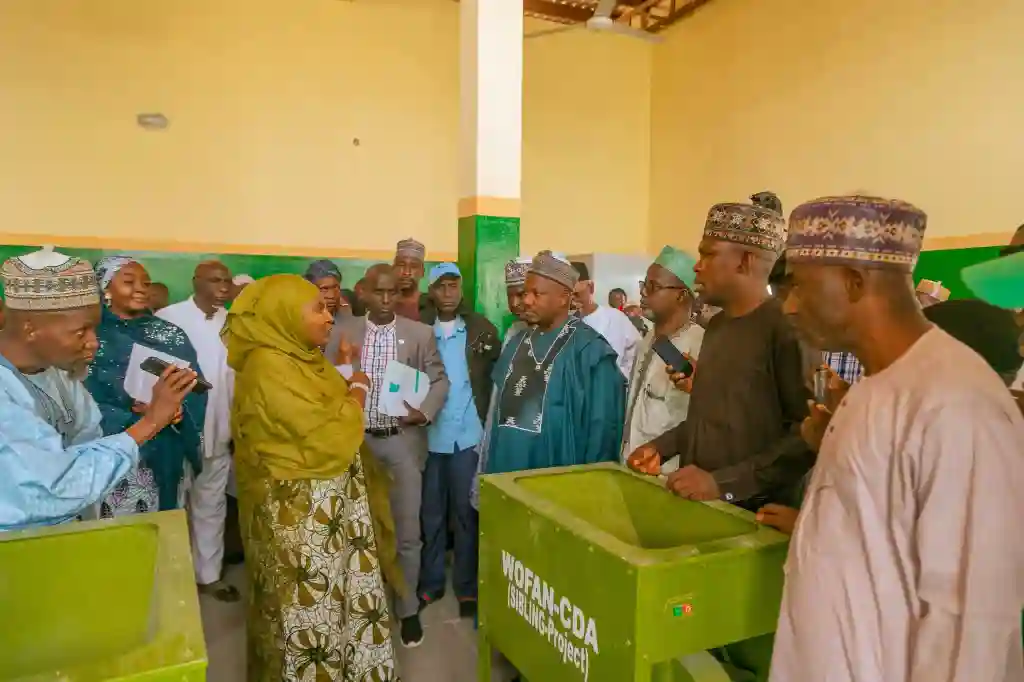
The Vice-Chancellor of Bayero University, Kano (BUK), Professor Haruna Musa Musa, fsi, on Tuesday, 17 February 2026, formally launched the Skills Improvement to Boost Livelihood and Nurture Growth (SIBLING) Project, describing it as the beginning of a transformative journey for the university community, especially students and junior staff who will directly benefit from the intervention.
Speaking at the launch, the Vice-Chancellor said the SIBLING initiative was a carefully designed response to pressing challenges facing agricultural education and food security in Nigeria. He explained that the two-year pilot programme is aimed at bridging the long-standing gap between theoretical knowledge and practical skills, a gap that has limited the employability and productivity of agriculture graduates.
He noted that by equipping students with hands-on experience and relevant technical skills, the university is positioning them to become more competitive and productive in the agricultural sector.
The Chairperson of the Women Farmers Advancement Network (WOFAN), Dr Salamatu Garba, who spearheaded the initiative in collaboration with the Centre for Dryland Agriculture (CDA) and the Faculty of Agriculture, said the project seeks to promote improved farming production and processing practices among younger students and wives of junior staff.
According to her, the goal is to help beneficiaries become self-reliant and to embrace agriculture as a sustainable source of income amid rapid population growth, rising food demand, and persistent food shortages. She stressed that empowering young people and women through practical agriculture is critical to strengthening food systems and improving livelihoods.
In his remarks, the Director of the Centre for Dryland Agriculture, Professor Sanusi Gaya Mohammed, said the SIBLING Project is deliberately people-centred, with a strong focus on students, women, youth, and other vulnerable groups in society. He explained that the partnership between WOFAN and CDA would harmonise expertise to promote best agricultural practices, strengthen agro-processing and value-chain addition, and advance inclusive value-chain development.
The Dean of the Faculty of Agriculture, Professor Aminu Sulaiman, stated that the initiative would provide agriculture students with access to demonstration plots for rice, maize, and groundnut production. He added that students would also receive hands-on training using modern equipment for processing, packaging, and marketing these crops, thereby improving their practical competence and market readiness.
Goodwill messages were delivered by the former Vice-Chancellor of Aliko Dangote University of Science and Technology, Professor Shehu Alhaji Musa; the immediate past Director of CDA, Professor Jibrin Mohammed Jibrin; and the NASU-BUK Chairman, Comrade Abdullahi Nasiru AbdulRafiu.
The immediate past Dean of the Faculty of Agriculture, Professor Muhammad Auwal Hussaini, delivered the vote of thanks. He expressed appreciation to all partners, stakeholders, and participants for their support toward the successful launch of the project.
Earlier, in his welcome address, the Chairman of the Local Organising Committee, Professor Sani Miko, warmly welcomed participants and described the event as a flagship programme initiated by WOFAN in collaboration with the Centre for Dryland Agriculture (CDA) and the Faculty of Agriculture.
As part of the event, the WOFAN Chairperson (International Group), Hajiya Dr. Salamatu Garba, distributed 2,617 bags of rice to 550 junior staff members of BUK, security personnel, casual staff, staff of the Registry Department, the Faculty of Agriculture and CDA, as well as outsourced cleaning staff drawn from 22 companies.
Beneficiaries expressed deep appreciation to WOFAN for the gesture, describing it as timely support on the eve of the Ramadan fast. They prayed for continued success for the organisation. One beneficiary, Malama Zainab Ibrahim, a cleaner, described the intervention as exceptional, saying, “You have truly come to our aid and supported us in a way that deserves more than commendation.”
The Adolescent Girls Initiative for Learning and Empowerment (AGILE) has commenced the disbursement of conditional cash transfers to 12,133 girls in Bauchi State as part of efforts to improve school enrolment and retention.
The State Project Coordinator of AGILE, Hajiya Ladi Muhammad Hamma, disclosed this during a briefing with journalists in Bauchi, confirming that beneficiaries have started receiving payments under the scheme.
She explained that each enrolled girl is entitled to a total support package of N60,000. According to her, N40,000 has already been released to the first batch of beneficiaries. “Out of the N60,000 package, N15,000 is paid as registration support, while N25,000 covers transition costs for the first term,” Hamma said.
She added that subsequent payments of N10,000 each would be made based on at least 70 per cent school attendance. “This condition is designed to ensure sustained participation in education,” she stated.
Hamma noted that the funds have been credited directly into the beneficiaries’ bank accounts, while ATM cards are currently being distributed to enable easy access to the grants.
Beyond the financial support, AGILE is also focusing on infrastructure development. She revealed that plans are underway to construct new schools across the state’s 20 local government areas, subject to the World Bank’s approval of prototype designs.
In addition, she said 1,203 secondary schools have been earmarked for renovation through School-Based Management Committees (SBMCs) to create safer and more conducive learning environments.
The coordinator called on parents and guardians to provide National Identification Numbers (NINs), birth certificates and relevant bank details to ease enrolment and ensure smooth implementation of the programme.
She also announced that 156 Technical Service Providers would undergo training on environmental and social safeguards ahead of the renovation works, with field activities expected to begin immediately after the exercise.
The AGILE intervention targets reducing out-of-school rates among girls while addressing barriers such as poverty and early marriage.
Civil servants in Benue State will now be able to own laptops and other essential digital devices without paying the full cost upfront, following the launch of the EasyOwn Digital Asset Financing Platform by the state government.
The platform was officially unveiled at the Office of the Head of Service as part of efforts by the administration of Governor Rev. Fr. Hyacinth Iormem Alia to digitize the state civil service and improve service delivery through technology.
In his address, the Head of Service, Mr Agbogbo Odeh, expressed appreciation to the Executive Governor for creating an enabling environment for digital reform in the state. He noted that Governor Alia’s vision for a modern, technology-driven civil service has already started producing visible results in less than three years.
“His Excellency gave us a clear picture of what a digitally transformed civil service should look like and directed that the Ministry of ICT and Digital Economy be established immediately. Today, we are witnesses to that commitment,” he said.
Odeh further disclosed that the EasyOwn initiative aligns with the ongoing digital skills training of over 43,000 civil servants across Benue State. According to him, making digital assets affordable will support the training programme and ensure officers are properly equipped to function in a fully digitized economy.
The Head of Service commended the GMD/CEO of Benue Digital Infrastructure Company (BDIC), Hon. Gbande Hembaor Terwase, AFCPN, for presenting the initiative. He pledged the support of the civil service and formally declared the project unveiled.
Representing the GMD/CEO of BDIC, Engr. Michael Idu, Head, Cooperate Services, BDIC, described the launch as a major step in the state’s digital journey. He explained that the partnership between BDIC and Novus Microfinance Bank was structured to allow civil servants own digital devices without the burden of paying the full amount at once.
He noted that through the platform, beneficiaries will receive devices supplied by BDIC under a structured loan arrangement facilitated by Novus MFB. This arrangement, he said, makes digital tools more accessible and affordable for workers across the state.
Managing Director of Novus Microfinance Bank, Mrs. Patricia Goja, emphasized that the institution remains focused on delivering practical financial solutions beyond conventional lending.
“Through EasyOwn, civil servants can now own essential devices and pay conveniently over time. Access to digital tools enhances efficiency, supports professional growth, and improves overall quality of life. This initiative is about empowerment and bridging the digital gap,” she stated.
In his vote of thanks, the representative of the Honourable Commissioner of ICT and Digital Economy, Dr. Elvis Ogenyi, who is also the Permanent Secretary, Bureau of Service Welfare, Office of the Head of Service, described the partnership between BDIC and Novus MFB as a significant boost to the digitalization of the Benue civil service. He appreciated the state government, BDIC and Novus for driving a project aimed at strengthening service delivery and promoting professional growth among civil servants.
The EasyOwn platform is expected to accelerate the state’s digital transformation agenda by ensuring that civil servants are not only trained but fully equipped to thrive in a modern digital economy.
The MTN Foundation (MTNF) has officially signed a Memorandum of Understanding (MoU) with the Bank of Industry (BOI) Limited ahead of the third phase of the MTN Y’ellopreneur initiative. The agreement centres on the establishment of a one billion naira matching fund model for Female Entrepreneurs. The MoU was executed at the BOI office in Marina, Lagos on Friday, February 13.
The partnership is designed to help reduce women’s unemployment and promote entrepreneurship by offering targeted capacity-building opportunities that strengthen business skills. Through a mix of equipment loans and advisory support, the programme aims to provide female entrepreneurs with the resources required to build and sustain successful enterprises.
Phase 3.0 builds on the achievements of the first two phases, which attracted thousands of applications, trained 5,754 women, and facilitated access to NGN 304 million in loans for 122 female entrepreneurs.
Under the new matching fund model, up to 200 female entrepreneurs will receive single-digit interest loans of up to NGN 5 million each. Speaking at the signing ceremony, the Managing Director and Chief Executive Officer of BOI, Dr. Olasupo Olusi, reaffirmed the bank’s commitment to gender-inclusive financial support.
“We are committed to the development of women-led enterprises. Today represents the deepening of our existing collaboration; it is a deliberate intervention targeted at women at the base of the economic pyramid who operate viable businesses,” he said.
He added, “Across Nigeria, women sustain a large share of micro-businesses in markets and communities for local economic development. This partnership goes beyond lending; it aims to provide mentorship and equip the recipients. BOI remains committed to sustainability and partnership on this programme.”
Executive Director of the MTN Foundation, Odunayo Sanya, also spoke on the significance of the initiative. “Today, we stand as custodians of a power that drives meaningful change. This partnership reflects our commitment to creating sustainable growth pathways for women. By 2030, we aim to strengthen the capacity of 30,000 female entrepreneurs and support 10,000 women-founded/led businesses with access to capital. Above all, we celebrate the women whose lives and businesses will be empowered through this initiative,” she said.
According to the organisers, the call for applications for the third phase of Y’elloprenuer will begin with a media parley, followed by the training of 1,000 women and a hybrid business pitch session to select the top 200 businesses. The approach is structured to ensure that female-led business owners can thrive in an evolving economic landscape.
The MTN Foundation and the Bank of Industry said they remain committed to empowering women entrepreneurs and equipping them with the financial and advisory support needed to play stronger roles in Nigeria’s economy.
The Federal University of Agriculture, Abeokuta has announced a Vocational Education Training on Agroecology under its 1st Cohort for 2026, calling on interested participants to apply for the practical programme.
The 3-Day Practical Based Training Programme on Agroecology and Sustainable Food Production is designed to equip farmers and agripreneurs with hands-on skills in sustainable and climate-smart agriculture. The training will focus on hands-on Agroecology and Sustainable Food Production for Farmers and will expose participants to modern, soil-less farming techniques.
The programme will begin from February 25th to 27th, 2026, starting at 9:00 AM daily. It will run for 6 to 7 hours each day at AGRECOFARM Lab, CEADESE, Federal University of Agriculture (FUNAAB), Abeokuta.
The training will be 80 percent practical and 20 percent discussion or demonstration, stressing that there will be no heavy theory or written exams. Participants will learn how to prepare land sustainably using a mini tiller, test soil nutrients using an NPK and multi-sensor soil tester, and produce crops using greenhouse hydroponics systems.
Other highlights include processing forage and producing pelleted feed with local materials, applying agroecological practices that protect soil, water and health, keeping simple farm records, safely operating a basic agricultural drone, using GPS to map farm boundaries and measure farm size, and flying drones to capture aerial images.
Participants will receive a certificate, daily lunch, and training materials. The programme is specifically designed for farmers, youths, women, students, aspiring agripreneurs, extension agents and farm service providers.
The College of Agriculture, Science and Technology (CAST), Obubra, Cross River State, has announced fresh admission into its National Diploma (ND) and Higher National Diploma (HND) programmes for the 2026/2027 academic session.
In a statement signed by the Registrar, Dr. Gabriel Ojie Osang, the institution invited qualified candidates to apply for its diverse academic programmes designed to equip students with practical skills in agriculture, science, and technology.
Dr. Osang stated that all academic programmes offered by the College have been fully approved by the National Board for Technical Education (NBTE). He assured prospective students and parents that the institution operates with full accreditation and follows national academic standards.
He disclosed that application forms are now available online. According to him, interested applicants are required to pay a non-refundable application fee of Twenty-Five Thousand Naira (₦25,000.00) only into the College account with United Bank for Africa (UBA), Account Number: 1028613027, Account Name: College of Agriculture.
The Registrar explained that proof of payment, completed application forms, and relevant credentials must be uploaded through the College portal at www.castobubra.ng/applications. He urged candidates to carefully follow all application guidelines to avoid errors during submission.
The available ND programmes include Animal Health and Production, Forestry and Environmental Technology, Fisheries Technology, Horticulture and Landscape Technology, Computer Science Technology, Hospitality and Tourism Management, and a Pre-National Diploma/Remedial Programme.
At the HND level, the College offers Animal Production Technology, Crop Production Technology, Fisheries Technology, Forestry Technology, Agri-Business Management, and Agricultural Extension and Management.
Beyond the diploma programmes, CAST also provides certificate courses in Veterinary Clinic Assistant, Forest/Game Management, Beekeeping and Honey Production, Fingerlings Production, Mushroom Production, and Snail Farming.
Dr. Osang advised applicants to visit www.castobubra.ng/requirements to review detailed admission requirements before completing their applications.
He further stated that the sale of application forms began on Monday, 16th February 2026, and will close on Tuesday, 17th March 2026, at midnight.
The Registrar reaffirmed the College’s commitment to delivering quality technical and agricultural education that promotes innovation, self-reliance, and sustainable development across Cross River State and beyond.
For further enquiries, applicants may contact +234 813 191 3864, +234 706 108 0676, Technical Support: +234 812 393 4461, or email enquiries@castobubra.ng.
The Federal Government has announced plans to undertake a comprehensive review of the reported acquisition of IHS Towers by MTN Group, citing the strategic importance of telecommunications infrastructure to Nigeria’s digital economy and national security.
In a press statement signed by the Minister of Communications, Innovation and Digital Economy, Bosun Tijani, the Ministry said it is closely monitoring developments in the telecommunications sector following the acquisition involving IHS Towers and MTN Group.
The Ministry noted that under the leadership of Bola Ahmed Tinubu, the administration has over the past two years implemented reforms aimed at stabilising and strengthening the telecommunications sector as a key pillar of the country’s digital economy.
According to the statement, government interventions, including policy clarity, regulatory support and sustained engagement with industry stakeholders, have helped restore investor confidence and improve overall sector performance.
The Ministry pointed to recent financial results released by major telecom operators, which it said show a return to improved profitability, increased infrastructure investments and enhanced operational stability across the industry.
However, it stressed that given the critical role telecommunications infrastructure plays in national security, economic growth, financial services, innovation and social inclusion, any major structural change within the sector must align with the administration’s broader market development agenda under the Renewed Hope policy framework.
“To ensure strategic actions by private sector operators are consistent with national objectives, the Ministry will undertake a thorough assessment of this development in collaboration with relevant regulatory authorities,” the statement said.
The government said the review would focus on protecting consumers, safeguarding investments and preserving the long-term sustainability of the telecommunications industry.
Reaffirming its commitment to a stable and transparent policy environment, the Ministry said it remains focused on keeping Nigeria’s telecommunications industry on a strong growth trajectory, in line with its broader vision of building a resilient and globally competitive digital economy.
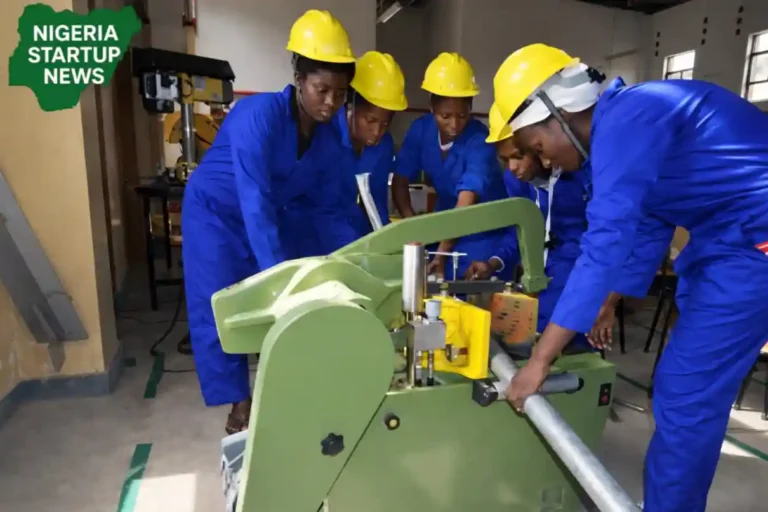
The Federal Government has commenced free training for 26,000 youths nationwide under the Innovation Development and Effectiveness in the Acquisition of Skills (IDEAS) project.
The initiative prioritises human capital development, youth empowerment, and sustainable economic growth. The IDEAS project, domiciled in the Federal Ministry of Education and funded by the Federal Government in collaboration with the World Bank, is designed to strengthen skills acquisition, enhance employability, and reduce unemployment among Nigerian youths.
It is a key initiative of President Tinubu’s administration, aimed at delivering globally aligned, high-impact education and workforce development programmes across the country.
The 26,000 youths currently undergoing training make up the third cohort of the scheme. The programme started last year with about 8,000 participants in the first two cohorts.
During an inspection visit to the Wavecrest College of Hospitality in Lagos, the World Bank Practice Manager for Education in Africa (West and Central), Scherezad Latif, praised the Federal Government’s commitment to addressing youth unemployment through technical skills development.
“Nigeria is one of our large programmes. I am here to look at the minister’s Technical and Vocational Education and Training (TVET) initiative through a project called IDEAS. We are very proud and happy to be part of the government’s programme, and to see all the results that have already been achieved through this programme,” she said.
Latif also expressed delight at the motivation and clarity shown by the students, adding that the World Bank is proud to partner with the Federal Government on the initiative.
The National Project Coordinator for the programme, Blessing Ogwu, stated that the training is free. She added that beneficiaries would receive starter packs and have access to soft loans from the Bank of Industry (BoI) after completing the programme.
Deputy Provost of Wavecrest College of Hospitality, Ifeoma Nwabachili, explained that the programme combines training with employment opportunities. Beneficiaries will undergo three months of hands-on training and three months of internship training in the industry.
One of the beneficiaries, Ihedioha Ifeanyinchukwu, thanked the Federal Government for the opportunity, expressing hope that the training would improve his skills and employability.