Home Blog Page 251

JAMB Sends Verified Admission List For Karimi 2025 Bursary Applicants

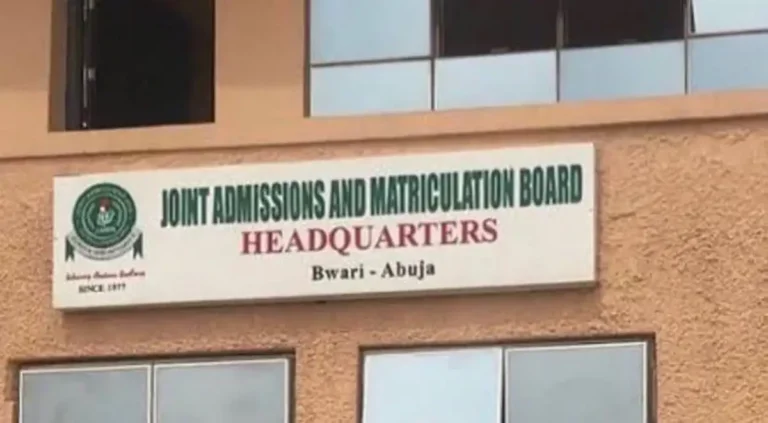
The Joint Admissions and Matriculation Board (JAMB) has confirmed the verification of registration numbers and admission status for beneficiaries of the Sunday Steve Karimi Bursary Programme 2025 in Kogi State. In a letter dated 5th December 2025 and addressed to Senator Sunday Steve Karimi, Chairman Senate Service, the Board responded to a request earlier sent on 5th November 2025.

The communication, signed by B Usman Funmilola F, Acting Director of Information Technology Services on behalf of the Registrar, stated, “As requested, please find attached the admission status of candidates nominated for your bursary.”

The letter explained that due to the document’s size, only a sample page was enclosed, while the full file would be transmitted via email.

The Board added, “Please accept the assurances of the Registrar’s highest regards,” reflecting its commitment to support transparency in student selection. JAMB listed its headquarters in Abuja and provided telephone contacts for further inquiries.

Advertisement

Lagos Disburses N1.6bn to 4000 Residents Under Sanwo-Olu Listens

0

Over 4,000 Lagos residents have benefited from financial support worth N1.6 billion between January and now under the Sanwo-Olu Listens and Sanwo-Olu Cares Initiative aimed at easing economic challenges faced by citizens. The latest phase of the initiative saw another 517 people receiving cheques during a presentation ceremony held at Alausa, Ikeja.

Speaking at the event, the Special Adviser to the Governor on Political, Legislative and Civic Engagement, Dr. Tajudeen Afolabi, said the financial aid was designed to help residents meet urgent needs such as boosting businesses, settling medical bills, and paying children’s school fees. He explained that the initiative continues to focus on assisting different categories of vulnerable people across the state.

Afolabi stressed that the process of selecting beneficiaries was free from political, tribal, or religious considerations. According to him, the only requirement was for applicants to clearly state the purpose for their request, live in Lagos, provide their LASSRA and NIN details, and submit their phone numbers.

“This financial aid is not for APC members. We don’t know the beneficiaries before calling them. Our requirement is for them to write an application on the purpose for the money, they should reside in Lagos, provide their LASSRA and NIN cards, as well as their phone numbers. We don’t question anyone if he or she is a member of APC or not, Igbo, Yoruba or Hausa. We don’t discriminate,” Afolabi said.

He noted that Lagos State Governor Babajide Sanwo-Olu remains committed to reducing hardship among residents through consistent support programmes. Describing the initiative as part of government responsibility, he highlighted how financial aid continues to relieve many families and small businesses.

“This is what this office is known for and part of the responsibilities the governor has given to us, which is to put smiles on the faces of the people under the Eko Cares, Sanwo-Olu Listens. For this year, a lot of beneficiaries have received a huge amount of financial intervention orchestrated by the governor and his deputy. Today, we gave out 517 cheques for purposes such as house rent, trading, health challenges and for physically-challenged individuals. This year, we have given cheques to 4,177 beneficiaries and we still have over 1,000 cheques awaiting disbursement for this year,” Afolabi added.

He urged beneficiaries to spend wisely, warning against wasteful use of resources meant to support essential needs. “My advice to the beneficiaries is to make good use of it. It’s not money that will solve all their problems but to assist them in meeting their basic needs. They should not use the money for frivolities but use it for intended purposes,” he said.

Beneficiaries, including petty traders, fashion designers, content creators, and others, expressed gratitude to the Lagos State government. They noted that the support would help sustain their livelihoods. Some stated they would use the funds for school fees, rent payments, hospital bills or to grow their small businesses.

In October 2025, under the EKO Cares Initiative and EKO Listens Financial Assistance Programme, Lagos State disbursed N2.7 billion to more than 10,000 vulnerable households to support healthcare, housing, education and small business development.

LCWF Workshop Trains Women for Legacy Businesses, Digital Empowerment

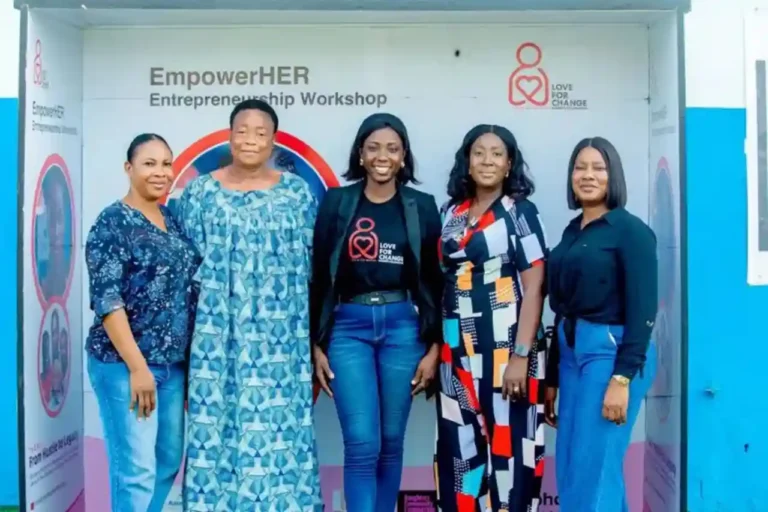
The Love for Change Women Foundation (LCWF) held its inaugural EmpowerHER Entrepreneurship Workshop, bringing together young businesswomen for what organisers described as a transformational day of clarity, confidence and community. The event equipped participants with skills, structure and capital needed to build sustainable businesses while encouraging them to move beyond survival mode and begin building ventures that can outlive them.

Founder of LCWF, Modupeola Bello Olukoya, said the initiative was created to empower women with tools that lead to financial independence and generational stability. “As women, having a consistent source of income is essential because it gives you the freedom to make empowered decisions,” she said.

“We want young women to build sustainable, well-structured businesses and be financially independent. This workshop helped them reflect, refine their ideas and build with clarity and intentionality.” She added that watching participants leave with sharpened business plans “reminded us why this work matters,” noting that “this isn’t just about a workshop. We are building a movement of women who support each other, share their resources and rise together.”

The workshop featured keynote speaker Olamitoyosi Babatunde, who urged participants to break out of short-term thinking. “The goal is for these women to move from thinking about sustenance to thinking about legacy,” she said. “Make money, keep the money, grow it and reinvest it. If we talk about generational curses, then we must also decide to be generational blessings.” Babatunde highlighted that Nigerian women were already demonstrating resilience and innovation. “It is rare today to find a Nigerian woman sitting idle,” she said. “Women work hard, and a woman can make her own money without doing anything underhand. Men should not feel threatened.”

She also called on government to remove structural barriers that limit women’s autonomy. “There are laws and practices that still require a man’s approval for a woman to make certain decisions—even to rent an apartment,” she said. “The environment must be conducive if women are truly to thrive.”

Workshop coordinator, Bukola Adeyemi, explained that the programme was designed to go beyond basic training by also offering capital support. “This is not just another programme,” she said. “Many women have businesses but lack the tools to transfer these businesses to their children. We want them to move from hustle to legacy.”

Adeyemi announced that LCWF, working with partners including BLGN, provided grants to 10 women amounting to more than N500,000. “The Mama BC recipients are taking home N50,000 each, while the Tomi category receives N100,000 because of their potential to leverage technology,” she explained. She added that the foundation would follow up on all beneficiaries to ensure growth and accountability.

Guest Mentor Iyene Adasa encouraged participants to stay structured and determined. “Beyond starting a side hustle, you can grow it into a legacy business,” she said. “Challenges are not designed to break you; they are there to build you.”

For many attendees, the training offered clarity and immediate action points. Fashion designer Zabiola Digbite said the workshop addressed her biggest business issue. “I had issues managing staff, and the speaker nailed it,” she said. “I will start applying what I learnt immediately.”

Another participant, Kelly, a bag designer, said the event reshaped her mindset about legacy building. “I used to think my daughter was too small to learn anything, but now I know she must see what I do,” she said. “I want to grow from sewing alone to owning a shop and employing people.”

The workshop followed LCWF’s eight-week virtual EmpowerHER Bootcamp, which trained women in digital entrepreneurship, branding and marketing. Outstanding participants from the virtual programme also received business-support grants, further strengthening the foundation’s commitment to practical empowerment.

Since its founding in 2014, LCWF has focused on breaking inter-generational poverty by equipping marginalised women with skills, training and community backing to build stable futures. Stakeholders say the workshop’s mix of training, mentorship and funding reflects a major step toward building a new generation of women-led legacy businesses across Nigeria.

In 2025, LCWF also ran its second InnovatHER STEM Bootcamp, enrolling over 200 girls from Lagos, Abuja, Kano, Benue, Kaduna, Anambra, Oyo and Kwara. The programme offered training in coding, robotics, data analytics, soft skills and problem solving, giving young Nigerian women the digital and entrepreneurial skills needed for sustainable futures.

The foundation publicly condemned the technology-access gap for girls in underserved communities, saying the lack of STEAM opportunities is “stifling their potential as future innovators and leaders.” The founder noted that hands-on training in robotics, Python programming and design is helping bridge this divide and build what she called “future-ready, purpose-driven” young women.

Epe Lawmaker Gives 400 Free Market Shops to Traders

1

A lawmaker representing Epe Federal Constituency in the House of Representatives, Tasir Raji, has donated 400 stalls in the reconstructed Ayetoro Market in Epe Town to residents of his constituency.

According to a statement shared with Saturday PUNCH by the lawmaker’s Media Assistant, Babatunde Kaka, the gesture formed part of the official commissioning of the heritage Ayetoro Market, which was rebuilt under Raji’s supervision.

Raji said the donation was aimed at reducing poverty and supporting small businesses across the constituency. He explained that 200 traders who occupied the former market were given stalls in the new complex, while another 200 new traders also benefited.

In her address at the event, the Chairman of Epe Local Government, Surah Animashaun, commended the lawmaker for what she described as “his life-enhancing projects” in the community. She urged beneficiaries to make meaningful use of the opportunity provided.

Also reacting, a constituent, Pastor Ojelabi, praised Raji for the “numerous developmental strides” he continued to attract to the constituency.

He said, “You have done wonderfully well, and I want to say on behalf of the party that we are proud of you. I mean the sort of infrastructure development we continue to see—your unrelenting strides to empower your people in the education sector, health sector, food production, and so on and so forth.”

In early November 2025, Raji had announced a wider development blueprint for Epe, promising not only 400 new shops for residents at no cost but also several road projects across the town.

The reconstruction and commissioning of the Ayetoro Market, which is nearly 100 years old, was completed in December 2025. The facility was handed over to former and new traders free of charge, an act described locally as “a renewal of hope” for economic growth in Epe.

FG Bans PoS Operators Without CAC Business Registration

0

The federal government has announced a nationwide ban on Point of Sale operators working without Corporate Affairs Commission (CAC) registration, following rising concerns about fraud and regulatory breaches. The announcement was issued on Saturday, 6th December, citing violations of the Companies and Allied Matters Act 2020 and Central Bank of Nigeria Agent Banking Regulations.

According to CAC, authorities observed an increasing number of PoS agents operating without traceable business identities, a trend the government described as dangerous. In the statement, the government warned that “This reckless practice often enabled by some fintech companies puts Nigeria’s financial system and citizens’ investments at risk. This must stop.”

The directive gave a clear deadline, stating that “EFFECTIVE 1 JANUARY 2026: No PoS operator will be allowed to operate without CAC registration. Security agencies will enforce nationwide compliance.” It further stressed that “Unregistered PoS terminals will be seized or shut down by Security Officials. Fintechs enabling illegal operations will be placed on watchlist and reported to the CBN. All operators are advised to regularize immediately.”

The government emphasised that compliance is mandatory for all operators.

This development follows earlier actions by financial crime agencies. In May 2025, the Police Special Fraud Unit and EFCC confirmed multiple arrests linked to PoS syndicates operating without proper registration, after banks flagged more than ₦9 billion in unauthorized withdrawals.

Authorities linked the unregistered terminals to identity theft and money laundering, prompting stronger calls for regulation and coordinated enforcement between CAC, CBN and security bodies.

Similarly, in August 2025, the Central Bank sanctioned several fintechs for onboarding PoS agents without Know Your Customer screening. Investigations reportedly connected over 400 cloned terminals to kidnapping, betting scams and pension fund theft.

Advocacy groups and lawmakers demanded urgent reform, warning that the credibility of Nigeria’s agent banking system was being eroded. The latest enforcement directive is seen as a response to these pressures as authorities move to clean up the PoS ecosystem.

CitySports Foundation Launches 1000 Boots for Underserved Youth

0

CitySports Foundation, the social impact arm of CitySports Africa, has launched its flagship 1,000 Boots Project, a youth empowerment initiative aimed at distributing free football boots to underserved children while also providing leadership and development support. The maiden edition will take place on December 23 at the National Stadium in Surulere, where more than 1,000 boys and girls are expected to benefit from free gear and learning opportunities.

The Chief Executive Officer of CitySports Africa, Shola Opaleye, said the initiative was created to break a barrier that has stopped many talented young players from advancing in football. According to him, access to proper equipment is often the first missing step for young athletes. “You are giving him dignity. You are giving him access. And you are also giving him the right to start to dream. Because all the while, the dream has always been somewhere, but you can’t move to the next step because the tools are not available,” he said.

Opaleye explained that although the first edition is holding in Lagos, the vision is continental. “Beyond Nigeria, we have this programme. We’re starting now in Lagos. This is the first time we’re doing this, and we’re grateful for the people who have backed it up until now. We intend to go across Africa,” he stated.

He noted that millions of young Africans play football weekly, often without boots or with improvised footwear, even though football remains one of the continent’s strongest platforms for youth connection. “Talent is everywhere, but what they just lack is access,” he said.

To show the possible impact the project may have, Opaleye referred to the early struggles of Senegalese star Sadio Mané, who once attended a trial without boots and wearing torn shorts before receiving his first pair from a coach. “Somewhere in Nigeria, Ghana, Kenya, Senegal or Rwanda, there is another Mané, a child whose destiny can change with a single pair of boots,” he added.

He said CitySports Africa has a clear growth goal for youth development. “CitySports, we have a goal. The target for us is that every year, we want to impact one million youth positively through sports. By 2035, we want to empower 10 million youth through sports.”

The 1,000 Boots Project is one of several tools designed to help reach that target. According to him, “This 1,000 Boots Project that is starting now is one of the tools I put together this year for the first time to help us achieve that. Tomorrow it may be 10,000 boots. It may be 50,000. Before you know it, we could have given out one million boots to African boys and girls. But this is the beginning of what we believe is a great journey,” he stated.

CitySports Africa confirmed that the launch event will include skill sessions, leadership engagements and a community AFCON viewing experience supported by TotalEnergies. More than 2,000 children, parents, youth leaders, coaches and volunteers are expected to attend.

Opaleye stressed that beneficiaries will not be pre-selected and encouraged children to attend freely. “We have zero slots set already. Just show up on that day,” he said.

While calling for support from corporate bodies, non-governmental organisations and individuals, he appealed for contributions in different forms. “We need to help these young people. The least we can do—if we have the means—is to contribute. It’s not just about money. Some have cameras, some have voices. Other organisations can fund boots. Others can fund food or Christmas activities.”

CitySports Africa plans to scale the boot distribution beyond Lagos starting in 2026. Steps are ongoing to make it a quarterly activity from 2027 to ensure continuous reach and expansion.

Earlier in July, CitySports Foundation hosted its Community Goalkeepers Summit in Lagos, where over 600 young athletes received mentorship, fitness gear and coaching support from former Super Eagles players and sports psychologists. The organisation said the event marked the first step in combining equipment distribution with leadership development.

It noted that the model is now expanding through the 1,000 Boots Project, which signals a shift toward large-scale youth inclusion through football across Africa.

Makinde Unveils Grown in Oyo Certification Mark to Drive Agribusiness Expansion

0

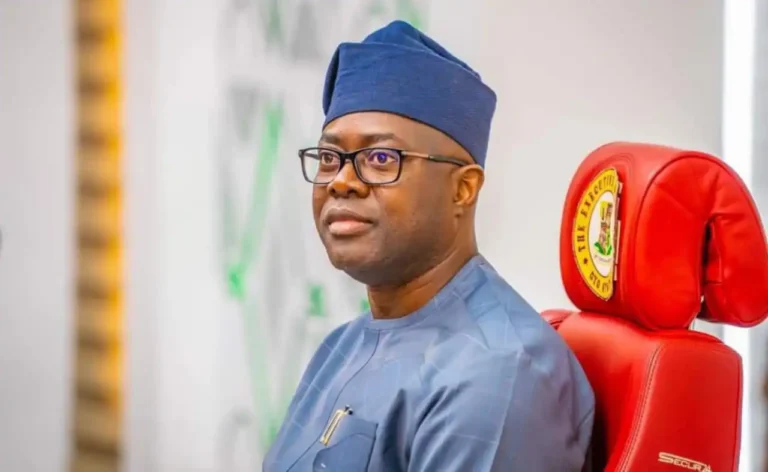
At the second edition of the Oyo State International Agribusiness Summit 2025, Governor ’Seyi Makinde unveiled the Grown in Oyo State Certification Mark, a stamp of authenticity designed to identify agricultural produce cultivated within the state. The mark reflects the administration’s renewed commitment to quality, transparency, and a modern agribusiness ecosystem that connects all stakeholders through a trusted identity system. According to the governor, this development shows that the government will continue to support genuine investors and build meaningful partnerships that boost economic opportunities across the state.

Speaking at the summit held at the International Institute for Tropical Agriculture (IITA), Ibadan, Governor Makinde declared that his government had succeeded in transforming agriculture through institutional reforms over the last six years. He explained that the state adopted a structured agribusiness model to create jobs, support farmers, attract investment, and strengthen internal revenue, with the goal of moving citizens from poverty to prosperity.

The event attracted stakeholders from across the agriculture value chain, including industrialists, bankers, development partners, policy makers, and international delegates. While addressing participants, the governor said the gathering illustrated what collaboration and interconnectivity could achieve, noting that it aligned with the state’s drive to turn agriculture from subsistence and survival activity into a major engine of inclusive economic growth.

Makinde explained that agricultural industrialisation had been the focus of his administration for more than six years, adding that the summit aligned with the theme Expanding Oyo State’s Economy through Agricultural Industrialisation. He restated his promise to take Oyo State from potential to productivity and eventually to prosperity through strategic agribusiness policies.

The governor invited agribusiness investors to explore opportunities available in the state, citing Oyo’s abundant arable land across different agro ecological zones, a young and credible labour force, favourable climate conditions, proximity to Lagos, and growing industrial hubs supported by infrastructure and improved security. He noted that beyond resources, investors would also find a government with a culture of listening, responding, and partnering, together with a commitment to stability and continuation of policies.

His words: “I welcome you all to the Oyo State International Agribusiness Summit 2025. This gathering is a reminder of what collaboration and interconnectivity can accomplish. It represents our commitment to transforming agriculture from a subsistence activity into a modern engine of inclusive economic growth. For inclusive economic growth through agribusiness, we definitely will have to industrialise.”

According to him, the administration chose to prioritise agriculture as a central pillar of the state’s economic growth strategy. He said the summit offered another platform to share experiences from the years of strategic planning that led to the adoption of a structured agribusiness model. “The vision has remained consistent, to move Oyo State from potential to productivity, and also from productivity to prosperity,” he said. Makinde added that this model was designed to generate jobs, support farmers, attract investors, and improve government revenue.

He noted that before these reforms, agriculture in Oyo State was not widely considered a business. Government support was limited to subsidies for small scale farmers and there was no connection between policy formulation, infrastructure planning, research institutions, and private sector investment. This approach, he stressed, had contributed to the slow rise of agro industrialisation before his administration stepped in to reshape the sector.

Makinde explained that Oyo State took advantage of its location among top agricultural research institutions to change this pattern. “Where I sit as the governor of the state, within 20 kilometres radius, you have IITA, you have Cocoa Research Institute of Nigeria, CRIN and many others,” he said. He recalled that the government asked itself how these great institutions could be better integrated into the state’s development process. This led to active partnerships with institutions such as IITA and CRIN on projects including cocoa rejuvenation. “We believed that to change our narrative, we must do something and we did something,” he added.

The governor pointed out that the establishment of the Oyo State Agribusiness Development Agency (OYSADA) was one of the major steps taken to drive change. He described OYSADA as a special purpose vehicle and an implementation engine focused on delivering agribusiness development across the state. Makinde said the agency had helped build a solid foundation for the state’s ongoing agribusiness reforms.

He highlighted the key areas within the agribusiness roadmap, including agriculture as business, creation of infrastructure, youth and women inclusion, research driven production, financing, and investments. These priorities shaped government’s investment decisions and institutional reforms.

According to him, the state’s work on infrastructure played a central role. “When we came in 2019, we started by connecting all the zones with infrastructure,” he said. The expanded road network linking Oyo to Iseyin, Iseyin to Ogbomoso, Iseyin to Ibadan, and Iseyin to Ibarapa was designed to boost produce movement and access to markets. The ongoing Eruwa to Ibadan road project will complete this connectivity, he added. He stated that anyone visiting produce belts such as Iseyin or Eruwa would see increased movement of trucks collecting produce, a sign that the reforms were working even if neighbouring states did not witness the same changes at the same time.

The governor also spoke about the emerging Special Agro Processing Zones (SAPZ) in Ijaye and Eruwa, which will complement the existing Fasola zone. He noted that land clearing and preparations were ongoing, emphasising that the zones would soon become operational, allowing more investors to take advantage of ready industrial platforms.

Makinde said that while the government recognised the importance of import substitution, the state was determined not to limit itself to the domestic market. “Whatever efforts we are making should also be good enough to export and earn foreign exchange from Nigeria and Oyo State,” he said.

Addressing investors, he highlighted the value of public private partnerships. “We’ll do everything possible to support new investors in Oyo State,” he assured, explaining that the state was ready to invest public funds because the jobs to be created would benefit its people while produce would serve both domestic and export markets.

During goodwill messages, international partners acknowledged the state’s reforms. The Ambassador of Belgium to Nigeria, His Excellency Pieter Leenknegt, the Consul General and Trade Counsellor of Denmark in Nigeria, Ms Jette Bjerrum, the former Director General of CGIAR/IITA, Dr Nteranya Sanginga, and the Managing Director of First Bank of Nigeria PLC, Segun Alebiosu, praised Governor Makinde’s leadership in transforming agribusiness. They promised increased collaboration to boost the state’s economy.

Earlier, OYSADA Director General Dr Debo Akande said that Oyo State had taken a leap into a promising future of industrial agriculture, food security, and economic development. He stated that the future of the state was tied to advancing its agribusiness ecosystem through agricultural industrialisation. He noted that rural infrastructure investments were already driving agro based industrial development and helping communities connect to wider markets. Akande added that global and regional trade instruments would be opened up to agribusiness industrialists to support access to global markets.

The summit was attended by top state officials including Deputy Governor Barr Bayo Lawal, Secretary to the State Government Prof Olanike Adeyemo, Chief of Staff Otunba Segun Ogunwuyi, Deputy Chief of Staff Hon Kazeem Adeniyi, leaders of the Oyo State Elders’ Council Dr Saka Balogun and Elder Wole Oyelese, commissioners, permanent secretaries, members of the diplomatic corps, traditional rulers, and other dignitaries.

PAWECA to Begin Fintiri Business Wallet Form Distribution In Adamawa

0

PAWECA has announced that it will begin distributing forms for the Fintiri Business Wallet Empowerment Programme across the 21 LGAs through selected stakeholders. The scheme is designed to assist people running micro and small businesses in communities across Adamawa State.

According to the Director General of the agency, Dr Michael Zira, the forms are not to be handled based on personal benefit, family links or favouritism. He stated that the agency expects the forms to reach only real business operators who are actively trading and need financial support to grow their ventures.

The programme targets traders, artisans, food sellers, petty shop owners, tailors, mechanics and other low-income business owners in the state. PAWECA further urged community leaders and distribution committees to ensure a transparent and fair process. The agency stressed that the selection must be inclusive and must serve people who genuinely need the opportunity. Zira noted that the aim is to strengthen small enterprises and improve income among hardworking citizens.

Apply for FMYD Waste to Wealth Initiative with Start-up Capital

The Federal Ministry of Youth Development (FMYD) has opened application for the Circular Economy Youth Empowerment Initiative (CEYEI) for Climate Change. Tagged “Waste to Wealth, Waste to Energy”, the programme aims to equip young Nigerians with skills to turn waste into useful products, create jobs, and support climate action across the 36 states and the FCT.

According to the federal government, the Waste to Wealth initiative is a groundbreaking effort designed to empower youth to become job creators. It is implemented under the mandate of President Bola Ahmed Tinubu to help participants develop waste-to-wealth businesses, contribute to the achievement of Sustainable Development Goals, reduce environmental pollution and foster economic growth. The initiative also seeks to mitigate climate change effects and support cleaner communities.

Training will be practical, covering major sectors of the circular economy. Areas include Waste Recycling, Upscaling and Upcycling, Energy and Community Renewable Solutions, Ecopreneurship, Biomass, and Electronic Waste. Each field contains a range of courses aimed at building technical and business skills.

The purpose is to empower youth with skills in waste collection, sorting, recycling, reuse and proper waste management. Selected participants will also receive start-up capital after training to launch their own ventures. The programme targets reductions in greenhouse gas emissions, air pollution, landfill waste, and flooding, while improving sanitation and encouraging household waste segregation.

Waste to Wealth, Waste to Energy programme seeks to expand renewable energy access in rural areas and position youth as drivers of eco-friendly solutions. The initiative is open to existing small enterprises and entrepreneurs interested in developing waste-to-wealth businesses. It focuses on transformation of waste into eco-friendly materials for environmental protection, regeneration and conservation.

Interested applicants should apply through the official portal at https://wastetowealth.fmyd.gov.ng.

Kogi disburses N7bn farm support to 7,000 farmers

0

Kogi State government says it has supported 7,000 farmers with agricultural credit facilities and farm inputs valued at over N7 billion in its drive to improve food production and livelihoods across the state.

Governor Usman Ahmed Ododo revealed this in Lokoja during a three day training programme on development and infrastructure growth, aligned with the state’s 32 year development plan. Represented by the Commissioner for Finance, Budget and Economic Planning, Idris Ashiru, the Governor stated that the intervention, provided 100% free, supported farmers during the last wet season. He added that the government had refurbished 140 abandoned tractors at a fraction of the cost of buying new ones.

According to him, the combined savings from the tractor project and the success of treasury management policies yielded more than N20 billion now being channelled into building roads and hospitals. He explained that, “Five hundred women and youths today are proud poultry owners because we gave them not fish, but the means to produce fish, viable farms.”

Ododo said that N6 billion in grants and soft loans had been provided through the Kogi Enterprise Development Agency, KEDA, to more than 15,000 micro, small and medium enterprises across the twenty one local government areas. He described Kogi as an agrarian economy waiting to be fully exploited for growth, investment and job creation.

He said the Lokoja Ultra Modern Market project was designed to redefine market architecture in Nigeria and open up a 25 hectare commercial hub to stimulate trade. The Governor noted that the President had approved development of the International Airport at Zariagi, adding that, “The design has been completed, and tendering is imminent. Our aim is to expand economic growth and investment, enhance trade and connectivity, strengthen infrastructure and urban development, promote social and regional integration, and, most importantly, create a wide range of job opportunities for the youths of Kogi State.”

He disclosed plans for the proposed Kogi Free Trade Zone to be formally announced, explaining that it would sit on about 3,000 hectares within the Ajaokuta economic corridor. According to him, the Zone is expected to harness the state’s natural resources, agricultural strength and location for value-added manufacturing, processing, export and industrialisation.

Ododo reaffirmed commitment to the Alape Processing Zone under the national Special Agricultural Processing Zone initiative. He said it is designed to attract private sector investment, both foreign and domestic, under a coordinated framework with federal agencies and development partners including the African Development Bank, AfDB. He described these efforts as steps to move Kogi from consumption to production and from dependence on civil service employment to agro-industrial leadership.

“We promised roads that open economies, not roads that merely win elections. Over five hundred kilometres of roads have been completed or substantially rehabilitated in less than twenty four months, cutting across all three senatorial districts,” he stated. Among them are the 8.5 km Ogaminana–Obangede–Okaito road with a spur to Oziokutu, the 19.55 km Obajana–Uro–Aku RAAMP road, the 16 km Oguma–Sheria road, and several rural access roads in Ankpa, Idah, Egbe, Mopa and Yagba.

Ododo noted that more than one hundred rural communities now enjoy electricity for the first time. He explained that the first phase of fifty kilovolt amp transformer distribution had begun to enhance electricity supply, stimulate businesses and improve living standards.

The Governor said employment and empowerment remained important to his administration. Under the Ododo Youth Empowerment and Skill Acquisition Scheme, OYESA, he said hundreds of young people had been trained in solar installation, fashion design, welding, catering and graphic design. He said all beneficiaries received starter packs to begin earning immediately.

Ododo also highlighted education and welfare support, stating that free WAEC, NECO and JAMB forms had been provided for over 35,000 students in 2025. He added that more than 15,000 students in tertiary institutions received bursaries, 2,000 new teachers were recruited, and outstanding local government salaries and leave bonuses were cleared.

He said targeted support for girls was being delivered through the World Bank supported AGILE project which began disbursing N40,000 Conditional Cash Transfer grants in September. “Pre loaded ATM cards were issued to parents and guardians of beneficiaries across the State. This is not a one off payment but part of an ongoing project to empower 13,359 adolescent girls,” he added.