
Home Blog Page 253

NAPTIN to Train 1,500 Engineers to Boost Power Sector Capacity

0

The National Power Training Institute of Nigeria (NAPTIN) has announced its readiness to train at least 1,500 engineers and technicians to strengthen capabilities in the Nigerian electricity sector. The announcement was made during a one day Stakeholders Engagement for the Nigerian Electricity Supply Industry (NESI) held in Abuja. The event was organised under the programme Enhancing Vocational Training Delivery for the Nigerian Power Sector with the theme Building a Skilled and Sustainable Workforce for NESI Transformation.

Speaking at the engagement, Permanent Secretary of the Ministry of Power, Alhaji Mamudah Mamman, represented by Mr Mustapha Babaumara, Director of Distribution in the Ministry of Power, confirmed that a new policy framework had been developed to support the training initiative. According to him, “The ministry has developed a policy for NAPTIN to train about 1,500 engineers and technicians throughout the country in the next two years.”

Mamman noted that achieving this goal required cooperation from sector stakeholders due to existing financial limitations facing the institute. He said, “This cannot be realised with the current financial status of NAPTIN, so we are encouraging stakeholders in the power sector to engage their staff and take advantage of their facilities to train personnel.”

He explained that the programme was essential for the protection and maintenance of technical assets deployed in the industry. Mamman stated, “This training is necessary for the safety of the state-of-the-art equipment that are put in place to be operated and maintained.”

He also commented on national efforts toward stable power supply. According to him, the government had made progress, but technical competence still limited full sector improvement. He said, “However, all these policies cannot be achieved without a skilled manpower in the sector.”

He added that both the renewable energy industry and conventional electricity market demanded solid technical workers. “We need a strong manpower, both in the renewable energy sector and the conventional power supply system which I believe NAPTIN is up to that task with the present class of training facilities put in place,” he said.

Mamman also encouraged distribution, generation and transmission companies to adopt and apply the training curriculum developed by NAPTIN. He said young graduates cannot immediately operate power equipment without relevant training. “Power sector is not a sector that a fresh graduate can come in and start operating. You need to train them,” he said. He urged organisations to use the institute’s resources, saying this would help build the electricity sector Nigerians desire.

Also speaking, Programme Manager, Energy and Circular Economy at the European Union (EU) Delegation to Nigeria and the Economic Community of West African States (ECOWAS), Mr Godfrey Ogbemudia, confirmed EU support for NAPTIN under different project components. He explained that the EU was funding Component 1 and Component 2 of the NAPTIN development project while supporting the Federal Government and the institute in drafting curriculum for Component 3.

Ogbemudia said, “The EU supported NAPTIN in corporate development in Component 1 that focuses on curriculum development and we have helped the institute in developing over 65 new courses as well as revision of existing ones.” He also noted that customer management processes at the institute had been studied to improve access and operational awareness.

“We have also analysed NAPTIN’s customers’ management processes to identify opportunities for improvement and define new marketing processes to increase awareness of how the institution operates,” he said.

He highlighted the EU’s participation in the renewable energy landscape in Nigeria. According to him, the EU pioneered private sector led mini grids and interconnected mini grids, enabling major growth in the solar industry. Ogbemudia said, “We have done a lot in the solar market, adding that they were the first to start innovative private sector led mini-grids and interconnected mini-grids in the country.”

He mentioned that work had expanded into other renewable energy forms such as wind power. “We are currently supporting the Nigerian government through the Ministry of Power in developing a roadmap and action plan for wind energy in the country,” he said. He explained that on site wind measurement was expected to start soon.

He further revealed efforts in hydropower development. Ogbemudia said, “I am working with the United Nations Industrial Development Organisation to develop several private sector-led small hydropower projects across the country.” He said the first small hydropower construction at Balanga Dam would commence before June next year. According to him, between 2021 and 2027, the EU aims to support Nigeria in contributing 400 megawatts from renewable sources to impact about five million citizens.

Earlier, Director General of NAPTIN, Mr Ahmed Nagode, said the theme of the engagement was timely because of sector challenges. He stressed that the success of infrastructure upgrades and market reforms depends on a skilled workforce. According to him, “Without a sustainable skilled workforce, infrastructure remained underutilised, investments underperformed, and the national aspiration for stable and affordable power would remain elusive.”

Nagode acknowledged that while NAPTIN understood the link between sector performance and human capacity, skill gaps still existed. He said industry output did not always match real labour needs and collaboration remained weak. “These are the very barriers we are assembled here today to address,” he said. He added that the objective of the engagement was practical action rather than mere dialogue.

Nagode said the institute intended to shift from consultation to structured collaboration. He said, “In the sessions today, you will hear about our journey, our strategic direction, our readiness to serve as the central coordinating pillar for skill development in NESI.” He assured participants that NAPTIN intended to collect sector concerns and suggestions to develop better partnerships. “More importantly, we are to listen to your challenges, your needs, your advice, and your ideas for a true public-private partnership in human capacity building,” he said.

Nagode expressed confidence that the meeting would lead not only to reports but to mutual action. He expected that discussions would support technical knowledge exchange, integrate research knowledge into operation and establish financially sustainable cooperation across the industry. The engagement brought key operators together to reflect on skill gaps and strengthen collaboration for workforce improvement in Nigeria’s electricity sector.
Advertisement

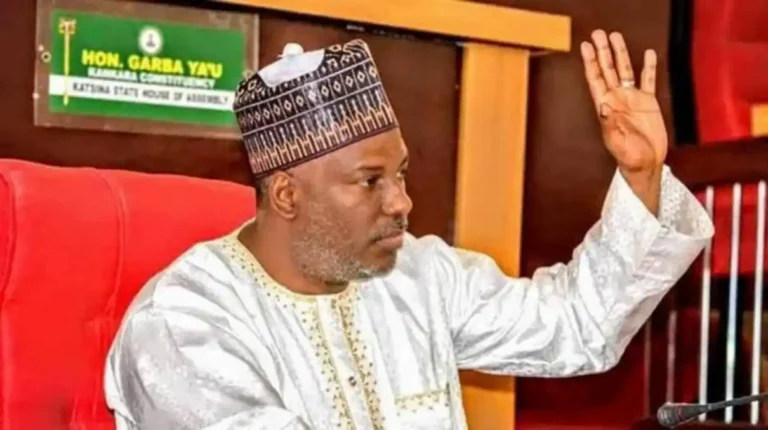
Katsina Speaker disburses ₦106m scholarships to 662 students

The Speaker of the Katsina State House of Assembly, Nasir Yahya-Daura, has disbursed scholarships worth ₦106 million to indigent students across his Daura constituency. The event took place on Thursday in Daura under the Nasiriyya Educational Programme Special Scholarship Scheme.

Governor Dikko Radda inaugurated the scholarship distribution and praised the speaker for what he described as an exceptional commitment to education and human capital development. According to the governor, the initiative reflected leadership, compassion, and dedication to uplifting young people in the state. He said the gesture aligned with the government’s ongoing reforms to widen educational access.

Mr Radda stated, “This initiative by the speaker is not just about paying school fees. It is about giving hope, opening doors, and securing the future of our children.” He added that Yahya-Daura’s action was inspiring and fit the government’s goal of ensuring no child in Katsina misses education due to lack of funds.

The governor urged beneficiaries to make good use of the support. He encouraged them to excel academically, maintain discipline, and uphold integrity. “You must use this opportunity wisely, stay focused, and become worthy ambassadors of your communities and Katsina state,” he said.

Earlier, the speaker explained that the scholarship scheme was set up to remove financial barriers, assist vulnerable families, and ensure students in his constituency do not drop out due to poverty. He said 662 students benefited during the first phase of the programme, with ₦32.7 million distributed across basic and tertiary institutions.

He noted that the distribution took place in three phases, beginning with 514 beneficiaries in September 2024, followed by 105 students in November 2024, and another 13 students added later. According to him, the total number of beneficiaries was 662 under the four-year educational intervention effort.

“The committee will return to the institutions in 2026 to commence the second cycle of payments for all beneficiaries,” Yahya-Daura said, assuring that the support would continue as planned.

FG targets $5bn CNG investment by 2027 as PiCNG confirms $2bn inflow

0

The Federal Government has attracted more than two billion dollars in investments into the Compressed Natural Gas subsector, according to the Presidential Initiative on Compressed Natural Gas and Electric Vehicles. The Executive Chairman and CEO of PiCNG, Mr Ismaeel Ahmed, revealed this in Abuja during the unveiling of CNG products by Alfa Design Nigeria Limited and an engagement session with industry stakeholders. The unveiling was attended by several dignitaries, including Malam Ali M. Ali, NAN Managing Director, Mr Mubarak Abdul, Alfa Designs Chief Operating Officer, Pankaj Bohhra from Mijo Auto Gas, PiCNG officials and other partners.

The products showcased included CNG conversion kits developed by Mijo AutoGas, a CNG cylinder manufactured by EKC International, a CNG Mother Station produced by CIMC ENRIC and an Optical Gas Imaging Camera from Opgal Optronics. Ahmed, who was represented by the Chief Compliance Officer of PiCNG, Mr Zayyanu Tambari, noted that the industry has recorded massive growth within two years. He explained that private sector investment already stands at over 1.8 billion dollars, rounded up to two billion dollars, and the initiative is now targeting five billion dollars by 2027.

“As of 2023, when this programme started, the CNG sector was virtually non-existent,” he said. “It was not really attracting any serious investment from any quarters. Today, as I speak, we have attracted over 1.8 billion dollars investments. We have rounded up to two billion dollars of private sector investment in the CNG subsector in just two years.”

He described the event as a reinforcement of rising investment and expressed confidence that the industry could reach double-digit billion-dollar inflows considering the level of private sector interest and job opportunities emerging in the ecosystem. He also disclosed that the sector has generated more than 80,000 direct jobs. With indirect jobs estimated at a one-to-four ratio, the target for 2027 stands at 300,000 direct jobs.

“We are already at 80,000 direct jobs. Again, we are reasonably confident we will meet and exceed this target,” he stated. Ahmed recalled that President Bola Tinubu launched the CNG programme in 2023 as an important part of Nigeria’s energy mix. He noted that the country had only seven conversion centres in 2023, but that number has grown to about 369 and continues to rise. The 2027 projection targets 3,000 centres, which Ahmed believes could be exceeded based on current expansion trends.

On refuelling infrastructure, he explained that the country had only 20 CNG refuelling stations in 2023, but now has more than 68 licensed facilities and over 150 others under construction in different stages. The goal for 2027 is to have between 2,000 and 2,500 CNG retail outlets nationwide.

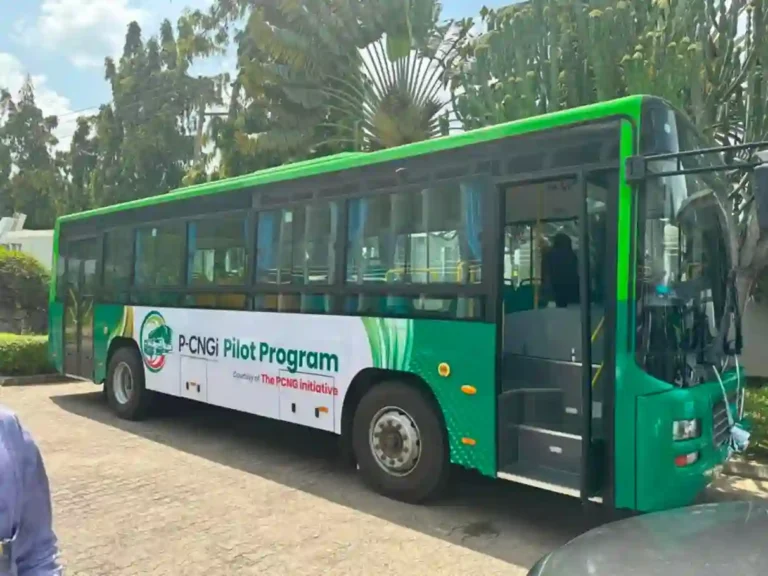
In October 2025, PiCNG also announced the rollout of 2,700 CNG-powered buses under the Presidential CNG Initiative. The buses are expected to reduce transport costs and accelerate gas adoption across the country. Officials said the development would boost demand for conversion and refuelling facilities, while strengthening investor confidence and expanding public awareness of CNG opportunities.

PIND launches ₦113m grant to upgrade 14 TVET centres in Niger Delta

0

The Foundation for Partnership Initiatives in the Niger Delta (PIND) has announced a ₦113 million TVET Facilities Upgrade Grant aimed at modernizing 14 Technical and Vocational Education and Training centers across the Niger Delta. The grant focuses on improving infrastructure, training delivery, and the long-term sustainability of institutions offering skills in ICT, Building Construction, Agriculture, and Services.

The selected centers are located in Aba in Abia State, Warri in Delta State, Port Harcourt in Rivers State, Uyo in Akwa Ibom State, and Asaba in Delta State. These hubs serve thousands of young people who are preparing for employment and enterprise opportunities. According to the foundation, the investment is designed to boost youth skills and support economic growth in communities that need practical job paths.

Speaking at the launch event, Sam Ogbemi Daibo, Executive Director of PIND Foundation, highlighted the broader value of the intervention. He said, “We are not just upgrading equipment; we are upgrading futures. This investment ensures that TVET centers can train more young people with skills demanded by today’s industries. When we strengthen institutions that train youth, we strengthen livelihoods, businesses, and the future of the Niger Delta.”

Beneficiary operators at the event welcomed the gesture, noting the impact it will bring to their training systems. A representative of a Port Harcourt-based hub stated, “This grant will allow us to modernize our workshops and increase the number of youths we train annually. For many young people, skills training is access to dignity, income, and independence. PIND’s support brings us closer to that reality.”

The program will run from September 2025 to February 2026 and is expected to directly serve more than 10,000 unemployed youth by equipping them with market-relevant skills. PIND says the upgrade will strengthen job and enterprise linkages, making it easier for graduates to secure opportunities.

As part of the launch, a strategy workshop was held with government agencies, private sector players, and development partners. Discussions focused on how to make the TVET sector more resilient, commercially viable, and better positioned to support local industries.

PIND’s new funding builds on its 2022 investment of over ₦80 million, which upgraded three TVET centers in the region and improved ICT and technical learning facilities. That earlier project increased enrollment and raised training quality for hundreds of young people, and the new ₦113 million commitment extends the foundation’s push for youth empowerment and innovation in the Niger Delta.

Tinubu Constitutes Boards for NADF, BOA and UBEC

0

President Bola Ahmed Tinubu has approved the constitution of new boards for key national institutions including the National Agricultural Development Fund (NADF), the Bank of Agriculture (BOA), and the Universal Basic Education Commission (UBEC), in what officials describe as a move to strengthen governance and development impact.

Senator Umaru Tanko Al-Makura, who was appointed in July, continues as chairman of the UBEC Board. New members appointed include Uchendu Ikechi Mbaegbulem, representing the South East, and Gift Ngo, representing the South South. Mrs Ibiwunmi Akinnola represents the South West, Dr Meiro Mandara represents the North East, Dr Abdu Imam Saulawa represents the North West, and Professor Paul Ibukun-Olu Bolorunduro represents the North Central. According to the Presidency, “The chairman and members of the board shall hold office for a term of four years in the first instance.”

In the Bank of Agriculture, President Tinubu confirmed the previously announced appointments of Muhammad Babangida as chairman and Ayo Sotinrin as managing director. He also named three executive directors and five non-executive directors drawn from Nigeria’s six geo-political zones. The executive directors include Fatima Garba from Sokoto as executive director, Corporate Services, Ka’amuna Ibrahim Khadi from Borno as executive director, Risk Management and Strategy, and Hakeem Oluwatosin Salami from Kwara as executive director, Operations.

The newly appointed non-executive directors are Aminu Malami Mohammed from the North East, Charles Amuchienwa from the South East, Oladejo Odunuga from the South West, Rabiu Idris Funtua from the North West, and Kochi Donald Iorgyer from the North Central.

In the agricultural development sector, President Tinubu has also moved to operationalise the National Agricultural Development Fund (NADF). The agency, which he previously placed under the leadership of Muhammad Abu Ibrahim as executive secretary and CEO in October 2023, is expected to support farmers and agripreneurs with affordable financing. The Presidency stated that the President has now constituted its board “in accordance with the Fund’s statute.”

Mallam Bello Maccido, pioneer chairman of FBNQuest Merchant Bank Limited, has been named chairman of the NADF board. He brings over 30 years of experience in the financial services industry and represents the North West. Other members include Dr Nelson Henry Essien, a financial consultant and seasoned banker representing Akwa Ibom and the South South, and Amina Ahmed Habib from Jigawa representing the North West. Amina is a fellow of the Institute of Chartered Accountants.

Ondo-born engineer and businessman, Akinyinka Olufela Akinnola, represents the South West, while Hassan Tanimu Musa Usman from Borno represents the North East. Usman is the founder of New Frontier Developments Ltd and a former non-executive director of Access Bank. Lufer Samson Orkar from Benue represents the North Central, and Felix Achibiri from Imo represents the South East. Achibiri is the Group Director of Genesis Energy Holdings and chairman and CEO of DFC Holdings Limited.

Sokoto, BTNL to Partner on Youth Empowerment in Digital and Green Economy

The Sokoto State Government (SOSG), through the Ministry of Innovation and Digital Economy (MIDE) led by the Honourable Commissioner, Bashar Umar Kwabo, has paid a working visit to Biofil Technology Nigeria Limited (BTNL) in Sokoto. The visit was aimed at strengthening engagement and exploring potential areas of collaboration on youth empowerment in both the digital and green economy sectors.

BTNL is a waste management company focused on converting organic and plastic waste into biogas, organic fertilizer, and eco friendly building materials. The company promotes a circular economy while supporting environmental sustainability in the state.

During the visit, the CEO and Managing Director of BTNL, Mr. Ibukun Taiwo, highlighted the company’s innovative waste to resource conversion technologies. He noted that the company’s operations align with Sokoto State’s environmental and economic development priorities. Taiwo emphasized BTNL’s role in promoting a circular economy and explained how its processes could support state initiatives for sustainability.

Also speaking, the Head of Sustainability and Innovation, Ms. Rita, expressed BTNL’s interest in partnering with MIDE on capacity building programmes. She mentioned plans focused on smart farming, renewable energy, waste data digitization, and establishing mini factories for waste conversion. According to her, these initiatives aim to equip young people in Sokoto with practical skills that can create employment and support sustainable livelihoods.

While responding, the Commissioner, Hon. Bashar Umar Kwabo, commended BTNL’s innovative work. He assured the company of the Ministry’s readiness to support programmes that advance youth empowerment, innovation and sustainable economic development. He stated that the Dr. Ahmad Aliyu led administration has continued to invest in youth training and skills development to promote sustainable livelihoods.

Hon. Kwabo further stressed that the Ministry will work to ensure smooth implementation of the partnership to strengthen the state’s digital and green economy goals. He noted that as an agrarian state, Sokoto would benefit greatly from innovations that boost agricultural productivity and environmental sustainability, complementing government efforts toward food security.

The visit was attended by officials from MIDE and the Sokoto Information and Communication Technology Development Agency (SICTDA).

Zamfara Graduates 1600 GEEP Trainees, Launches Batch B to Train 3500

0

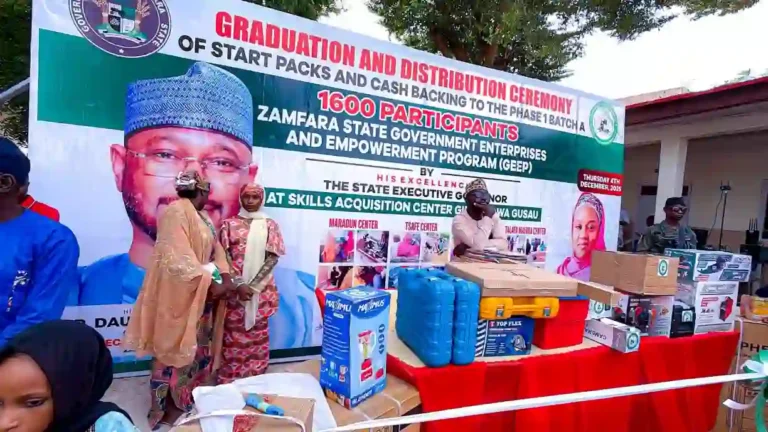
Zamfara State has graduated 1,600 trainees under the Government Enterprises and Empowerment Programme (GEEP) Skills Acquisition initiative, as Batch B preparations also begin. The event marked the completion of Phase One, Batch A of the scheme, where beneficiaries received cash grants and working tools to start their businesses. The initiative is part of President Bola Ahmed Tinubu’s Renewed Hope agenda aimed at empowering Nigerians through practical and sustainable skills.

The graduates completed three months of intensive training across 21 specialized trades, including tailoring, welding, ICT, hairdressing, and other vocational fields. Governor Dauda Lawal, accompanied by the Minister of State for Humanitarian Affairs, presented the start-up support to the trainees in Gusau. The governor said the initiative was designed to reduce unemployment and give youth practical pathways to financial independence.

“We are gathered here not just to mark the end of the training program but to witness the unfolding of a new chapter in the lives of our young citizens — one where they will contribute positively to the economic progress of our dear state. We recognize from the beginning that sustainable peace, economic revival and social harmony cannot be achieved when a large proportion of the population — especially the youth — remain without productive engagement. I encourage you to seek opportunities to network, to collaborate and to continue learning. The knowledge you have gained is just the foundation,” Governor Lawal stated.

The programme is widely seen as a key part of Zamfara’s development drive. Officials say it aligns closely with President Tinubu’s Renewed Hope policy, which emphasises inclusive growth and job creation. They also believe it will strengthen economic participation among young people and improve community livelihoods.

Sadiya Bello, the Zamfara State coordinator of GEEP, praised the beneficiaries for their commitment and emphasised that their journey symbolised resilience. “You have walked a journey that began with uncertainty but ends today with hope, purpose, and opportunity. Your presence here is a testimony of your dedication, your discipline and your desire to build a better future for yourself, your family and your communities,” she said.

She described the initiative as a major step forward in the state government’s Rescue Mission agenda. According to her, the programme seeks to help youths and women become self-reliant through skills and access to capital.

Bello noted that the training covered areas like tailoring, barbing, welding and fabrication, electrical repairs, mechanical work, and computer skills, ensuring participants could specialise according to their interests.

During her tour of Gummi and Anka communities to inspect skill acquisition centres, Bello commended trainers and urged participants to make the most of the knowledge and resources given to them. She appealed to traditional leaders, traders, women associations, and religious stakeholders to support the scheme, saying such support was necessary to reduce unemployment, fight poverty and improve small businesses in Zamfara.

A major highlight of the ceremony was the announcement of Batch B, which the governor directed to begin immediately. The new phase is expected to enroll 3,500 beneficiaries drawn from all local governments in the state. Officials say the success recorded in Batch A encouraged the government to expand the programme so more young people can be reached.

Public reaction to the selection process has been positive, with many describing it as transparent. Programme officials explained that the 1,600 Batch A graduates were chosen from wards in seven local governments, and only youth applicants were considered. Beneficiaries were given the freedom to choose trades that matched their interests, with no reported complaints throughout the selection or training period.

The GEEP programme seeks to equip youths and women with practical skills and technical knowledge to help them avoid idleness or dependence on others. It also provides working tools and post-training support so that beneficiaries can begin their businesses immediately after training. Officials emphasised that the programme creates special opportunities for women by establishing dedicated training spaces that respect local cultural and religious values, allowing them to participate freely and develop competence.

As Batch A graduates move into the business space, the government says monitoring and support will continue, while Batch B registration begins to offer similar opportunities to thousands more.

Apply for PHED Meter on MAP Online Portal

0

Port Harcourt Electricity Distribution Plc (PHED) has opened applications for its meter procurement, while warning customers to avoid cash payments to staff or installers. PHED does NOT authorize staff or installers to collect cash for meters, stressing that all payments must be made only through approved channels. Customers were urged to follow the official process “to avoid fraud.”

According to PHED, anyone requesting cash for meter services should be reported immediately. For cases of extortion, customers are to contact: 07074808130 or 07074808131.

The company explained payment options for customers applying for meters. For online payment, users are to confirm the amount and other details, then click on pay with Interswitch. After that, they are required to select pay with card, input card details, and submit. For bank payment, customers are expected to take account details from the link sent in email, make payment to the listed bank, and upload the receipt on the system.

PHED outlined the Meter Asset Provider (MAP) steps for obtaining a meter. Applicants are to visit the MAP portal and click the link labelled “click to Get yours now.” They must confirm their account or meter number and input their NIN and required details. An OTP will be sent to the registered phone number, which should be entered to continue. Applicants then fill out the MAP form and submit it.

Applicants should check their email for application details and Ticket ID or Application ID. The metering department will conduct a preliminary check to identify the meter type needed, with prices depending on phase and vendor. “If the request is successful you will receive an email for the payment process,” PHED noted.

The payment link will direct applicants to the PHED page or allow uploading of payment evidence depending on the selected MAP vendor.

Interested customers are advised to apply via https://map.phed.com.ng.

DBN launches Kaduna innovation hub after N151bn funding for MSMEs

The Development Bank of Nigeria (DBN) has announced a major shift in its innovation agenda, revealing that it has funded 260,000 youth-led Micro, Small and Medium Enterprises (MSMEs) with nearly N151 billion. The bank says this milestone highlights the potential of young entrepreneurs to transform the Nigerian economy through enterprise and innovation.

Speaking on Thursday at the launch of the DBN Innovation Hub in Kaduna, DBN Chief Economist Joseph Nnanna said the new hub was created to accelerate growth and scale ideas by offering young innovators tools, platforms, and access to funding.

He noted that every enterprise supported reflects determination and creativity. “Each of these enterprises tells a story of courage, innovation, and the power of access to finance,” he said, stressing that youth-driven ventures are the engine of Nigeria’s rising innovation economy.

The Kaduna centre is the first of six regional innovation hubs DBN plans to open across the country. According to Nnanna, the facility will act as a springboard for early-stage ventures, particularly those led by young people in the North-West region. It will provide structured incubation programmes, technical assistance, investment-readiness training, and direct links to venture capital. DBN will serve as an anchor limited partner, guiding private investors toward emerging enterprises.

Nnanna described innovation as a key driver for inclusive development and said Nigeria must respond to global economic changes by nurturing new business models. “Innovation is the next frontier of inclusive growth and Nigeria cannot afford to be left behind,” he stated.

Beyond youth funding, the Chief Economist highlighted the bank’s broader footprint in the MSME sector. He disclosed that DBN has supported more than 723,000 women-led MSMEs with N322 billion, financed over 106,000 startup enterprises with N119 billion, and trained more than 50,000 MSMEs through online and physical channels.

Nnanna reiterated that youths remain central to DBN’s focus moving forward. “Our young entrepreneurs digital, creative, and resilient are brimming with ideas that can solve real challenges if given the right platform,” he said. He added that DBN intends to make thousands more youth-led ventures investment-ready by 2028 while deepening young people’s participation in Nigeria’s innovation ecosystem. The new hub approach, developed in partnership with innovation centres, aligns with global standards while remaining locally relevant.

Calling for cooperation, Nnanna encouraged private sector actors, investors, and development partners to join DBN’s push. “Together, we can turn ideas into enterprises, enterprises into growth, and growth into shared prosperity for all Nigerians,” he said.

Representing Governor Uba Sani at the launch, Abdullahi Makarfi, Executive Director of Kaduna Enterprise Development Agency, said the State is prioritising how MSMEs can thrive by embracing ICT innovation and capacity-building. He noted that the State Enterprise and Development Agency is working to ensure finance, markets, and training are well facilitated for businesses.

According to him, MSMEs in Kaduna must now position themselves for export opportunities. “Now, MSMEs in the state must ensure that their products are export ready. What I mean export ready, I mean the MSMEs in Kaduna State should be able to sell their service or commodity or product within the country or outside the country. And that’s one of the reasons why the State government, in fact, we are the first of signing into the tech start-up law in the country,” he said.

He explained that the Kaduna tech start-up law is supported by a N250 million fund dedicated to backing MSMEs operating within the innovation hub and helping them improve operational capacity. Makarfi also confirmed the government’s willingness to collaborate with DBN as a major stakeholder in the State’s development drive.

In 2023, DBN strengthened its youth enterprise agenda through its Entrepreneurship Training Programme, which supported over 10,000 MSMEs with business skills and investment-readiness. The initiative helped young founders improve record-keeping, secure funding, and expand operations. The Kaduna hub builds on this momentum, signalling DBN’s long-term push for youth-driven economic growth.

UK initiative to train women for public procurement access in Rivers State

0

A new UK-backed initiative is drawing attention to the untapped opportunities within Nigeria’s public procurement market, a space valued at trillions of naira every year. Although the federal government has introduced many reform policies over time, slow implementation has left women-owned businesses with limited access to contracts that support local development and job growth.

Next week, the Chevening Alumni Association of Nigeria (CAAN), in partnership with civil society group DO Take Action and supported by the UK Foreign, Commonwealth & Development Office (FCDO), will host a two-day programme in Port Harcourt aimed at changing this situation. The event forms part of the Scaling Women’s Economic Empowerment through Affirmative Procurement (SWEEAP) programme, which promotes gender-responsive procurement as a tool to create jobs, improve service delivery, and strengthen economic resilience at state level.

The programme opens on 11 December with a train-the-trainers session for procurement officers, gender focal persons and civil society organisations. This workshop is expected to highlight how ministries, departments and agencies in Rivers State can adopt Gender-Responsive Budgeting (GRB) and Gender-Responsive Procurement (GRP) in their systems to increase fairness and inclusion.

The second day will include a high-level stakeholder forum bringing together government officials, policymakers, private sector leaders, development partners and women entrepreneurs. Organisers say the forum goes beyond policy conversations and is designed to build alliances capable of driving institutional reforms, attracting investment, and encouraging women-owned and women-led businesses to take advantage of public sector opportunities.

According to the UK government, the programme aligns with its evolving development strategy in Nigeria, which now prioritises strengthening institutions rather than direct financial support. “This project embodies our commitment to strengthening institutional capacity and fostering policy dialogue necessary for inclusive economic growth and gender equality,” said Oluwafunmilayo Ladepo, Chevening programme officer at the British High Commission.

CAAN president Kester Osahenye noted that the initiative shows how alumni networks can contribute to transformation. “Our goal is to strengthen the capacity of both government institutions and women-owned businesses so that gender-responsive procurement becomes a norm, not an aspiration,” he said.

Across Nigeria, women-owned businesses encounter many obstacles when trying to access public contracts. These include lack of access to bidding information, absence of certification, strict prequalification requirements and weak financial documentation. SWEEAP aims to help close this gap through targeted training and mentorship. Participants who complete the programme will graduate formally at the forum and form part of a growing pipeline of emerging suppliers equipped to compete for government opportunities.

Precious Ebere Chinonso, chief executive of DO Take Action, described the initiative as a focused effort to “break long-standing barriers that have kept women at the margins of public procurement,” adding that continuous capacity building and collaboration will be key to ensuring women are not only included but prioritised.