Home Blog Page 254

BII, FCMB launch $50m credit for northern MSMEs, women-led businesses

0

British International Investment, the United Kingdom’s development finance institution and impact investor, has partnered with First City Monument Bank to launch a $50 million credit facility aimed at boosting Micro, Small, and Medium-sized Enterprises in Nigeria. The announcement was made on Tuesday, highlighting the goal of supporting business growth while driving financial inclusion across underserved regions.

Under the agreement, BII will provide the funding to FCMB for onward lending to businesses. Seventy percent of the money will go to MSMEs in northern Nigeria, a region long seen as underserved by lenders. The remaining thirty percent will focus on strengthening women-owned businesses nationwide. This structure is designed to close long-standing financing gaps and expand opportunities for diverse entrepreneurs.

Nigeria’s MSMEs play a major role in the economy, contributing more than half of national GDP and generating over 80 percent of jobs. Yet many businesses, especially in underserved communities, struggle to access affordable capital. This partnership aims to correct that imbalance by unlocking growth in sectors like agriculture, trade and manufacturing. It also promotes innovation and improves the economic fabric of northern Nigeria by reaching business owners often excluded from mainstream financial systems.

Apart from direct lending, the initiative also includes capacity-building support and better market assessments to help businesses scale sustainably. This means the programme is not only offering money but also helping MSMEs improve their operations and identify new opportunities.

Yemisi Edun, managing director and Chief Executive Officer of FCMB, said the partnership strengthens FCMB’s mission to reach businesses that need help the most. “Our partnership with British International Investment strengthens our ability to channel resources where they matter most, deepen financial access for underserved groups, and create pathways for long-term economic participation across the country. As of September 2025, we provided over N533 billion credit lines to thousands of businesses nationwide.”

She explained that the new facility expands the bank’s lending capacity, particularly for northern Nigeria and women-led businesses. According to her, wider access to capital will support job creation and industry improvement, especially in disadvantaged communities where financial access is limited.

Jonny Baxter, British Deputy High Commissioner in Lagos, described the investment as part of a broader relationship between both countries. He said: “This investment is one of many examples of the UK’s commitment to partnering with Nigeria to drive inclusive growth and mutual prosperity. By empowering Nigerian SMEs, particularly those in underserved regions, we are not only creating jobs and driving inclusion but also strengthening the foundations for deeper UK-Nigeria trade and investment partnerships now and in the future. In addition, by supporting FCMB to innovate its approach to deploying finance, this investment will help catalyse systemic change in how SMEs are financed across Nigeria.”

Chris Chijiutomi, managing director and head of Africa at BII, said the partnership reflects BII’s priority to improve access for entrepreneurs facing financing challenges. He stated: “We are delighted to partner with FCMB to directly address long-standing barriers to financial access, empowering Nigerian entrepreneurs who have faced significant challenges in securing affordable financing. Through this investment, we are unlocking opportunities for businesses particularly in Northern Nigeria where our support is needed most. This aligns with our commitment to supporting MSMEs and women-led businesses that are key to creating jobs and accelerating inclusive prosperity across Nigeria.”

The initiative aligns with the United Nations Sustainable Development Goals 5 and 8, which focus on gender equality and decent work with economic growth. It also follows a similar effort in 2023 when United Bank for Africa worked with International Finance Corporation on a $20 million MSME facility, which expanded credit to underserved small businesses and demonstrated the positive impact of development financing partnerships in strengthening inclusion and resilience in Nigeria.

Advertisement

Moniepoint launches Moniebook to unify payments, bookkeeping for businesses

0

Nigeria’s Moniepoint Microfinance Bank, widely known for supporting small and medium-sized businesses, has unveiled Moniebook, a new all-in-one Point-of-Sale solution built to change how retail, hospitality, health, and service businesses run their daily activities. The system stands out as the first tool in the country that merges payments and bookkeeping into a single platform. It is designed for both growing small businesses and larger multi-location enterprises. With Moniebook, business owners get access to strong software supported by reliable hardware, helping them improve operations, cut delays, and make better decisions using data insights.

Moniebook allows businesses to manage inventory, monitor sales, record payments, build customer relationships, and generate reports from one dashboard. The goal is to help business owners simplify their work, eliminate errors, and increase profits. Whether it is a supermarket, pharmacy, restaurant, or boutique, the system gives users the ability to prevent stockouts, assign staff tasks, or check expiry dates of products with ease.

Speaking at the launch, Babatunde Olofin, Managing Director of Moniepoint MFB, explained the purpose behind the product. He said, “Our mission has always been to help businesses grow by giving them the tools they need to succeed. This is in strong consonance with our mantra of creating financial happiness even as we consistently power the dreams of the millions of Nigerians who have come to love and trust the brand as an enabler of progress, as businesses or as individuals. Moniebook is engineered to be a growth partner for businesses – a holistic source of truth in the hands of every entrepreneur. By providing full visibility over sales, staff, customers, and inventory in real-time, we are giving business owners the control they need to scale efficiently and securely.”

During its beta phase, more than 4,000 businesses tested Moniebook. Many of them have expressed positive feedback. One user, BBQ Chef, shared an experience using the platform: “I discovered through Moniebook that I had made over ₦2 million in my first month! It tracks my sales, manages inventory, and is so easy for my team to use. Honestly, any business not using Moniebook is missing out.”

Oluwole Adebiyi, Head of Product for Moniebook, also spoke about how the platform was developed to match real business challenges in Nigeria. He stated, “We built Moniebook with the realities of Nigerian business owners in mind, which begins with a deep understanding of their everyday challenges. For too long, small and medium-sized business owners have had to juggle multiple, disconnected tools to manage critical operations, from tracking inventory to processing payments and understanding their sales data. This complexity is a direct barrier to growth.”

Continuing, he noted, “For us, whether you’re running a supermarket, a restaurant, or multiple retail outlets, you shouldn’t have to juggle five different systems. Moniebook gives you everything in one place – fast, secure, and scalable. By simplifying the complexities of running a business, we are freeing up entrepreneurs to do what they do best: serve their customers and grow their enterprises. This is another step in our commitment to fostering a thriving business ecosystem in Nigeria.”

The system comes with several features such as inventory management for tracking stock levels, automated reordering, and expiry monitoring. Businesses can also access sales and reporting tools that give a clear view of daily performance and customer behaviour. For payments, the platform supports transactions through Moniepoint terminals and includes split payments, discounts, and credit sales options. It also enables business owners managing more than one branch to monitor all outlets through a central platform. Staff management tools allow customized access rights and role assignments to help organise employee responsibilities easily.

Moniebook is offered in two pricing plans. The Core package, meant for small operations, costs ₦6,000 per month. The Pro version, designed for enterprise-level and multi-location businesses, costs ₦8,500 per month. Users can also pay for additional registers, branches, or setup support as their businesses expand.

Interested users can sign up through moniepoint.com/ng/business/moniebook.

BOFIA Bill: Senate flags unfair pay for Nigerian social media creators

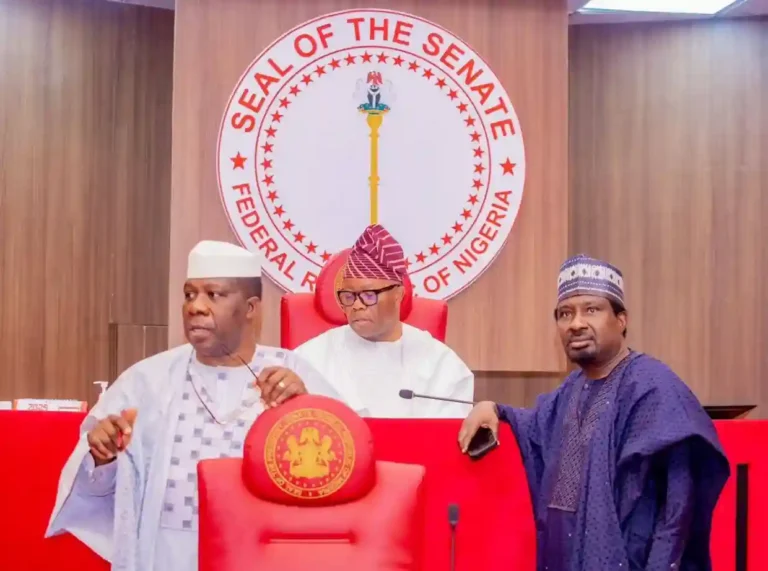
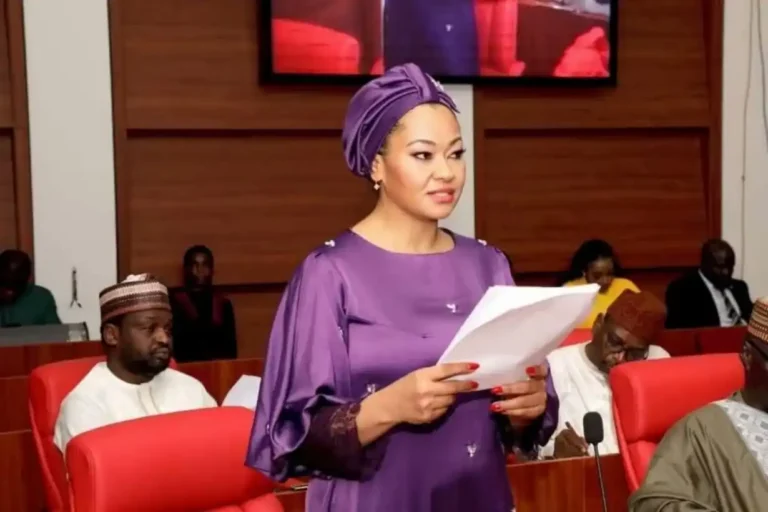
The Nigerian Senate witnessed a heated debate on Thursday during the second reading of the BOFIA Amendment Bill, 2025 (SB 959) as Senator Natasha Akpoti-Uduaghan (Kogi Central) drew attention to what she described as a quiet exploitation affecting young Nigerians earning money through social media platforms. She told lawmakers that thousands of youths who depend on digital content creation for income are being underpaid compared to their foreign counterparts, despite driving massive global traffic and engagement.

“Our youths are earning 50 cents for content that fetches 10 to 30 dollars per 1,000 views in the U.S.,” Natasha stated. “This inequality must not be ignored as we reform our financial system.” She stressed that social media has become a major source of income for young Nigerians, adding, “I’m speaking for the content creators because, trust me, social media has become a very critical source of income for our youths.”

Natasha argued that the revenue gap undermines Nigeria’s digital economy and poses challenges for financial inclusion. She urged policymakers to consider the realities of the growing online workforce while reviewing the country’s financial laws. The senator called for stronger regulatory engagement with global tech companies, saying Nigeria must demand transparency, fairness, and equitable earning structures for citizens participating in the global content economy. Her submission broadened the debate beyond technical banking reform to include the economic future of millions of Nigerians building livelihoods from digital platforms.

The bill, sponsored by Senator Tokunbo Abiru (Lagos East), seeks to update the Banks and Other Financial Institutions Act by giving the Central Bank of Nigeria power to classify large fintechs as Systemically Important Institutions. This would subject them to increased oversight. Abiru explained that fintechs and mobile-money operators have evolved into essential national infrastructure, rivaling traditional banks in transaction volume while holding vast amounts of customer data, often stored outside Nigeria.

“The law has not kept pace,” he said. “A dominant fintech can now pose as much risk as a bank.” According to him, the proposed legislation would allow the CBN to identify and supervise high-risk fintechs, create a national registry for transparency, expose beneficial ownership, improve consumer protection, safeguard data sovereignty, and close gaps observed during the CBN’s 2024 crackdown on some digital financial firms.

Abiru rejected suggestions for a new fintech regulatory body, insisting such duplication would cause confusion. He argued that global best practice supports strengthening existing institutions rather than setting up fresh agencies.

The bill has been forwarded to the Senate committee in charge, but Natasha’s intervention ensured attention now shifts to the fast-growing digital economy and the millions relying on it for income. Her submission highlighted concerns that financial reforms must reflect modern realities, especially the contributions of young Nigerians engaged in digital enterprise.

Former President of the Nigerian Labour Congress, Senator Adams Oshiomhole, also shared his personal experience with online banking risks, revealing that his accounts were once hacked through a fintech platform. He said the identities of many operators remain unknown, raising accountability concerns. “I know the directors of our regular banks, but I can’t say the same of these fintech banks,” Oshiomhole said. “I don’t know the directors of MoniePoint, Opay and all others.”

He argued that properly regulated digital institutions could better protect Nigerians, adding that an enabling legal framework would ensure online operators serve the public interest more effectively.

Senate moves to tighten fintech regulation with BOFIA amendment bill

The Senate on Thursday passed for second reading a bill aimed at overhauling the regulatory framework for Nigeria’s fast growing financial technology sector. The bill, sponsored by Senator Mukhail Adetokunbo Abiru of Lagos East and co-sponsored by members of the Senate Committee on Banking, Insurance and Other Financial Institutions, seeks amendments to the Banks and Other Financial Institutions Act (BOFIA) 2020 to allow for the designation, registration and stricter supervision of Systemically Important Institutions.

Leading the debate, Senator Abiru explained that the amendment became necessary due to the rapid evolution of technology driven financial services and emerging risks linked to big fintech operators. He highlighted that mobile money operators, payment service banks, digital lenders and switching companies now process large volumes of transactions and customer data, making them vital to commerce and financial inclusion.

Abiru stated that while BOFIA 2020 already gives the Central Bank of Nigeria the authority to identify systemically important institutions, the current law mainly focuses on traditional deposit money banks, leaving what he called a major regulatory gap.

The proposed amendment aims to empower the CBN to apply enhanced risk based supervision, establish a national registry for fintech companies, strengthen data sovereignty and improve consumer protection.

During the session, Senator Natasha Akpoti Uduaghan of Kogi Central stressed the importance of protecting Nigeria’s digital economy and young content creators. She noted the increasing role of social media as a source of employment for millions of youths and raised concerns over what she described as “a huge discrepancy” in earnings for Nigerian content creators when compared to those abroad, particularly on platforms like Facebook.

Education District II students win N2.2m at Lagos Spelling Bee

Three students from Education District II have won a combined N2.2 million at the 21st Annual Lagos State Spelling Bee Competition for secondary schools. The event, organised by the Office of Education Quality Assurance in partnership with the New Era Foundation, also produced the one-day governor and deputy governor for another year, continuing the tradition of grooming young leaders through academic excellence.

According to a statement shared with PUNCH Online by the Deputy Director of Public Affairs of OEQA, Adepeju Adeyemi, Etiyeyemonu Esther of Senior Model College, Igbokuta, Imota, emerged the overall winner. Esther received a cash prize of N1 million for her performance. Awoyemi Dorcas of Ikosi Senior Secondary School, Ikosi–Isheri, and Salami Jumai Olaide of Angus Memorial Senior High School, Somolu, received N700,000 and N500,000 as first and second runners-up.

In a goodwill message, the First Lady, Senator Oluremi Tinubu, CON, represented by the Executive Secretary of the New Era Foundation, Barr. Grace Giwa, congratulated the students and praised their character. She said, “This positive feedback reaffirms my belief that investing in education is investing in the collective future of our young learners.”

The Lagos State Commissioner for Basic and Secondary Education, Mr. Jamiu Alli-Balogun, applauded the winners and commended the standard of education in Lagos public schools. “I say it confidently anywhere, our students are the best. The results speak for themselves,” he said while recalling the school trip to Singapore as another proof of excellence.

The Head of Service, Mr. Olabode Agoro, represented by Tutor-General and Permanent Secretary of Education District I, Dr. Idowu Olufunke Oyetola, described the competition as an expression of strength and intellectual capacity. “Whether or not you go home with a trophy, you are symbols of excellence, courage, and commitment,” he stated while encouraging the participants to cherish their experience.

Tutor-General and Permanent Secretary of Education District III, Teacher Olusegun Olawale Osinaike, urged the competitors to stay humble and value sportsmanship. He said, “Every competition teaches us something valuable, and one of the greatest lessons is learning to rejoice with those who excel today,” according to the statement.

Dr. Sulaimon Ogunmuyiwa, Director of Private Education and Special Programmes at OEQA and Chairman of the Planning Committee, praised the spelling bee for going beyond word mastery and placing emphasis on preparation, focus, and confidence.

After being declared the winner, Esther described her victory as deeply personal and inspiring for other students. She said, “Winning this competition shows that hard work truly pays off. I hope my success encourages others to aim high and never give up on their dreams.”

France backs women empowerment, gender equality in Nigeria

The French Embassy in Nigeria has reaffirmed its commitment to support projects that promote gender equality, women empowerment, and other initiatives that align with France’s development priorities in the country. This was disclosed by the Ambassador of France to Nigeria, Marc Fonbaustier, during a news conference in Abuja where he highlighted the impact of ongoing programmes in partnership with the ministry of women affairs.

According to Ambassador Fonbaustier, the collaboration has generated meaningful returns by supporting Civil Society Organisations in Nigeria involved in implementing the Embassy’s 2025 projects. He explained that France’s funding focuses on key areas such as tackling gender-based violence, encouraging the socio-economic inclusion of women, and creating sustainable livelihoods for youth and vulnerable groups through advocacy and strategic partnerships.

He noted that the support given through indigenous partners was designed to ensure interventions reach the right beneficiaries. The Ambassador said an independent evaluation revealed that for every 1 Naira invested, the programme generated 4 Naira, 30 Kobo in value for women, their families, and local communities.

He described the FEF-OSC as a locally adapted model, stating, “The FEF-OSC is not an imported model but a tailored one. It is a shared ambition built on trust and mutual learning. This investment in capacity is one of the most powerful legacies, skills stay, grow, and multiply long after the funding ends.”

In stressing the programme’s success, he said its strength lay in its strong local integration. He pointed out that partner CSOs secured over 540 formal partnerships with government ministries, the private sector, and traditional rulers, helping projects to continue beyond early funding.

While sharing results achieved, the Ambassador cited a story from a Benue IDP camp where a mother of three, Judith Michael, was able to acquire fashion and design skills through the programme. He said this training placed her on a pathway to dignity and economic independence.

Speaking in connection with the 16 Days of Activism against Gender-Based Violence, Ambassador Fonbaustier said the achievements of the initiative reflect the resilience of Nigerian civil society and the “growing Franco-Nigerian friendship.” Quoting a project documentary, he added that the outlook remains positive as “E go better.”

He further explained that the initiative aligns with France’s feminist diplomacy, which promotes inclusive growth, amplifies local voices, and supports the Sustainable Development Goals SDGs.

A’ Ibom Lawmaker Launches scheme to empower 100 women traders with ₦20m

Rep. Martins Esin, Member representing Oron/Mbo/Okobo/Udung Uko/Uruoffong Oruko Federal Constituency and Chairman, House Committee on Youth Development, has announced the launch of the Oro Women Investment Scheme, OWINS. The initiative aims to boost grassroots economic development by supporting women entrepreneurs across the constituency.

According to a statement issued from his office at the National Assembly Complex, “OWINS is a targeted initiative designed to strengthen grassroots economic growth across the constituency through the empowerment of women entrepreneurs.”

The First Phase of the programme is scheduled to take place in Oron on Saturday, December 7, 2025. At the event, a total of ₦20 million will be disbursed to 100 market women and small-scale traders selected from the five LGAs. The office noted that this financial support is expected to ease business challenges and encourage more women-led enterprises.

Rep. Esin added that the new scheme aligns with his broader empowerment efforts under the RIDE agenda, which covers Represent, Inspire, Develop and Empower. These include the Oro Youth Enterprise Scheme, OYES, the Oro Students Engagement and Education Development Scheme, OSEEDs, and other initiatives aimed at advancing financial inclusion in the constituency, especially for young people and women, to create sustainable growth.

The statement was signed by Mr John Ntekim, Legislative Aide and Head, Media and Public Affairs.

Apply for Web Hub Africa manufacturing incubation program AEIF grant

1

Web Hub Africa has announced that applications are now open for its Manufacturing Incubation Program titled Empowering Youth to Drive Africa’s Economic Growth. The organisation confirmed it has been awarded the 2025 Alumni Engagement Innovation Fund (AEIF) grant to support the initiative.

According to the statement, “With this Alumni support, we’re on a mission to transform the lives of 200 young people, and women in Lagos and Uyo, taking them from innovative manufacturing ideas to shelf-ready products for local and international markets.”

The program will offer hands-on manufacturing training, regulatory compliance guidance, market access strategies, and a co-manufacturing hub for selected entrepreneurs.

Through initiatives such as the Shelf-Ready Workshop and Manufacturing Excellence Incubator, and through partnerships with global distribution platforms including Amazon and Walmart, it aims to turn homegrown ideas into viable and resilient businesses.

“A huge thank you to the Alumni Engagement Innovation Fund and the U.S. Department of State for making projects like ours possible,” the organisers added, stressing that “Your manufacturing dreams are now valid.”

Interested applicants are encouraged to apply via the form link https://docs.google.com/forms/d/1PpKIvsfhlM_isJmnToisS_y8LbELNw7sT-4RygDBiTw/viewform.

Nextgen Fellowship to Empower 25,000 Nigerians in 46 LGAs, FCT

The NEXTGEN Fellowship by Airtel and 3MTT Nigeria is set to empower 25,000 young Nigerians across 46 LGAs and the FCT, bringing world class digital skills closer to communities nationwide. According to Airtel Nigeria, “No long travel. No barriers. Just access, opportunity, and growth.”

Each selected location hosts an approved Applied Learning Centre where Fellows can walk in, learn, and gain hands on technical experience within their state.

These centres include Kinplus in Ekiti, Knots Technology in Taraba, Kano State Polytechnic ICT Centre in Kano, Brainpals C.I. of IDE Academy in Kogi, Maisoft in Zamfara, and Pan African Professional Studies in Rivers.

Others are Abia Tech Hub in Abia, BCHub in Adamawa, Wedigraf Technologies Ltd in Akwa Ibom, igHub Innovation Growth Hub in Anambra, and ForeTrust in Enugu. Also listed are CRAI in Jigawa, Code Nation in Edo, Computer Training Technology in Bauchi, Guru Innovation Hub in Cross River, and JEEF Africa in Imo.

More centres include Micotech ICT Solutions and Services in Benue, WaffiHub in Delta, Fath Tech Business Hub in Borno, Unitcom Group in the FCT, Jeif Africa in Ebonyi, Beautek Computers Nigeria Limited in Gombe, Brain Builders IT Firm in Osun, OP Innovation Hub in Imo, and KwaraTech Academy in Kwara.

The list continues with Nexus in Kaduna, Blue Sapphire Hub in Kano, Teesas Education in Lagos, Grazac in Ogun, N Tech in Ondo, Lumilab in Katsina, Ida Ibadan Digital Academy in Oyo, Quantum Innovations Hub in Rivers, and many others driving this initiative.

Haven’t applied yet for Airtel – 3MTT NextGen Fellowship? Click Here.

Akwa Ibom Governor Offers ₦50,000, Skills Training to All CBT Candidates

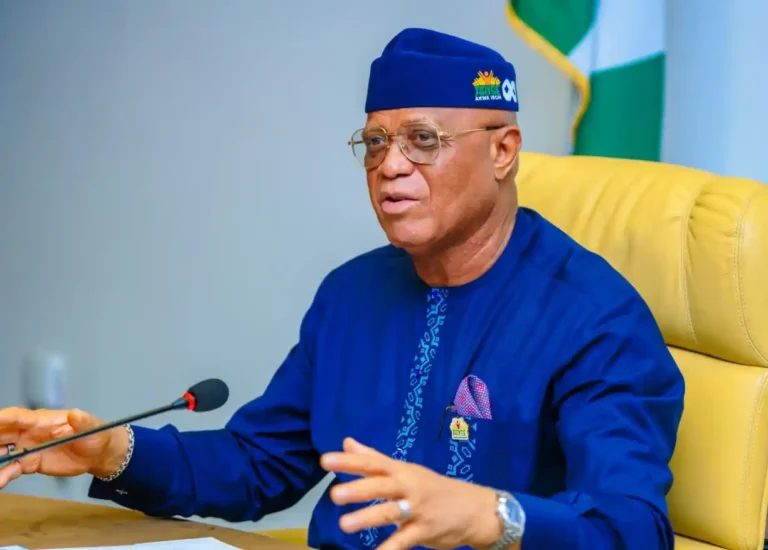
Akwa Ibom State Governor, Pastor Umo Eno, has announced a comprehensive welfare and empowerment package for the more than 33,000 applicants who sat for the State Civil Service Computer-Based Test, CBT, assuring that no candidate will be excluded regardless of performance. The Governor made this known on Thursday during a briefing at Government House, Uyo, after receiving an update on the test outcome from the Commissioner for Science and Digital Economy, Dr. Frank Ekpenyong.

Governor Eno stated that every applicant who took part in the exercise will receive a support allowance of ₦50,000 aimed at covering transport and welfare expenses. According to him, “People don’t come for interviews and walk away with nothing. Let them get the fifty thousand naira they spent on transport and lunch.”

To address unemployment among unsuccessful candidates, the Governor disclosed that those who did not meet the cut-off score will be enrolled into the Dakkada Skills Acquisition Programme. He explained that while the state cannot employ everyone, various ongoing projects across Akwa Ibom require skilled manpower, making vocational training a pathway for income and sustainability.

For the 12,000 candidates who scored between 50 and 90 percent, Governor Eno confirmed that oral interviews will take place between January and February. He ordered the immediate establishment of a committee to handle scrutiny and interview processes to ensure transparency.

A total of 4,000 successful applicants are expected to receive employment letters by the first week of March, followed by compulsory induction and training. The Governor further directed the creation of a database for the remaining successful applicants to be considered for future job openings within the next two to three years. “We need four thousand now. Next time we need one thousand, we simply select from this database. So, there is hope,” he emphasized.

In his presentation earlier, Dr. Ekpenyong said that 12,500 candidates passed the CBT, with 5,257 scoring very good excellent marks, far exceeding the 4,000 vacancies available.

He disclosed that Persons with Disabilities were given a dedicated one hour to write the test instead of the standard 40 minutes. However, only one PWD candidate scored up to 60 percent, while two exceptional candidates from the general pool achieved 90 percent of the total score.