Home Blog Page 257

SEC to Launch USSD and Audio Services at Capital Market Meeting

0

The Securities and Exchange Commission has announced plans to unveil two new products, a USSD Service and ISS Audio, aimed at making information more accessible and improving investor engagement in Nigeria’s capital market. In a statement released on Wednesday, the Commission confirmed that the launch will take place during the Capital Market Committee meeting scheduled for next Monday at the Federal Palace Hotel in Victoria Island, Lagos.

According to the SEC, the upcoming CMC meeting will focus on major issues affecting the growth and sustainability of Nigeria’s capital market. The statement noted that discussions will examine “global macroeconomic dynamics and their transmission effects on domestic financial markets,” as well as the need to strengthen cross-border financial integration within Africa.

The Commission explained that other important topics include unlocking pension fund investments, improving market liquidity, and encouraging innovation through targeted regulatory reforms. It added that a major part of the programme will review the progress of the Capital Market Master Plan. The SEC said this will include a detailed look at achievements so far and “the formal sunset of the 2025 CMMP, alongside the articulation of a strategic framework for the 2030 CMMP Plan.”

The agenda will also feature an analytical session on Nigeria’s recent tax reform legislation and how it affects market efficiency and investor confidence. The SEC noted that “collectively, these discourses and initiatives underscore the strategic resolve to reposition the Nigerian capital market as a catalyst for inclusive and sustainable economic growth, consistent with national development objectives and global best practices.”

The CMC is made up of the SEC, market operators, trade groups, and other stakeholders. It serves as an important platform for discussions, idea sharing, and resolving challenges affecting market development. The committee was created to enable industry participants to exchange views and provide feedback to the SEC for continuous improvement of market operations and regulation.

The upcoming meeting is expected to attract CEOs from all registered market firms, including brokers and dealers, investment advisers, custodians, fund managers, and portfolio managers. The Commission believes the event will help shape future policies for strengthening Nigeria’s capital market.

Advertisement

Safana Council Empowers 1,322 Residents with Cash and Vehicles in Katsina

0

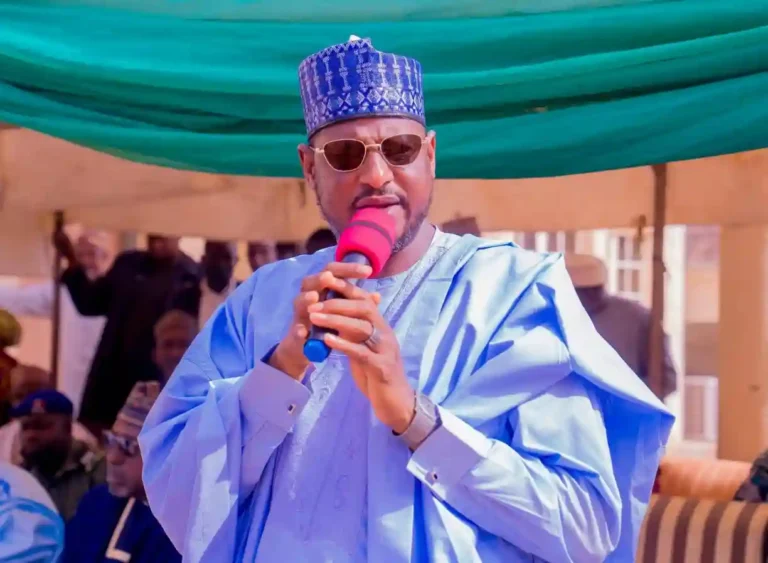
Katsina State Governor, Malam Dikko Umaru Radda, has praised Safana Local Government Council for what he described as the most impactful empowerment programme he has witnessed since engaging with councils across the state. The Governor applauded the Executive Chairman, Hon. Abdullahi Sani Brazil, noting that his leadership reflects commitment to grassroots transformation and real service delivery. He said the initiative was “the best and most far-reaching empowerment initiative” carried out under local government autonomy.

Hon. Brazil explained that the empowerment programme featured the distribution of 100 sewing machines, 100 grinding machines, 100 noodle machines, 100 Buje-Buje grinding machines, 50 motorcycles, 10 vehicles, one council bus, 100 power tillers and one vehicle designated for the APC Local Government Chairman. The council also distributed 100 bags of flour and provided 60 tricycles to persons with disabilities. In addition to equipment, cash empowerment of fifty thousand naira each was given to 101 women and 101 youths. Another fifty thousand naira each went to 101 vulnerable persons, while 297 Local Government and Ward EXCO members also received fifty thousand naira each.

Governor Radda said the broad distribution showed a deliberate plan to support local enterprise, uplift households and stimulate economic activities. He noted that ordinary residents benefited directly, with 1,322 beneficiaries recorded. According to him, “This is what local government autonomy is meant to achieve—development that starts from the grassroots and directly transforms the lives of ordinary people. What Safana has done today is outstanding and stands as the most expansive empowerment programme I have witnessed since beginning my local government engagements.”

He added that his administration would continue to deepen empowerment programmes, promote self-reliance and invest in initiatives that help youths, women and vulnerable groups in Katsina State. Earlier, the Governor paid a courtesy visit to the District Head of Safana, Alhaji Sada Rufa’i, Yariman Katsina, meeting ward heads and traditional leaders. He highlighted the role of traditional institutions in governance, peacebuilding and development. The Governor also held discussions with Safana stakeholders, including community leaders, party officials, youth groups, women associations and organisations, where achievements were reviewed and feedback gathered to build stronger development strategies.

Governor Radda was accompanied by top officials and political leaders such as the Speaker of the Katsina State House of Assembly, Rt. Hon. Nasir Yahaya Daura, Senator representing Katsina Central, Senator Abdulaziz Musa Yar’adua, and the Member representing Batsari/Safana/Danmusa Federal Constituency, Hon. Aliyu Ilyasu Ruma. Former Member representing Danmusa/Safana/Batsari, Hon. Ahmed Dayyabu Safana, was also present. Other dignitaries included the Member representing Mashi/Dutsi Federal Constituency, Hon. Salisu Yusuf Majigiri, APC National Legal Adviser, Barr. Murtala Aliyu Kankia, Chief of Staff Abdulkadir Mamman Nasir, Principal Private Secretary Abdullahi Aliyu Turaji and Chairman of the Katsina State APC, Alhaji Sani JB Daura. Members of the Katsina State Executive Council were also in attendance.

Oluremi Tinubu Empowers 250 Edo Persons with Disabilities with N200,000 Grants

The Edo State Government has empowered 250 Persons with Disabilities (PWDs) with cash grants of N200,000 each through the Office of the First Lady, under the Renewed Hope Initiative (RHI) championed by the First Lady of the Federal Republic of Nigeria, Sen. Oluremi Tinubu. The empowerment was carried out in Benin City as part of activities marking the International Day of Persons with Disabilities, reflecting efforts to promote inclusion and support vulnerable groups.

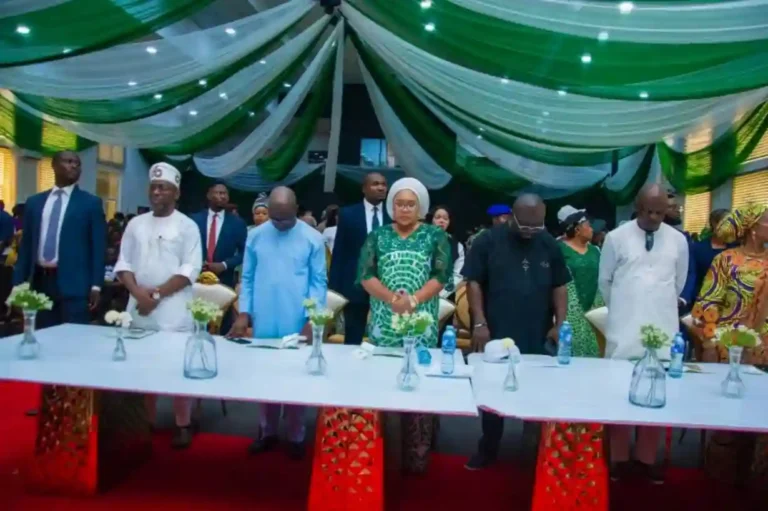
At the event held at the New Festival Hall of the Government House, the Executive Governor of Edo State, Sen. Monday Okpebholo, reiterated the importance of supporting PWDs and called for an end to discrimination. He described them as God’s creation who deserve care and equal opportunities. The Governor further announced the donation of a bus to the Community to strengthen mobility and welfare support, stressing that the government remains dedicated to improving the lives of disadvantaged populations.

In her address delivered by the Coordinator, Office of the Edo State First Lady and State Coordinator of the Renewed Hope Initiative, Mrs. Edesili Okpebholo Anani, Sen. Tinubu revealed that the programme was launched simultaneously across all states and the Federal Capital Territory. She explained that the initiative involves grants for 9,500 individuals nationwide to boost small businesses, aligned with President Bola Tinubu’s economic vision.

According to her, the aim is to promote economic independence and support vulnerable citizens, especially on the International Day of People Living with Disabilities. She stated, Our social investment programmes have provided financial and material supports to victims of flood, communal clashes, and disaster, as well as to the elderly, widows, and the orphans of our fallen heroes. She added that food assistance has been delivered to 22 states and the FCT, including internally displaced persons and vulnerable communities. She emphasized that RHI remains committed to uplifting lives and restoring hope.

Sen. Tinubu noted that the RHI Governing Board has now designated economic empowerment for PWDs as an annual activity to be held every 3rd of December. She encouraged beneficiaries to use the grants responsibly, grow their enterprises, and support their households.

Mrs. Anani urged government officials to consider PWDs in areas of employment, education, and infrastructure development, stressing their strengths and potential. She expressed concern over sexual assault and gender-based violence against persons with disabilities, calling for better care systems, accessible healthcare, and communication support tailored to their needs.

Secretary to the State Government, Barr. Umar Musa Ikhilor, reaffirmed that the government is committed to inclusion. He supported the establishment of a commission for PWDs, noting that the administration of Sen. Okpebholo intends to improve welfare and bring PWDs into mainstream governance.

The Executive Director of the Network for the Advancement of Persons with Visible Disabilities (NAPVID), Melody Omosah Esq., commended the Governor for prioritising the establishment and sustainability of the Commission for PWDs and integrating them into government programmes. He said this empowerment marked the first major direct engagement between the government and the disability community.

Barr. Omosah stressed the resilience and capability of PWDs. He highlighted their desire for opportunities, education, and a fair system that allows them to contribute meaningfully. He explained that they should be defined by their capabilities and not their disabilities, calling for stakeholders to value dignity, competence, and the contributions of PWDs to social development.

Some beneficiaries expressed gratitude, including Mrs. Glory Inegbenehi, a visually impaired teacher and widow from Idia College in Benin City. She promised to invest the support in profitable ventures instead of wasteful spending, describing the gesture as timely and impactful for her business plans.

Katsina Governor launches Kurfi LGA empowerment for 3,445 residents

0

Katsina State Governor, Malam Dikko Umaru Radda, received a massive reception in Kurfi Local Government Area as he launched a wide empowerment programme designed to support thousands of residents. The event drew community members, local leaders, and political figures who hailed the initiative as a major boost to grassroots development. Governor Radda praised the people of Kurfi for their loyalty and hospitality, stressing that their unwavering support continues to strengthen the relationship between government and the community.

“Kurfi has given us a very warm reception. We appreciate this,” the Governor said. “During the campaign, we came here seeking your votes, and by Allah’s will, you gave us your mandate. Now that we have spent almost two and a half years in office, we felt it necessary to return to the people who supported us.” He reminded residents that his administration is focused on touching every ward, adding that the impressive turnout reflects the confidence people have in government programmes.

The empowerment project was organised under the leadership of the Executive Chairman of Kurfi Local Government, Hon. Babangida Abdullahi Kurfi, and is part of the 2025 Business Empowerment Programme. The distribution included an extensive list of support items for youths, women, community leaders, government workers, and vulnerable households. Five Peugeot 206 vehicles were presented to selected councillors, while two modern health vehicles were allocated to General Hospital Kurfi and CHC Kurfi. Another 100 vehicles were shared among supervisory councillors, L.E.A staff, the Office of the Judge, E-Birth Registrars, NUT members, health workers, NULGE officials, APC chairmen, and youths.

The programme further provided 1,000 bicycles for Rumfa members and LGA staff, 1,000 pasta machines, 1,000 bags of foodstuff for women, and 250 sewing bicycles for women leaders and youths. Small business operators such as tea vendors and food sellers received 1,000 packs of noodles and 1,000 crates of eggs. Cash support ranging from ₦150 to ₦4,000 was also shared among beneficiaries. Overall, 3,445 residents of Kurfi Local Government Area are expected to benefit from the initiative.

Governor Radda also acknowledged the contributions of the Executive Secretary of the Katsina State Scholarship Board, Dr. Aminu Tsaari, who supported schools and pupils in the LGA with 5,000 exercise books, 200 cartons of chalk, 50 school uniforms, 50 pairs of sandals with socks, and ₦1.5 million. The Governor used the platform to highlight the achievements of his administration state-wide. “In Katsina today, we have executed projects in every one of the 361 wards. There is no polling unit that has not felt the presence of government,” he said.

He commended Hon. Babangida Abdullahi Kurfi for aligning local government priorities with state development strategies and ensuring no resident is left behind. “The Chairman is following our example. He has not left anyone behind in Kurfi’s empowerment programmes,” he said. Radda encouraged the community to remain united and cooperative, as this would attract more development to the area.

The Governor explained that his visit was aimed at interacting with district heads, ward leaders, stakeholders, political party executives, business groups, and organisations in order to deepen grassroots engagement and listen to local concerns. Responding to appeals from traditional and community leaders, Governor Radda gave several assurances. He confirmed that Kurfi is among the frontline beneficiaries of the Zobe Water Project. “Very soon, you will begin to enjoy this service,” he said.

On the Birchi–Wurma 7km road project, he revealed discussions with federal representatives. “I have discussed it with your member at the National Assembly. He has promised to include it in the 2026 Federal Constituency Projects. Insha Allah, it will take off next year,” he stated. He added that rehabilitation of the Mai Mani Dam is expected to commence by February, noting that it is already included in government plans. He also disclosed that several locally developed proposals have been handed over to the LGA Chairman for implementation.

Governor Radda described Kurfi as “a centre of education, blessed with prominent personalities and respected community leaders across Nigeria,” and expressed sympathy over past insecurity challenges. “We sympathize with the people of Kurfi over the security challenges you have faced. We have worked hard to stabilize these areas, and we will continue to do more,” he said.

Former Katsina Central Senator and Chairman of the Kurfi Stakeholders’ Forum, Senator Abdullahi Kabir Barkiya, praised the Governor’s visit as “a mark of respect and solidarity” and applauded developmental efforts across the state. “We want to assure His Excellency that the people of Kurfi are fully behind him at every stage. We have seen real change here,” he said.

In his welcome address, Hon. Abdullahi Babangida Kurfi thanked the Governor for his mentorship, recalling his entry into politics. “I thank His Excellency, the Governor, who brought me into politics barely six months ago,” he said. He explained that the Governor’s trust in local government autonomy allowed Kurfi to empower residents. He reaffirmed community loyalty and prayed for lasting peace. “We support you wholeheartedly, and we pray to Allah to bring an end to insecurity in Katsina State and Nigeria at large,” he said.

The Governor was accompanied by key political figures, including the Speaker of the Katsina State House of Assembly, Hon Nasir Yahya Daura, Senator Abdulaziz Musa Yar’adua, Former Governor Barrister Ibrahim Shehu Shema, Member representing Dutsinma/Kurfi Federal Constituency Hon Aminu Balele Dan Arewà, and Member representing Dutsi/Mashi Federal Constituency Hon Yusuf Majigiri. Also present were the Chief of Staff Abdulkadir Mamman Nasir, Principal Private Secretary Abdullahi Aliyu Turaji, and members of the Katsina State Executive Council, among other dignitaries.

FG Pays Cash Transfers to 8.3m Nigerians as CSOs Launch Monitoring Report

The Federal Government has disbursed cash transfers to over 8.3 million vulnerable Nigerians under the National Social Safety Net Programme as civil society organisations released the 2025 monitoring report on how the intervention is being implemented across states. This disclosure was made on Thursday in Abuja during the official launch of the Third Party Monitoring report, which reviewed progress, challenges, and impacts of the programme across communities where beneficiaries reside.

Speaking at the event, the National Grievance Redress Mechanism Manager, Ichado Eleojo, explained that only individuals verified and captured in the National Social Register are eligible to receive payments. She said the register is managed and mined by the National Social Safety Net Coordinating Office, which ensures that only genuine beneficiaries are recognised.

According to Eleojo, “What we do is we try to facilitate payments to already targeted beneficiaries that have been validated into our data from the National Social Register. This National Social Register comes from NASSCO, they do all the mining and everything.”

Eleojo stressed that payments are now strictly tied to the National Identification Number as part of efforts to improve transparency and accountability in the system. She stated, “So when the data comes, we validate that it goes with our NIN because now we have to use the NIN of beneficiaries to pay them for transparency and accountability. So when everything has been confirmed and all the approvals have been done, then payment is made to the respective beneficiaries.”

She revealed that President Bola Ahmed Tinubu approved an increase in the value of the cash transfers, which were previously pegged at N10,000 but now stand at N25,000 paid in three cycles. She said beneficiaries now receive a total of N75,000 in three installments.

According to her, “Thanks to our President, His Excellency Bola Ahmed Tinubu. Initially, it was N10,000 but now he has moved it up to N25,000 which is paid three times, so a beneficiary gets N75,000 three times. Once the beneficiary gets N75,000, that is all for that beneficiary. So far, we have paid up to 8.3 million beneficiaries.”

Eleojo also noted that the programme has been expanded beyond its initial target due to economic shocks caused by fuel subsidy removal and COVID-19. Before now, the goal was to reach 10 million people, but the government has increased coverage to 15 million beneficiaries. She added that the programme’s monitoring and grievance redress system remains active nationwide. “We have the Monitoring and Evaluation Unit, we have payment officers. You know, at the cash transfer, it is not just a payment, there are other officers who run it to be sure that everything falls into place. So from time to time there are monitoring activities, when grievances come, there are grievance officers to manage them at the state level, at the LGA level and we have officers that are ready to redress and resolve the grievances. So we monitor them, we get their feedback, we know where they are because we have their data.”

Also speaking, Lead Consultant of Muryar Fulani Peace Initiative Network, Hassan Ibrahim, said the monitoring work has shown real impact, especially among women in northern states such as Kano, Jigawa, and Katsina. He explained that despite the amount being less than N100,000, beneficiaries are pooling funds to start small businesses like petty trading and food processing.

Ibrahim said, “To be honest, though the amount received is less than 100,000, you can see that some of the women are pulling resources together to start small businesses, like food processing, like petty trading. And some were able to offset very important expenses, the medical bills with the grant. The cash transfer is really touching lives, and it’s making an impact within the part of the country where we covered. That is Katsina, Kano, and Jigawa states.”

He recommended that the government further review the cash amount in line with rising inflation. “Considering the inflation rate, I would strongly advise that the government should increase the amount. You should consider reviewing the amount upwards. Instead of less than 100,000, let the households get close to 100,000. That will help a lot.”

Senior Monitoring, Evaluation, Research and Learning Officer at the Foundation for Resilient Empowerment and Development, Amina Danjuma, said the field assessment confirmed that beneficiaries are receiving support as intended.

She said, “This assessment was very necessary. So far, we have gone into the communities to ensure that the ultimate objective, which was to ensure accountability of this project, was met. And we didn’t meet directly with the beneficiaries to ensure that what this whole coordinating the National Safety Net Coordinating Office set out to is actually achieving, which is to ensure that the vulnerable population is being served and given, like, some kind of level of cushion effect to manage their hardship in the country.”

She added that the feedback gathered during monitoring was mostly positive. “And so far, from what we’ve seen, from what we assessed, indeed, the beneficiaries did give positive feedback. They are happy about their experiences, that they’re being supported by the government of Nigeria, and even though they hope for more. So, yes, the objective is being met, and hopefully we will do better than as a country generally,” she noted.

Gender and Communications Lead at the International Climate Change Development Initiative, Oloruntobi Adejare, said the launch of the report reflects renewed government focus on supporting citizens hit by economic hardship. According to her, “This event is about the renewed agenda of cash transfer, ensuring that Nigerians who do not have the wherewithal to survive in Nigeria, have the means being supported by the government, one way or the other, to alleviate the present situation of the country.”

She explained that multiple civil society organisations were commissioned nationwide to serve as third-party monitors. “Several CSOs were put together and they were taken to different states to carry out this project. The report of that project being done by all the CSOs is what we have launched today.”

Adejare noted that ICCDI acted as an independent monitoring body for the programme. “ICCDI has acted as a third-party monitor on this project, monitoring the activities of all the CSOs worldwide. We are launching that project today, which is what we just did. The report is an activity of everything that has been carried out by all the different CSOs across several states.”

She highlighted implementation challenges, including distrust among residents and security concerns. “We look forward to going into other states. Some of the challenges we encountered were people not trusting the process and wanting to participate, but along the way, we were able to get them to come on board with the programme. Also, some of the places where we encountered security challenges due to the current insecurity happening in the country, we tried as much as possible to work with locals so that we were able to reach some of these places.”

According to Adejare, inclusivity was prioritised regardless of disability or gender. “Our major findings were that there were people who were indisposed, people physically challenged who could not reach some of these places. We tried as much as possible to make the process very inclusive. We tried as much as possible also to have more women on board and persons living with disability on board to ensure that the exercise got to everyone. As I said earlier, security challenges were encountered. Working with the locals and the chiefs, we were able to sum up some of these challenges.”

The National Social Safety Net Programme is one of Nigeria’s largest poverty alleviation initiatives aimed at cushioning the impact of inflation, fuel subsidy removal, and the economic effects of COVID-19. It is coordinated by NASCO and targets poor households captured in the National Social Register across the 36 states and the Federal Capital Territory. The programme includes conditional and unconditional cash transfers to help vulnerable Nigerians meet basic needs, improve household income and build resilience against hardship.

Apply for ValueJet 2026 Graduate Trainee Programme

0

ValueJet Airlines has opened applications for its Graduate Trainee Programme 2026, giving young Nigerian graduates an opportunity to begin a career in aviation. The airline, founded in 2018, is a team of dedicated and passionate people committed to offering modern air travel backed by technology. It operates flights to Lagos, Abuja, Port Harcourt, Yola, Benin, Asaba, Kano and Jos, and also provides charter services.

According to the announcement, the programme seeks “motivated, numerically inclined and ambitious graduates ready to gain hands-on experience and professional exposure across key organizational projects.” Graduates from any discipline can apply as long as they have strong problem-solving and organisational skills and are willing to work in a collaborative team environment.

An added advantage includes internship or project experience related to business operations and familiarity with tools such as Power BI or Tableau. ValueJet said the programme offers “structured training and mentorship,” with exposure to real projects and interaction with cross-functional teams. It also promises career growth and professional development opportunities for successful trainees.

The airline’s vision is to be a global airline connecting people and places, and the graduate intake forms part of this long-term plan to build a skilled workforce.

The application closing date is 31st December 2025.

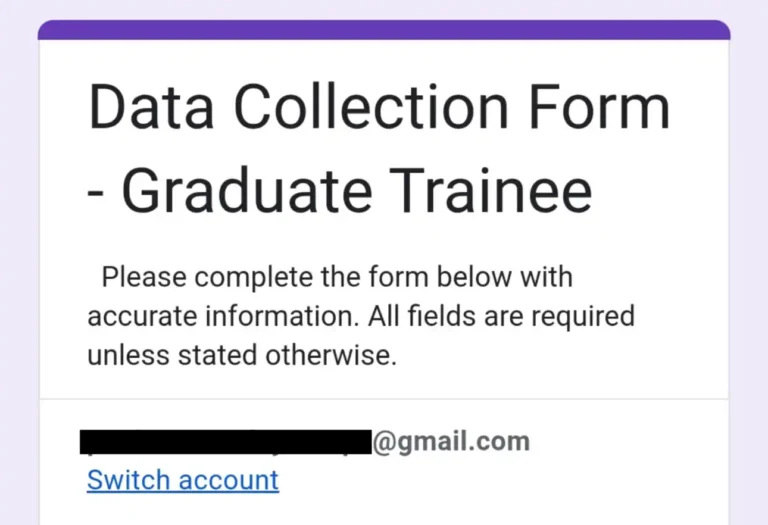
Interested and qualified candidates are required to apply via the link provided at docs.google.com/forms/d/e/1FAIpQLScOHuEojTPKDnMaOp_P29FAfQoAJfy-k7oCX2Gk1YEQp51YVw/viewform.

TETFund, UNDP partner to equip 500,000 students with innovation skills

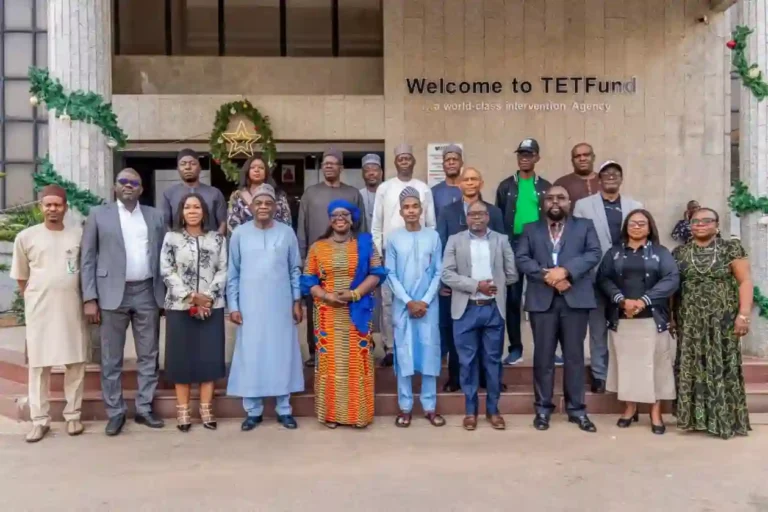
The Tertiary Education Trust Fund and the United Nations Development Programme have signed a five-year Memorandum of Understanding that will equip more than 500,000 students and researchers with digital and innovation skills, support up to 2,000 university-linked startups and commercialise 5,000 research outputs. The agreement is expected to reshape Nigeria’s tertiary education system and drive the country’s transition into an innovation-powered and knowledge-based economy.

The MoU focuses on building and expanding innovation hubs across universities and polytechnics so that higher institutions become stronger centres for research commercialisation, job creation, entrepreneurship and technological growth. Both institutions said the partnership aims to position Nigerian universities and polytechnics at the heart of Africa’s emerging digital economy.

Speaking at the signing ceremony in Abuja, the UNDP Resident Representative in Nigeria, Mrs. Elsie Attafuah, described the collaboration as “a defining moment” for Nigeria’s journey toward becoming an innovation-driven and knowledge-powered economy. She explained that the MoU was the result of months of joint consultation and co-creation, which produced the National Innovation and Digital Transformation Partnership Programme designed to strengthen the role of universities and polytechnics as engines of inclusive growth and economic competitiveness.

Attafuah pointed to some early achievements under the partnership, including the Emerging Mining Tech Unipod at Nasarawa State University, Keffi, and the Artificial Intelligence Unipod at the University of Lagos. She said these facilities are state-of-the-art hubs created to drive mineral value addition, advanced geoscience, clean energy innovation, artificial intelligence applications and next-generation skills development. According to her, “These are not isolated projects. They belong to the first cohort of eight university innovation ports and one polytechnic port ready for full activation, from Borno to Benue, Abia to Akwa Ibom, all aligned with Nigeria’s economic priorities.”

She explained that the Unipods are “purpose-built innovation engines” designed to accelerate research-to-market pathways, link innovators with industry and investors, and transform universities into full innovation ecosystems capable of producing enterprises, jobs and national competitiveness. Attafuah noted that the strength of the partnership lies in TETFund’s nationwide institutional network and UNDP’s continental innovation assets, including the prestigious Timbuktu Pan-African Innovation Initiative. “This partnership does more than formalize cooperation; it places Nigerian universities and polytechnics at the heart of Africa’s innovation future,” she added.

Attafuah praised TETFund’s long-standing support for Nigeria’s tertiary education system. She stated, “Its investments have strengthened infrastructure, expanded research, and supported thousands of scholars. UNDP is honoured to partner with you in this next phase—one focused deliberately on innovation, digital transformation, and the knowledge economy.”

On his part, TETFund’s Executive Secretary, Arc. Sonny Echono, described the signing as a “momentous day” that aligns with the Fund’s mission to overhaul curriculum delivery and provide young Nigerians with the skills required for the future global economy.

He said TETFund had long recognised the need to prepare Nigerian youths for emerging global opportunities, especially as demographic trends project that nations like Nigeria will supply a significant share of the world’s future workforce. “To fill that gap, we must prepare our youth adequately. That is why we are replicating innovation hubs on our campuses and now scaling them up significantly,” he said.

Echono disclosed that TETFund has tripled its allocation for innovation hubs in the 2025 intervention cycle and is working to ensure that the facilities are properly integrated into academic activities and aligned with national and community development priorities.

He expressed confidence that working with UNDP, an organisation with global credibility, would accelerate learning, improve programme design and expand the impact of innovation centres across higher institutions. “This partnership will make our growth faster, our systems stronger and our institutions more relevant to the communities they serve. It is a critical pillar in delivering on President Bola Ahmed Tinubu’s transformation agenda for the sector,” he said.

In a joint statement issued earlier by the UNDP Public Engagement, Outreach and Partnerships Lead, Ms. Christabel Chanda Ginsberg, and the Director of Corporate Affairs at TETFund, Mr. Abdulmumin Oniyangi, both organisations reaffirmed their commitment to empowering Nigerian institutions, nurturing young innovators and transforming ideas into enterprises capable of generating jobs, prosperity and hope. The statement said Nigeria is entering an important decade in which innovation, digital capability and knowledge ecosystems will be central to economic competitiveness.

According to the statement, “Building on decades of investment in research infrastructure and academic talent, the TETFund–UNDP partnership marks a major step toward transforming tertiary institutions into hubs of creativity, frontier technology adoption, and inclusive economic growth.” It added that the partnership will operate through the National Innovation and Digital Transformation Partnership Programme, which will serve as a joint engine for programming, co-investment, technical collaboration and ecosystem coordination.

The statement revealed that both organisations will focus on five strategic areas which include institutionalising innovation across tertiary institutions, enhancing Nigeria’s human capital base for transformative innovation, accelerating research commercialisation and frontier technology adoption, scaling access to sustainable financing for innovation, and strengthening evidence, policy, governance, and impact systems.

Under the partnership, UNDP and TETFund aim to activate eight university innovation pods and one polytechnic pod, upgrade more than nine existing innovation facilities funded by TETFund, and establish or strengthen up to 20 Technology Transfer Offices. The programme also includes equipping more than 500,000 students and researchers with digital and innovation skills and supporting up to 2,000 university-linked startups while commercialising 5,000 research outputs.

A’ Ibom Approves Interview, ₦50,000 Allowance for 12,502 Civil Service Applicants

Akwa Ibom State has moved to the next phase of its civil service recruitment as Governor Umo Eno approved that 12,502 candidates who scored above 50 percent in the Computer-Based Test will face oral interviews. He also approved a transport and lunch allowance of ₦50,000 for each of the 33,461 applicants who participated in the screening exercise.

The directive was issued when the Governor received the official report of the recruitment process from the committee overseeing the exercise. The team included the Head of Civil Service, the Commissioner for Digital Economy, the Chairman of the State Civil Service Commission, and the Rector of the Dakkada Skills Acquisition Centre, among others.

Governor Eno asked the committee to begin oral interviews in January 2026 to ensure the recruitment continues without delay. He also instructed the Head of Civil Service, Mrs. Elsie Anietie Peters, to put necessary arrangements in place for the induction of newly employed safety officers and lawyers.

He further ordered that full safety audits be carried out across Ministries, Departments and Agencies, and other public facilities to provide essential safety equipment for citizens. According to him, this will strengthen workplace protection and improve service delivery.

The Governor praised the committee for being diligent, transparent, and committed to a credible exercise, saying it reflects equal opportunity for all applicants. He encouraged them to maintain the same level of dedication as the process enters the next phase.

Presenting the report, the Commissioner for Digital Economy, Dr. Frank Ekpenyong, revealed that 37,314 people applied, 33,461 participated in the CBT screening, and 12,502 candidates met the 50 percent benchmark and above. His announcement highlighted the size of the exercise and the commitment required to manage it effectively.

In separate remarks, Mrs. Elsie Peters, Mrs. Ekerebong Umoh, who is Chairman of the State Civil Service Commission, and Prof. Enoidem Usoro, the Rector of the Skills Acquisition Centre, expressed gratitude to the Governor for the opportunity to serve. They praised him for insisting on a fair and merit-based process and confirmed their readiness to keep delivering on his vision.

Those present at the report presentation included the Executive Assistant and Chief Delivery Advisor to the Governor, Mr. Aniefiok Johnson; the Attorney-General and Commissioner for Justice, Uko Udom (SAN); the Commissioner for Information, Rt. Hon. Aniekan Umanah; the Commissioner for Finance, Mr. Emem Almond Bob; the Commissioner for Tourism, Dr. Anietie Udofia; and the Managing Director of the Akwa Ibom Investment Corporation, Pastor ImohAbasi Jacob.

Adamawa Trains 63 Graduates in Cosmetology and Home Technology

0

Adamawa state has trained 63 graduates, including women and youths, in cosmetology and home technology as part of its empowerment programme. Hamman Gatugel, the commissioner for entrepreneurship development, disclosed this in Yola while presenting start-up kits to the beneficiaries after their four-day training.

He explained that the initiative was a major step toward promoting creativity, resilience and economic empowerment. According to him, “The programme is designed as part of the ministry’s mandate to equip youths and women with market-driven skills that promote self-reliance, wealth creation, and sustainable livelihoods.” He noted that cosmetology and home technology remain fast-growing sectors in micro-enterprise development, adding that the skills acquired would help beneficiaries generate daily income and support their families.

Mr Gatugel congratulated the trainees and urged them to apply their skills productively, saying their knowledge would contribute to the growth and prosperity of Adamawa and Nigeria. He also commended Governor Ahmadu Fintiri for supporting various women and youth empowerment programmes.

In his remarks, Michael Zira, director-general of the Poverty Alleviation and Wealth Creation Agency (PAWECA), praised Mr Fintiri for establishing the Ministry of Entrepreneurship Development. He stressed that small-scale businesses could sustain communities and encouraged the graduates to take their trades seriously so they could become employers of labour in the future.

Mustapha Gana, state coordinator of the Small and Medium Enterprises Development Agency of Nigeria (SMEDAN), urged the beneficiaries to uphold professionalism, creativity and excellence in their businesses. He advised them to value their customers, remain consistent, and invest time and resources to grow their enterprises. He also assured the state government that SMEDAN would continue to provide technical support to small-scale businesses in Adamawa.

Speaking on behalf of the beneficiaries, Wonokaha Ahmadu thanked the state government for organising the programme aimed at promoting self-reliance. He said the training covered both theory and practical sessions, including production of liquid detergent, petroleum jelly, air freshener, shampoo and soap. He noted that the opportunity had given participants useful skills they could build on to improve their livelihoods and contribute to the state economy.

Kaduna Free CNG Buses Save Residents N1.39bn in 5 Months

0

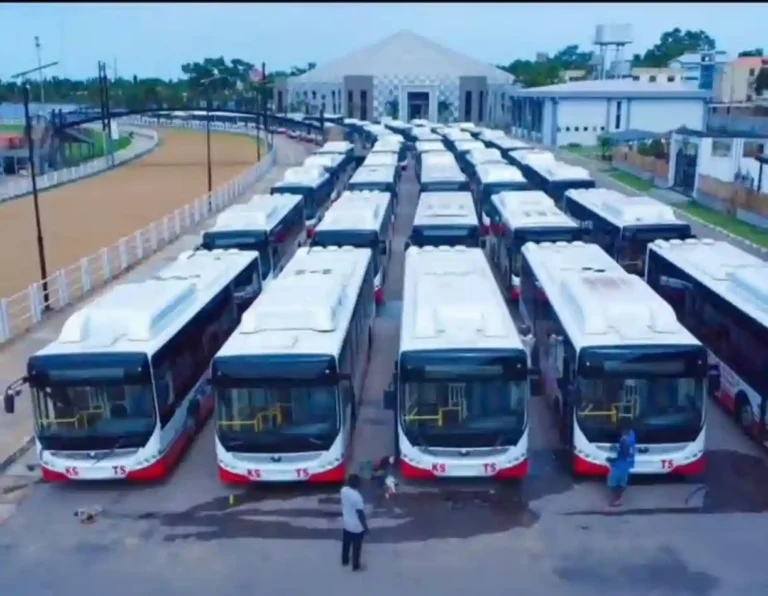
Kaduna State says its free CNG bus service has transported over 1.4 million passengers and saved residents more than N1.39 billion in transport costs within its first five months. The Commissioner for Information, Mallam Ahmed Maiyaki, shared the figures during a media briefing on Thursday, noting that the programme has delivered relief to many households. Fresh data released by the state government shows that the buses, which operate across Kaduna metropolis, Zaria, and Kafanchan, recorded high patronage between July and November 2025.

Maiyaki explained that the assessment was conducted to measure the true impact of the free-ride policy introduced by Governor Uba Sani. He said public adoption of the service surpassed initial expectations. According to him, the scheme initially targeted civil servants and students but was later expanded to include all commuters on selected routes. He stated, “From July 7 to the end of November, the buses have moved an impressive number of our people at zero cost.”

The government data shows that in Q3 2025, covering July to September, the buses conveyed 683,650 passengers, amounting to a fare value of N738.8 million in savings. Ridership rose further in October and November with 626,710 passengers recorded and an extra N667.2 million saved for commuters. October alone accounted for 339,530 users because of school resumption and increased mobility needs. Maiyaki said, “In total, Kaduna residents who rely on these four routes have saved N1.39 billion in just five months,” describing it as proof of Governor Sani’s effort to reduce hardship.

The commissioner noted that 30 CNG buses operate daily from 7:00 a.m. to 6:00 p.m. across 200 bus stops. The serviced routes include Tudun Wada–Kawo–Rigachikun, Rigachikun–Yakowa–Maraban Rido, Rigachikun–Kasuwa–Maraban Rido, and Rigasa–NEPA Roundabout. He added that the average daily passenger lift stands at 18,426 people, translating to about 294,824 passengers monthly. Each bus reportedly completes eight trips daily, reflecting strong demand and operational efficiency.

Maiyaki highlighted additional benefits beyond mobility, saying the project has revived economic activity for petty traders previously displaced by urban policies. “Kaduna’s economy suffered when thousands of small operators were pushed out. This intervention is gradually restoring mobility and livelihoods,” he stated. He also stressed that Governor Sani launched the policy out of empathy for residents facing financial pressure. “His Excellency is concerned about the well-being of everyone, civil servants, students, market women, and ordinary citizens who move daily to survive,” he said.

Despite offering free rides, Maiyaki said the system shows financial viability, and projections indicate it could generate surplus revenue if fares are restored. He assured that the state will continue to assess long-term sustainability but will keep citizen welfare at the centre of its decisions. Updated ridership figures beyond November will be released as demand grows.

The initiative began after Governor Uba Sani commissioned 100 CNG buses in July 2025, first providing free rides to civil servants, students, retirees, and security personnel before expanding to wider public use. Authorities say the goal is to reduce transport pressure and support residents facing rising living costs.