Home Blog Page 26

20,000 jobs created as Nigeria’s non-oil exports reach $6.1bn in 2025

0

20,000 direct jobs have been created under Nigeria’s expanding non-oil export drive, as Special Economic Zones generated employment alongside $500 million in export revenue, according to the latest figures released in February 2026.

The data, compiled from FMITI and NEPC reports and published by statehouse digital, forms part of a broader fact-check titled “Nigeria’s Non-Oil Export Revolution: Fact-Checking the Numbers.”

Addressing what it described as misleading claims online, the report clarified that some posts “conflate $500M (Special Economic Zone revenue) with $6.1B (Total National Non-Oil Exports).” It stressed that the $6.1 billion represents Nigeria’s total non-oil export value for 2025, the highest since the NEPC’s inception.

According to the figures, 2025 recorded $6.1 billion in non-oil exports, more than double the $2.97 billion achieved in 2013, marking a 100 percent increase over 2013 benchmarks. Export volume also rose to 8.02 million metric tonnes, up from 7.29 million metric tonnes in 2024.

Product diversification expanded to 281 distinct products in 2025, compared to 248 in 2024. The report highlighted a 500 percent expansion in NCX traded volumes, noting that refocusing the Nigeria Commodity Exchange significantly increased structured commodity trade activity.

In addition, 300 MSME exporters received fully sponsored FDA and HACCP certifications to boost global market access, while 96,221 participants benefited from 728 NEPC capacity-building programmes covering export procedures, documentation, and product development. A total of 4,633 hybrid seedlings were distributed to support cocos, coffee, and oil palm exports.

Cocoa beans led exports at $1.99 billion, representing 32.76 percent, followed by urea at $1.29 billion or 21.19 percent. Cashew nuts accounted for $0.46 billion, while other products contributed $2.35 billion. Nigeria exported to 120 countries, with the Netherlands, Brazil, and India as top partners, under the Renewed Hope Agenda.

Advertisement

Lagos to establish Sovereign Wealth Fund for long-term wealth creation

0

The Lagos State Government on Tuesday said it is dedicated to setting up a Sovereign Wealth Fund as a strategic investment vehicle that will safeguard the state’s future and secure the prosperity of unborn generations.

The proposed fund is expected to establish a coherent and bankable architecture to drive infrastructure development, economic stabilisation, long-term savings and strategic growth. According to the government, the initiative is designed to secure Lagos’ financial future through the creation of dedicated investment windows that will protect public resources, generate returns and reduce fiscal shocks.

The Commissioner for Finance, Mr. Abayomi Oluyomi, disclosed the plan during the Lagos State Wealth Fund (LSWF) Bill Harmonisation Session themed “Designing a Coherent and Bankable Wealth Fund Architecture for Lagos,” held at Four Point by Sheraton Hotel, Oniru, Lagos.

The session brought together members of the Lagos State Executive Council and the Lagos State House of Assembly, as well as top officials and stakeholders from both the public and private sectors. The aim was to fine-tune provisions of the LSWF Bill ahead of its consideration by the Lagos State House of Assembly.

Speaking during the one-day retreat organised by the Ministry of Finance to harmonise stakeholders’ input on the proposed Lagos State Wealth Fund Bill, Oluyomi said the bill is aimed at designing a coherent and bankable wealth fund architecture for the state.

He explained that the retreat followed the public hearing held on the Lagos State Wealth Fund Bill on November 12, 2025, which generated extensive feedback from stakeholders. He noted that the harmonisation session was designed to harmonise all comments and recommendations into a unified framework that would strengthen the bill before final legislative action.

Oluyomi commended the economic reform drive of the Lagos State Governor, Mr. Babajide Sanwo-Olu, describing the wealth fund initiative as part of efforts to secure Lagos’ long-term financial stability and development.

He added that the proposed model draws inspiration from the sovereign investment framework of the Nigerian Sovereign Investment Authority, which manages Nigeria’s Sovereign Wealth Fund established in 2011 and has recorded steady profitability over the years.

According to him, the Lagos State Wealth Fund Bill outlines four major investment windows that are expected to boost infrastructure financing, enhance economic diversification, strengthen fiscal buffers during economic downturns and build long-term savings for future generations.

Oluyomi emphasised the need for private sector involvement in shaping the framework, describing it as central to Lagos’ economic strength. “The private sector is the engine that drives economic growth, particularly in an economy as large as Lagos. That is why their participation in this process is very critical,” he said.

Speaking at the event, the Speaker of the Lagos State House of Assembly, Rt. Hon. Mudashiru Obasa, who was represented by the Chairman of the House Committee on Finance, Hon. Femi Saheed, said the harmonisation session would assist in formulating a Lagos State Wealth Fund Law for future security.

He said the law would help attract investment and support infrastructure, technology and innovation initiatives across the state.

“We are here today to harmonise and get the best law that will set up the Lagos State Wealth Trust Fund. It is going to serve as a form of stabilisation fund in case of emergency, like during the times of COVID. This fund could also be used to finance a budget deficit.

“It is just a system of reducing our risk and creating wealth that will further generate returns for Lagos State. The Governor of Lagos State will want to position and make a landmark fund that will boost Lagos State’s investments and make Lagos State reduce its risk,” he said.

Giving the Executive Summary of the Fund, the Lagos State Commissioner for Justice and Attorney General, Mr. Lawal Pedro (SAN), described the initiative as a legacy achievement for Lagos and Africa’s first subnational wealth fund initiative.

Pedro highlighted the broader economic gains of the proposal, noting that the fund would promote revenue maximisation, prudent asset management and economic diversification.

He said the fund comes with several benefits, including revenue maximisation and economic diversification, adding that the state needs a strategic approach to managing its commercial assets to meet its growing obligations.

Pedro further described the proposal as a legacy project capable of positioning Lagos as Africa’s first sub-national government to establish a structured wealth fund framework, strengthening its reputation as a leading economic hub.

The Special Adviser to the Governor on Corporate and Finance Strategy, Mr. Akintayo Sanwo-Olu, also described the initiative as a major step in sub-national financial innovation.

“The Lagos State Wealth Fund represents a bold and visionary step in sub-national financial innovation. By institutionalising long-term savings and channelling capital into strategic infrastructure and economic enablers, the Fund strengthens Lagos’s fiscal resilience while enhancing investor confidence,” he said.

He added, “It is not about short-term gains — it is about building sustainable prosperity for future generations, creating jobs, improving public services, and attracting domestic and international capital. As global cities compete for talent and investment, Lagos is positioning itself not just as Nigeria’s economic hub, but as a financially disciplined, forward-looking metropolis with a clear roadmap for inclusive growth.”

Some stakeholders at the retreat also said Lagos State needs a strategic approach to manage its commercial assets to meet its growing obligations. They expressed confidence that the refined structure would position Lagos as a leading model for sub-national wealth fund management in Nigeria.

Participants expressed optimism that once passed into law, the Lagos State Wealth Fund would serve as a sustainable financial pillar, attracting investments, safeguarding public wealth and ensuring long-term development for Africa’s largest sub-national economy.

The Lagos State Wealth Fund Bill Harmonisation Session featured detailed clause-by-clause reviews of the bill, with extended deliberations aimed at producing a harmonised and investor-friendly wealth fund framework that aligns with global best practices while addressing the unique needs of Lagos State.

Abia Launches EMIS to Centralise Education Data Across Schools

0

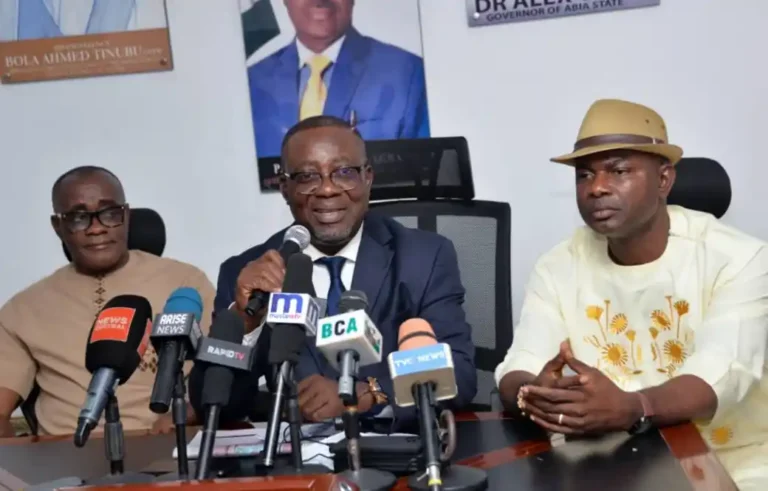
The Abia State Government has launched a comprehensive Education Management and Information System (EMIS) to centralise and digitally integrate education data across public and private schools in the state.

Speaking to journalists at the Government House in Umuahia after this week’s Executive Council meeting chaired by Governor Alex Otti, the Commissioner for Information, Okey Kanu, said the platform will host all education-related data at both basic and secondary levels in a unified central database.

He explained that the system is designed to improve planning, enhance measurable outcomes, and support data-driven policy decisions across the education sector.

Prince Kanu further stated that all public and private schools across the 17 local government areas of the state have been issued secure login credentials to access EMIS. According to him, this will ensure that schools actively participate in maintaining accurate and up-to-date records.

He added that the system also supports the issuance of the Abia Learners Identification Number (ABSLIN) for every pupil in the state, helping to properly document and monitor learners within the education system.

On teacher recruitment, the commissioner disclosed that the second batch of the state’s recruitment exercise is progressing steadily. He revealed that 36,415 applications have been received so far, while 24,023 candidates have been shortlisted to sit for the Computer-Based Test (CBT) for the recruitment of 4,000 teachers.

Prince Kanu also announced that the Mass Literacy, Adult and Non-Formal Education Programme for the 2025–2026 academic session has resumed across all the 17 local government areas.

Highlighting achievements under the Otti-led administration, he said Abia State emerged as the overall best-performing state at the recently concluded National Basic Education School Sports Games, winning eight gold medals in athletics.

He further noted that for the past three years, Abia State has consistently ranked as the best-performing state in the National Examinations Council examinations, describing the achievement as clear evidence that the administration’s education reforms are yielding measurable results.

Also speaking, the Commissioner for Basic and Secondary Education, Goodluck Ubochi, said the EMIS and ABSLIN initiative would enable the government to track each learner’s academic journey from entry to completion of basic education.

Kano Inaugurates YEIDEP Committee Ahead of Batch A Training

0

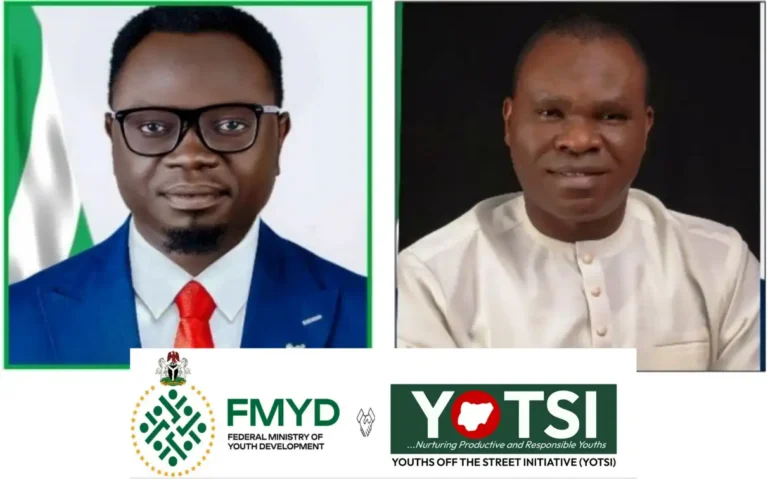
The Kano State Government has inaugurated a committee to oversee the implementation of the Youth Economic Intervention and De-Radicalisation Programme (YEIDEP) ahead of 2026 Batch A training for beneficiaries and the completion of YEIDEP onboarding for the remaining 8 million beneficiaries.

YEIDEP is a federal government initiative implemented by the Federal Ministry of Youth Development (FMYD) in collaboration with partners, Nigeria Startup News reports. The programme is designed to empower young Nigerians with economic opportunities and tackle youth unemployment, poverty, radicalization and insecurity through support in agriculture, ICT and vocational trades.

The Secretary to the Kano State Government, Alhaji Umar Farouk Ibrahim, said the committee is expected to ensure that youths across the state fully benefit from the initiative. He added that members of the committee will submit quarterly progress reports to guarantee effective implementation and the achievement of set objectives.

“It’s a government initiative aimed at addressing the current economic hardship being experienced throughout the country. As a state, the most populous, we should be at the forefront of embracing this project. We have the highest number of urban-situated youth,” he said.

Sani Musa Danja, Special Adviser to the Governor on Youth and Sports, described YEIDEP as a programme structured to reduce unemployment across the country.

“YEIDEP is a programme from the federal government to reduce the rate of unemployment in the country. This programme is handled by the Ministry of Youth Development and is structured differently from previous interventions,” he said.

He explained further, “Unlike some earlier initiatives handled through the Central Bank of Nigeria, YEIDEP’s structure uses participating commercial banks for easier access, verification and empowerment of beneficiaries.”

Meanwhile, YEIDEP beneficiaries are still awaiting updates from the federal government through Comrade Kennedy Iyere, the Coordinator-General, and Ayodele Olawande, Minister of Youth Development of Nigeria, concerning the disbursement of payments to eligible applicants.

Foundation empowers 440 Orphans and Guardians with KsRelief Support

0

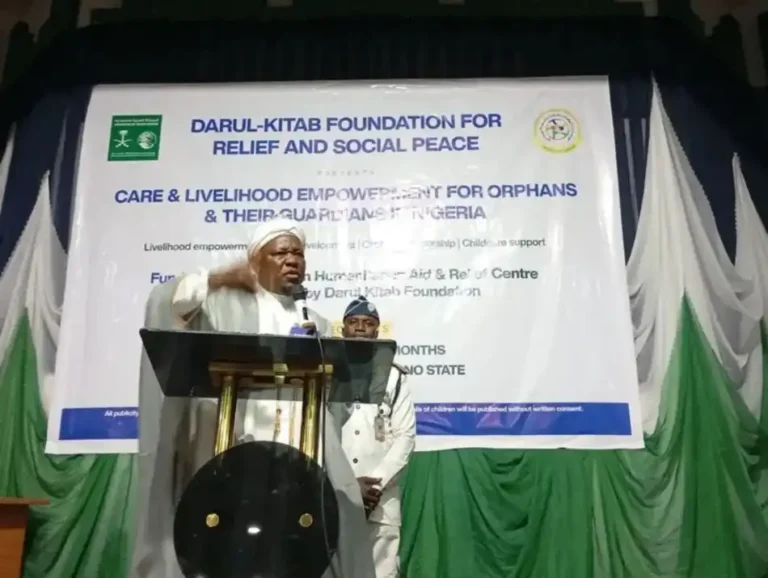
An Islamic charity organisation, Darul-Kitab Foundation for Relief and Social Peace, has empowered 440 orphans and their guardians with starter kits and working tools through the support of King Salman Humanitarian Aid and Relief (KsRelief).

The foundation said the initiative is aimed at moving beneficiaries from dependency to dignity and helping them become economically productive and socially resilient.

The Founder of the foundation, Sheikh Abdulkadri Salman, who is also the Chief Imam of the National Mosque, Abuja, disclosed this on Monday in Abuja at the official launch of the Care and Livelihood Empowerment Project for Orphans and their Guardians.

Salman said the event was organised for vulnerable people in Borno State and the Federal Capital Territory (FCT). He described the programme as an important intervention to address critical humanitarian needs across many communities in Nigeria, especially among internally displaced persons and vulnerable households.

According to him, thousands of orphans and their guardians continue to face daily challenges related to access to basic care, education and sustainable means of livelihood.

“Today, we inaugurate a programme that will directly support 440 beneficiaries through multiple livelihood pathways,” he said.

He explained that some beneficiaries would receive poultry starter kits, including cages, chicks, feed and a monthly stipend to give them a stable foundation for regular income.

“Some beneficiaries will receive poultry starter kits, including cages, chicks, food, and monthly stipend giving them a foundation for regular income.

“Others will receive tricycles, enabling them to earn through transportation services. We are also launching POS machines and kiosks to support small businesses and promote financial inclusion,” Salman said.

He added that skills development remains a major part of the project. According to him, the foundation is partnering with AFS Vocational Hub to enroll beneficiaries into structured training programmes in fashion design, leather works, culinary arts and soap making.

“Equally important is our investment in skills development. In partnership with AFS Vocational Hub, beneficiaries will be enrolled into structured training programmes in fashion design, leather works, culinary arts, and soap making,” he said.

Salman stressed that the initiative is not designed as a temporary solution but as a long-term opportunity to restore confidence, independence and economic stability.

“Upon completion of their training, participants will receive empowerment tools to begin their own journeys toward self-reliance.

“Our approach is guided by the belief that true humanitarian work is not only about providing aid or restoring dignity.

“It is about equipping individuals with the ability to rebuild their lives with pride and resilience.

“We recognise that many of our beneficiaries come from challenging circumstances, including displacement and poverty. Yet we also recognise their strength.

“Today’s commissioning is a message to every beneficiary: you are not forgotten, and you are not alone,” he said.

The Project Manager of the foundation, Dr Sulaiman Al-Gamawiy, said the project is designed to run for 12 months and will be implemented in structured and progressive phases to ensure effectiveness and sustainability.

Al-Gamawiy explained that the project targets 220 orphans and 220 guardians, making a total of 440 direct beneficiaries.

He said the programme includes several vocational and technical training sessions aimed at equipping beneficiaries with practical and market-relevant skills.

“There will be monthly sponsorship stipends for orphans, provided throughout the entire twelve-month period of the project, to support their basic needs, education, and overall wellbeing,” he said.

He further stated that from the sixth month to the twelfth month, the foundation would focus on monitoring, mentorship and business support to ensure the success of the new ventures started by beneficiaries.

“During Months 6 to month 12, Darul-Kitab Foundation will focus on monitoring, mentorship, and business support.

“This is to ensure that beneficiaries receive continuous guidance, technical advice, and supervision to help them stabilise their new ventures and achieve long-term self-reliance,” Al-Gamawiy said.

He assured that the foundation is committed to implementing the project with transparency and accountability.

“As the implementing organisation, Darul-Kitab Foundation is fully committed to delivering the project with the highest standards of transparency, accountability and Impact.

“We have put in place strong monitoring and evaluation systems to ensure that every resource entrusted to us is used effectively, responsibly, and reaches the intended beneficiaries,” he said.

Also speaking at the event, Mr Delu Yakubu, Senior Special Assistant to the President on Humanitarian Affairs and Poverty Reduction, said the project aligns with the humanitarian and poverty reduction goals of President Bola Tinubu’s administration.

Represented by Mr Bashir Butoma, he noted that Nigeria has a large number of people in need of relief due to banditry and insurgency.

“We have seen that King Salman Humanitarian Relief Centre has played the humanitarian role of complementing the efforts of the Nigerian government through the Darul Kitab Foundation.

“We are thanking the Centre and also calling on all well-meaning Nigerians to emulate the gesture as Federal Government can not do it alone.

“All hands need to be on deck to make sure that we bring relief to the Nigerian people,” he said.

Dr Khadija Ibrahim, Founder of Being a Human Foundation for the Less Privileged, described the initiative as a positive step toward reducing poverty in the country.

“This is a good cause, and I love to always be associated with this kind of event, and that is why I am here today to rejoice with the beneficiaries.

“I advise them to make use of what they have been given here today, wisely, so that they can take themselves out of the street and become independent instead of being dependent on people every time,” she said.

FG Rolls Out 2,000 Tractors Under Renewed Hope NAMP

0

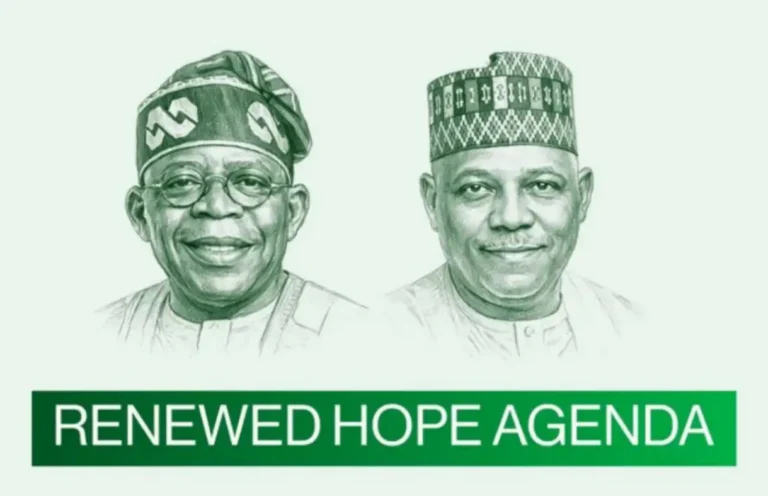
The Federal Government has commenced the rollout of more than 2,000 tractors and heavy-duty equipment to mechanised farmers under the Renewed Hope National Agricultural Mechanisation Programme (NAMP), with the Bank of Agriculture (BOA) leading implementation and support from Heifer International.

The initiative, witnessed by the National Agricultural Development Fund (NADF), is designed to lift farm productivity and reinforce national food security through structured access to modern equipment across the country.

Speaking at the event, the BOA Managing Director, Ayodeji Sontirin, said the programme was built to outlast one-off interventions. He described it as a systems-driven effort anchored on financial discipline, inclusive participation and digital accountability.

“NAMP is more than tractor distribution. It is a commitment to building systems that endure, generate value and serve the millions of smallholder farmers who feed the nation,” he said, urging beneficiaries to treat the equipment as a national trust.

Mr Sontirin added that the Federal Government was working through the Ministry of Agriculture and Food Security and NADF to procure tractors from John Deere, describing the arrangement as central to the President’s National Agricultural Mechanisation Plan.

The Minister of Agriculture and Food Security, Abubakar Kyari, said demand for mechanisation was clear, with more than 100,000 applications received in the first phase of the programme.

He clarified that the tractors were not for private ownership but would be deployed through regulated Mechanisation Service Providers under lease-based models.

“These tractors are entrusted to service providers to support farmers, not for private ownership,” he said, explaining that each unit could service about 600 hectares annually.

He added that many of the service providers are youth- and women-led enterprises supported by structured financing arrangements.

Delivering a goodwill message, the Executive Secretary of NADF, Mohammed Ibrahim, said sustainable mechanisation must be backed by collaboration across public and private institutions.

“Sustainable mechanisation should be that mechanisation that is supported by strong partnerships between government institutions, financial institutions, development partners, mechanisation agencies and private sector-led mechanisation experts. This is the mantra of the national agricultural mechanisation programme, and this is the trust that we all intend to follow within this policy,” he said.

Tinubu Urges National Health Fellows to Serve with Honour and Courage

0

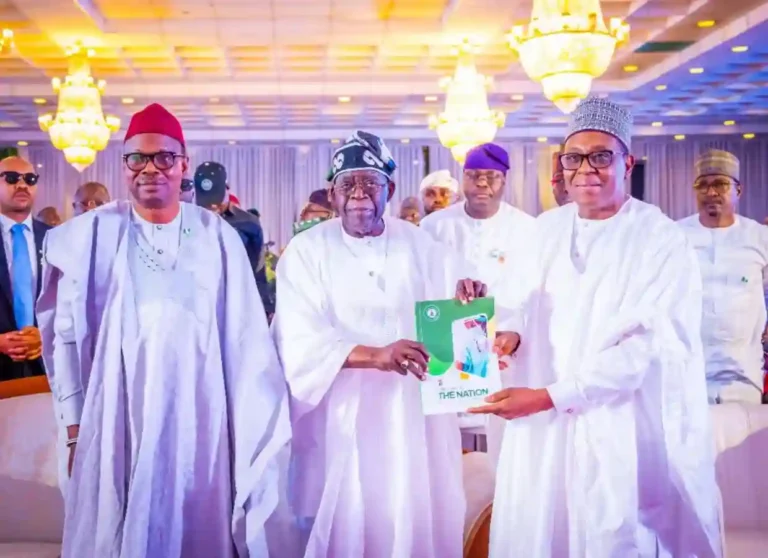
President Bola Ahmed Tinubu on Tuesday urged young fellows of the Federal Government’s National Health Fellowship Programme to serve with honour, humility and courage, assuring them that his administration will work hard to secure their career paths.

The President spoke in Abuja during the first National Traditional and Religious Leaders Summit on Health. He described the Fellows as the driving force toward achieving the Renewed National Health Alliance and strengthening healthcare delivery across the country.

The National Health Fellows are carefully selected from each of the 774 Local Governments in Nigeria. The current group is the Second Cohort of the Fellows, chosen to boost healthcare services nationwide under a programme championed by the Federal Ministry of Health and Social Welfare.

Addressing the young professionals, President Tinubu expressed confidence in their abilities and commitment.

“Today, I stand here with pride that our young people are proving yet again that Nigeria’s future is not something to fear. It is something to look forward to. I thank the Federal Ministry of Health and Social Welfare, state governments and all our partners for keeping this vision alive,” he said.

He assured them that the government is taking practical steps to support their growth within the system.

“We are working to secure your career paths through the federal structure and support from development partners. I am also aware that the Honourable Minister of Health and Social Welfare and his team have requested state governments to host a fitting graduation ceremony for you in your states as you complete your fellowship. I thank you on behalf of a grateful nation and urge you to carry the spirit of altruism, as it will bring great rewards.”

Speaking directly to the new cohort, the President said the initiative reflects a new direction for the country.

“To Cohort 2, the National Health Fellowship Programme represents a new Nigeria where talent and competence help you reach your full potential. This administration recognises and believes in the potential of our youth. We will harness your energy to fuel our renewal and create opportunities that provide you with dignity, purpose and a pathway to leadership.”

President Tinubu also encouraged the Fellows to work closely with traditional and religious leaders to improve service delivery at the grassroots.

“You are the driving force that traditional and religious leaders will count on to fulfil the commitment they made today as the operational backbone of this national health alliance. Bring structures where systems are weak, data where decisions lack clarity and energy where communities seek hope. You are the youthful force behind Nigeria’s health transformation,” he said.

The President further called on traditional and religious leaders to actively support government efforts aimed at achieving universal health coverage.

“We are building an inclusive, united and committed society to renew the hope of our people. The keyword here is HOPE. Nothing good is achieved without our hope, and we pledge to do everything possible to renew it,” he stated.

He also reaffirmed his administration’s commitment to tackling insecurity across the country, assuring Nigerians that the nation will ultimately overcome the challenge.

At the event, the Minister of Health and Social Welfare, Professor Mohammed Ali Pate, thanked the President for his leadership and clear policy direction. He presented the 2025 State of Health Report to the President and explained its importance to ongoing discussions.

“We have used the 2025 State of Health of the Nation Report as a basis for the dialogue. As you can see, Christian and Muslim faiths are represented to hear their feedback, and I think we have carried some important lessons from what we have heard from them,” the Minister said.

He added, “We hereby commend the Federal and State governments for embarking on the ambitious Nigeria Health Sector Renewal Investment Initiative and for the inclusive spirit of the Health Sector Compact.”

The summit brought together traditional rulers and religious leaders from the six geopolitical zones of the country. Among those present were the Ooni of Ife, Oba Adeyeye Ogunwusi; the Olu of Warri, Ogiame Atuwatse III; the Emir of Zazzau, Alhaji Ahmed Nuhu Bamalli; and the Tor Tiv, Prof. James Ortese Ayatsev.

Others in attendance included the Olowo of Owo, Oba Ajibade Ogunoye; the Shehu of Borno, Alhaji Abubakar Umar Garbai Al-Kanemi; Igwe Dr Lawrence Chikezie Agubuzu, the Ogbumechendu of Ezema Olo Kingdom; the Ayangburen of Ikorodu, Oba Kabiru Adewale Shotobi; and the Olumobi of Imobi-Ijesa Kingdom, Oba Jacob Adetayo Hasstrup.

Also present were the President of the Christian Association of Nigeria, Most Rev. Daniel Okoh, and the Deputy President General South of the Nigerian Supreme Council for Islamic Affairs, Alhaji Razaq Oladejo. Both leaders committed to championing community healthcare coverage within their areas of influence, aligning with the broader goal of expanding access to quality health services across Nigeria.

Katsina Inaugurates LG Coordinators for RHWDP ₦50,000 Grant

0

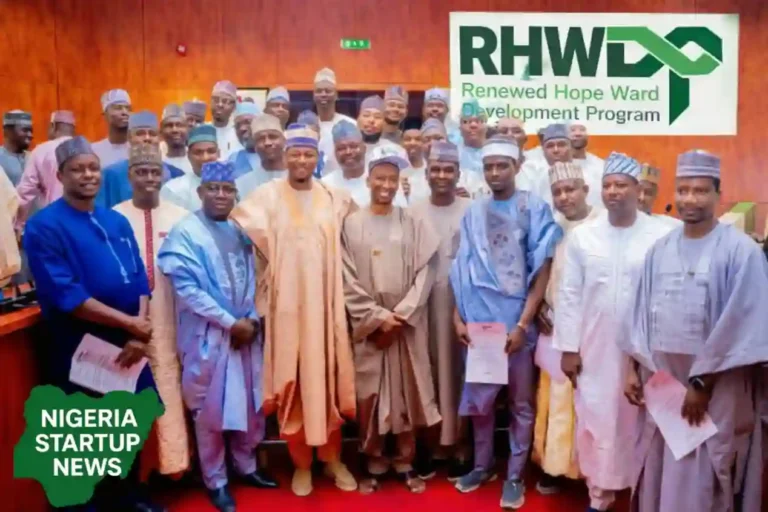
Katsina State Governor, Malam Dikko Umaru Radda, has inaugurated the 34 Local Government Coordinators of the Renewed Hope Ward Development Programme (RHWDP) to drive the registration and support of beneficiaries across the state’s 361 wards.

The inauguration ceremony, held at the Government House in Katsina, was attended by council chairmen, members of the State Assembly, Renewed Hope Ambassadors, party stakeholders, government officials, and other dignitaries.

Under the programme, 1,000 beneficiaries are expected to be registered in each ward, with ₦50,000 grants to be disbursed in phases to support small and medium-scale businesses.

Governor Radda described the initiative as a key intervention of the administration of President Bola Ahmed Tinubu, aimed at stimulating grassroots economic growth and supporting businesses across various sectors.

“The Renewed Hope Ward Development Programme was introduced to support small and medium enterprises across various sectors. It is meant to inject capital into businesses, stimulate growth, and create job opportunities, especially in rural communities,” the Governor said.

He explained that the programme is coordinated nationally under a structure involving the Nigerian Governors’ Forum, with governors serving as zonal coordinators in the six geopolitical zones.

“In the North-West, I have the responsibility of serving as the zonal coordinator. This arrangement ensures proper direction, coordination, and effective implementation of the programme across the country,” he stated.

Governor Radda said the initiative has two main components, one political and the other administrative, stressing the need for both to work together.

“The Renewed Hope Ambassadors are responsible for political mobilisation, while the Ward Development Programme delivers direct economic support to the people. Both structures must work together because the success of one depends on the other,” he said.

He urged the newly inaugurated coordinators to work closely with the Renewed Hope Ambassadors in their respective local governments.

“You must work hand in hand with the Renewed Hope Ambassadors. They will guide you on the categories of beneficiaries, and after the support is delivered, they will maintain engagement with those beneficiaries. This cooperation is essential for the success of the programme,” the Governor stressed.

Governor Radda expressed confidence in the choice of coordinators, noting that many of them are individuals he knows personally and trusts.

“I am satisfied with the choices made. Many of you are people I know and trust. But the task before you is not a small one. You must justify the confidence reposed in you,” he said.

He disclosed that Katsina State is expected to register at least 1,000 beneficiaries per ward but admitted that the state is currently behind some others in the registration process.

“Some states have already recorded hundreds of thousands of beneficiaries. We cannot afford to be left behind. You must work day and night to ensure that people in your local governments benefit from this initiative,” he warned.

The Governor added that registration procedures have been simplified, particularly with the requirement for National Identification Numbers and Bank Verification Numbers. He urged coordinators to encourage residents to obtain the necessary documentation.

“Many of our people already have their NIN and BVN. You must push for more registrations so that our citizens can benefit from this important national programme,” he said.

Governor Radda made it clear that each coordinator would be accountable for the performance of his local government.

“With this inauguration, we expect rapid progress. If any local government is left behind, the people will know who to hold accountable, because each of you is responsible for ensuring that your area is fully represented,” he said.

Earlier, the State Coordinator of the Renewed Hope Ward Development Programme in Katsina, who also serves as Chief of Staff to the Governor, Hon. Abdulkadir Mamman Nasir, said the initiative was designed to tackle poverty at the grassroots and strengthen local economies.

He explained that the programme was initiated by President Bola Ahmed Tinubu to empower between 1,000 and 2,000 individuals in each political ward across the country.

“These interventions will focus on agriculture, food processing, trading, and mining, with grants provided to stimulate production and strengthen household incomes at the community level,” he said.

Nasir noted that at least 1,000 beneficiaries per ward would receive ₦50,000 grants in three phases, adding that the programme is expected to reach about 10 million beneficiaries nationwide.

He further explained that the implementation strategy involves identifying economic opportunities in every ward, with collaboration among local, state, and federal authorities. Applications remain open to residents with valid National Identification Numbers and Bank Verification Numbers.

“The local government and ward coordinators will serve as the engine room of this programme, working closely with ambassadors and community stakeholders to ensure effective implementation and lasting impact,” he concluded.

Also in attendance were the Principal Private Secretary, Hon. Abdullahi Aliyu Turaji; the former Deputy Governor of Katsina State and State Coordinator of the Renewed Hope Ambassadors, Hon. Tukur Ahmed Jikamshi; the Katsina State APC Chairman, Hon. Sani Aliyu Daura; and the Chairman of the Katsina State APC Stakeholders, Hon. Salisu Mamman Kadandani.

3MTT National Impact Challenge 1.0: NITDA announces new deadline

0

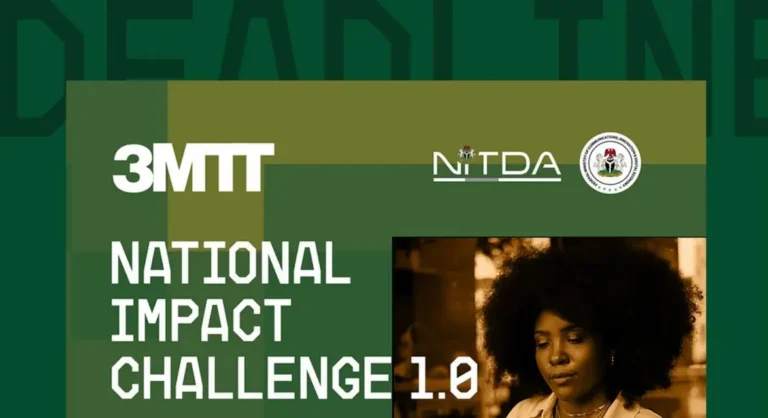
The 3 Million Technical Talent (3MTT) programme by the National Information Technology Development Agency (NITDA) has announced the NATIONAL IMPACT CHALLENGE 1.0 for fellows across Nigeria.

According to the organisers, participants are to “record a 2-min video sharing your 3MTT journey” and post it on social media using the hashtag #3MTTImpact.Challenge. Fellows must also tag @officialABAT, @bosuntijani, and @3MTTNigeria, then submit the link via B.LINK/IMPACTCHALLENGE-FELLOW.

Prizes include 10 Laptops, 200 E-Tablets, and 1000 Data Bundles (10GB) & More. The organisers confirmed that the “EXTENDED DEADLINE SATURDAY, FEB 28, 2026” applies to all entries.

FG Portal for technical facilitators recruitment in Federal Technical Colleges

0

The Federal Government, through the Federal Ministry of Education (FME), has opened the application portal for the recruitment of Technical Facilitators to revitalise Federal Technical Colleges nationwide. The move reinforces ongoing reforms aimed at repositioning Technical and Vocational Education and Training (TVET) across the country.

The initiative aligns with the Renewed Hope Agenda of President Bola Ahmed Tinubu and seeks to bridge Nigeria’s critical skills gap by engaging qualified, industry-oriented professionals to deliver modern, competency-based training.

The recruitment drive targets experienced technical experts with strong pedagogical skills who can strengthen both practical and theoretical instruction in Federal Technical Colleges. The intervention forms part of broader reforms designed to improve the quality, relevance, and responsiveness of technical education to evolving labour market demands.

The Ministry reaffirmed its commitment to strengthening Federal Technical Colleges as centres of excellence for skills development, innovation, and workforce readiness.

All submissions will undergo a transparent, rigorous, and merit-based evaluation process, noting that submission does not guarantee selection.

The application portal will close at 11:59 p.m. on Monday, 16 March 2026.

Interested applicants are required to complete the official online application form through the Ministry’s designated portal. https://docs.google.com/forms/d/e/1FAIpQLSfxRAdsj9oBzdkmbKsYiei30L5o8aH-QhHo1UFMCVlL0i6BEw/viewform