Home Blog Page 264

Tinubu’s Wife Awards ₦50m Empowerment Grant to Rivers PWDs

0

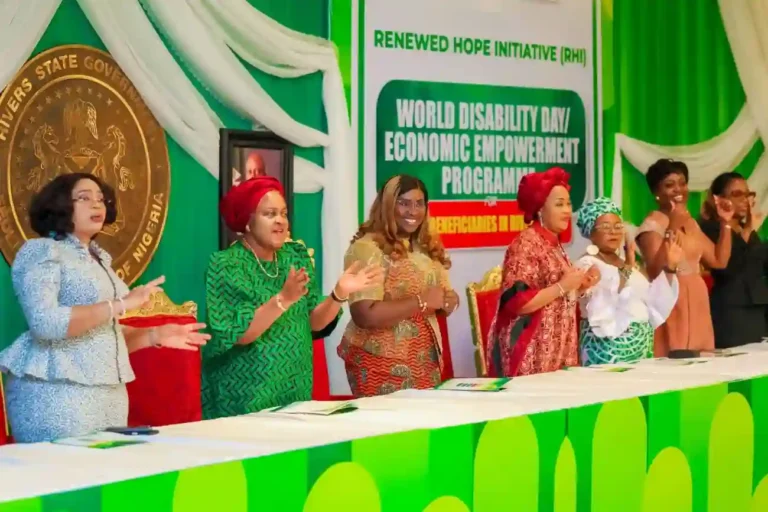
Nigeria’s First Lady, Senator Oluremi Tinubu, has awarded a ₦50 million grant to support Persons with Disabilities in Rivers State under the Renewed Hope Initiative Social Investment Programme. The event was held at the Government House in Port Harcourt on the 2025 International Day of Persons with Disabilities. Lady Valerie Fubara, wife of the Rivers State Governor, presented the grants to the recipients on behalf of the First Lady.

The programme is being implemented across all 36 states, the Federal Capital Territory, and DEPOWA. Each state is expected to support 250 PWDs with ₦200,000 business grants. In total, ₦1.9 billion is being shared with 9,500 beneficiaries nationwide. According to organisers, each state will also distribute ₦50 million among qualified beneficiaries.

Senator Tinubu said the timing of the launch shows the government’s commitment to inclusion. She stated that empowering all citizens strengthens national development and quoted Helen Keller, saying, “Alone we can do so little; together we can do so much.” She noted that the initiative supports President Bola Ahmed Tinubu’s vision for shared prosperity and announced that the empowerment programme will take place every December 3rd.

Lady Valerie Fubara encouraged the beneficiaries, stressing that “Your strength and creativity define you, not your limitations.” She called for communities to embrace inclusion and end discrimination against PWDs. In Rivers State, 250 beneficiaries received ₦200,000 each to support business development. Senator Tinubu urged recipients to use the grant wisely and grow sustainable ventures.

Dr. Vetty Agala revealed that 253 PWDs in the state will gain health insurance coverage under the “Health For All Rivers Initiative,” giving them free access to primary, secondary, and tertiary healthcare services. Mrs. Lorenta Davis-Dimkpa explained that the state is progressing towards establishing a regional office for the Disability Commission and enforcing the Disability Act of 2018.

Former Supreme Court Justice Mary Odili praised both federal and state governments for prioritising disability inclusion. Kie Obamanu spoke for the beneficiaries and thanked the First Lady and Lady Fubara while calling for full implementation of disability laws to eliminate discrimination.

The Rivers State Ministry of Health presented Lady Fubara with a Universal Health Coverage Ambassador award in recognition of her work to expand access to healthcare for vulnerable groups.


Advertisement

Nasarawa PWDs Receive N200,000 Grants Under Renewed Hope Initiative

0

At least 250 Persons With Disabilities in Nasarawa State have benefited from the Renewed Hope Initiative Economic Empowerment Programme launched by Nigeria’s First Lady, Senator Oluremi Tinubu. The disbursement took place in Lafia on Wednesday, where the First Lady announced that each beneficiary would receive N200,000 to support small businesses and reduce poverty among vulnerable groups.

Represented by Hauwa Jugbo, Nasarawa State Commissioner for Women Affairs and Humanitarian Services, Senator Oluremi explained that the initiative was designed as a business capitalization grant to help PWDs start or expand their ventures. She added that similar interventions had taken place nationwide. According to her, “Each state of the federation, the FCT, and the Defence and Police Officers’ Wives Association was given N50 million, amounting to N1.9 billion.”

She noted that the empowerment scheme aligns with the Federal Government’s Renewed Hope Agenda, which seeks inclusive growth and shared prosperity to ensure that no citizen is left behind. The First Lady recalled that in the past two years, more than 100,000 women petty traders and small business owners, including PWDs, had received financial support to grow their enterprises.

She further announced that the programme would now become an annual event every December 3 in commemoration of the International Day of Persons With Disabilities. This decision, she said, was approved by the RHI Governing Board to ensure continuous inclusion and sustained empowerment.

Silifat Sule, Wife of Governor Abdullahi Sule of Nasarawa State, inaugurated the disbursement and praised the First Lady for her consistent support. She stated that beneficiaries were selected from the state’s 13 Local Government Areas to guarantee fairness and wide coverage. She encouraged recipients to invest the funds wisely, saying it would improve their lives and those of their families.

Salah Barde, Executive Secretary of the Nasarawa State Disability Rights Commission, also expressed appreciation to both the First Lady and the Governor’s Wife. He reaffirmed the commission’s commitment to ensuring the grants are used productively to promote growth and development among PWDs in the state.

NUC Receives First €3m ICT Loan Tranche for 10 Universities

The National Universities Commission has confirmed that it has received €3m as the first tranche of the $40 million loan secured from the French Development Agency to support Information, Communication and Technology projects in 10 selected universities across the country. The Executive Secretary of the commission, Abdullahi Ribadu, made this known during the inaugural meeting of the 13th NUC Board held on Wednesday at the commission’s headquarters in Abuja.

Ribadu explained that since assuming office about a year ago, the commission has continued to push major reforms centred on research, entrepreneurship, digital transformation and skills development in Nigerian universities. He stated, “We have secured $40 million loan from the French Development Agency for the ICT Blueprint Project in 10 selected universities. We have strengthened – only yesterday, the director confirmed to me that the first tranche of €3m has been deposited in our CBN account to kick-start the process.”

He also highlighted progress in internal reforms and expansion of opportunities across the higher education sector. According to him, the commission has strengthened internal financial management, licensed new private universities, approved new programmes and supported the take-off of publicly funded universities. Ribadu added that open and distance learning centres have been expanded while quality assurance exercises continue nationwide. He confirmed that the 2025 Accreditation Exercise is currently ongoing across institutions.

“These priorities continue to form the foundation of the Commission’s direction, and I am seeking your support in advancing them,” Ribadu told board members. He assured them of full cooperation from NUC management, saying the commission stands ready to draw from their expertise. “We will rely on your wisdom to guide us as we carry out our duties. I am confident that your collective experience will strengthen the commission’s capacity to guide the Nigerian university system at a time when higher education continues to evolve,” he added.

The Executive Secretary also expressed hope that members will use their networks to attract projects and partnerships. “We also look forward to using your networks to help advance projects and partnerships that will benefit the Commission and the entire university system,” he said.

On his part, Chairman of the 13th NUC Board, Emeritus Professor Oluremi Aina, thanked President Bola Tinubu for his continued support for the university sector. He noted that the board was taking charge at a time of transition, when global standards in higher education were rising and expectations from universities were increasing.

Aina outlined five central pillars that will guide the new board’s mandate, focusing on performance evaluation, improved university rankings, digital literacy, research and institutional reforms. He said, “As we settle into this assignment, but permit me to present what I call five pillars that I believe will help guide our stewardship. One, evaluation of NUC performance.” He explained that the commission must review the Act that established it, understand amendments, and study its mission, principles and ethics.

He added that the commission must assess its challenges and achievements while comparing its performance with global standards rather than relying on sentiment or history. The second pillar, he said, aligns with the renewed hope agenda of the administration, noting that the president has made education a key driver of national transformation. According to him, “Through our assignment, we must lead other key stakeholders in the higher education sector. In pragmatically resolving the naughty and nagging agitation of the academic staff union and other university unions.”

Aina stressed the importance of enhancing digital literacy and adopting artificial intelligence to reposition Nigerian universities locally and internationally. He added that boosting performance in global and webometric rankings will remain a priority for the board. He noted that the third pillar involves identifying and dismantling obstacles affecting university quality, adding that governance gaps, funding constraints and research stagnation must no longer be treated as normal.

The fourth pillar, he stated, focuses on reviewing existing funding streams and exploring new sources for sustainable financing. “Nigerian universities cannot thrive on ingenuity alone. The board must intensify the research for alternative funding sources. Strengthen utilisation and explore emerging and local opportunities,” he said. The fifth pillar centres on investing in staff welfare and enhancing regulatory systems, noting that no system can perform beyond its operators.

Aina also stated that the board intends to leverage technology for efficiency. “We will seek to leverage technology to ease our burden through the adoption of digital platforms for the advancement of our collective objectives. And I have a charge for the board. This board, in whom I am well-pleased, carries with it the weight of expectations and aspirations of the Nigerian people,” he said.

In July 2025, the Agence Française de Développement — the same French agency backing the recent loan tranche — formally launched a €38 million financing scheme for the National Universities Commission to support modernization of ICT infrastructure and digital capacity across 10 federal universities under the Blueprint-ICT-Dev Project. The launch signalled France’s ongoing collaboration with NUC on technology-driven university reform, aligning with current funding efforts announced by Ribadu.

FG earns N7bn, expands irrigation to 154,000 hectares

0

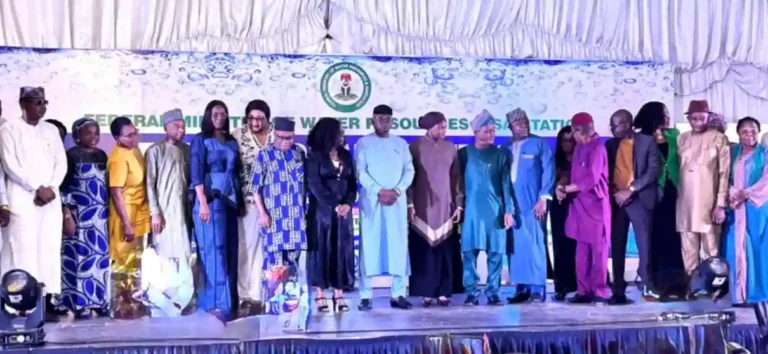
The Federal Government has earned N7 billion from hydropower and agro-allied concessions and expanded irrigable land nationwide to 154,000 hectares, the Minister of Water Resources and Sanitation, Prof Joseph Utsev, has said.

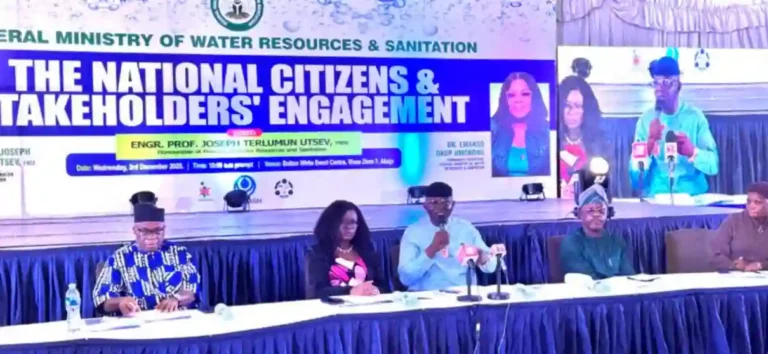
He announced this on Wednesday in Abuja during the Citizens and Stakeholders Engagement on the achievements of the ministry’s projects and programmes.

Utsev explained that the 40-megawatt Kashimbilla Hydropower Plant and the Kashimbilla Integrated Cargo and Agro-Allied Airport were concessioned in full compliance with the Infrastructure Concession Regulatory Commission Act of 2005.

He said more concession agreements were being finalised for Farin Ruwa, Katsina-Ala, Dasin Hausa, Manya, and Bawaku Dams, including the Azara–Jere Irrigation Scheme to integrate private-sector expertise into agricultural water management.

The minister said flood preparedness had improved through the 2024 and 2025 Annual Flood Outlooks, which identified 1,249 high-risk communities and 2,187 moderate-risk communities across 33 states and the FCT.

He listed disaster mitigation efforts to include the National Flood Insurance Programme, Integrated Climate Resilience Innovation Project, Niger Flood Project, and the Annual Drought Outlook, backing flood forecasting and climate resilience planning.

Utsev clarified that no water had been released from Lagdo Dam in Cameroon and advised residents in Lokoja, Makurdi, and Wurobokki to rely on verified updates from the Nigeria Hydrological Services Agency.

The minister said key institutions under the ministry had been strengthened.

“The Nigeria Hydrological Services Agency monitors floods and droughts, the National Water Resources Institute trained over 1,500 youths, and the Nigeria Integrated Water Resources Management Commission issued 24 water-use licences,” he said.

He said River Basin Development Authorities had been repositioned to develop 154,000 hectares of irrigable land, directly benefiting 1.6 million farmers in dry-season agriculture.

Recent dam completions, he noted, include Rafin Yashin Dam in Niger, Odo Ape Dam in Kogi, and Amla Otukpo Dam in Benue, with solar-powered drip irrigation systems and strengthened Water Users Associations already in place.

Utsev said partnerships with the World Bank, African Development Bank, UNICEF, and WaterAid support the Agro-Climatic Resilience in Semi-Arid Landscapes Project, improving land and water sustainability across 19 northern states and the FCT.

He added that sanitation programmes, including the Sustainable Rural Water Supply and Sanitation Programme and the Sustainable Power and Irrigation in Nigeria programme, had made huge progress.

According to him, 26 states have joined the SPIN programme, while the National Sanitation Conference developed strategies to eradicate open defecation with support from religious and traditional leaders.

He said the ministry’s targets for 2026 include completing Adada, Mangu, and Ogbesse Dams, operationalising the Kashimbilla Water Supply Scheme, expanding micro-irrigation projects, and strengthening structured citizen feedback channels.

Utsev reaffirmed that water, sanitation, irrigation, and hydropower are central to the Renewed Hope Agenda for food security, clean energy, climate resilience, and national prosperity.

Earlier, the Permanent Secretary of the Ministry, Dr Emanso Umobong, said the Citizens and Stakeholders Engagement was designed to strengthen accountability, transparency, and stakeholder inclusion.

She said the water and sanitation sector remains central to public health, economic development, food security, and national well-being.

Umobong noted that the forum provides a platform for dialogue on sector performance, challenges, and collaboration.

“Close interaction with stakeholders is essential to obtain meaningful feedback and improve service delivery. The Ministry values all contributions, and outcomes of today’s session will help refine policies and enhance programme implementation,” she said.

She highlighted that stakeholder engagement was first anchored in Presidential Executive Order 12 of 2022, later amended by Executive Order 13 to strengthen coordination and accountability in implementing government priorities.

Umobong further noted that ministries are required to hold at least one stakeholder engagement meeting every quarter, chaired by the Minister and supported by Permanent Secretaries, Directors, development partners, and civil society actors.

Highlights of the meeting included questions and feedback from partners on repositioning the ministry and its agencies to align with its mandate and strengthen the water and sanitation sector.

Tinubu’s Wife Gives N1.9bn Grants To 9500 Nigerians With Disabilities

0

The wife of the President, Sen. Oluremi Tinubu, has empowered 9,500 persons living with disabilities nationwide with a recapitalisation grant of N200,000 each, totalling N1.9 billion. The support, delivered through the Renewed Hope Initiative, RHI, was announced on Wednesday in Abuja during the commemoration of the 2025 International Day of Persons with Disabilities.

The First Lady also extended similar financial backing to 250 disabled military and police veterans to strengthen their small business ventures. According to her, the economic empowerment scheme forms part of the RHI Social Investment Programme, which aligns with President Bola Tinubu’s Renewed Hope Agenda.

She stressed that national development grows stronger when every citizen is enabled to contribute meaningfully. Quoting Helen Keller, she said, “Alone we can do so little; together we can do so much. These words remind us that a truly inclusive society is built when we stand together, creating opportunities that empower everyone to contribute their unique gifts to national progress.”

Mrs Tinubu explained that RHI is providing N200,000 business recapitalisation grants to 250 persons with disabilities in each state and the FCT to strengthen existing small businesses and improve livelihoods. She added, “In addition, each state, the FCT, and DEPOWA have received N50 million to be distributed to beneficiaries within their domains. In total, 9,500 beneficiaries are receiving N1.9 billion.”

She noted that in the last two years, RHI had supported more than 100,000 women petty traders and small business owners, including persons with disabilities, with direct grants to expand their enterprises.

In her welcome remarks, wife of the Chief of Defence Staff and President of DEPOWA, Mernan Oluyede, commended the First Lady for her compassion and dedication to uplifting disadvantaged Nigerians. She highlighted a UN report which shows that 1.3 billion people, representing 16 per cent of the world’s population, live with a disability and continue to face obstacles in education, healthcare, employment and social inclusion.

“Your unwavering compassion across all 36 states and the FCT sends a powerful message: every Nigerian, regardless of ability, deserves dignity, support, and opportunity,” Mrs Oluyede said.

She praised Mrs Tinubu’s leadership in agriculture, health, education, social investment and economic empowerment, noting that RHI programmes continue to transform families nationwide. She also called for a standing ovation in honour of the First Lady’s service.

Mrs Oluyede reaffirmed DEPOWA’s commitment to supporting the First Lady’s vision by advancing initiatives that uplift families within the Armed Forces and Police communities.

The theme for the 2025 International Day of Persons with Disabilities is “Fostering Disability-Inclusive Societies for Advancing Social Progress.”

Some beneficiaries expressed their appreciation to the First Lady. Master Warrant Officer Patrick Ocheje (retd) said the programme renewed the confidence of retired personnel. “It gave us hope that there is ability in disability. Even though we are retired, we are not tired. We thank the First Lady and pray she continues this support,” he said.

Inspector Adamu Yahaya, who had been ill for a decade, described the support as uplifting. He said the assistance “gladdens my heart,” and thanked Mrs Tinubu for remembering them.

Another retired police officer, ASP Izge Margimari, said he was overjoyed. “When I received the message inviting me here, I was very happy. In all my years of service, I have never experienced this level of kindness from a First Lady,” he stated.

Tinubu Gives ₦50m Grants To 250 Persons With Disabilities in Anambra

0

Nigeria’s First Lady, Senator Oluremi Tinubu, through her Renewed Hope Initiative has empowered 250 persons living with disabilities in Anambra State with business grants worth fifty million naira. Each beneficiary received two hundred thousand naira to support and recapitalize their small businesses under the RHI Economic Empowerment Programme. The initiative aims to strengthen existing ventures owned by persons with disabilities to help them expand and remain sustainable.

The programme was launched simultaneously across Nigeria’s 36 states and the FCT, including beneficiaries from the Police Officers’ Wives Association. According to organisers, a total of 9,500 persons with disabilities nationwide will receive support under the scheme, amounting to one billion, nine hundred million naira. Officials noted that the annual programme is designed to ensure inclusion and offer economic dignity to vulnerable citizens.

Delivering the First Lady’s message, the wife of the Governor of Anambra State, Dr Nonye Soludo, represented by Lady Oluchi Ibezim, stated that the initiative fits into President Bola Tinubu’s Renewed Hope Agenda. She explained that the agenda seeks to promote inclusive growth and shared prosperity, with focus on Nigerians whose needs are often not fully addressed. She noted that initiatives like this reflect the commitment of the presidency to ensuring no one is left behind.

Senator Tinubu shared that in the past two years, the initiative has already provided direct financial support to over one hundred thousand petty traders, women, and persons with disabilities. She said these grants have helped many small business owners grow their enterprises and secure earnings for their families.

The RHI National Chairman further highlighted other interventions delivered by the initiative. He noted that RHI Social Investment Programmes have supported victims of disasters, communal clashes, and floods, in addition to the elderly, widows, and orphans of fallen heroes. He added that through the RHI Monthly Food Outreach Scheme, food items have been delivered across 22 states and the FCT.

Speaking at the ceremony, Anambra State Commissioner for Health, Dr Afam Obidike, praised the First Lady of Anambra for ensuring the state benefits from all federal empowerment programmes. He said the support represents her deep commitment to the welfare of Anambra people. He encouraged beneficiaries to use the money wisely, describing it as a potential seed that could generate income and secure a better future.

On her part, the Commissioner for Women and Social Welfare, Mrs Ify Obinabo, said the effort by the Nigeria’s First Lady reinforces the belief that persons with disabilities should continue to pursue their dreams. She said the empowerment shows that disability should not limit anyone from achieving their goals.

In his goodwill message, the Chairman of the Joint National Association of Persons With Disabilities in Anambra, Comrade Ugochukwu Okeke, thanked the organisers. He described the initiative as a compassionate gesture of Senator Tinubu, implemented in the state through the governor’s wife. He urged beneficiaries to show through their actions that empowerment has value when resources are used responsibly.

FG Says 2 Million Rural Residents Now Have Clean Water

Over two million rural Nigerians now have access to clean and safe drinking water after the completion of hundreds of government water projects, according to Prof. Joseph Utsev, Minister of Water Resources and Sanitation. The minister announced this in Abuja on Wednesday while delivering the keynote address at the Citizens and Stakeholders’ Engagement on the ministry’s achievements. He explained that 500 new installations, including solar-powered boreholes, storage tanks, reticulated pipelines, and water fetching points, have been built across the country to improve rural livelihoods and sanitation.

Utsev added that sanitation efforts have been strengthened through the Clean Nigeria Campaign, noting that 5,238 public sanitation facilities have been constructed and 162 Local Government Areas have been certified Open Defecation Free (ODF). He stated that the ministry’s achievements received support from UNICEF, the World Bank, and other development partners through programs such as Sustainable Rural Water Supply and Sanitation (SURWASH) and the Partnership for Expanded Water Supply and Sanitation (PEWASH). “These programs provide sustainable Water, Sanitation, and Hygiene (WASH) services across the country, benefiting millions of Nigerians,” he said.

The minister confirmed that two National Water Quality Reference Laboratories in Asaba and Umuahia have been completed to strengthen nationwide water quality monitoring. He stressed that community engagement remains a priority for the ministry, pointing out that Water Users’ Associations have been set up across regions to support farmers and ensure the long-term management of irrigation and WASH infrastructure. According to him, this approach helps empower communities and improves ownership of resources.

Speaking on hydropower and dam development, Utsev reported that the Kashimbilla Multipurpose Dam and its 40-megawatt hydropower plant are fully operational. He noted that the Gurara and Dadin Kowa Dams are also contributing renewable energy to the national grid. He listed other ongoing projects, including Mangu Dam in Plateau State, which is 90 percent completed; Adada Dam in Enugu at 78 percent; Ogbesse Dam in Ekiti at 65 percent; and Farin Ruwa Dam in Nasarawa. “Smaller dams, including Irawo Earth Dam in Oyo and Otukpo Multipurpose Dam in Benue, along with the rehabilitation of Tiga, Challawa Gorge, and Ruwan Kanya reservoirs, are improving capacity and operational efficiency,” he stated.

On irrigation, Utsev explained that the Dadin Kowa Scheme now provides 2,000 hectares of farmland for farmers in Gombe State, boosting productivity and enhancing livelihoods. He said the Middle Rima Valley Project in Sokoto and the Middle Ogun Project in Ogun are operational, adding that they now use solar-powered sprinklers that reduce energy costs for farmers.

The minister said small-scale renewable energy irrigation projects have been completed in Gari, Ipapo, and Duku-Lade, while additional schemes are underway in Kebbi State. He added that river basin development authorities now play an important role in national food security, revitalising dry-season farming schemes that benefit over 1.6 million farmers nationwide.

Utsev also highlighted the maiden National Sanitation Conference, which brought together stakeholders, religious leaders, and traditional leaders to develop strategies to end open defecation. According to him, water security, irrigation, renewable energy, and sanitation remain central to Nigeria’s vision for inclusive growth, public health, food security, and national prosperity. He reiterated government commitment to achieving global targets, saying, “Our government is committed to achieving Sustainable Development Goal 6, targeting universal access to clean water and sanitation by 2030.”

Earlier, Permanent Secretary of the Ministry, Dr Emanso Umobong, stated that the Citizens and Stakeholders’ Engagement was designed to strengthen accountability, transparency, and stakeholder inclusion. She noted that the water and sanitation sector remains crucial to public health, economic development, and national wellbeing. Umobong explained that the forum provides a platform to exchange views on sector performance, challenges, and collaboration. “Close interaction with stakeholders is essential to obtain meaningful feedback and improve service delivery. The Ministry values all contributions, and outcomes of today’s session will help refine policies and enhance programme implementation,” she said.

She added that citizen participation and stakeholder engagement were first introduced through Presidential Executive Order 12 of 2022 before being amended by Executive Order 13 to strengthen coordination and accountability in implementing government priorities.

The Permanent Secretary stated that ministries must hold at least one stakeholder engagement meeting every quarter, chaired by the Minister and supported by officials, development partners, and civil society actors. Highlights of the event included questions and feedback from partners on aligning the Ministry’s mandate and strengthening the water and sanitation sector.

Young Africa Innovates Programme to Showcase 205 Youth Solutions

0

Young Nigerians with new solutions to local challenges are set to showcase their work this December as the Young Africa Innovates Programme hosts State Showcases across seven locations including Lagos, Anambra, Kaduna, Kwara, Ekiti, Akwa Ibom and Borno. The initiative is backed by the Mastercard Foundation and implemented by the United Nations Development Programme (UNDP).

According to organisers, the programme began earlier in the year with more than 9,000 applications from youth-led teams nationwide. These were filtered to 1,348 participants who attended bootcamps designed to improve their ideas and introduce business and impact tools. From that group, 205 innovators were selected for further incubation at the Stage Gating phase.

UNDP explained that the Stage Gating period has exposed participants to residency workshops, mentorship and learning circles. During this stage, the innovators developed basic versions of their solutions, reviewed business strategies and built networks to improve market access.

The upcoming State Showcases will feature exhibitions, pitches and policy discussions. Exhibition booths will allow innovators to present their solutions directly to invited guests including investors, government officials and industry actors. Some participants will also pitch their ideas, target markets and intended impact to potential supporters.

Organisers noted that the events are expected to generate awareness of youth-led innovation, attract partnerships and investment opportunities and promote inclusion, particularly for women and persons with disabilities. Media platforms across TV, radio and online outlets will cover the Showcases, highlighting stories of young Nigerians addressing pressing problems.

Programme leads described the initiative as a deliberate effort to broaden who participates in national innovation spaces. They stressed that the inclusion of underserved communities demonstrates that talent exists everywhere and must be supported. The State Showcases, they said, signal recognition for young innovators and a commitment to helping their solutions grow.

YASIF Commences Phase 2 of IAVE RRA SkillsBuild Program

0

YASIF has announced the start of Phase 2 of the IAVE RRA SkillsBuild Program, a project supported by the International Association for Volunteer Effort IAVE and IBM SkillsBuild. The organisation described this development as a renewed drive to equip young people with practical and future-focused skills. According to YASIF, this initiative aims to help youths contribute meaningfully in a world that is rapidly changing through technology and innovation.

With digital growth shaping economies and new job opportunities, the group said access to quality training has become crucial. The program gives young people access to industry-relevant courses, digital pathways, career development tools, and globally recognised certifications designed to improve preparedness for employment and entrepreneurship. Phase 2 expands the program’s reach into Niger, Katsina, the Federal Capital Territory, Lagos, and Kaduna, allowing more communities to benefit from what was described as a life-changing opportunity.

Looking back on Phase 1, YASIF celebrated 12,000 learners who earned over 1,200 digital credentials, noting that more than 50 percent of participants were female. It added that courses focused on climate change and the green economy were among the most popular, showing rising interest in sustainability.

“This project would not be possible without the leadership and support of IAVE,” YASIF stated, praising the association’s dedication to volunteer-driven impact across Africa.

The organisation also recognised Emerging Communities Africa and Lil Gifted Hands as implementation partners for Phase 2. Their involvement and community engagement efforts were highlighted as essential for meeting the program’s goals and achieving meaningful results for participants.

YASIF said it remains committed to supporting young people on their journey to growth and success. It noted that more details on how to take part, upcoming activities, and community engagement plans will be published across its platforms, signalling continued expansion of the initiative.

Apply for N1m DOWA x ConnectED Diaspora Startup Challenge 2025

The DOWA x ConnectED Diaspora Startup Challenge 2025 has opened applications for young innovators of Nigerian descent, both at home and abroad. Organized by Doing Good Work in Africa (DOWA) in partnership with ConnectED Diaspora and NiDCOM’s Homestrings Program, the initiative aims to support the next leading business-tech start-up in Nigeria.

It is designed to “build, break and believe in Nigeria” by identifying and empowering young people with feasible, scalable, and tech-driven solutions that address important local challenges while shaping industries and communities.

The challenge offers cash prizes, mentorship, and networking opportunities. First place receives N1 million, second place earns N500,000, and third place gets N300,000. Winners living outside Nigeria will get the dollar equivalent of the prize money.

Participants will also have the chance to present their ideas at the ConnectED Diaspora “Building, Breaking & Believing” event. They will gain access to valuable networks and are guaranteed a spot in the 2026 in-person Summer Internship with a tech organisation.

The competition targets undergraduates, graduates, and recent graduates who are tech thinkers and bold problem solvers. Applicants in the diaspora and those in Nigeria are eligible and may apply individually or as a team of two.

Applicants must submit a two-page business ideation brief written in English using Times New Roman, size 12, spacing 1.15, in .docx format along with a graphic image visually representing the idea.

Submission closes on December 12, 2025.

Interested candidates can apply using the link https://forms.gle/LBGGXdrycVfwkVHK9.