Home Blog Page 27

Shettima Urges Banks, Agencies to Expand Support for MSMEs

0

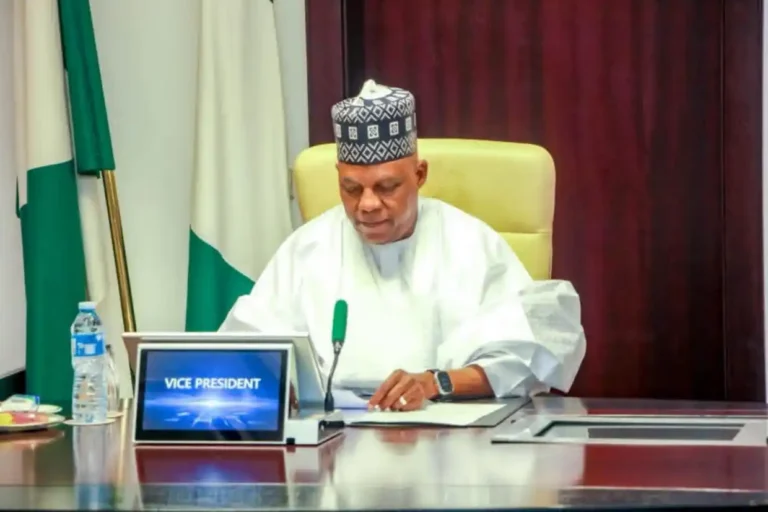
Vice President Senator Kashim Shettima has called on financial institutions, government agencies, and private sector players to expand their support for Micro, Small, and Medium Enterprises (MSMEs) in Nigeria.

He made the appeal on Tuesday while receiving the 2025-2026 MSME report during the Nigerian MSMEs stakeholders meeting held at the Presidential Villa, Abuja.

Emphasising the critical role of MSMEs in economic growth, job creation, and poverty reduction, the Vice President urged stakeholders to leverage technology to strengthen the sector, especially for young Nigerians operating in the digital space.

“We have our jobs cut out for us. SMEDAN is doing an awesome job, so also is ITF. Every stakeholder here, from NAFDAC, to CAC, NITDA, Export Promotion Council, and NIPC, is putting in their best, and we are mightily proud of all of you,” he told participants at the meeting.

Senator Shettima encouraged both government agencies and private sector partners to harness Nigeria’s potential in digital services, agriculture, and other key areas that can benefit MSMEs. He asked them to take a cue from India, which generated $130 billion in 2025 from business process outsourcing alone.

“So, we need to really harness our potential in the digital space, in agriculture,” he added, noting that the opportunities in outsourcing are significant.

The Vice President also thanked stakeholders for their efforts in advancing MSMEs in Nigeria and assured them that the administration of President Bola Ahmed Tinubu would continue to support the growth of small businesses across the country.

Earlier, the Minister of Information and National Orientation, Mohammed Idris, described the meeting as an important review of progress made by MSMEs over time. He said all key participants facilitating the success of the MSMEs programme were present to assess achievements and chart the way forward.

He revealed that over 250,000 jobs had been created through MSME-related initiatives, adding that more jobs are expected in the coming months.

The Minister also commended the Special Adviser to the President on MSMEs and Job Creation in the Office of the Vice President, Mr. Temitola Adekunle-Johnson, for bringing together stakeholders in MSMEs across Africa to Abuja.

He said the convergence was an opportunity to showcase Nigeria and discuss strategies for enhancing the development of the MSME sector on the continent.

Presenting the MSME report, the Special Adviser to the President on Job Creation and MSMEs, Adekunle-Johnson, gave a brief overview of how the Renewed Hope Agenda under President Tinubu has repositioned MSMEs as a central pillar of national economic transformation and job creation.

He explained that the core focus in the past year had been on improving access to affordable financing, reducing operational challenges through shared infrastructure, strengthening market linkages, and institutionalising recognition frameworks that promote excellence and competitiveness.

Speaking on developments in 2025, he said access to funding had been expanded through MSME Clinics. According to him, the clinics serve as a bridge between the federal government, state governments, and small businesses, providing market visibility, opportunities for business formalisation, and instant on-site grants for outstanding businesses at each clinic.

On job creation, the presidential aide disclosed that more than 11 shared hubs had been deployed across the country in the past year, creating over 250,000 jobs nationwide.

Looking ahead to 2026, he said his office would focus on strengthening coordination with partner agencies and state governments. He added that priorities would include de-risking of funds, the National MSME Awards, sustainable job creation programmes, capacity development, and improved access to funding for small businesses.

In his goodwill message, the Director General of Small and Medium Enterprises Development Agency of Nigeria, Charles Odii, commended President Tinubu and Vice President Shettima for “setting the blueprint for Small and Medium Enterprises growth in Nigeria.”

He said the shared facilities created for MSMEs by the Office of the Vice President had engaged many people, even late into the night, leading to more job opportunities. He added that “this is the first time the people have been been so fascinated about the policy of government.”

Managing Directors of the Corporate Affairs Commission, National Agency for Food and Drug Administration and Control, and Nigerian Export Promotion Council also highlighted how their agencies had supported thousands of MSMEs within the past year.

Representatives of Access Bank, Zenith Bank, and Wema Bank pledged continued partnership with the Office of the Vice President to ensure MSMEs receive the support they need, as stakeholders reaffirmed their commitment to moving the Nigerian economy forward through small business development.

Advertisement

WAEC Launches DigiCert Digital Certificate System in Five Countries

0

The West African Examinations Council (WAEC) has unveiled the much-anticipated WAEC Digital Certificate Services System (WAEC DigiCert) across all its member countries: The Gambia, Ghana, Liberia, Nigeria, and Sierra Leone.

In a statement on Monday, WAEC said the Digital Certificate Services platform is a mobile and web-based application designed to provide enormous benefits to stakeholders. According to the Council, the platform offers simple features that enable users to access, request, confirm, or share digital forms of their original certificates. Users can also recover lost WAEC examination numbers through the system.

WAEC stated that the system is reliable and that the authenticity of certificates obtained through WAEC DigiCert is guaranteed. It added that the cost benefits to users “cannot be overstated.” Following its successful pilot phase in Nigeria, the Council said WAEC DigiCert received positive feedback from candidates and educational institutions worldwide.

The general public and all stakeholders have been advised to use WAEC DigiCert to avoid administrative challenges and bottlenecks associated with manual certificate issuance and collection.

The Council also assured the public that the usual printing and issuance of physical certificates will not be affected by the new innovation.

WAEC said the mobile app can be downloaded on the App Store or the Play Store for iOS and Android devices. For more information, it directed users to visit www.waec.org or its official social media accounts @WAECDigicert.

The statement was signed by Demianus G. Ojijeogu, anipr, Head of Public Affairs, WAEC Headquarters, Accra, Ghana.

SMEDAN to Fund 6,122 Entrepreneurs with N250,000 to N5m Loans

0

The Small and Medium Enterprises Development Agency of Nigeria (SMEDAN) is set to empower 6,122 trained entrepreneurs nationwide with loans ranging from N250,000 to N5 million at single-digit interest rates.

The Director-General of SMEDAN, Mr Charles Odii, said the agency’s new Inspire, Create, Start and Scale (ICSS) programme addresses a key challenge facing small businesses across the country.

He explained that the initiative bridges the gap between entrepreneurship training and access to finance.

Odii made this known on Tuesday during the launch of the ICSS MSME Financing Window in Abuja. According to him, the initiative combines structured entrepreneurship training with single-digit interest loans to support business growth.

He stated that the scheme allows participants to acquire laptops, power solutions, and operational equipment essential for business growth and sustainability.

“The current phase involves 100 participants, while 6,122 trained entrepreneurs nationwide are targeted for financing support.

“The programme has already been implemented in Niger, Edo, Enugu, Abuja, Lagos, and Kano States,” he said.

Odii described ICSS as a “capital-training bridge” that equips entrepreneurs with the technical, managerial, and financial skills demanded by banks. He noted that the goal is to transform business training into actionable access to funding opportunities.

He called on more financial institutions to partner with SMEDAN to scale the dedicated loan facility nationwide. He stressed that sustainable growth for Micro, Small, and Medium Enterprises requires directly linking training with funding.

Earlier, the Minister of Youth Development, Ayodele Olawande, said access to finance remains the most critical factor enabling young Nigerians to convert ambition into viable businesses. He added that structured support is essential for growth.

“Across our nation, young people are energetic, creative, and ambitious, yet many lack capital and opportunities to convert ideas into sustainable enterprises.

“There is, therefore, a need for deliberate investment in youth-led businesses,” he said.

Olawande highlighted three priority areas for youth development, which include transitioning to greener growth, adopting digital solutions, and building practical enterprise skills to attract financing and foster sustainable business models.

He noted that decades of economic growth have not always benefited the youth, leaving many disconnected from opportunities.

“Programmes integrating training, mentorship, finance, and market linkages are essential to close this gap,” he said.

He emphasised that sectors such as agriculture, manufacturing, technology, and the creative economy are key drivers of local production and global market connectivity.

Also speaking, the Head of Development Cooperation of the German Government, Dr Karen Jansen, commended SMEDAN for its leadership and thanked Jaiz Bank and other partners for supporting the dedicated loan facility.

She said the German Government, through the Federal Ministry for Economic Cooperation and Development (BMZ) and implemented by GIZ, has supported ICSS in six states and Abuja.

Jansen stated that access to finance must match capacity, explaining that the facility offers START loans ranging from N250,000 to N2,000,000 and SCALE loans from N1,000,000 to N5,000,000.

“It is targeting 50 beneficiaries in the pilot phase, with a special focus on women and young entrepreneurs”.

She praised the integrated design linking structured training, mentorship, and responsible financing, noting that beneficiaries are expected to demonstrate repayment commitment.

Some beneficiaries testified to the programme’s impact.

David Inalegwu, a professional photographer and videographer, said the initiative enabled him to expand operations, relocate to a suitable workspace, and upgrade equipment to meet growing demand.

Ruqayyat Yusuf, a natural cosmetics and agro-processing entrepreneur, said the programme would greatly support women-led businesses, enabling expansion into export markets and increased production capacity.

Yobe Flags Off Ride for Education Bicycle and Tricycle Scheme

0

Governor Mai Mala Buni on Monday flagged off the Forum of Yobe State Focal Persons and Project Coordinators Education Empowerment Programme in Damaturu, cautioning beneficiaries not to sell items distributed under the initiative.

The launch, held at the Cultural Centre in Damaturu, featured the rollout of the “Ride for Education” Bicycle and Tricycle Scheme. The scheme is designed to address transportation challenges faced by students across the state’s 17 Local Government Areas.

Represented by the Commissioner for Wealth Creation, Empowerment and Employment Generation, Aji Yerima, the governor said the intervention was focused on improving access to education, especially for students in rural communities.

“This intervention is designed to support your education and ease transportation challenges, especially for students in rural and hard-to-reach communities,” he said.

“It is not meant for sale but to motivate academic excellence, improve school attendance and strengthen inclusive access to education.”

Buni commended the Focal Persons and Project Coordinators for initiating what he described as a grassroots-driven intervention aligned with the state’s education reform agenda.

Chairman of the Forum, Mohammed Babami, said the programme was structured to support ongoing reforms in the education sector.

“Education remains the most powerful instrument of empowerment, social transformation and sustainable development. This initiative is structured to complement ongoing reforms in the sector,” Babami said.

Under the programme, 100 performance-based bicycles will be awarded to outstanding junior and senior secondary school students. The beneficiaries will be selected through transparent and merit-driven criteria.

In addition, 17 tricycles, one for each Local Government Area, will serve as community-based education support vehicles to enhance enrolment and retention.

Delivering a goodwill message, the Executive Secretary of the Yobe State Emergency Management Agency, Mohammed Goje, called for continued partnership among stakeholders.

“We must maintain the tempo of collaboration, transparency and commitment that brought this programme to fruition,” Goje said.

Also speaking, the Forum’s Secretary, Farouk Chiromari, said their appointments came with responsibility.

“Our appointments as Focal Persons and Project Coordinators are a call to greater responsibility and service to the people, and we remain dedicated to supporting government policies aimed at youth empowerment and inclusive development,” he said.

The event attracted government officials, traditional and community leaders, development partners and other stakeholders in the education sector.

FG, SMEDAN launch ICSS Grow Fund MSME financing scheme

0

The Minister for Youth Development, Ayodele Olawande, has announced the official launch of the Inspire, Create, Start, and Scale (ICSS) Grow Fund MSME Financing Scheme in partnership with SMEDAN, Kaduna Business School, the German Cooperation, Jaiz Bank, and other key stakeholders.

The launch of the Grow Fund for ICSS beneficiaries took place on Tuesday at Reiz Continental Hotel, Abuja, as part of efforts to strengthen Nigeria’s enterprise ecosystem and empower the next generation of Nigerian entrepreneurs.

The initiative, powered by the Small and Medium Enterprises Development Agency of Nigeria (SMEDAN) and supported by Jaiz Bank, is described as a strategic move to bridge the funding gap for young business owners across the country.

Speaking at the event, the minister said access to finance remains one of the biggest challenges facing young Nigerians with bold ideas and the energy to build sustainable businesses.

“Many of our young people are prepared to work; what they often lack is structured support and the capital to scale,” he said.

He explained that the Federal Ministry of Youth Development is addressing this challenge through the Nigerian Youth Academy (NiYA), which focuses on expanding access to practical skills, digital capabilities, enterprise development pathways, and startup support.

“At the Federal Ministry of Youth Development, we are tackling this gap through the Nigerian Youth Academy (NiYA), expanding access to practical skills, digital capabilities, enterprise development pathways and startup support. But we need partnership and collaboration to scale up and expand the space of opportunity for a greater number of young Nigerians,” he stated.

According to him, NiYA provides practical skills and digital capabilities, enterprise development pathways, and direct links to responsible financing.

He stressed the importance of collaboration between public and private institutions, noting that when young entrepreneurs are properly trained, structured, and linked to finance, businesses grow, jobs are created, and confidence in youth enterprise increases.

Olawande added that the ICSS Financing Scheme aligns with the broader agenda to prepare young entrepreneurs, connect them to markets, and support them with responsible financing.

“It rewards preparation, recognises discipline, and promotes access based on compelling structure. I commend all partners driving this process and encourage our young entrepreneurs to build carefully, grow sustainably, and create real value. That is how we will change the narrative of youth enterprise in Nigeria under the Renewed Hope Agenda,” he said.

He added that under the Renewed Hope Agenda, the focus is shifting from job seekers to job creators.

Apply: FG 3MTT National Impact Challenge

0

The federal government has opened entry applications for 3MTT National Impact Challenge aimed at strengthening outcomes from the three-million-man training programme, as it moves to scale up its digital skills initiative.

Minister of Communications, Innovation and Digital Economy, Mr. Bosun Tijani, announced the challenge in a post on his X handle on Tuesday.

The challenge is designed to capture real-life outcomes from participants and partners, while also helping government understand how the programme is shaping careers, businesses, and communities across Nigeria.

About the 3MTT Programme

Over the pilot phase of the
Million Technical Talent (3MTT) programme, the federal government has made strong progress in building Nigeria’s digital talent base — training over 135,000 Nigerians across three cohorts, extending learning to 300,000+ learners through our community resources, and contributing to the creation of 15,000 job and opportunity pathways.

Beyond these, over 1.8 million Nigerians are currently within the 3MTT pipeline as the government work towards the programme’s broader ambition of equipping three million citizens with in-demand digital skills.

The programme focuses on areas such as software development, data analysis, cybersecurity, product management, and other digital fields aligned with global market needs. Through structured learning, mentorship, and community engagement, 3MTT aims to position Nigerian talents for local and international opportunities.

Scale-up Phase of the Programme

As we enter the scale-up phase of the programme where we accelerate our spread towards our target, our focus is on deepening impact by strengthening the alumni community, expanding access to opportunity, and ensuring skills translate into real outcomes.

As part of this next phase, the FG would like to hear directly from Fellows and partners through the #3MTTImpactChallenge on how 3MTT has shaped your journey so far, through the 3MTT National Impact Reflection.

This reflection is expected to provide insights into employment outcomes, career transitions, entrepreneurial growth, and community impact driven by the programme.

Prizes

  • 10 Laptops
  • 200 E-Tablets
  • 1,000 Data Bundles (10GB)
  • And more

Eligibility Criteria

Eligibility criteria for the 3MTT National Impact Challenge include the following:

  • Applicants must be current or past Fellows of the 3MTT programme
  • Partners or collaborators who supported 3MTT activities are eligible
  • Submissions must focus on real experiences linked to the 3MTT programme
  • Entries must be shared publicly on approved social media platforms
  • All required hashtags and tags must be used for validation

How to Submit Entry

This short guide outlines the critical steps you must complete to successfully submit your entry for the National Impact Challenge.

  1. Draft Your Story: Write your compelling “Before and After” story, detailing how the 3MTT program has impacted your life and career and share on one or more social media platforms of your choice (Facebook, LinkedIn, X, TikTok or Instagram)
  2. Use Mandatory Hashtags: Your post must include all three of these official hashtags to be eligible:
  • #My3MTTStory
  • #3MTTImpactChallenge
  • #3MTTNigeria
  1. Tag Mandatory Organizers: You must also tag the following official accounts:
  • President of Nigeria: @officialABAT
  • Hon. Minister of Information and Digital Economy: @Dr. ‘Bosun Tijani
  • 3MTT Nigeria: @3MTTNigeria
  1. Programme Partners: Also tag a minimum of two (2) of the following partner organizations in your post:
  • @UNDP
  • @Airtel Nigeria
  • @MTN Nigeria
  • @Huawei
  • @Moniepoint
  • @Google
  • @Microsoft
  • @European Union
  • @AWS
  • @IHS
  • @Denmark

Deadline for the Impact Reflection Challenge submission is Monday, 14th February, 2026

Link to Apply: APPLY HERE

News update (February 17, 2026):

New EXTENDED DEADLINE is SATURDAY, FEBRUARY 28, 2026.

Read Also: NJFP 2.0 Approves Fellows

AfDB approves $200m loan for NAGS-AP Phase 2 Agricultural Scale Up in Nigeria

0

The Board of Directors of the African Development Bank Group has approved a $200 million loan to support the scale up of priority agricultural investments in Nigeria under the second phase of the National Agricultural Growth Scheme – Agro-Pocket (NAGS-AP).

The funding will help boost productivity, strengthen value chains and accelerate climate-smart, data-driven farming across the country. The scheme is part of the Federal Government of Nigeria’s wider agricultural reform efforts.

The new approval follows an earlier financing for Sector Budget Support under the Bank Group’s African Emergency Food Production Facility. It will directly support the implementation of five key programmes under the National Agricultural Technology and Innovation Policy (NATIP).

The five focus areas include access to high-quality agricultural inputs, strengthening value chains for priority crops, revitalising extension services, promoting digital and climate-smart agriculture, and improving agricultural data management systems.

According to details of the programme, the funding is designed to raise staple crop production and productivity by making accessible technologies available to farmers. These include climate-resistant, high-yield seed varieties and fertiliser blends tailored to local environments.

The scheme will also expand access to crop insurance to protect farmers from climate-related losses. It aims to increase wheat production fivefold and raise rice output by 20 percent in order to strengthen national self-sufficiency. In addition, it seeks to encourage Nigerian youth to expand cultivated areas and adopt more commercially oriented farming practices, helping to turn the country’s growing youth population into a driver of economic opportunity.

Dr. Abdul Kamara, African Development Bank Director General for Nigeria, said the second phase builds on earlier achievements.

“Building on the strong results achieved under Phase 1, this second phase draws directly from those lessons and successes to scale up impact even further. By expanding access to quality inputs, digital tools, and climate-smart technologies, we are supporting farmers to improve productivity and resilience. This programme will continue to play a critical role in reducing food imports, boosting local production, and advancing inclusive growth across the country,” he said.

The first phase of NAGS-AP introduced an ICT-based system that delivered quality seeds, pesticides and fertiliser to farmers through more than 600 agro-dealers nationwide. It also supported the cultivation of 118,000 hectares of wheat during the 2023/2024 dry season, tripling national wheat output to an estimated 0.5 million metric tons in 2024.

So far, about 650,000 smallholder farmers growing wheat, rice, cassava, maize, sorghum and millet have benefited from the programme.

Agriculture currently employs 38 percent of Nigeria’s working population and contributes 25.2 percent to the country’s gross domestic product (GDP). However, the sector continues to face low productivity due to limited access to quality seeds and fertilisers, weak land tenure systems, low irrigation levels, climate breakdown and soil degradation.

The project will run for four years beginning in March 2026. It aligns with Bank Group President Sidi Ould Tah’s Four Cardinal Points strategic vision for Africa, which focuses on empowering young people and women through technology and financial support.

Nigeria must turn youth population into economic advantage: Tijani

0

Bosun Tijani, Federal Minister of Communications and Digital Economy, has said Nigeria must act quickly to turn its growing youth population into an economic advantage rather than a national challenge.

Speaking yesterday in Oslo during the European roadshow for Project BRIDGE, Tijani said his engagements with NORAD, NORFUND, the University of Oslo, SINTEF and PRIO pushed him to reflect not only on infrastructure but on Nigeria’s future.

He said PRIO’s research on Nigeria’s youth bulge was “sobering and reassuring at the same time.”

“Nigeria is one of the youngest nations on earth and millions of young people enter working age every year. That energy can become our greatest blessing or it can become a source of strain,” he said.

According to him, “Demography is not destiny. It is direction shaped by policy, discipline and investment.”

He noted that PRIO observed that Nigeria today sits roughly where South Korea stood in the 1970s, when its youth population was strategically harnessed for transformation. “That comparison is not about imitation. It is about possibility,” he explained.

Tijani stressed that “the difference between dividend and disruption is structure,” adding that the government’s agenda is structural and interconnected.

He described Project BRIDGE as an effort to build the backbone that allows young Nigerians to create, work and compete globally. He said NUCAP, the rural tower programme, is designed to ensure that children in riverine and remote communities are not excluded from opportunity because of geography.

“Our satellite investments strengthen national resilience and extend connectivity to every corner of our country,” he said.

The minister added that 3MTT is preparing the workforce at scale, while the national AI strategy positions Nigeria’s youth to become creators in the next technological wave.

However, he said infrastructure and skills alone are not enough. “We are expanding the digital economy so that there is real demand for talent, more startups, more innovation and more export capacity,” he stated.

He also said the government is driving e-governance reform to make public services more efficient, transparent and digitally accessible, thereby lowering friction for entrepreneurs, reducing cost of compliance and building trust in institutions.

“There are not many investments capable of converting a youth bulge into a demographic dividend. Connectivity at scale. Skills at scale. Institutional reform. Digital public infrastructure. Policy coherence,” he said.

Drawing a comparison with natural resources, Tijani said, “Like oil, demography can bless or destabilise. Norway reminds us that resources become prosperity only when governed wisely.”

Reflecting on his experience, he said, “My years building CcHUB showed me that talent is abundant in Nigeria and my time in public service has reinforced that infrastructure, institutions, and policy determine whether that talent finds expression.”

He acknowledged that some may not immediately see the value in laying fibre across tens of thousands of kilometres, connecting remote communities, investing early in AI or digitising public services.

“But demographic windows are time-bound. If we do not build the rails now, the pressure will build elsewhere,” he warned.

“I am resolved to stay focused. To ensure that this moment of service is used to lay the foundations that will allow Nigeria’s youth bulge to become a blessing,” he said.

“History will not judge us by noise. It will judge us by whether we engineered the dividend. And I intend to stand and be counted.”

Tinubu unveils Nigeria Industrial Policy 2025, orders immediate implementation

0

President Bola Ahmed Tinubu on Tuesday unveiled the Nigeria Industrial Policy 2025, charging relevant ministries, departments and agencies (MDAs) to ensure its speedy implementation.

The policy, described as a roadmap for re-engineering Nigeria’s industrial base, aims to unlock value across sectors and place production, competitiveness, and job creation at the centre of the country’s economic strategy. Speaking at the official launch held at the Bola Ahmed Tinubu International Conference Centre in Abuja, the President stressed that the new policy already has a clear implementation architecture.

Represented by Vice President Kashim Shettima, the President noted that policies often fail not at conception but at execution. He regretted that for too long, Nigeria has struggled “with fragmented value chains, high production costs, infrastructure gaps, policy inconsistency, and insufficient coordination between government and industry.”

He declared firmly that “this stops now,” explaining that the Nigeria Industrial Policy 2025 is an acknowledgement of those shortcomings and a clear effort to address them.

“We have realised that industrialisation is not a wish you think about; it is an action you perform. More than that, we must remind ourselves that this task demands coherence across energy, trade, infrastructure, finance, skills, and innovation. It requires partnership between government and the private sector,” he said.

President Tinubu insisted that implementation and execution would define the success of the policy. He recalled that when his administration came into office in 2023, it did so with a promise to redefine Nigeria’s industrial ambition.

“The defining strength of this policy is its insistence on implementation. This administration will not measure success by the number of documents we produce,” he said.

“We will measure success by the number of factories that open their gates at dawn, by the jobs created for our young men and women, by the exports that leave our ports bearing the mark of Nigerian excellence, and by the value retained within our own economy.”

Outlining the key components of the Nigeria Industrial Policy 2025, the President explained that it prioritises strategic sector focus based on Nigeria’s comparative and competitive advantages.

“It advances value chain development so that Nigeria moves steadily from exporting raw materials to producing finished goods. It integrates our micro, small, and medium enterprises into the heart of industrial growth, because prosperity must not be exclusive,” he said.

“It aligns infrastructure and energy with industrial ambition, for factories cannot run on policy alone. It strengthens skills, technology, and innovation to prepare our people for the industries of today and tomorrow.”

The President also called for stronger private sector participation, urging businesses “to invest with confidence and responsibility, to deepen local value chains, to create jobs and transfer skills, and to partner with government in building a productive economy.”

He commended the Minister of State for Industry, Senator John Owan Enoh, “for his disciplined leadership and clarity of purpose in driving” the process. According to him, the Minister “has demonstrated that policy leadership is not about noise, but about substance, coordination, and follow-through.”

President Tinubu further applauded the Ministry’s technical teams, industry stakeholders, manufacturers, investors, and practitioners for shaping the policy into “a document grounded in reality and informed by experience.”

Earlier in his remarks, the Minister of State for Industry, Chief John Owan Enoh, described the launch as a turning point aimed at building an industrial Nigeria that produces, competes, and prospers.

On his part, Chairman of Dangote Group of Companies, Alhaji Aliko Dangote, thanked the federal government for introducing what he called a progressive industrial policy. He observed that Nigeria is the only country in Africa where the private sector is bigger than the government.

Dangote said domestic manufacturers are pleased with the policy created by the Tinubu administration and expressed strong confidence in the country’s currency outlook. According to him, “the naira, this year, will be at ₦1,000 to $100.”

He added that many investors are willing to invest in Nigeria due to foreign exchange stability and other reforms. However, he stressed the importance of protecting indigenous industries.

“If there is no protection, there is no way any industry will thrive here,” Dangote stated.

The United Nations Resident and Humanitarian Coordinator in Nigeria, Mr. Mohamed Malick Fall, also expressed optimism. He said that with the official launch of the policy, Nigeria has taken a step into its future where hope is translated into action, leading to inclusive economic growth.

He explained that the policy is the outcome of an ongoing partnership between the United Nations Industrial Development Organization (UNIDO) and Nigeria, aimed at transforming the country into a beacon of prosperity and a key player in regional and global value chains.

Similarly, the President of the Manufacturers Association of Nigeria (MAN), Otunba Francis Meshioye, commended the President for launching the policy. He noted that manufacturers are focused on its effective implementation and backed the promotion of indigenous entrepreneurship as enshrined in the policy. He assured that MAN would give full support to ensure its successful implementation.

CIVTECH Training Begins for 2,000 Cross River Civil Servants

0

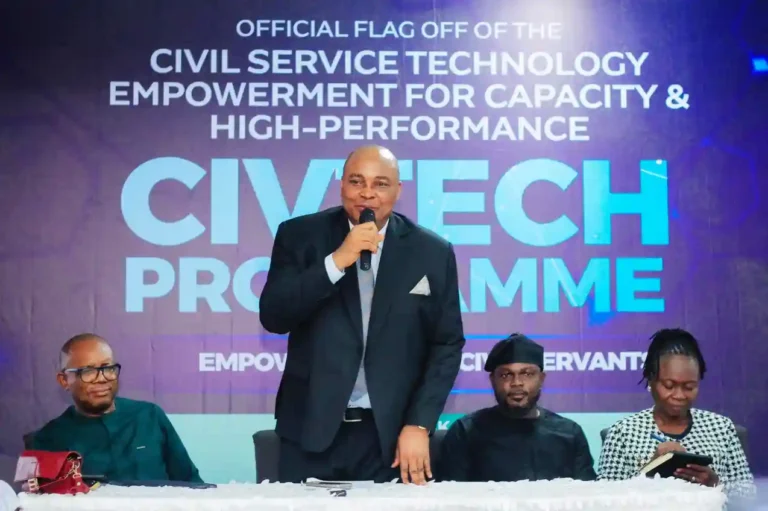
The Cross River State Government has officially commenced the Civil Service Technology Empowerment for Capacity & High-performance (CIVTECH) Programme, an initiative designed to digitally transform the state’s public workforce.

The intensive training phase of the programme began on Monday, February 16, 2026, under the administration of Senator Prince Bassey Edet Otu. The initiative is aimed at equipping 2,000 civil servants with essential digital skills to improve efficiency, innovation, and service delivery across government ministries and agencies.

CIVTECH is a collaborative effort involving the Office of the Head of Service, the Cross River State Microfinance and Enterprise Development Agency (CRSMEDA), and the National Information Technology Development Agency (NITDA). The training is being hosted at the Cross River State ICT Hub, also known as the CR-ICT Hub, with a flexible and high-impact schedule designed to accommodate the large number of participants.

Speaking on the initiative, the Director General and Chief Executive Officer of CRSMEDA, Great Ogban, described the programme as a strategic investment in governance. He said, “The CIVTECH Programme is more than just a training series; it is a strategic investment in the future of governance and to also drive the People First agenda.” He added that by empowering civil servants with 21st-century tools, Cross River State is positioning itself as a leader in Nigeria’s digital economy.

The programme aligns with the Federal Government’s agenda to promote a paperless civil service and reduce administrative bottlenecks in public service delivery. It focuses on building digital capacity and encouraging the use of automated systems to enhance productivity and transparency.

The Director General of NITDA, Kashifu Inuwa Abdullahi CCIE, participated in the official flag-off of the programme. Representing him at the ceremony, Dr Aristotle Onumo, Director of the Stakeholder Management and Partnership Department at NITDA, delivered a keynote address highlighting the importance of digital transformation in public service.

Dr Onumo emphasised the urgent need for Nigeria’s public service to transition “from bureaucracy to digital excellence.” He noted that citizens now expect government services to reflect the speed, transparency, and convenience found in digital banking and e-commerce platforms.

Declaring the programme open, the Head of Service, Mr Orok Okon, reaffirmed the state government’s commitment to strengthening the capacity of its workforce. He stated that the government is determined to equip civil servants with the competencies required to drive efficient, technology-enabled service delivery.

Dr Onumo commended Cross River State for embracing digital reform and encouraged the adoption of modern tools and technology-driven skills. He stressed that a truly high-performance public service must leverage technology to deliver excellence, anytime, anywhere, and for everyone.

Other key figures present at the event included Ekuri Ekuri Asu, Centre Manager of the Cross River State ICT Hub, who is supporting the coordination of the training sessions.