Home Blog Page 275

Gov Eno reaffirms support for tourism and blue economy in A’ Ibom

0

Governor Umo Eno has restated his commitment to tourism growth and blue economy development in Akwa Ibom State, saying his administration will continue to encourage and reward young professionals who are ready to work with government to promote the State’s positive image through the ARISE Agenda. He made this known while speaking with Government House correspondents after inspecting the location of the movie “The Black Book 2” (Old Scores) at Ishiet Beach and Market in Uruan Local Government Area.

The Governor praised the movie Producer and Director, Editi Effiong, for what he described as talent, vision and creativity in showcasing the tourism potential of the State. He said Effiong’s work would contribute to boosting the local economy and attracting more attention to Akwa Ibom. According to him, young people in the State should avoid division and instead draw inspiration from successful indigenes who are using their skills to support development in tourism and the blue economy.

Governor Eno said the location visit left a strong impression on him, explaining that creativity can change the way people see a place. He said, “The impression is amazing, seeing that we have one of our own trying to pull the world down here. I would love to thank and encourage him, and to let our young people see that Akwa Ibom has what it takes to drag the world’s attention.” He added that different people see the same place in different ways, noting, “Someone can see this place and write one story about a swamp that has been abandoned and make all the noise. Another person sees this place and makes a great movie out of it that will market this place to the world and is able to attract the attention because of the work he has done here.”

The Governor pledged support and collaboration with Effiong and other young Akwa Ibomites to help them grow in their chosen fields. He said, “We are going to work with him. Editi is a young man I have known very well. This is one thing I say to our people in the diaspora, let’s partner. Come back home, whatever you see out there, bring it back here, and let’s work together.” He noted that the film project had attracted many visitors and talented artists to the State, saying Effiong “deserves an award and our support.”

Effiong thanked Governor Eno for what he described as visionary leadership and a strong interest in tourism development. He expressed appreciation for the State’s hospitable and tourism-friendly environment, supported by good road networks and modern facilities, which he said make Akwa Ibom one of the most treasured filming and tourism locations in Nigeria.

Advertisement

UNIMAID at 50: N3.5 Trillion Allocation Not Enough for Education – Shettima

0

Vice President Kashim Shettima has said Nigeria must strengthen its education system despite the new 3.5 trillion naira allocation in the 2025 Budget, stressing that the country cannot compete globally if its universities remain underfunded. He explained that the renewed investment by the administration of President Bola Ahmed Tinubu reflects a clear effort to reposition Nigeria in the global knowledge economy.

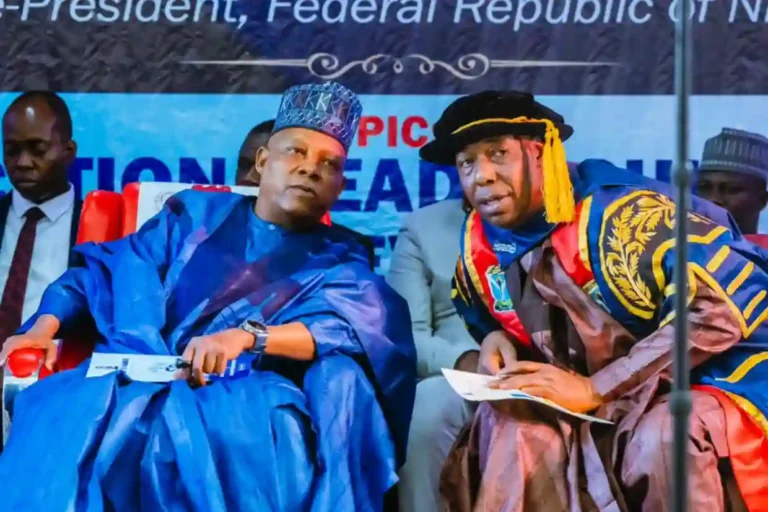
Speaking on Saturday in Maiduguri at the 50th anniversary of the University of Maiduguri, the Vice President said education has become a central part of national development and security. According to him, “Today, there is a shared national understanding that education is the most reliable vehicle to development. It is the immune system of the nation. It fuels economic mobility, lifts families out of poverty, strengthens social cohesion, deepens democratic culture, and fortifies national security. It sustains every modern endeavour, from the construction of strong institutions to the building of a strong economy.”

He said the Tinubu administration has made it clear that it will not pay lip service to education. Shettima noted that national development depends on what citizens know, can imagine, and can create. He added that budgetary decisions have been aligned with these goals. He explained that “in the 2025 Budget, education received a total of 3.5 trillion naira, amounting to 7.3 percent of the national budget, an increase from the previous year.”

He stated that for the first time in many years, universities are receiving support to build mechanised farming programmes. He also noted that new grants have been created to strengthen medical education and that entrepreneurial initiatives in universities have been expanded to equip students with skills needed in today’s global economy. “We are preparing our young people for a knowledge-driven world, not with the tools of yesterday, but with the skills of tomorrow,” he said.

Despite these investments, Shettima admitted that challenges remain. He explained that underfunding over several decades weakened the foundations of Nigeria’s education system. While global benchmarks recommend dedicating fifteen to twenty percent of national budgets to education, Nigeria has often been unable to reach those levels due to competing priorities such as security, healthcare and infrastructure.

The Vice President reflected on the heavy impact of insecurity on education in the North-East. He recalled that over 500 schools were attacked in Borno State between 2009 and 2021, resulting in thousands of classrooms being destroyed and teachers either killed or displaced. He said that despite these setbacks, the state has shown significant recovery. As of March 2025, 877,777 learners were enrolled in public schools across Borno State, and the government committed ₦69.81 billion to education. He added that more than 26,000 students had their WAEC fees paid by the state, while daily school feeding now costs about ₦122 million. Shettima described this resilience, saying, “When terrorists attacked our schools, they were trying to kill the future. But Borno chose hope over fear and education over darkness.”

He acknowledged that universities across Nigeria still face staff shortages, brain drain, outdated curricula, insufficient research funding, frequent strikes and high student-to-teacher ratios. According to him, the Tinubu administration is addressing these issues through digital transformation, creation of a national education database, curriculum reform, investment in research development and the promotion of skills-based training. He said these reforms aim to shift Nigerian education away from rote learning and toward creativity, problem-solving and entrepreneurship.

Shettima stressed that President Bola Ahmed Tinubu’s Renewed Hope Agenda places education at the centre of the country’s growth. He said education is directly linked to job creation, poverty reduction, democratic stability and national security. “National development is impossible without skilled citizens and leaders of integrity. That is why this government is investing deliberately in education, digital skills, research capacity and institutional autonomy,” he stated.

He also traced the origins of the University of Maiduguri to the Third National Development Plan of 1975–1980, noting that the institution has remained a symbol of national progress despite decades of security challenges. Shettima described the university as a resilient institution that continues to produce knowledge and skilled manpower for the country. “This university stands today not as a victim of the storms it endured, but as a lighthouse in the Sahel. The wealth of a nation lies not in gold or oil, but in the minds of its people. And that future is being shaped in our classrooms,” he said.

Earlier, Governor of Borno State, Prof. Babagana Zulum, said the state government is proud of the achievements of the University of Maiduguri and announced scholarships for 200 lecturers to further their studies. He noted that the institution has been a vital part of the state’s human capital development and economic plans for many years.

Governor Umaru Fintiri of Adamawa State also announced a donation of N1.8 billion on behalf of the states in the North-East region for the university’s endowment fund. He praised the growing efforts to expand funding for the institution through private partnerships and individual contributions.

In his remarks, the Vice Chancellor of the University of Maiduguri, Prof. Mohammed Mele, said the 50th anniversary was a celebration of resilience, success and perseverance, especially considering the impact of insurgency on the institution. He recalled the major challenges faced by the university in past years and called for stronger private sector collaboration to support government funding. He said such partnerships are necessary to maintain the progress achieved in research, teaching and community development.

Other dignitaries present at the anniversary event included Former Vice President of Nigeria, Alhaji Babagana Kingibe; Minister of State for Education, Prof. Suwaiba Ahmad; businessman and philanthropist Alhaji Muhammadu Indimi; businessman Sir Emeka Offor; Pro Chancellor of the University and Emir of Lafia, Justice Sidi Bage; members of the National Assembly from Borno State; and the Shehu of Borno, Alhaji Abubakar Ibn Umar Garbai El-Kanemi.


DSS Sends Training Invitation SMS to Candidates

0

The Department of State Services (DSS) has started sending training invitation SMS to shortlisted candidates, with Bauchi State applicants confirming they began receiving messages on Saturday.

One of the messages read, “You are hereby invited for DSS training course at SSDC, Maiduguri road, Bauchi on Friday 19/12/25 about 0700 am.” Candidates were also told, “Come along with original and photocopy of your credentials, 2 passport, (5) whites T shirt, (5) white trousers. Keep your phone at home.”

According to the update, DSS recruitment training will commence in December as Bauchi candidates have been invited to report on 19 December 2025.

All applicants are advised to keep their numbers active and continue checking their SMS for invitations, while preparing the required items ahead of camp.

Federal Auto Training Creates Jobs and N11m Funding for Technicians

0

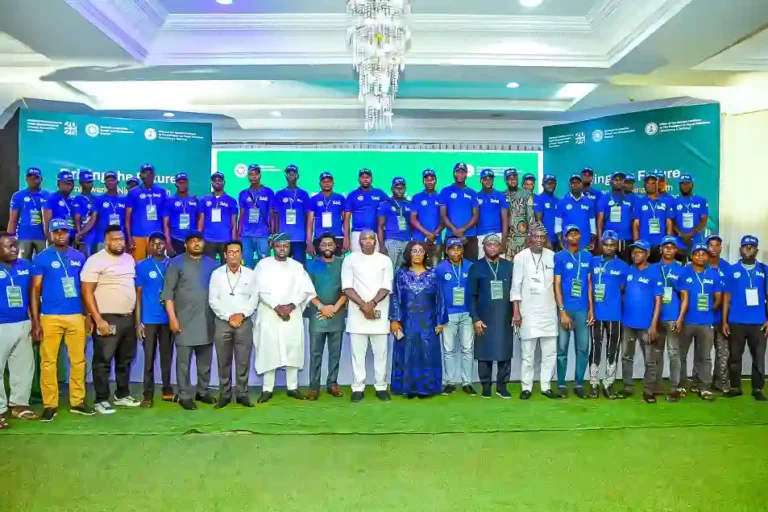
Titilope Gbadamosi, SA to President Bola Ahmed Tinubu on Youth Initiative, has announced the completion of a major youth training programme carried out in Ibadan, Oyo State. She said the project was done in partnership with the National Automotive Design and Development Council (NADDC) and focused on building technical skills for young Nigerians.

According to her, “I spent the last one month working with the National Automotive Design and Development Council to deliver on youth initiatives in Ibadan, Oyo State.” She stated that the first set of beneficiaries were 50 young technicians trained and equipped by DAG Bajaj, a leading automobile company. Another 50 young technicians also received training from the NADDC in CNG conversion and the retrofitting of vehicles to support CNG use.

The programme ended at the Driving The Future conference, where six outstanding trainees received direct employment from Weeldrop Petroleum Company. Gbadamosi added that “a donation of 11 Million Naira was made by Mr Taiwo Shittu, MD of Lanre Shittu Motors, and Mr Tobi Ajayi, Chairman of Nord Motors.”

She expressed appreciation to the Director General of the NADDC, Joseph Osanipin, noting that his partnership has strengthened youth development in automotive technology and local content manufacturing.

Gbadamosi also thanked several supporters, including the Minister of Youth Development, Cmr Ayodele Olawande; the Special Adviser to the President on Media and Communications, Chief Sunday Dare, who delivered a speech; the DG of NITDA, Dr Kachifu Inuwa; the MD of Bank of Industry, Dr Olasupo Olusi; and the DG of the Nigeria-China Partnership, Mr Joseph Tegbe.

She also acknowledged the speakers, Mr Tobi Ajayi and Mr Lanre Shittu, along with the GOC 2 Division Nigerian Army, Major General Chinedu Nnebeife, and the MD of Tatum Bank, Mr Niyi Adeseun, for their support.

Apply for Presidency Poem Challenge with N1 Million Prize

0

The Office of the Senior Special Assistant to the President on Citizenship and Leadership has announced that application is open for the new Poem Challenge titled “My Nigeria My Responsibility.” The theme of the competition is “Reigniting patriotism through responsible citizenship and leadership,” and it aims to inspire young people to express their national duty.

The prizes include ₦1,000,000 for first position, ₦500,000 for second and ₦250,000 for third. Winners will receive prizes live during the event.

According to the announcement, participants must record a short video, maximum 1 minute, reciting an original poem titled My Nigeria My Responsibility. The video must be posted on Instagram and tagged to @ossap_citizenship_leadership with hashtags #MyNigeriaMyResponsibility, #ossapcl, #citizenshipandleadership, #nasirJaaji and #poemchallenge.

Presidency unveils raffle draw with grant, laptop and scholarship

0

The Office of the Senior Special Assistant to the President on Citizenship and Leadership has announced a raffle draw as part of the My Nigeria My Responsibility campaign. The event follows the theme Reigniting Patriotism Through Responsible Citizenship and Leadership.

According to the announcement, participants will get raffle tickets at the registration point before entering the hall. A Special Guest will be invited to pick the winning tickets from the raffle box to ensure transparency.

Prizes include 10 laptops, 20 startup grants worth ₦500,000 each, free scholarships for 10 persons and 20 iPads, with winners receiving prizes immediately.

Verto Announces Winners of First Global Business Award

0

Verto has announced the winners of its first Verto Global Business Award, recognising early-stage African startups that are pushing innovation and supporting international trade. The awards ceremony took place in Lagos on Wednesday and gathered industry leaders, partners and members of Nigeria’s growing startup community.

Dingpay, a fintech company, won first place in the competition. AquaTrack, an agrotech startup, came second, while Grower, an online marketplace for tech talents, secured third place. The winners received cash prizes of USD 10,000, USD 3,000, and USD 2,000 to support their plans for global expansion and cross-border operations.

Speaking after the announcement, Dingpay co-founder Itohowo Udofia shared his excitement about the recognition. He said, “We are honoured to be recognised as the winner of the Verto Global Business Award. This prize will enable us to scale faster, strengthen our operations, and unlock new market opportunities. It’s an incredible validation of our work, and we’re excited for what comes next.”

Verto co-founder and Chief Executive Officer Ola Oyetayo also praised the startups participating in the inaugural edition of the award. He explained that the event highlighted the strength and ambition of Africa’s early-stage startup ecosystem. According to him, “This inaugural edition of the Verto Global Business Award has revealed just how much innovation, resilience, and global ambition exist within Africa’s early-stage startup ecosystem. The calibre of founders we’ve seen this year has been exceptional. As these businesses grow, expand, and strengthen international ties, we remain committed to providing the financial infrastructure that helps turn their global ambitions into reality.”

MTN Unveils Demo Day for 2025 Cloud Accelerator Supporting Startups

0

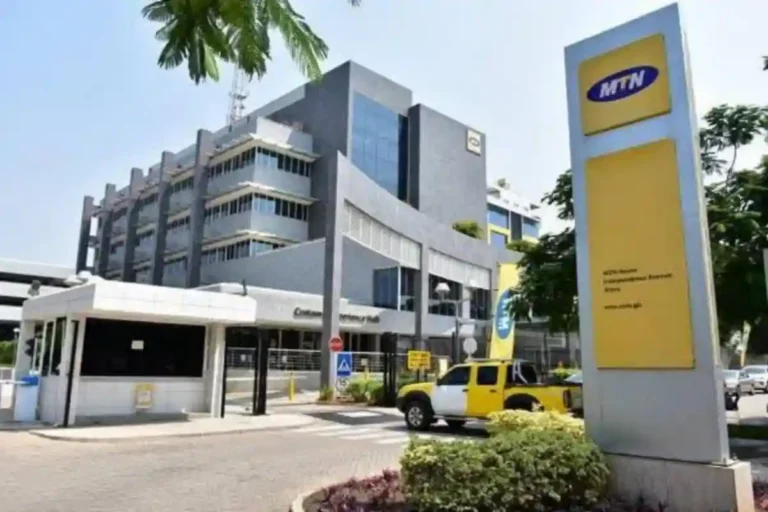
MTN Nigeria has introduced a major boost for early-stage startups through its 2025 Cloud Accelerator, offering infrastructure, funding support, and access to investors without asking for equity. The programme, which held its Demo Day in Lagos, gathered 20 high-growth ventures to pitch their products and share how the accelerator strengthened their capacity to scale. MTN said the initiative is designed to support Africa’s growing innovation ecosystem by giving founders the technical tools and business exposure needed to reach new markets.

The Demo Day marked the end of a 12-week programme aimed at fast-tracking early-stage African startups through non-equity funding, technical guidance, and access to MTN’s enterprise cloud and digital infrastructure. Applications for the accelerator opened in July and closed on August 15, targeting innovations across fintech, health, agriculture, artificial intelligence, and e-commerce. MTN noted that the project aligns with its long-term vision to build a strong pipeline of African innovators who can scale sustainably.

Throughout the programme, founders received cloud credits, access to MTN Cloud, MoMo, and Chenosis APIs, technical mentorship, business development support, and sessions to prepare them for investor engagement. MTN executives explained that beyond training, the accelerator creates opportunities for commercial partnerships between the telecom company and the participating ventures.

In his keynote speech, Ayham Moussa, MTN Nigeria’s chief operating officer, said the company remains committed to strengthening digital transformation across Africa. “The goal is not just to train founders. Africa’s innovators need infrastructure that truly fits the continent’s realities. MTN is committed to supporting solutions that are both globally competitive and locally relevant,” he said.

Among the 20 startups that pitched, Regxta stood out with its micro-lending and savings services targeted at underserved individuals and SMEs in rural areas. Led by CEO Bello Rukayat, the company said its data-driven approach helps keep loan default rates below one percent. Another strong pitch came from Pipeops, represented by Samuel Ogbonyomi, which offers an AI-powered tool that makes cloud infrastructure deployment easier for businesses, especially in markets where DevOps talent is limited.

Hadi Finance, led by CEO Bidemi Adebayo, introduced its credit and financing tools for small retailers, while ProDev, represented by Faith Dike, highlighted its recruitment platform built to connect African tech professionals to global employers. Other startups featured in the cohort included Prembly, CreditCheck, Sproutly, MyItura, Uri, Bunce, Trashcoin, and several others working across finance, agriculture, logistics, and digital identity.

MTN executives emphasised that the accelerator supports efforts to remove barriers that slow down African startups, especially access to infrastructure, payment systems, and enterprise technology. Industry analysts say MTN’s decision to provide non-equity backing and access to cloud tools gives founders a faster path from prototype to market-ready products.

MTN confirmed that support for the startups will continue after Demo Day through pilot programmes, commercial partnerships, follow-up support, and possible future investment opportunities. For many founders, the event served as a key chance to present their solutions, attract investors, and strengthen their presence in Nigeria’s competitive tech landscape and the wider African market.

Kaduna Releases N5bn Women Grant, Enrols 10,000 Almajiri Children

The Kaduna State Government has outlined major progress in women’s empowerment, child protection, and social inclusion, confirming that a targeted grant of N5 billion has been released to support women-led businesses across the state. According to the government, the intervention includes skills training and free agricultural inputs for women smallholder farmers to help them improve their livelihoods and expand economic opportunities.

At a press conference held on Saturday in Kaduna, the Commissioner for Women Affairs and Social Development, Rabi Salisu, explained that the state has continued to invest in long-term reforms designed to reduce inequalities. She stated that “the government has enrolled 10,000 Almajiri children into the school system,” describing it as an important step toward reducing the number of out-of-school children. She added that adolescent girls have also been enrolled in formal schools and provided with start-up kits and protection services to support their education and safety.

The commissioner highlighted that combating GBV remains a central priority for the state. She noted that Kaduna has strengthened its response mechanisms through the operation of four Sexual Assault Referral Centres, toll-free hotlines, and a technical working group created to coordinate interventions and improve support for survivors. She emphasized that these structures are backed by consistent policy action and financial investment.

To reinforce legal protection for vulnerable groups, Salisu said the state has domesticated and implemented several key laws. These include the Violence Against Persons Prohibition Law, the Child Welfare and Protection Law, and the Disability Law. The government has also established four functional family courts to ensure faster handling of cases involving women and children.

Further updates from the ministry showed that the Children’s Diversion Program has supported 85 children in conflict with the law by offering school enrollment, literacy and numeracy classes, skills training, and mental health support. The initiative is designed to provide a rehabilitative alternative rather than exposing children to the regular justice system.

On social inclusion, the state confirmed that the Disability Affairs Board is now fully operational, improving access to essential services for Persons with Disabilities. Cash transfers and youth development programs are also being implemented as part of broader social protection efforts benefiting vulnerable households.

Salisu noted that the government has integrated gender and inclusion principles across all ministries and agencies. She added that through the Open Government Partnership, citizen participation in planning and budgeting has increased, making development more equitable. The government reaffirmed its commitment to strengthening partnerships with development partners and civil society organizations to sustain progress in gender equality and inclusive growth.

Lagos NYCN Commends Government Youth Programs

0

Ibrahim Adigun, chairman of the National Youth Council of Nigeria (NYCN), Lagos State chapter, on Saturday praised the Lagos State Government for its efforts toward youth and human capital development. He gave the commendation during the 2025 Africa/National Youth Day celebration held in Lagos. The event was organised by the National Institute for Legislative and Democratic Studies in conjunction with the federal ministry of youth development.

Mr Adigun noted that Gov. Babajide Sanwo-Olu had, over the past few years, shown strong commitment to youth empowerment through several programmes targeted at young people in the state. He explained that the Lagos State Government had carried out impactful initiatives in the ministry of youths and social development, led by Mobolaji Ogunlende as commissioner and Toyin Oke-Osanyintolu as permanent secretary.

He said, “LASG has increased its support for youth organisations like the Lateef Jakande Leadership Academy, Ibile Youth Academy, Lagos Youth Development Institute among others.” He added that “Lagos State is ranked highest among other states of the federation at the ongoing Youth Day celebration final.”

Mr Adigun also commended the state for its review of the youth policy and the movement of the National Youth Service Corps (NYSC) to the ministry of youth and social development.

Mr Adigun and Abubakri Asoro, vice chairman, Lagos East, received an award presented by Emmanuel Olawande, minister of youth development, on behalf of LASG.