Home Blog Page 28

FG to Launch National Community Food Bank Programme in April

0

First Lady, Senator Oluremi Tinubu, in partnership with the Bank of Industry (BOI), Bank of Agriculture (BOA) and other partners, is set to launch a National Community Food Bank Programme in April to tackle child malnutrition across Nigeria.

Senator Oluremi disclosed this while flagging off an advocacy and awareness campaign for the national community food bank programme aimed at addressing child health challenges caused by malnutrition. The event took place in Abuja on Tuesday during the Federal Government’s first edition of the National Traditional and Religious Leaders Summit on Health, held at the State House Banquet Hall.

Speaking at the summit, Mrs Tinubu stressed the importance of health to national development.

“Health, as we all know, is central to the well-being, productivity and progress of any nation.

“It is for this reason that President Bola Tinubu placed health at the heart of the Renewed Hope Agenda as an essential pillar of national development.”

She explained that the Office of the First Lady of Nigeria would work closely with the Ministry of Health and Social Welfare and the National Primary Health Care Development Agency to address child malnutrition across the country.

“This year, the Office of the First Lady of Nigeria will be working with the Ministry of Health and Social Welfare, and the National Primary Health Care Development Agency to address child malnutrition across the nation,” she said.

According to her, her office and the ministry will also collaborate with BOI, BOA and other partners to officially launch the National Community Food Bank Programme in April.

She said the programme is designed to strengthen community nutrition support, improve access to safe and nutritious food for vulnerable children, and contribute meaningfully to the national response to ending child malnutrition.

“The programme will operate through the nationwide network of Primary Health Centres to identify and register eligible families with children under six years.

“Caregivers will receive counselling and be given food vouchers that they can redeem for nutritious locally-grown foods at food banks that will be established close to the health centres.

“This initiative will be funded through a Trust Fund by willing private sector partners and well-meaning Nigerians, and to ensure accountability, the trust fund will be overseen by credible Nigerians,” she said.

Mrs Tinubu called on traditional and religious leaders to support the initiative by raising awareness and sensitising households so that no eligible family is left behind.

She acknowledged the presence of traditional and religious leaders from across the country and thanked them for their leadership roles and commitment to the well-being of the people.

The First Lady also advised the wives of governors nationwide to support the advocacy campaign and ensure that the programme reaches those who need it most.

“I commend the Coordinating Minister of Health and Social Welfare and his team on this particular health summit. Well done for all the great work that you have been doing to improve healthcare delivery to our people.

“At this juncture, I officially flag off the Advocacy and Awareness Campaign for the National Community Food Bank Programme.

“I also congratulate our health volunteers, the National Health Fellows and wish you all success as you commence this journey to contribute to our beloved nation.

“While learning and building your skills, together we will build healthier and stronger generations of Nigerian children,” Mrs Tinubu said.

Muhammad Ali Pate, the Minister for Health and Social Welfare, said the initiative aligns with the sector’s Renewal Investment Initiative and President Tinubu’s broader reform agenda.

Pate noted that the programme also aims to improve governance, service quality, security and domestic health financing.

He said the Federal Government convened the National Summit on Health as part of its efforts to deepen community engagement, strengthen health reforms and improve health outcomes nationwide.

“Today we have gathered to hear the details of what the federal government has decided to do with both the state government and the local government.

“Secondly, the malnutrition issue, we have built an infrastructure for our children to address the issue of acute malnutrition,” Pate said.

Traditional and religious leaders from the 36 states of the federation, including the FCT, attended the summit.

Political leaders, health sector stakeholders, other prominent Nigerians and representatives of the World Health Organisation were also present at the event.


Advertisement

Temu responds as NDPC probes alleged data protection breaches in Nigeria

0

Temu, the global e-commerce platform, has responded to an ongoing investigation by the Nigeria Data Protection Commission (NDPC), saying it is committed to protecting users’ personal information and will cooperate fully with authorities.

The response follows an earlier announcement by the NDPC that it had launched a probe into the platform over alleged breaches of the Nigeria Data Protection Act. The commission said the investigation is focused on how Temu collects, processes, stores, and transfers Nigerians’ personal data.

In a statement sent via email to Nigeria Startup News on Tuesday, Temu said safeguarding privacy remains central to its operations.

“At Temu, protecting user privacy and data security is a top priority. We are committed to complying with applicable laws and regulations in our data practices. We will continue to engage in open and constructive dialogue with the NDPC to address any questions or concerns,” the company stated.

Temu added that it would maintain open communication with the Nigerian regulator as the investigation progresses.

“We will continue to engage in open and constructive dialogue with the NDPC to address any questions or concerns,” the company noted.

The NDPC had earlier disclosed that it initiated the probe after identifying potential issues relating to the platform’s data processing activities. According to the commission, the investigation is examining key areas such as data minimisation, duty of care, transparency obligations, and cross-border transfer of personal information.

The regulator also warned that organisations processing the personal data of Nigerians without complying with the country’s data protection law could face enforcement actions, including penalties.

Temu entered the Nigerian market in late 2024 and has quickly gained popularity due to its low-priced products, strong advertising campaigns, and mobile-first shopping model. The platform is estimated to have attracted millions of Nigerian users within a short period, drawing regulatory attention over how large volumes of consumer data are managed.

Under the law, the NDPC is empowered to regulate how organisations collect and process personal data, investigate alleged breaches, and impose sanctions for violations.

Lagos Pushes Circular Economy to Turn Waste into Markets

Lagos State Governor, Mr. Babajide Sanwo-Olu, on Monday said the concept of circular economy has inspired the state government to adopt innovative approaches that help reclaim value from resources that are currently being wasted.

The Governor made this known at the 2026 Nigeria Circular Economy Week held at the Lagos Continental Hotel, Victoria Island. He spoke through the Commissioner for the Environment and Water Resources, Mr. Tokunbo Wahab.

Sanwo-Olu said the aim of the state government is to ensure that the systems being built will outlast the present administration. He explained that the circular economy has helped Lagos create systems that keep materials in circulation and build markets that turn environmental responsibility into economic opportunities.

He described the theme of the event, “Turning Challenges into Markets,” as very apt. According to him, it captures how the state sees sustainability not as a distant goal, but as a practical approach to competitiveness, resilience and inclusive growth.

The Governor said the state has taken bold steps to restore order in urban areas. These include clearing illegal structures under bridges, removing blockages along drainage paths and reclaiming public land that had become unsafe and environmentally risky.

Sanwo-Olu stated that these actions are essential for public safety, flood prevention and environmental protection. He added that they also represent something deeper, which is the reclamation of land and infrastructure as valuable assets.

He explained that when the government clears drainage channels, it extends the life of roads and other public works. “When encroachments are removed, it restores natural flows of water which lowers the risk of flood,” he said.

The Governor further stated that reclaiming under-bridge spaces creates opportunities for organised public use. These uses may include transport hubs, markets, green spaces and community facilities. He maintained that environmental enforcement aligns with the principles of a circular economy because it brings value back to spaces and systems that had lost their productive potential.

Speaking on the next phase, Sanwo-Olu said the government plans to transform enforcement successes into economic opportunities. He noted that demolition and clearance efforts often produce recoverable materials such as metals, timber and plastics. He added that reclaimed areas can also become hubs for repairs, recycling and green businesses.

According to him, flood-resilient infrastructure helps to minimise material loss and replacement costs while safeguarding public investments. He also said that bringing informal waste workers into organised recovery systems can enhance livelihoods and strengthen material supply chains.

“These are tangible ways to turn environmental actions into market opportunities,” the Governor said.

He revealed that the government is also focused on locking in the progress already made. This includes strengthening regulatory clarity to support Extended Producer Responsibility frameworks and expanding recycling infrastructure through partnerships between the public and private sectors.

Sanwo-Olu added that the state is supporting small and medium-sized enterprises, SMEs, that turn waste into marketable products. He said the government is aligning public procurement with recycled and sustainable materials and formalising pathways for recovering materials from demolition and clearance activities.

While noting that the government can set the direction, he stressed that collaboration is what builds markets. “Lagos State government is inviting investors to back circular enterprises that are ready to grow,” he said.

He also encouraged manufacturers to design products with reuse and recyclability in mind. In addition, he urged researchers to move innovations from the laboratory stage to the production line.

The Governor called on development partners to continue supporting frameworks that connect sustainability with economic opportunities.

During a panel session at the event, the Commissioner for the Environment and Water Resources, Mr. Tokunbo Wahab, said the state enacted a ban on the production, distribution and sale of single-use plastics in 2022.

Wahab, who was represented by the Director of Climate Change and Environmental Planning, Mr. Michael Bankole, explained that the ban covers items such as plastic bags, straws and cutlery. He said the policy is aimed at reducing plastic pollution and promoting sustainable alternatives.

Earlier in his remarks, the Netherlands Ambassador, Ambassador Bengt Van Looschrecht, said the Nigeria Circular Economy Programme was commissioned by the African Development Bank and supported by the Government to integrate circular principles into national policy.

He explained that the programme targets high-impact sectors including agriculture, energy, waste management and industrial processes. According to him, the Netherlands worked closely to develop the Nigeria Circular Economy Programme, which was launched by the Ministry of Environment in 2024.

Van Looschrecht added that Lagos has been identified as an initial pilot model for circularity under the programme. He stated that the Netherlands will remain a partner of Nigeria in scaling holistic and sustainable solutions to address what he described as the triple climate crisis, which includes climate change, biodiversity loss and pollution.

LIFE-ND empowers 1,420 Akwa Ibom youths in agribusiness

0

The FGN/NDDC/IFAD assisted Livelihood Improvement Family Enterprises in Niger Delta (LIFE-ND) project has trained and empowered 1,420 unemployed and underemployed youths in Akwa Ibom State in different agricultural businesses across 10 selected Local Government Areas.

This was disclosed during the 3rd Joint Monitoring and Oversight visit by the Niger Delta Development Commission (NDDC), the LIFE-ND National Project Coordinating Office (NPCO) and the Akwa Ibom State Project Coordinating Office to incubation centres in the state.

Twelve incubation centres were selected in eight local government areas. In Essien Udim, the centres are located at Ekpeyong Atai, Adiasim Ikot Essen Ndot, and Ukana Ikot Ntuen. In Mbo, the centre is at Afi Uda village. In Nsit Ubium, it is at Ikot Ikpe Okon. In Ini Local Government Area, the centres are at Ikot Nung Mbiabong Ukan and Ndot Ikpe. Etim Ekpo has Ata Nto Obo. In Onna, the centres are at Awa Iman and Ikot Ese Ishiet. Mkpat Enin has Ikot Akata, while Ibiono Ibom has Nung Udoe Itak.

LIFE-ND is being implemented across the nine Niger Delta states, with IFAD funding six states, Abia, Bayelsa, Cross River, Delta, Edo and Ondo, while NDDC funds Akwa Ibom, Imo and Rivers. The project covers 90 local government areas and 900 communities, focusing on establishing profitable agribusinesses, improving infrastructure, promoting financial inclusion and strengthening rural institutions.

The project has two components: economic opportunity enhancement and project management and coordination. Its primary beneficiaries are 4,250 per state unemployed and underemployed youths aged 18 to 35, women-headed households with children under 15 years, and people living with disabilities. They receive agribusiness training and support to become self-sufficient in selected enterprises within the agribusiness value chain, alongside strengthened local governments, communities and private sector operators.

LIFE-ND is a collaboration between the Federal Government of Nigeria, IFAD and NDDC. It was approved in December 2017 and supports national policies on youth employment and agriculture. The project runs in two phases of six years each and uses an Incubation Model to develop skilled agri-preneurs. It is a 12-year initiative aimed at transforming the rural economy of the Niger Delta by enhancing income, food security and job creation for youths and women through sustainable agribusiness development.

In Akwa Ibom State, the project was launched on September 13, 2024, and focuses on four priority commodities: Cassava, Oil Palm, Fishery and Poultry. The pilot phase covers 10 local government areas, Ibesikpo Asutan, Mbo, Onna, Mkpat Enin, Essien Udim, Ini, Etim Ekpo, Ibiono Ibom, Nsit Ubium and Oruk Anam, representing the three Senatorial Districts with active project presence.

Speaking during the visit, Mr. Oretan Adebowale, who represented the NDDC Headquarters, said the gesture was made possible by the Managing Director of NDDC to uplift the living standard of people in the region. He noted that although the first phase of the programme had been completed in six other states, the Managing Director, Dr. Samuel Ogbuku, ensured that funds needed for the take-off and implementation of the project in Akwa Ibom, Imo and Rivers were released to achieve a transformed rural economy.

Mr. Norbert Brown, Director of NDDC State Office, said the proposal submitted to the NDDC Board by Dr Mrs. Winifred Madume, Director of Agriculture, was promptly approved due to her passion for the vulnerable in the region. He explained that the project is funded by the Federal Government of Nigeria, IFAD and NDDC, with counterpart funding and enabling environment provided by the state government. He added that LIFE-ND had recorded significant success in the last one year in benefitting communities in Akwa Ibom State.

He urged beneficiaries to take the opportunity seriously, devote time and make the best out of it for their own benefit.

Stella Manureh, NDDC Representative, reiterated that the Commission is ready to provide every necessary support to move LIFE-ND to the next level. She explained that the major objective of LIFE-ND is to improve beneficiaries’ income, create job opportunities and enhance food security in the region. She said the project has recorded success stories and has been very impactful.

Mr. Bunmi Ogunleye, Technical Assistant to the National Project Coordinator, representing Engr. Dr. Abiodun Sanni, told beneficiaries that the monitoring visit was to ensure that funds released had been properly utilised and spent for the right purpose. He said the visit would continue as a routine exercise until the desired results are achieved.

At the pre-field meeting for the 3rd Joint Monitoring and Oversight visit, the State Project Coordinator of LIFE-ND in Akwa Ibom State, Mr. Solomon Joe, said the project, sponsored by NDDC, the Federal Government of Nigeria, IFAD and the Akwa Ibom State Government, had supported 1,420 beneficiaries in 2025 out of the 4,250 targeted over six years in the state.

He explained that 350 beneficiaries were supported in seven local government areas in the first phase, 500 in the second phase, and 570 in 10 local government areas in the third phase. He added that all beneficiaries received stipends, working capital and seed capital.

Some excited incubatees and incubators visited expressed appreciation for the support from the Federal Government of Nigeria, NDDC and IFAD through LIFE-ND, stating that the programme has brought relief and new opportunities to them.

COLE2Lead Launches 23 Virtual Learning Hubs Across Rivers LGAs

0

Communities across Rivers State are set to benefit from a major education and leadership development project as the COLE2Lead initiative rolls out 23 virtual learning hubs across the state.

The centres are designed as technology-enabled spaces to promote academic excellence, skills acquisition and leadership development among young people. The programme will operate in all 23 local government areas and is expected to engage more than 31,900 emerging leaders.

Tonye Cole, the programme initiator, said the initiative, tagged COLE2Lead, is a policy and leadership accelerator created to bridge the gap between political ambition and effective governance by focusing on policy literacy and civic responsibility.

“The initiative reinforces The COLE’ctive’s commitment to building inclusive systems that ensure leadership renewal is intentional and grounded in community realities,” he said.

Cole added that the programme seeks to democratise leadership by making opportunities accessible to committed individuals from communities, professional sectors and youth networks, not only those with proximity to power.

“Leadership should never be accidental. COLE2Lead is about preparing people to lead with clarity, competence, and a deep sense of responsibility to the public.

“The programme’s structure includes establishing 23 virtual learning hubs and delivering governance training across 319 wards,” Cole noted.

He further explained that participants, drawn from civic platforms such as FREE2RUN Rivers, will take part in workshops and mentorship sessions aimed at strengthening ethical decision-making and shaping a strong public service mindset.

Cole emphasised that the programme is designed to demystify governance and equip emerging leaders with practical tools to understand policy processes and lead with credibility.

According to him, by embedding leadership development within real civic engagement, COLE2Lead aims to build a sustainable pipeline of competent leaders across the state.

FG: Presidential Emergency Food Intervention Covers 10 States

The federal government has disclosed that the Presidential Emergency Food and Nutrition Intervention under the administration of President Bola Tinubu covers 10 of the most humanitarian-affected states in the country: Borno, Adamawa, Yobe, Benue, Niger, Plateau, Katsina, Zamfara, Sokoto, and Kebbi.

The Minister of Humanitarian Affairs and Poverty Reduction, Dr Bernard Doro, made this known yesterday in Maiduguri during the flag off of distribution of assorted food and non-food items to victims of Boko Haram insurgency in Borno State.

He explained that the programme is a coordinated national response to multiple shocks arising from conflict, climate change, and economic pressures.

According to the minister, the federal government has approved and mobilised large quantities of food and nutrition items nationwide. These include rice, beans, millet, maize, cooking oil, fortified food supplements, condiments, salt, and assorted essential medicines.

Doro noted that Borno State remains a priority beneficiary because of prolonged displacement and socio-economic disruption. He said the state has received substantial allocations of food, nutrition, and medical supplies.

He emphasised that the intervention goes beyond emergency relief. He described it as “a deliberate effort to protect lives, restore dignity, and lay the foundation for resilience, local food production, and self-reliance.”

The permanent secretary in the ministry, Mr Olubunmi Olusanya, described the event as “a significant milestone in the collective fight against hunger and malnutrition.”

Also speaking, Borno State Acting Governor, Dr Umar Usman, said the support was “timely and critical to easing the suffering of displaced persons and vulnerable families impacted by conflict and economic hardship.”

African Startups Raise $3.9bn Across 506 VC Deals in 2025

0

African startups raised $3.9bn across 506 deals in 2025, showing signs of stability in the continent’s venture ecosystem after two years of global market adjustment, according to the African Private Capital Association’s 2025 Venture Capital Activity in Africa report.

In a statement released on Monday, the African Private Capital Association (AVCA) said that although total capital deployment remained below the record highs seen in earlier cycles, deal activity stabilised during the year.

AVCA, the pan-African industry body that champions and enables private capital investment across the continent, noted that early-stage resilience, stronger domestic investor participation and the expansion of venture debt shaped the 2025 landscape.

“Deal volume rose four per cent year-on-year, making Africa the only global region where venture activity did not decline. Seed and early-stage deal activity expanded, with median deal sizes at both stages reaching multi-year highs, demonstrating stronger conviction at entry despite a more selective funding environment,” the statement said.

The report also highlighted shorter fundraising timelines from Seed to Series A, indicating more efficient early-stage progression for startups.

At the upper end of the market, eight megadeals were completed in 2025, raising a combined $1.3bn. These large transactions helped cushion the impact of weaker late-stage equity activity, which declined to its lowest level since 2020.

Domestic investor participation reached a record level during the year. African investors accounted for 45 per cent of total venture fund commitments, up from an average of 23 per cent between 2022 and 2024. The increase was driven mainly by corporates and African development finance institutions.

Although overall development finance institution participation fell by 27 per cent, its structure shifted towards localisation. African DFIs contributed 63 per cent of DFI capital deployed, reversing previous years when international DFIs dominated commitments. AVCA said domestic capital is increasingly positioning itself as a more durable anchor for innovation, reducing the ecosystem’s historic reliance on external funding sources and global sentiment.

One of the most significant changes recorded in 2025 was the continued growth of venture debt. Venture debt reached $1.8bn, nearly doubling year on year and extending a three-year upward trend. The report said debt financing has moved beyond being a complementary option to becoming a core component of startup funding, especially for growth-stage companies looking to extend runway, manage dilution and optimise capital efficiency.

This trend aligns Africa more closely with financing dynamics in more mature emerging venture markets. East Africa accounted for more than two-thirds of regional deal value linked to this growth.

Exit activity also strengthened. Venture-backed exits rose to a new high of 34 in 2025, marking a 31 per cent increase year on year. This outpaced the global growth rate of one per cent recorded during the same period. North Africa led in exit volume, while Southern Africa recorded the largest share of exit value at $288m.

Trade sales remained the dominant exit route, accounting for more than 70 per cent of both exit volume and value. Financial sponsors increased their participation and reached a new high in 2025, particularly in mature sectors such as FinTech. Africa-based buyers accounted for 54 per cent of exits, signalling a growing base of local and regional acquirers alongside continued international involvement.

Commenting on the findings, the Chief Executive Officer of AVCA, Abi Mustapha-Maduakor, said, “The African venture capital ecosystem is recalibrating towards patient, structured, and locally anchored capital. The record-breaking domestic participation and exit activity we see shows that African investors are increasingly confident in backing homegrown businesses and achieving exits, providing strong validation of the ecosystem’s long-term investability.

“The priority now is to continue supporting the industry in diversifying its allocation pool to ensure adequate funding reaches the investors backing high-growth startups across the continent.”

WAEC releases 2025 Private candidates results, 42.17% secure 5 credits

0

The West African Examinations Council (WAEC) has released the results of the 2025 Computer-Based West African Senior School Certificate Examination (CB-WASSCE) for private candidates.

The examination, which was the second series of the computer-based WASSCE for private candidates, was conducted between Tuesday, 11 November and Wednesday, 17 December 2025.

In a statement issued by WAEC’s Acting Head of Public Affairs, Moyosola Adesina, a total of 65,752 candidates sat for the examination at 370 centres across the country. Of this number, 32,005 candidates, representing 48.68 per cent, were males, while 33,747, representing 51.32 per cent, were females.

The statement also disclosed that 235 candidates who registered for the examination had varying degrees of Special Needs. “Out of this number, three were visually impaired, 24 had impaired hearing, and three were Albinos,” the statement said.

WAEC further explained that the coordination of examiners and marking of scripts took place at seven marking venues located in Lagos, Ibadan, Benin, Enugu, Uyo, Jos and Kaduna. The exercise was held from Wednesday, 14 January, to Tuesday, 3 February, with a total of 3,361 examiners participating.

According to the council, results of 61,943 candidates, representing 94.21 per cent, have been released. The remaining 3,809 results, representing 5.79 per cent, are still being processed due to “some errors traceable to them”.

On performance, WAEC stated that 27,727 candidates, representing 42.17 per cent, obtained at least a credit in five subjects, including English Language and Mathematics. It added that 33,989 candidates, representing 51.69 per cent, secured at least a credit in a minimum of five subjects, with or without English Language and Mathematics.

“Candidates may check their results by visiting www.waecdirect.org to ascertain their status before visiting the Digital Certificate platform (www.waec.org) to access the digital copies of their certificates, which have been released along with the results,” the statement added.

WAEC began implementing CBT for private candidates in 2024 with 8,285 candidates. The council also announced that from this year, it will transition the WASSCE for school and private candidates to CBT, following a directive by Nigeria’s Minister of Education, Tunji Alausa, who said the move was to curb examination malpractice.

AGILE to train 156 service providers, expand cash support in Bauchi

0

The Adolescent Girls Initiative for Learning and Empowerment (AGILE) Project in Bauchi State is set to train 156 technical service providers on environmental and social safeguards to strengthen the implementation of its activities across the state.

The State Project Coordinator, Hajiya Ladi Mohammed Hamma, disclosed this during a media briefing on the progress of the project. She explained that the technical service providers include civil engineers, architects, quantity surveyors and environmental experts who will serve as professional guides for building and renovation works under the project.

Hamma said the project had been awaiting approval from the World Bank before conducting the training. “We have now received clearance, and the training will commence next Thursday,” she said.

She also gave updates on the construction of new schools across the 20 local government areas of the state. According to her, all necessary processes have been completed, and the project is awaiting approval of prototype designs and site specifications from the World Bank. She noted that approval is expected before the end of the month, after which advertisement, tendering and bidding processes will begin.

The coordinator further stated that AGILE plans to renovate 1,203 secondary schools across Bauchi State. She explained that the renovation has been delayed pending the training of technical service providers, which is a requirement before fieldwork can start.

Hamma revealed that 12,133 beneficiaries in 100 schools are already benefiting from the project’s conditional cash transfer scheme. Each beneficiary has received N40,000 directly credited to their bank accounts. She said a few beneficiaries are yet to receive their ATM cards, adding that distribution is ongoing through FCMB’s Jos branch. “All beneficiaries will receive their ATM cards before the end of the week,” she assured.

According to her, each girl will receive N60,000 under the scheme. She explained that N15,000 is for registration and N25,000 is for transition support in the first term, making N40,000 already disbursed. Beneficiaries who maintain at least 70 per cent attendance will receive N10,000 per term until they complete junior or senior secondary school.

Hamma said AGILE is expanding from 100 to 200 schools and aims to enrol 40,000 beneficiaries in the second cohort. She appealed to parents to ensure their wards obtain a National Identification Number (NIN) and birth certificates, as well as parents’ NIN and BVN, to enable account processing. She clarified that application forms are given directly to beneficiaries and urged parents to use the funds strictly for educational purposes, reaffirming AGILE’s commitment to improving access to quality education for adolescent girls in Bauchi State.

Bauchi Gov Launches 2025–2026 Dry-Season Farming Programme

0

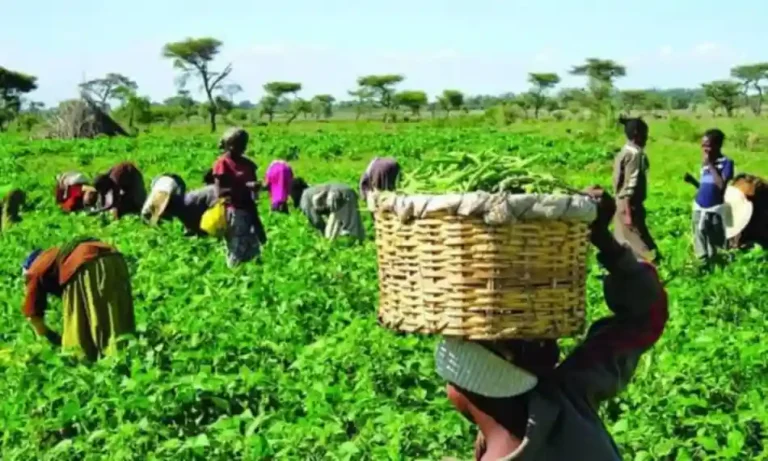
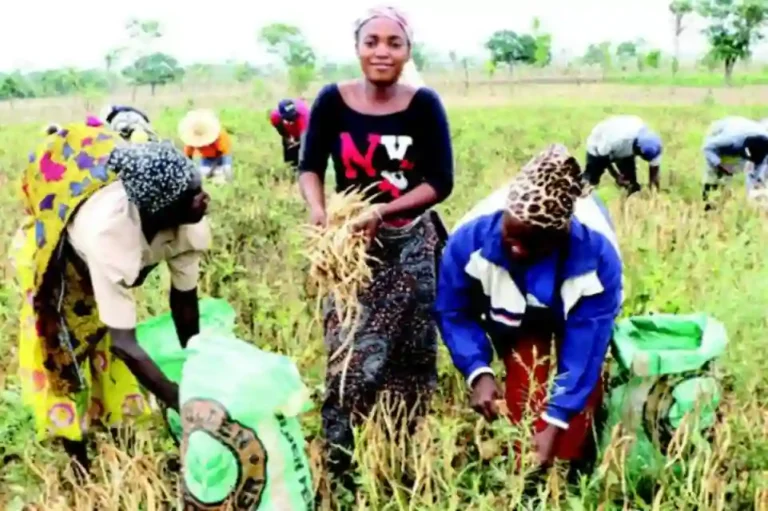
Bauchi State Governor Bala Mohammed on Monday launched the 2025–2026 dry-season farming programme in Misau, declaring agriculture the cornerstone of the state’s food security, job creation, and economic prosperity agenda.

Speaking at the event, the governor said Bauchi’s agrarian strength has shaped deliberate reforms since 2019. He listed key actions taken by his administration, including the revival of extension services, fertilizer subsidy of up to 40 percent, mechanisation support, and the reactivation of the state’s fertilizer blending plant.

Governor Mohammed also disclosed plans to procure hundreds of additional tractors to boost productivity. He said the government would strengthen a transparent hiring system to ensure smallholder farmers can access equipment fairly. He added that irrigation would be expanded to make farming a year-round enterprise across the state.

The governor highlighted youth and women empowerment through skills acquisition programmes and strategic partnerships with the World Bank and international firms. He said science-based farming practices driven by soil mapping and climate information would improve yields and sustainability.

He assured farmers of improved security, better storage facilities, and cooperative-driven interventions to ensure farm inputs reach genuine beneficiaries.

Urging communities to protect public assets and use land responsibly, the governor emphasized peaceful coexistence between farmers and herders.

“Today, we are not just planting crops,” he said. “We are planting prosperity and building a peaceful, food-secure Bauchi.”