Home Blog Page 301

Google Launches AI Skilling Blueprint to Strengthen Africa’s Workforce

0

Google has introduced the AI Skilling Blueprint for Africa, a new initiative aimed at helping governments prepare their citizens for the growing opportunities in artificial intelligence. The programme is part of a wider Africa-focused strategy designed to support economic development, digital transformation, and workforce readiness across the continent. With Africa being home to the world’s youngest and fastest-growing population, experts believe the region holds strong potential for AI-driven economic growth if the right skills are developed.

The AI Skilling Blueprint gives governments a clear, step-by-step guide for creating national AI education and training strategies. It focuses on three key groups that play different roles in the digital economy. The first group is AI Learners, who will gain basic knowledge and AI literacy to help them understand how the technology works. The second group is AI Implementers, professionals who will receive specialised training to apply AI tools in their jobs. The third group is AI Innovators, the deep technical experts who will build advanced AI solutions that can address local and global challenges.

Despite the strong optimism surrounding artificial intelligence in Africa, with enthusiasm reaching 95 per cent in Nigeria and 76 per cent in South Africa, a major challenge remains. New research shows that 55 per cent of firms across the continent report needing skilled AI talent more than they need financing. This shortage highlights the growing demand for digital skills and the need for capacity-building programmes to strengthen the workforce.

Google’s Vice President of Government Affairs and Public Policy, Doron Avni, said the blueprint is meant to support long-term development. According to him, “The AI Skilling Blueprint provides a clear roadmap for governments to build the workforce of the future. By also investing in AI-ready data and expert local organisations and partners, we are helping build the interconnected ecosystem needed for a prosperous, AI-driven future for the continent.”

As part of its broader efforts to strengthen Africa’s AI ecosystem, Google also announced a $2.25 million contribution to support the creation of trustworthy public data sets. The funding will assist the UN Economic Commission for Africa, the UN Department of Economic and Social Affairs, and PARIS21 in modernizing data infrastructure across the continent. The goal is to help national statistical offices and governments access reliable information that will support evidence-based decision-making on issues ranging from food security to economic planning.

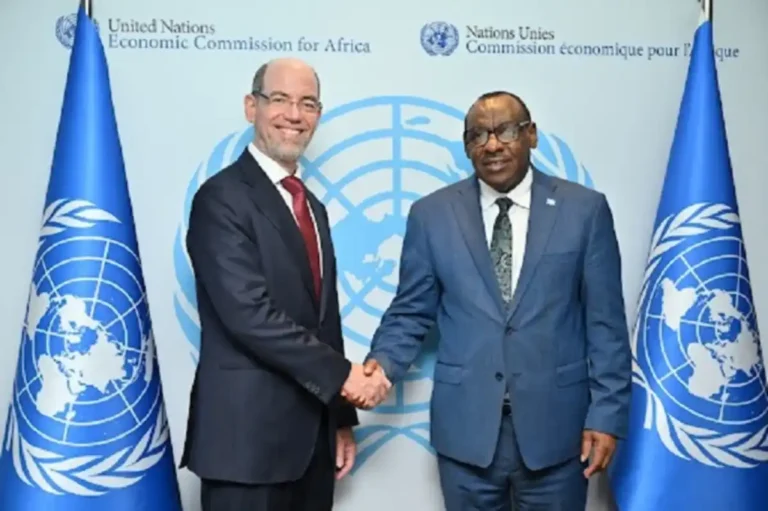
Claver Gatete, the Executive Secretary of the UN Economic Commission for Africa, emphasized the importance of data in Africa’s development journey. He said, “For Africa to drive sustainable development, evidence-based policymaking is indispensable. This requires accessible, reliable, and AI-ready data. This effort is a crucial step forward. By building a Regional Data Commons, we can empower African institutions with the data and tools they need to make strategic choices that will drive growth and prosperity.”

Google further expanded its commitment by announcing the first set of organizations that will receive support from the $7.5 million Google.org Skilling Fund. Beneficiaries include FATE Foundation and the African Institute for Mathematical Sciences, which will integrate advanced AI curricula into universities. Additional partners such as JA Africa and CyberSafe Foundation will focus on online safety, digital literacy, and responsible technology use.

Adenike Adeyemi, the Executive Director of FATE Foundation, said the partnership aligns with the organisation’s long-term mission. She stated, “We are incredibly proud to partner with the African Institute of Management Sciences on the Advanced AI UpSkilling Project, with support from Google.org. This groundbreaking initiative is a direct response to the urgent need for deep AI competencies in Africa, empowering tertiary institutions, lecturers, and students in Nigeria, Ghana, Kenya, and South Africa. This strategic support aligns perfectly with FATE Foundation’s mission to foster innovation and sustainable economic growth across the continent.”

Simi Nwogugu, chief executive of Junior Achievement Africa, also highlighted the importance of protecting young people online as they learn new digital skills. She remarked, “We live in an age defined by rapid technological change and our mission at JA Africa is to ensure that African youth are not left behind. However, even as we engage our youth in more digital programs and encourage AI literacy, we are fully aware of the harmful effects of unchecked online exposure and, therefore, invest equally in protecting their data, physical safety and mental wellbeing. Through this support from Google.org, we will give young people the tools, knowledge, and confidence they need to navigate the digital world safely and responsibly.”
Advertisement

NASITDEA, Vocational Board Move to Strengthen ICT Training in Nasarawa

0

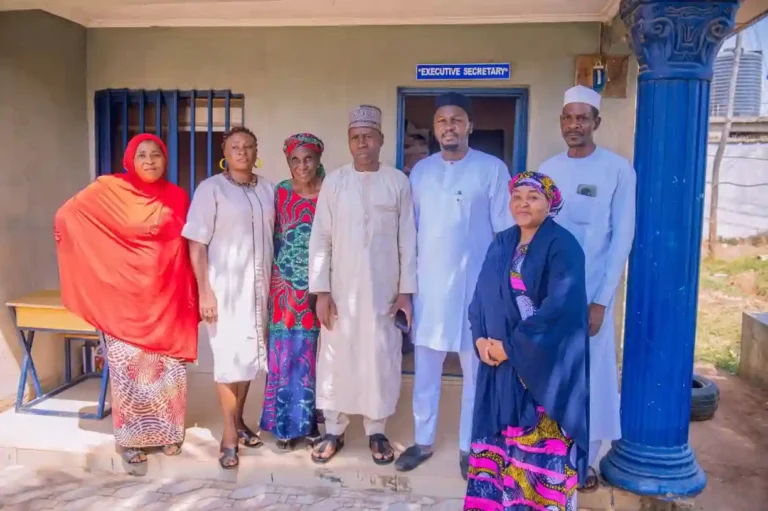
The Director General of the Nasarawa State Information Technology and Digital Economy Agency, Haruna Sani Sani, has paid a courtesy visit to the Nasarawa State Vocational and Relevant Technology Board, where he emphasized the need for stronger collaboration to grow digital skills and improve the impact of technology across the state. During the engagement, he explained that agencies must work more closely and showcase the value in their sectors to create a stronger digital ecosystem. According to him, expanding strategic thinking will help more stakeholders understand the importance of technology in education and economic growth.

He stated that institutions will be more willing to send their students for information technology training when they see clarity, proper structure, and measurable results. The DG encouraged the Board to procure laptops, upgrade its capacity, and keep proper records of activities to support better planning and service delivery. He also advised the Board to intensify awareness campaigns and create a platform that highlights its initiatives, saying this will guide individuals toward productive ideas that can create value for themselves and the state.

Speaking on current digital demands, he noted that setting up an ICT laboratory has become necessary to align with modern trends. He added that NASITDEA is preparing to train staff and selected students on the Internet of Things. He said, “When we complete this first phase, we will invite the Board to send its staff to participate so that we can begin deeper collaboration.”

Responding, the Executive Secretary of the Board, Engr. Kasimu Hamidu, expressed appreciation for the guidance provided. He said students from the Federal University of Lafia regularly visit for practical training, noting that Thursdays are currently set aside for them and that an additional training day is being considered. He added that the Board remains open to partnerships that will help revive ICT development across the state.

Engr. Hamidu explained that the Board runs two main programmes, one for vocational students and another for individuals seeking skills either before or after graduation. He disclosed that the Board has written to Governor Abdullahi A. Sule requesting 20 desktop computers to strengthen technology training and improve service delivery.

The meeting ended with both agencies expressing readiness to begin immediate collaboration, starting with staff training and strengthening ICT facilities to support digital skills development across the state.

Nigeria Targets Regional Leadership in CNG, Electric Vehicle Production

0

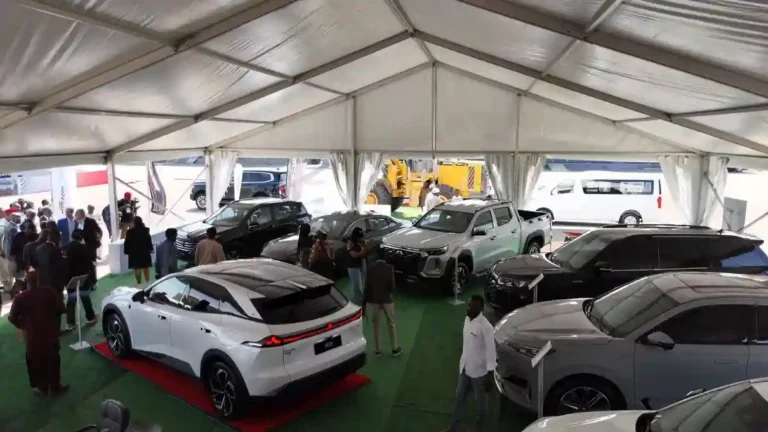
The Federal Government has announced new policy support and incentives aimed at strengthening the automotive sector and positioning Nigeria as the leading hub for Compressed Natural Gas vehicles and Electric Vehicles in West Africa. This was disclosed at the 25th Abuja International Motor Fair themed Driving Nigerians Automotive Future: Innovation, Sustainability and Growth.

Vice President Kashim Shettima, represented by the Minister of Innovation, Science and Technology, Dr. Kingsley Tochukwu Udeh, said the theme reflects the Renewed Hope Agenda, which encourages Nigerians to produce what they consume and work toward transforming the country into an automotive hub in Sub-Saharan Africa. He stated that the sector is central to national development, noting that manufacturing, technology, youth employment and the energy transition all connect within the industry.

Shettima explained that the rollout of Compressed Natural Gas for mass transit remains crucial because it helps cushion economic adjustments and offers affordable relief to millions of citizens. He added that the government sees the growth of the automotive market as essential for long-term economic stability.

He reiterated the need for innovative financing options, including single-digit interest rates specifically targeted at made-in-Nigeria vehicles, noting that such measures will improve affordability for the public. He encouraged commercial institutions to adopt flexible and creative financing models to support the sector’s expansion.

The Minister of State for Industry, Trade and Investment, Sen. John Owenoh Owan, emphasized that the automotive industry remains a key driver of economic growth under the current administration. He remarked that the Abuja Motor Fair showcases progress made through the National Automotive Industry Development Plan and praised local assemblers and component manufacturers for demonstrating that made-in-Nigeria products can compete in quality and value.

Earlier, the Director-General of the National Automotive Design and Development Council, Oluwemimo Joseph, said the agency is accelerating efforts to increase local content and reduce reliance on imports as part of its long-term strategy for sustainable sectoral growth. He noted that continued collaboration between government agencies, investors and industry stakeholders will play a major role in strengthening Nigeria’s competitiveness and ensuring that reforms deliver benefits for everyday users.

Anambra Approves Onwa Dezemba Festival Plans

0

The Anambra State Executive Council has confirmed new plans for a major December celebration called Onwa Dezemba. During its 23rd ANSEC meeting held on November 17, 2025, at Light House, Awka, the Council said it reviewed a detailed report on activities designed to give Ndi Anambra “the most memorable December experience ever.”

The event will take place at Solution Fun City, Awka, the reconstructed Ekwueme Square, and other approved venues. According to officials, the programme will feature a masquerade festival, Christmas carols, cultural showcases, and musical fiestas with well-known Nigerian musicians.

The Council also approved N85,311,850.58 for the supply and installation of a 32kva solar power system at the Country Club of Solution Fun City, Awka, to support the festive activities. It said preparations are already underway across key locations.

Impersonators Caught as Akwa Ibom Continues CBT Recruitment

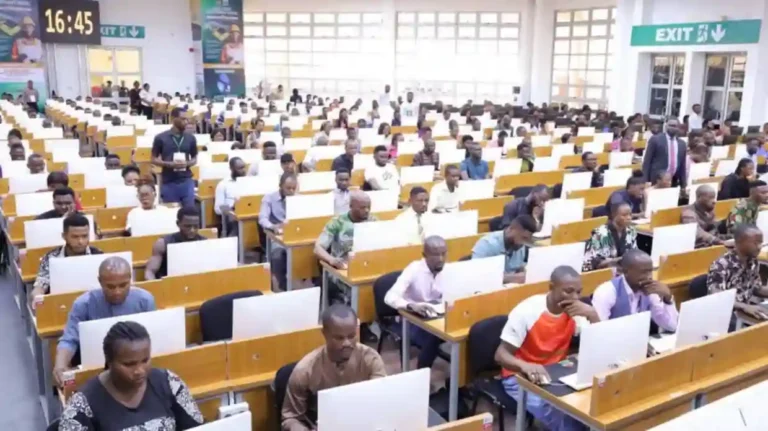
The ongoing Computer-Based Test process currently being used to recruit 4,000 qualified personnel into the State Civil Service has been described as fair, seamless, and devoid of any form of examination malpractice.

This was stated by the Honourable Commissioner for ICT and Digital Economy, Engr Frank Ekpenyong, as the compulsory test entered Day 13 at the Civil Service Auditorium, Idongesit Nkanga Secretariat. The Commissioner assured that Governor Pastor Umo Eno’s vision of deploying technology to ensure transparency and merit-based recruitment into the State Civil Service will be carried out with full commitment and precision.

Engr Ekpenyong, who spoke through the Supervisor 1 at the CBT Centre, Rachel Mba, said the State Government is adequately equipped to detect and prevent any form of examination malpractice while ensuring that impersonators are apprehended as the CBT process continues smoothly into its second week.

“The experience we’ve had so far has been seamless although we’ve had a few cases of attempted impersonation where people try to come in and write the examination for others, but what they don’t know is that we have our ways of figuring that out,” Mba said.

“When someone comes in and sits on a computer, we immediately proceed to match their faces and pictures because we did a liveness check when they registered. So we match their faces because we have cameras on all the computers. We do this as they try to sign in and effortlessly fish out any impersonator and rightly send them to the appropriate quarters as we have the Nigeria Police and the DSS stationed here,” she added.

Mba further explained that beyond impersonation, some candidates had also attempted to cheat during the test. “We’ve also had cases of people attempting to bring out their phones to cheat; we’ve also had candidates trying to go away from our website and open other websites in an attempt to cheat. What they don’t know is that we have our ways of finding out these things and when we nab such candidates, we make sure that examination is cancelled, their devices confiscated, and we hand the candidates over to the Police,” she said.

It can be recalled that Governor Pastor Umo Eno has consistently reaffirmed his administration’s commitment to digitizing the State’s public service. He has emphasized that the use of technology in recruitment is aimed at promoting merit, transparency, and efficiency while completely eradicating the influence of godfatherism in employment processes.

“The Civil Service is the engine room of governance. The quality of people we bring into the service in this 21st century matters. The world has even moved to AI now, so we need people who at least understand basic computing to the extent that they can take an exam,” Governor Eno said during a recent visit to the CBT Centre at the Idongesit Nkanga Secretariat, Uyo.

“This system will also eliminate godfatherism. People should have confidence that they got into the service by merit—by passing the required exams. We’re in the 21st century, and that’s the way it should be,” he added.

Some candidates who spoke after writing the test commended Governor Eno for fulfilling his promise, expressing satisfaction that the recruitment process was transparent and fair. They also noted that the era of using connections or godfathers to secure civil service jobs is finally over.

Governor Eno’s initiative in digitalizing the recruitment process further demonstrates his administration’s commitment to interpreting the ARISE Agenda by modernizing public service through innovation, inclusivity, and technology-driven governance.

FGN Announces ₦460 Billion Bond Auction for November 2025

0

The Debt Management Office has released a new offer circular announcing that it is opening subscriptions for two Federal Government of Nigeria bonds through an auction. According to the notice, the auction will take place on November 24, 2025, while the settlement date is set for November 26, 2025. The circular states that the DMO is acting on behalf of the Federal Government of Nigeria and is doing so under the provisions of the Debt Management Office Act 2003 and the Local Loans Act.

The announcement confirms that applications are now authorized for ₦230,000,000,000.00 at 17.945 percent for the FGN August 2030 bond and another ₦230,000,000,000.00 at 17.95 percent for the FGN June 2032 bond as part of the five-year and seven-year re-openings. The DMO noted that it reserves the right to allot the bonds at its discretion, making it clear that the process will follow standard financial market regulations.

The issuer of the offer is the Federal Government of Nigeria, and the bonds will be sold at ₦1,000 per unit. The announcement explains that investors must subscribe to a minimum of ₦50,001,000 and continue in multiples of ₦1,000.

The circular adds that for these re-openings of previously issued bonds, successful bidders will pay a price tied to the yield-to-maturity that clears the auction volume along with any accrued interest. Interest will be paid semi-annually, and the redemption will follow a bullet repayment on the maturity date.

The DMO emphasized that the bonds qualify under the Trustee Investment Act and are recognized as government securities under both the Company Income Tax Act and the Personal Income Tax Act, which allows tax exemption for pension funds and other investors.

The bonds are listed on the Nigerian Exchange Limited and the FMDQ OTC Securities Exchange, and they qualify as liquid assets for banks when calculating liquidity ratios.

The circular stresses that the bonds are backed by the full faith and credit of the Federal Government of Nigeria and charged upon the nation’s general assets. Interested investors are directed to contact any Primary Dealer Market Maker, including Access Bank, Citibank Nigeria, Ecobank, FBNQuest Merchant Bank, Guaranty Trust Bank, Stanbic IBTC Bank, United Bank for Africa, Zenith Bank and others for participation.

Amahoro Coalition, BOA Begin Sessions to Drive 200,000 Job Initiative

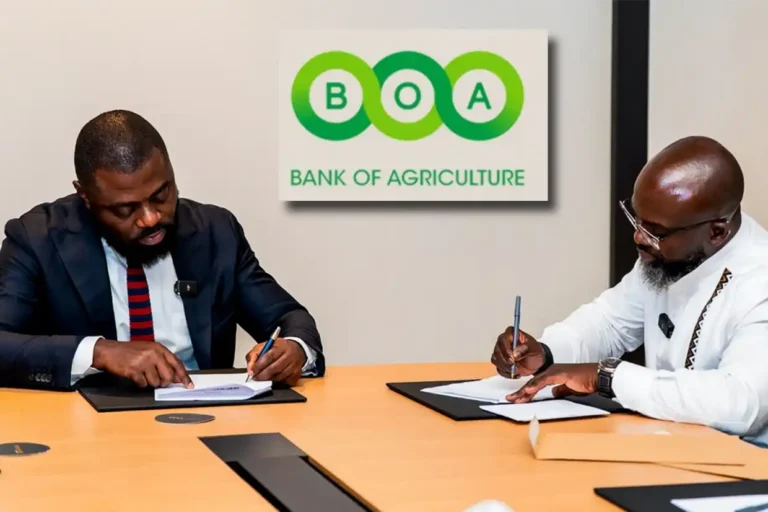
The Amahoro Coalition has begun its conceptual and technical sessions with the Managing Director of the Bank of Agriculture, Mr. Ayo Sotinrin, marking what the group describes as a major step toward expanding livelihood and economic opportunities for Forcibly Displaced Persons and their host communities in Nigeria. According to the coalition, this phase will define the frameworks, financing pathways, and capacity-building models required to activate the commitment to create 200,000 jobs under the BOA–Amahoro partnership.

Amahoro stated that it is developing the beneficiary design framework, while the Bank of Agriculture will align its nationwide branch network and agricultural financing tools to drive implementation. The teams explained that this joint effort is establishing a foundation for a scalable and sustainable pathway that integrates displaced people into Nigeria’s agricultural economy.

The coalition noted that by combining displacement-focused program design with agricultural financing strength, the partnership is moving closer to real economic integration for displaced families.

Tinubu Calls for Unified African Customs System to Boost AfCFTA Trade

0

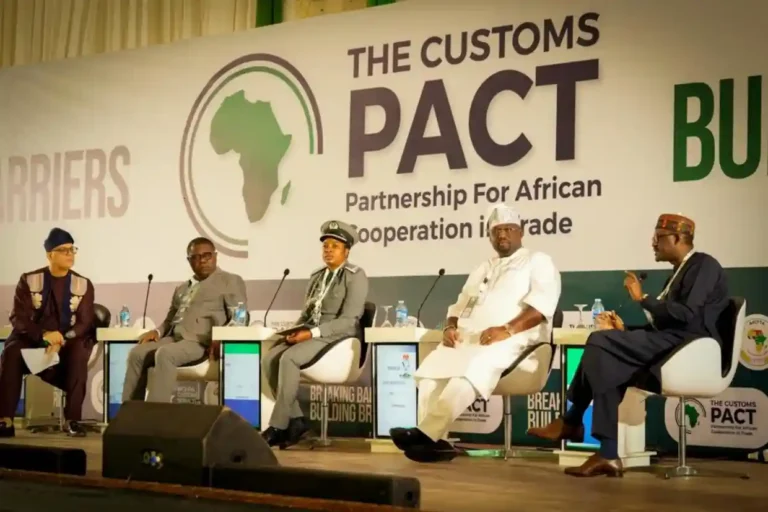
President Bola Ahmed Tinubu on Monday, 17 November 2025, urged African nations to break down inefficient borders, modernise their Customs systems and embrace a unified trade architecture that can reshape the continent’s economic future. Speaking at the maiden Customs Partnership for African Cooperation in Trade Summit at the State House in Abuja, Tinubu, represented by Vice President Kashim Shettima, said Africa’s prosperity depends on reforms that turn its large population and market into a functional economic force.

Shettima told delegates that the continent can no longer afford fragmented markets or weak implementation of trade policies. He said every African country must show political will, institutional alignment and readiness to deploy technology that simplifies trade. According to him, the administration’s reform efforts, including exchange rate unification, fuel subsidy removal, port modernisation and stronger Customs digitalisation, were designed to create a trade-friendly environment that can compete globally and support Nigeria’s continental ambitions.

The Vice President highlighted Nigeria’s National Single Window, scheduled to go live in March 2026, as one of the key tools expected to reduce clearance timelines from 21 days to under seven. He said this shift will align Nigeria with AfCFTA’s digital trade requirements and position the country as a leader in port automation, making trade processes faster and more transparent for businesses.

Shettima urged African governments to translate commitments into measurable progress that traders and manufacturers can experience daily, adding that “Integration cannot be declared. It must be engineered.” He warned that without clear actions, the continent risks missing the economic opportunities offered by a unified African market.

Speaking at the event, the Comptroller-General of Customs, Adewale Adeniyi, said President Tinubu’s extension of his mandate included performance indicators linked to the African Continental Free Trade Area. He said Nigeria’s Customs Service has, over the last three months, increased engagement with Customs administrations across Africa to ensure proper alignment with AfCFTA structures.

Adeniyi recalled recent consultations in Ghana with the AfCFTA Secretariat, explaining that Customs must drive rules of origin enforcement, preferential duty implementation and trade preference administration. He stressed that these core elements determine whether AfCFTA becomes fully operational or remains only an aspiration.

He noted that implementing a free trade agreement requires strong political commitment and extensive capacity building because it involves gradually suspending Customs duties among member states. He added that previous regional efforts such as the ECOWAS Trade Liberalisation Scheme failed due to inconsistent implementation, saying AfCFTA must avoid repeating that pattern.

According to him, African economies have different levels of readiness, but recent engagements have helped build consensus that Customs must sit at the centre of AfCFTA execution. He said his advocacy for stronger Customs inclusion led to the creation of C-PACT, a framework that connects African Customs administrations, private-sector operators, regulators and international partners.

Adeniyi added that Nigeria’s export volume has grown by more than 30 percent in two years, and the next goal is to channel more of that trade into African markets where opportunities and economic impact are greater. He also commended AfreximBank, the AfCFTA Secretariat, NEPC, commercial banks, NPA and other agencies for supporting efforts to improve trade facilitation across the continent.

Nigeria, China Begin New Talks on Agriculture, Youth Skills Development

The federal government has opened new bilateral talks with China as part of President Bola Ahmed Tinubu’s Renewed Hope Agenda to expand non-oil external revenue and boost economic growth. The discussion focused on agriculture, skills development, and wider trade opportunities that can support local markets and youth empowerment.

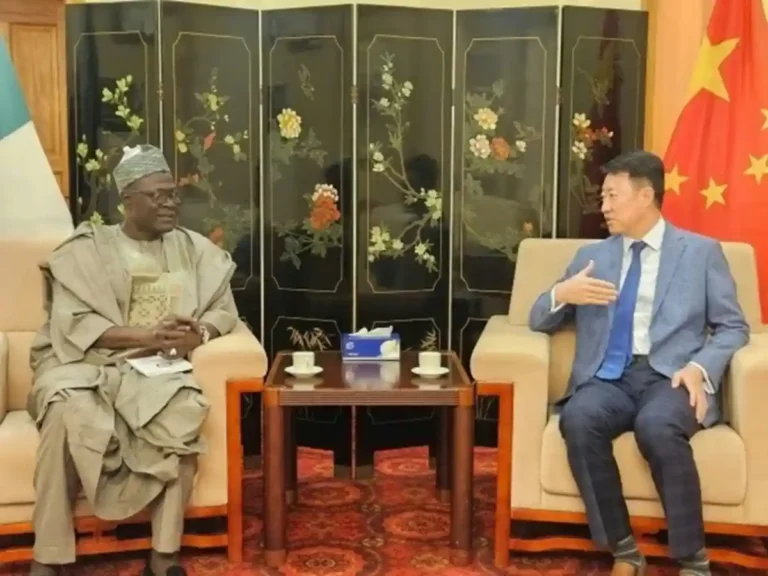
The talks were held between the chairman of the Senate committee on the Northwest Development Commission and Senator representing Jigawa North-East, Dr. Babangida Hussaini, and the Chinese Ambassador to Nigeria, His Excellency Yu Dunhai. In a statement released in Dutse, Senator Hussaini described the meeting as “productive and fulfilling,” noting that both sides explored practical cooperation that would directly benefit Nigeria and Jigawa State.

He explained that the new initiative aims to increase the export of agricultural commodities like sesame seeds and hibiscus flowers, improve market access for farmers, and strengthen commercial ties that can stimulate local economies. Senator Hussaini said, “We discussed establishing a strong and sustainable trade linkage between our major markets — particularly Gujungu Market and the Maigatari International Border Market — and markets in China.”

The talks also touched on opportunities for Nigerian youths to gain training and exposure in China. According to him, the programmes will cover technology, skills development, and postgraduate studies, helping young people develop capacity that can support long-term national growth. He stated, “I am confident that these partnerships will open new doors for our young people, enabling them to grow, innovate, and contribute meaningfully to national development.”

Senator Hussaini expressed appreciation to Ambassador Yu Dunhai for his openness and commitment to collaboration. He reaffirmed his determination to pursue strategic partnerships capable of bringing development and long-term progress to Jigawa North-West, Jigawa State, and Nigeria as a whole.

Abuja Motor Fair: FG Restates Commitment to Nigeria’s Auto Industry

0

The Federal Government has restated its commitment to boosting Nigeria’s automotive industry as stakeholders gathered for the 25th Abuja International Motor Fair held on 18th November 2025. The event, hosted by the National Automotive Design and Development Council in collaboration with BKG Exhibition, marked the Silver Jubilee edition and focused on driving innovation, sustainability and economic growth. During the fair, the Vice President, Kashim Shettima, represented by the Minister of Innovation, Science and Technology, Dr. Kingsley Tochukwu Udeh, said the theme “Driving Nigeria’s Automotive Future: Innovation, Sustainability and Growth” reflects a major national priority. He explained that the focus aligns with the Renewed Hope Agenda which encourages local production and aims to position the country as the automotive hub of Sub-Saharan Africa.

The Minister of State for Industry, Trade and Investment, Owan Enoh, also addressed participants and reaffirmed the Federal Government’s support for the auto sector. He stated that the automotive industry remains a strong driver of industrialization and job creation, noting that progress under the National Automotive Industry Development Plan continues to attract investment. He assured manufacturers and investors of stable policy support to strengthen the market and encourage long-term growth.

In his remarks, the Board Chairman of NADDC, His Eminence Emma Eneukwu, described the Silver Jubilee as a symbol of resilience and steady sectoral progress. He pointed out improvements in component manufacturing, vehicle assembly and the rise of EV and CNG technologies. He encouraged State Governments and international partners to take advantage of available investment opportunities, especially the development of automotive industrial parks that can boost manufacturing and support economic diversification.

The Director-General of NADDC, Oluwemimo Joseph Osanipin, highlighted the achievements recorded across the value chain and commended the commitment of stakeholders who continue to build the industry. He noted that more than 30 companies are now assembling vehicles in Nigeria, including brands such as Innoson, Jet and Nord. Osanipin added that ongoing initiatives under the Renewed Hope Agenda include a comprehensive EV Policy, expansion of component manufacturing and new financing partnerships with the Bank of Industry and Credit Corp to improve access to Nigerian-assembled vehicles.

He also applauded the Chairman of BKG Exhibition Ltd, Ifeanyi Agwu, for sustaining the Motor Fair for 25 years and supporting the growth of Nigeria’s automotive sector.