Home Blog Page 302

Akwa Ibom Extends Civil Service CBT Exam Acceptance Deadline

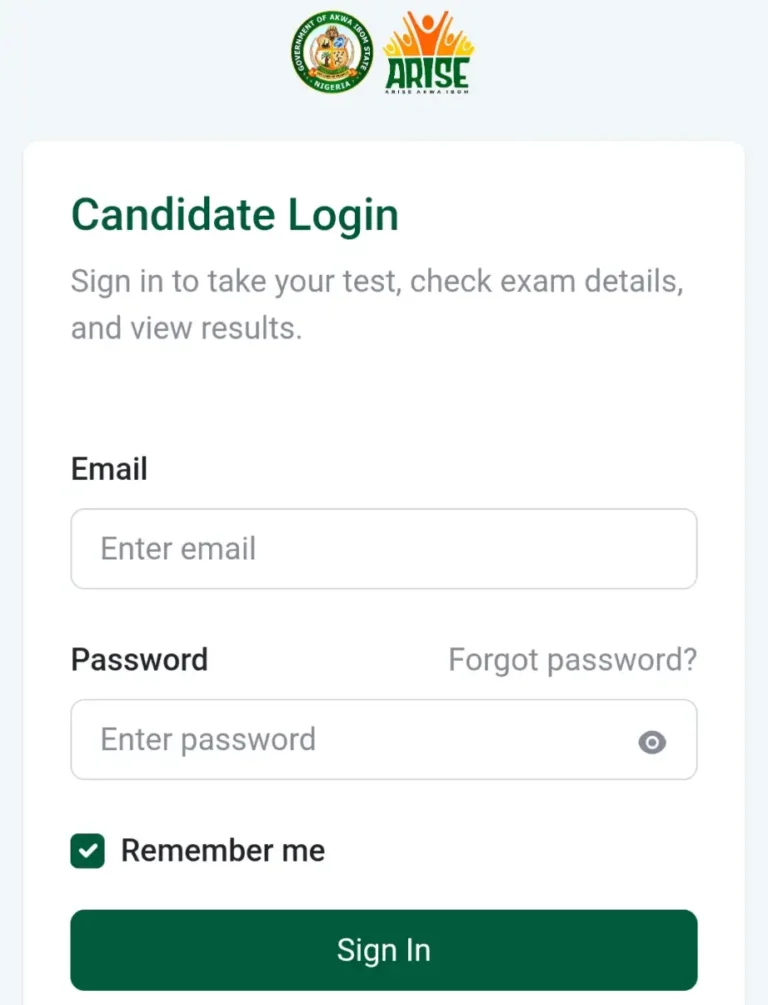
Akwa Ibom Civil Service has issued a new update on the ongoing recruitment process, confirming that emails have been sent to candidates to accept the extended Main Assessment deadline through the Arise CBT portal dashboard.

The recruitment team said this extension is to support applicants who could not accept their initial examination invitation or missed the test because of logistical challenges connected to distance.

The email titled Acceptance Deadline Extended reads, “Dear Candidate, We hope this message finds you well. This is to inform you about the new event on your account!”

Candidates have been informed that they have until November 20, 2025, 06:00 PM to accept or decline the examination invitation, warning that any unaccepted slot will be terminated automatically. The notice also stated that the acceptance deadline for the Civil Service Recruitment Main Assessment has been extended. The message added that candidates can visit their dashboard through the official link.

Meanwhile, Godwin Robert, Media Consult, released another statement explaining that the CBT portal for the civil service recruitment has extended the deadline due to issues faced by applicants who missed the first invitation.

He said eligible candidates who have not received their main examination invitations should keep checking their email inbox and dashboard because invitations are being sent in batches. He urged candidates to stay patient and vigilant to avoid missing any important communication during the recruitment process.

Advertisement

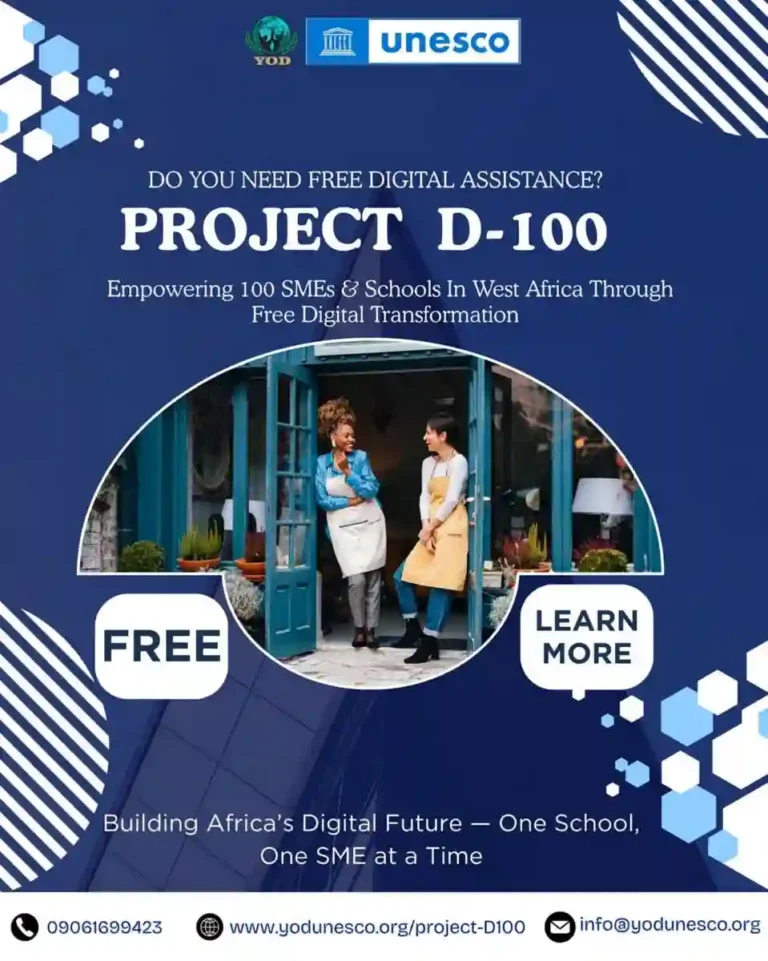
YOD UNESCO Launches Project D-100 to Support 100 Schools and SMEs

Youth Orientation for Development UNESCO has launched Project D-100, a digital empowerment initiative designed to provide free website development, branding support, and digital capacity-building to 100 schools and small-to-medium enterprises across Africa.

The programme was announced under the leadership of YOD UNESCO President Ambassador Emmanuel Ejiogu, who said the project is aimed at reducing the digital divide affecting underserved communities that lack access to essential online tools.

The initiative is led by Godwin Iheuwa, Head of Digital Development at YOD UNESCO, who created the concept after observing the low digital visibility of many schools and local businesses. Iheuwa said the goal is to expand digital opportunity for institutions that struggle to compete in today’s connected economy. He explained that Project D-100 is positioned to help organisations that need affordable digital solutions to improve online presence, communication, and community engagement.

The first phase will support 100 institutions, while the second phase is planned to reach an additional 200 schools and SMEs. According to the organisation, the long-term target is to empower 5,000 institutions across the continent, forming one of Africa’s largest community-focused digital transformation movements. More than 50 young volunteers, described as creatives and technology enthusiasts, are already contributing skills in web development, design, digital marketing, and content creation. The volunteer division is coordinated by Eze Akalugwu, who serves as Head of Volunteers.

Ambassador Ejiogu stressed that Project D-100 aligns with YOD UNESCO’s broader commitment to digital inclusion, youth development, and community empowerment. He said the project offers free website creation or upgrade, social media setup, branding support, content development, digital mentorship, and capacity-building opportunities for young people who want practical experience in technology.

Registration is currently open on the project portal, where schools, SMEs, and volunteers can sign up at no cost. YOD UNESCO described the initiative as an important step in its digital development agenda and reaffirmed its commitment to promoting sustainable impact and strengthening digital empowerment across Africa. For further inquiries, participants may visit the YOD UNESCO website or contact the organisation through email.

DSS Sends SMS for Recruitment Documentation

0

The Department of State Services has started reaching out to applicants for documentation as part of the ongoing DSS recruitment process. According to a recent circulating update, the agency is now sending SMS messages to candidates, asking them to come to their state DSS office with photocopies of their credentials and two passport photographs.

This step follows a directive reportedly issued from the DSS Headquarters, telling all state commands to begin collecting documents from applicants who are qualified and have passed the vetting and background check stage.

One of the SMS messages obtained by Nigeria Startup News on Tuesday reads, “You are requested to report at the DSS office, Port Harcourt tomorrow 18/11/2025 by 2PM with photocopies of your credentials, and 2 passport photographs.” Candidates who received the message were also told to acknowledge receipt. The quoted SMS shows that the update came from the Rivers State office.

Reports also indicate that some states, including DSS Jigawa, Sokoto and Borno, have started calling applicants.

Candidates who applied for DSS recruitment are encouraged to stay alert and prepare their documents, as their state command may contact them with further instructions.

Nigeria Reaffirms Readiness for More Foreign Investment

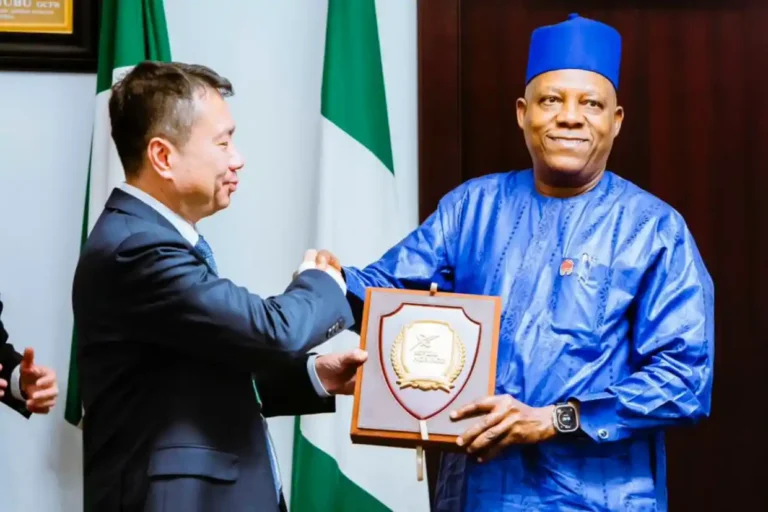
The Vice President, Senator Kashim Shettima, has reaffirmed Nigeria’s readiness to engage in global business partnerships, saying the ongoing economic reforms introduced by President Bola Ahmed Tinubu are creating new opportunities for investment and foreign direct investment. He said the current policies are designed to support economic growth, strengthen financial stability and expand access to major business sectors.

“There is no better time to invest in Nigeria. You have come at the right time, where we have been blessed with committed leadership,” he said on Tuesday while receiving a delegation from the Advanced Energy Partners led by Senator Abu Ibrahim during a courtesy visit to the Presidential Villa.

Senator Shettima highlighted Nigeria’s abundant natural resources, expanding markets and strategic economic reforms, noting that these elements are building a stronger environment for international investors. He said the government has taken deliberate steps to make the country more attractive for sectors such as energy, oil and gas, mining, and technology. According to him, these reforms are unlocking new opportunities for sustainable development and long-term growth. “Be rest assured that you have invested your trust in the right nation. Nigeria is ready for business. We have crossed the Rubicon and are now on the path of sustainable development,” he told the visitors.

Speaking earlier, the chairman of the consortium, Senator Abu Ibrahim, explained that the delegation was in Nigeria to explore major opportunities for investment in the upstream oil sector and other parts of the economy. He noted that rising interest in Nigeria reflects confidence in the administration’s economic direction and its steps to strengthen international trade.

Also speaking, the Vice President of China North Industries Corporation, Mr QIANG Wenyu, said their visit followed an earlier meeting with President Tinubu in September 2024 in Beijing. He restated the company’s commitment to working with Nigerian partners, saying NORINCO is prepared to deepen cooperation and expand its activities in the country. “For the past one year, we have been acting on that,” he said while reaffirming the company’s long-term investment plans.

He listed the company’s core areas as energy, oil and gas, defence industries and mining. He added that NORINCO recorded an annual turnover of $30 billion last year, maintaining a strong global reputation in its main sectors.

In her remarks, the CEO of Horizon Energy Abu Dhabi, Ms Mahra Rashed Al Suwaidi, praised President Tinubu’s leadership and said it has encouraged the company’s renewed interest in Nigeria. She explained that the management of key institutions such as the Nigerian National Petroleum Company Limited has further strengthened investor confidence and improved the country’s global investment profile.

The UAE Ambassador to Nigeria, Salem Saeed Musabbeh Al Shamsi, urged the consortium to take advantage of the present opportunities, describing Nigeria as the right place for foreign investment. He said the Tinubu administration has improved economic and bilateral relations with the UAE, noting that non-oil trade between both countries reached $4.3 billion in 2024.

Others present at the meeting included the CEO of AEP, Mr Shakiru Olayinka; Mr Abiye Membere of AEP; Mr HU Keyu of China Zhenhua Oil Corporation; Mr XU Yongfeng of Beijing Auxin Chemical Technology Corporation; and Mr LIANG Hongda of NORINCO African Department.

Lagos Launches New Private Health Partnership to Reform Insurance System

0

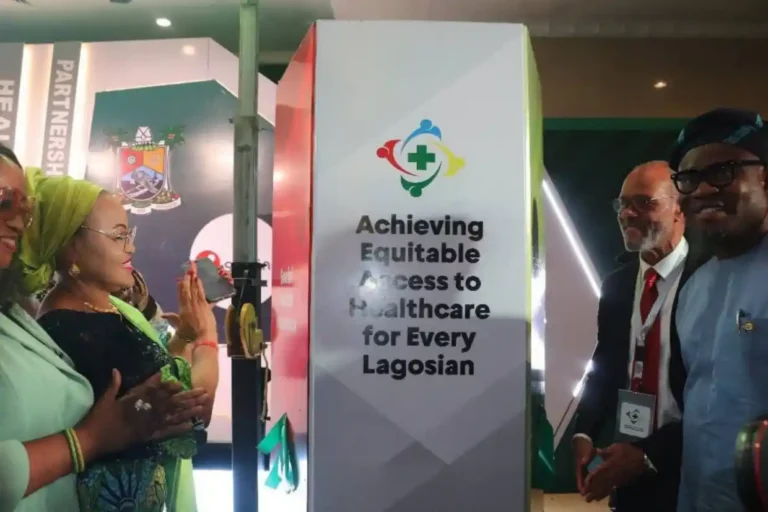
Lagos State on Tuesday marked a major step in its health sector reforms with the official launch of the Lagos Private Health Partnership, a new framework aimed at transforming health financing and expanding insurance coverage for millions of residents.

The event, held at the Civic Centre in Victoria Island, brought together government officials, private insurers, healthcare regulators, financial institutions, and development partners who all expressed support for a more transparent and unified approach to health insurance and service delivery in the state.

Delivering the keynote address on behalf of the Lagos State Governor, the Secretary to the State Government, Abimbola Salu-Hundeyin, described the initiative as “a historic step towards building a resilient and future-driven health financing architecture capable of protecting households from catastrophic expenditure.” She explained that the Lagos Private Health Partnership shows the state’s determination to translate compulsory insurance mandates into workable and sustainable systems that will support long-term reform and economic growth.

According to the Governor, the initiative grew directly from Lagos’ domestication of the National Health Insurance Authority Act of 2022, which the state implemented through an Executive Order signed in July 2024. The order made health insurance mandatory for all residents and created enforcement mechanisms to improve compliance. He noted that a Technical Working Group made up of industry stakeholders produced the operational guidelines that later led to the Lagos Private Health Partnership, ensuring that the private sector aligns with the state’s policy direction, risk pooling goals, and digital accountability requirements.

The Governor emphasised that more than 70 percent of healthcare encounters in Lagos occur in the private sector, and the reform is designed to strengthen that reality by ensuring that private providers and insurers operate within a stable framework that balances profitability, service quality, and equity. He also announced that the state has adopted a population-based enrolment model for employees of private organisations to ensure fair risk distribution and increase access to subsidised health plans.

Lagos Commissioner for Health, Akin Abayomi, said in his opening remark that the launch represents a firm break from a decade of fragmented and inefficient private health insurance practices marked by unhealthy competition, enrollee restrictions, and loss of trust among providers and beneficiaries. He stated that the Lagos Private Health Partnership was built to restore fairness, transparency, and sustainability by introducing a collaborative procurement platform that places value-driven outcomes above price wars.

Abayomi expressed concern that despite Lagos’ population of more than 25 million and its strong economic base, the state still struggles with low insurance penetration, workforce shortages, and rising medical tourism. He said the new reform is one of the strongest tools the government has introduced to improve health outcomes, rebuild trust, and enhance the overall performance of the state’s healthcare system. He stressed that improved financing, digital governance, and coordinated insurance processes will give residents better access to affordable and reliable healthcare services.

The Commissioner explained that the system uses a fully digital marketplace to manage enrolment, provider selection, fund disbursement, claims processing, monitoring, reporting, and evaluation. According to him, this digital footprint will make the system more transparent and shift competition from pricing to value delivery, with quality assurance supervised by the state’s health facility monitoring agency. He added that full enforcement of mandatory health insurance will begin after a six-month sensitisation campaign, which aligns with the Governor’s directive to strengthen financial protection and cross-subsidisation.

Further detailing the reform, Abayomi said that the Lagos Private Health Partnership includes a state-managed risk equalisation and solidarity fund that will require private insurers to contribute 13 percent of premiums. He explained that the fund will support vulnerable groups, boost emergency response systems, and help Lagos move closer to achieving universal health coverage. He projected that if 20 million residents enrol at an average premium rate of 20,000 naira yearly, the state could inject more than 400 billion naira into the health financing system annually, creating a stronger and more stable sector.

Chairman of the Lagos State Health Management Agency, Adebayo Adedewe, said the initiative is a credible solution to long-standing challenges in health insurance and praised the government for its broad stakeholder engagement and technical planning. He described the launch as “a watershed moment” for health financing and gave assurance that the agency will remain committed to supporting the reform and guiding its implementation across the state.

National Adviser on Health Insurance Matters for the Healthcare Providers Association of Nigeria, Jimi Arigbabuwo, said the launch marks an important turning point in recognising the essential role of private healthcare providers. He urged the government to ensure fair compensation to promote sustainability, improve patient satisfaction, and reduce the rate of medical tourism by giving residents confidence in local health services.

Managing Director of Sterling Bank, Abubakar Suleiman, said the bank’s involvement aligns with its HEART agenda, which focuses on health, education, agriculture, renewable energy, and transport. He stressed that healthcare financing remains expensive without structural reform and that the bank will continue providing both financial and digital support to help the system remain efficient. Suleiman added that Lagos has created “a unified marketplace where digital governance, transparency, payment integration, and enrollee empowerment work together to improve value-based healthcare.”

Participants at the event agreed that the Lagos Private Health Partnership is one of the most comprehensive health financing reforms introduced in Nigeria and is likely to become a national model.

They emphasised that its success will depend on multisector collaboration, continuous public education, and firm policy enforcement. The Ministry of Health confirmed that the next steps include onboarding health maintenance organisations, piloting the system, reviewing early results, and expanding implementation across the entire state.

The event ended with a call to residents, private employers, civil society groups, insurers, and healthcare providers to support the shared vision of creating affordable, digital, and universal healthcare access for everyone living in Lagos.

Nigeria, UN Strengthen Partnership on Poverty Reduction, Humanitarian Response

The Federal Government has reaffirmed its commitment to strengthening its partnership with the United Nations as Nigeria intensifies efforts to reduce poverty, improve humanitarian response systems and support vulnerable communities across the country. This assurance was given by the Minister of Humanitarian Affairs and Poverty Reduction, Dr. Bernard M. Doro, during a courtesy visit by a United Nations delegation led by the UN Resident and Humanitarian Coordinator, Mr. Mohammed Malick Fall, at the Minister’s Conference Room in Abuja.

Dr. Doro thanked the UN team for what he described as consistent solidarity, noting that the administration of President Bola Ahmed Tinubu has introduced important economic reforms aimed at stabilizing the economy while protecting vulnerable citizens. He explained that these reforms are designed to create long-term national stability, even though some may come with short-term challenges that affect households, businesses and community systems.

According to the Minister, the goal of the government is not only to reduce poverty but to build stronger structures that support job creation, financial inclusion, skills development and economic empowerment. He said the statistics around poverty may appear challenging, but Nigeria can achieve real progress through strong partnerships that support long-term development. He added that poverty might not disappear completely, but it can be significantly reduced if Nigerians are empowered through programs that build self-reliance.

Dr. Doro disclosed that the Ministry is developing a flagship poverty reduction programme that focuses on skills acquisition, structured mentoring and provision of start-up capital, supported by continuous monitoring to ensure sustainable results. He stressed that humanitarian challenges caused by conflict, natural disasters and climate shocks require shared responsibility and closer collaboration with the UN system. He said Nigeria must shift from quick, short-term reactions to long-term strategies capable of preventing crises before they escalate.

He noted that the Renewed Hope Agenda places strong emphasis on poverty reduction, crisis response, protection of vulnerable groups and restoration of dignity for affected Nigerians across different regions. In his remarks, Mr. Mohammed Malick Fall congratulated the Minister for his appointment, describing it as a critical period when humanitarian needs in Nigeria have grown beyond the North-East into several other regions affected by conflict, insecurity and climate-related emergencies.

Mr. Fall said more than 3.5 million Nigerians are currently displaced due to conflict and climate shocks, with millions more experiencing urgent humanitarian needs. He pointed out that even as needs rise, global humanitarian funding has declined, making it necessary for Nigeria to strengthen national leadership in its humanitarian and development response.

He said Nigeria is a country the continent looks up to, and at a time when global crises compete for attention and resources, the country must take stronger ownership of its humanitarian strategy. He added that the UN has more than 20 agencies ready to work closely with the government.

The UN Coordinator emphasized the importance of promoting leadership by Nigerian institutions, local groups and government agencies to build a more sustainable and efficient approach to humanitarian operations. He also recalled ongoing discussions on establishing a National Council for Humanitarian Affairs to improve coordination and strengthen Nigeria’s response capacity.

The UN pledged continued support to the Ministry as the country works to improve systems, empower communities and reduce pressures linked to poverty, conflict and climate change. Both parties agreed on the need to combine humanitarian action with long-term development strategies to achieve sustainable progress.

The meeting was attended by the Permanent Secretary, Dr. Yakubu Adam Kofarmata, Directors of the Ministry and UN delegates.

Ministry of Humanitarian Affairs Launches 1Gov ECMS

0

The Federal Ministry of Humanitarian Affairs and Poverty Reduction has launched its Enterprise Content Management System, marking a major move toward digital transformation in the Federal Civil Service. The Ministry went live on the 1Gov ECMS platform today at its headquarters in the Federal Secretariat, Abuja.

The project is part of a national effort to strengthen e-governance, improve public service delivery, and support key reforms that promote efficiency, transparency, and accountability. The initiative also aligns with high value sectors like digital infrastructure, data security, technology investment, and public sector innovation, which continue to attract attention from citizens and policy stakeholders.

While flagging off the project, the Honourable Minister of Humanitarian Affairs and Poverty Reduction, Dr. Bernard M. Doro, said the ECMS supports the goals of the Renewed Hope Agenda. He explained that the administration is focused on using technology to improve how government institutions operate.

According to him, “This innovation aligns squarely with the Renewed Hope Agenda, particularly the administration’s vision to digitize government processes, reduce inefficiencies and make public institutions more responsive to citizens’ needs.” He added that “today’s event marks a significant step forward in the Ministry’s ongoing commitment to innovation, transparency, and operational excellence in the delivery of Humanitarian and Poverty Reduction services to Nigerians across all regions.”

Dr. Doro praised the Permanent Secretary, the technical implementation team, and partners who played crucial roles in achieving the milestone. He stated, “Your dedication to this vision exemplifies what a result-oriented public service should look like.” The Minister emphasized that improved workflow, faster access to information, and reduced paperwork will help the Ministry serve vulnerable communities more effectively.

In her remarks, the Head of the Civil Service of the Federation, Dr. Didi Esther Walson-Jack, OON, mni, commended the Ministry for adopting a paperless system and described it as a breakthrough for the public service. She said, “This ministry with its vital mission of supporting the vulnerable is now embracing paperless processes and I say this is a milestone.”

She highlighted that the shift to the 1Gov ECMS platform represents more than just automation. In her words, “The shift to the 1Gov ECMS platform is not just digitalisation, it is a fundamental change in how the Ministry operates. Workflows will now be automated, reliance on paper reduced and real time collaboration across teams is now possible.”

Dr. Walson-Jack encouraged other government institutions to adopt similar systems and applauded Galaxy Backbone Limited for providing reliable infrastructure that supports secure data management, digital governance, and national information systems. She urged the media to help the public understand that all 19 Ministries currently operating the ECMS no longer accept paper documents, as part of a unified move toward digital processes.

Earlier, during his welcome address, the Permanent Secretary explained that the Ministry’s mandate requires systems that guarantee fast access to information, efficient document handling, and seamless collaboration among departments. He said, “So with the ECMS, we are moving from manual paper-based operations to a fully digitized workflow, thereby improving service delivery to citizens.” The new system is expected to boost productivity, support data-driven decision making and help the Ministry respond quicker to humanitarian needs.

The Managing Director and CEO of Galaxy Backbone Limited, Prof. Ibrahim Adeyanju, noted that Galaxy Backbone serves as the digital infrastructure company of the Federal Government. He said that the government has heavily invested in digital infrastructure and digitalisation to ensure that secure data management and strategic national information remain within Nigeria’s borders.

He explained that the project is meant to guarantee that confidential, sovereign, and security data are controlled by the Nigerian government in line with national laws. Prof. Adeyanju expressed confidence that with continued support, the goal of achieving a fully paperless civil service by 31st December 2025 is achievable.

The event was attended by Dr. Bernard M. Doro, Dr. Didi Walson-Jack, Dr. Yakubu Adam Kofarmata, Directors of the Ministry, Permanent Secretaries, senior officials from the Office of the Head of the Civil Service of the Federation, the MD and CEO of Galaxy Backbone Limited Prof. Ibrahim Adeyanju and his team, among others.

The Ministry is also one of the 19 Ministries nationwide that have now adopted the ECMS to strengthen digital governance and improve efficiency in public administration.

A’Ibom LGA Unveils Skills Centre as China Says Youths Need Skills, Not Cash

0

Real estate investor My-ACE China has urged key stakeholders in Akwa Ibom State to stop the culture of offering cash handouts to young people and instead focus on building sustainable skills that can support long-term careers. Speaking at the unveiling of the revived Mbo Vocational and Craft Centre in Enwang, China said the region must prioritise practical empowerment that encourages economic growth and job creation.

China, who is the Managing Director of Housing and Construction Mayor Limited, is partnering with the Mbo Local Government Council to expand opportunities for young people through vocational training. He said he was inspired to support the centre by his Special Assistant, Anthony Andemic, who also chairs the Mbo Entrepreneurship Committee. “To support him, we donated toward the upgrade of this centre,” he said. “Today, I’m committing to training 30 of the trainees and providing them with a machine and capital to start up.”

The newly reopened centre has taken in 100 trainees for its first batch, with China sponsoring 30 of them. Each beneficiary will receive starter packs and take-off capital at the end of the six-month programme, which is designed to strengthen skills acquisition and promote entrepreneurship among young people.

China commended the Mbo Local Government Chairman, Etim Sunday, for creating a system that focuses on long-term empowerment instead of temporary support. “The chairman is bringing people, especially youths, out of poverty systematically. If you haven’t set up at least 300 youths in your community, you’re not a resourceful LG chairman,” he said. He urged leaders across sectors to take responsibility for building skilled communities. “I urge government and political leaders to arise and fish— not by sharing money, but by empowering people to stand on their own. Big men, arise and fish.”

Earlier, Andemic said the upgraded centre now hosts several vocational paths aimed at boosting enterprise development and increasing productivity in the region. “Our target is to transform Mbo LGA, Akwa Ibom State, and Nigeria. Productivity is the key innovation,” he stated.

Chairman Etim described the centre as a revived project that was previously abandoned and vandalised. He expressed satisfaction that it is now ready to shape future careers for young people. “We are unveiling a hub for innovation, skills acquisition, and enterprise,” he said. “Trainees will receive quality instruction in Cosmetics, Catering, Fashion and Design, and ICT. Soon, we will expand into Woodwork, Carpentry, Mechanical Engineering, Auto Repairs, Agriculture, and other specialised crafts.”

Etim said the centre will also help trainees prepare for certification exams including NASTEB and Trade Test Certification. He called on more partners to sponsor trainees, provide tools, support internships, and assist graduates in setting up new businesses. “Together, we can build a skilled, self-reliant, and productive Mbo,” he said.

He added that the council is sponsoring 11 youths currently enrolled at the Dakkada Skills Acquisition Centre, noting that the commitment represents an investment in the future of the community.

FG Reaffirms N250bn Push to Reduce Nigeria’s Housing Deficit

0

The Federal Government says President Bola Tinubu’s Renewed Hope Agenda is firmly focused on closing Nigeria’s housing deficit and accelerating broad-based economic growth. This commitment was restated at the 8th Affordable Housing Finance and Investment Summit 2025 held on Tuesday in Abuja. The event focused on innovative financing that supports affordable housing and promotes economic development, aligning with economic growth, real estate investment, mortgage financing, and affordable housing solutions.

Speaking at the summit, the Minister of Housing and Urban Development, Ahmed Dangiwa, represented by the Director of Public Buildings and Housing Development, Pemi Temitope, said the administration was pursuing a comprehensive strategy to expand affordable housing, stimulate job creation, and grow local industries tied to construction.

He explained that the Federal Government had activated a N250billion intervention fund to further address the housing deficit and support real estate development across the country.

Dangiwa said, “Our housing deficit remains colossal, estimated in tens of millions of units and the bottlenecks are well known; such as the high cost of building materials, accessibility to funds. The ministry had taken decisive steps under the renewed housing programme targeting 50,000 units in Phase 1. We are in 15 locations nationwide and we have over 10,000 units under construction.” He noted that the renewed housing programme is designed to unlock mortgage opportunities, support construction financing, and promote inclusive urban development.

Reiterating the government’s stance, Dangiwa said housing was not a luxury but “a fundamental human right and a foundational enabler of national development. The government is no longer seeing housing as a cost, but as an economic engine especially to the teaming public servants.”

To tackle the rising cost of building materials, he added that the ministry planned to establish Building Materials Manufacturing Hubs in each of the six geo-political zones. According to him, “This is a key initiative to reduce costs and break supply-chain bottlenecks.”

Also speaking at the summit, the Minister of Finance and Coordinating Minister of the Economy, Wale Edun, represented by the Director of Home Finance, Alhaji Ali Mohammed, reiterated the government’s economic policy direction aimed at addressing Nigeria’s housing challenges.

He said, “Recently, a N250bn intervention programme was floated for developers to get access to funds for the development of housing in Nigeria. We urge developers to key into the programme to reduce the housing deficit in Nigeria. The Ministry of Finance is really committed in providing financial assistance to reduce the housing deficit in Nigeria.”

Edun added that efforts were also ongoing to support housing ownership from the demand side. He revealed that the Federal Government Staff Housing Loan Board under the Head of Service of the Federation was being restructured, noting that the threshold of accessing loans had been increased to help more civil servants own homes.

In his goodwill message, the former Chief of Staff to the President, Prof. Ibrahim Gambari, linked the success of such initiatives to national stability. He said, “When people talk about security, they think about physical security which is important but the biggest security is human security, food security, housing security, environmental security, generally speaking, economic security.” He called for collective efforts in addressing Nigeria’s housing challenges and improving national development.

Earlier, the Convener of the summit, Dr Yemi Adelakun, said past government schemes had failed to make significant impact. He urged stakeholders to collaborate to deliver what he described as “Tinubu houses” to ordinary Nigerians on a revolving basis. According to him, successful housing projects have multiplier effects, creating jobs and catalysing economic development.

Premplus, REA Sign MoU to Build National Energy Innovation Hub

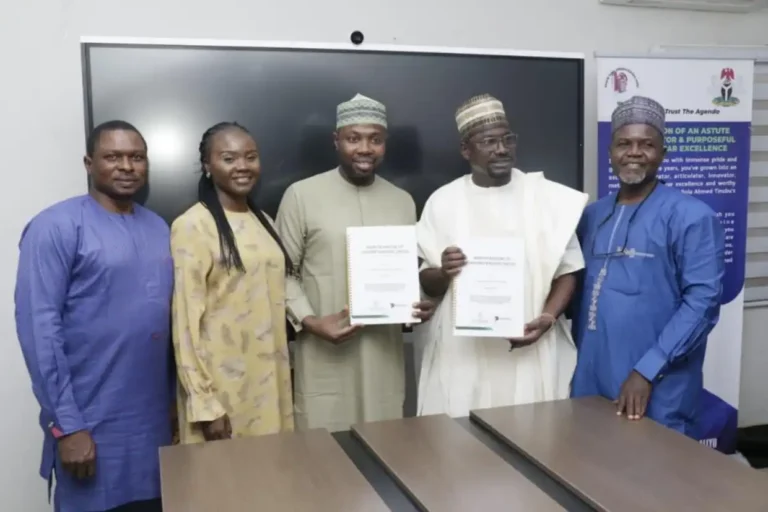
Premplus Limited has taken a major step in Nigeria’s clean energy sector after signing a landmark Memorandum of Understanding with the Rural Electrification Agency on Friday, 14 November 2025. The agreement focuses on upgrading the Energizing Education Programme Workshop and Training Centre in selected Federal Universities into a National Energy Innovation Hub.

The deal, signed at the REA Headquarters in Abuja, supports Nigeria’s push for renewable energy development, technical skills acquisition, and clean energy innovation. It also strengthens efforts around solar power, mini-grid expansion, battery storage solutions, and energy efficiency systems, which remain important for economic growth and job creation.

According to the details of the partnership, Premplus Limited will collaborate with the Rural Electrification Agency to optimize the existing facilities and transform them into a functional hub for training, applied research, and enterprise development. The company plans to apply its Technical Vocational Education and Training framework while working with Brunel University, London. This global partnership provides access to top researchers and innovators who will support technology development and renewable energy research in Nigeria. The project aligns with the Federal Government’s Distributed Access through Renewable Energy Scale-up programme, which focuses on expanding clean energy infrastructure across the States.

During the signing ceremony, the Managing Director and CEO of the Rural Electrification Agency, Dr. Abba Abubakar Aliyu, praised Premplus for its commitment to local content and capacity development. He stated that he expects “Premplus to take the lead in TVET as a private sector player, facilitating an exemplar model for certified technical skills acquisition and training in renewable energy in Nigeria and a model for national replication”.

Dr. Abba further noted that “this collaboration presents a unique opportunity to deepen Nigeria’s clean energy talent pipeline while strengthening innovation, research, and enterprise support across the country”. He said the agency is committed to working with strong private sector partners to unlock solutions that will improve energy access and create opportunities for young people.

The Managing Director and CEO of Premplus Limited, Engr. Zaharadeen Usman, expressed gratitude for the confidence shown by the Rural Electrification Agency. He explained that “the Hub will be structured to ensure long-term sustainability through robust technical training programs, industry partnerships, and innovation-driven models that support local solutions”.

Engr. Usman added that “leveraging the REA’s existing Workshop and Training Centers in Federal Universities and leaning on the Agency’s leadership and strategic direction, this project will become a national reference point for renewable energy skills development and innovation”.