
Home Blog Page 303

CISLAC Pushes for 30% Women Quota in Police Recruitment

CISLAC has urged the National Assembly to increase the proposed women’s recruitment quota in the Nigeria Police Act (Amendment) Bill from 15 per cent to 30 per cent. The call was made in Abuja by Auwal Rafsanjani, the executive director of the Civil Society Legislative Advocacy Centre and head of Transparency International-Nigeria. He said this adjustment aligns with African Union and ECOWAS standards on gender inclusion in security sector governance and will support stronger human rights protection and gender equality reforms.

According to him, “The National Policy on Women, adopted in 2000, recommended a 30 per cent reservation for women in appointments.” Rafsanjani explained that increasing the quota will help Nigeria meet the international benchmark and improve inclusive policing. During the public hearing organised by the House Committee on Police Affairs, he was represented by Gimba Hassan, CISLAC’s senior programme officer. Hassan stressed that women make up less than 11 per cent of the Nigeria Police Force, which is far below global and regional expectations for effective security sector reform.

Stakeholders at the hearing applauded CISLAC’s recommendation, with some panel members showing interest in considering a 20 per cent starting point. CISLAC welcomed the committee’s openness and encouraged lawmakers to take bold steps that will promote transparency, security sector accountability, and gender mainstreaming across all police structures.

The organisation also called for ending analogue record-keeping and establishing a digital, unified and permanent record system for crime data. It said this would improve tracking of gender-based violence cases, human rights violations, investigative outcomes, and prosecutions in a transparent format accessible to the public. CISLAC further proposed the creation of a Gender and Inclusion Compliance Directorate with statutory powers to monitor recruitment, training, postings, promotions, and disciplinary actions.

It added that compulsory gender-responsive budgeting, annual gender audits, and open reporting should be adopted across the police force to strengthen institutional accountability and support sustainable security reforms. The organisation reaffirmed its commitment to assisting the National Assembly in building a police force that is inclusive, transparent, and aligned with global best practices.

Okorie Kalu, head of the legal unit at the Federal Ministry of Police Affairs, announced that the ministry is drafting new police regulations aimed at ending discriminatory requirements. He stated that the new rules would remove marital and pregnancy restrictions, abolish gender-based duty assignments, and end long-standing dress code policies that have been criticised by CISLAC.
Advertisement

FG Moves to Engage Retired Teachers for New TVET Programme

0

Federal Government has begun moves to engage retired teachers as tutors in the new Technical and Vocational Education Training programme, according to a memo issued by the Federal Ministry of Education in Abuja.

The memo, signed by the Technology and Science Education department, confirmed that retired technical teachers will play key roles in teaching trade subjects and supporting quality assurance across approved centres. The plan aligns with the government’s ongoing effort to strengthen skill development, promote economic growth, and expand access to digital workforce opportunities.

The government had earlier launched a free TVET programme designed to help Nigerians gain practical skills while receiving a monthly stipend of N22,500 to ease transportation and training costs. The programme is jointly implemented by the Federal Government and the National Board for Technical Education, with accredited training centres established across the 36 states and the Federal Capital Territory.

The memo stated: “Sequel to the launch of the New TVET Initiative by the Honourable Minister of Education, the Federal Ministry of Education is willing to engage the services of retired technical teachers to support the full implementation of the programme by teaching some of the critical trade subjects as STT or serving as IQAM in our TVET Institutions. This assignment recognises your decades of experience and specialised technical knowledge, which is essential for bridging critical knowledge gaps and ensuring the consistent application of high-quality standards across the TVET Institutions. Interested officers are therefore encouraged to contact the National Coordinator on 08033891762. We look forward to your positive response and invaluable contributions to raising the standard of technical education across the TVET Institutions.”

A major reform in the TVET curriculum now prioritises 80 per cent practical training and 20 per cent theory to ensure learners are job-ready and equipped with workplace-relevant skills that support employment growth. The initiative operates under three tracks: six-month Short-Term Skill Training Centres, twelve-month Vocational Enterprise Institutions, and a three-year Technical College Track.

Executive Secretary of the National Board for Technical Education, Prof. Idris Muhammad Bugaje, earlier said the Minister of Education is working to reposition TVET. He confirmed that the initiative was launched with about ₦70 billion, with ₦20 billion already released to support implementation.

Nigeria also signed a Memorandum of Understanding with China to enhance vocational education through practical training partnerships. Progress so far includes updated curricula, revised occupational standards, the retraining of 3,600 instructors, and upgrades carried out across 38 Federal Technical Colleges.

The digital TVET platform has recorded 1.3 million applications, with 960,000 completed, while 1,600 accredited centres have been onboarded. A total of 58,000 students have been placed, with a target of up to 150,000. Additionally, 2,080 Quality Assurance Managers have been trained nationwide.

Adamawa State Launches 5Ws Humanitarian Data System

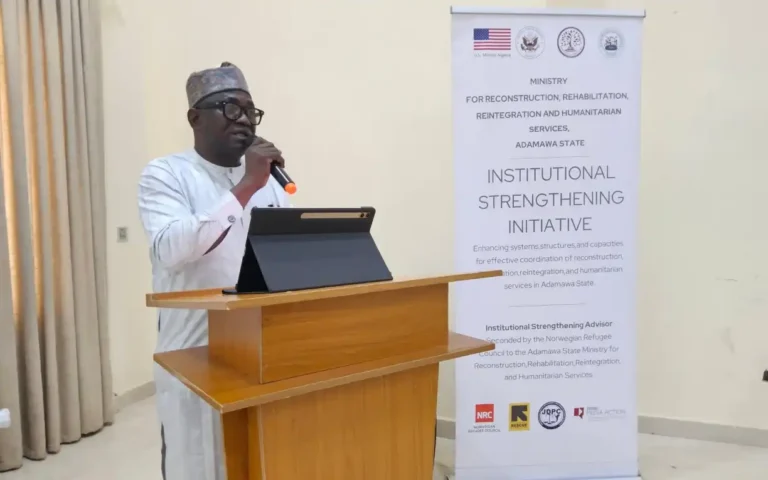
Adamawa State has introduced the 5Ws Humanitarian and Development Management Information System to improve coordination and reporting in ongoing humanitarian and development efforts. The initiative was launched during a workshop organized by the Adamawa State Ministry for Reconstruction, Rehabilitation, Reintegration and Humanitarian Services, which focused on strengthening response information management through the key questions of who is doing what, where, when, and for whom.

This system is expected to support better project monitoring, enhance data-driven planning, and improve public service delivery.

Declaring the workshop open, the Honourable Commissioner of the Ministry, Hon. Bello Hamman Diram, represented by the Permanent Secretary, Pharmacist Amos Enoch Piribu, said there is an urgent need to define clear roles and responsibilities in humanitarian data management. He explained that accurate and timely information remains a major driver for effective humanitarian coordination and long-term development planning in the state. According to him, the new system will harmonize reporting across sectors, enable faster data analysis for evidence-based decisions, and strengthen accountability among partners.

He added that the system fully aligns with the Nigerian Data Protection Act 2023 to ensure responsible handling of sensitive information. The platform is designed to enhance visibility and collaboration among humanitarian actors, especially in areas affected by displacement, poverty, and limited access to social services. These improvements are expected to support better emergency response and more efficient development programmes.

The workshop was attended by representatives from the Adamawa State Planning Commission, the Office of the Adviser to the Governor on CSOs and NGOs, the Office of the Adviser to the Governor on World Bank and Development Partners, UN OCHA, NRC, IRC, and the Ministry of Land and Survey. Participants shared insights from their sectors and reaffirmed their commitment to improving coordination and strengthening the humanitarian response architecture across Adamawa State.

SEDC Begins Mapping for South East Agro-Development Program

0

The South East Development Commission has begun the site identification, mapping, and scoping exercise for the South East Agro-Development Program as part of President Bola Ahmed Tinubu’s commitment to modernise and expand agricultural production.

The exercise officially started in Enugu State in partnership with the State Government, marking what officials describe as a major first step toward accelerating agricultural transformation and strengthening Nigeria’s strategic grain reserves.

According to the Commission, the initiative is aligned with the Agriculture Plan of the Renewed Hope Agenda and builds on Enugu State’s ongoing efforts to establish farm estates in every Local Government Area. Field teams are already carrying out assessments in Ezeagu, Udi, Igbo-Eze, and Nsukka LGAs to identify key agricultural clusters, validate investment-ready sites, and prepare the region ahead of the 2026 planting season.

SEDC said the program will rely on data-driven planning and strong collaboration with Federal MDAs, Development Partners, and the Private Sector to create a sustainable agro-industrial value chain. The Commission noted that the project aims to create jobs, improve livelihoods, support economic growth, and advance food security across the South East region and the nation.

House Committee Threatens Arrest Over N1.2 Trillion Agriculture Fund Probe

0

House Committee Chairman on Nutrition and Food Security, Hon. Chike Okafor, on Tuesday warned that bench warrants may be issued for the arrest of the Managing Director of the Bank of Agriculture, Ayo Sontinrin, and the Director-General of the Agricultural Research Council of Nigeria, Dr. Abubakar Adamu Dabban.

The warning came during the resumed investigative hearing on the alleged misuse of N1.2 trillion meant for agricultural interventions, a matter attracting strong public interest and raising questions about financial transparency and government accountability.

Okafor stated that the Committee will not hesitate to invoke its parliamentary powers if the invited officials continue to ignore summons. He explained that “the Committee held its maiden investigative hearing on April 8, 2025, with the Central Bank of Nigeria in attendance, followed by a second session on June 16, 2025, with both the CBN and participating financial institutions present.” He noted that while some organizations submitted records confirming non-involvement, others “have either ignored us or offered flimsy excuses. This is unacceptable.”

The Bank of Agriculture had claimed that a recent change in leadership was responsible for its absence, but Okafor dismissed the explanation, stressing that the institution remains accountable regardless of internal transitions.

The Committee also examined discrepancies in agricultural loan disbursements involving Prospect Micro-Finance Bank. Its Managing Director, Isaac Inwang, told lawmakers that N14.6 million was disbursed to 30 poultry farmers, with N6 million recovered and held based on CBN instructions. However, the CBN countered that N15.5 million was disbursed and accused the bank of violating guidelines by withholding recovered funds for over three years.

Okafor directed the Micro-Finance Bank to submit all documents and correspondence related to the transactions on Wednesday, November 19, and address identified breaches.

The Committee also cleared the National Agricultural Seeds Council of involvement in the Anchor Borrowers Programme after its Director-General, Alhaji Fatuhu Muhammed, confirmed the agency’s non-participation, a position the CBN supported.

CAC Opens Abuja Office For Manual Complaint Resolution

0

The Corporate Affairs Commission has announced a new temporary measure to improve customer service and reduce delays caused by ongoing system issues. In a public notice, the Commission stated that the Registrar-General has approved the immediate opening of its office in Zone 5, Abuja, to receive manual complaints and provide fast, on-the-spot resolutions. This update is expected to ease challenges faced by business owners dealing with company registration, regulatory compliance, and ICT-related inquiries.

According to the Commission, representatives from the Registry Department, Incorporated Trustees Department, Consent Unit, ICT Department, and Compliance Department have been deployed to the Abuja office. The notice explained that these officers are fully equipped and mandated to resolve complaints instantly, adding that “issues will be addressed immediately, except in cases requiring additional procedural actions.” This step is part of efforts to stabilize the Intelligent Company Registration Portal, which continues to experience disruptions affecting business registration and compliance services.

The Commission added that all existing complaint channels, including email and the call center, remain active. It also confirmed that similar measures will soon be extended to all zonal offices nationwide to ensure customers can access timely support.

FG Launches Committee for Nationwide Women Empowerment Expansion

The Federal Government has inaugurated the Federal Technical Committee for the Nigeria for Women Programme Scale-Up (NFWP–SU), a major move aimed at boosting women’s economic empowerment across the country. The event, held in Abuja, highlighted the government’s plan to expand support for financial inclusion, livelihood opportunities, and social protection under a unified national framework that aligns with high-value development goals and economic growth policies.

Speaking at the ceremony, the Permanent Secretary of the Federal Ministry of Women Affairs and Social Development, Dr. Maryam Keshinro, said the committee’s creation shows the government’s commitment to strengthening women-focused interventions and deepening inclusive national development. She described the Nigeria for Women Programme Scale-Up as a transformative extension of the Nigeria for Women Project, originally implemented from 2018 to 2024 in Abia, Akwa Ibom, Kebbi, Niger, Ogun, and Taraba states.

According to her, the earlier project recorded remarkable achievements by reaching more than 460,000 women, forming 22,000 Women Affinity Groups, and mobilising over N4.4 billion in collective savings. She explained that the scale-up phase, approved in June 2024, will now expand the programme nationwide and integrate key components such as financial inclusion, social protection, and livelihood support. “This model strengthens Women Affinity Groups into sustainable economic institutions linked directly to formal markets and financial services,” she said.

Dr. Keshinro noted the ongoing gender gaps that affect economic participation, stressing that the scale-up aligns with the National Women Economic Empowerment Policy designed to address inequality.

She highlighted worrying statistics, stating that “seventy per cent of Nigerian women are extremely poor and have only about 10 per cent access to their own land. Although 70–80 per cent of agricultural labour is carried out by women, only 20 per cent of board representation is female.” She added that women still earn 45 to 50 per cent less than men in similar roles, while only 34 per cent of women have digital access compared to 88 per cent of men.

She said the programme also supports the World Bank Group’s Global Crises Response Framework by promoting food security through agricultural productivity and climate resilience. The Permanent Secretary urged committee members drawn from the Ministries of Budget and Economic Planning, Education, Water Resources, Health and Social Welfare, Communications and Digital Economy, and Trade and Investments to ensure strong coordination and provide timely technical support. She encouraged them to track progress, uphold accountability, and maintain alignment with national policies and global best practices. According to her, their expertise is crucial to reaching the programme’s ambitious targets.

Presenting a progress update, the National Project Coordinator, Dr. Hadiza Maina, said engagements with state governments, development partners, financial institutions, and community leaders are ongoing to support ownership and long-term sustainability. She revealed that the scale-up phase will introduce enhanced digital tools for monitoring, real-time reporting, and better delivery of financial and livelihood assistance.

“Our goal is to ensure that every participating woman not only benefits economically but becomes part of a resilient network capable of withstanding shocks, supporting household welfare, and contributing meaningfully to the local and national economy,” she said.

Dr. Maina added that the programme is placing special focus on climate-smart agriculture, small-scale enterprise development, and digital financial literacy, noting that these areas have become crucial due to rising climate pressures, inflation, and economic vulnerabilities.

In her remarks, the Co-Task Team Lead for the World Bank, Dr. Yetunde Fatogun, praised the Federal Government for scaling up a programme that has already shown measurable improvements in women’s productivity, income, and resilience. She said the World Bank remains committed to supporting Nigeria in strengthening community systems that empower women socially and economically.

Fatogun also noted that the scale-up is happening at a time when global economic uncertainties and climate-related shocks disproportionately affect women, making continued collaboration among government institutions, development partners, and civil society vital to reaching vulnerable groups.

Senate Seeks Recruitment of 100,000 Military Personnel After Kebbi Abduction

The Senate has called for the immediate recruitment of 100,000 additional military personnel as part of urgent measures to rescue the 25 students abducted from Government Girls Comprehensive Secondary School in Maga, Kebbi State. Lawmakers said the scale of insecurity demands a major expansion of Nigeria’s armed forces to protect citizens, schools, and rural communities across the country.

During its plenary session, the Upper Chamber urged President Bola Tinubu and security agencies to act quickly to secure the safe return of the abducted students. Senators stressed that the President, as Commander-in-Chief, must approve and deploy a significantly larger, fully trained, and well-equipped military workforce to respond to growing security challenges.

They argued that population growth and rising attacks require a stronger defence system that can operate effectively nationwide.

The Senate also moved to investigate the Safe School Programme by establishing an Ad Hoc Committee made up of the Finance, Education, Defence, Army, and Navy committees. The lawmakers said the investigation will focus on the programme’s funding, expenditure, and its real impact on school security. A minute of silence was held in honour of the vice principal killed in the attack, and prayers were offered for the principal who was injured and for the students still being held.

The resolutions followed an urgent motion presented by Senator Yahaya Abdullahi (APC, Kebbi North), who described how terrorists invaded the school in Maga, located in Danko-Wasagu Local Government Area. He explained that despite some police presence, the attackers kidnapped 25 students, killed the vice principal, and wounded the principal.

Abdullahi recalled similar incidents in the state, noting that in one 2022 case, it took four years before kidnapped schoolgirls were recovered.

Senate President Godswill Akpabio condemned the incident, saying the issue of insecurity is not unique to Nigeria. “Terrorism is terrorism. Our responsibility is to make laws, pass motions, and take decisions that reduce crime,” he said. He urged citizens to supply relevant information that could help security agencies rescue the students.

Other lawmakers stressed that Nigeria’s armed forces are overstretched. Senator Sani Musa (APC, Niger East) noted that 177,000 personnel are insufficient for a nation of over 230 million people.

Senator Mohammed Tahir Munguno (APC, Borno North) urged parliament to fully support the President’s security directives, while Senators Francis Fadahunsi and Asuqo Ekpeyong called for stronger coordination, firm ultimatums, and accountability across security agencies to prevent recurring attacks.

NCF Application for 2026 Chief S.L. Edu PhD Research Grant for Nigerians

0

The Nigerian Conservation Foundation has announced that the 2026 Chief S.L. Edu Memorial Ph.D. Research Grant is now open for applications, offering support for advanced research that promotes sustainable natural resource management in Nigeria.

According to the Foundation, the grant is sponsored by Chevron Nigeria Limited and is designed to encourage studies in natural sciences, social sciences, environmental law, and related fields. The NCF explained that the award aims to recognize and reward scholarly contributions that improve habitat restoration, resource management, climate resilience, and biodiversity conservation. The theme for this year is described as Restoring Ecosystems and Strengthening Climate Resilience for Sustainable Development in Nigeria.

The NCF stated that eligibility for the grant is based on the quality of research proposals and specific requirements. It said applicants must be Nigerian citizens with an M.Sc degree or its equivalent in natural sciences, social sciences, or environmental law, with the field tied to natural and environmental resource management. The Foundation added that candidates must have secured admission into a Nigerian university for a Ph.D in any of the approved fields and must submit research proposals aligned with the theme and the NCF’s vision.

The Foundation emphasized that a progress report from the applicant’s project supervisor is mandatory, explaining that “a reference letter is not equivalent of a progress report from the Project Supervisor(s).” It added that the report must show how far the researcher has gone, the supervisor’s role in the initial review, and the relevance to the grant’s objectives. Applicants are also required to submit a 200-word justification connected to biodiversity conservation and environmental resource management, along with a 3,000-word proposal containing the title, statement of problem, objectives, methodology, and expected outputs. A curriculum vitae of not more than two pages and a scanned copy of the admission letter must be included.

The NCF stated that applications must be submitted online through the official Link and warned that no paper applications will be considered. It noted that only one proposal should be submitted and confirmed that all entries will be acknowledged, though only successful applicants will be contacted.

The Foundation is a membership-based environmental NGO established in 1980 by Chief S.L. Edu, dedicated to promoting conservation, environmental management, and sustainable development across Nigeria.

NLNG Application for 2026 Undergraduate Scholarship Award

0

Applications have opened for the 2025 NLNG undergraduate scholarship award for Nigerian students, with Nigeria LNG Limited announcing a new call aimed at supporting outstanding young scholars in the country.

NLNG said the scheme reflects its commitment to education and national development and confirmed that the application is free for all eligible candidates. The company described the initiative as a way to empower first-year undergraduates with financial support that can strengthen their academic journey.

NLNG is calling all first-year undergraduates to apply for the 2025 Undergraduate Scholarship Scheme created to support brilliant Nigerian students who are ready to shine. The organisation added that applicants must have basic computer skills because the selection stage will be conducted through an online proctored test. The scheme targets students in the 2025/2026 academic session who show strong academic potential.

To qualify, applicants must be Nigerian citizens currently living in the country and must have at least five O’Level credits in one sitting, including Mathematics and English. They must be between 18 and 25 years old, be full-time first-year students in a federal or state-owned university, and have scored a minimum of 200 in the JAMB UTME.

NLNG noted that no applicant should be a spouse, child, ward, or direct relative of its staff or be receiving any scholarship or grant from another organisation.

The application process requires candidates to apply through the official portal Link and fill in all necessary fields. Applicants must upload a recent passport photo without glasses, WAEC or NECO results, JAMB UTME results, a JAMB admission letter, LGA identification, and a birth certificate.

NLNG explained that only shortlisted applicants will be invited for the online selection test, and the company will later request additional documents from candidates who pass the test.

The scholarship will only be awarded to those who meet every eligibility requirement and successfully complete all stages of the process. The organisation encouraged interested students to apply before Friday, 12 December 2025, and advised that all enquiries should be sent to ugss@nlng.com.