Home Blog Page 308

NCAOOSCE Awaits States on Enrolling 700,000 Out-of-School Children

The National Commission for Almajiri and Out-of-School Children Education has announced that it is still waiting for state governments to take action on the enrolment of 700,000 out-of-school children recently mapped across the country. The executive secretary, Muhammad Idris, disclosed this on Saturday in Abuja while responding to questions from journalists. He explained that the commission had already written formally to all 36 state governors and the Federal Capital Territory authorities to begin the enrolment process, which he described as a major step toward reducing the number of children without access to education.

Mr Idris said the commission embarked on an unprecedented nationwide mapping exercise that involved reaching remote communities, documenting learners, and identifying children who had never been in school or who dropped out. He noted that poverty continues to be the major factor keeping children away from school. According to him, many families struggle to afford basic needs such as school uniforms and PTA levies, which discourages enrolment and creates long-term educational challenges.

He stated that the commission is fully prepared to submit the data of the 700,000 mapped children to states once the necessary steps are taken to begin implementation. He added that within the next three months, the commission would present an updated database containing information on an additional three million out-of-school children. He said this expansion would depend on states enrolling the current 700,000 learners already identified.

Mr Idris stressed that the assignment aligns with the directive of President Bola Tinubu, who has repeatedly stated that no Nigerian child should remain out of school before the end of his administration. He said, “The president was pressing on us that before the end of his 8 years, no Nigerian child should be out of school. And I just told you that I can make the number three million in the next three months only if I have someone who is ready to take them to school. And because the federal government cannot open schools across all the states, it has to be done by the states.”

He commended governors, noting that many were taking steps to strengthen the education sector, but he called for stronger partnerships. “I know that state governors are working hard to revitalise education in their states. And they are doing all that is required. But what we are saying is, let there be partnership,” he said.

Speaking further, the executive secretary welcomed the recent approval of the National Policy on Almajiri Education by the National Council on Education. He said the approval confirms that Almajiri children are entitled to the same quality of education, resources, and learning environment as every other child in the country. He described it as an important move toward integrating Almajiri learners into mainstream education systems.

Providing updates on key interventions, Mr Idris highlighted the progress made at the Tinubu Legacy Skills Training Institute in Kaduna. He revealed that about 200 Almajiri learners had completed a nine-month intensive programme. The training equipped them with English and Arabic language proficiency, Qur’anic interpretation skills, and the opportunity to take the National Board for Arabic and Islamic Studies examination, which qualifies them for further studies in Nigerian and foreign institutions. He said, “It was a nine-month training programme, and we were able to successfully accomplish this nine-month programme. I want to share with you that they were allowed to attempt the National Board for Arabic and Islamic Studies examination, and very soon they will be certified by NBIAS.”

He added that the commission had engaged authorities in Saudi Arabia and Malaysia, both of which indicated readiness to offer scholarships to successful learners. Beyond academics, the students were also trained in various vocational skills such as POP installation, CCTV maintenance, solar technology, tiling, GSM repairs, agriculture, and ICT, with some already becoming skilled web designers.

In Oyo State, he said another 150 out-of-school girls in Ibadan were undergoing training in vocational areas, including fashion designing, cosmetology, hair-making, makeup, shoemaking, leather works, school bag production, catering services, and event planning. The girls were also being supported through the Accelerated Basic Education Programme to help them reintegrate into formal schooling.

Mr Idris noted that the commission had established 106 learning centres across different states, where out-of-school children were receiving literacy and numeracy lessons while Almajiri learners were guided through the curriculum. He urged stronger cooperation from all stakeholders, emphasising that reducing the number of out-of-school children and reforming the Almajiri system required collective commitment from governments, communities, and partners.
Advertisement

Federal Government Launches 2025–2026 NAGS-AP for 80,000 Farmers

0

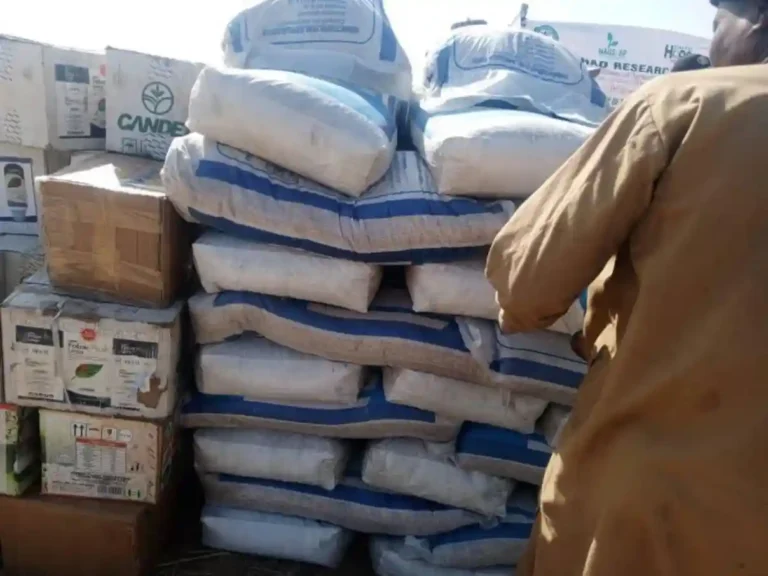
The Federal Government on Saturday launched the 2025–2026 National Agricultural Growth Scheme, Agro-Pocket Input Collection in Maiduguri, targeting 80,000 registered farmers and projecting an output value of about ₦160 billion. The initiative is part of ongoing efforts to boost food security, expand agricultural financing, and support smallholder farmers who produce most of Nigeria’s food. The programme also highlights the government’s continued commitment to economic development through commercial agriculture and dry-season farming.

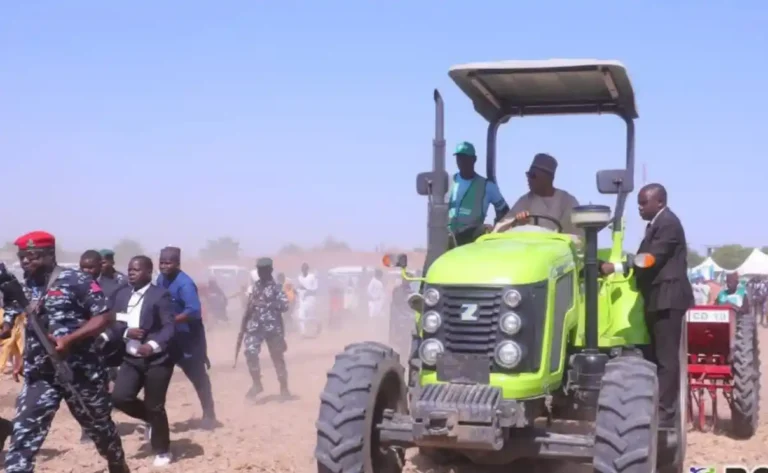
During the flag-off, the Minister of Agriculture and Food Security, Senator Abubakar Kyari, said 3,000 hectares out of the 40,000 hectares allocated nationwide for the dry-season wheat programme have been assigned to Borno State, covering 6,000 farmers. He said the National Agricultural Growth Scheme has remained one of the government’s strongest platforms for strengthening rural livelihoods and improving access to subsidised inputs that enhance productivity and income growth.

Kyari recalled that 107,429 farmers benefited during the 2023–2024 dry-season wheat programme, achieving an output valued at ₦474.6 billion. He added that another 279,297 farmers were supported in the 2024–2025 cycle, producing wheat valued at ₦893.7 billion. He said this progress demonstrates the impact of government-led agricultural intervention and the role of technology, irrigation systems and market-driven policies in boosting national food supply.

He explained that the programme aligns with the Federal Government’s current priority on food security, following President Bola Ahmed Tinubu’s declaration of a state of emergency on food security in July 2023. According to him, the wheat component of the scheme now covers 16 states, including Adamawa, Bauchi, Gombe, Cross River and Zamfara. He said hosting the new national flag-off in Maiduguri holds special significance and reflects confidence in the resilience and capacity of farmers across Borno State.

“Under the 2023–2024 dry-season wheat production programme, a total of 107,429 registered farmers received subsidised inputs, resulting in an output valued at ₦474,628,000,000. During the 2024–2025 dry-season programme, 279,297 registered farmers were supported, with an output valued at ₦893,750,400,000,” he said. “This progress is being recorded at a time when Nigeria has elevated food security to the highest level of national priority. In July 2023, His Excellency, President Bola Ahmed Tinubu, declared a state of emergency on food security.”

Also speaking, Borno State Governor, Professor Babagana Umara Zulum, praised President Tinubu’s Renewed Hope Agenda and described agriculture as the backbone of livelihoods in the state. He said farmers in Biu, Baga, Gwoza, Damasak, Ngala and Monguno have benefited from improved irrigation systems, water pumps, certified seeds, chemicals and extension services.

Zulum said mechanisation has become more accessible through partnerships that allow smallholder farmers to use equipment at subsidised rates, with many producing enough food last year to sustain their households for up to two years. He added that the Presidential Agricultural Insurance Scheme has helped farmers recover from climate-related losses, especially the severe floods recorded in 2024.

He noted that additional support from the World Food Programme and humanitarian partners, including improved seeds, fertiliser and cooperative structures for women and young people across ten conflict-affected local government areas, is strengthening food production and contributing to wider recovery efforts in Borno State.

FCTA Begins Free Gas Cylinder Distribution To 5,000 Households

0

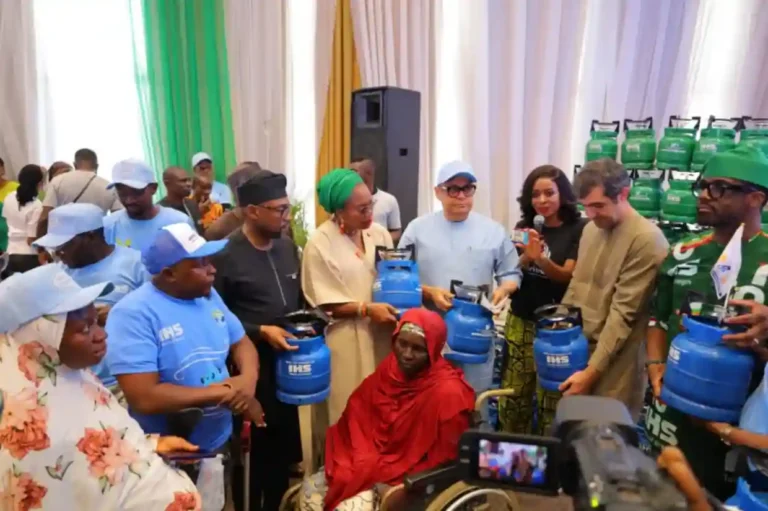
Federal Capital Territory residents are set to benefit from a major environmental health move as the Federal Capital Territory Administration commenced full implementation of its Breathe Clean Air Initiative, targeting over 5,000 households. The beneficiaries will receive free gas cylinders and free refills of cooking gas for six months, as part of efforts to reduce pollution and improve public health.

The initiative was officially launched on Saturday during the unveiling of the Safe Environment Renewable Project – Breathe Clean Air Abuja. The programme focuses on reducing reliance on firewood and charcoal, promoting clean energy, strengthening environmental protection, and improving family health. It also supports national goals under President Bola Tinubu’s Renewed Hope Agenda, which prioritises quality of life and sustainable development for all social classes.

Speaking at the event, the Mandate Secretary of the FCTA Health and Environment Secretariat, Dr Adedolapo Fasawe, said the Breathe Clean Air Initiative goes far beyond handing out palliatives. She stressed that the project is designed to address environmental ignorance and help families, especially women, adopt healthier cooking habits. According to her, President Tinubu’s agenda has impacted every aspect of human life and continues to push for improved living standards across the country.

Fasawe explained that the FCT Minister, Nyesom Wike, has embraced the President’s vision and remains committed to creating a safer and healthier environment for residents. She said, “The truth is, health is wealth. Health and environment are equal. So the focus of this program is not only to give out palliatives, as we’ve done in the past. The focus of this program is to address the Renewed Hope Agenda Initiatives. It’s to tell Nigerians that if only we can put our hands together, and not wait for governments alone, we can have a happy, peaceful, and prosperous Nigeria. Because truly, with peace and prosperity Nigeria will be great again.”

Also speaking, the Permanent Secretary of the Health Services and Environment Secretariat, Babagena Adams, said the initiative is important because it helps reduce the physical stress experienced by pregnant women. He explained that clean cooking improves productivity and strengthens community health. He said, “We’re also saving the pregnant women, along with the family. So if they live healthy, they’ll be more productive, and the GDP of FCT will increase. A healthy community is a wealthy community, that’s the benefit.”

Mohammed Darwish, Chief Executive Officer of IHS Nigeria Limited and a partner of the initiative, noted that the project is designed to protect mothers and children from harmful emissions. He said prolonged use of firewood and charcoal exposes families to lung cancer and other respiratory diseases. According to him, “the six month voucher distributed in addition to the cylinder would encourage the beneficiaries to sustain the usage of the gas cylinders. This programme, in a nutshell and simple English, is about helping 5,000 mothers, sisters, and daughters by not inhaling toxic gases anymore, and by really making sure that their health is better by breathing fresh air. That’s in a nutshell.”

The Executive Vice President of IHS, Ayotade Oyinlola, added that the shift to clean cooking will reduce household spending on medical bills. Supporting this view, a Consultant Radiation and Clinical Oncologist at the National Hospital Abuja and Secretary of the Nigerian Cancer Society, FCT Chapter, Dr Ayuba Hannatu Usman, described the project as a prevention-focused health measure aimed at reducing environmentally induced illnesses.

Another advocate, Daniela Omotola of the Rotaract Clubs in Abuja, praised the project as a timely and life-changing effort that will reduce pollution and promote healthier living conditions. Stakeholders also noted that as more households adopt cooking gas, pressure on forests and surrounding ecosystems will gradually reduce.

According to the FCTA, the initiative is part of a wider environmental health strategy aimed at cutting pollution and building safer communities across the Federal Capital Territory in line with the national Renewed Hope Agenda.

Enugu Flags Off PEWASH Water Project in Isi-Uzo

Enugu State has taken a major step toward improving rural water access with the official flag-off of the Partnership for Expanded Water Supply, Sanitation and Hygiene programme in Isi-Uzo Local Government Area. The launch, done in collaboration with the Federal Ministry of Water Resources and Sanitation, drew federal officials, state representatives, traditional rulers, women leaders and community stakeholders who described the initiative as a lifeline for communities that have endured years of water scarcity and frequent cholera outbreaks. The programme aims to improve safe water supply, promote sanitation and hygiene, and strengthen public health in rural settlements.

Speaking on behalf of the Minister of Water Resources and Sanitation, Engr. Prof. Joseph Terlumun Utsev, Senior Water Engineer Engr. Sunday Agu explained that the PEWASH programme was created as a national collaborative platform involving federal and state governments, development partners, the private sector and benefiting communities. He said the success of the initiative depends on joint responsibility and adherence to established guidelines. According to him, “For the full benefits of PEWASH to be realized, all partners must demonstrate equal commitment in line with established protocols,” adding that long-term sustainability would rely heavily on community ownership and proper maintenance of the facilities.

Representing Governor Peter Ndubuisi Mbah, the Commissioner for Labour and Productivity, Dr. Felix Nnamani, praised President Bola Ahmed Tinubu for expanding access to essential amenities through the national WASH efforts. He revealed that Enugu State had fully met its counterpart funding obligations and encouraged residents of the benefiting areas to take full responsibility for the facilities. He stated that communities must “take full ownership of these projects to ensure they endure.” Dr. Nnamani also noted that two local governments were selected from each senatorial zone for the intervention and urged others to work closely with the Enugu State Rural Water Supply and Sanitation Agency to advance Sustainable Development Goal 6 focused on clean water and sanitation. He applauded Igbo-Etiti LGA for recently achieving Open Defecation Free status and said the administration would continue to maximize federal opportunities for public welfare.

The Permanent Secretary of the Ministry of Water Resources, Ada Nwonye, representing the Commissioner, described the programme launch as “a critical step in expanding access to safe water, promoting sanitation, and enhancing hygiene across the state.” She commended Governor Mbah for his consistent support and investment in rural development projects intended to improve citizen welfare. Her remarks highlighted the urgent need for safe water solutions, especially for communities that remain vulnerable to waterborne diseases and seasonal water shortages.

Managing Director of EN-RUWASSA, Hon. Chika Mbah, gave insight into why Isi-Uzo was chosen as a priority location. She said data showed that the area has faced persistent water scarcity and remains a hotspot whenever cholera outbreaks occur in Enugu State. According to her, “Whenever there is a cholera outbreak in Enugu State, Isi-Uzo is always the hotspot, and we understand why; it is a water source issue.” She stressed that the project is need-driven and backed by detailed geographical surveys conducted across the communities to identify viable water sources. She noted that EN-RUWASSA ensures community participation in every stage, including surveys, contractor engagement and federal evaluations. She clarified that “PEWASH is a matching project, not a matching fund,” explaining that the approach empowers communities to manage the facilities independently. She added that drilling would begin on Thursday, November 13, with technical experts from EN-RUWASSA supervising operations due to the difficult soil formation. She emphasized that “Water is difficult to access underground, so our professionals will oversee all technical aspects to ensure the project’s success.”

Local government representatives, including Hon. Nnamchi of Isi-Uzo and Hon. Aka Eze Aka of Udenu, praised Governor Mbah’s commitment to rural development and pledged local support to ensure effective implementation. Health officials at the event also linked unsafe water and poor sanitation to high cases of diarrhoea and advised residents to take full ownership of the new facilities to reduce preventable illnesses.

For many residents, the launch marked the end of decades of struggle. Women leaders such as Nnaji Josephine and retired school principal Chinyere Eze narrated their experiences of relying on unsafe water sources. They recalled depending on streams like the Neke Ebony River, which dries up during the dry season and leaves families vulnerable to waterborne diseases. The traditional ruler of Nkwo Ikem, His Royal Highness Igwe Pius Nnamani, delivered goodwill messages from the traditional council and emphasized the urgent need for permanent water solutions.

Hon. Chika Mbah also acknowledged the role of Engr. Obinna Ejike, Head of the Water Department, and his team for conducting extensive surveys across the six benefiting local governments, a task she described as vital for the successful planning and rollout of the PEWASH programme.

The ceremony ended with a cultural performance by women of Ikem Isitoro, reflecting community unity and shared commitment to sustaining the water and sanitation facilities. Observers noted that the PEWASH flag-off demonstrates a strong multi-stakeholder commitment to solving Enugu’s rural water challenges through community-driven and sustainable solutions aimed at improving public health and quality of life.

Nigeria for Women Programme targets 4 million women in nationwide scale-up

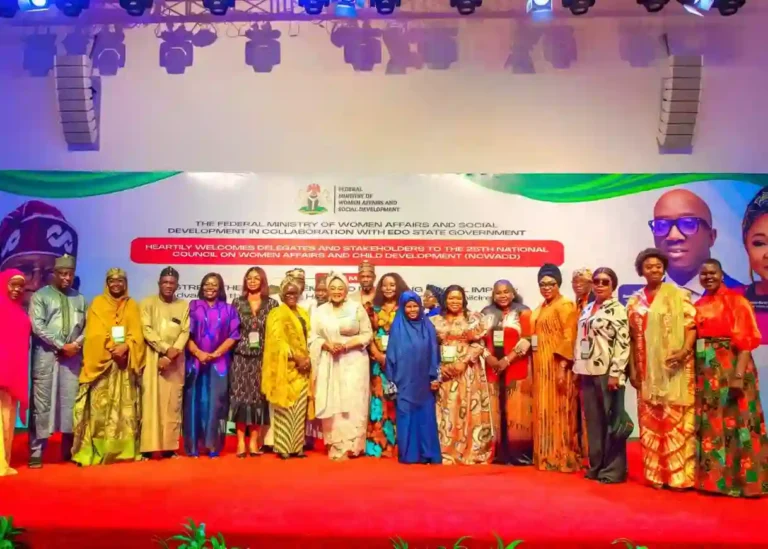
The National Project Coordinator of the Nigeria for Women Programme, Dr. Hadiza Maina, has announced that the programme is now set for a nationwide scale-up aimed at reaching about four million women across the country. She shared this update in Benin City, Edo State, during the National Council on Women Affairs and Child Development, shortly after presenting the programme’s impact Scorecard. The initiative, designed to strengthen financial inclusion and promote sustainable economic empowerment for women, is moving from its pilot phase into a much broader national rollout.

Dr. Maina explained that the pilot phase, which ran from 2019 to 2024 in six states – Niger, Kebbi, Taraba, Cross River, Abia, and Ogun – exceeded its original target by a significant margin. The programme was initially expected to empower 300,000 women but surpassed this figure by 150,000, recording over 450,000 beneficiaries. She added that this growth happened because of strong community participation and the programme’s focus on building practical financial literacy and livelihood skills. According to her, Women Affinity Groups remain the foundation of the project’s success, serving as platforms for savings, internal lending, cooperative development, and access to economic resources.

She stated that each Women Affinity Group consists of 15 to 25 women aged 18 and above, explaining that the groups are self-formed. “Women self-select themselves based on certain criteria within the community. It’s not imposed, they self-select themselves and form a cooperative,” she said. Dr. Maina described the groups as the nerve centre of the Nigeria for Women Programme scale-up projects, providing training in financial inclusion, financial literacy, health, nutrition, reproductive health services, water sanitation, digital skills, and climate smart farming. She emphasised that these interventions are designed to give women stronger economic independence and better resilience in their households.

Dr. Maina also praised the World Bank for its role in supporting the programme’s design and execution. “The World Bank is our valuable technical partner in these projects,” she stated. She noted that the remarkable results recorded during the pilot phase encouraged many state governors to request inclusion in the scale-up phase. She explained that empowering women naturally strengthens families, supports communities, improves livelihoods, and reduces youth restiveness in local areas.

Looking forward, Dr. Maina said the project aims to empower four million women across 32 states in the next phase of implementation. The initiative is expected to expand from 22,000 Women Affinity Groups at the end of the pilot to about 170,000 groups nationwide. She described the target as conservative, saying, “We’re looking at empowering over 4 million women just to be conservative.” Speaking to Voice of Nigeria, she emphasised that inclusivity is central to the next phase. She said the programme will also accommodate women in internally displaced persons camps, refugees, and women living with disabilities, adding that it “goes down to the real vulnerables.”

Dr. Maina explained that the project is a long-term economic model designed to give women sustainable income opportunities. She said it is different from short-term palliative distribution as participants are trained to build and grow their own livelihoods. “It is not the usual dole out of palliative. It is economic empowerment initiative that is diverse, that is sustainable, because you do it yourself,” she said. She narrated how the programme has transformed the lives of women at the lowest income levels. “You can imagine a woman at nano level selling garri ten naira is now a landowner through the livelihood support. Such a woman will have economic freedom which indirectly or directly will impact on her family and community.”

She linked the programme to the Federal Government’s Renewed Hope Agenda and said the initiative contributes to national economic goals. According to her, the Nigeria for Women Programme will help women contribute to the country’s Gross Domestic Product and support the vision of building a trillion-dollar economy. “We have a programme that will enable you contribute to the GDP of this country. We’re dreaming of a trillion-dollar economy,” she stated. She added that the team will continue to work to ensure that women are positioned to contribute meaningfully to national growth. “We will continue to do our best to make sure that we deliver on Nigerian women’s economic empowerment. To make sure that the women are positioned to contribute to the GDP, to the one trillion Dollar economy we envision by 2030.”

Dr. Maina also expressed appreciation to President Bola Ahmed Tinubu and the Minister of Women Affairs, saying, “I really want to appreciate the government of President Bola Ahmed Tinubu and my Minister whom he has given the right key to operate the Women Affairs Ministry. She’s a right peg in the right hole and she is delivering on the Renewed Hope Agenda.”

The Nigeria for Women Programme is a Federal Government and World Bank economic empowerment initiative aimed at improving women’s earnings and strengthening household resilience. It promotes financial inclusion, internal lending, business development, climate-smart livelihoods, digital access, and life skills, reinforcing the commitment that empowering women leads to stronger families, more prosperous communities, and long-term national development.

CDCFIB Says No Change to CBT Exam Dates on Portal

0

Earlier, there were concerns about the CDCFIB exam portal rescheduling date for some candidates. The CDCFIB recruitment team on Saturday clarified that the dates for the Computer Based Test, which started on Wednesday, remain unchanged for all candidates using the online exam platform.

In an update shared on its official X and Facebook handles, the Board said, “The dates for the ongoing CBT which commenced last Wednesday 12th Nov 2025, and is to conclude on Wednesday 19th Nov 2025, remain unchanged.”

“Applicants are to note that the test will be conducted exclusively online according to the date and time selected.”

The clarification followed several complaints posted by candidates across social media regarding new dates being seen on the exam login portal, raising fresh concerns about the recruitment process and online assessment system.

Some candidates had reported a sudden change in their scheduled exam dates. One applicant wrote that his exam was rescheduled to a day before the chosen date, a concern that Nigeria Startup News had earlier reported as more candidates checked the portal for updates.

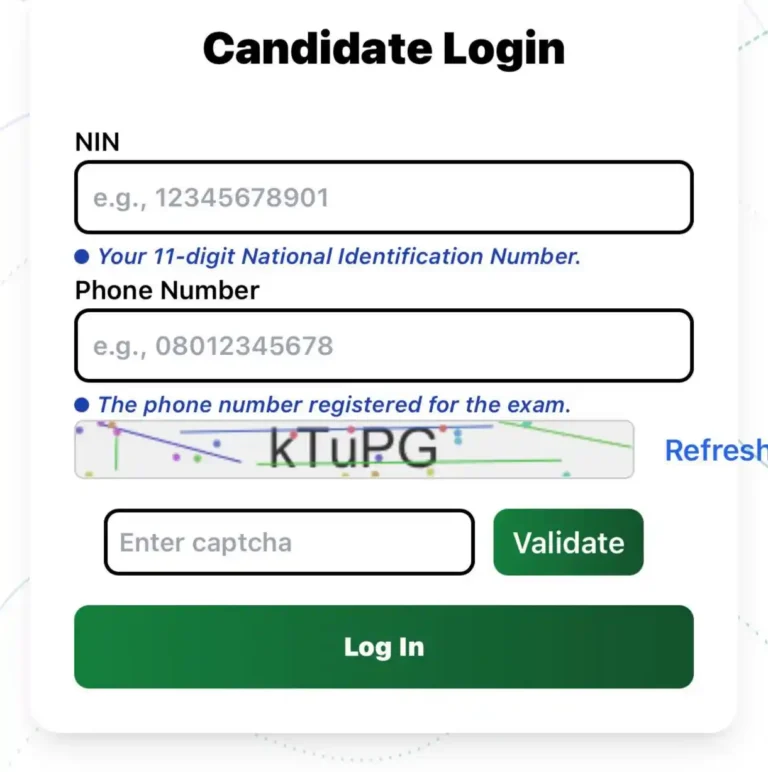
Many candidates used the opportunity to express frustration over invalid NIN and phone number errors, and other issues affecting their ability to access the online exam portal. Several users said the platform displayed their CBT result as zero even when they did not get the chance to attempt the questions, increasing worries about technical errors and online verification.

Despite the rising concerns, some applicants remained hopeful. Many expressed optimism, saying they believed they would be among the successful candidates. Others continued to ask questions about their exam scores, the recruitment process, and when the final result would be released.

Ecobank Announces Walk-In Recruitment Dates Across Nigeria

0

Ecobank Nigeria has announced a new walk-in recruitment drive aimed at helping young professionals build a stronger banking career. According to the bank, this opportunity is open to qualified and passionate individuals who want to join a dynamic and forward-thinking team. The bank stated that candidates are expected to come with a copy of their CV and all relevant credentials, noting that this supports a smooth verification process during the interview sessions.

In the official notice titled Advance Your Career @Ecobank Nigeria, the bank explained that the openings are for the role of Relationship Manager and Branch Manager under the grade level ABO to AM. The sessions will run from Tuesday 18th to Tuesday 25th November 2025 between 9:00am and 5:00pm. Ecobank added that this initiative aligns with its commitment to provide a better way and a better Africa by supporting employment growth across key cities.

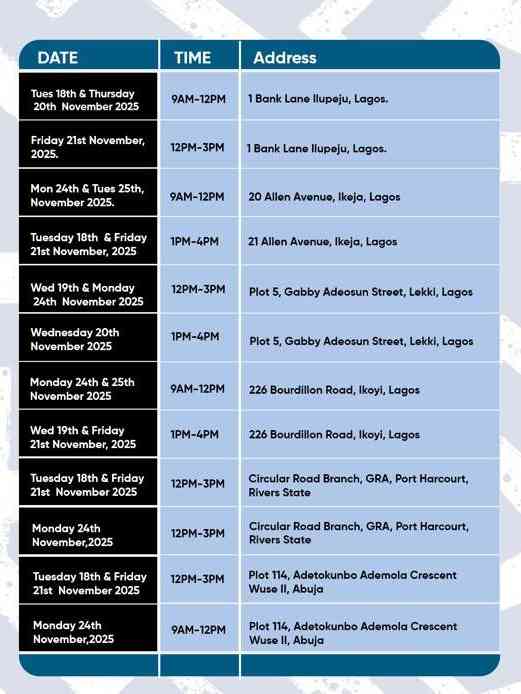
The Lagos walk-in interviews will take place at 1 Bank Lane Ilupeju on November 18 and 20 from 9AM to 12PM, and on November 21 from 12PM to 3PM. Additional Lagos sessions will hold at 20 Allen Avenue, Ikeja on November 24 and 25 from 9AM to 12PM, and at 21 Allen Avenue, Ikeja on November 18 and 21 from 1PM to 4PM. The Lekki location at Plot 5, Gabby Adeosun Street will host candidates on November 19, 20, and 24 within scheduled hours, while Ikoyi interviews will run at 226 Bourdillon Road on November 24, 25, 19, and 21.

Sessions in Port Harcourt will hold at Circular Road Branch, GRA on November 18, 21, and 24, and Abuja applicants can attend at Plot 114 Adetokunbo Ademola Crescent Wuse II on November 18, 21, and 24.

ecobank walk-in interview recruitment schedule

FG Targets 80,000 Farmers as Wheat Dry-Season Farming Begins in Borno

0

The Federal Government has flagged off the 2025–2026 wheat dry-season farming in Borno State, launching a major agriculture investment plan that targets 80,000 farmers across 16 states. The Minister of Agriculture and Food Security, Abubakar Kyari, said each farmer will receive support to cultivate half a hectare, adding that “if everything goes as planned, the initiative will produce wheat worth more than 100 billion naira.”

Borno State Governor, Professor Umara Zulum, welcomed the move and highlighted the government subsidy and security efforts helping local farmers. He said the intervention will ensure farmers enjoy maximum safety while working to boost food security. According to him, “under the 2025 wet-season farming, most farmers in the state produced food that would last them at least 12 to 18 months.”

6,000 farmers from Borno are included in the wheat farming programme, set to cultivate 3,000 hectares during the dry-season this farming cycle today.

Zulum Launches Dry-Season Wheat Input Distribution in Borno

0

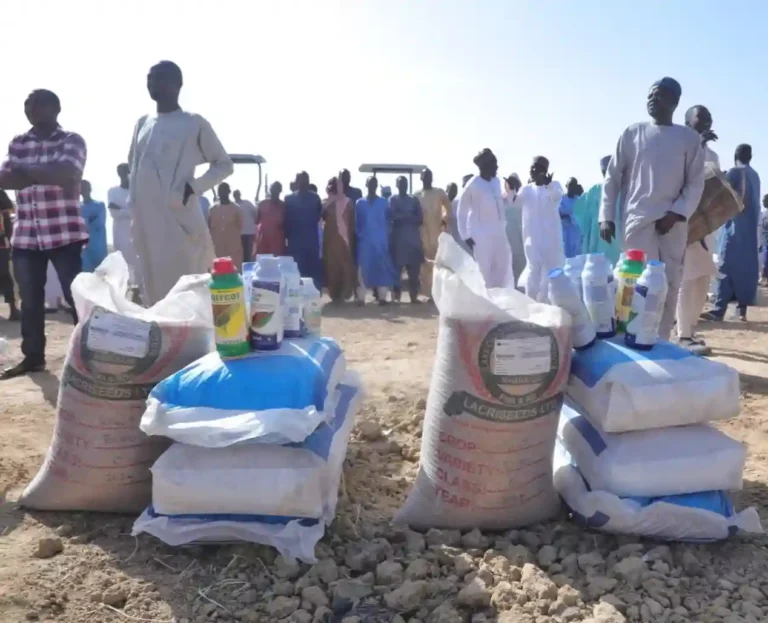
Borno State Governor, Professor Babagana Umara Zulum, has kicked off the distribution of inputs for the Nigeria Agricultural Growth and Sustainable Productivity dry-season wheat production programme. The event was held in Indusuman, Jere Local Government Area, as part of ongoing efforts to expand food security and promote year-round farming in the state. The programme is expected to support farmers with essential materials that can boost productivity and reduce the pressure on imported food.

Speaking at the flag-off ceremony, the Commissioner for Agriculture, Natural Resources and Food Security, Engr. Bawu Musami, praised the Federal Government for what he described as consistent backing for agricultural development. He said the expansion of large-scale irrigation farming has created more opportunities for farmers to grow crops beyond the rainy season. According to him, Borno has a natural advantage due to its fertile land and strong irrigation potential around the Lake Chad region. Musami explained that the state government is also reviving irrigation schemes in places where insurgency once disrupted farming, noting that the goal is to restore livelihoods and increase agricultural output.

The Minister of Agriculture, Senator Abubakar Kyari, restated the Federal Government’s resolve to strengthen agricultural and food security policies nationwide. He said President Bola Ahmed Tinubu places agriculture at the core of the Renewed Hope Agenda. According to him, reducing dependence on imported food remains a key priority. Senator Kyari described the rollout of the dry-season wheat initiative in Borno as an important step towards rebuilding irrigation farming culture in the Lake Chad basin. He added that the inputs shared with farmers will improve resilience and support more sustainable food systems.

Governor Zulum expressed appreciation to the Federal Government for its continued support. He noted that Borno remains one of Nigeria’s most promising agricultural hubs with vast arable and irrigable land. He said his administration will continue to back all-year-round farming through infrastructure, logistics, machinery, quality seeds, fertilizers, agrochemicals and other resources to boost productivity across the state.

LEAP Africa Announces SIPA 2025 for Youth Innovation in Lagos

0

LEAP Africa has announced the 12th edition of its Social Innovators Programme and Awards, also known as SIPA, scheduled to take place on November 25, 2025, at Four Points by Sheraton in Victoria Island, Lagos. The organisation, known for its impact in youth leadership and social innovation, said the 2025 gathering will unite more than 200 innovators, policymakers, investors, and private sector leaders from different parts of Africa. The event will spotlight high-value themes such as technology, finance, entrepreneurship, and policy, which continue to attract strong interest from development partners and the business sector.

The theme for SIPA 2025 is Africa as THE Sector: Maximising Possibilities through Technology, Finance, and Policy. According to LEAP Africa, the aim is to reshape how the world views the continent by presenting Africa not as an emerging market but as a leading sector full of innovation and growth potential. The convening is expected to drive conversations around sustainable development, digital transformation, impact investment, and long-term economic opportunities. It will also highlight how stronger policies and financial support can open doors for youth-led solutions.

Speaking on the significance of the theme, Kehinde Ayeni, Executive Director of LEAP Africa, said, “Africa is not a peripheral player; it is the sector of opportunity, creativity, and transformation. At LEAP Africa, we are intentional about positioning young African innovators as architects of a redefined global order. More than a convening, SIPA is a movement that is challenges us to believe that Africa’s ingenuity can and must set the agenda for the future.”

The event will feature a series of activities aimed at strengthening collaboration and investment. LEAP Africa stated that, “SIPA 2025 promises an immersive experience, including a Pre-Conference Mixer connecting funders, innovators, and ecosystem leaders; a Partner Breakfast Dialogue designed to spark collaboration; and an Interactive Solution Lab focused on unlocking opportunities through technology, finance, and policy innovation.”

Distinguished speakers expected at the event include Elhadji Malick Soumare, Deputy Chief of Party, Entrepreneuriat and Investissement in Senegal; Ms Naomi Emeka Nwokolo, Executive Director of the UN Global Compact Network Nigeria; Ruby Igwe, Country Director of ALX Africa; Abimbola Ogundare, Chief Operating Officer of Deloitte Africa Consulting; and Karina Karunwi, also known as Awa Daffe, Regional Head at ANDE West Africa and Francophone.

Since its launch in 2013, SIPA has supported more than 290 social innovators, influencing over 4 million lives across 15 African countries and generating over 6 million dollars in funding and revenue. LEAP Africa notes that the platform has consistently driven impact investing and shifted discussions from hype to real solutions.

The convening will close with the SIPA Awards Ceremony, which will honour exceptional contributions through categories such as the Outstanding Innovator Award, the Social Impact Award, the Seyi Bickersteth Award, and the Innocent Chukwuma Prize. Nigeria Startup News is inviting corporate organisations, development agencies, and government institutions to partner on SIPA 2025 by sponsoring the event, supporting Solution Labs, and advancing youth-led transformation across the continent.