
Home Blog Page 312

FG, NLNG Move to Revive Nigeria’s Science and Technology Prize

0

Honourable Minister of Education, Dr. Tunji Alausa, has announced new steps to strengthen Nigeria’s science and technology sector after hosting a high-level meeting with leaders from the Nigeria LNG Prize for Science. He welcomed Prof. Bart Nnaji, former Minister of Science and Technology and Minister of Power, and Chair of the Nigeria LNG Prize for Science; Sophia Horsfall, General Manager of NLNG; and their leadership team in Abuja this week to discuss the future of the annual prize and the wider innovation ecosystem.

During the meeting, Dr. Alausa confirmed that this year’s NLNG Prize for Science and Technology received no worthy applications, a situation he described as a major concern for national development and global competitiveness. He explained that the Federal Government is now looking beyond the prize itself to stimulate stronger activity in research, innovation, and intellectual property. He said the Ministry plans to put more focus on supporting scientists, researchers, and creators of intellectual property to strengthen Nigeria’s knowledge economy and boost high value sectors linked to education technology, digital transformation, and renewable energy.

The discussions were held in partnership with the Research, Innovation and Commercialisation Committee, inaugurated earlier this year to close the gap between academia and industry. According to Dr. Alausa, the RICC team briefed him on their progress and a new pilot programme designed to help researchers turn their work into viable products and services.

Dr. Alausa stated that deeper collaboration with the private sector is essential to achieving President Bola Ahmed Tinubu’s Renewed Hope Agenda for Education. After the meeting, all parties agreed to set up a Technical Working Group made up of members of the RICC and NLNG Ltd. The group will work on strengthening the Science and Technology Prize, including a recommendation to split the award into two sub-categories to widen participation for Nigerian scientists and researchers.

Dr. Alausa expressed appreciation to Prof. Bart Nnaji, calling him a national treasure, and thanked the NLNG leadership team and the RICC chaired by Mr. Tayo Aduloju of NESG for their dedication to advancing scientific innovation.
Advertisement

Edo Governor reaffirms commitment to women’s empowerment

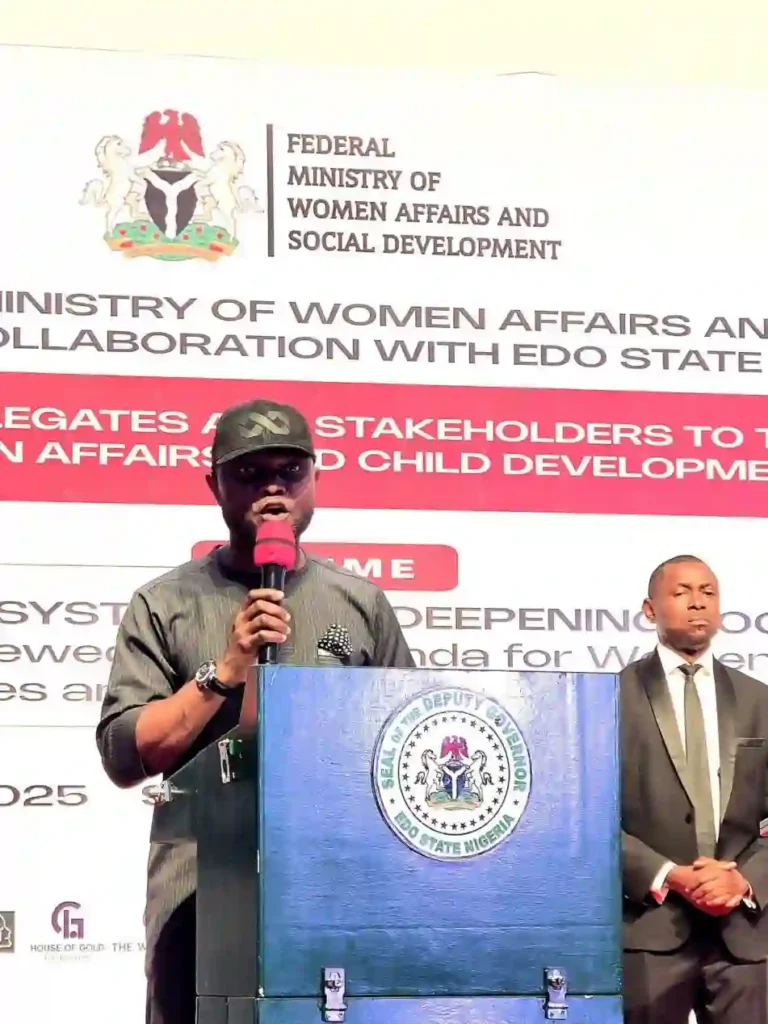
Edo State Governor, Senator Monday Okpebholo, has reaffirmed his administration’s commitment to women’s empowerment, social inclusion, and gender-responsive governance, stating that Edo remains a symbol of women’s courage, excellence, and leadership in Nigeria’s history. Speaking at the opening of the 25th National Council on Women Affairs and Child Development in Benin City, the Governor said the gathering represents a shared promise to build a society where every woman and child can live with dignity and purpose.

“Hosting this 25th National Council on Women Affairs is not just an honour for Edo State, it is a reaffirmation of our shared commitment to building a Nigeria where every woman and every child can live with dignity, purpose, and hope,” he said. Represented by the Deputy Governor, Dennis Idahosa, he added that Edo women have always played defining roles in nation-building, noting that “women from the state have long embodied leadership, resilience, and innovation.”

He stated that the contributions of women stretch back centuries. “Long before gender equality became a global movement, Edo women were already shaping history and leadership. From ancient times to today, the Edo story remains incomplete without the courage and strength of our women,” he said.

The Governor honoured iconic Edo women such as Queen Idia, Emotan, and Professor Grace Alele-Williams, describing them as symbols of courage, loyalty, and brilliance. He also celebrated Professor Idia Ize-Iyamu, recently appointed by President Bola Ahmed Tinubu as the first female Chief Medical Director of the University of Benin Teaching Hospital, calling it another historic milestone for women in leadership.

Aligning with the theme of the Council, Strengthening Systems and Deepening Social Impact: Advancing the Renewed Hope Social Agenda for Women, Children, the Family, and Vulnerable Groups, the Governor said Edo’s policies reflect President Tinubu’s Renewed Hope Agenda, which focuses on inclusion and economic empowerment.

“In Edo State, we are fully committed to advancing women’s empowerment and social inclusion. We are building structures that guarantee women are not just participants but drivers of sustainable development,” he said. He listed ongoing programmes such as interest-free loans for women traders, stronger gender-responsive ministries, appointments of women to strategic positions, and expanded access to education and healthcare for women and girls.

He pledged continued collaboration with the Federal Ministry of Women Affairs and development partners to strengthen inclusion frameworks. The Governor urged women and youths to seize opportunities under the Renewed Hope Social Agenda, saying, “To our women and youths, I say, this is your time to shine. Let your creativity and courage drive the transformation of our state. The future of Edo will be shaped by your hands, your ideas, and your determination.”

NDE Katsina hosts PUI on Youth and Women Empowerment Partnership

0

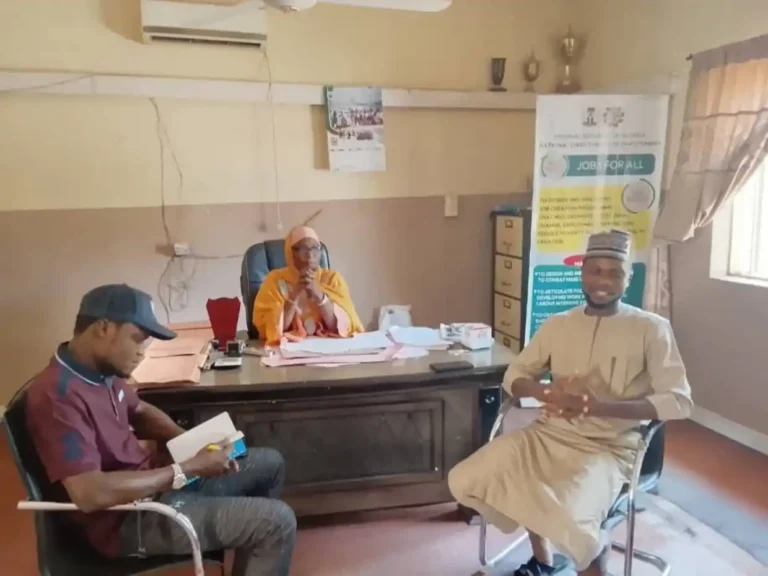
The State Coordinator of the National Directorate of Employment, Katsina State Office, received a delegation from Premiere Urgence Internationale during a familiarization visit aimed at strengthening partnership plans between both organizations. The delegation was led by Mr. Isa Ridwan, Program Manager, who attended the meeting with Mr. Mohammed Hassan, Livelihood Supervisor. The visit supported ongoing discussions focused on youth empowerment, skills training, economic development, and sustainable livelihood programmes.

During the briefing, Mr. Ridwan informed the NDE management about PUI’s current projects targeted at empowering women and youth in conflict-affected communities. He stated that PUI considered NDE a strategic institution, adding that the programme is now at an advanced stage. According to him, “PUI identified NDE as a key partner in implementing this initiative, and we are committed to ensuring its success.”

The State Coordinator expressed appreciation for PUI’s interest in collaboration and highlighted NDE’s achievements in employment generation, vocational training, entrepreneurship development, and job creation. She emphasized the importance of strategic partnerships that support economic growth and improve access to sustainable opportunities.

Heads of the four core NDE departments also made short presentations outlining departmental activities and potential areas of collaboration with PUI to expand impact across communities.

The State Coordinator reaffirmed NDE’s readiness to collaborate with PUI, noting the Directorate’s commitment to transparency and accountability. The meeting ended with group photographs and a closing prayer led by Mr. Nura, Manager, Skills Acquisition Kurfi.

Nasarawa, Niger shortlists 3445 candidates for NINATECH digital training

The Nasarawa State Government has announced that 3,445 candidates have been selected for training under the NINATECH Smart Skill Programme, a joint digital capacity-building initiative carried out with the Niger State Government. The programme is supported by CISCO through the International Cybersecurity and Digital Forensics Academy and hosted by the Nasarawa State Information Technology and Digital Economy Agency. This development is a major step in strengthening youth digital literacy and improving access to high demand tech careers.

According to the announcement, shortlisted candidates are expected to review the training requirements for courses including Cybersecurity and Digital Forensics through the CISCO Introduction to Cybersecurity, Data Science through the CISCO Introduction to Data Science, and Digital Entrepreneurship through CISCO Discovering Entrepreneurship. The government stated that “details regarding enrollment and access to prerequisite courses will be communicated via email.”

Candidates are urged to check their emails regularly and complete all prerequisite courses within three weeks after receiving login details to qualify for practical sessions. The public can confirm shortlisted names via the official portal Link.

FG Backs Private Sector to Train More Nigerian Youths

0

The Federal Government says it will continue to work closely with the private sector to drive industrialisation and support inclusive growth through skills and vocational training for young Nigerians. This commitment was restated by the Minister of State for Industry, Trade and Investment, Senator John Owan, during the ITF-NECA Stakeholders’ Dialogue Forum and the 2023/2024 Outstanding Trainees’ Awards Ceremony held in Abuja.

Owan praised the Industrial Training Fund for its long-standing partnership with the Nigeria Employers Consultative Association, noting that the collaboration has supported skills acquisition and vocational training for youths over the last sixteen years. He said President Bola Tinubu’s administration remains focused on empowering young people so they can contribute meaningfully to national economic development, job creation and overall economic growth.

According to the minister, several reforms and interventions have already been introduced to support the expansion of Small and Medium Enterprises, encourage innovation, and build a workforce capable of meeting global standards. He explained that strengthening skills training is an essential part of the government’s plan to boost economic development, attract investment and enhance productivity across key sectors.

Also speaking at the forum, the Minister of State for Finance, Dr Doriz Uzoka-Anite, described the Skilled Up Artisans programme of the Industrial Training Fund as one of the most impactful initiatives of the current administration aimed at youth empowerment. She said her ministry will continue to support programmes that help keep young Nigerians off the streets through vocational training, digital skills and entrepreneurship development. Uzoka-Anite emphasised the importance of stronger public-private partnerships in reducing unemployment and helping young people become self-reliant while contributing to national security and community stability.

The Director-General of the Industrial Training Fund, Dr Oluwatoyin Afiz-Ogun, revealed that 60,000 youths have so far benefited from the Technical Skills Development Project under the ITF-NECA partnership. Afiz-Ogun explained that the programme has produced creators, innovators and problem solvers who are already contributing to Nigeria’s industrial and economic landscape.

He said, “As our country advances on the path of industrialisation and inclusive growth, one truth remains constant: skills are the new currency of national development. The strength of our workforce – their competence, creativity and resilience – will determine how effectively Nigeria competes and thrives in the global economy.”

Afiz-Ogun added that a skilled youth population continues to drive investment, industrial growth and economic development.

Earlier, the Director General of the Nigeria Employers Consultative Association, Mr Adewale Smart, said beneficiaries of the TSDP were trained in thirty-five trade areas, adding that the project has led to the upgrade of several federal educational institutions. He noted that the Stakeholders’ Dialogue Forum was held simultaneously in nine centres across the country.

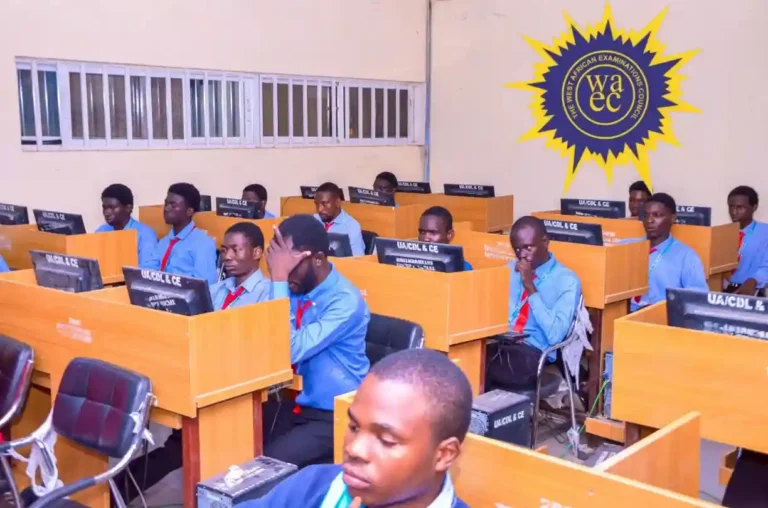
House of Reps Tell WAEC, FG to Suspend 2026 CBT Rollout

0

The House of Representatives has asked the Federal Ministry of Education and the West African Examinations Council to suspend the planned introduction of Computer-Based Testing for the 2026 school examinations. Lawmakers raised concerns that schools across the country, especially in rural communities, lack the infrastructure, electricity, and manpower needed to support a complete transition to a digital examination system.

WAEC, backed by the Federal Government, had earlier announced that it would begin conducting the 2026 May/June examination using computers after running a partial CBT rollout for private candidates in 2024. But lawmakers disagreed, saying the rollout would put millions of students at risk of failure and emotional distress if done without proper preparation.

The House urged the Education Ministry and state governments to include in their 2026, 2027, 2028, and 2029 budgets the recruitment of computer teachers, construction of computer halls with internet facilities, provision of standby generators, and comprehensive assessment of private schools’ readiness. Lawmakers recommended that full implementation should be shifted to 2030, giving schools enough time to build digital infrastructure.

The resolution followed a motion of urgent public importance sponsored by Rep. Kelechi Wogu, titled “Need for Intervention to Avert the Pending Massive Failure of Candidates Intending to Write the 2026 WAEC Examination Using Computer-Based Testing (CBT), Capable of Causing Depression and Deaths of Students,” as reported by Vanguard.

Leading the debate, Rep. Wogu reminded the House that WAEC examinations determine students’ eligibility for higher education, with tertiary institutions requiring at least five credits, including English Language and Mathematics. He also recalled how the 2025 WAEC result portal was temporarily shut down due to what he described as “technical glitches,” leaving many students distressed.

He expressed concern that, despite resistance from the Nigeria Union of Teachers and heads of schools, “the Ministry of Education has insisted on introducing CBT for the 2026 examination,” even though rural areas host more than 70 per cent of school candidates. According to him, “computer-based examinations require fully equipped halls with functional computers, internet access, and constant electricity — either from the national grid or standby generators.”

Wogu noted that about 25,500 schools nationwide are expected to present candidates for the 2026 examination, which will run from March to July. Most of these schools, he said, do not have functional computers or qualified computer teachers. He added that unlike JAMB, WAEC candidates sit for at least nine subjects, making a rushed transition unrealistic.

He warned that forcing the policy could lead to widespread failure, depression, frustration, and rising social problems among young people. He recommended at least three years of preparation before a proper rollout in the 2029–2030 academic session.

The House unanimously adopted the motion and directed its Committees on Basic Examination Bodies, Digital and Information Technology, Basic Education and Services, and Labour, Employment and Productivity to engage with key stakeholders and report back within four weeks.

In June, Nigeria Startup News had warned in an opinion piece titled “Nigeria’s Rush to WAEC, NECO CBT Will Be a Tech Disaster” that the country was not ready for a full-scale digital exam system.

Fidelity Bank Tells Customers to Link NIN or Tax ID Before 2026

Fidelity Bank Plc has told customers to urgently link their Tax ID or National Identity Number to their accounts ahead of the Nigerian Tax Administration Act (NTAA) 2025 deadline. In an email update, the bank said, “This Act would come into effect on January 1, 2026,” adding that accounts without a Tax ID or NIN may be restricted from transacting from that date.

The bank explained that the NTAA 2025 requires all bank accounts in Nigeria to be linked to a valid Tax ID, or a NIN for customers who do not have a Tax ID. Fidelity Bank urged customers to act quickly, saying the update is necessary to keep accounts accessible and avoid disruptions to banking and digital payments.

Customers can submit their NIN through the link provided in the email, by dialing 77002#, or by visiting any Fidelity Bank branch. Enquiries can be directed to Fidelity Trueserve via phone or email.

Dangote meets President Hichilema, reinforces new investments in Zambia

0

Aliko Dangote, President and Chief Executive of the Dangote Group, has paid a courtesy visit to His Excellency Mr. Hakainde Hichilema, President of the Republic of Zambia, reaffirming the Group’s commitment to industrial growth and national development. The meeting highlighted Dangote’s plans to deepen investment in manufacturing, energy, and sustainability, supporting Zambia’s long-term economic goals and attracting high value investment keywords linked to economic growth.

Dangote Cement Zambia Limited has invested over USD 500 million in a 1.5 MTPA integrated cement plant in Ndola, equipped with a 30 MW captive power plant and more than 400 distribution trucks. The company has produced over 8 million tonnes of cement, shifting Zambia from a net importer to a major exporter within the SADC region. DCZL employs over 1,200 people directly and enables more than 5,000 indirect jobs through local value chains, with all raw materials sourced within the country.

In sustainability, the company has replaced more than 30 percent of fossil fuels with alternative energy sources, using used tyres, municipal waste, and agricultural by-products. It is certified by ZEMA for safe waste management and has earned awards for environmental excellence. Its 30 MW power plant supports energy security and supplies 8 MW to the national grid, reinforcing energy investment and infrastructure development keywords.

President Hichilema commended the Group’s economic contribution, saying the country welcomes deeper collaboration on energy solutions. Dangote responded by reaffirming his commitment to support energy diversification and climate resilience. He stated that the Group will explore solar and thermal power projects to serve Zambia and the DRC and expressed interest in leveraging Zambia’s coal and other mineral resources to develop sustainable power for the region.

These initiatives align with the 8th National Development Plan and strengthen the Dangote Group’s role in Zambia’s manufacturing, energy, and agricultural transformation.

FCCPC sets January 5, 2026 deadline for digital lending compliance

0

The Federal Competition and Consumer Protection Commission has announced a firm deadline of Monday, 5 January 2026, for all operators in Nigeria’s digital lending market to fully comply with the Digital, Electronic, Online and Non-Traditional Consumer Lending Regulations, 2025. The announcement was released on Thursday, November 13, 2025, and marks the next phase of the Commission’s move to strengthen transparency, protect consumers, and improve accountability in the rapidly expanding digital lending space. The Regulations, which took effect on 21 July 2025 under the Federal Competition and Consumer Protection Act 2018, set clear compliance standards for lending platforms, intermediaries, and service partners across the country.

To help operators meet the new requirements, the FCCPC has issued an additional instrument titled the Guidelines on the Digital, Electronic, Online and Non-Traditional Consumer Lending Regulations, 2025. The Guidelines were made under Sections 17 and 163 of the Act and provide detailed direction on documentation, operational expectations, and the revised Forms 1 and 3. These updates follow feedback from stakeholders and are intended to simplify the compliance process. The Commission confirmed that applicants with pending submissions may submit any additional information required without waiting for an official request, adding that reviews will continue transparently and without delay to support sector stability.

The Executive Vice Chairman of the FCCPC, Mr. Tunji Bello, emphasised the importance of adhering to the timeline, stating that “full compliance is not only a legal requirement but an important step in protecting consumers and ensuring that the sector continues to grow in a fair and responsible manner. Operators have had ample time to adjust to the Regulations and the additional guidance now provided. We expect all obligations to be met before the deadline.” According to the Commission, enforcement activities will begin immediately after 5 January 2026. These actions may include restricting non-compliant lenders from operating, directing digital platforms or partners to stop engaging with them, and applying other sanctions permitted by law.

The FCCPC also confirmed that copies of the Guidelines, revised Forms, and Frequently Asked Questions are available on its official website and at its offices nationwide. The Commission says it remains committed to promoting responsible digital lending practices that improve consumer protection and strengthen confidence in Nigeria’s financial technology sector.

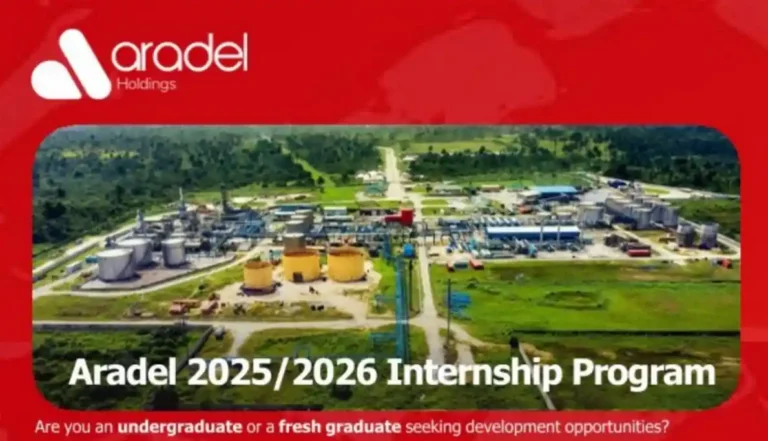
Aradel Holdings Opens 2025/2026 Internship Program for Students and Graduates

0

Aradel Holdings has opened applications for its 2025/2026 Internship Program, giving young Nigerians a chance to gain experience in the energy industry. The company said the program will offer “valuable on-the-job experience, coaching support, and meaningful exposure” to help build practical skills.

Aradel Holdings stated that the graduate internship will run for up to twelve months, while the undergraduate internship will last six months or the duration approved by each university. The program will take place in Lagos and Port Harcourt.

For the undergraduate category, applicants must be full-time students, be in 300 or 400 level, and have official authorization for the 2025/2026 academic year. For the graduate category, candidates must hold a bachelor’s degree with at least a Second-Class Upper or Upper Credit for HND holders and must be recent graduates with less than one year post-graduation.

Aradel Holdings noted that only suitable candidates will be contacted. The company directed interested applicants to apply through the official Link, adding that the program is aimed at supporting early career growth across the energy sector today.