Home Blog Page 323

Over 5000 South East youths to receive tablets, laptops at FLE Festival

0

Over 5,000 youths from the South East states, including Rivers and Delta, are set to gather in Owerri, the Imo State capital, for a mentorship and entrepreneurial skills training programme aimed at building capacity among young Nigerians.

The event, organised by the Miracle Anyanwu Foundation (MAF) and the Faith Life Leadership Entrepreneurship (FLE), will empower 500 selected participants financially to start their own businesses after the training.

Founder of MAF and FLE, Dr. Miracle Anyanwu, while speaking to journalists about the programme tagged “FLE Festival,” scheduled for Saturday, November 22, said the initiative is designed to help young people discover and develop their potential.

According to him, the concept was born out of a personal commitment to contribute to the advancement of Nigerian youths, describing them as vital to the nation’s future.

“FLE Festival is driven by my passion for the development and welfare of Nigerian youths. This is not just another gathering; it is a life-changing experience designed to equip, inspire, and propel young people toward success,” he stated.

The event will feature lectures by experienced speakers, award presentations, empowerment sessions, musical performances, and several indoor and outdoor games.

Dr. Anyanwu also revealed that each participant will receive a tablet, laptop, and various food items after the event as part of the empowerment package.

Advertisement

Over 54,000 women empowered through Edo, FG partnership

No fewer than 54,000 women have been economically empowered by the Edo State Government in partnership with the Federal Government.

The State Commissioner for Women Affairs and Social Development, Mrs. Eugenia Abdallah, disclosed this during the weekend while briefing journalists on the activities of the ministry over the past year.

According to Abdallah, the ministry empowered the women through the provision of entrepreneurial training, access to microfinance, and skills development initiatives aimed at boosting economic inclusion and job creation.

“The ministry’s skills acquisition programmes have equipped women with relevant skills to improve their economic prospects, including training in Compressed Natural Gas (CNG) vehicle conversion and electric vehicle maintenance,” she said.

She explained that the Ministry of Women Affairs has explored collaborations with development partners such as the German International Cooperation (GIZ) and the Society for the Empowerment of Young Persons (SEYP) to enhance women empowerment programmes. The ministry has also partnered with the Federal Ministry of Industry, Trade, and Investment (FMITI) to expand initiatives that promote women’s socio-economic development and entrepreneurship.

The commissioner noted that the ministry has intensified advocacy efforts against human trafficking by raising awareness about its dangers and consequences while collaborating with relevant agencies to combat the menace.

“We have prioritised programmes that empower the girl child, including education and skills development initiatives, to ensure they reach their full potential and contribute to the development of our dear state. To achieve this aim, the ministry has collaborated with young advocates of good causes and implemented active school programmes to promote positive values and behaviours among young people,” she said.

According to Abdallah, these initiatives aim to equip the next generation with the knowledge, skills, and values necessary to drive positive change in Edo State and across Nigeria.

She added that the ministry has provided comprehensive support to rape victims, including medical, emotional, and psychological care.

“While we have worked with law enforcement agencies to ensure that perpetrators are brought to justice, we have been committed to advocating for stricter penalties for those convicted of rape,” she stated.

Earlier, while receiving members of the Afemai Daughters and Wives Association (ADAWA) during a courtesy visit to the ministry in Benin City, Abdallah reiterated the government’s commitment to empowerment, inclusion, and sustainable development, with particular attention to women and vulnerable groups.

She emphasised that the administration of Governor Monday Okpebholo continues to prioritise inclusive governance and equal opportunities, ensuring that no group, community, or individual is excluded from the state’s social welfare and empowerment programmes.

“The government remains focused on creating opportunities for all, especially women and the vulnerable. We aim to ensure that no one is left behind in Edo State’s development efforts,” Abdallah said.

She commended ADAWA for its unity and ongoing support, encouraging members to maintain their collaborative efforts towards community development. She assured the association that the ministry remains open to partnerships with organisations and individuals committed to building an inclusive and progressive Edo State.

In her remarks, the President of ADAWA, Hajiya Zuliat Bello-Osagie, congratulated Mrs. Abdallah on her appointment, describing it as well-deserved. She praised the commissioner’s dedication to advancing women’s causes and noted that her leadership continues to inspire many across the state.

The Vice President of ADAWA and former Commissioner for Women Affairs, Hajiya Maimuna Momodu, also commended the ministry’s work in protecting vulnerable citizens and promoting empowerment for women and youth.

She expressed confidence in Mrs. Abdallah’s vision and ability to expand existing initiatives, stating that her leadership would create more opportunities for women’s participation in the state’s development.

Miss Edo Carnival 2025 Audition holds November 14 in Benin City

The search for the next queen of Edo State has begun as Peak Rendezvous Entertainment Global Ltd announces the Miss Edo Carnival 2025 Audition. The event will take place on November 14, 2025, by 10 AM at Viewpoint Hotels Suites, Ikpokpan Road, Benin City.

Organizers say the audition is open to bold, beautiful, and talented young women who are ready to represent Edo with pride. “This is your chance to wear the crown and showcase your unique gifts,” the organizers stated.

The winner of Miss Edo Carnival 2025 will walk away with grand prizes worth ₦10 million, while the first runner-up gets ₦1 million and the second runner-up ₦750,000.

The audition also welcomes dance groups, choirs, poets, magicians, fire performers, and other exceptional talents. Interested participants can register by contacting 08032604739 or 08100060088.

FG inaugurates committee for Nigeria Green Climate Fund, Carbon Credits

0

The Federal Government, through the Ministry of Petroleum Resources, has inaugurated a Technical and Steering Committee on the creation and management of the Nigeria Green Climate Fund and Sovereign Carbon Credits. The move is aimed at positioning Nigeria as a major player in global climate finance and energy transition.

Speaking during the inauguration in Abuja, the Permanent Secretary, Ministry of Petroleum Resources, Dr. Emeka Vitalis Obi, mni, described the initiative as a bold step toward integrating economic growth, energy security, and environmental responsibility.

“We gather at a defining moment where energy security, climate responsibility, and economic resilience must no longer exist in silos,” he said. “This Committee’s work is not mere paperwork; it is economic statecraft, climate diplomacy, and a transition by design, not by external pressure.”

Dr. Obi explained that the Committee was created to design a financial, institutional, and regulatory framework that would enable Nigeria to access global climate capital, monetize emission reductions, and reposition the Ministry as a transition-energy and climate-smart institution as provided for in the Petroleum Industry Act (PIA) 2021.

He stated that the global voluntary carbon market is projected to exceed 50 billion dollars by 2030 and reach one trillion dollars by 2037. However, Africa, which contributes less than three percent of global emissions, receives under five percent of international climate finance. Dr. Obi noted that methane emissions, which are 84 times more potent than carbon dioxide, make Nigeria’s petroleum sector strategically important to global climate solutions.

He emphasized that under Nigeria’s updated Nationally Determined Contributions, the country has pledged to cut emissions by 47 percent by 2030, equivalent to about 60 million metric tonnes, subject to international support. He added that gas flaring has reduced from 2.5 billion standard cubic feet per day in 2000 to about 700 million today, but still emits over 25 million metric tonnes of carbon dioxide equivalent annually.

According to him, if properly captured and traded as carbon credits, this could earn Nigeria more than 500 million dollars every year. He further explained that the Nigeria Energy Transition Plan requires 1.9 trillion dollars in investment by 2060, of which 410 billion dollars must come from climate finance and carbon markets, showing how critical the Committee’s work will be for the country’s future.

Dr. Obi said the Committee will design the institutional framework for the Nigeria Green Climate Fund, establish a sovereign carbon credit registry in line with UNFCCC standards, identify eligible projects such as gas flare capture and renewable energy, and propose sustainable financing and transparent revenue models.

He charged members to deliver their reports within 10 weeks, urging them to prioritize accuracy, patriotism, and institutional focus.

“History will not remember this Committee for the minutes of its meetings but for the systems it builds,” he said. “Let us seize this moment strategically and responsibly for the benefit of future generations.”

Earlier in his remarks, the Director of Midstream and Downstream, Mr. Mohammed Mohammed Abubakar, described the inauguration as a milestone in aligning Nigeria’s petroleum sector with global transition priorities. He said the Ministry, in partnership with Black River Switzerland and other government institutions, is working to design and operationalize a credible carbon credit trading framework for the oil and gas industry.

Mr. Abubakar explained that the partnership brings technical expertise in carbon asset development, emissions accounting, and verification systems to ensure transparency and compliance with international standards. He stressed that collaboration across government, private sector, and sub-national levels will be key to achieving success.

The Committee members drawn from the Ministry of Petroleum Resources include Mr. Mohammed Mohammed Abubakar as Chairman; Tyendezwa T. G, member; and Sharang Aine Jennifer, member.

Others are Mr. Emmanuel Okon, Mr. Chris Ugwuegbulam, Engr. Hozana Onakpoyovwire, Engr. Amamki Ephraim, Engr. Samson Izonfade, Engr. Ibrahim Musa Suleiman, Barr. Sokiepirim Soberekou, Engr. Andrew Uchendu, Amadi Ijeoma, Dr. Kingsley Uranta, Peter Ikpeme, and Luka Timothy Agyo.

From the agencies under the supervision of the Ministry, the members include Afolabi Abioye from the Nigerian Midstream and Downstream Petroleum Regulatory Authority (NMDPRA), Hajara Abdulfatah from the Nigerian Upstream Petroleum Regulatory Commission (NUPRC), Michael Ivonso from the National Council on Climate Change (NCCC), and Ransome Obem from Black River.

Nasarawa launches Gender Policy to strengthen AGILE education project

0

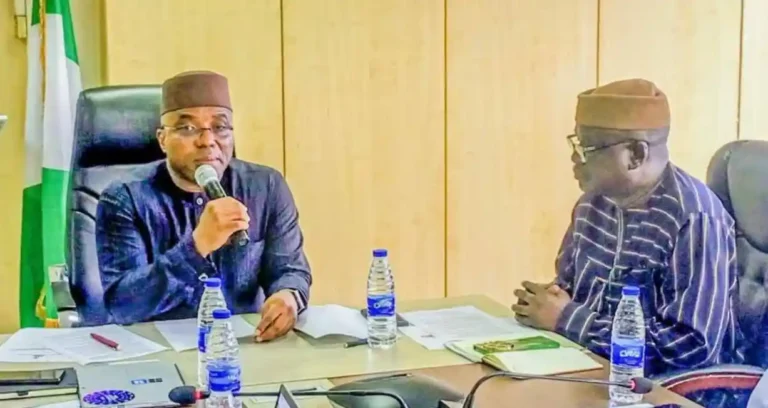
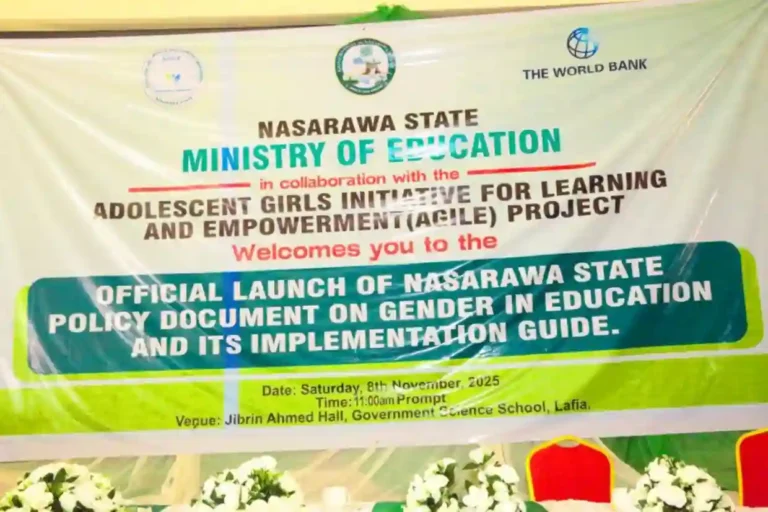
The Nasarawa State Government has officially launched the State Policy on Gender in Education, marking a major milestone in its continuous efforts to promote inclusive, equitable, and quality education for all learners. The event also featured the unveiling of the policy’s implementation guidelines, aimed at strengthening the Adolescent Girls Initiative for Learning and Empowerment (AGILE) project in the state.

The new framework is designed to remove barriers that limit access to education, especially for girls and vulnerable learners. These barriers include poverty, early marriage, gender-based violence, and the lack of inclusive learning facilities. The policy also aligns with key global and national education commitments such as the Sustainable Development Goals (SDGs) 4 and 5, the National Policy on Gender in Education (2001), and the Child Rights Act (2005).

Speaking at the official launch, Hon. Abel Bala, Chairman of the Nasarawa State House of Assembly Committee on Education, Science, and Technology, praised the initiative and reaffirmed the legislature’s support for gender-responsive educational reforms.

“Empowering girls through education is not just the right thing to do—it’s the smart thing to do,” he stated.

The Commissioner for Education and Chairman of the AGILE State Steering Committee, Dr. John Mamman, described the policy launch as a key achievement under the leadership of Governor Abdullahi Sule. He said it demonstrates the administration’s strong commitment to advancing education reforms in Nasarawa State.

“This policy will expand opportunities for marginalized learners, particularly girls, and enhance school enrollment, retention, and completion rates in Nasarawa State,” Dr. Mamman said.

AGILE State Coordinator, Hajiya Aishatu Isoga Aliyu, also commended the state government for its continuous support and urged traditional and religious leaders to intensify advocacy on the importance of educating the girl child.

Mr. Aloko William, State President of the All Nigeria Confederation of Principals of Secondary Schools (ANCOPSS), highlighted the AGILE project’s impact, noting improvements in school infrastructure, water and sanitation facilities, and the supply of essential learning materials across several schools in the state.

Delivering the vote of thanks, Mrs. Julian Polycarp, Deputy Project Coordinator of AGILE, described the launch as a “key milestone” in promoting gender equity in education. She announced that Nasarawa is the third out of 18 AGILE-participating states to formally launch the Gender Policy and urged the State House of Assembly to prioritise its passage when presented as a bill.

The 123-page policy document provides a comprehensive guide to ensure the effective, inclusive, and sustainable implementation of the AGILE project in Nasarawa State.

World Bank-funded AGILE Project transforms education for girls in Katsina

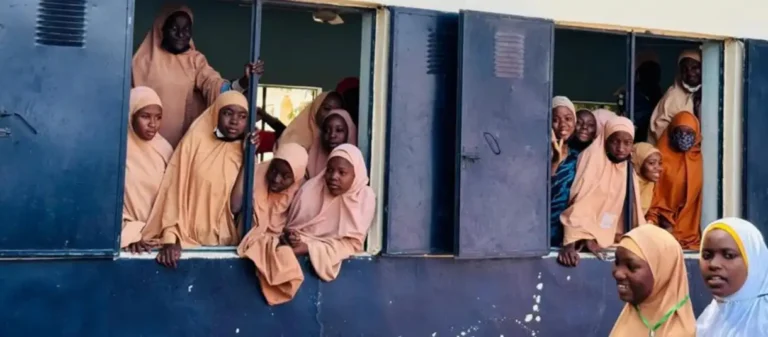
Katsina State in Northern Nigeria has seen major educational changes in recent years, largely due to the Adolescent Girls’ Initiative for Learning and Empowerment (AGILE) project supported by the World Bank. Once challenged by deteriorating school buildings and poor teacher housing, the state’s schools are now witnessing steady progress. During a stakeholder consultation in November, a teacher recalled, “Fifteen years ago, our schools were in disarray. Infrastructure was terrible, and teachers’ homes were in poor condition.”

Katsina, long known as a historic centre of learning and culture since the 1400s, was one of the first states in Northern Nigeria to establish formal education, with its first middle school dating back to the early 1920s. But in later years, a decline in infrastructure and access slowed this progress. The AGILE project was introduced to bridge these gaps and revitalise learning.

The AGILE project, a $1.2 billion World Bank-assisted Investment Project Financing (IPF) initiative, aims to improve education and empower about 15 million girls and boys across Nigeria. Initially launched in seven states, it expanded in 2023 to 18 states, with a focus on regions experiencing high fertility rates, large numbers of out-of-school girls, and low transition rates to secondary education.

In Katsina, AGILE’s main goal is to ensure inclusive, safe, and equitable education for adolescents. The project has rehabilitated over 13,000 classrooms and built nearly 9,000 Water, Sanitation, and Hygiene (WASH) facilities, helping to create better learning conditions across the country. At Muhammadu Dodo Model Junior Secondary School, one of the new schools in the state, students now have access to clean water, solar energy, a library, science and computer labs, and other modern amenities.

AGILE is currently constructing 150 schools in Katsina, 75 of which are already in use. These schools are equipped with solar-powered water systems, energy-efficient classrooms, and digital monitoring tools such as teacher management systems. The project also promotes community-managed construction to reduce costs, improve local ownership, and strengthen resilience against insecurity and climate change.

Beyond building schools, AGILE focuses on empowering adolescent girls through scholarships, life skills, and digital literacy programmes. Over 200,000 girls have been trained in reproductive health, menstrual hygiene, and self-confidence. Additionally, digital literacy lessons have reached about 225,000 students, preparing them for opportunities in the digital economy.

To address gender-related challenges, AGILE includes mechanisms to combat gender-based violence, create safer schools, and establish grievance redress systems. Conditional cash transfers and scholarships have further increased school attendance and retention rates, especially among girls who face economic challenges.

The programme’s success can be seen in the story of Maryam Ma’aruf, a 2024 graduate of Government Girls College Katsina. “Thanks to AGILE for digital and life skills training, I graduated school, and I am now a graphic designer and a public speaker,” Maryam said during the stakeholder consultation. Her story reflects how educational access and training can open pathways for young women to achieve independence and make positive contributions to their communities.

AGILE’s impact in Katsina is not just about physical infrastructure; it represents a cultural shift. The initiative encourages leadership, creativity, and self-reliance among students. Climate action clubs established in several schools have also become a platform for environmental awareness, where students engage in activities like fish farming and tree planting.

Despite these successes, stakeholders continue to highlight key challenges. They point to the need for more motivated teachers, better-equipped libraries, and stronger laboratory facilities. These improvements are seen as crucial to ensure quality learning outcomes and prepare students for global competitiveness.

Still, the achievements recorded under AGILE mark significant progress. By combining modern infrastructure, community engagement, and practical training, the project is helping to reshape the educational system in Katsina. The World Bank’s investment is strengthening the foundation for inclusive education in Nigeria, showing that targeted support and effective partnerships can drive sustainable development.

The project’s ongoing efforts underline the importance of aligning education with empowerment, ensuring that young Nigerians—especially girls—are given the skills, confidence, and opportunities they need to thrive in today’s world. AGILE continues to stand as an example of how international collaboration and local participation can transform education, uplift communities, and secure a better future for millions across Nigeria.

FG targets $3.7bn yearly revenue through youth training in global outsourcing

0

The Nigerian Export Promotion Council (NEPC) has announced plans to generate about 3.7 billion dollars annually by training and empowering young Nigerians to explore opportunities in the global outsourcing market.

Speaking at a one-day workshop themed “Leveraging Business Process Outsourcing for Non-Oil Export Growth,” held at the Council’s Regional Office in Apapa, Lagos, stakeholders discussed the vast potential Nigeria holds in the Business Process Outsourcing (BPO) sector.

Executive Director and Chief Executive Officer of NEPC, Mrs Nonye Ayeni, represented by Mr Sunday Ayodele, said the Council is working to expand Nigeria’s BPO industry from 16,000 practitioners to about 200,000 professionals. According to her, such an expansion could raise the sector’s monthly earnings to 292 million dollars and generate up to 3.7 billion dollars in yearly revenue.

She explained that the workshop aimed to sensitise and equip young Nigerians with the practical knowledge and skills required to deliver outsourcing services that meet international standards. Ayeni noted that this aligns with NEPC’s mission to diversify Nigeria’s non-oil export base through service-oriented ventures and digital economy growth.

Ayeni urged the participants to continuously invest in self-development, seek new knowledge, and remain competitive in the global market. She emphasised that the future of work lies in digital transformation and the export of services rather than relying solely on traditional commodities.

In his address, the founder of BPO Academy, Dr Madu Obiora, encouraged young Nigerians to strengthen their skills, embrace innovation, and develop a global mindset. “You don’t need capital to offer services; what you’re selling is here,” he said, pointing to his head. “Knowledge is your biggest asset. Once you have it, you can compete globally.”

Obiora explained various outsourcing categories such as Business Process Outsourcing (BPO), Knowledge Process Outsourcing (KPO), Legal Process Outsourcing (LPO), and Creative Process Outsourcing (CPO). He noted that globalisation and technology have removed geographical barriers, allowing Nigerians to work remotely for international firms. “The world is flat,” he said, referencing Thomas Friedman’s book on globalisation. “It doesn’t matter whether you’re in London, Lagos, or Delhi; what matters is the quality of your service.”

Assistant Director, Services Department at NEPC, Mr Ayodele Sunday, urged youths to develop strong communication skills, build their digital presence, and become self-reliant. “Government jobs are no longer the solution; remote work and service exportation are the future,” he said. “Let’s use what we’ve learned to improve our lives, our families, and the Nigerian economy.”

FME confirms Tinubu approved Epe University before moratorium

0

The Federal Ministry of Education has clarified that the establishment of the Federal University of Science and Technology, Epe, Lagos State, was approved by President Bola Ahmed Tinubu, GCFR, before the Federal Executive Council (FEC) adopted its seven-year moratorium on creating new federal tertiary institutions.

In a statement issued in Abuja, the Honourable Minister of Education, Chief (Dr.) Maruf Tunji Alausa (FAMedS), CON, explained that the approval came through a Presidential Executive Memo prior to the FEC’s decision. He said, “President Tinubu had given his approval for the establishment of the Federal University of Science and Technology, Epe, before the Federal Executive Council’s moratorium was adopted.”

Dr. Alausa added that the Federal University of Science and Technology, Epe, Lagos; the Federal University of Science and Technology, Kachia, Kaduna State; and the Federal University of Environment and Technology, Tai and Koroma in Ogoni Land, Rivers State, were all approved simultaneously by the President.

According to the Minister, the announcement of the Epe University came later because the Senate had gone on its 2025 annual recess before passing the establishment bill. The bill was passed upon resumption, which caused a delay in its formal transmission to the President.

He reaffirmed that the Federal Government remains committed to enforcing the seven-year moratorium, describing it as “sacrosanct and binding.”

NERD records over 11,000 student projects uploaded nationwide

0

Reports from the newly established National Education Record Digitisation Programme under the Nigeria Education Repository and Databank (NERD) have revealed that Nigerian students uploaded and curated over 10,000 project entries within the first three weeks of the initiative. The number later rose to more than 11,000 submissions by the weekend, including 158 postgraduate entries from a total of 242 active institutions. According to a statement from the organisation, over 40,000 students have now been successfully enrolled into the NERD system.

The NERD programme, launched by the Minister of Education, Dr Tunji Alausa, has also onboarded 135 tertiary institutions across Nigeria for academic credential verification purposes. This development marks a major step in the government’s effort to improve transparency, research quality, and access to academic materials across all levels of higher education.

Live analytics from the NERD portal showed that Ekiti State University, Ado-Ekiti, currently leads the list of early participants with 990 curated entries. It is followed by Bayero University, Kano, which recorded a total of 611 submissions as of press time. Auchi Polytechnic, Edo State, ranked third with 532 student project entries. Other institutions with high numbers include Ambrose Alli University, Ekpoma, Edo State (493), Osun State Polytechnic, Iree, Osun State (479), University of Ilorin, Kwara State (469), and Bamidele Olumilua University of Education, Science and Technology, Ikere Ekiti (462). Kaduna Polytechnic (379), University of Benin, Edo State (374), and University of Nigeria, Nsukka, Enugu State (282) also made the top ten list of highest submissions in the first month of the programme.

Data from NERD also showed that Science and Innovation dominated the national student industry preference with 5,952 entries. Interestingly, these submissions were not limited to Science and Engineering students alone, as many students from Arts and Social Sciences explored research topics around innovation and modern technology. Other key industry preferences include Multidisciplinary Studies (2,091), Engineering and Technology (1,958), Tourism and Entertainment (1,392), Infrastructure and Sustainable Development (952), while Humanities recorded 783 submissions.

Speaking on the progress of the initiative, NERD spokesperson Haula Galadima explained that one of the strategic objectives of the federal government for the thesis digitisation, classification, and archiving scheme was to improve the quality of academic supervision across Nigerian universities and polytechnics. She said, “Lecturers across Nigerian institutions are likely to be more thorough with their supervisory work when they know their names will accompany those works and can be accessed by other researchers, captains of industry, and entrepreneurs globally.”

Galadima further stated that the programme would also support institutional accountability and reward systems. “NERD now has precision metrics to track earned allowances computation in any institution in Nigeria. This will help the government to see the quantum of supervisory works being done by our lecturers outside their rigorous class teaching schedules, field, or laboratory work,” she added.

The report also highlighted gender participation data, revealing that more female students enrolled and submitted projects ahead of their male counterparts. According to the breakdown, 6,142 female students completed their submissions compared to 4,995 male students.

For the first time since Nigeria’s independence, the Bola Tinubu-led administration has taken what experts describe as a revolutionary decision to digitise, classify, and organise thousands of yearly research outputs generated across the nation’s higher institutions.

“The goal is to improve the quality of those works, organise and curate them in a location where they can be easily accessed by the industry, as well as make them available to other researchers who can improve upon them for overall national growth and development as a net contributor to global knowledge in a measurable and accountable manner,” the statement said.

Through this initiative, the federal government aims to leverage the NERD platform as a strategic tool to promote institutional quality enhancement without direct interference in internal academic processes. Under the NERD regulation, all academic works are required to be deposited in the national databank, regardless of the type of institution or proprietorship, and irrespective of the level of study, whether undergraduate or postgraduate.

FG links falling food prices to boosted production, market interventions

0

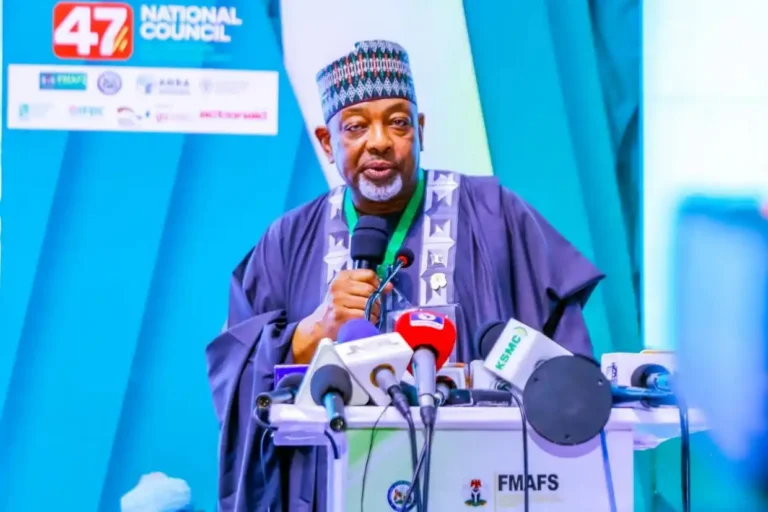
The Federal Government has said that the recent decline in the prices of key food commodities across Nigeria is linked to targeted market interventions, increased food production, and sustained agricultural investment. The Minister of Agriculture and Food Security, Sen. Abubakar Kyari, made this statement during the 47th Regular Meeting of the National Council on Agriculture and Food Security, held in Kaduna on Thursday, 6th November 2025.

According to him, the reforms under President Bola Ahmed Tinubu’s administration are driven by a firm commitment to achieve food sovereignty. He stated that the goal is to ensure Nigeria produces what it consumes, while also making food accessible, available, and affordable for households in both urban and rural areas. Kyari noted that the reforms are already having measurable effects.

In his words, “As we continue along this path, we are already beginning to witness a decline in food prices across several commodities, a reflection of targeted market interventions. While we are not yet where we want to be, this positive trend confirms that we are moving in the right direction.”

The Minister emphasized that achieving food sovereignty starts with consistent, high-yield crop production. He said this requires timely access to quality and affordable agricultural inputs. To support this, the Ministry, in collaboration with the African Development Bank and State Governments, has strengthened the National Agricultural Growth Scheme-Agro-Pocket (NAGS-AP), which he described as Nigeria’s flagship programme for improving input distribution and boosting farm productivity.

Kyari explained that wheat production in Nigeria has continued to expand under this programme. Wheat cultivation moved from 15 participating states in the 2023/2024 dry season to wider coverage in the 2024/2025 farming cycle. He stated that this growth is a sign of the government’s commitment to improving agricultural productivity and achieving self-sufficiency in major staple crops.

He highlighted a recent milestone in October with the introduction of rainfed wheat cultivation in Kuru, Plateau State. This innovation, developed by the Lake Chad Research Institute (LCRI), has extended wheat farming beyond irrigated zones. “With rainfed varieties now proven viable across the highlands of Plateau, Taraba, and Cross River States, Nigeria is charting a new course toward all-year farming and self-sufficiency in wheat production, bringing us closer to meeting our national demand from within,” Kyari stated.

To address price stability and reduce post-harvest losses, the Minister announced the Nigeria Postharvest Systems Transformation Programme (NiPHaST). The programme, developed in partnership with the Alliance for a Green Revolution in Africa (AGRA), focuses on improving storage, preservation, and processing systems. He said the programme was presented earlier this year during the Africa Food Systems Forum in Dakar, Senegal.

Kyari also noted investments in drought-tolerant crop varieties, integrated pest management, and the Nigerian Farmers’ Soil Health Scheme. The soil health scheme is designed to support farmers by ensuring fertiliser use is based on the specific soil needs of different regions.

He further disclosed that the Bank of Agriculture has been approved for N1.5 trillion recapitalisation and an additional N250 billion financing window to support smallholder farmers. This move, he said, will expand access to credit and boost rural economic development.

In partnership with Heifer Nigeria, the Federal Government has introduced a national agricultural mechanisation programme, targeting youth and women-led mechanisation service centres across all six geopolitical zones. “Mechanisation will become a national service that modernises production, raises yields, and creates sustainable rural employment,” the Minister said.

Speaking at the event, the Minister of State for Agriculture and Food Security, Sen. Dr Aliyu Sabi Abdullahi, stressed the importance of climate-smart agriculture for Nigeria’s future. He explained that adopting climate-resilient practices is key to maintaining productivity under changing weather conditions. “We must adopt climate-smart practices that increase crop yields while building resilience,” he said.

He highlighted key government initiatives including the 500,000-hectare Dry Season Farming Scheme, renewable energy-powered irrigation projects, and the Every Home a Garden programme led by the First Lady, Senator Oluremi Tinubu, which encourages household food production.

Both ministers noted that Nigeria holds the largest agricultural production potential in West Africa and can become a leading food supplier in the region through sustained reforms and investments.

Declaring the Council Meeting open, the Executive Governor of Kaduna State, Sen. Uba Sani, described the gathering as timely and critical. He said, “This year’s session unfolds at a defining moment in our collective journey, one in which the very notion of food security has transcended policy and entered the realm of national survival.”

According to him, Nigeria must secure food supply and also build an agricultural economy capable of supporting long-term prosperity. He acknowledged the transformation under the Renewed Hope Agenda, stating that agriculture has been repositioned at the center of the nation’s economic planning. “These are not isolated policies; they are the scaffolding of a new era of shared growth and self-reliance,” he said.

The governor added that Kaduna State is aligning closely with the Federal Government’s strategy by expanding access to credit, improving input delivery, modernizing logistics infrastructure, and supporting agribusiness. He described agriculture as the foundation of rural transformation and a driver of inclusive development.

The Council served as a platform for stakeholders to exchange ideas on strengthening agricultural value chains, enhancing market linkages, and improving youth participation in agribusiness. Participants discussed the role of private sector partners in sustaining food systems development.

Earlier in the visit, the Ministers and stakeholders toured several agricultural facilities, including De-Branch Farmers, the Afrexim Bank Quality Assurance Centre under construction, Olam Agri, Tomato Jos, and TMDK Agro Park. These visits showcased examples of innovation, value addition, and job creation in Kaduna’s agricultural sector.

The event concluded with the presentation of awards to outstanding farmers and agricultural stakeholders.