Home Blog Page 325

OSGF, NASENI sign MoU to digitalise federal executive council

0

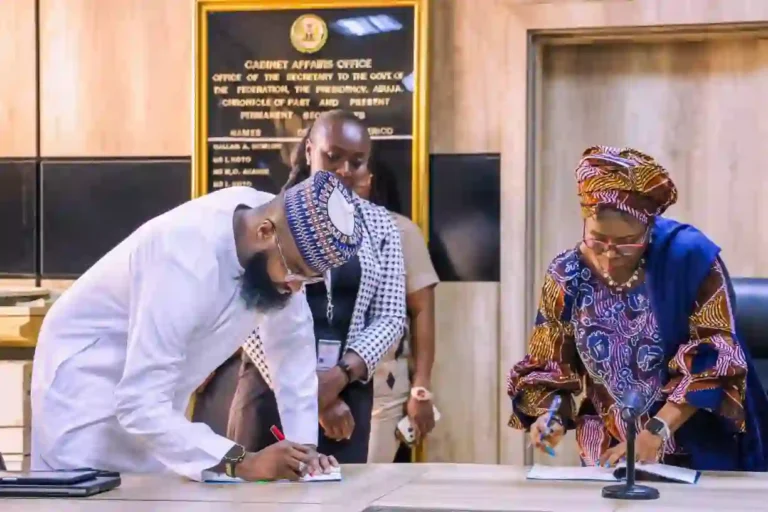
The Office of the Secretary to the Government of the Federation (OSGF) has signed a Memorandum of Understanding with the National Agency for Science and Engineering Infrastructure (NASENI) to digitalise the Federal Executive Council (FEC) processes. The agreement aims to enable the Cabinet Affairs Office (CAO), which coordinates FEC activities, to operate entirely paperless.

During the signing ceremony, the Secretary to the Government of the Federation, Senator George Akume, represented by the Permanent Secretary, Cabinet Affairs Office, Dr. Emanso Okop Umobong, described the project as a major milestone in modernising government operations and improving efficiency in documentation and record management.

“Digitalisation of the Cabinet Affairs Office will significantly ease the burden on Honourable Ministers, who currently have to handle voluminous documents during council meetings,” Dr. Umobong stated. “In December 2024, we achieved real-time transcription of Council proceedings. This next phase will fully digitalise all processes. By December 2025, we are confident that the Federal Executive Council will operate completely paperless, and we are grateful to NASENI for partnering with us to make this a reality.”

The Executive Vice Chairman and Chief Executive Officer of NASENI, Mr. Khalil Suleiman Halilu, said the agency has already transitioned to a fully digitalised system and is now ready to replicate the same model in the OSGF.

This partnership highlights the Federal Government’s commitment to innovation, digital transformation, and creating an efficient paperless working environment in its institutions.

Advertisement

200 young women in Lagos trained on financial literacy

0

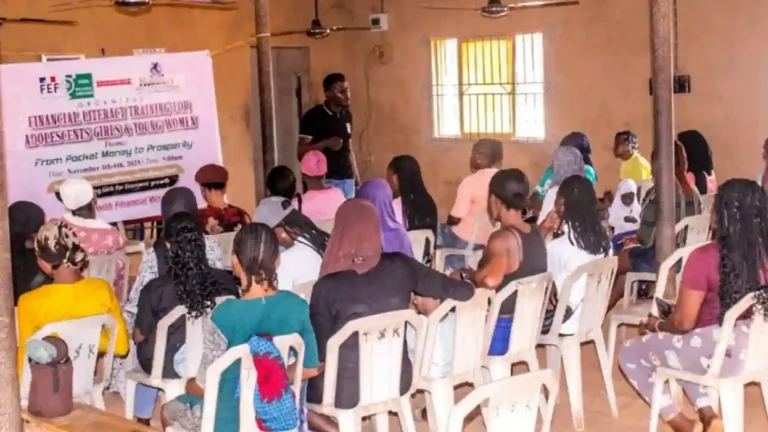
Two hundred young women from four local government areas of Lagos State have received training on financial literacy under the theme “From Pocket Money to Prosperity.” The initiative, organized by the Humanity Family Foundation for Peace and Development (HUFFPED) with support from the French Embassy in Nigeria, aimed to strengthen the financial skills of adolescent girls and young women.

The beneficiaries were selected from Kosofe, Ikorodu, Lagos Island, and Somolu local government areas. According to HUFFPED’s Executive Director for Programmes, Mr. Henry Adenigba, the project was designed to enhance the financial capability of young women and help them make informed money decisions. He explained that the training encouraged participants to cultivate saving habits and identify safe and practical income opportunities.

Mr. Adenigba stated that the initiative also seeks to tackle the issue of financial exclusion among young women, promoting economic empowerment, financial independence, and gender equality. He noted that financial literacy is an essential tool for building a secure future, especially among youths facing limited access to financial resources.

The Project Manager, Mr. Damilola Kalejaiye, who facilitated one of the sessions, said the training covered topics such as understanding money, differentiating between needs and wants, budgeting, and developing consistent saving habits. He encouraged participants “to move beyond managing pocket money and focus on long-term financial stability and prosperity.”

Another facilitator, Mrs. Mosunmola Balogun, engaged participants through practical learning using savings boxes, mobile tools, and group contributions to meet personal financial goals.

Participants also learned creative and safe ways to earn income through tailoring, braiding, baking, and digital freelancing. Many of them expressed confidence in applying the lessons, forming peer groups to encourage savings and small business growth. Some described the training as life-changing, saying it inspired responsibility, confidence, and self-reliance.

Lagos invests N150m to empower young agripreneurs against food crisis

0

Lagos State is investing heavily in its young population to tackle Nigeria’s growing food crisis, with a new N150 million fund aimed at empowering agripreneurs who are bringing innovative solutions to the food system.

Abisola Olusanya, the commissioner for the Lagos State Ministry of Agriculture and Food Systems, made this known during the Lagos Agrithon Grand Finale pitch competition held on Thursday. She said the state government is supporting a pool of young agripreneurs driving innovation in the agriculture and food space to scale their businesses and create jobs.

“We want to give them the kind of support that will scale and transcend their businesses to the next level,” Olusanya said.

She explained that the initiative is not just about funding but also about building an ecosystem that connects people with similar goals. “More importantly, it’s about creating an ecosystem of like-minded people where the connection, partnership, and synergy, we can bring it to the fore and help businesses scale better that way,” she added.

According to her, the state has already recorded significant success through various agricultural empowerment initiatives and has built a strong community of advocates who are encouraging young people in schools to see the potential in agriculture and food systems.

“We have people here who are now mentors for our Lagos Agripreneurship Programme Lab. We have mentors now for our Lagos Agric Scholars Programme,” she noted.

She added that this growing community continues to inspire and guide young Nigerians into agribusiness. “And so many other things that we’re doing as a collective are surely showcasing that indeed, when there’s a communal synergy, when there’s that communal value, then we can go higher and scale faster,” she said.

Olusanya stated that collaboration within the agribusiness ecosystem has led to impressive growth among participants. “We’ve seen many businesses now come together, partner and do bigger and better things. We’ve seen businesses scale rapidly. We’ve seen those connections and we know that we’re on the right path,” she explained.

The commissioner further said that Governor Babajide Sanwo-Olu’s administration views Agrithon as an initiative that will nurture future billionaires, industry leaders, and innovators capable of transforming the food industry in Nigeria.

Speaking about the 2025 Agrithon edition, Olusanya revealed that the call for entries received over 1,000 applications. The process involved written examinations, oral interviews, and mentorship programmes. To ensure credibility, the selection committee visited the farms and businesses to confirm their existence before choosing 32 entrepreneurs for the final stage.

She said the selected 32 agripreneurs represent diverse states across the country and will receive support from the N150 million grant to expand their ventures. “We have people from all over Nigeria. It’s not only people residing in Lagos. We have people from diverse cultures represented here at the Lagos Agrithon,” she stated.

Explaining the inclusion of non-Lagos-based entrepreneurs, she added, “Even if you don’t have a farm or your business is not located in Lagos, we believe that the majority of your customer base is still in Lagos. Whatever solution it is you’re driving at, at least a minimum of 60 percent of your customer base is in Lagos. So, we see that as we are here for everybody.”

NITDA adopts ICEGOV 2025 recommendations for Nigeria’s digital economy

The National Information Technology Development Agency (NITDA) has reaffirmed its commitment to implementing key recommendations and global best practices discussed at the ICEGOV 2025 conference to strengthen Nigeria’s digital economy and governance framework.

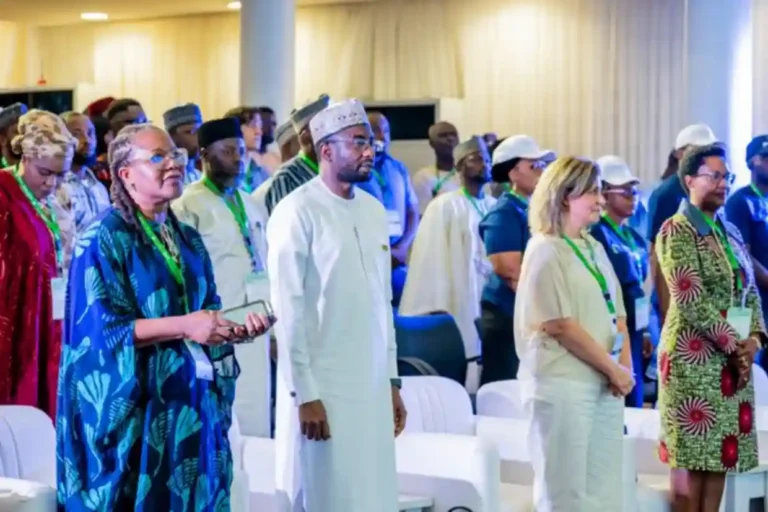
Speaking at the closing session of the five-day global conference held in Abuja, the Special Adviser on Innovation and Research to the Director-General of NITDA, Lukman Lamid, said President Bola Tinubu’s administration is determined to improve governance through efficient service delivery while driving economic diversification through innovation and digitisation.

He explained that hosting ICEGOV 2025 provided an opportunity for experts from around the world to develop research-based recommendations to shape the future of digital governance through cooperation, innovation, and inclusion.

“We have seen some of the best papers in this series, and we intend to take some of their propositions and translate them into impact,” Lamid said.

According to him, one of the major outcomes of the conference is the call to strengthen digital public infrastructure and harmonise existing policies to enhance connectivity and inclusion. He cited the Ministry of Communications, Innovation and Digital Economy’s project to deploy 95,000 kilometres of fibre optic cable by 2027 as a crucial step toward achieving last-mile internet access across Nigeria.

“Imagine what this can do for the economy when more Nigerians can access the internet; it will significantly boost our digital economy and drive diversification,” he added.

The Research category award at ICEGOV 2025 went to Robert Ifeonu of the Central Bank of Nigeria for his paper titled “Micro-Transformation Framework for Public Sector Innovation: Catalysing Resilient, Outcome-Driven Digital Governance.”

The Programme Chair of ICEGOV 2025, Dr Adeboyegba Ojo, said Nigeria’s hosting of the international event demonstrates the government’s determination to use technology to enhance governance and service delivery. He explained that the conference provides a vital platform for dialogue on how digital tools and emerging technologies, particularly artificial intelligence (AI), can improve policy formulation and strengthen public engagement.

Dr Ojo said hosting ICEGOV in Nigeria reflects the country’s readiness to join the global discourse on technology-driven governance. He expressed optimism that the government would go beyond providing the platform and start implementing innovative ideas discussed during the event within Nigeria’s unique realities.

The Director of the United Nations University Operating Unit on Policy-Driven Electronic Governance (UNU-EGOV), Delphine Soares, commended Nigeria’s growing commitment to digital transformation. She said the conference created multiple layers of impact, including stronger collaboration among participants and the exchange of ideas on digital governance frameworks and emerging technologies.

“Nigeria is clearly making significant progress in this area,” Soares said. “What we expect from ICEGOV is that it continues to serve as a platform for reflection and collaboration, helping governments use technology to create good governance and improve the lives of citizens.”

Established in 2007 by the United Nations University’s UNU-EGOV, the ICEGOV conference promotes collaboration and knowledge sharing for sustainable development. ICEGOV 2025 recorded strong global participation, with 151 papers submitted by 308 authors from 33 countries, 68 per cent of whom were from emerging economies. Nigeria led the participation list with 102 authors, ahead of Brazil, India, Portugal, and Greece.

Seventy-four papers were accepted overall, and the Best Paper Awards recognised outstanding research and innovation, rounding off a conference that reaffirmed Nigeria’s rising profile in global digital governance and technology-driven development.

MAN urges FG to approve N1tn stabilisation fund for manufacturers

0

The Manufacturers Association of Nigeria has urged the Federal Government to approve the N1 trillion stabilisation fund for the manufacturing sector, describing it as a key measure to cushion the effects of high interest rates and rising production costs faced by local industries.

The Director-General of MAN, Segun Ajayi-Kadir, made the appeal in Lagos during a media briefing, where he confirmed the full disbursement of the N75 billion previously allocated to manufacturers under the Federal Government’s Presidential Palliative Programme.

According to him, the successful implementation of the earlier intervention has shown that manufacturers can responsibly manage government-backed funding. He said, “We fully utilised the opportunities granted by the memorandum of understanding with the government. I can confirm to you that the N75bn has been fully disbursed, and our members were involved in the process. Even when we had cases where the beneficiaries’ status was unclear, we investigated with the Bank of Industry to ensure they were authentic contractors.”

Ajayi-Kadir added that the effective management of the fund by the sector demonstrates the capacity of manufacturers to handle larger interventions. He noted, “This has created an avenue for us to call for the release of the N1tn under the stabilisation plan. We have demonstrated our capacity to work effectively with the Bank of Industry, and if the government releases this fund, its impact will be positive and immediate.”

The MAN Director-General highlighted findings from the association’s Manufacturers CEOs Confidence Index for the third quarter of 2025, which called on the government to “approve the N1tn stabilisation fund for manufacturers and direct the CBN to increase the capital base of the Bank of Industry to meet the credit demand of industries.”

He lamented that despite recent monetary policy adjustments, interest rates remain too high for manufacturers to access affordable credit. “The average entry rate is still above 30 per cent. It is safer not to borrow from commercial banks, and many of our members are cutting back on loans because of the interest burden,” he stated.

Ajayi-Kadir said the association was exploring the capital market and other financing sources but warned that high lending rates continue to weaken industrial competitiveness both locally and internationally.

As part of its recommendations, MAN called on the government to establish a Manufacturing Refinancing and Rediscounting Facility that would allow commercial banks to refinance approved manufacturing loans at single-digit interest rates for up to seven years.

The association also urged the creation of a publicly accessible dashboard to monitor lending flows, interest rate spreads, loan approvals, and sectoral disbursements in real time.

Ajayi-Kadir emphasized that these proposals aim to reduce borrowing costs, enhance production, and sustain jobs within the manufacturing industry, which remains a major driver of Nigeria’s economic growth and industrial development.

CDCFIB reopens shortlist portal for exam slip printing

0

The Civil Defence, Correctional, Fire and Immigration Services Board (CDCFIB) has temporarily reopened its recruitment portal for exam slip printing until 12 pm midnight today.

Applicants can now log in to retrieve their examination slips ahead of the Computer-Based Test (CBT). According to the notice, “Candidates are advised to visit recruitment.cdcfib.gov.ng to check and print their examination slips before the portal closes again.”

To retrieve the examination slip, applicants are required to enter their National Identity Number (NIN) and phone number. This urgent notice is for candidates who could not update their details earlier today before the CDCFIB shortlist portal was closed.

Germany approves second phase Nigeria’s youth skills project

0

The German government has approved the second phase of its collaborative project aimed at strengthening Nigeria’s chambers of commerce and boosting youth skills development across the country.

The initiative, funded by the Federal Ministry for Economic Cooperation and Development of Germany, seeks to position the chambers as major drivers of vocational training and entrepreneurship for young Nigerians.

Head of Competence Centre Africa for the Giessen-Friedberg Chamber of Commerce, Dr Kristen Albrecht, confirmed the approval during a meeting with the executive members of the Nigerian Association of Chambers of Commerce, Industry, Mines and Agriculture (NACCIMA) in Abuja on Friday.

Albrecht explained that the first phase of the programme focused on enhancing the capacities of NACCIMA, the Lagos Chamber of Commerce and Industry (LCCI), and the Ogun Chamber of Commerce to enable them to better serve their member companies and support local businesses.

She said, “During the first phase, we worked closely with the Lagos Chamber of Commerce and Industry to establish an innovation hub and a business centre in Ikeja, Lagos, where youths can develop their skills and receive support from the chamber.”

According to her, the second phase will expand on those achievements, with plans to enlarge the innovation hub and create new technology hubs offering qualification courses for young Nigerians, particularly in information technology.

“For the second phase, we plan to enlarge the innovation hub and install tech hubs where qualification courses will be held for young Nigerians seeking more skills, especially in information technology, so they can either stay and work in Nigeria or be prepared to work abroad,” Albrecht said.

She added that the next phase would also deepen German-Nigerian economic relations through joint participation in trade fairs and the introduction of a trade fair calendar featuring two trade missions annually between both countries.

Albrecht announced the launch of a new platform called “The World Meets in Giessen,” which will serve as a meeting point for small and medium enterprises from both countries. The platform will feature an annual B2B conference where businesses can connect, secure partnerships, and attract investments through AI-driven business matching tools.

Also speaking, the CEO of the Giessen Chamber of Commerce, Dr Matthias Leder, said the project aims to strengthen the capacities of Nigerian chambers and position them as key institutions driving national economic growth.

He said, “The B2B conference, scheduled for June 8 to 10, 2026, in Germany, will provide Nigerian SMEs with a valuable platform for international exposure, technology transfer, and investment opportunities that can help scale their operations.”

Leder praised the collaboration with NACCIMA on the dual vocational training programme and urged the association to expand the initiative across the country to empower more young people.

In his remarks, NACCIMA President Engr Jani Ibrahim said the partnership with the German Chamber has matured into a productive relationship that continues to benefit Nigerian youths through capacity building and skills training.

“It is a relationship that has started well, and we are consolidating it to train young Nigerians and make them marketable globally through vocational skills,” he said.

Ibrahim added that acquiring skills through the dual vocational training model would enable young Nigerians to legally work abroad, reducing the risks associated with irregular migration.

He further noted that NACCIMA’s partnership with the Industrial Training Fund (ITF) focuses on training and facilitating the export of skilled artisans to international markets as part of its ongoing talent development initiative.

Propcom+ empowers Kano women with electric vehicles for agro logistics

The UK Foreign, Commonwealth and Development Office (FCDO)-funded Propcom+ programme has launched a new initiative to promote climate-smart agriculture and women’s economic empowerment by providing the Mata Zalla Cooperative Society in Kano with electric vehicles for rural agro-cargo transportation across Northern Nigeria.

The initiative, known as the Mata Zalla Small Agro Logistics Service, seeks to connect smallholder farmers, particularly women and youth, to markets through clean, affordable, and efficient logistics solutions. The project supports the transition to sustainable transport systems while boosting agricultural productivity and green economic growth.

A beneficiary of the initiative, 30-year-old tricycle operator Mary Micheal from Kano, described the support as life-changing. She said the introduction of electric vehicles would help reduce transportation costs, boost her income, and improve farmers’ access to markets. “I will continue conveying passengers with my tricycle, while the electric vehicles will be used to move farm produce. This will make transportation cheaper and strengthen our local economy since most Kura residents are farmers,” she said.

The President of Mata Zalla Cooperative Society, Hajiya Hauwa Ahmed, explained that the initiative has transformed what began as a small women-led group into a driving force for sustainable transport and inclusive growth. “With support from Propcom+, our goal is to reduce post-harvest losses, increase farmers’ income, and promote green economic growth while creating decent jobs for women and youth. Empowering women economically is not just a social cause it’s an economic necessity,” she said.

Propcom+ Country Director, Dr Adiya Ode, noted that the project builds on earlier successes from the UK-funded LINKS Programme, where Mata Zalla women first operated electric tricycles in Kano with financing support from a Bank. She said the new initiative would reduce reliance on combustion engines, promote clean energy adoption, and enhance women’s participation in the agricultural value chain. “Propcom+ remains committed to improving the incomes and climate resilience of 3.79 million Nigerians, half of whom will be women by 2030,” she stated.

Ekiti disburses ₦77m to cohort 2 broilers scheme beneficiaries

0

The Ekiti State Governor, Biodun Oyebanji, on Friday announced the approval of N300 million to boost poultry farming and create wealth for hundreds of young people in the state. The governor explained that the main goal of his administration is to strengthen the poultry farming base in Ekiti State to enable the production of at least 90,000 birds per cycle, creating more jobs and generating wealth for residents.

Governor Oyebanji made this known at the profit distribution ceremony for Cohort 2 of the Ekiti State Broilers’ Production Scheme (EBOPS), held at Jibowu Hall, Government House Ground, Ado Ekiti. Represented by the Deputy Governor, Chief (Mrs) Monisade Afuye, the governor revealed that the scheme had grown significantly since its inception. He said, “The scheme, which started with a profit base of N19.4 million in Cohort 1, has now spiralled to a sum of N77 million in Cohort 2.”

Oyebanji described the progress as a major economic success that would bring more development to Ekiti. He added that agriculture was not only about feeding the nation but also a strong tool for wealth creation and youth empowerment. The governor also disclosed plans for Cohort 3, the next phase of the programme, which will recruit an additional 200 young participants to raise 90,000 birds per cycle as part of efforts to boost the state’s agro-industrial growth.

The governor stated, “Today, I am delighted to note that over 250,000 broilers have been successfully raised and over 250 youth have benefitted from the programme, who are direct beneficiaries, let alone the ancillary beneficiaries. As part of our commitment to sustain and expand this impact, I have approved N300m for the expansion of the scheme and the establishment of new clusters across the three senatorial districts.”

Oyebanji commended the youth farmers for their efforts in promoting food security and driving the state toward economic growth. He said, “To our participants, you are the face of a new Ekiti, who are innovative, industrious, and future-oriented. I urge you to reinvest your profit wisely, build sustainable agribusiness, and mentor others who aspire to follow your footsteps.”

The governor emphasized that agriculture remained central to his administration’s economic agenda and promised continuous support for initiatives that promote dignity, income, and opportunities for young people. He added that the new N300 million investment would boost poultry production clusters across the state’s three senatorial districts.

The Commissioner for Agriculture, Mr. Ebenezer Boluwade, described the programme as a significant step forward for Ekiti youth and the agricultural sector. He noted that the government had renovated six poultry pens across the state to support the scheme, with plans to establish more for future use. Boluwade said, “Since 2023 that we started, a total of 160,000 broilers have been produced with a target of 250,000 and more. Agriculture is central to the policy thrust of this government. I want to salute the poultry farmers for their dedication and sense of patriotism. You can now see that there is dignity in farming.”

Boluwade added that the rapid progress of the scheme shows Ekiti State’s determination to join the league of leading states in poultry farming and agribusiness development. The initiative aligns with the broader goal of creating job opportunities and improving the local economy.

Also speaking, the Chairman of the Ekiti State House of Assembly Committee on Agriculture, Hon. Babatunde Fawekun, praised the programme as a masterstroke and a demonstration of Oyebanji’s commitment to making agriculture the foundation of the state’s economy. Fawekun explained that the governor had also included the broilers’ farming scheme in the 2026 appropriation bill, with a proposed increase in funding for the agricultural sector. He said, “This shows the seriousness and commitment of the administration toward sustaining this great initiative that supports farmers and empowers our youth.”

In her remarks, the Chairman of the Ekiti State Poultry Association, Mrs. Mary Olotu, expressed appreciation to Governor Oyebanji for reviving poultry businesses that had become inactive before his intervention. She stated, “Many of the participants had their businesses waned and moribund before the governor stepped in to resuscitate their dead investments.” She urged farmers in the state to continue supporting the governor’s second-term ambition to sustain ongoing projects across different sectors.

One of the programme’s participants, Mr. Femi Fagbemi, shared his experience and thanked the governor for what he called a “landmark initiative.” He explained that the scheme had helped to revive many struggling poultry farms and provided new opportunities for young entrepreneurs. Fagbemi added, “This programme has helped to remove many youths from the unemployment market. I appeal to the government to establish more poultry pens to expand production and accommodate more farmers.”

(This news publication has been updated)

Adeleke distributes Imole Osun Cash grants 2.0 to 2000 beneficiaries

0

Governor of Osun State, Senator Ademola Jackson Nurudeen Adeleke, has restated his commitment to improving the financial and economic well-being of residents through sustained empowerment initiatives.

Speaking during the official distribution of the Imole Osun Cash Grant/Empowerment Scheme 2.0, organized by the Ministry of Cooperatives and Empowerment at the Centre for Black Culture and International Understanding, Abere, the Governor emphasized that the initiative was designed to transform lives beyond their previous financial levels.

Represented by the Honourable Commissioner for Commerce and Industry, Rev. Dr. Bunmi Jenyo, Governor Adeleke noted that the cash disbursement was another evidence that his administration is focused on genuine development and not empty promises.

“Today’s event is another bold statement of our commitment to people-centred governance and inclusive development,” the Governor said. “It is a practical demonstration of our resolve to take empowerment beyond slogans. By providing cash grants that will create wealth, generate jobs and foster prosperity, while enhancing the state’s economic growth. This Cash Grant/Empowerment Scheme is not just about today. It is about empowering the people of Osun State to be self-reliant and independent in their businesses, enabling them to contribute meaningfully to the growth of our economy.”

Governor Adeleke also expressed appreciation to the Ministry of Cooperatives and Empowerment under Honourable Prince Bayo Ogungbangbe for their dedication to advancing the government’s five-point agenda. He reiterated that the initiative aligns with his administration’s focus on economic empowerment, job creation, and financial inclusion.

“Distinguished ladies and gentlemen, today’s ceremony is yet another proof that our administration is not about empty promises or deceit. We deliver, we empower and we transform lives. To the 2,000 beneficiaries across the state’s nine federal constituencies, I urge you to use this opportunity wisely to grow your businesses, empower others and become true beacons of the Imole spirit in your communities,” he added.

Governor Adeleke assured that the empowerment scheme would continue to reach more residents, promising that all Osun citizens would benefit from the dividends of democracy. “To other applicants, do not lose hope as our government will ensure that all Osun residents enjoy the true dividends of democracy. Indeed, light has come to Osun through the Imole Osun Cash Grant/Empowerment Scheme,” he said.

In his remarks, the Commissioner for Cooperatives and Empowerment, Prince Bayo Ogungbangbe, revealed that over 20,000 residents had been empowered through various economic intervention programmes since the beginning of Governor Adeleke’s administration.

“Governor Adeleke’s administration is a government for the grassroots. We are committed to putting smiles on the faces of our people through continuous empowerment initiatives and the provision of social amenities that directly impact their lives,” Ogungbangbe said.