Home Blog Page 327

CDCFIB shortlisted candidates portal now closed

0

The Civil Defence, Correctional, Fire and Immigration Services Board (CDCFIB) has announced that the shortlisted candidates window for its ongoing recruitment has officially closed. The announcement applies to applicants who registered for positions in the Nigerian Correctional Service (NCOS), Nigeria Immigration Service (NIS), Federal Fire Service (FFS), and the Nigeria Security and Civil Defence Corps (NSCDC).

According to the Board, the online Computer-Based Test (CBT) for all shortlisted candidates is scheduled to begin on November 12, 2025. Candidates are urged to take note of the date and the specific time assigned to them for the test.

The CDCFIB also clarified that it has not authorized any individual or organization to publish or circulate any other list of shortlisted candidates. “The public is hereby advised to disregard any information not sourced from the Board’s official channels,” it said, warning that it will not be responsible for any consequences.

Advertisement

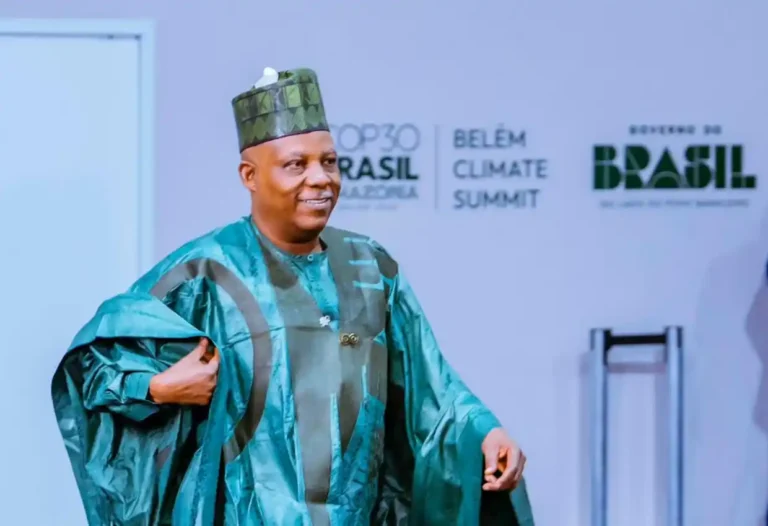
COP30: Shettima tells world peaders to move from pledges to action on climate change

0

Vice President Kashim Shettima has called on world leaders to take concrete steps beyond making promises in addressing climate change and its global impact. Speaking at the Leaders’ Climate Summit during the 30th Conference of the Parties of the UNFCCC (COP 30) in Belém, Brazil, Shettima said the world must shift from “pledges to performance” and from “dialogue to delivery.”

“Let COP30 be remembered as the moment when the world moved from pledges to performance, from ambition to action, and from dialogue to delivery,” the Vice President said.

Representing President Bola Ahmed Tinubu, Shettima reaffirmed Nigeria’s commitment to cutting greenhouse gas emissions by 32% by 2035. He explained that the move follows the introduction of the National Carbon Market Framework and the Climate Change Fund, which are aimed at attracting billions of dollars in clean energy investments.

According to the Vice President, the initiatives are designed to strengthen Nigeria’s climate finance system and promote sustainable development. “Nigeria’s renewed climate agenda represents not just an aspiration, but a solemn national commitment to preserve the planet for future generations,” he said.

Shettima emphasized that the world must move from talk to tangible results to prevent further natural disasters. “The Earth speaks in the language of loss and warning. It tells us that our survival is tied to its well-being. These are the cries that have compelled us to gather, from one city to another, in pursuit of one shared purpose — to save the only home we have,” he said.

He noted that no country can achieve its climate goals through goodwill alone. “No nation can finance climate ambition with goodwill alone. We need a reliable and equitable architecture that recognises the realities of developing nations and empowers them to deliver on global commitments,” he added.

The Vice President also stated that Africa must take the lead in renewable energy, forest conservation, and carbon capture. “I hereby say without absolute certainty that we are not the problem; we are an integral part of the solution. This is why, at COP30, we hope to demonstrate that Africa can lead in carbon capture through forests, in renewable energy expansion, in digital monitoring of emissions, and in regional cooperation that translates ambition into prosperity,” he said.

Shettima reaffirmed that Nigeria is ready to work with other nations to achieve a fairer and greener planet. “Nigeria is ready to work with all nations to build a fairer, greener, and more resilient world, one where our children inherit not the ruins of our indifference, but the fruits of our collective resolve,” he stated.

He disclosed that the National Carbon Market Framework will enable Nigeria to generate, trade, and retire carbon credits in line with Article 6 of the Paris Agreement. The proceeds from these activities, he said, will be channelled into the Climate Change Fund to support communities affected by floods, droughts, and desertification.

Shettima added that Nigeria has developed a five-year Carbon Market Roadmap to establish an Emissions Trading System and a Carbon Tax Regime, backed by fiscal incentives to encourage clean industrial innovation.

Highlighting the country’s broader strategy, he said Nigeria’s Third Nationally Determined Contribution (NDC), validated and submitted in September 2025, covers energy, agriculture, transport, waste, and industry. He further explained that the Decade of Gas Strategy remains central to Nigeria’s energy transition, balancing natural gas use with solar and off-grid electrification for rural development.

On the global stage, UN Secretary-General Antonio Guterres warned that the world has failed to stay within the 1.5 degrees Celsius limit set under the Paris Agreement. He urged leaders to adopt a new approach to reduce emissions faster.

“I cannot agree more, and the real truth is that we have failed to remain below 1.5 degrees, and science now tells us that the temporary overshoot between the 1.5 limit, starting at the latest in the early 2030s, is inevitable,” Guterres said.

He called for a paradigm shift to reduce the scale and duration of the overshoot. “We therefore need a paradigm shift to limit these overshoots magnitude and duration and quickly drive it down. Given the temporary average overshoots and their thematic consequences, it could push ecosystems and expose billions of people to unliveable conditions and amplify threats to peace and security,” he added.

The UN chief said the consequences of inaction would be severe, especially for poorer nations. “Every fraction of a degree means more hunger, displacement and loss especially for those least responsible. This is more of failure and deadly negligence. The world metrological service has indicated that emissions will begin to increase this year and the 1.5 degrees is a red line for humanity,” he said.

Guterres appealed to world leaders to act urgently to make the overshoot as small as possible and bring global temperatures back below 1.5 degrees Celsius before the end of the century.

Also speaking, Brazil’s President, Lula Inacio Da Silva, said the fight against climate change requires collective effort from all sectors. He emphasized that combating climate change must be a top priority for every government and individual.

“We will need to overcome the mismatch of lack of connection between diplomatic dialogue and the actual world. It will take a collective effort, listening to indigenous communities and those bearing the brunt of climate change in order to take a global approach to the challenge,” President Da Silva said.

He explained that the slogan “Collective Efforts” was adopted for COP 30 to encourage climate action worldwide, involving civic societies and grassroots organizations.

“Climate change is the result of the same dynamics that, during centuries, has broken our societies between rich and poor. Climate justice is aligned with fighting hunger and poverty, the struggle against racism and gender inequality,” he added.

Prince William, representing King Charles at the plenary, said it was time for his generation to take responsibility for preserving the environment. “Our children and grandchildren will stand on the shoulders of our collective action. Let us use these inspiring surroundings here in the heart of the Amazon to rise to meet this moment, not with hesitation, but with courage; not with division, but with collaboration; not with delay, but with decisive commitment,” he said.

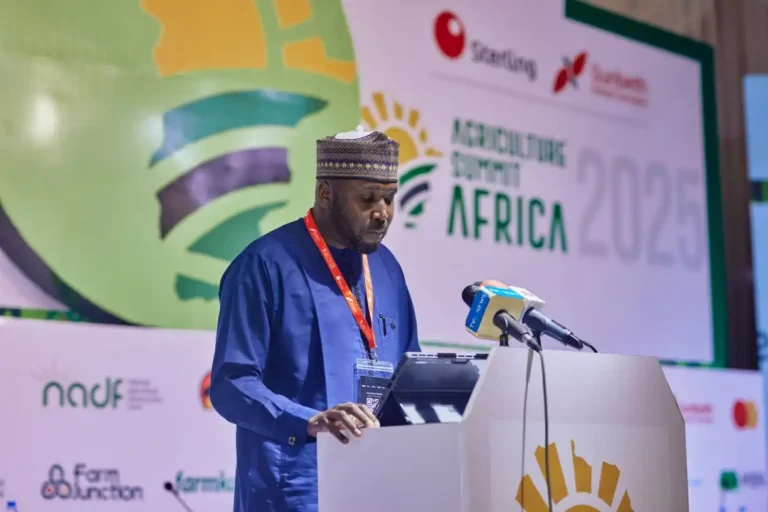
NADF reaffirms commitment to transform agricultural finance in Nigeria

0

The Executive Secretary of the National Agricultural Development Fund (NADF), Mohammed A. Ibrahim, has reaffirmed the Fund’s commitment to transforming agricultural finance across Nigeria and the African continent. He made this known in his keynote address delivered by Mr Nasir Ingawa, General Manager – Partnerships and Investor Relations, at the 2025 edition of Agricultural Summit Africa, themed “Survival of the Greenest: Reclaiming Africa’s Food Destiny.”

Ibrahim emphasized that achieving Africa’s food-security goals requires more than capital injections, noting that “it demands catalytic finance that derisks innovation, attracts private investment, and drives inclusive growth throughout the agricultural value chain.” He described the NADF as a fit-for-purpose institution leveraging blended-finance models to unlock value and resilience in one of Africa’s most vital yet risk-prone sectors.

According to him, the Fund is deploying first-loss capital mechanisms to build investor confidence while embedding climate-smart finance principles into all interventions. These include support for climate-resilient seeds, renewable energy for agro-processing, and efficient water-management systems aimed at boosting productivity and long-term sustainability.

“We are leveraging our limited public pockets to crowd in private capital,” he said, stressing that every naira deployed by the Fund is designed to multiply its value in productivity, employment, and social impact across rural and urban farming communities.

The Executive Secretary also highlighted that the NADF’s approach places smallholder farmers, women, and youth at the center of its agricultural development strategy. By strengthening cooperatives, expanding value-chain finance, and linking producers directly to markets and financial systems, the Fund aims to move Nigerian agriculture from subsistence to sustainability.

Calling for stronger collaboration, Ibrahim urged investors and development partners to “reconsider Nigerian agriculture through the lens of derisking tools” and move beyond isolated efforts toward integrated partnerships that share both risk and reward.

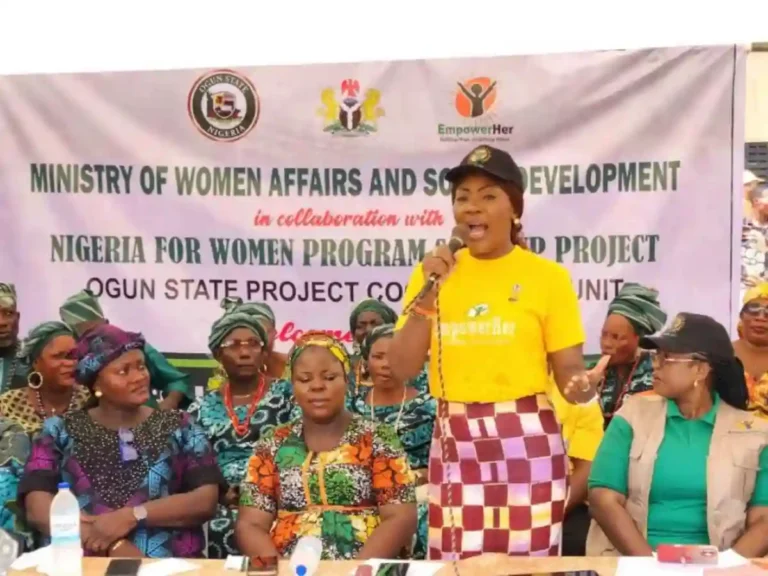
Ogun launches empowerment initiative for over 105,000 women

The Ogun State Government on Wednesday launched a women empowerment initiative under the Nigeria for Women Project Scale-Up (NFWP-SU), designed to transform the livelihoods of more than 105,000 women across four local government areas through better access to finance, skills, and social capital to boost economic growth.

Speaking at the official launch held in Akute, Ifo Local Government Area, the Commissioner for Women Affairs and Social Development, Adijat Adeleye, said the initiative aims to empower women economically and help them adapt to the ongoing economic challenges. She mentioned that the project will cover Ifo, Ijebu-Ode, Sagamu, and Ado-Odo/Ota councils.

According to Adeleye, the structure of the project would be driven by 420 Ward Facilitators, each tasked with forming ten Women Affinity Groups (WAGs). Each group will consist of twenty-five women, adding that the process will eventually lead to the creation of 4,200 Women Affinity Groups across the participating local government areas. This, she said, would help create a strong and organized network of economically active women.

“The Women Affinity Groups are not just gatherings; they are safe, transparent, and non-political spaces where women will learn financial literacy, entrepreneurship, savings, and investment,” Adeleye explained. “For many unbanked women, this will serve as their first connection to the formal economy, a veritable platform to save together, grow together, and rise together.”

She emphasized that the Women Affinity Group was not created for political purposes but to train women in entrepreneurship and financial management, helping them improve their livelihoods and cope with the effects of fuel subsidy removal. Adeleye added that the empowerment project aligns with the Ogun State Government’s broader goal of promoting inclusive economic growth and reducing poverty among women.

The Commissioner stated that this new phase builds on the success of the first phase implemented in Odeda, Yewa North, Ijebu North-East, and Ikenne local government areas. The first phase, she noted, received national recognition and commendation from the Nigeria Governors’ Forum (NGF) and other states that visited Ogun to study its implementation strategy.

Adeleye called for more collaboration from traditional rulers, community leaders, and grassroots stakeholders to support the initiative. She urged them not to leave the task to the government alone but to contribute to its success by encouraging women in their communities to participate actively.

“The Scale-Up Project is not just a government program but a movement to institutionalize women’s economic empowerment across the Gateway State,” she said. She also encouraged the beneficiaries to take full advantage of the opportunity with determination and integrity, promising that Ogun would continue to serve as a model for women-centered development programs across Nigeria.

The State Project Coordinator of NFWP-SU, Mrs. Bolanle Fadairo, explained that the first phase of the project covered Ikenne, Ijebu North-East, Odeda, and Yewa North Local Government Areas. She described the project as a Federal Government initiative implemented across six states, aimed at promoting inclusive financial empowerment for women.

Fadairo added that the Scale-Up phase involves intensive training sessions for facilitators and the creation of small groups of twenty-five women each, who would work collectively to enhance their financial independence and improve their livelihoods.

“The aim is for these women to rise together, scale up together, and sustain their growth through shared learning, savings, and enterprise support,” she said.

She noted that the successful formation of the Women Affinity Groups in Ifo Local Government represents a major step forward in the project’s progress within Ogun State. She added that upon completion of their training, the groups would receive investment grants to strengthen their businesses and promote women-led enterprises at the grassroots level.

In her goodwill message, the Chairman of Akute Central Community Development Council, Moradeun Ogundele, praised the initiative, stating that it would help improve the socio-economic conditions of the beneficiaries while encouraging financial independence for women in rural communities.

Ogundele said, “This initiative will go a long way in uplifting women at the grassroots, helping them gain financial stability, and reducing poverty in our communities.”

FG unveils new agricultural reforms to end hunger, boost food production

0

The Federal Government has introduced a new set of agricultural reforms aimed at ending hunger, boosting food production, and cutting post-harvest losses estimated at over $10 billion annually. The reforms are in line with President Bola Tinubu’s Renewed Hope Agenda for food security and national prosperity.

This was contained in a joint statement released on Thursday by the Minister of Agriculture and Food Security, Senator Abubakar Kyari, and the Minister of State, Senator Aliyu Abdullahi.

Senator Kyari stated that agriculture remained the foundation of Nigeria’s economy and a key part of national renewal. “Agriculture remains the single largest employer of labour in Nigeria and contributes more than one-quarter of our Gross Domestic Product. Yet beyond these figures lies a deeper truth: agriculture is the measure of our nation’s resilience and the foundation of our collective renewal,” he said.

He explained that the government’s ongoing reforms were designed to end hunger, ensure food sufficiency, and drastically reduce post-harvest losses affecting the country’s agricultural value chain. “Together, these tiers will form a connected post-harvest system aimed at cutting losses valued at over $10 billion annually, while improving food quality, farmer incomes, and price stability nationwide,” Kyari added.

The minister noted that with increased mechanisation, expanded irrigation, and stronger storage systems, the government was laying the groundwork to make food abundance a reality for every Nigerian household.

He reaffirmed President Tinubu’s directive to modernise agricultural production. “Mr President’s charge remains clear: ‘Our farmers must transition from hoes and cutlasses to tractors and harvesters. Food sufficiency is the first currency of national stability,’” Kyari stated.

He disclosed that several key programmes were already underway to drive this transformation, including the National Agricultural Growth Scheme–Agro-Pocket, the Renewed Hope Agricultural Mechanisation Programme, and the Nigeria Postharvest Systems Transformation Program (NiPHaST).

According to Kyari, a significant milestone was recorded in October with the introduction of rainfed wheat cultivation in Kuru, Plateau State. The innovation, developed by the Lake Chad Research Institute, extends wheat farming beyond irrigated zones. “With rainfed varieties now proven viable across the highlands of Plateau, Taraba, and Cross River States, Nigeria is charting a new course toward all-year farming and self-sufficiency in wheat production,” he said.

On post-harvest management, the minister described the NiPHaST programme as a legacy initiative to reduce food losses, improve quality, and stabilise market prices. “NiPHaST is designed to strengthen post-harvest handling and storage systems from the community level upwards, creating an integrated network that connects farmers, cooperatives, and strategic reserves across the country,” Kyari said.

He announced that the National Strategic Grain Reserve Silos located in Zamfara, Katsina, Nasarawa, Adamawa, Niger, Osun, Edo, and Kwara states were being upgraded to enhance emergency interventions and price stabilisation measures.

On financing, Kyari revealed that President Tinubu had approved the recapitalisation of the Bank of Agriculture with N1.5 trillion and established a N250 billion financing window for smallholder farmers. “The Bank of Agriculture, in partnership with Heifer Nigeria, has launched the Renewed Hope National Agricultural Mechanisation Program, a transformative tractor financing and management initiative designed to expand affordable access to mechanisation services nationwide,” he said.

He explained that the initiative would turn mechanisation into a national service, helping to modernise production, increase yields, and create sustainable employment across rural areas.

Kyari added that the National Agricultural Development Fund was now fully operational to expand agribusiness financing and complement the Bank of Agriculture’s functions. He also mentioned the government’s investments in rural infrastructure such as feeder roads, mini-dams, solar-powered boreholes, and market access facilities to strengthen rural livelihoods.

Senator Abdullahi, Minister of State for Agriculture and Food Security, also highlighted the government’s focus on climate-smart and inclusive agricultural reforms. “Today, we are all gathered here to propose actions that will strengthen our national solidarity in the fight to end hunger, malnutrition, and poverty, and to highlight the need for food security and nutritious diets, which is in line with President Bola Ahmed Tinubu’s Renewed Hope Agenda,” Abdullahi said.

He stated that achieving food self-sufficiency required optimising the production of major crops such as maize, wheat, sorghum, millet, soybean, cassava, yams, and cowpeas. “For us to reach food self-sufficiency or improve our current food self-sufficiency levels, we need to attain all potential crop production levels for our major food security crops,” he explained.

The minister added that the Federal Government was prioritising climate-smart agriculture through the development of new climate-resilient crops that can withstand various environmental stresses. He also noted that there were ongoing efforts to implement integrated soil-crop system management and pest control systems for better productivity.

Abdullahi listed additional government initiatives, including the Dry Season Initiative, which covers 500,000 hectares of all-year farming, the Every Home a Garden Initiative by the First Lady, Senator Oluremi Tinubu, and the Nigerian Farmers’ Soil Health Scheme, which offers fertiliser recommendations tailored to specific crops and locations.

“Our broader goals are targeted at reducing import dependence, strengthening market confidence, and reviving agribusiness to position Nigeria as a leading food supplier in West Africa,” Abdullahi said.

In recent months, the Federal Government has introduced several targeted measures to fight hunger, including converting idle institutional lands into food production hubs and declaring a state of emergency on food security.

Mechanisation and irrigation projects have been expanded nationwide to boost productivity, as part of the administration’s broader plan to transform Nigeria’s agricultural sector into a driver of economic growth and national stability.

For decades, agriculture has been the backbone of Nigeria’s economy, employing millions and sustaining rural communities. However, challenges such as low mechanisation, weak infrastructure, and high post-harvest losses have limited the sector’s potential. The new reforms, according to the government, represent a turning point in the country’s quest for food security, economic diversification, and sustainable development.


Tinubu’s renewed hope housing project begins in Akwa Ibom

0

Akwa Ibom State Governor, Pastor Umo Eno, on Thursday, performed the groundbreaking ceremony for the Federal Housing Authority (FHA) Renewed Hope Estate at Ekpene Ukim in Uruan Local Government Area. The event, held on November 6, 2025, marked the official commencement of President Bola Ahmed Tinubu’s Renewed Hope Housing Project in Akwa Ibom State.

Governor Eno described the occasion as a true reflection of inter-governmental collaboration and expressed appreciation to President Tinubu and the Federal Housing Authority for selecting Akwa Ibom as the launch site. He noted that the Renewed Hope Housing Project aligns with his administration’s goal of addressing the housing deficit in the state while promoting real estate development and economic growth.

“We thank the Federal Housing Authority for their collaboration and for making Akwa Ibom the first state where the Renewed Hope Estate is being launched. I am deeply grateful to President Bola Ahmed Tinubu for approving this project across the country,” the Governor said.

Governor Eno assured the project team of his government’s full support, promising to provide necessary infrastructure such as access roads and adequate security to ensure the smooth execution of the project. He emphasized that the Renewed Hope Estate will not only provide affordable housing but also create jobs and stimulate investment in the local economy.

Earlier, the Managing Director and Chief Executive Officer of the Federal Housing Authority, Hon. Oyetunde Oladimeji Ojo, expressed delight at the commencement of the project, noting that Akwa Ibom’s exceptional hospitality influenced the decision to start the housing project in Uyo. He reaffirmed the Authority’s dedication to delivering quality and sustainable housing for Nigerians under President Tinubu’s Renewed Hope Agenda.

The Chairman of Uruan Local Government Council, Surv. Iniobong Ekpenyong, commended both Governor Eno and President Tinubu for bringing the Renewed Hope Estate to the area, assuring that the council would provide the needed security and support for its success.

In his welcome remark, the Chairman, Commissioning Committee and Executive Director of Estate Services, Arc. Ezekiel Nya-Etok, praised Governor Eno’s commitment to partnership and delivery on promises.

Goodwill messages also came from the Board Chairman of Ibom Mortgage Bank and the Managing Director of FMHA Mortgage Bank Ltd, who applauded both leaders for expanding access to affordable housing and prayed for divine wisdom as they continue to promote sustainable development in Nigeria.

FG disburses N200m grants to 14 DELT-Her women engineers

The Federal Government has disbursed ₦200 million in grant funding to 14 outstanding women engineers to scale up innovations tackling Nigeria’s key development challenges.

The initiative, led by the Presidential Implementation Committee on Technology Transfer (PICTT) in partnership with the National Agency for Science and Engineering Infrastructure (NASENI), marks the second phase of the Developing Engineering Leadership and Technology–Her (DELT-Her) programme.

Launched to address gender disparity in Science, Technology, Engineering, and Mathematics (STEM), the programme aims to empower women innovators and promote inclusive participation in the nation’s technology and engineering sectors.

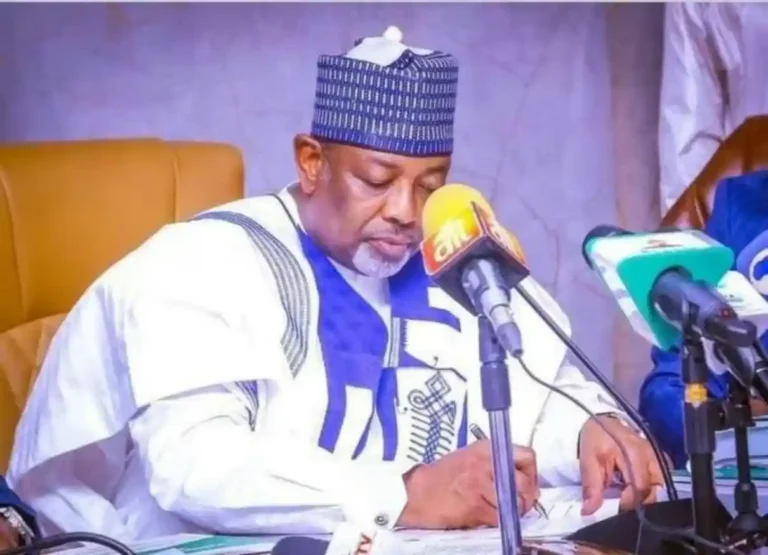
Speaking during the award ceremony held in Abuja on Thursday, the Chairman of PICTT, Dr. Dahiru Mohammed, described DELT-Her as a “transformative step toward building a new generation of women leaders in engineering and technology.”

“DELT-Her was born from a national vision to rectify the gender imbalance in STEM fields, fostering an environment where women can lead groundbreaking innovations,” Mohammed said.

He noted that the programme had recorded significant growth since it began. While the first edition in 2024 empowered six female engineers with ₦70.5 million, the 2025 phase received 9,925 project proposals, a sharp increase from 120 applications submitted in the previous year.

“From this competitive pool, fourteen remarkable female engineers have emerged as this year’s awardees, receiving over ₦200 million in grant funding to advance their innovative projects,” he added.

The selected projects cover key sectors such as agriculture, clean energy, healthcare, mobility, digital security, and environmental sustainability. According to Mohammed, the projects were chosen for their potential to deliver real-life impact and strengthen Nigeria’s technological base.

Beyond the financial support, the DELT-Her initiative has expanded its mentorship and grassroots engagement programmes to encourage young girls in secondary schools to pursue STEM careers.

“In 2024, we mentored 30 schoolgirls in the FCT. This year, we scaled significantly, reaching over 150 girls across Kwara, Niger, Plateau, Nasarawa, and the FCT,” he said.

Through STEM bootcamps and the use of fabrication kits, the participants were able to design creative prototypes such as biodiesel production technology and solar-powered power banks. Mohammed said the hands-on approach was “inspiring the next generation of innovators” and ensuring continuity in female participation in STEM fields.

Also speaking at the event, the Project Coordinator of DELT-Her under NASENI and PICTT, Olamide Apejoye, attributed the programme’s rapid progress to growing awareness and support for women-led innovation across the country.

“We had increased participation—from 150 applications last year to 9,925 this year. The number of winners also grew from six to fourteen, while funding rose from ₦17.5 million to ₦228 million across board,” she said.

Apejoye stated that DELT-Her is helping bridge gender gaps in Nigeria’s engineering and science fields, which have long been dominated by men. She explained that the programme also promotes entrepreneurship and contributes to economic inclusion.

“The more prototypes they create, the more startups emerge. That means more jobs, more empowerment, and more economic growth,” she added.

Apejoye encouraged women scientists and engineers nationwide to prepare for the next round of applications. “DELT-Her is here to support female engineers and scientists across Nigeria. I encourage more women to take advantage of the next call for applications,” she said.

The DELT-Her initiative was introduced in 2024 as part of the Federal Government’s broader strategy to boost technology transfer and strengthen local innovation through PICTT and NASENI. It aligns with Nigeria’s National Science, Technology and Innovation Roadmap, which prioritises inclusive participation in science and engineering.

Gender disparity remains a major challenge in STEM, with women representing less than 22 percent of Nigeria’s engineering workforce. Programmes like DELT-Her are therefore considered crucial in promoting gender equality, boosting local innovation, and expanding the nation’s economic and technological capacity.

FG begins disbursement of ₦10m interest-free loans to tertiary institution staff

0

The Federal Government has started the disbursement of the ₦10 million interest-free loan scheme under the Tertiary Institutions Staff Support Fund (TISSF), aimed at improving staff welfare, motivation, and productivity in universities, polytechnics, and colleges of education across Nigeria.

According to a statement released on Thursday and signed by the Director of Press and Public Relations, Folasade Boriowo, the Minister of Education, Dr. Tunji Alausa, announced the official launch and disbursement during a ceremony held at the Federal University of Technology, Akure (FUTA).

Dr. Alausa described the event as a historic step in fulfilling President Bola Ahmed Tinubu’s Renewed Hope Agenda, which prioritises human capital development and educational excellence. He explained that the TISSF provides zero-interest loans of up to ₦10 million, capped at one-third of an applicant’s annual gross salary, to support essential needs such as housing, healthcare, transportation, and small business ventures.

The Minister disclosed that over 9,000 academic and non-academic staff across 219 federal and state tertiary institutions have started receiving offer letters and payments. He added that more than 400 beneficiaries have already been credited.

He noted that the Fund, which was conceived and implemented within four months, forms part of the Nigerian Education Sector Renewal Initiative (NESRI). According to him, this reflects the administration’s commitment to translating policies into measurable impact.

“The TISSF is not merely a financial intervention; it is a tangible expression of government’s appreciation for the dedication of those who sustain our tertiary education system,” Dr. Alausa said.

He called on beneficiaries to ensure timely repayment, stressing that the Fund operates as a revolving scheme that depends on repayment discipline to extend benefits to others. The Minister assured that the Ministry would maintain transparency, accountability, and quarterly monitoring to ensure the sustainability of the initiative. He added that the programme would help reposition Nigeria’s tertiary education system to become globally competitive and knowledge-driven.

The Minister of State for Education, Professor Suwaiba Sa’id Ahmad, also described the TISSF as a visionary and transformative welfare programme designed to stabilise the education system by boosting staff motivation and professional growth. She commended Dr. Alausa for championing the initiative and appreciated the Bank of Industry and other partners for their support in the Fund’s design and implementation.

“Investing in our educators is investing in the future of our nation,” she stated.

The Vice-Chancellor of FUTA, Professor Adenike Temidayo Oladiji, praised the Federal Government for what she called a timely, visionary, and transformative initiative. She commended the Ministers for reforms that have revitalised tertiary education, including separating research accounts from the Treasury Single Account (TSA) and improving access to TETFund grants.

Professor Oladiji also revealed that FUTA has been selected as a beneficiary of the ₦1 billion Commercialisation Aid Fund initiative, reaffirming the university’s commitment to innovation and national development.

One of the beneficiaries, Mrs Bola Ajayi, expressed gratitude on behalf of all recipients to President Bola Ahmed Tinubu and the Ministry of Education, describing the loan support as “a profound gesture of renewed hope.”

“The Federal Ministry of Education reaffirmed its determination to sustain the TISSF as a model of transparency, accountability, and shared progress, ensuring that every educator feels valued, supported, and empowered to shape Nigeria’s future,” the statement concluded.

Lagos SUBEB denies claims inviting applicants for screening

The Lagos State Universal Basic Education Board (LASUBEB) has alerted the public to a false message circulating online and via SMS, inviting applicants to a screening exercise scheduled for Friday, November 7, 2025. The Board clarified that the message did not originate from its office.

In a statement issued by Dr. Hakeem Shittu, Executive Chairman of LASUBEB, the agency emphasized that it operates through “established and credible procedures,” and therefore, “any unsigned or unofficial publication should be regarded as false and misleading.”

The public is advised to ignore the trending message. According to LASUBEB, genuine and verified information will be communicated directly to applicants through the phone numbers submitted during the online application process.

Cen Global Services opens graduate trainee program

0

Cen Global Services Limited has announced the opening of its Graduate Trainee Program in Port Harcourt. The company stated that the program is designed to provide young graduates with hands-on experience and exposure to various aspects of its operations. According to Cen Global Services, “Successful candidates will undergo structured training and rotational assignments aimed at developing future professionals.”

The firm outlined key responsibilities for participants, including taking part in training sessions, supporting daily operations under supervision, assisting with research and reporting, and demonstrating initiative and adaptability.

Applicants must hold a Bachelor’s degree or HND in relevant fields such as Engineering, Sciences, Business, or Social Sciences, and must have completed NYSC. The company added that candidates should have 0–1 year post-NYSC experience and strong analytical and teamwork skills. Applications are open via the official form Link.