
Home Blog Page 33

Rivers State initiative to empower 5,000 rural women with grants

The Toby Jug Foundation, in partnership with Rivers Women Unite for SIM, has announced the first phase of the Rivers Rural Women Support Stimulus (RRWSS) initiative to empower 5,000 women across all 23 local government areas of Rivers State with grants.

The announcement was made on Saturday, February 14, 2026, at Isaac Boro Park, where women from across Rivers State gathered in a colourful event that blended faith, civic responsibility, and community celebration. The gathering, themed “For the Love of State and Country,” drew inspiration from the biblical admonition in Matthew 12:25 on the strength of unity.

Organisers described the event as a clear shift from conventional festivities, turning it into a platform for prayer, thanksgiving, and collective responsibility toward nation-building. Participants said the occasion reflected a renewed commitment to unity and sustained peace in the state and across Nigeria.

At the centre of the event was a joint commendation issued to Bola Tinubu, Siminalayi Fubara, and Nyesom Wike for choosing dialogue and reconciliation over political confrontation. The women stated that the current atmosphere of calm in Rivers State is vital for social stability, economic growth, and long-term development. They urged all stakeholders to preserve and strengthen the peace that has been achieved.

Speaking at the rally, the President of the Toby Jug Foundation, Amaopuorubo Sotonye Toby Fulton, said prioritising stability over rivalry represents a shared victory for citizens. She noted that previous political tensions had slowed progress in the state and stressed that unity must be actively protected through responsible leadership and civic participation.

According to her, “Genuine love for the state is best expressed through service, prayer, and actions that uplift vulnerable communities.” She added that the women’s gathering was not just symbolic but a practical demonstration of their commitment to peace and development.

A major highlight of the event was the formal unveiling of the Rivers Rural Women Support Stimulus (RRWSS). Organisers said the empowerment initiative is designed to provide financial grants to 5,000 women in its first phase. The programme will target rural communities across all 23 local government areas, with special focus on market women, Muslim women’s groups, and non-indigenes residing in the state.

The organisers described the scheme as a practical extension of their commitment to inclusive development and social equity. They explained that the initiative aims to strengthen small businesses, improve household income, and promote broader participation of women in local economic activities.

The gathering also featured intercessory prayers for national and state leaders, families, and the future of Nigeria. The prayers were led by Salvation Oziri of Conquerors World Glorious Ministry International. The spiritual session, marked by worship and reflection, reinforced the message that faith and unity remain central pillars of societal harmony.

Beyond the formal activities, the event maintained a family-friendly atmosphere. Children took part in games and recreational sessions, while mothers engaged in fellowship and reflection. The celebration concluded with a ceremonial cake-cutting to symbolise love, shared purpose, and special milestones among participants.

Through the event, Rivers women projected a united voice, affirming that peace, faith, and collective action are essential foundations for a thriving society and a stable future for Rivers State and Nigeria.

Advertisement

FG to Deploy Diaspora Doctors Nationwide in July 2026

0

The Nigerians in Diaspora Commission (NiDCOM) has announced plans to deploy Nigerian medical professionals in the diaspora across the country in July 2026 to strengthen healthcare delivery nationwide.

Chairman/CEO of NiDCOM, Abike Dabiri-Erewa, disclosed this in Abuja while unveiling the Diaspora Health Impact Initiative (DHII) 2026. She described the programme as a coordinated national platform designed to harness the expertise, innovation and commitment of Nigerian health professionals living abroad to improve health outcomes at home.

According to her, the initiative will run during the week preceding National Diaspora Day, observed annually on July 25. She explained that the focus will be on specialist interventions, capacity building and long-term institutional partnerships rather than short-term outreach missions.

Dabiri-Erewa noted that diaspora remittances to Nigeria exceed $20 billion annually, but stressed that the knowledge and professional skills of Nigerian doctors abroad remain an underutilised national asset. She said DHII 2026 will align with national and state health priorities, especially in underserved communities across the six geo-political zones.

She added that the programme aims to strengthen specialist service delivery, improve access to quality healthcare, enhance clinical governance, promote medical innovation and generate data to guide policy reforms.

Implementation will be carried out in collaboration with the Federal Ministry of Health and Social Welfare, the Federal Ministry of Education, the Nigerian Medical Association, and the Medical and Dental Council of Nigeria.

Seven diaspora medical associations from the United States, Canada, the United Kingdom, Germany, Australia and South Africa have been assigned to specific states for interventions scheduled between July 20 and 23, 2026. The interventions will include advanced specialist lectures, maternal and newborn care, sickle cell screening, women’s health services, interventional radiology, neurosurgery and broader health systems strengthening.

The initiative will be officially flagged off in Abuja at the start of Diaspora Week 2026 before medical teams deploy to designated states in partnership with state governments and local health institutions.

Also speaking, President of the Medical Association of Nigerians Across Great Britain, Dr. Jide Menakaya, described the programme as inclusive and multidisciplinary. He stressed that nurses, midwives, pharmacists and other healthcare professionals all have critical roles to play.

Dabiri-Erewa commended Bola Ahmed Tinubu for supporting diaspora engagement as part of national development efforts and called on more Nigerian health professionals abroad to participate in the initiative.

Nigeria, Denmark Hold Marine and Blue Economy Cooperation Talks

0

A high-level technical dialogue between Nigeria and Denmark is signaling renewed momentum in bilateral cooperation on marine and blue economy development, underscoring both countries’ strategic ambitions in the maritime sector.

The meeting brought together a delegation from Nigeria’s Federal Ministry of Marine and Blue Economy (FMMBE) and senior Danish officials to explore expanded collaboration across maritime security, sustainable ocean governance and value chain development.

The Danish delegation was headed by Jens Ole Bach Hansen, Denmark’s ambassador in Nigeria, alongside Jette Bjerrum, consul general for Sustainable Value Chains, Tumi Onamade, Maritime Advisor, and Henrik Laugesan, Defence Attaché.

Nigeria’s delegation was led by Kalthum Ibrahim, Director of Planning, Research and Statistics at FMMBE, together with Busayo Fakinlede, Senior Special Assistant to the President on Marine and Blue Economy.

Frederik Klinke, Vice President of the European Chamber of Commerce in Nigeria, also contributed perspectives from the European private sector, information gathered by BusinessDay on Wednesday indicated.

The talks focused on strengthening institutional ties, accelerating sustainable marine initiatives, and enhancing trade competitiveness through more resilient and efficient maritime value chains. Both sides emphasized the importance of translating policy dialogue into measurable economic impact, noting that cooperation must deliver practical results.

Denmark enters the partnership as one of the world’s foremost maritime nations. Ranked ninth globally, it operates approximately 61 million gross tonnage and maintains a Danish-flagged fleet of 744 vessels as of January 2026. Shipping remains the country’s largest export sector, supported by globally competitive expertise in maritime technology and energy-efficient solutions.

Nigeria, meanwhile, is positioning the blue economy as a cornerstone of its economic diversification agenda. With an 853-kilometre Atlantic coastline, more than 10,000 kilometres of inland waterways, and a vast Exclusive Economic Zone in the strategically vital Gulf of Guinea, the country plays a central role in regional trade and maritime activity.

The dialogue builds on established cooperation frameworks, including the Danish Gulf of Guinea Maritime Security Programme (2022–2026), which aims to strengthen maritime domain awareness and regional security. It also reflects longstanding commercial engagement, notably investments by APM Terminals in Nigerian port and logistics infrastructure.

The renewed engagement aligns with Denmark’s Africa Strategy, which prioritizes equal partnerships, green transition and sustainable economic cooperation. For both countries, officials said, the objective is clear: harnessing the blue economy not only as a policy concept, but as a practical engine for jobs, trade and long-term growth.

NAAIP Calls for Nationwide Deployment of Homegrown AI Solutions

0

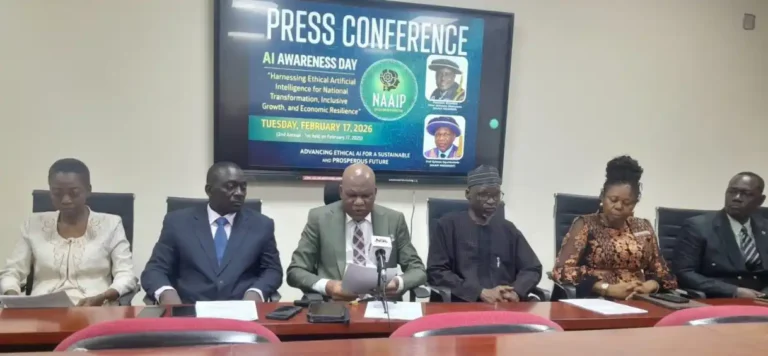
The Association of Artificial Intelligence Practitioners (NAAIP) has called for the large-scale deployment of homegrown artificial intelligence (AI) solutions to transform governance, expand economic opportunities, and strengthen Nigeria’s national resilience.

The President of the Association of Artificial Intelligence Practitioners, Eyitope Ogunbodede, made the call in Abuja at the commencement of the 2026 Artificial Intelligence Awareness Day. He described the moment as a critical turning point in Nigeria’s AI journey.

Speaking on the 2026 theme, “Harnessing Ethical Artificial Intelligence for National Transformation, Inclusive Growth, and Economic Resilience,” Ogunbodede said the focus has shifted decisively from awareness to national-scale deployment. According to him, Nigeria must move “from conversation to implementation, from potential to measurable national impact.”

He stressed that AI should be applied to address infrastructure gaps, service-delivery bottlenecks, security challenges, and productivity deficits across key sectors of the economy.

Ogunbodede explained that NAAIP was founded in April 2024 after a landmark national training programme that equipped nearly 1,000 participants with specialised AI competencies. He said the association was established to move Nigeria from being a consumer of AI technologies to a creator of ethical, globally competitive solutions.

Outlining practical use cases, he said AI could ease urban congestion through intelligent traffic systems, improve power supply via predictive maintenance of the national grid, and boost transparency and efficiency in public administration. “This is not science fiction,” he said. “These are achievable solutions that can save billions of naira and improve the daily lives of millions of Nigerians.”

On inclusive growth, Ogunbodede warned against AI becoming the preserve of a privileged few. He highlighted initiatives that support AI-driven advisory services for farmers, personalised learning tools for rural students, and digital solutions across health, finance, agriculture, and governance. He added that such efforts are particularly important for youth engagement and workforce readiness.

He also underscored AI’s role in economic resilience and national security, stating that NAAIP is ready to collaborate with the Federal Government on AI-enabled surveillance, predictive analytics, and data-driven decision-support systems.

Development partners were urged to support capacity building, research funding, ethical governance frameworks, and global knowledge exchange. Young Nigerians were also encouraged to acquire AI skills and innovate responsibly.

Addressing regulation, the Vice President, North Central, Association of Artificial Intelligence Practitioners, Emmanuel Dandaura, noted that although Nigeria has AI strategies and frameworks, regulatory responsibilities remain fragmented across multiple agencies.

He called for the establishment of a central AI Commission to harmonise oversight, coordinate sector regulators, and handle complaints. Dandaura added that fears of job losses could be mitigated through education, retraining, and responsible adoption, drawing parallels with job creation following the introduction of GSM.

Abia to inspect, grade and classify hotels, lounges and tourism facilities

0

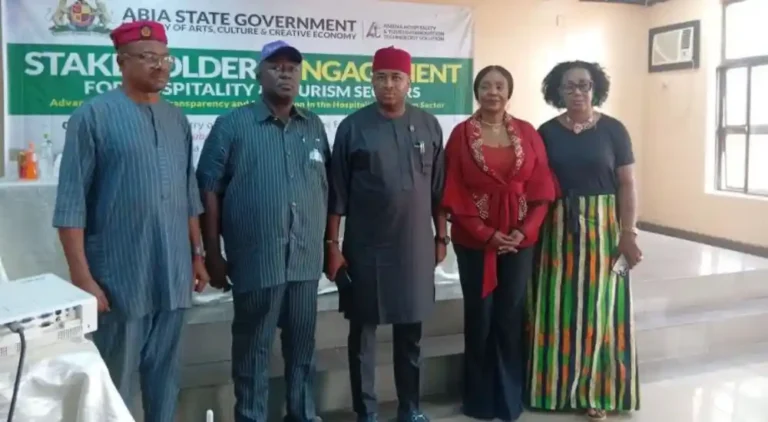
The Abia State Government has unveiled plans to comprehensively inspect, grade and classify hospitality and tourism facilities across the state in line with global best practices, as part of efforts to reposition the sector for growth, visibility and increased economic returns.

The initiative was disclosed on Wednesday during a stakeholders engagement for operators in the hospitality and tourism sector, organised by the Ministry of Arts, Culture and Creative Economy. The meeting was attended by hotel owners, industry players, consultants and government officials.

Speaking at the event, the Managing Director of Amena Hospitality and Tourism Innovation Technology Solution, Mr. Edosa Eghobamien, said the administration of Governor Alex Otti had taken a strategic decision to upgrade standards in the sector, recognising tourism as one of the highest employers of labour globally.

“The Abia State Government has thought it wise to upgrade the standards of its hospitality and tourism destinations. Tourism and socialisation is one of the highest employers of labour, not just in Nigeria but globally,” Eghobamien said.

According to him, all hotels, lounges, bars, restaurants and recreational centres operating in the state will undergo inspection and classification based on international benchmarks, with technology deployed to enhance transparency and global visibility.

“Every hospitality establishment in the state will be inspected, graded and classified according to best global practices. Technology will be infused into this programme, and when that is done, it creates visibility.

“The world will see you, notice you and recognise you as a five-star or four-star destination worth visiting,” he explained.

Eghobamien described the initiative as a “win-win” for both government and operators, noting that grading would encourage proper maintenance, improve customer satisfaction and drive repeat patronage.

“One of the greatest challenges in this industry is maintenance. Through grading, defects are identified, recommendations for upgrades are made, and facilities are rated accordingly. What you represent is exactly what the customer will see,” he said.

He added that the technology to be deployed would also allow users to share their experiences, stressing that poorly maintained facilities would inevitably suffer revenue losses.

“If customers are unhappy, they won’t return. It’s only happy, repeat customers that sustain a business. This initiative will directly impact revenue, profitability and long-term sustainability,” Eghobamien noted.

He commended the Ministry of Arts, Culture and Creative Economy and its leadership for driving continuous engagement with stakeholders, describing the programme as “Abia hospitality and tourism to the world.”

“Something good has come to Abia State and it has come to stay. Abia wants to lead Nigeria on this new trajectory, and we are calling on all stakeholders to join hands with government so that everyone becomes a winner,” he said.

Earlier, the Commissioner for Arts, Culture and Creative Economy, Chief Matthew Ekwuribe, said the hospitality classification exercise was aimed at bringing order, fairness and professionalism to the industry, while aligning Abia with emerging global standards.

“Our ministry will not be left behind. One of the things we are trying to achieve is to give the hospitality industry better organisation and structure,” Ekwuribe said.

He disclosed that the enumeration of hotels and hospitality facilities would commence in the coming weeks, involving physical inspections, facility assessments and detailed questionnaires, after which establishments would be graded.

“This is not a desk exercise. We will visit facilities, ask questions based on what you have, and at the end of the exercise, you will be graded.

“Hotels will also be put online so people can book directly from their websites,” he said.

Ekwuribe noted that the grading system would also address long-standing complaints about blanket taxation and levies, ensuring that hotels pay according to their size, capacity and classification.

“Through proper classification, a small hotel will pay what it can afford, while bigger facilities will pay accordingly. We want to stabilise standards and ensure fairness across the board,” he explained.

The commissioner also emphasised the importance of staff training, citing poor customer handling as a major weakness in the sector.

“One of the problems we have is the lack of well-trained hotel managers and front-desk staff. Simple hospitality etiquette like knocking before opening doors or properly engaging guests is often ignored. Training will be a key component of this reform,” he said.

He added that accessibility, security and inclusiveness, including facilities for persons with disabilities, would form part of the new standards.

“We want to bring major events and activities to Abia, but the question is: are we ready to welcome people? This programme is to ensure that we are ready,” Ekwuribe stated, calling on operators to cooperate fully with government.

Also speaking, the Permanent Secretary of the Ministry, Mrs. Chibuzo Ehiemere, underscored the critical role of private sector operators in achieving the ministry’s mandate of repositioning tourism as a major economic driver in the state.

“You are critical stakeholders. Nothing can happen in the tourism industry without you being part of it. Visitors will sleep in hotels, eat in restaurants and relax in recreational centres – that is where you come in,” she said.

Ehiemere explained that the classification and grading exercise was designed to align Abia’s hospitality sector with international best practices, boost confidence among visitors and address persistent concerns about fees and standards.

“This engagement is an opportunity to ask questions, understand the process and add value. It is surprising that many operators are absent, yet we complain about excessive fees and challenges. This is the time to sit down and correct those issues,” she noted.

She reaffirmed the state government’s commitment to sustaining the initiative, stressing that lack of immediate buy-in would not derail the reform.

“The government is determined to make the tourism industry one of the best. This is about exposure, international standards and opening Abia to the world,” Ehiemere said.

The stakeholders’ engagement concluded with assurances that the grading, classification and continuous training programme would be implemented in phases, with periodic reviews, as part of a broader strategy to improve tourism, transportation, hospitality standards and the overall wellbeing of the Abia people.

FG targets 300,000 new MSME jobs in 2026

0

The Federal Government on Tuesday forecasted up to 300,000 additional jobs in 2026 as it intensifies efforts to strengthen the Micro, Small and Medium Enterprises (MSME) sector through stronger agency collaboration, improved funding channels and technology-driven incubation programmes.

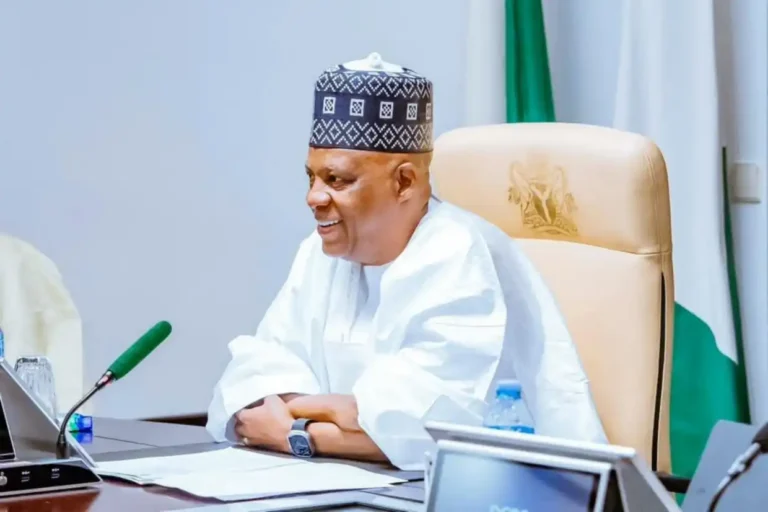
The projection followed a high-level meeting chaired by Vice President Kashim Shettima at the Presidential Villa, Abuja. Briefing journalists after the meeting, Minister of Information and National Orientation Mohammed Idris said recent progress in MSMEs shows that reforms are beginning to deliver results.

He described the developments as “clear evidence that broad-based economic reforms are gaining traction.”

According to Idris, the meeting brought together government officials, development partners and business stakeholders to review ongoing programmes and improve coordination among agencies focused on economic growth. He commended the Office of the Special Adviser on MSMEs for what he called its “renewed coordination and visible enthusiasm among participants.”

The minister revealed that the MSME sector created about 250,000 jobs last year. He said maintaining the current pace could result in another 300,000 jobs in 2026, helping to address employment challenges while promoting financial inclusion and wider economic participation.

Idris also pointed to increasing international recognition of Nigeria’s reforms. He said engagements with global lenders and improved credit ratings reflect growing investor confidence. He added that Nigeria’s stronger presence at African business forums demonstrates its commitment to sustainable growth across the continent.

Special Adviser to the President on MSMEs, Tola Adekunle-Johnson, said President Bola Tinubu has directed federal agencies to align under a unified framework to speed up job creation and make small-business loans more accessible.

He disclosed that agencies such as the Industrial Training Fund (ITF), Small and Medium Enterprises Development Agency of Nigeria (SMEDAN), Nigerian Export Promotion Council (NEPC) and Nigerian Investment Promotion Commission (NIPC) are now working “as a single team” to deliver better outcomes.

Adekunle-Johnson said the coordinated approach is expected to lower MSME loan rates, expand access to new markets and simplify support systems for entrepreneurs. He noted that state partnerships last year introduced de-risking funds offering loans at 9 to 10 per cent interest rates.

He added that the Vice President has directed SMEDAN to deepen its engagement with state governments to expand funding access, while NEPC has been tasked with widening export opportunities for small businesses.

SMEDAN Director-General Charles Odii stressed the importance of collaboration across sectors, stating that “job creation cannot be achieved in isolation.” He said the agency is strengthening government–private sector partnerships and recently held strategy sessions with the National Assembly ahead of updates to MSME policies.

Odii disclosed that Nigeria has about 39.6 million nano, micro, small and medium enterprises. He said a new census is underway to improve data accuracy and guide planning.

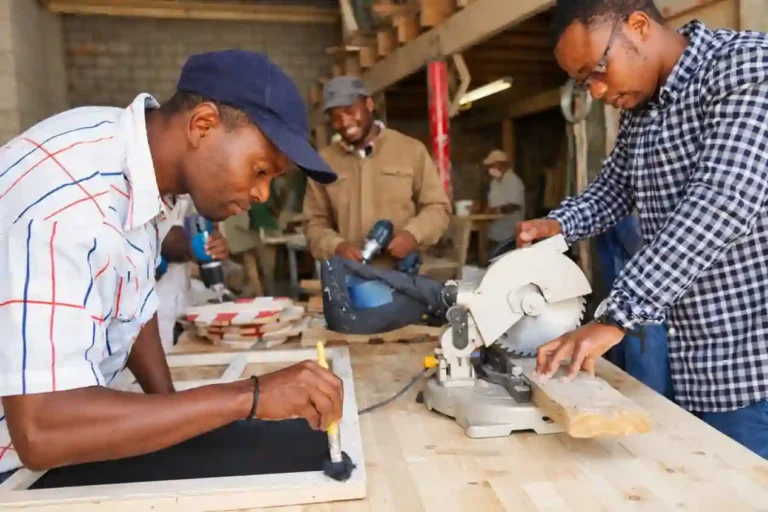
Looking ahead to 2026, he announced that SMEDAN will roll out ITF-backed support for textile and fashion professionals, equipping selected designers and tailors with N5 million business setups each.

He also revealed plans to commission West Africa’s first meta and digital fabrication centre in Lagos in April, with similar centres to be established nationwide. According to him, the hubs will leverage local strengths such as timber in Edo and Ondo, ceramics in mineral-rich areas and leather in Kano, using digital tools to improve productivity and competitiveness.

Odii said the programmes align with the government’s private sector-led growth agenda and noted that beneficiaries will be required to mentor others to expand job creation and business growth within their communities.

MSMEs Lose N5–N10 Trillion Yearly to Employee Fraud – CPPE

0

Nigeria’s Micro, Small and Medium Enterprises (MSMEs) may be losing between N5 trillion and N10 trillion every year to employee corruption and occupational fraud, according to the Centre for The Promotion of Private Enterprise (CPPE).

The claim was made in a statement issued on Sunday by the Director General of CPPE, Dr Muda Yusuf. The organisation said the losses are happening at a time when businesses are already battling inflation, weak purchasing power, high operating costs, infrastructure deficits and constrained access to finance.

CPPE described the estimated losses as a major but often ignored burden on entrepreneurs. It stated that the amount represents “a massive hidden tax on entrepreneurs in the MSME space, eroding profits, weakening investment capacity, and constraining job creation.”

The centre said small manufacturing and processing businesses, agribusiness and produce trading, hospitality, food services and entertainment, retail and wholesale trade are among the worst affected. According to CPPE, these sectors are more exposed because of high daily cash turnover, weak reconciliation systems, stock diversion and informal procurement chains.

The organisation explained that occupational fraud remains a “corrosive threat” to MSMEs and occurs in different forms. These include theft of cash and inventory, diversion of sales proceeds, payroll manipulation, procurement kickbacks, customer diversion, collusion with suppliers or clients, expense reimbursement abuse and falsification of financial records.

Citing global occupational fraud studies, CPPE noted that organisations typically lose between five and 10 percent of their annual revenue to employee-related fraud. It added that small businesses suffer even higher losses due to weaker internal control systems, heavy reliance on cash transactions, limited audit capacity, lower detection and recovery rates and a high level of informality.

The centre warned that although such acts are often treated as internal management issues, their wider economic impact is significant. It said these losses can completely wipe out profits, deplete working capital and even lead to business closure, especially as many Nigerian businesses operate on thin margins, often below 15 percent of turnover.

“This dynamic contributes to the high mortality rate of small businesses, where studies suggest up to 80 percent fail within five years and over half fail within the first year, with employee fraud being a significant contributory factor,” the statement said.

“Because many MSMEs are labour-intensive, corruption-induced contraction rapidly translates into job losses, declining household incomes, rising informality and deeper poverty,” it added.

CPPE stressed that occupational fraud should not be treated as a mere governance issue but as a national welfare concern.

1.5 million register for 2026 UTME as JAMB insists on Feb 26 deadline

0

With the February 26 deadline for the 2026 Unified Tertiary Matriculation Examination (UTME) sale of e-PIN fast approaching, the Joint Admissions and Matriculation Board (JAMB) has announced that more than 1.5 million candidates have successfully completed their registration.

The Board made it clear that the deadline will not be extended. It expressed concern that although it has the capacity to register up to 100,000 candidates daily, accredited centres across the country are currently operating at only about 30 per cent of that capacity.

In a statement issued on Wednesday by the Public Communication Advisor of the examination body, Dr Fabian Benjamin, candidates were advised to secure their e-PINs before the vending deadline and promptly visit accredited centres to finalise their registration.

The statement explained that the sale of e-PINs, which enables a candidate to proceed to a Centre for registration, will end at 12:00 midnight on Thursday, 26th February, 2026. However, actual registration at accredited centres for candidates who have already obtained their PIN will close on 28th February, 2026.

“The Board wishes to clearly state that there will be no extension of the registration deadline. JAMB operates within a nationally coordinated examination calendar agreed upon by all examination bodies in Nigeria.

“The Board’s registration window is strategically scheduled to allow other examination bodies to conduct their own exercises immediately afterward. Consequently, there is no available window for any extension, even if the Board were inclined to consider one.

“Candidates are therefore strongly advised to obtain their e-PINs before the vending deadline and proceed immediately to accredited centres to complete their registration. Waiting until the last few days may result in avoidable challenges, and the Board will not entertain any appeals for extension after the deadline,” the statement read.

The JAMB spokesperson added that the Board is acting proactively to ensure that no candidate who genuinely intends to sit for the 2026 UTME is excluded due to procrastination or inaction.

The Guardian reports that this year’s UTME is scheduled to hold from April 16 to 25.

Tinubu Launches Free JAMB Registration for 50,000 Southeast Students

0

President Bola Tinubu, through his Renewed Hope Agenda, on Tuesday launched a free JAMB registration initiative for 50,000 students in the Southeast region.

Under the programme, 10,000 prospective JAMB candidates from each state in the region will benefit. Each student will receive ₦8,500 to cover registration for the 2027 JAMB examination.

The exercise was launched in Enugu by the National Coordinator of the Southeast Renewed Hope Agenda (SERHA), Belusochukwu Enwerem. He described the initiative as part of Tinubu’s commitment to ensuring quality education and youth empowerment in the region.

“Today is not just a ceremony. Today is a movement—a movement of hope, empowerment, and a declaration that the future of Enugu State will not be limited by financial barriers,” Enwerem said.

He noted that education remains the strongest pillar of sustainable development and described the initiative as a strategic investment in 10,000 future doctors, engineers, lawyers, teachers, entrepreneurs, innovators, and leaders.

“This programme is not charity; it is strategic empowerment. It aligns with the Renewed Hope vision of youth inclusion, educational access, and human capital development.

When we educate our youths, we secure our economy. When we empower our students, we strengthen our nation,” he added.

Enwerem urged beneficiaries to approach the opportunity with discipline, determination, and excellence, and to prepare seriously for their examinations.

Addressing parents and guardians, he said the initiative is designed to ease their financial burden and ensure that “your children’s future matters.”

Douye Diri Skills acquisition programme phase 4 recruitment schedule 2026

0

The recruitment process for the Douye Diri Skills Acquisition and Empowerment Programme Phase 4 is set to commence. In a bid to ensure a seamless and transparent exercise, the programme will be rolled out across all eight Local Government Areas (LGAs) according to the schedule below.

The process will be conducted at the respective LGA headquarters, with the full involvement of the Youth Presidents and CDC Chairmen from each LGA to ensure community participation and proper oversight.

Mrs. Charity Kens Godwin, Technical Adviser to the Governor on Entrepreneurship Development and Director General of the Douye Diri Skills Acquisition and Empowerment Programme, stated that the recruitment will be coordinated to ensure fairness and equal access for eligible applicants across the state.

Recruitment Schedule

S/N | Local Government Area | Date (March 2026) | Venue & Notes

  1. Yenagoa LGA – Monday, 2nd March
    To be held at the LGA Headquarters, in collaboration with the Youth Presidents and CDC Chairmen of each community.
  2. Kolokuma/Opokuma (KOLGA) LGA – Tuesday, 3rd March
    To be held at the LGA Headquarters, in collaboration with the Youth Presidents and CDC Chairmen.
  3. Sagbama LGA – Wednesday, 4th March
    To be held at the LGA Headquarters, in collaboration with the Youth Presidents and CDC Chairmen.
  4. Brass LGA – Thursday, 5th March
    To be held at the LGA Headquarters, in collaboration with the Youth Presidents and CDC Chairmen.
  5. Southern Ijaw LGA – Monday, 9th March
    To be held at the LGA Headquarters, in collaboration with the Youth Presidents and CDC Chairmen.
  6. Ekeremor LGA – Tuesday, 10th March
    To be held at the LGA Headquarters, in collaboration with the Youth Presidents and CDC Chairmen.
  7. Ogbia LGA – Wednesday, 11th March
    To be held at the LGA Headquarters, in collaboration with the Youth Presidents and CDC Chairmen.
  8. Nembe LGA – Thursday, 12th March
    To be held at the LGA Headquarters, in collaboration with the Youth Presidents and CDC Chairmen.

All CDC Chairmen and Youth Presidents of the various communities are kindly requested to lend their full support and collaboration to the programme’s implementation team. Their partnership is vital to ensuring the proper and fair distribution of registration forms to eligible persons in rural areas.

Skills to Be Acquired
Douye Diri Skills Acquisition and Empowerment Programme (Phase 4)

  1. Mastering AI Tools
  2. Web Design
  3. App Development
  4. Animation
  5. Video and Photo Editing
  6. Graphic Design
  7. Content Creation
  8. Digital Marketing
  9. Dropshipping
  10. Phone Repair
  11. Catering, Pastries, and Food Processing
  12. Fashion Design
  13. Paint Production and Application
  14. Acrylic Nail Fixing, Eyelash Extension, and Contact Lens Application
  15. Makeup and Gele Tying
  16. Shoe Production
  17. Solar and Electrical Works
  18. Barbing
  19. Cosmetology
  20. Soap and Detergent Production
  21. Fish Farming
  22. Snail Farming
  23. Generator and Plant Repairs
  24. Welding

Individuals who have previously benefited from this scheme with starter packs are not eligible to participate in the Phase 4 recruitment. Defaulters will face legal consequences, including arrest and prosecution.

Senator Douye Diri, Governor of Bayelsa State, has demonstrated his commitment to ensuring that all Bayelsans are equipped with the necessary skills for economic empowerment and self-sufficiency.