Home Blog Page 330

NJFP 2.0 reverses rejection email, application still under review

0

Nigeria Jubilee Fellows Programme (NJFP) 2.0 has started sending new emails to applicants withdrawing earlier messages that said their applications were not successful. The management of NJFP explained that the previous emails were sent due to a temporary verification issue.

The new withdrawal email reads, “Dear candidate,

We hope this message finds you well.

We recently sent you an email stating that your NJFP application was not successful. Please disregard that message, as it was sent due to a temporary verification issue.

Your application is still under consideration.

Thank you for your understanding and for your continued interest in the Nigeria Jubilee Fellows Programme (NJFP).”

Earlier, NJFP had sent rejection emails to some applicants, explaining that their applications were not successful because they graduated before 2022.

The earlier message stated, “Hello candidate,

After careful review, we regret to inform you that your NJFP application was not successful.

The following reasons contributed to this outcome:

You graduated before 2022

Thank you for your interest in the programme.

We wish you the best in your future endeavours.”

Nigeriastartupact commends NJFP’s withdrawal of the rejection emails as a necessary correction. The age requirement stated that applicants must not exceed 30 years old, so using a 2022 graduation limit in 2025 was not reasonable.

Below is screenshot of the new withdrawal email:

Advertisement

Minister pledges federal support for Egyptian feed production partnership

The Minister of Livestock Development, Idi Mukhtar Maiha, has pledged the Federal Government’s full support to a consortium of Egyptian investors planning to establish feed and pasture production centres across Nigeria. He described feed as the country’s “biggest gap and greatest opportunity” in livestock transformation.

The Minister made this known on Wednesday, 5th November 2025, in Abuja during a courtesy visit to his office by representatives of Nutrivet Misr LLC of Egypt, led by its Chairman, Alaa Ibrahim Mahmoud, and K.K. Kingdom Limited, led by its President and CEO, Alhaji Khalifa Naziru Abdullahi. The delegation presented a proposal for collaborative feed development and livestock nutrition initiatives aimed at improving animal productivity and supporting sustainable agriculture in Nigeria.

Maiha commended the partnership as timely, noting that inadequate feed and poor animal nutrition have long been major challenges to livestock productivity. He said, “Feed is the solution to unlocking the full potential of our local breeds.” The Minister explained that better feeding and proper animal health management could raise milk yield from one or two litres to as much as eight litres per day, which would significantly boost the dairy industry and rural income.

Reaffirming the government’s commitment, Maiha assured the investors of a conducive policy environment and full collaboration with state governments. He also mentioned that the Ministry would work with the consortium to establish demonstration and milk collection centres across the country.

He further highlighted the importance of extension services, genetic conservation, and the inclusion of creep feed and small ruminant feed formulas in their production line to meet the diverse needs of Nigeria’s livestock farmers.

“We will work with you all the way,” Maiha said. “Nigeria is Africa’s largest livestock market, and we must use this opportunity to strengthen our feed base, enhance productivity, and generate employment.”

The visiting team expressed confidence that their successful model in Egypt would contribute to livestock growth in Nigeria and praised the Minister’s leadership, reaffirming their commitment to sustainable agricultural partnerships.

Nigeria, Germany partner to train one million youths in technical skills

0

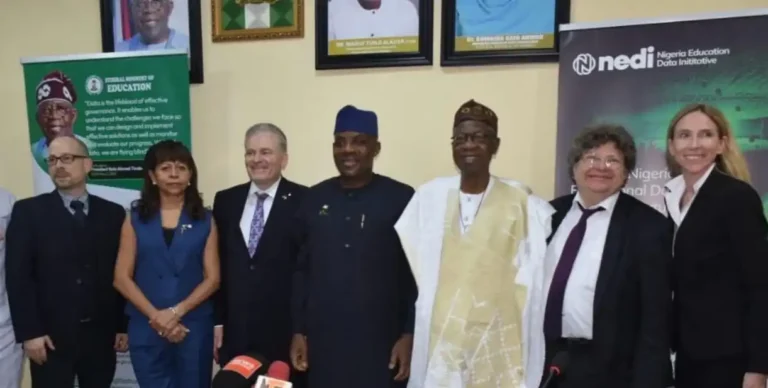
Nigeria’s Minister of Education, Dr. Tunji Alausa, has said that the Federal Government is deliberately developing a new generation of skilled young Nigerians to address the country’s workforce challenges and meet international demands.

Dr. Alausa stated that the export of Nigerian skills is not an act of brain drain but a strategic effort to promote the nation’s talent and improve its global competitiveness. Speaking during a meeting with a delegation from the Giessen-Friedberg Chamber of Commerce in Germany, led by Chief Executive Officer Dr. Matthias Leder, the Minister emphasized that Nigeria’s partnership with Germany aims to bridge the global manpower gap through Technical and Vocational Education and Training (TVET).

He explained that the Ministry of Education will collaborate with the Giessen-Friedberg Chamber of Commerce to create pathways for Nigerian TVET graduates to work in Germany. According to him, this move will allow the country to benefit economically from its skilled workforce while also contributing to global industrial development.

“We will now work to set up a technical working group to begin to draft the MoU with you and we will feed these students in our technical school to the pathway,” Alausa said. “We will do it in such a way that you will also come in for the assessment of these students while they are in school and even the ones we have trained. The ones that your chamber deems fit to travel, we will follow through the processes that we will put in place up to getting training visas from the German embassy.”

Dr. Alausa revealed that the first cohort of 250,000 participants under the government’s Technical and Vocational Education and Training programme has begun training. The Federal Government, he said, is targeting one million young Nigerians in the ongoing skills development plan.

He also disclosed that the Dual Mandate Training programme has been implemented across all federal technical colleges. “When we met last year November, we learnt from what you said about this Dual Mandate Training and I am happy to report to you that we have implemented that in all our technical colleges. The Federal Government has announced that going to our technical colleges is going to be free. We are paying everything so it’s free, and we have seen the surge of enrolment in our technical colleges has gone up by 400%, and we are going to continue this and increase more enrolment,” he said.

The Minister added that the government has secured funding from the World Bank to build and equip workshops in all federal technical colleges, as well as some state-owned institutions, to ensure that students gain practical skills that align with international standards. He noted that this funding will help Nigeria modernize its vocational training infrastructure and create employment opportunities for young people.

Dr. Alausa commended the Giessen-Friedberg Chamber of Commerce for its continuous support in promoting Dual Vocational Training in Nigeria. He mentioned that the Chamber has worked in partnership with the Nigerian Association of Chambers of Commerce, Industry, Mines and Agriculture, as well as other regional chambers, to strengthen skills acquisition programmes in the country.

He emphasized that the Federal Government is determined to take full ownership of the Dual Vocational Training model to ensure its sustainability. According to him, the initiative will not only boost industrial development but also position Nigerian youths for better job opportunities within and outside the country.

Dr. Matthias Leder, in his remarks, highlighted that between 2012 and 2018, the Giessen-Friedberg Chamber of Commerce and Industry supported over 600 trainers and trainees in Nigeria through vocational training programs. These initiatives were carried out in partnership with the Abuja Chamber of Commerce and Industry (ACCI), Lagos Chamber of Commerce and Industry (LCCI), Ogun State Council of Chambers of Commerce Industry, Mines and Agriculture (OCUNCCIMA), the Manufacturers Association of Nigeria (MAN), and the Nigerian-German Business Association (NGBA).

Leder noted that the Dual Vocational Training system offers an effective solution to Nigeria’s skills shortage and promotes industrial growth. He announced that 18 Nigerians have been selected through a rigorous process to begin learning the German language before starting a three-year vocational training program in Germany.

“There are a lot of Nigerians willing to pay thousands of dollars to migrate illegally, but it’s much cheaper to migrate legally,” he said, adding that legal labour migration creates safer and more sustainable opportunities for young people seeking better prospects abroad.

He also praised former Minister of Information and Culture, Alhaji Lai Mohammed, who now serves as the Managing Partner of Bruit Costaud, for supporting the chamber in strengthening its collaboration with Nigeria.

Other members of the German delegation included Marina França Leder, wife of the CEO; Tim Müller, Deputy Director, Foreign Trade; Norbert Noisser, Senior Advisor Africa/China; and Dr. Kristen Albrecht, Head of Competence Centre Africa.

Katsina State PHC releases shortlisted candidates, exam date and venue

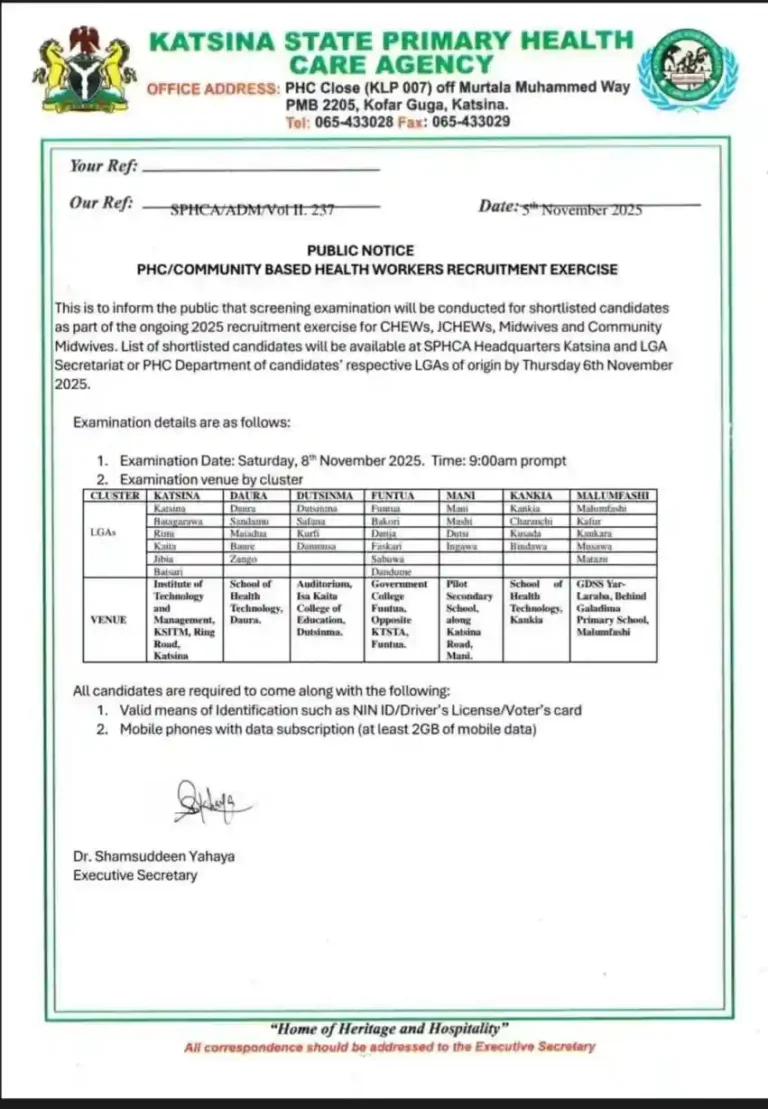
The Katsina State Primary Health Care Agency has announced the schedule for the screening examination of shortlisted candidates for the 2025 recruitment exercise for Community Health Extension Workers (CHEWs), Junior Community Health Extension Workers (JCHEWs), Midwives, and Community Midwives.

In a public notice dated November 5, 2025, the agency stated that the list of shortlisted candidates would be available at the SPHCA Headquarters in Katsina, as well as at the LGA Secretariat or PHC Department of candidates’ respective local government areas of origin by Thursday, November 6, 2025.

According to the notice, the examination will be held on Saturday, November 8, 2025, beginning at 9:00 a.m. The screening exercise is part of the state government’s effort to improve healthcare delivery and employment opportunities in the health sector.

The examination venues have been grouped by clusters. Candidates from Katsina, Batagarawa, Rimi, Kaita, Jibia, and Batsari LGAs will write at the Institute of Technology and Management, KSITM, Ring Road, Katsina. Those from Daura, Sandamu, Maiadua, Baure, and Zango LGAs will write at the School of Health Technology, Daura. Candidates from Dutsinma, Safana, Kurfi, Dandume, Danmusa, and Danja LGAs are to report at the Auditorium, Isa Kaita College of Education, Dutsinma.

In the Funtua cluster, which includes Funtua, Bakori, Danja, Faskari, and Sabuwa LGAs, the venue is Government College Funtua, opposite KTSTA. For candidates in the Mani cluster, which includes Mani, Mashi, Dutsi, Ingawa, and Dandume LGAs, the examination will take place at Pilot Secondary School, along Katsina Road, Mani. Those from the Kankia cluster, including Kankia, Charanchi, Kusada, and Bindawa LGAs, are to write at the School of Health Technology, Kankia. Candidates from Malumfashi, Kafur, Kankara, Musawa, and Matazu LGAs will take the exam at GDS Yar-Laraba, behind Galadima Primary School, Malumfashi.

The Executive Secretary, Dr. Shamsuddeen Yahaya, advised all candidates to come with a valid means of identification such as a NIN ID, Driver’s License, or Voter’s Card. He added that candidates should also come with mobile phones that have at least 2GB of data subscription.

One Acre Fund to empower four million farmers by 2030

0

A nonprofit organisation focused on food sustainability, One Acre Fund, has announced plans to empower four million farmers across Nigeria to boost food production and promote agricultural development. The organisation said this initiative aligns with its goal to support farmers with improved access to seeds, fertilizer, and training to ensure sustainable food security.

Speaking during the Kwara Harvest Day agenda held in Share, Ifelodun Local Government Area of Kwara State, the Lead, Impact Innovation of the Fund, Dr. Adefunke Adewole, said the organisation has concluded arrangements to reach more farmers nationwide. She also revealed that One Acre Fund will collaborate with Seedco to distribute about three million free seedlings to farmers across the country by the year 2030.

Dr. Adewole stated that “this year alone, we have distributed about 250,000 free seedlings to farmers in the states we cover.” The event, which was organised to celebrate farmers’ achievements for the outgoing year, also featured awards for high-performing farmers as part of efforts to encourage greater productivity in the coming year.

According to her, “Next year, we are going to scale up to 500,000 seedlings.” She added, “We are spreading also. At the moment, we are spreading to Plateau and Bauchi States. We are already in Nasarawa State. Our big vision is to cover the whole of Nigeria. We intend to serve three million farmers in the next four years, and that is what we are working towards.”

She further disclosed that “this year together we have served 75,000 farmers with our credit programme in Niger, Kwara, and Nasarawa States.” Explaining the process, she said, “Farmers enroll for our credit programme by taking a bundle. The bundle comprises maize, fertilizer, seeds, and herbicides, and it varies from quarter, half, and full hectare.”

Dr. Adewole noted that the organisation has maintained a strong partnership with Seedco, adding, “Our programme in Nigeria started in 2018. Kwara is one of the states we have expanded to. We started with the expansion last year. We are trying to see how we can support farmers so that they can improve their productivity through increment in their yields.”

She also appreciated the support of state governments where the programme operates. “We have enjoyed good working relationships with state governments. They have been supportive of our programme. We covet for more of that,” she said.

On challenges, Dr. Adewole pointed out that insecurity has affected the organisation’s expansion efforts. “The issue of banditry has been a major challenge. It prevents our programme from scaling to some places. We take security very seriously, so we always watch out to see areas where we can operate safely before we move to any area,” she added.

ACF to raise N100bn endowment fund for Northern development

0

The Arewa Consultative Forum (ACF) has announced plans to establish a N100 billion endowment fund to address major development challenges in Northern Nigeria, focusing on education, healthcare, and economic empowerment.

The announcement was made by the Secretary-General of the Forum, Alhaji Murtala Aliyu, during a courtesy visit to the Media Trust Group headquarters in Abuja as part of activities marking the Forum’s 25th anniversary.

Aliyu said the initiative reflects the Forum’s commitment to move from advocacy to direct intervention, especially in underserved communities across the region. “We are not just asking you to publicise it, but we are also asking you to participate in it,” he said, calling on stakeholders and development partners to support the fund.

He explained that the ACF, which has for years relied on member contributions and policy advocacy, now intends to embark on tangible projects that can serve as practical models for sustainable development in Northern Nigeria. “After 25 years, beyond talk, we should be partnering with communities, if it becomes necessary with governments, to carry out some projects that will now be examples for others to follow,” he stated.

According to Aliyu, the initial target for the fund was N10 billion, but stakeholders recommended a higher figure to match the scale of challenges in the region. “Initially, our thinking was N10bn. But then the moneybags looked at us and said, look, this will not look serious. So, they raised it to N100bn,” he revealed.

He noted that the Forum is currently developing a management structure for the fund and identifying priority sectors for investment, with universities expected to play a key role in launching the fundraising campaign.

Also speaking, the Chairman of the ACF Board of Trustees, Bashir Dalhatu, Wazirin Dutse, expressed worry over the growing number of out-of-school children and the continued existence of the almajiranci system. He noted that empowering communities through cottage industries could help reduce poverty and strengthen local economies. “We are in a very dire condition. Security, unemployment, poverty, lack of good leadership, and how we select our leaders. These are going to be part of the things that we want to discuss,” Dalhatu said.

Group Chief Executive Officer of Media Trust, Ahmed Shekarau, commended the Forum’s renewed development focus and assured the company’s support for the 25th anniversary celebration and related projects.

The ACF’s 25th anniversary will be held from November 21 to 23 in Kaduna, attracting leaders, experts, and development partners to strategize on rebuilding and securing the future of Northern Nigeria. “Beyond marking a milestone, the anniversary will serve as a rallying point for action to rebuild communities, empower citizens, and secure the future of Northern Nigeria,” the Forum said.

Signature Bank opens new Kano branch to support smes, traders

0

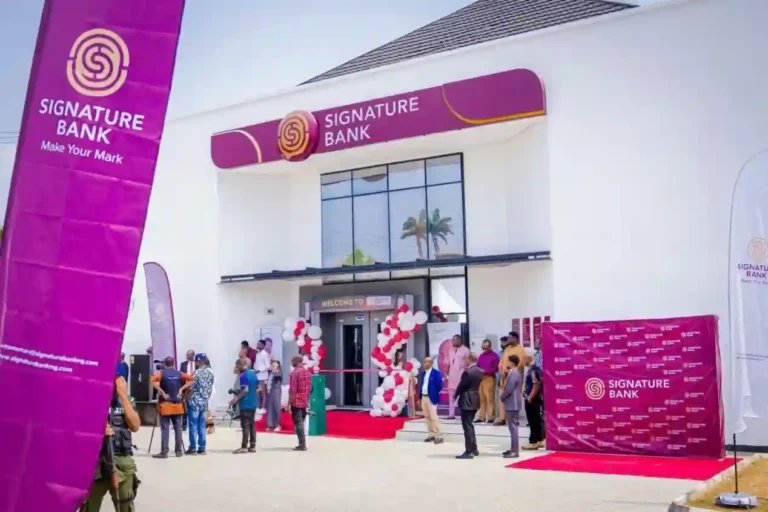
Signature Bank, one of Nigeria’s emerging financial institutions, has expanded its operations in Northern Nigeria with the opening of a new branch in Kano. The bank pledged to support Small and Medium-Scale Enterprises (SMEs), traders, and other vital sectors contributing to the region’s economic growth.

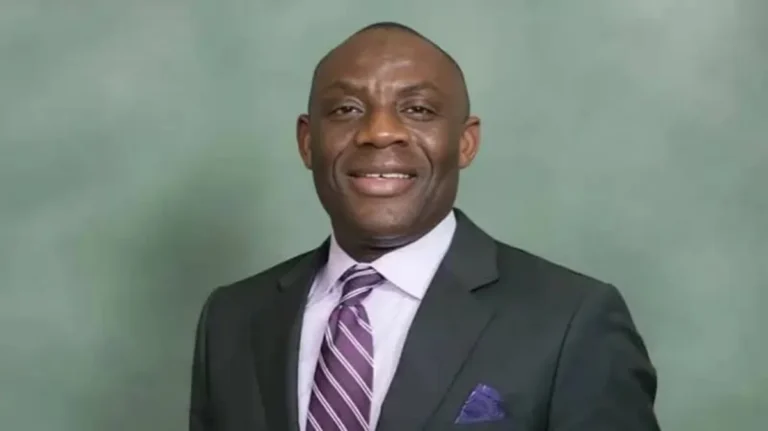
Speaking during the branch inauguration on Tuesday, the Managing Director of Signature Bank, Mr. Nixon Iwedi, said the new outlet represents a strategic step to boost economic activities in Kano and across the North through innovative and inclusive banking solutions.

Iwedi explained that the bank would focus on providing secure, reliable, and technology-driven financial services designed to meet the needs of local businesses, farmers, and professionals. “We are committed to serving the people of Kano by providing modern financial services that will enhance trade, agriculture, and entrepreneurship. Our goal is to be a catalyst for business growth and economic empowerment in Northern Nigeria,” he said.

The Chairman of Signature Bank, Alhaji Tijjani M. Borodo, said the expansion aligns with the bank’s mission to promote financial inclusion and broaden access to credit facilities for SMEs. He commended the Kano State Government for maintaining an investor-friendly environment that continues to attract corporate investments into the state.

Governor Abba Kabir Yusuf of Kano State described the bank’s entry as a major endorsement of Kano’s economic potential and a boost to its investment profile. He assured investors of his administration’s continued support to improve the ease of doing business, enhance security, and implement policies that promote sustainable economic development.

Governor Yusuf also called on financial institutions to support small businesses through accessible and low-interest credit facilities.

Ondo seals $50bn deal for refinery and free trade zone development

0

Governor Lucky Aiyedatiwa of Ondo State has formalised a $50 billion deal for the development of a 500,000-barrels-per-day refinery and a 1,471-hectare Sunshine Free Trade Zone in Ilaje Local Government Area of the state.

The deal involves international partners, including Backbone Infrastructure, MJ Care Investment Finance, China Harbour, and Honeywell OUP, operating under the Sunshine Infrastructure Joint Venture (JV). The initiative aims to position Ondo State as a major industrial hub in Nigeria, creating jobs and attracting more global investors.

The funding followed the signing of a Memorandum of Understanding (MoU) between the Joint Venture and the state government through the Ondo State Investment Promotion Agency (ONDIPA). The collaboration is seen as a major step toward boosting industrialisation and long-term economic development in the region.

Receiving the investors at the governor’s office in Akure, Governor Aiyedatiwa described the agreement as a strategic investment that would strengthen the state’s economic base. He said, “This investment marks a new dawn for Ondo State. It will fast-track industrial development, attract more investors and create jobs for our people.”

The governor assured the investors of his administration’s commitment to transparency, a conducive business environment, and full protection of their investments. He explained that his government had introduced policies to promote ease of doing business in Ondo State and ensure that both local and foreign investors enjoy sustainable growth.

Aiyedatiwa added that the project would stimulate productivity across multiple sectors and enhance the state’s Gross Domestic Product (GDP), promoting inclusive growth. He described the project as part of the broader plan to expand infrastructure, drive industrialisation, and secure the state’s economic future.

Managing Director of Sunshine Infrastructure JV, Mr. Henry Owonka, said the initiative had evolved from conception to execution through continuous collaboration with ONDIPA. He revealed that the project’s initial $30 billion valuation was reviewed upward to $50 billion after expanding its scope to include infrastructure and community-oriented programmes.

“The Sunshine JV is not just an investment; it’s a development framework that will transform industries, strengthen communities and improve livelihoods,” Owonka stated. He said the refinery would produce petroleum products for both local and international markets, adding that its corporate social responsibility (CSR) plan would focus on education, employment, and infrastructure development in host communities.

Owonka also revealed that the consortium would implement social programmes centered on healthcare, youth empowerment, and skill acquisition to ensure inclusive and sustainable growth in the state.

A representative of one of the consortium partners, A. Clement, disclosed that preparations for the project had begun before their arrival in Ondo State. He stated that beyond the refinery and the Sunshine Free Trade Zone, the partnership would also drive industrial, agricultural, aviation, and healthcare development.

According to him, the goal of the investors is not only to reciprocate the state government’s support but to contribute meaningfully to the overall transformation of Ondo State. He added that the consortium’s partners, who had earlier visited the project sites, were impressed and ready to begin work.

The consortium’s Chairman and former Senate President, Ken Nnamani, who had previously met with Governor Aiyedatiwa, was praised for his leadership role in the project. Stakeholders described the Sunshine Infrastructure initiative as a credible model of public-private partnership that could serve as a benchmark for other Nigerian states.

Present at the event were the Deputy Governor, Dr. Olajide Adelami; Secretary to the State Government, Dr. Taiwo Fasoranti; Chief of Staff, Prince Segun Omojuwa; Head of Service, Dr. Bayo Philip; Commissioner for Infrastructure, Lands and Housing, Engr. Ayorinde Olawoye; and Commissioner for Physical Planning, Hon. Sunday Olajide.

Others in attendance included the Commissioner for Information and Orientation, Idowu Ajanaku; Director-General of Ondo State Radiovision Corporation (OSRC), Mr. Kenneth Odusola-Stevenson; Administrative Secretary of ONDIPA, Mr. Omomowo Emmanuel; and Director of Business Development, Mr. Femi Akarakiri.

FG re-enrols over one million out-of-school children nationwide

The Federal Government has re-enrolled more than one million out-of-school children across Nigeria as part of its renewed national effort to strengthen foundational learning and expand access to quality education. This was disclosed by the Minister of Education, Dr. Tunji Alausa, during his visit to the Ondo State Governor, Hon. Lucky Aiyedatiwa, in Akure on Wednesday ahead of the 69th National Council on Education (NCE) meeting.

Alausa, who unveiled wide-ranging reforms targeting teacher development, digital learning, and data-driven policy implementation, said the administration of President Bola Tinubu is determined to transform Nigeria’s education sector through technology and innovation. He noted that the new policies aim to ensure inclusiveness, improve learning outcomes, and build a sustainable future for Nigerian students.

In his presentation, the Minister of Education highlighted major reforms being implemented under the Tinubu-led government, including the Teacher Registration and Licensing System (TRLS) through the Teachers Registration Council of Nigeria (TRCN), and the establishment of the National Teachers’ Resource Centre (NTRC) for nationwide teacher training.

He explained that teacher development programmes have now been moved online, allowing educators across the country to access training remotely and earn financial incentives upon completion. According to him, the initiative is designed to motivate teachers and bridge the learning gap between rural and urban areas.

Alausa said, “We have moved teacher development online, where teachers anywhere in the country can access training, take short breaks, and after passing, they will be paid for completing their development programmes. In rural areas, where teachers earn less, such incentives of ₦10,000 to ₦15,000 make a real difference.”

He added that teachers would also enjoy free data access under the programme, while digital payment systems would ensure smooth implementation. He said the government’s focus on digital learning would enhance transparency, efficiency, and participation across all levels of the education system.

The minister also announced the launch of the Digitised National Education Management Information System (DNEMIS), a cloud-based platform designed to improve real-time data collection and promote evidence-based decision-making.

“For the first time in Nigeria’s history, school census data is now cloud-based. From 2026, every school, even in rural areas, will upload data directly using mobile devices. We can now make informed, evidence-based interventions and monitor outcomes,” he said.

Speaking further on efforts to address the growing out-of-school children crisis, Alausa revealed that over one million children had already been identified and brought back into classrooms through targeted interventions.

“Contrary to popular belief, 95 per cent of out-of-school children are out because of poverty, not insecurity. President Tinubu has approved significant funding to bring them back and ensure retention through school feeding and welfare programmes,” he stated.

He disclosed that a school feeding programme targeting 300,000 pupils is currently being piloted in six states, with plans for nationwide expansion. The initiative, he said, would boost attendance and retention rates, particularly in underserved communities.

Alausa encouraged Ondo State to consider establishing an Education Trust Fund similar to the model adopted in Bauchi State, which he described as an effective tool for supporting foundational education and promoting sustainable development.

“I’ll be happy if Ondo State quickly adopts the education trust fund model. It’s a strategy that can directly support foundational schools and strengthen the state’s industrialisation agenda,” he advised.

The minister commended Ondo State for its proactive approach to educational development and restated the Federal Government’s commitment to supporting states in teacher training, basic education, and digital transformation. He said the collaboration between federal and state governments would ensure that education remains the cornerstone of national development.

Governor Lucky Aiyedatiwa, in his response, reaffirmed his administration’s commitment to sustaining education reforms and aligning with Federal Government initiatives. He described education as the foundation of human capital development and national progress, adding that Ondo State remains dedicated to improving access and quality in the sector.

He expressed appreciation to the Federal Government for choosing Ondo State as the host for the 69th National Council on Education meeting, saying the decision reflected confidence in the state’s commitment to promoting learning and innovation.

Aiyedatiwa said, “Thank you for the energy and disposition towards Ondo State. You chose us, and we accepted to host you because education remains a shared responsibility between all levels of government.”

He commended the Ministry of Education for its strengthened focus on teacher training, licensing, and digital learning, stressing that such reforms complement ongoing state-led initiatives aimed at building a knowledge-driven economy. The governor also lauded President Bola Tinubu for prioritising education under the Renewed Hope Agenda, assuring that Ondo State would continue to align its policies with national objectives.

“Education remains the cornerstone of development. What we have achieved so far in Ondo is through the commitment of stakeholders and our shared vision to build a productive and knowledge-driven state,” he added.

Aiyedatiwa further acknowledged the efforts of education administrators and civil servants in ensuring policy continuity, describing them as the “institutional memory” that preserves progress beyond political transitions. He also praised the Vice-Chancellor of the Federal University of Technology, Akure, Prof. Adenike Oladiji, for her continued support for innovation and scientific advancement within the state’s education ecosystem.

The event was attended by key government officials including the Deputy Governor, Dr. Olayide Adelami; Secretary to the State Government, Dr. Taiwo Fasoranti; Chief of Staff, Prince Segun Omojuwa; Head of Service, Mr. Bayo Philip; Commissioner for Education, Science and Technology, Prof. Igbekele Ajibefun; Chairman of the State Universal Basic Education Board, Mr. Victor Olabimtan; and Director General of OSRC media group, Mr. Kenneth Odusola-Stevenson.

FG to train one million teachers By 2027 – Minister Alausa

0

The Minister of Education, Dr Tunji Alausa, has announced that the Federal Government is working with key ministries and agencies to improve the quality of education in Nigeria, with special focus on the girl-child and teacher development.

Dr Alausa made this known during a courtesy visit to Governor Lucky Aiyedatiwa in Akure, the Ondo State capital. He revealed that one million teachers would be trained between now and 2027 under the National Educational Management System, in partnership with the Universal Basic Education Commission (UBEC).

According to the minister, “President Bola Tinubu has approved substantial funds to support the training of out-of-school children, many of whom dropped out due to poverty.” He added that about one million children have already been identified for the programme, while 300,000 pupils are targeted under the school feeding initiative, which has been redesigned for greater efficiency and transparency.

Governor Aiyedatiwa, in his response, praised the minister and his team for their commitment to transforming Nigeria’s education sector. He noted that his administration is using information and communication technology (ICT) as a major driver to reposition education in Ondo State.

Dignitaries present at the meeting included the Deputy Governor, Dr Olayide Adelami, Secretary to the State Government, Dr Taiwo Fasoranti, Commissioner for Education, Prof Igbekele Ajibefun, and the Vice Chancellor of the Federal University of Technology, Akure, Professor Adenike Oladiji.