Home Blog Page 337

FG launches ACE Alliance and Achievements Compendium

0

The Federal Government has launched the Africa Centres of Excellence (ACE) Alliance and a detailed Compendium highlighting the major achievements and impacts of the ACE Project.

Speaking at the event in Abuja on Monday, the Minister of Education, Dr Tunji Alausa, described the launch as a reaffirmation of Nigeria’s commitment to academic excellence and sustainable development. He said the initiative represents the government’s dedication to strengthening innovation, collaboration, and global competitiveness in higher education.

According to Alausa, the ACE Alliance unites all 20 Africa Centres of Excellence established in Nigeria, including three that exited during the transition to ACE Impact, into one strategic network for collaboration, shared learning, and global engagement. “It is a timely initiative that consolidates the gains of the ACE Project, enhances visibility, and amplifies the voices of our Centres on the global stage,” he said.

He praised the ACE Project, which is funded by the World Bank and the Agence Française de Dévelopement (AFD) in collaboration with the Federal Government, describing it as a major success aligned with President Bola Tinubu’s Renewed Hope Agenda. Alausa noted that the project demonstrated how “strategic partnerships can drive sustainable growth” and strengthened Nigeria’s leadership position in higher education and research across Africa.

“The ACEs are helping to shape the skilled workforce and knowledge base our nation needs to compete in a dynamic global economy,” he stated.

Alausa also revealed that the Ministry of Education had endorsed the National Universities Commission’s (NUC) proposal to engage additional development partners to support the Blueprint for the Rapid Revitalisation of University Education. He commended the Centres for attracting international students and faculty, promoting regional collaboration, and positioning Nigeria as a continental hub for quality postgraduate education and innovation.

He added that “the ACE Project has positioned Nigeria not only as a consumer but also as a provider of high-quality transnational education.”

The National Project Coordinator of the ACE Project, Dr Joshua Atah, in his remarks, traced the beginning of the ACE Project to August 2012 when discussions first started with the then NUC Executive Secretary, Prof. Julius Okojie. He explained that the project was officially launched in 2014 with a focus on strengthening postgraduate education and driving research to address Africa’s most pressing challenges in science, technology, engineering, mathematics (STEM), agriculture, and health.

Atah said under the first phase, known as ACE 1, ten Nigerian universities were selected to host Centres of Excellence, the highest number among all participating countries. Building on that success, the ACE Impact project was introduced in 2019 with joint support from the World Bank and AFD, expanding to 53 Centres across 11 African countries, with Nigeria hosting 17 of them.

“These Centres have evolved into engines of innovation and excellence,” Atah said. He disclosed that the Centres had collectively attracted over $145 million through performance-based disbursements and mobilised additional funds exceeding N3.9 billion, $46 million, €1.78 million, and £2.6 million from diverse sources. He noted that these funds were reinvested into research, infrastructure, and capacity building.

Over the past decade, more than 45,000 students, including participants from over 15 African countries, have been trained through the Centres. This, he said, has strengthened regional cooperation and positioned Nigerian universities as continental leaders in postgraduate education.

“The Centres have also produced over 6,600 graduates, including 1,596 PhDs, with faculty and students publishing over 4,200 scientific papers in reputable journals,” Atah said.

The Executive Secretary of the National Universities Commission, Prof. Abdullahi Ribadu, noted that the Centres’ research outputs had led to patents, policy innovations, and market-ready solutions. He added that the Centres had also attracted regional students and faculty from across Africa while strengthening cross-border collaboration and academic mobility.

Each Centre, he said, tells a story of possibility—from breakthroughs in public health, renewable energy, and digital innovation to advances in pedagogy, maternal health, and herbal medicine regulation. “The newly unveiled Compendium on Key Achievements and Impacts of the ACEs serves as a historic record of these accomplishments. Spanning four volumes, the publication captures the depth of the project’s outcomes,” Ribadu stated.

The World Bank Manager of Education for Western and Central Africa, Scherezad Latif, commended Nigeria’s leadership in higher education and regional development. She said the programme’s success showed how Africa could build for Africa, turning knowledge into real solutions that strengthen communities and drive economic transformation.

Latif also announced plans for ACE Innovate, a new initiative designed to equip African youth with advanced skills, entrepreneurial capacity, and job readiness in key economic sectors. She encouraged universities to deepen collaboration with industries, align academic programmes with labour market needs, and continue promoting innovation.

She reaffirmed the World Bank’s commitment to supporting education, skills development, and job creation across Africa, calling the ACE Alliance “a model for sustainable, country-led growth.”

The ACE Compendium, a four-volume documentation, captured the journey and measurable outcomes of the Centres. Volume One highlights the Centres’ achievements and innovations, Volume Two catalogues over 4,000 research publications, Volume Three profiles the researchers driving these results, and Volume Four details the state-of-the-art equipment and facilities.

Advertisement

Over 1500 youths trained under IDEAS/TVET digital skills programme

0

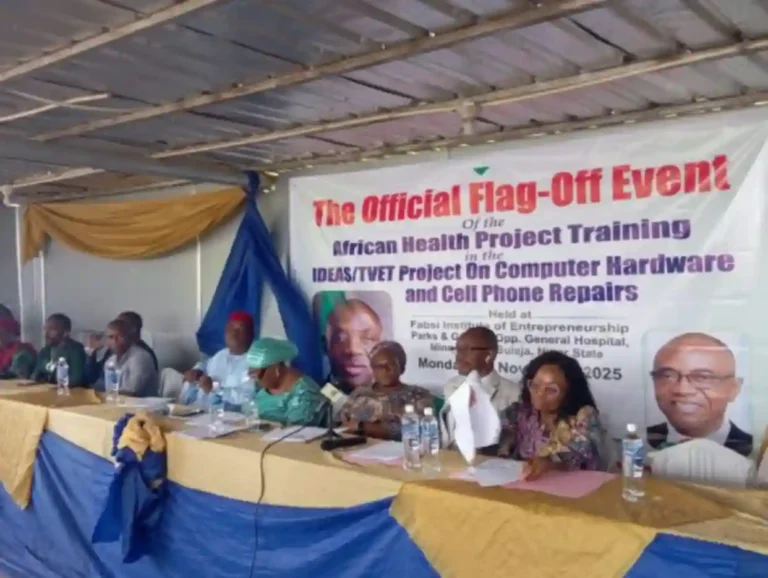
No fewer than 1,500 youths have benefitted from the digital skills training organised through a partnership between the Federal Government’s World Bank-supported IDEAS/TVET Project and the African Health Project.

The World Bank-backed Innovation Development and Effectiveness in the Acquisition of Skills (IDEAS) initiative, under the Technical and Vocational Education and Training (TVET) programme, is designed to boost job opportunities for young people across Nigeria through digital and vocational learning.

Speaking during the inauguration of the digital skills training in Suleja on Monday, Dr Ali Onoja, Chief Executive Officer of the African Health Project and proprietor of the Fabsi Institute of Entrepreneurship, said that 529 youths participated in the pilot phase of the programme between January and June 2024. Out of the total number, 460 successfully met the certification requirements.

He explained that further training programmes supported by Ubelle Nigeria Limited and partners have since trained more than 1,000 additional youths. “This brings the total number of beneficiaries already reached through the IDEAS/TVET and Fabsi partnership to well over 1,500 youths,” Onoja said.

According to him, beyond the latest phase inaugurated in Suleja, the African Health Project has also received approval to train 200 more youths aged 15 to 35 in computer hardware and mobile device repairs. He noted that successful participants would be registered with the Computer Professionals Registration Council of Nigeria (CPN) to improve their employability and access to digital jobs.

Onoja stated that the programme runs for a minimum of six months, including certification and industry-based internships. Completion is assessed based on the trainee’s transition to job placement or self-employment. He added that the initiative is part of a wider plan to strengthen Nigeria’s workforce through practical skills and innovation-driven education.

National Project Coordinator of IDEAS/TVET, Mrs Uche Mbaogwu, described the initiative as a national strategy to address unemployment by equipping young Nigerians with market-relevant digital skills. Represented by Mrs Blessing Ogwu from the Monitoring and Evaluation Unit, she said the training is part of ongoing government efforts to foster innovation, create job opportunities, and support inclusive development.

“The training is free-of-charge to all beneficiaries,” Mbaogwu said. “IDEAS/TVET remains committed to providing accessible skills, knowledge, and opportunities required for competitiveness in a rapidly evolving technological landscape.”

She commended the African Health Project for its role in executing the training, describing the organisation as “not just a facilitator, but a nation builder helping Nigeria shape the future of its young people.”

Also speaking, the Special Guest of Honour, Dr Ngozi Onwudiwe, a retired Permanent Secretary at the Federal Ministry of Information and National Orientation, praised the initiative as a platform that ignites dreams and opens doors of opportunity for Nigerian youths.

“What we are witnessing is a powerful example of collaboration for impact on government, global partners, and local institutions working together to empower Nigerian youths,” she said, urging participants to embrace character, discipline, innovation, and entrepreneurship in the growing digital economy.

FG, World Bank launch digital skills training for 200 youths

0

Reaffirming the Federal Government’s commitment to youth empowerment through technical and vocational education, the Federal Ministry of Education, in partnership with the World Bank and Fabsi Institute of Entrepreneurship, on Monday launched a digital skills training programme for 200 Nigerian youths in Suleja, Niger State.

The initiative, implemented under the Innovation Development and Effectiveness in the Acquisition of Skills (IDEAS)/Technical and Vocational Education and Training (TVET 2) Project, seeks to equip young Nigerians with employable skills in computer hardware and mobile phone repairs while fostering self-reliance, innovation, and entrepreneurship. The programme aims to create more digital job opportunities, promote entrepreneurship development, and strengthen the country’s digital economy.

Speaking at the flag-off ceremony, Dr. Ngozi Onwudiwe, retired Permanent Secretary, Federal Ministry of Information and National Orientation, described the training as “a launch of dreams and a doorway to opportunity.”

“Today, we are not just launching a training programme; we are launching dreams,” she said. “We are opening doors of opportunity for young Nigerians to take charge of their future, create solutions, and write their own success stories.”

Dr. Onwudiwe said the initiative represents a strategic investment in Nigeria’s youth, arming them with both technical and entrepreneurial skills needed to thrive in a technology-driven world.

“Those who understand how technology works and how to fix it hold the key to tomorrow’s economy,” she said. “This programme is about turning our youth into problem-solvers, innovators, and entrepreneurs, the kind of leaders our nation needs in this digital age.”

She commended the Federal Ministry of Education, the World Bank, and the Fabsi Institute of Entrepreneurship for their collaboration, describing the programme as a “model of impactful partnership” between government, international agencies, and local institutions.

“Every investment in skills development is an investment in peace, progress, and prosperity,” she added. “To our trainees, this is your moment. What you learn here can change your life. Be disciplined, creative, and honest because the world rewards not only what you can do but who you are.”

Dr. Onwudiwe, in her closing remarks, reminded participants that the future belongs to those who are willing to learn, innovate, and lead with integrity.

“The future is digital. The future is entrepreneurial. But most importantly, the future is yours,” she declared. “As we flag off this training, I want each of you to say to yourself: I am the future. I am skilled. I am unstoppable.”

In his remarks, Dr. Ali Onoja, Chief Executive Officer of the African Health Project and Proprietor of Fabsi Institute of Entrepreneurship, said the six-month programme will provide participants aged 15 to 35 with hands-on training, certification, and internship opportunities to enhance their employability.

“This project is set to make a substantial impact by improving digital literacy and job readiness,” Onoja said. “Successful trainees will be registered with the Computer Professionals Registration Council of Nigeria (CPN), strengthening their prospects for formal employment and entrepreneurship.”

He explained that the curriculum aligns with the National Skills Qualification Framework (NSQF) and National Occupational Standards (NOS) approved by the National Board for Technical Education (NBTE). The training is designed to boost technical knowledge in line with global standards and promote high-paying job creation within Nigeria’s growing digital economy.

Highlighting past achievements, Onoja revealed that over 1,000 Nigerian youths, including persons with disabilities, have benefitted from previous IDEAS project phases implemented through partnerships with firms such as Ubelle Nigeria Limited and Neo Cloud Technologies.

“Out of 529 trainees who enrolled in the 2024 cohort, 460 earned certifications in data analytics, cybersecurity, digital marketing, and graphics design,” he said. “We expect 100 percent certification success in this batch. Parents would have paid heavily for this quality of training if not for the Federal Government and World Bank support.”

Also speaking, Mrs. Blessing Ogwu, National Coordinator of the IDEAS TVET Initiative, represented by Mrs. Uche Mbaogu, stressed that the training is completely free of charge, being funded through a World Bank-supported Federal Government loan facility.

“Did anybody ask you to pay any money? No,” she told the trainees. “The Federal Government obtained a loan from the World Bank to train Nigerians free of charge. The goal is to ensure that no young person remains idle or unskilled.”

She explained that the IDEAS project aims to reduce unemployment and dependence on white-collar jobs by providing practical skills that make young people self-sufficient and productive members of society.

“We don’t want to see artisans roaming the streets or people doing nothing. Let us train them to be self-reliant,” she said. “When you have a white-collar job and also a skill, you have a double advantage you can create jobs instead of waiting to apply for one.”

“Today marks a crucial step in empowering Nigerian youth with the skills, knowledge, and opportunities they need to thrive,” she said. “Through this initiative, we reaffirm our resolve to tackle unemployment, foster innovation, and promote inclusive development across our great nation.”

Potter’s Wheel Foundation trains over 300 FCT women, youths

0

Over 300 women and youths across the Federal Capital Territory have benefitted from a skills acquisition programme organised by the Potter’s Wheel Foundation in Abuja.

Speaking at the event, the National Coordinator of the Foundation, Mr. Godsown Onuzulike, said the beneficiaries were trained in vocations such as shoe-making and confectionery production as part of efforts to promote job creation and economic self-reliance in Nigeria. He stated that each participant would receive starter packs to help them start their own businesses.

Mr. Onuzulike noted that over twenty thousand Nigerians have benefitted from the Foundation’s empowerment initiatives in the last five years. He urged governments at all levels to “establish more vocational training centres to address unemployment and reduce insecurity across the country.”

Some beneficiaries expressed appreciation to the Foundation, describing the initiative as a life-changing opportunity that would make them self-reliant and employers of labour.

In his remarks, the Minister of Education, Dr. Tunji Alausa, reaffirmed the Federal Government’s commitment to strengthening vocational and technical education as a major driver of sustainable development. Represented by an Assistant Director in the Department of Technology and Science Education, Mrs. Jane Obiebi, Dr. Alausa commended the Foundation for its role in youth empowerment. He also called for stronger partnerships between government and private organisations to reposition the education system and prioritise practical skills training across the country.

Ondo State to begin scholarship and bursary disbursement Tuesday

The Ondo State Government, led by Governor Dr. Lucky Orimisan Aiyedatiwa, will officially begin the disbursement of scholarships, bursaries, and financial assistance to indigenes of Ondo State studying in various tertiary institutions across Nigeria. The event is scheduled for Tuesday, November 4, 2025.

The initiative is part of the Governor’s “Our Ease” agenda, which focuses on promoting quality education, improving learning outcomes, and building strong partnerships for sustainable development in the education sector.

According to the Administrative Secretary of the Ondo State Scholarship Board, Funso Tunji-Omoniyi (Mrs), “the ceremony will hold at the Cocoa Conference Hall, Governor’s Office, Alagbaka, Akure, by 10:00 a.m.” She further stated that representatives of student bodies are requested to attend the event.

“All invited guests are expected to be seated promptly by 9:00 a.m,” said Bisi Lawani from the Ministry of Education.

Lagos to launch digital telecom approval system in February 2026

0

The Lagos State Government has announced plans to digitise and automate the approval process for telecommunication infrastructure projects through a new system known as the Telecommunication Infrastructure Regulatory System, TIRS, which will officially launch in February 2026.

This was revealed in a statement signed by Prince Oyekanmi Elegushi, General Manager of the Lagos State Infrastructure Maintenance Regulatory Agency, LASIMRA. According to Elegushi, the system will ensure that all telecommunication infrastructure projects in the state comply with regulatory standards while improving transparency, efficiency, and accountability.

He explained that the TIRS platform will simplify the process of obtaining permits for the installation of masts, towers, and right-of-way for fiber optic cables, eliminating bureaucratic delays and physical interactions. “The implementation of the Telecommunication Infrastructure Regulatory System, TIRS, is expected to significantly enhance transparency and accountability, minimizing human interaction by as much as 99 per cent. Companies will now be able to apply for infrastructure permits such as masts, towers, and fiber optic right-of-way online, reducing the need for physical visits,” Elegushi said.

He also revealed that a comprehensive training programme had been completed for all departments and units within LASIMRA to ensure a smooth transition to the digital platform once it becomes operational. The training, he said, covered both theoretical and practical aspects of TIRS to equip personnel with the technical knowledge needed to manage and monitor telecom infrastructure approvals through the system.

Elegushi reaffirmed the Lagos State Government’s commitment to creating a transparent and investor-friendly regulatory environment for telecommunication operators and infrastructure providers. He added that the TIRS initiative supports Governor Babajide Sanwo-Olu’s goal of promoting digital governance and enhancing public service delivery through technology-driven innovations.

IFAD-VCDP sets N5.17bn for 2026 Ebonyi agriculture programme

0

The International Fund for Agricultural Development (IFAD)-assisted Value Chain Development Programme (VCDP) has proposed a budget of N5.17 billion for its 2026 operations in Ebonyi State.

The IFAD–VCDP state programme coordinator, Sunday Ituma, announced this in Abakaliki during the state steering committee meeting on the 2026 Annual Work Plan and Budget (AWPB) held on Monday.

According to Mr Ituma, the budget, prepared by the State Programme Management Unit (SPMU), aims to enhance agricultural productivity, promote youth empowerment, and improve value addition in rice and cassava production across the state. He explained that the project’s funding would come from multi-stakeholder contributions focused on improving the livelihoods of farmers in eight participating local government areas.

“IFAD will provide N4.122 billion, the Ebonyi government will contribute N176.64 million, while beneficiaries will support implementation with N876.73 million,” he said.

Mr Ituma added that one of the major components of the 2026 budget includes the provision of small-scale rice processing equipment valued at N150 million. The items include haulers, destoners, weighing scales, and bag-stitching machines for farmer organisations to improve rice production and packaging quality.

He further noted that the budget also provides for the procurement of two rice colour sorters worth N60 million and equipment for youth enterprises engaged in vitamin A cassava processing. “The youth processing equipment includes ovens, gas cylinders, extractors, and scales estimated at N22.5 million,” he said.

The coordinator expressed satisfaction with the steering committee’s approval of the budget, noting that it would be forwarded to the Federal Ministries of Agriculture and Finance for concurrence before being sent to IFAD headquarters for final clearance. “Hopefully, by late 2025 or early 2026, activities will commence across participating LGAs,” he said.

Mr Ituma highlighted that since its inception in 2015, IFAD–VCDP has empowered thousands of farmers in Ebonyi, injecting over N17 billion into the state’s economy.

Chairman of the VCDP Steering Committee and Commissioner for Agriculture and Natural Resources, Nkechinyere Iyioku, commended the implementation team for its dedication and urged it to sustain its performance. Ms Iyioku encouraged the team to expand its reach to all LGAs, describing the programme’s interventions as “life-changing” for rural farmers.

Vice chairman of the Steering Committee and Commissioner for Finance and Economic Development, Leonard Uguru, also praised the programme’s results, noting that its evaluation ratings exceeded 90 per cent. “We have encouraged other World Bank-assisted teams in the state to learn from IFAD–VCDP’s impressive performance and impact-driven approach,” Mr Uguru added.

Court orders FG to release conditional cash transfer records

The Federal High Court in Abuja has ordered the Federal Ministry of Humanitarian Affairs and Poverty Reduction to release detailed information on the conditional cash transfer programme carried out between November 2024 and May 2025. The ruling, delivered by Justice Binta Nyako on November 3, 2025, came after a suit filed by Myson Nejo, a legal practitioner and governorship candidate of the African Democratic Congress (ADC).

In the judgment marked FHC/ABJ/CS/1222/2025, Justice Nyako ruled that Nejo was entitled to the information requested and directed the Ministry to provide it within seven days of the judgment. The decision reinforces transparency in the management of government social welfare programmes and aligns with the Freedom of Information Act 2011.

Nejo, through his lawyer, Vincent Adodo, sought three reliefs, including damages of N30,000,000. His request followed a claim made in May by the former Minister of Humanitarian Affairs, Prof. Nentawe Yilwatda, now the National Chairman of the All Progressives Congress (APC), that about six million Nigerians benefited from the conditional cash transfer programme within six months.

Following this claim, Nejo wrote to the Minister of Humanitarian Affairs requesting the list of beneficiaries in the 18 local government areas of Ondo State and the amount disbursed to each council under the programme. The letter was submitted under the Freedom of Information Act.

In response, the office of the National Coordinator and Chief Executive of the National Social Investment Programme Agency (NSIPA) informed Nejo that it was still reviewing its archives to gather the requested data. However, after waiting without receiving the details, Nejo approached the court seeking an order compelling the Ministry to provide the information.

During Monday’s proceedings, Nejo’s lawyer, Adodo, moved the motion on notice, while counsel for the respondents, Ibrahim Moddibo, led by Noro Gwom, opposed the application. The respondent argued that the information requested was exempted from disclosure under the Act, citing concerns that releasing the data could violate the privacy of the beneficiaries.

In his reply, Adodo maintained that “the public interest involved in the disclosure of the information sought outweighs whatever inconvenience that could be occasioned to the beneficiaries,” emphasizing the need for transparency in the use of public funds.

Delivering judgment, Justice Nyako ruled that Nejo was entitled to the information and granted the reliefs sought. The court also awarded damages of N2,000,000 to Nejo, affirming that the Ministry must uphold accountability and transparency in all conditional cash transfer programmes.

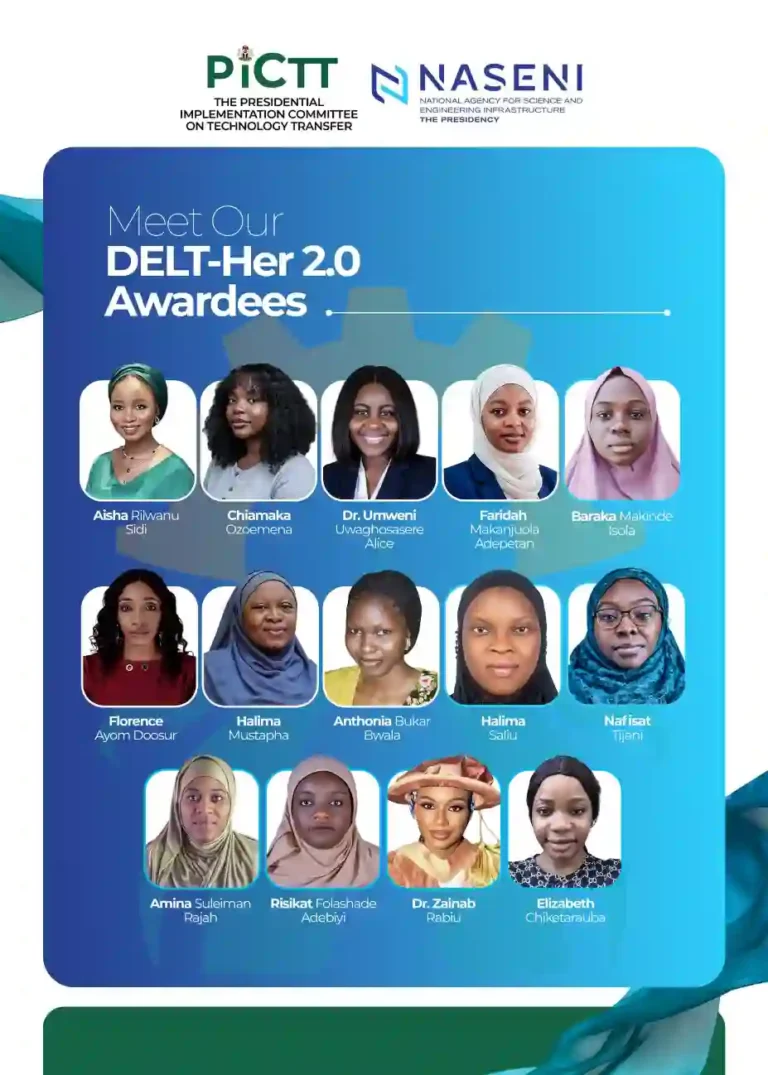
NASENI shortlists 14 women for DELT-Her 2.0 innovation grants, 9925 applied

0

National Agency for Science and Engineering Infrastructure (NASENI) has announced the selection of 14 outstanding women for the second edition of the DELT-Her Initiative, aimed at supporting innovative women working to solve real-life problems in Nigeria. According to the agency, 9,925 applications were carefully reviewed before choosing the final awardees who will receive their grants on November 6.

In a statement shared on X, NASENI wrote, “After carefully reviewing 9,925 applications for the 2nd edition of the DELT-Her Initiative, we’re excited to announce that 14 exceptional women have been selected to receive their grants on November 6th — empowering more innovators to turn bold ideas into impact, addressing real life challenges faced by the average Nigerian.”

The selected beneficiaries include Aisha Rilwanu Sidi, Chiamaka Ozoenena, Dr. Umweni Uwaghosasere Alice, Faridah Makanjuola Adepetan, Baraka Makinde Isola, Florence Ayom Doosur, Halima Mustapha, Anthonia Bukar Bwala, Halima Saliu, Nafisat Tijani, Amina Suleiman Rajah, Risikat Folashade Adebiyi, Dr. Zainab Rabiu, and Elizabeth Chiketarauba.

Several Nigerians have shared their reactions online, congratulating the winners and appreciating NASENI’s effort to empower women in science, technology, and innovation. One user, Honeystunner, wrote, “Your work in addressing real-life challenges in Nigeria is so needed. Can’t wait to see the impact you make.” Another user, Ahmad Saminu Kankia Wizo, stated, “Empowering women innovators isn’t just about inclusion, it’s about unlocking solutions that transform communities.”

The DELT-Her Initiative continues to promote gender inclusion and support innovation as part of NASENI’s vision to drive national development and create sustainable opportunities.

Ogun SUBEB postpones Bid Opening till further notice

0

Ogun State Universal Basic Education Board (OGUN SUBEB) has announced the postponement of its bid opening exercise earlier scheduled for Tuesday, November 4, 2025, at 10:00 a.m. The event, which was to take place at the board’s premises, has been shifted to a new date that will be communicated later.

According to the Tender Board Secretary of OGUN SUBEB, “The postponement is to enable wider participation and allow more interested bidders to submit their documents.” The statement also added that “any inconvenience occasioned by this change is regretted.” The public and prospective bidders are advised to await further updates on the new schedule.