Home Blog Page 347

How FG’s expanded N25,000 cash transfer programme will be disbursed

The Federal Government has expanded the National Cash Transfer Programme, also known as the Household Uplifting Programme (HUP), under the National Social Safety Nets Project (NASSP) supported by the World Bank. The initiative aims to provide N25,000 to more than 15 million targeted poor and vulnerable Nigerian households through a transparent and structured payment process.

Beneficiaries of the programme will be selected from the National Social Register (NSR), which is made up of State Social Registers (SR) of poor and vulnerable households across the country. The registers are developed under the supervision and guidance of the National Social Safety Nets Coordinating Office (NASSCO) in Abuja.

At the National Social Safety Nets Coordinating Office, officials explained that their role is to ensure that support reaches the right people. “We collect, verify, and share household data transparently with partners who deliver social programmes across Nigeria,” a NASSCO official said. The office, however, does not disburse money. Instead, it ensures that the verified data of eligible households are made available to relevant agencies and partners responsible for implementation.

The National Cash Transfer Office (NCTO) oversees the disbursement process, working closely with the State Cash Transfer Units (SCTUs) that manage operations at the state and local government levels. Each local government area has a cash transfer team that implements activities within communities to ensure timely and fair delivery.

The NCTO’s responsibilities include providing technical support, facilitating the enrolment of beneficiaries, and issuing programme cards to recipients. It also integrates Payment Service Providers (PSPs) into the system under NASSP, ensuring effective coordination of payments. In addition, NCTO conducts performance assessments, supports grievance redress, and monitors activities to prevent fraud and ensure accountability.

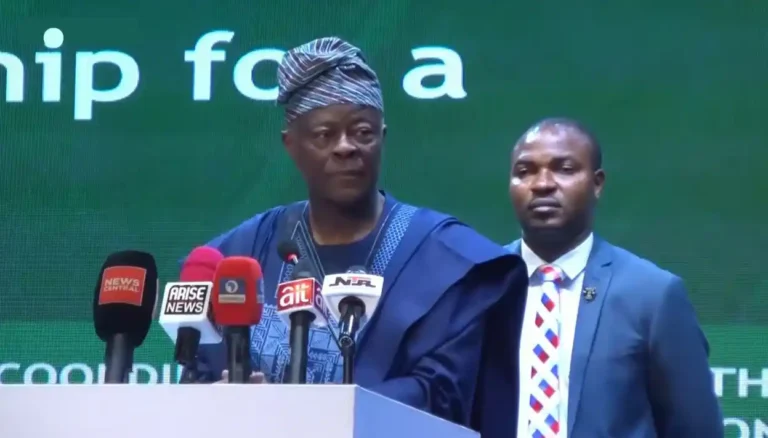
According to Wale Edun, the expanded N25,000 cash transfer will be part of a new ward-based development initiative that will channel resources directly to Nigeria’s 8,809 wards across the 774 local government areas.

“This is why there is a transparent, accountable, and robust system of providing direct payments to 15 million households,” said Finance Minister Edun. The initiative aims to improve livelihoods, enhance financial inclusion, and strengthen social protection for millions of poor families nationwide.

Advertisement

FG, Donors Establish Unified Livestock Investment Group

0

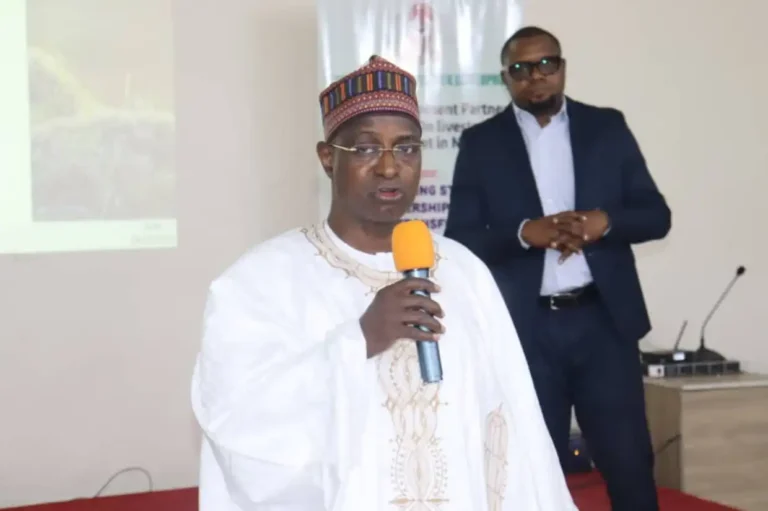
The Federal Ministry of Livestock Development, in collaboration with key development partners, has established a Livestock Sector Donor Working Group (LDWG) to strengthen coordination, improve resource mobilisation, and align donor interventions with Nigeria’s national livestock priorities.

The decision was reached at the Donor and Development Partners’ Workshop on Livestock Development in Nigeria, held in Abuja on Tuesday, October 28, 2025. The event, themed “Strengthening Strategic Partnerships for Livestock Transformation,” brought together major international donors, policymakers, and private sector stakeholders.

In his address, the Minister of Livestock Development, Idi Mukhtar Maiha, said the Nigeria Livestock Growth Acceleration Strategy (NL-GAS) remains the central roadmap for expanding the livestock sector’s contribution to the national economy. He explained that the plan aims to raise the sector’s GDP contribution from $32 billion to at least $74 billion by 2035 through large-scale private investments and improved production systems.

According to Maiha, the NL-GAS, approved by the National Economic Council, is built on ten strategic pillars designed to remove systemic barriers and attract both local and international investors. He noted that the Federal Government is actively engaging top global meat producers, including JBS, one of the world’s largest meat processing companies, in a potential $2.5 billion investment in Nigeria’s livestock sector.

“At the G20 Summit last year in Brazil, Nigeria secured commitments from leading Brazilian livestock companies, including JBS, one of the world’s largest meat processors. Since our visit to Brazil, I have also visited a number of markets,” he said.

“Our goal is to articulate a clear mission and vision at the macro level, establish a formal engagement framework between the FMLD and global partners, harmonize development-oriented programmes for greater impact and efficiency, and mobilise resources, technology, and expertise to drive sustainable growth in the livestock sector,” he added.

The Permanent Secretary, Dr. Chinyere Ijeoma Akujobi, described the creation of the LDWG as a “practical step” toward aligning donor programmes with the NL-GAS framework. She said the initiative will enhance impact measurement, transparency, and coordination across all livestock development programmes.

The Country Representative of the Food and Agriculture Organisation (FAO), Dr. Hussein Gadain, commended the Ministry’s leadership, reaffirming FAO’s support for the implementation of the NL-GAS. He said the organisation remains committed to helping Nigeria strengthen food systems and improve rural livelihoods.

Similarly, the Programme Manager of the European Union Delegation to Nigeria, Dr. Temitayo Omole, praised the Ministry’s renewed focus on livestock health and productivity. He pledged the EU’s continued partnership, especially in disease control, with emphasis on eradicating Peste des Petits Ruminants (PPR).

Participants at the workshop expressed interest in joining the LDWG, proposed an inauguration plan, and nominated an interim Co-Chair to coordinate preparatory activities ahead of the official launch.

The LDWG will serve as a unified platform for policy alignment, strategic planning, and knowledge sharing among donors, development agencies, and government institutions.

Lagos committed to free basic education through project zero initiative

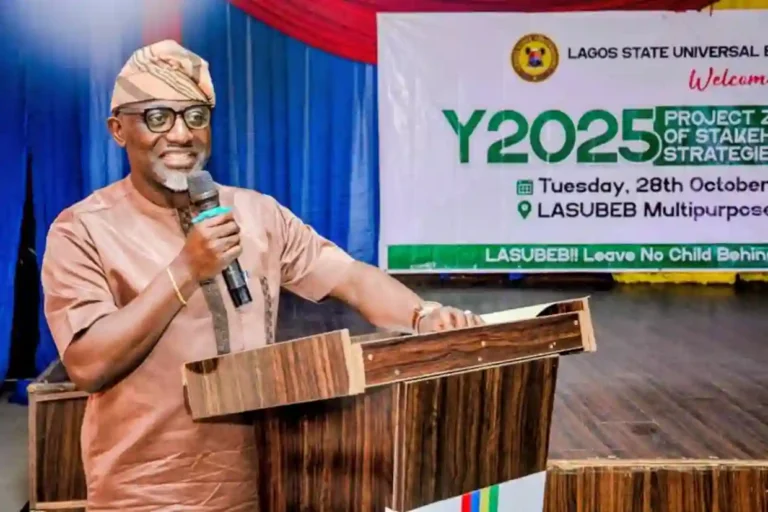
Lagos State Government has restated its commitment to ensuring that no child of school age is denied access to free and quality basic education through its Project Zero Initiative, a flagship programme aimed at reducing the number of out-of-school children across the state.

The initiative brought together key stakeholders including members of the School-Based Management Committees (SBMCs), Mothers’ Associations, Heads of Sections, and Project Zero Desk Officers at a sensitization event. The meeting, titled “Y2025 Project Zero Sensitization for Stakeholders on Implementation Strategies and Procedures,” was held at the LASUBEB Multi-Purpose Hall on Tuesday, 28th October, 2025.

Speaking at the event, the Executive Chairman of the Lagos State Universal Basic Education Board (LASUBEB), Dr. Hakeem Shittu, explained that the programme is designed to reduce the rising number of out-of-school children and strengthen collaboration among stakeholders to guarantee sustained access to basic education. He said, “Project Zero remains one of our strongest tools in ensuring that every child in Lagos State has the opportunity to learn and grow in a supportive environment.”

Dr. Shittu revealed that since its launch after the COVID-19 pandemic, Project Zero has identified, enrolled, and reintegrated more than 32,000 out-of-school children across the state. He added that the initiative provides free school uniforms, bags, sandals, and notebooks to learners, while about 470 parents have benefited from vocational training in collaboration with the Ministry of Women Affairs and Poverty Alleviation (WAPA).

He emphasized that the Zero Tolerance to Out-of-School Children Initiative aligns with the United Nations Sustainable Development Goal 4 on Quality Education and supports the THEMES+ Agenda of Governor Babajide Olusola Sanwo-Olu, which promotes education and technology for a Greater Lagos.

The Project Zero Desk Officer, Miss Omobolanle Shobowale, presented strategies for identifying, tracking, and monitoring re-enrolled children. She called on School-Based Management Committees to work closely with Headteachers and parents to ensure children remain in school until completion.

Executive Director of Hope Builders Foundation, Mrs. Folayimika Adu, praised the government for sustaining the initiative, describing basic education as “a shared responsibility that requires continuous collaboration among all stakeholders.”

NJFP sends onboarding email to 2024 fellows applicants

0

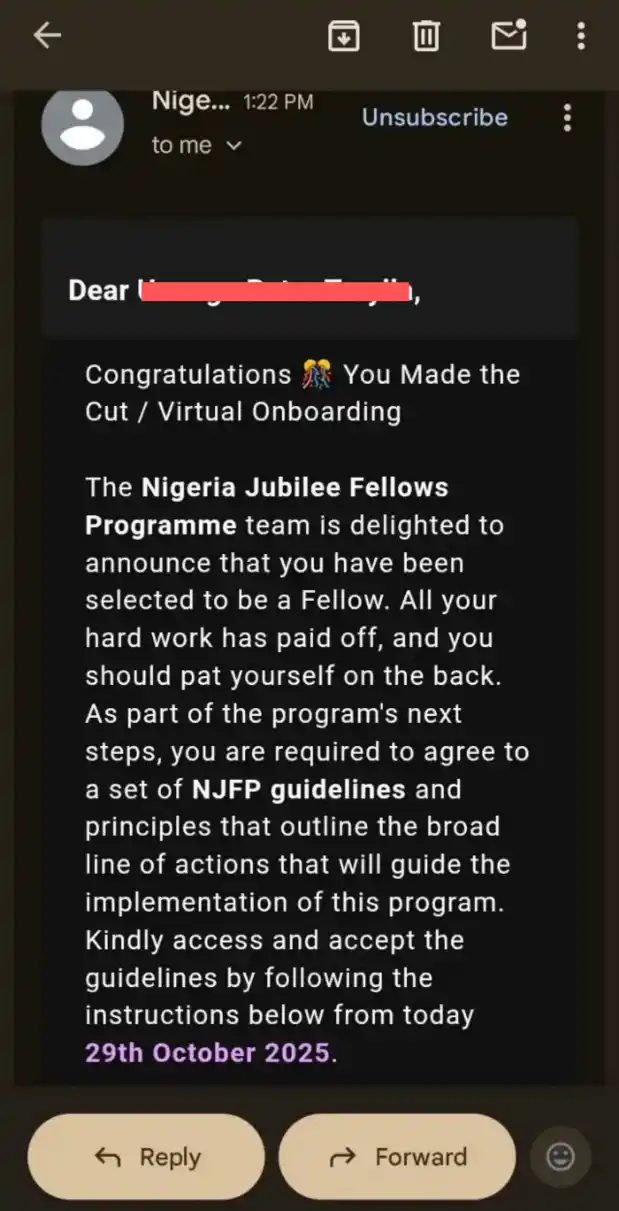
The Nigeria Jubilee Fellows Programme (NJFP) has started sending onboarding emails to applicants who applied in 2024 for the 12-month placement opportunity.

The message titled “Dear (name of fellow), Congratulations You Made the Cut / Virtual Onboarding” confirms the selection of successful candidates. According to the email, “The Nigeria Jubilee Fellows Programme team is delighted to announce that you have been selected to be a Fellow. All your hard work has paid off, and you should pat yourself on the back.”

The onboarding notice also explained the next steps for the fellows, stating that they are required to agree to a set of NJFP guidelines and principles that define how the programme will be implemented. Fellows were directed to access and accept the guidelines beginning from October 29, 2025.

Successful participants will also have the option to verify their bank details to ensure accuracy. After accepting the guidelines, another confirmation email will be sent to the fellow, stating “Congratulations you have successfully accepted the guidelines.” The message also includes the fellow’s name, host organization’s name, and email address.

As part of the programme, each Fellow will perform duties and tasks as outlined in the job description provided by their host organization. The host will assign a supervisor or supervisory team to oversee and guide their work.

Fellows are advised to ensure their submitted bank account is BVN-linked and at least a Tier-3 account capable of receiving deposits of N100,000 and above.

Zamfara approves payment of outstanding fees to Sharda University, India

0

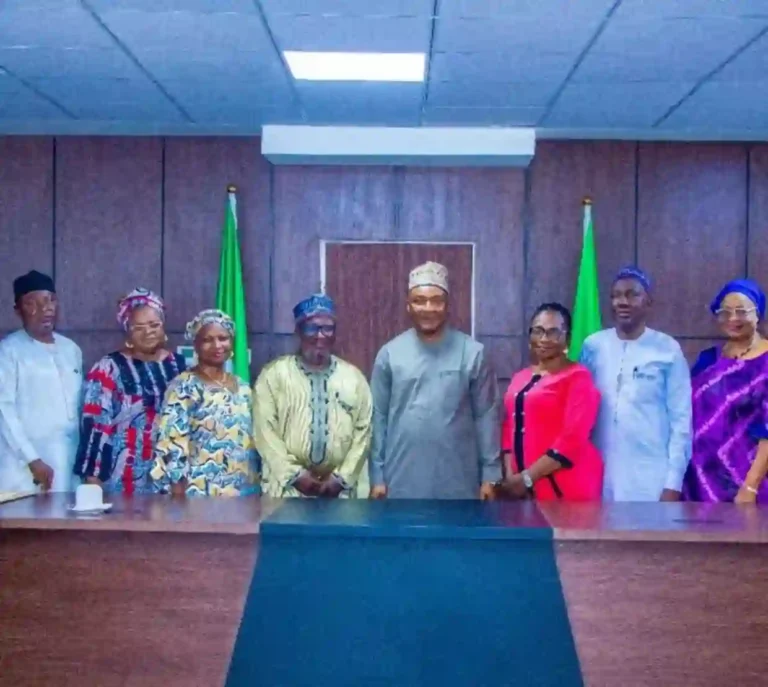
The Zamfara State Scholarship Board has announced that the state government has approved the payment of outstanding tuition and upkeep fees owed to Sharda University in India. This move marks another major step in the government’s efforts to support education and youth development in Zamfara State.

According to the board, the approval was granted by His Excellency, Governor Dauda Lawal, as part of his Rescue Mission Agenda. The debt, which was inherited from the previous administration, had affected several Zamfara indigenes who were sponsored to study various courses at Sharda University.

Many of these students were reportedly stranded after the former government failed to pay their fees. Despite the financial challenges, Sharda University allowed them to complete their studies under difficult conditions.

In a statement released by the Zamfara State Scholarship Board, it said, “His Excellency, the Executive Governor, has graciously approved the settlement of outstanding fees owed by the previous administration to Sharda University in India.”

The board added that all affected students have now been safely brought back home. “The Governor has approved the immediate settlement of the accumulated debt to enable the graduates to receive their certificates without further delay,” the statement continued.

This action, the board emphasized, will restore hope to the students and their families while enabling the young graduates to contribute to the growth and development of Zamfara State and Nigeria.

Signed: Ahmed Haruna – DPRS ZSSB, for: ESZSSB.

NBS seeks NDE sponsorship for Nasarawa unity kitchen programme

0

The management of Nasarawa Broadcasting Service (NBS) has appealed for sponsorship for Nasarawa youths in an upcoming programme tagged Nasarawa Unity Kitchen. The appeal was made during a courtesy visit to the Director General of the National Directorate of Employment (NDE), His Excellency Silas Ali Agara.

The NBS delegation, led by the Executive Vice Chairman, Alhaji Salihu Awwalu, appreciated the DG for the relocation of the NDE headquarters and for creating opportunities for their staff to develop skills in Artificial Intelligence (AI). Awwalu expressed gratitude to the NDE for its continuous collaboration, saying that such partnerships would help empower young people and promote youth employment across the state.

In response, the DG of NDE acknowledged the contributions of NBS in promoting the activities of the Directorate nationwide. He also commended the leadership of NBS and congratulated the newly appointed General Manager, Mrs. Patricia Akawu, who is the first female GM appointed by the Executive Governor of Nasarawa State, His Excellency Abdullahi Sule.

Agara assured that the sponsorship proposal for the Nasarawa Unity Kitchen would be presented before the management, promising sustained partnership. “We appreciate the confidence the Governor and Executive Vice Chairman have in our new GM. We will continue to support initiatives that promote peace and unity,” the DG stated.

Full List: Oluremi Tinubu’s 10 digital learning centres in all states

The First Lady of Nigeria, Senator Oluremi Tinubu, has reaffirmed her commitment to youth empowerment through education and technology by commissioning ten new Digital Learning Centres across the country. The initiative aims to promote digital inclusion, skills acquisition, and technological innovation among young Nigerians.

According to a statement received by TVC, the intervention aligns with the First Lady’s vision to complement President Bola Tinubu’s development agenda in education and human capital development. The statement reads, “The First Lady of Nigeria, Senator Oluremi Tinubu, has reaffirmed her commitment to youth empowerment through education with the commissioning of ten new Digital Learning Centres across the country.”

The centres, which were inaugurated virtually from the State House in Abuja, are located in Abia, Delta, Edo, Kano, Katsina, Lagos, Nasarawa, Ondo, Yobe, and Zamfara States. Implemented under the Renewed Hope Initiative (RHI), the project is part of the administration’s plan to ensure that Nigerian youth gain access to quality education and digital skills necessary for today’s economy.

According to the statement, the initiative was developed in collaboration with the National Information Technology Development Agency (NITDA) to bridge the gap between education and employability. It added, “In partnership with the National Information Technology Development Agency (NITDA), the Digital Learning Centres are designed to promote technological literacy and bridge the gap between education and employability. The collaboration reflects a shared national goal of building a knowledge-based economy where young Nigerians can thrive in a technology-driven world.”

Senator Tinubu noted that the programme goes beyond providing computers and internet access. She said it focuses on nurturing creativity, innovation, and entrepreneurship among Nigerian youth. “By integrating technology into learning, the programme seeks to empower students and communities, particularly in underserved areas, to participate in the opportunities of the digital age,” she said.

The Renewed Hope Initiative’s Digital Learning Project reinforces the Federal Government’s commitment to inclusive growth and sustainable development. It also highlights the belief that every Nigerian child, regardless of background or location, deserves equal access to digital tools and education needed to shape Nigeria’s future in the global digital economy.

Over 250000 women apply for EmpowerHER financial literacy programme

Over 250,000 Nigerian women have registered for the newly launched EmpowerHER Financial Literacy Programme, a key initiative of the Federal Ministry of Women Affairs. The programme is designed to improve women’s skills in finance, digital technology, and entrepreneurship, boosting their role in Nigeria’s economic growth and national development.

The initiative, introduced in Abuja under the leadership of the Minister of Women Affairs, Imaan Sulaiman-Ibrahim, represents a major step in the federal government’s plan to promote women’s economic empowerment and inclusive growth. EmpowerHER is being implemented in partnership with Kudimata Nig. Ltd, an organization known for its expertise in financial literacy and empowerment programmes. Kudimata will provide digital tools, expert content, and a nationwide network to ensure effective delivery of the scheme.

Speaking at the launch, Sulaiman-Ibrahim said, “This initiative is a cornerstone of national transformation that places knowledge and financial capability at the centre of empowerment.” She emphasized that EmpowerHER is structured to train millions of women across the country, helping them build essential skills in financial management, digital literacy, and entrepreneurship to secure long-term economic independence.

“Empowerment must start with understanding,” the Minister stated. “Financial literacy gives women the confidence to take control of their resources, opportunities, and future.” She added that the programme’s goal is to build a financially literate and economically empowered generation of Nigerian women who will contribute to stronger families, thriving communities, and a more resilient nation.

Sulaiman-Ibrahim also announced that financial and digital literacy would now be included in all empowerment programmes of the ministry, in line with the Renewed Hope Social Impact Interventions 774 initiative under President Bola Tinubu’s administration. This ensures that every government intervention remains sustainable, transparent, and impactful.

“From classrooms to marketplaces, civil service to entrepreneurship, every Nigerian woman deserves to be equipped and empowered to shift from survival to thriving. We are building a generation of women who are informed, equipped, and unstoppable,” she said.

Kudimata Nig. Ltd CEO, Kathleen Erhimu, described EmpowerHER as more than just a project but a nationwide movement for women’s empowerment. “Whether a woman is behind a desk, in a market, on a farm, or leading an enterprise, EmpowerHER ensures she has the knowledge, access, and confidence to grow wealth, build businesses, and shape her destiny,” Erhimu explained.

Delivered through the Happy Woman Platform, the programme provides participants with training in financial and digital literacy, entrepreneurship mentorship, access to finance, peer learning, and opportunity networks.

EmpowerHER, aligned with President Tinubu’s Renewed Hope Agenda, aims to reach 10 million Nigerian women by 2030, bridging both urban digital audiences and community-based groups across the nation.

Analyst says FG’s N25000 cash transfer too small to reduce poverty

Public affairs analyst, Jide Ojo, has expressed concerns over the effectiveness and long-term impact of the N25,000 Federal Government’s expanded direct cash transfer programme, despite recent assurances of improved transparency and reach.

Previously, Nigeriastartupact.ng reported that the Minister of Finance and Coordinating Minister of the Economy, Wale Edun, had on Tuesday announced that the Federal Government plans to expand its direct cash transfer initiative to include more poor and vulnerable Nigerians. Edun disclosed this at the Oxford Global Think Tank Leadership Conference and book launch held in Abuja on Tuesday, stating that over 15 million households are currently benefiting from the scheme.

According to Edun, the initiative is part of the government’s broader effort to cushion the effects of ongoing economic reforms under President Bola Tinubu. He explained that leadership change in 2023 brought renewed focus and that the administration has recorded significant progress in stabilizing the economy.

“Leadership changed in 2023, and under President Bola Tinubu, change has been for the better. If you look at the record, if you look at the statistics, if you look at the progress that has been made since 2023, the improved growth rate, the stable exchange rate, the lowering inflation, those are just one side of the story,” Edun said.

He added that the government’s focus remains on improving the human side of the economy. “The most important aspect is the human side: the effect on people’s daily experiences, the cost of food, the cost of transport, how they are living their lives. This report stands both as a call to reflection and an invitation to urgent action,” he said.

The minister further emphasized that Nigeria’s economic growth must now rely more on knowledge and innovation. “Today’s global competition is no longer fought in factories alone. It is anchored in what I call the new factors of economic production. We can do much better with the abundance of human and material resources that our country is blessed with. We live in a new era where wealth is tied to knowledge, and there is a lot of advantage for us in this regard,” Edun added.

Reacting to the announcement, public affairs analyst Jide Ojo, who joined a live TVC News discussion via Zoom, acknowledged the government’s improved efforts in transparency but questioned the real impact of the cash transfer on Nigerian households.

“I listened to the minister attentively, and this time around, they collected the National Identification Number of all the beneficiaries, and the money is not given to them via cash. It is transferred into their wallets or into their bank accounts. That gives a higher level of transparency than what was done under the Muhammadu Buhari administration, where ₦5,000 or ₦10,000 that was given at that time was handed out manually, without biometrics, without data beyond the names and addresses of the beneficiaries,” Ojo explained.

He noted that while the process now ensures greater accountability, the actual financial assistance being provided may not achieve meaningful poverty reduction. “So, to that extent, I think what is being done under President Bola Tinubu has a higher level of transparency and integrity. However, where I have issues is that while it may be true that we have 15 million beneficiaries, this conditional cash transfer, which is ₦25,000 for three months, is too little to impact a family positively,” he said.

Ojo argued that inflation and currency depreciation have drastically reduced the purchasing power of Nigerians. “If you look at 2023 to date and the devaluation of the naira, what ₦25,000 could buy under the Buhari administration was higher in value than what it can buy now. It’s like what you could buy with ₦25,000 under that administration is what you now need ₦100,000 to buy,” he explained.

He added that even though the government is spending a large amount, the value does not match the current cost of living. “If you are talking about 15 million families, not just 15 million individuals, for three months, that’s a total of ₦75 billion. It’s not consequential in terms of the value of the currency,” Ojo stated.

When asked about the accuracy of the social register guiding the programme, Ojo noted that the database was built with international support and is relatively credible. “We do. I understand that the social register currently in use was built with support from the World Bank. If you recall, when the Tinubu administration came in 2023, some governors had issues with the data in the social register and decided that they were going to have their own registers and all of that. But I think we’ve gone past that,” he said.

Ojo, however, maintained that while data might not be the main challenge, the core problem lies in the economic value of the assistance being offered. “The bottom line is that these vulnerable people do exist. But my argument is: yes, assuming, without conceding, that 15 million people are benefiting right now, and giving the government the benefit of the doubt, the value of this ₦25,000 for three months is insignificant. It will not buy much for a family of four; they cannot survive on it,” he added.

He also raised concerns about rising living costs and the limited duration of the support. “Even the minister himself mentioned issues around transportation and feeding. What about shelter? In my neck of the woods, where I’m talking to you from, accommodation has increased by 100 percent. So, what will you be able to do with ₦25,000? And then after three months, the whole program stops?” Ojo asked.

He concluded by urging the Federal Government to adopt more sustainable poverty reduction strategies that go beyond short-term relief. “Government needs to look at how to ameliorate poverty beyond the conditional cash transfer,” he said.

The expanded direct cash transfer programme is one of the government’s flagship social intervention policies aimed at reducing poverty and supporting low-income families amid economic reforms. However, while the policy is well-intentioned and transparent, its limited duration and low value make it insufficient to address the current cost-of-living crisis facing millions of Nigerians.

ABU confirms postponement of nerd policy for 2025 batch C NYSC

0

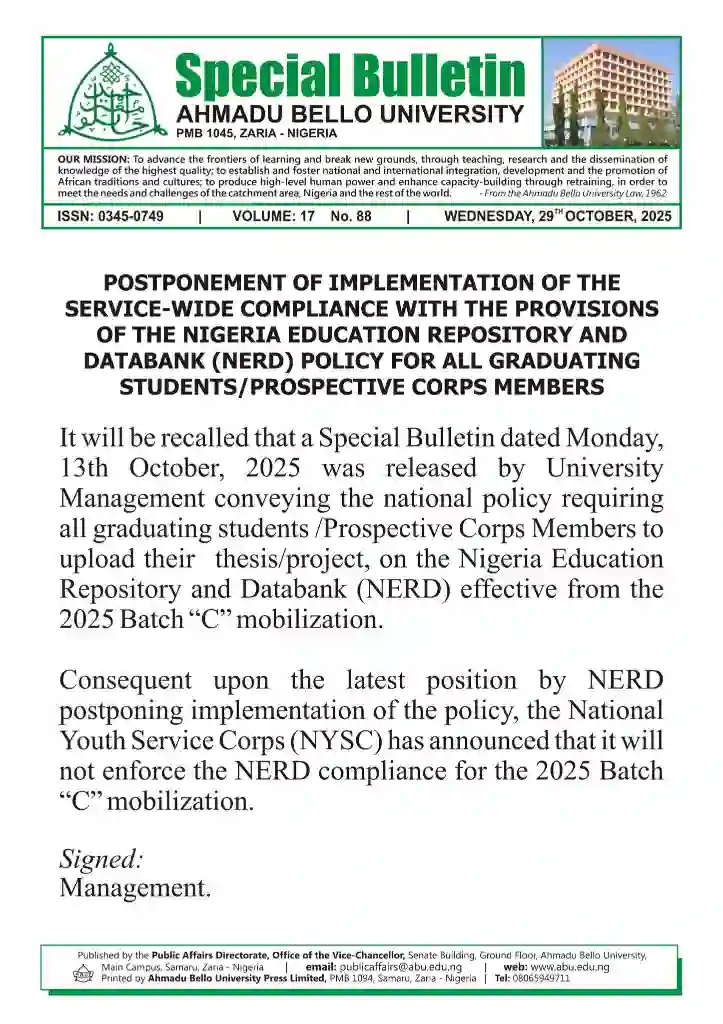
Ahmadu Bello University, in its Special Bulletin ISSN: 0345-0749, Volume 17 No. 88, dated Wednesday, 29th October, 2025, has announced the postponement of the implementation of the service-wide compliance with the provisions of the Nigeria Education Repository and Databank (NERD) policy for all graduating students and prospective corps members.

It will be recalled that a previous Special Bulletin dated Monday, 13th October, 2025, was released by the University Management, conveying the national policy that required all graduating students and prospective corps members to upload their thesis or project to the Nigeria Education Repository and Databank (NERD), effective from the 2025 Batch “C” mobilization.

However, consequent upon the latest position by NERD postponing the policy’s implementation, the National Youth Service Corps (NYSC) has confirmed that it will not enforce the NERD compliance for the 2025 Batch “C” mobilization.

This was signed by the Management.