Home Blog Page 349

Arcade Engineering opens 2026 graduate trainee programme

0

Arcade Engineering has announced the opening of its Graduate Trainee Programme 2026 in Port Harcourt, Rivers State. The company, a leading EPCICM firm in Nigeria, provides innovative services to both government and private-sector clients across various industries.

According to Arcade Engineering, the programme targets young talents with a Bachelor’s degree in Civil, Mechanical, or Electrical Engineering from a reputable university, with a minimum of First Class. Applicants must have completed NYSC with a valid certificate or exemption letter and possess 0–2 years post-graduation experience. “Candidates must not be more than 25 years old by December 31,” the firm stated.

Interested applicants can apply via the official application Form.

Advertisement

WAEC schedules mock CBT for October 29, 2025 at 8am

0

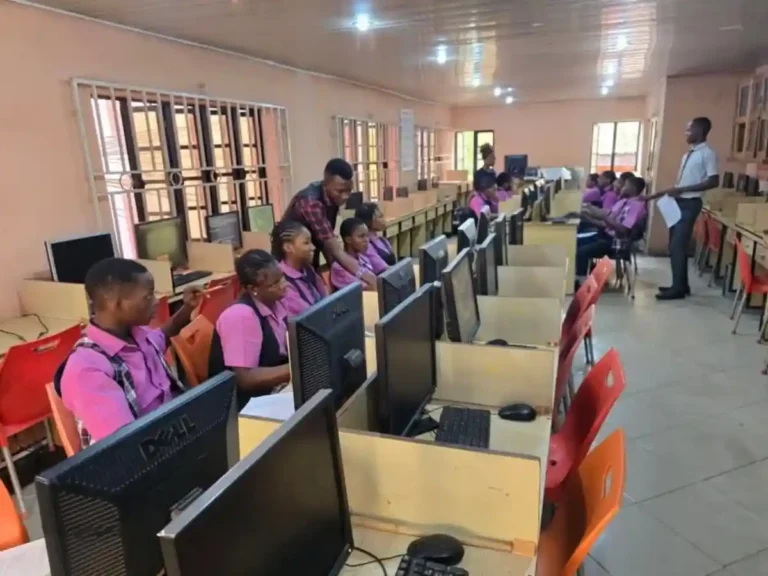
The West African Examinations Council (WAEC) Nigeria has announced that candidates can take part in a mock Computer-Based WASSCE (CB-WASSCE) scheduled for Wednesday, October 29, 2025, at 8:00 a.m. The exam body made this known through an official post on X (formerly Twitter) on Tuesday evening.

The post read, “Please visit https://mockcbt.waec.org.ng on Wednesday, October 29, 2025, at 08:00 in the morning, for mock CB-WASSCE; this is to familiarise yourself with the testing site. Use the Examination Number: 5010101520 to log in. We wish you success and a wonderful experience.”

The update, which already has over 4,000 views, has drawn several reactions from candidates and concerned individuals on social media. One user, Hussain Dani Mamman, commented, “Bro! Just 8:00, am or pm?” Others raised concerns about the short notice and accessibility.

A user with the handle @certified1031 said, “This will be valid if they can use it from now till Sunday so they can log in anytime. If not, there will be traffic congestion on the site ooooo.” Another user, Anuoluwa, reacted, “So the students writing mock tomorrow now will suspend their exams to practice CBT? Na wa oh!”

Some candidates also sought clarification about eligibility and exam scope. @thekanoblog asked, “Does this mock CBT exercise also include private candidates who are writing the November 12, 2025 WASSCE?” while another user, Achuagu, questioned, “Is this CBT objectives only or does it include Essays?”

This mock CBT aims to help students practice and get used to the digital examination platform before the main CB-WASSCE begins.

FG moves to stabilize food prices with affordable farm inputs, storage systems

0

The Federal Government has reaffirmed its commitment to stabilizing food prices across Nigeria by making farm inputs more affordable and improving community-based storage systems.

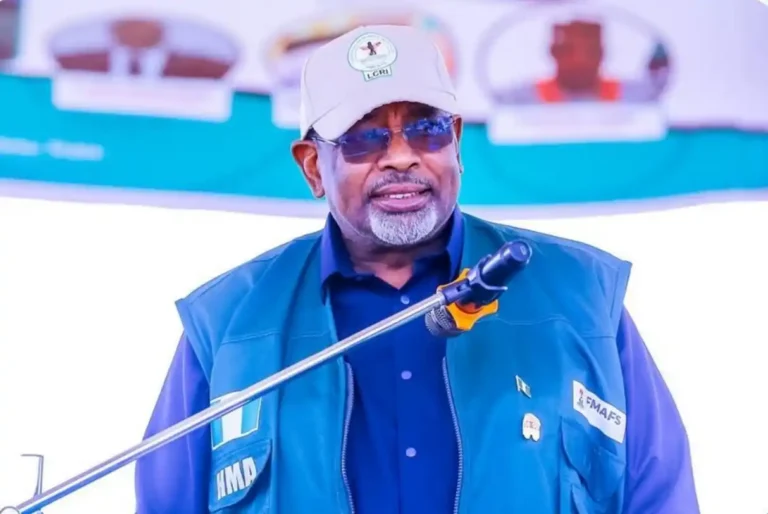
In an official statement, the Honourable Minister of Agriculture and Food Security, Senator Abubakar Kyari, CON, said the Ministry is implementing comprehensive measures in line with the Renewed Hope Agenda of President Bola Ahmed Tinubu, GCFR, to ensure lasting stability in the country’s food system.

“Our focus remains on making farm inputs such as fertilizers, improved seeds, and irrigation materials more affordable and accessible to farmers across the country,” the Minister said. “By reducing production costs and enhancing productivity, we aim to strengthen food supply chains and improve the livelihoods of smallholder farmers.”

He noted that the Federal Ministry of Agriculture and Food Security is intensifying efforts to establish community-based silos and storage facilities in different parts of the country. According to him, these facilities will help minimize post-harvest losses and ensure the steady availability of staple foods all year round.

“These localized storage systems will empower farming communities to manage their harvests more efficiently and reduce dependency on external storage infrastructure,” Senator Kyari explained.

He added that the Ministry remains fully committed to ensuring that every intervention contributes directly to food security, economic stability, and job creation.

“This includes deeper collaboration with state governments, the private sector, and farmer associations to align efforts toward increased productivity and market efficiency,” he stated.

The Minister further highlighted that the Ministry is advancing initiatives in agricultural mechanization, rural infrastructure, and private sector engagement to make farming more attractive, profitable, and sustainable for Nigerians.

Senate moves to boost food security, Job creation across 774 LGAs

0

The Senate has reaffirmed its commitment to strengthening Nigeria’s agricultural sector through new policies aimed at promoting food security, job creation, and economic diversification.

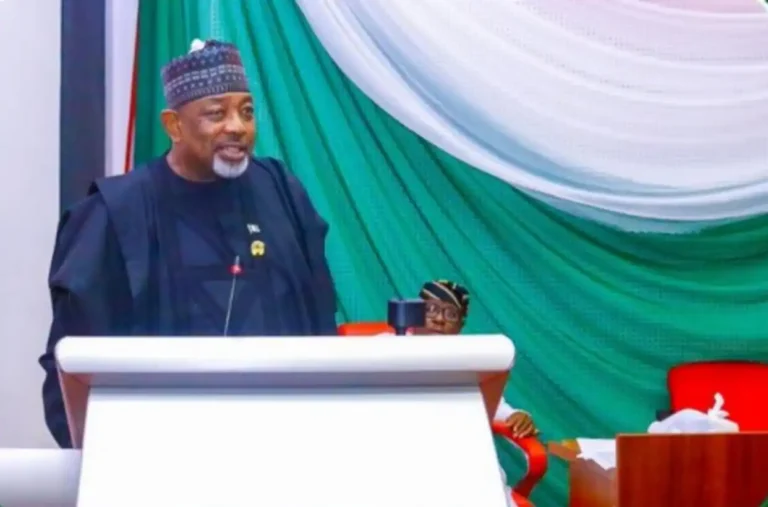
Speaking at a one-day public hearing on three key agricultural bills—the Cassava Flour (Mandatory Inclusion in Flours Production) Bill, the National Food Reserves Agency Bill, and the Rice Development Council of Nigeria Bill—the President of the Senate, Godswill Akpabio, GCFR, represented by Senator Tahir Monguno, said the proposed programs are designed to boost productivity, deepen value addition, and promote sustainable development in the sector.

“The 10th Senate is deeply committed to ensuring food security and job creation. We invite producers, millers, and bakers to leverage these opportunities to produce more and contribute to the nation’s food sufficiency,” Senator Monguno stated.

The Chairman of the Senate Committee on Agricultural Production Services and Rural Development, Senator Saliu Mustapha, explained that the bills aim to harness Nigeria’s abundance of cassava to create jobs, strengthen smallholder farmers, and stabilize rice prices. He said the initiatives would also help diversify the economy and create sustainable markets for local produce.

In his presentation, the Minister of Agriculture and Food Security, Senator Abubakar Kyari, CON, noted that the Cassava Flour Production Bill will significantly enhance Nigeria’s agricultural value chain. He described cassava as one of the country’s most commercially viable crops with great potential for export and industrial use.

“Cassava has the highest production capacity among our crops. That is why President Bola Ahmed Tinubu, GCFR, envisions Nigeria producing over fifty million tonnes of cassava annually,” the Minister said.

He assured stakeholders that the Ministry remains committed to empowering local farmers, improving productivity, and strengthening institutional frameworks to achieve lasting food security across the country. Kyari emphasized that with the right support, Nigeria could reduce its dependence on food imports and build stronger agricultural value chains that support jobs and rural development.

The Permanent Secretary of the Ministry, Dr. Marcus O. Ogunbiyi, stressed the importance of policy alignment and institutional efficiency. He noted that the proposed National Food Reserve Agency (NAFRA) should complement the Ministry’s existing functions rather than duplicate them. According to him, “Strengthening current systems before creating new ones is vital to ensuring sustainable results.”

Stakeholders at the hearing expressed broad support for the bills and called for inclusive implementation that addresses the needs of all categories of farmers. Hajiya Maryam Lawan, representing the Women Farmers Association of Nigeria (WOFAN), urged lawmakers to prioritize greater participation of women in agricultural programs and decision-making processes.

Mustapha Othman Bakano, President of the Cassava Growers Association of Nigeria, said the legislation would create employment opportunities across the country’s 774 local government areas. He revealed that the association has already secured farmland nationwide to expand cassava cultivation and reduce dependence on imported wheat for flour production.

Similarly, Aliyu Mustapha, President of the Onion Farmers Association of Nigeria, appealed for the speedy passage of the bills, noting that they would help farmers improve production capacity and develop better storage systems for perishable crops.

Senator Mustapha assured participants that all contributions would be reviewed before the next legislative stage. He reiterated the Senate’s resolve to ensure that the final versions of the bills reflect the collective aspirations of Nigeria’s agricultural community.

“These bills represent a national effort to strengthen our food systems, empower farmers, and position agriculture as the backbone of our economy,” he said.

FG launches Green Women to empower women in climate action

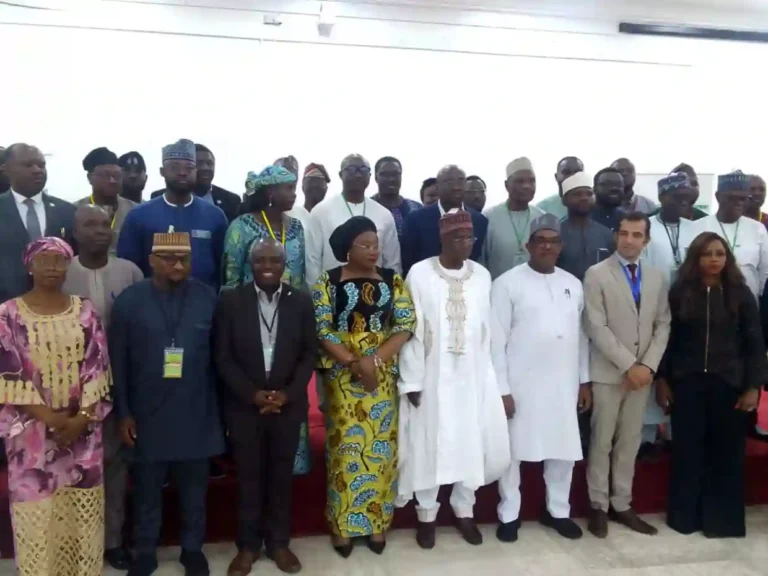
The Federal Government has reaffirmed its commitment to placing Nigerian women at the forefront of climate action through the Green Women Platform (GWP).

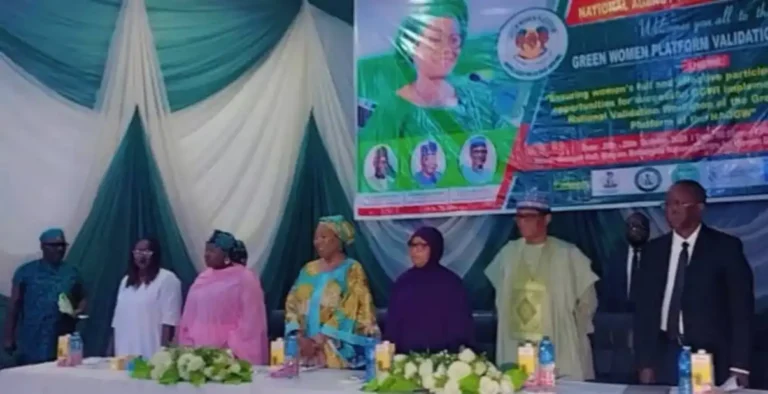
Malam Balarabe Lawal, the Minister of Environment, said this at the Validation Workshop of the Green Women Platform held in Abuja on Tuesday.

The theme of the event was “Ensuring Women’s full and effective participation and equal opportunities for successful Great Green Wall Initiative implementation.”

The Green Women Platform is a flagship initiative designed to drive women-led environmental restoration, climate resilience, and sustainable livelihoods across the country.

Lawal, who was represented by Mrs Agnes Aneke, Director of Planning, Research and Statistics, said the platform would provide space for Nigerian women to take ownership of solutions affecting their lives, families, and communities.

“This moment is significant for Nigeria and the Pan-African Great Green Wall initiative, as we move from concept to action in ensuring that women are placed at the centre of environmental restoration, climate resilience, and sustainable development,” he said.

According to him, “Through this platform, women will not only have a voice in governance and decision-making around land use, natural resources, and climate action, but they will also gain access to economic opportunities in areas such as reforestation, renewable energy, sustainable agriculture, and green enterprises.

“It will also ensure that women remain the custodians of biodiversity and indigenous knowledge, passing on sustainable practices to future generations.”

The minister said Nigeria has consistently demonstrated leadership within the Great Green Wall initiative, from restoring degraded lands to promoting sustainable livelihoods.

He added that the programmes have been a model for replication across Africa and, equally important, the Green Women Platform connects strongly with the United Nations Sustainable Development Goals.

“It speaks to Goal 5 on gender equality by ensuring women’s full participation in environmental decision-making. It advances Goal 13 on climate action by mobilising women as leaders in adaptation and resilience,” Lawal said.

“By doing so, we are affirming that Nigerian women are not simply victims of climate change, but leaders of climate solutions. They are not passive beneficiaries, but innovators and decision-makers. They are not on the sidelines, but at the very centre of the Great Green Wall.”

Lawal stated that the Green Women Platform is a unique innovation of the Pan-African Great Green Wall designed to place women at the centre of the fight against desertification, climate change, land degradation, and the improvement of livelihoods.

Mr Mahmud Kambari, Permanent Secretary in the Ministry, said that women bear the most significant burden of environmental degradation, yet they are also the most potent agents of resilience and adaptation.

Kambari, who was represented by Aneke, said that by creating the Green Women Platform, Nigeria is aligning with the regional vision of the Pan-African Great Green Wall.

“This initiative demonstrates our collective resolve to mainstream gender equality into the Great Green Wall programme and ensure that women are not left behind in the implementation of our national environmental and climate commitments,” he said.

According to Kambari, “This workshop will validate the structural framework, adopt a national governance arrangement, and agree on a two-year action plan for the Green Women Platform. These outcomes will ensure that women are empowered as beneficiaries and full partners in decision-making, resource mobilisation, and implementation.”

Also speaking, Mr Almoustapha Garba, Executive Secretary of the Pan-African Agency of the Great Green Wall, commended the Federal Government of Nigeria for its efforts in implementing the Great Green Wall Initiative.

“The platform must, therefore, provide guidance, serve as an interface, and be a representative of the many women who do not have access to decision-making spheres in order to translate into reality and concrete actions,” Garba said.

He added that “It must serve as an observatory of women’s rights in the community and work to ensure their full and effective participation in local governance and access to natural resources.”

Mr Saleh Abubakar, the Director-General of the National Agency for the Great Green Wall (NAGGW), said that in Nigeria, women are not only custodians of the land but also agents of transformation within their communities.

“We may establish a strong and inclusive platform that empowers Nigerian women to build resilience, restore degraded lands, and foster sustainable livelihoods,” Abubakar said.

FG secures N700bn to deploy 1.1m electricity meters nationwide – Adelabu

0

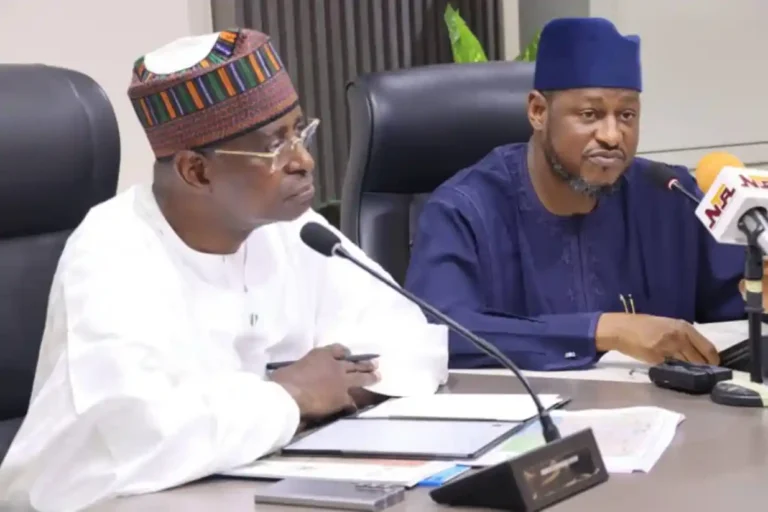
Minister of Power, Adebayo Adelabu, has announced that the federal government has secured about N700 billion from the Federation Account Allocation Committee (FAAC) to deploy 1.1 million electricity meters nationwide by the end of 2025.

Mr Adelabu disclosed this on Tuesday in Lagos during the 2025 Nigerian Energy Forum (NEF), themed “Powering Nigeria through Investment, Innovation, and Partnership.” He explained that after the initial deployment, the government would roll out two million meters annually for the next five years under the Presidential Metering Initiative (PMI).

According to him, the initiative is designed to close Nigeria’s metering gap, improve transparency in billing, and strengthen the financial stability of the power sector. He noted that the PMI complements the 3.2 million meters currently being procured through the World Bank’s Distribution Sector Recovery Programme (DISREP), positioning Nigeria to bridge the metering gap within five years.

The minister stated that the federal government is also leveraging bilateral funding and development finance to attract private investment and expand electricity access in underserved areas, including schools, hospitals, and public institutions.

“In the past two years, more than $2 billion has been mobilised through key programmes, including the World Bank’s DARES, NSIA’s RIPLE, and the JICA fund,” Adelabu said. “These interventions are accelerating renewable energy deployment and access to reliable power.”

He further revealed that new training infrastructure had been commissioned at the National Power Training Institute of Nigeria (NAPTIN) to build technical capacity within the sector. Agreements signed at the 2025 Nigerian Renewable Energy Innovation Forum, he said, would add nearly four gigawatts of solar manufacturing capacity annually, representing about 80 per cent of Nigeria’s current generation capacity.

“With this level of renewable energy production, Nigeria is on track to meet its domestic transition targets and serve regional power markets,” the minister said.

Adelabu added that the Electricity Act 2023 had transformed the energy sector by allowing states to establish their own subnational electricity markets. “Fifteen states have received regulatory autonomy, with one fully operational. We’re ensuring alignment between wholesale and retail markets,” he noted.

He maintained that ongoing tariff reforms had improved electricity supply reliability, reduced industrial energy costs, and boosted sector revenue from N1 trillion in 2023 to N1.7 trillion in 2024, with projections to exceed N2 trillion by 2025.

The minister also confirmed that President Bola Tinubu had approved a N4 trillion bond to settle verified debts owed to generation companies and gas suppliers, alongside a targeted subsidy plan to protect vulnerable consumers.

Mr Adelabu reaffirmed the government’s commitment to partnering with the private sector to unlock stranded generation capacity and build a sustainable power future. “Through sustained investment, innovation, and strong partnerships, we can power Nigeria’s journey toward a brighter, more resilient energy future,” he said.

FG targets $1tn economy, $74bn from livestock by 2035

0

The Federal Government has reaffirmed its commitment to achieving a $1 trillion economy by 2030, with the livestock sub-sector projected to contribute at least $74 billion to Nigeria’s Gross Domestic Product (GDP) by 2035.

The Minister of Livestock Development, Alhaji Idi Mukhtar Maiha, disclosed this during the Donor and Development Partners Workshop on Livestock Development in Nigeria, held in Abuja. He stated that the government has designed a comprehensive roadmap known as the Nigeria National Livestock Growth Acceleration Strategy (NL-GAS), which aims to transform the sector through private sector participation.

According to Alhaji Maiha, “To realise this vision, the government has developed a market-oriented, private-sector-led and public-sector-enabled strategy that focuses on sustainable livestock production.” He identified key pillars of the strategy as Livestock Value Chain Development and Market Access, Water Resources Management, and Feed and Fodder Development.

The minister urged donor agencies and development partners to continuously share experiences, ambitions, and innovative ideas with the Ministry. He said such collaboration would help build a resilient, inclusive, and globally competitive livestock industry capable of supporting economic diversification and food security.

The Country Representative of the Food and Agriculture Organisation (FAO) to Nigeria, Dr Hussain Godain, emphasised the critical role of the livestock industry in rural livelihoods. He noted that “the livestock sector employs millions of Nigerians and Africans, contributing significantly to food security and income generation.” He added that FAO is developing policies to ensure sustainable and safe food access through livestock production.

Similarly, the Programme Manager of the European Union Delegation to Nigeria and ECOWAS, Dr Temifayo Omole, highlighted the EU’s ongoing investments in vaccine production. He assured that the European Union “will continue to support Nigeria’s livestock development,” describing the sector as the country’s potential next “gold mine.”

Kano Governor Abba Yusuf empowers 5200 women With N260M

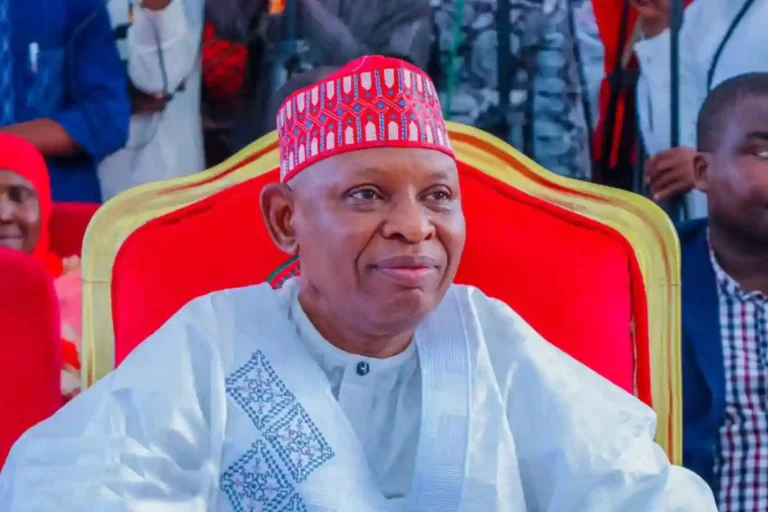
Kano State Governor, Abba Yusuf, on Tuesday empowered another batch of 5,200 women with N260 million under the state government’s empowerment programme aimed at improving livelihoods across the 44 local government areas of the state.

Speaking at the event, Governor Yusuf said the initiative was part of his administration’s ongoing efforts to support women with financial assistance for small-scale business ventures. He explained that new measures were introduced to ensure the funds reached the right beneficiaries after discrepancies were found in the first phase of the programme.

“Following the discovery of discrepancies in the disbursement during the first phase, we introduced measures to ensure the money reaches the targeted beneficiaries,” the governor stated.

According to him, each local government now has a 20-member committee responsible for supervising the disbursement process. The committee includes traditional rulers, local government chairmen, and party officials to ensure transparency and accountability.

The governor urged the beneficiaries to make good use of the financial support by investing in small-scale enterprises that would enhance their economic stability and contribute to community development. He reminded the women that the empowerment initiative fulfilled one of his campaign promises made in 2023.

“We promised to support you in taking care of yourselves and your children. We pledged to make you self-reliant and to take care of your health, especially the health of pregnant women among you and children,” Yusuf said. “Today we have fulfilled our promise. We will be doing this to the same number of women but with some modifications to ensure transparency and accountability.”

Deputy Governor Aminu Gwarzo also cautioned the beneficiaries against misusing the funds, emphasizing that the empowerment package was designed to uplift their living conditions.

A cross-section of the beneficiaries expressed appreciation to the Kano State Government, describing the initiative as timely support that would help them start and grow small businesses.

Minister hails Katsina for livestock development efforts

0

The Honourable Minister of Livestock Development, Idi Mukhtar Maiha, has praised the Katsina State Government for its proactive steps in advancing the livestock industry. He highlighted the creation of the Ministry of Livestock Development, the empowerment of women through a goat rearing programme, and the establishment of a modern meat processing plant aimed at export promotion.

Mukhtar gave the commendation when the Executive Governor of Katsina State, Dikko Umar Radda, led a delegation on a courtesy visit to the Ministry of Livestock Development in Abuja on Monday, October 27, 2025. He noted that Katsina State is one of the 18 states that have established a Ministry of Livestock Development, describing it as a model for others.

He assured that the Federal Government would support the state in setting up cattle corridors and disease control points to ensure proper certification of animals transported across states and international borders. “We want to fine-tune what we are doing to meet international standards optimally in Katsina State. Our focus is on livestock investment that will translate into a sustainable livestock economy,” the Minister emphasised.

Mukhtar also identified the sensitisation of farmers and herders as one of the key challenges facing the livestock sector. He stressed the importance of unity and collaboration among stakeholders. “Both farmers and herders should see themselves as partners. There should be a symbiotic relationship between them,” he said, urging for the restoration of grazing reserves in Katsina to promote feed and fodder availability and reduce cattle movement.

Governor Dikko Umar Radda, in his remarks, explained that his administration had invested about ₦5.6 billion in the initial phase of the goat rearing empowerment programme, which has benefited women across the state. “Apart from the women selected from each ward, we also identified one large-scale farmer per ward and provided them with 50 goats each. The repayment model is not monetary. After two years, beneficiaries return the number of goats received to enable us to extend the initiative to others. We now have a success rate of about 70% since inception,” the Governor said.

Governor Radda further stated that the establishment of the Katsina State Ministry of Livestock Development aligns with the government’s broader strategy to enhance food security, promote peace, and safeguard lives and property.

In her closing remarks, the Permanent Secretary of the Ministry, Dr. Chinyere Ijeoma Akujobi, commended the Katsina State Government for its strong commitment to livestock development and assured continued federal collaboration.

WAEC denies restricting subjects for 2026 WASSCE candidates

0

The West African Examinations Council (WAEC) has dismissed claims circulating in the media that it directed schools to restrict Senior Secondary students to specific subjects for the 2026 West African Senior School Certificate Examination (WASSCE) for School Candidates.

In a statement released from its headquarters at 21, Hussey Street, Yaba, Lagos, WAEC expressed concern over what it described as misleading publications. The Council stated that it “did not issue any such directive(s) nor restrict the choice of students to offer any particular subject(s) for WASSCE (SC) 2026 as alleged.”

According to WAEC, reports suggesting that the Council had introduced subject restrictions are false and should be disregarded. The examination body clarified that the regulation and development of school curricula in Nigeria are the responsibility of the Federal Government.

“The development and regulation of Curricula in Nigeria is within the purview of the Federal Government of Nigeria. WAEC, as an examination body, only comes in to implement Government policies via assessment,” the Council stated.

WAEC further emphasized that it operates within the law and does not unilaterally make curriculum decisions. “As a law-abiding organization, WAEC operates strictly within the established legal and operational frameworks of its host country. The introduction or modification of any curriculum in Nigeria is a function of the Federal Government,” the statement added.

The Council advised schools, education stakeholders, and the general public to disregard the false reports and rely solely on verified communications from WAEC for accurate updates about the 2026 WASSCE.

“We emphasize that changes in the Curriculum are not implemented arbitrarily by the Council, but by following due process as mandated by the Federal Government,” it noted.

WAEC assured candidates, parents, and schools of its continued commitment to professionalism and fairness. “We assure our stakeholders that WAEC remains dedicated to professionalism and excellence in the service of the Nigerian Child. The Council guarantees that all candidates participating in the WASSCE for School Candidates, 2026 will be afforded fair opportunity for assessment, ensuring that no candidate is disenfranchised,” it concluded.

The release was signed by Moyosola Adeshina, anipr, Acting Head of Public Affairs, WAEC, Yaba, Lagos, on Tuesday, October 28, 2025, for the Head of National Office.