Home Blog Page 350

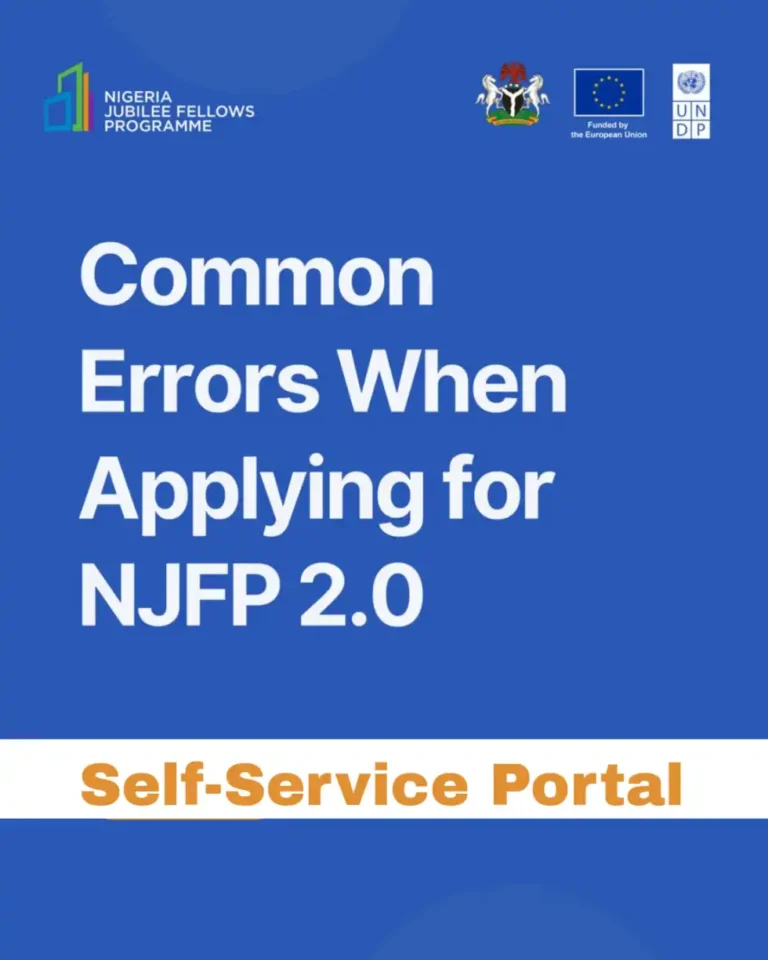
NJFP 2.0 opens self-service portal for nin and email correction

0

The latest update is that the Nigeria Jubilee Fellows Programme (NJFP) 2.0 has now made it possible for applicants to correct error in their NIN or email using a self-service correction portal. However, this option can only be used once.

NJFP 2.0 stated that, “If you made an error in your NIN or email, use the self-service correction option using this link – https://self-service.njfp.ng/ – You only have ONE chance to make changes. Use it wisely.”

The programme has also listed out the common errors when applying for NJFP 2.0 that applicants have faced.

Verification failed is one of the common issues applicants encounter. This error may occur due to temporary downtime or a connection issue with the NIN verification service provider. Applicants are advised to wait and try again later.

Another issue is NIN mismatch or invalid NIN. This typically happens when the NIN is mistyped or incomplete, or when the name on the NJFP application doesn’t match the name on the NIN record. Applicants are urged to ensure their details match exactly as they appear on their NIN, including correct spelling. Those who have changed their names are advised to update their NIN record first. If an NIN record is incorrect, applicants should visit a NIMC office to update it before trying again.

Some applicants also see a “Not Eligible” message after entering their NIN. This may appear if the applicant is over 30 years old (born before 1995), graduated earlier than 2022, is a past NJFP fellow or alumnus, or does not meet other eligibility requirements.

Applicants who make an error in their NIN or email should simply use the self-service correction option link to correct them. Remember, it can only be used once.

Advertisement

Edo announces vegetable farming training in Benin City

0

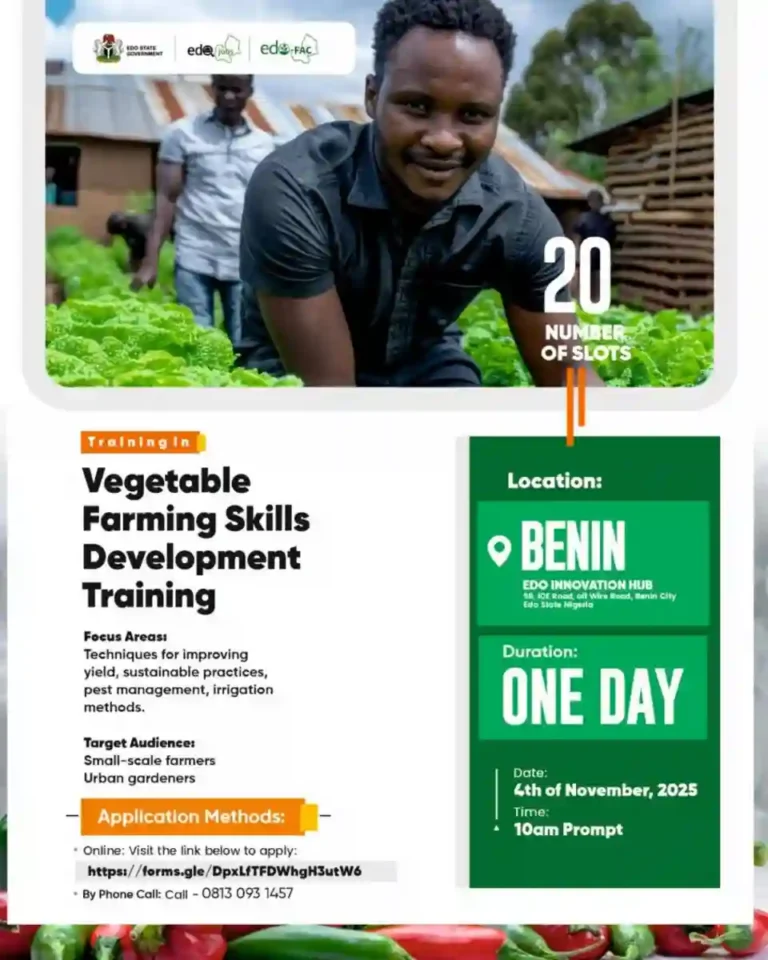
Edo State Skills Development Agency (ESSDA) has announced a one-day Vegetable Farming Skills Development Training in Benin City to help small-scale farmers and urban gardeners grow their farming skills. The event will take place at the Edo Innovation Hub on 4th November 2025, starting at 10am prompt.

According to the organisers, the training is designed to equip participants with modern techniques for improving yield, pest management, sustainable practices, and efficient irrigation methods. “We want to help farmers increase productivity and adopt better farming methods for long-term success,” the agency stated.

The training targets small-scale farmers and urban gardeners in Edo State. Only 20 slots are available. Interested participants are encouraged to apply early through forms.gle/DpxLfTFDWhgH3utW6.

Oluremi Tinubu launches rhi ICT empowerment for 320 Edo women

The First Lady of Nigeria, Senator Oluremi Tinubu, has launched the Renewed Hope Initiative (RHI) Women’s Information and Communications Technology (ICT) Training and Empowerment Programme 2025 in partnership with the National Information Technology Development Agency (NITDA). The event took place today at Prestige Hotel, G.R.A, Benin City.

Represented by the Managing Director of the Edo State ICT Agency, Mr. Eghosa Urhoghide, Senator Tinubu said the initiative demonstrates her commitment to promoting gender equality and unlocking the potential of women across Nigeria. She encouraged participants to take full advantage of the opportunity, noting that their dedication and success would mark “a significant step towards a brighter future.”

The Coordinator, Office of the Edo First Lady, Mrs. Edesili Okpebholo Anani, stressed the importance of digital inclusion as a major driver of socio-economic development and innovation. Represented by the Special Adviser to the Governor on Special Duties, Mrs. Betty Okonoboh, she explained that ICT skills can transform the lives of women by enhancing their economic and social independence.

The ICT empowerment programme will train and equip 320 women from all six geopolitical zones and the Federal Capital Territory with essential technology skills. This initiative supports the Renewed Hope Agenda’s vision of using digitalization to promote economic growth, bridge the gender gap in technology, and boost women’s participation in Nigeria’s digital economy.

BIODEC Odi boosts food security, youth empowerment in Bayelsa

0

The Bioresources Development Centre (BIODEC), Odi, under the National Biotechnology Research and Development Agency (NBRDA), is spearheading innovative bioresource projects designed to boost food security, create jobs, and promote sustainable development in Bayelsa State and neighbouring communities.

Located in Bayelsa State, the Centre is one of the 39 Bioresources Development Centres established nationwide by NBRDA to advance biotechnology research and enterprise development. Under the vision-driven leadership of the Director General, Prof. Abdullahi Mustapha, the Centre is becoming a hub for bioresource innovation, enterprise incubation, and youth empowerment in the Niger Delta.

The Centre’s Coordinator, Dr. Timi Wood, explained that BIODEC Odi has launched a Lowland Rice Project to evaluate the growth and yield performance of improved rice varieties suitable for the Bayelsa environment. According to him, “Lowland rice refers to rice cultivation in fields that are flooded, semi-flooded, or where water accumulates. This initiative focuses on testing high-yielding rice varieties that can thrive in these conditions.”

Dr. Wood said the project includes seed multiplication, demonstration farms, and training for farmers and youths on modern agronomic practices such as land preparation, seed treatment, nutrient management, and pest control. He noted that by linking farmers to local rice milling and processing markets, the initiative will boost local production, create income opportunities, and reduce dependence on imported rice, supporting Nigeria’s food security and self-reliance goals.

To further promote food and industrial cassava production, the Centre has distributed free cassava stems to farmers and entrepreneurs. “This step aims to improve rural livelihoods and drive national agro-industrial growth,” Dr. Wood added.

In addition, BIODEC Odi has provided fingerlings for sale to aquaculture entrepreneurs across Bayelsa and neighbouring states. The Centre has also introduced Black Soldier Fly (BSF) maggot production as a sustainable and protein-rich feed option, reducing feed costs and promoting environmentally friendly aquaculture.

Beyond research, the Centre is nurturing bio-entrepreneurs through its Bio-Entrepreneurship Training Services (BETS), which offers hands-on training in aquaculture, cassava processing, and animal breeding. The programme targets youths, women, and rural entrepreneurs, empowering them to establish profitable, science-based enterprises.

Nasarawa scholarship board calls applicants for bvn, account verification

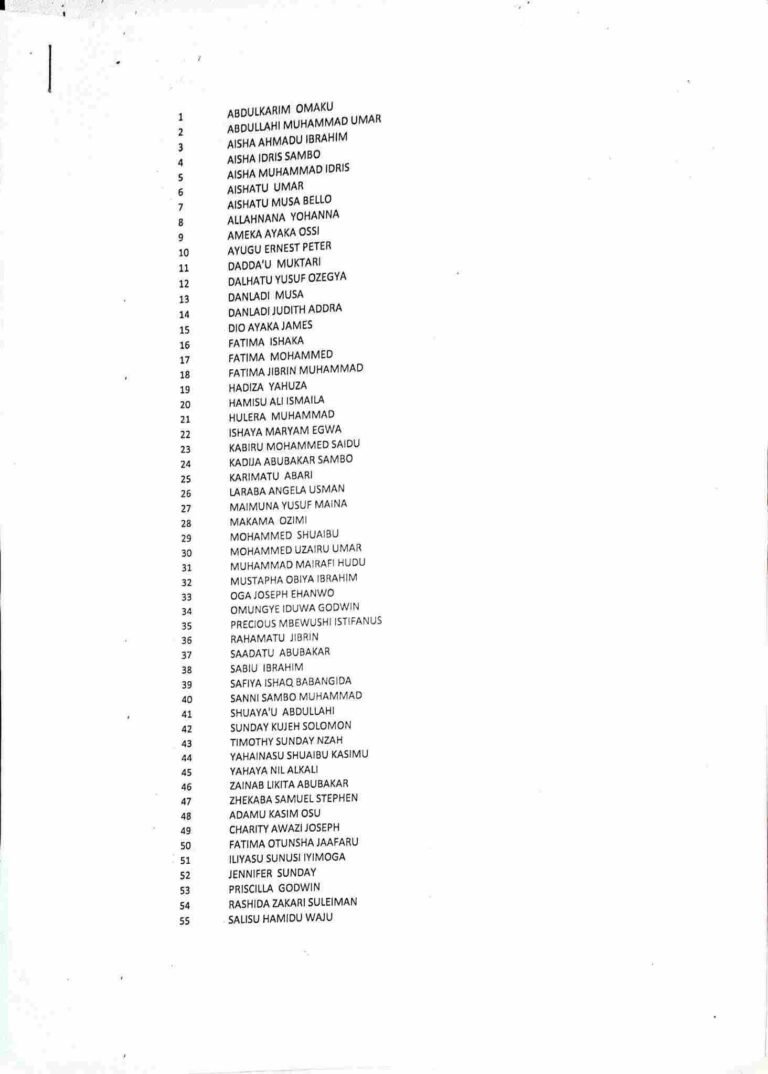
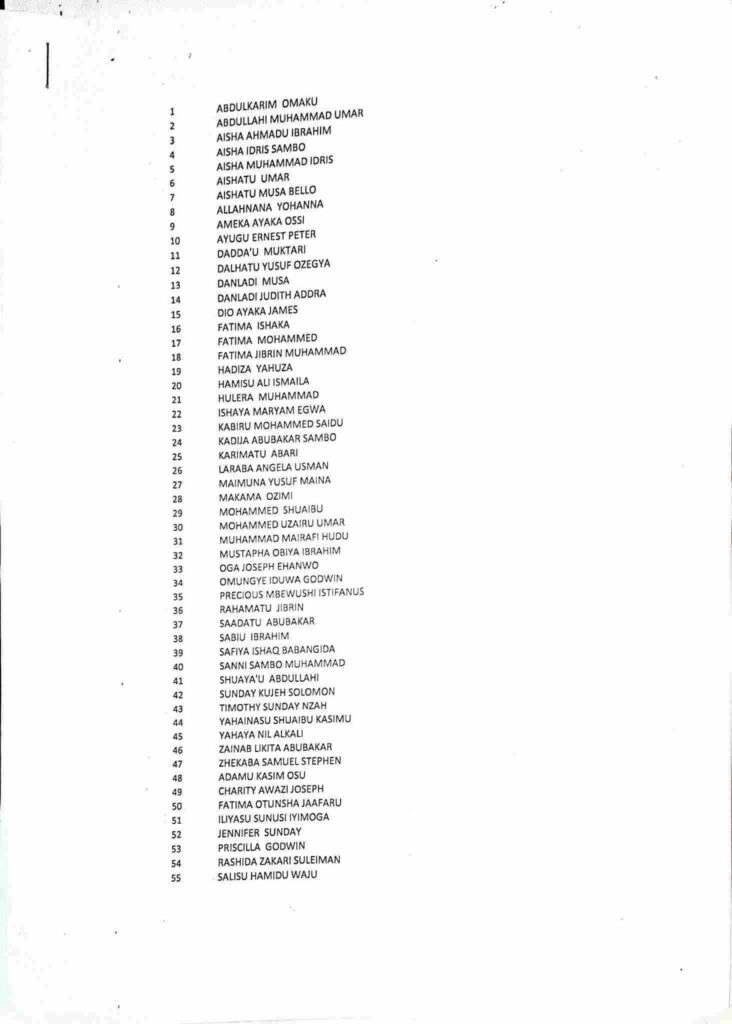
Nasarawa State Scholarship Board (NSSB) has released a public notice calling on 139 applicants whose names appeared again on the new list to report to the Board’s office on Wednesday, 29th October 2025, for BVN and account number verification. The management advised all concerned applicants to comply accordingly to ensure a smooth disbursement process.

According to the statement, “The disbursement exercise is still in progress, and the Board sincerely appreciates your patience and understanding.” The scholarship scheme aims to support students across Nasarawa State with financial aid.

Attached below is the list of candidates.

EFCC links yahoo yahoo to youth laziness and Peer Pressure

The Chairman of the Economic and Financial Crimes Commission (EFCC), Ola Olukoyede, has identified laziness, lack of patriotism, and peer pressure as the major factors pushing Nigerian youth into cybercrime and other criminal acts.

Mr Olukoyede made this known on Monday during an orientation and sensitisation programme for new students at the Air Force Institute of Technology, Nigerian Air Force, Mando. He was represented by Nana Fatima Abubakar from the EFCC’s Kaduna zonal directorate.

In a statement released by the anti-graft agency, Mr Olukoyede explained that many young Nigerians are largely responsible for cybercrime in the country. The statement said that “peer pressure, lack of patriotism, greed, and laziness are the main catalysts for youth involvement in internet fraud.”

The EFCC chairman also warned about the growing link between cybercrime, drug abuse, and criminal fetish activities. He noted that these dangerous habits have become closely connected with internet fraud operations, putting many young people at risk of losing focus and moral direction.

Charging youths to embrace integrity and discipline, the statement added that there is “no shortcut to wealth.” It emphasised that “hard work, perseverance, and dedication remain the true paths to success.”

According to the EFCC, the quest to get rich quickly often leads to severe consequences, including “loss of freedom, image damage, depression, and untimely death in some instances.”

The anti-graft boss further urged students across Nigeria to support the national campaign against corruption and financial crimes. The statement also advised that students can report such offences through the EFCC’s Eagle Eye App, which ensures complete anonymity for whistleblowers.

Gombe to begin Civil Servant verification exercise

All is set for the commencement of a comprehensive civil servant verification exercise across Gombe State.

The Chairman of the State Technical Committee for the exercise, Musa Jonga, announced that the verification will cover all civil servants across Ministries, Departments, and Agencies (MDAs) in the state.

He, however, clarified that judicial staff, medical personnel in field facilities, and teachers are exempted from the exercise.

According to Jonga, the verification will involve physical screening, biometric data capture, and updating of personnel records, with the goal of creating a reliable and accurate civil service database for the state. He said the exercise will help improve transparency, accountability, and efficiency in the public sector.

The verification is scheduled to commence tomorrow, beginning with staff of the Government House, followed by personnel from the Office of the Secretary to the State Government (SSG). The committee aims to verify at least 200 civil servants daily to ensure steady progress of the process.

Civil servants are required to appear in person with their documents including first appointment letter, confirmation of appointment (permanent and pensionable), birth certificate or age declaration, personal subhead number, latest promotion letter, posting or deployment letter, evidence of secondment or approved leave of absence, BVN slip, NIN slip, and original academic certificates.

Jonga emphasised that “the exercise is not punitive, but part of the state government’s ongoing civil service reform to strengthen efficiency, transparency, and accountability in the public sector.”

FG to expand cash transfer programme beyond 15 million households

The Federal Government has announced plans to expand its direct cash transfer programme to reach more poor and vulnerable Nigerians. The Minister of Finance and Coordinating Minister of the Economy, Wale Edun, disclosed this at the Oxford Global Think Tank Leadership Conference and Book Launch held in Abuja on Tuesday.

Edun explained that the initiative, which currently supports over 15 million households nationwide, is part of ongoing efforts to reduce poverty and cushion the effects of economic reforms. He said the government is committed to ensuring that Nigerians begin to feel the benefits of stabilising inflation and exchange rates.

“There is an attempt to ensure that the pains of reform are immediately alleviated. That’s why there is a transparent, accountable, and robust system of providing direct payments to 15 million households,” Edun stated.

The minister added that the programme is built on transparency and accountability through the use of a digital verification system. According to him, the system ensures that all beneficiaries are verified by name, national identity number, and digital payment records.

“In some places, people say they haven’t heard of anyone receiving the payments. We immediately call for the data to verify this because each individual is identified by name, national identity number, and paid digitally—either to a bank account or mobile wallet. There is accountability, transparency, and a record,” he explained.

Edun revealed that the Federal Government is working to expand the cash transfer programme further to reach more beneficiaries, especially at the grassroots level. This move, he said, aligns with the broader goal of reducing poverty and supporting economic recovery.

He also announced a new ward-based development initiative that will channel resources directly to Nigeria’s 8,809 wards across 774 local government areas. “This will empower economically active people at the ward level—small businesses and cottage industries—by providing support and financing. It’s a key element in ensuring that the benefits of current reforms and improvements reach right down to the local level,” he said.

Also speaking at the event, the Founder of the Oxford Global Think Tank Leadership, Dr. Arunma Oteh, called for more investment in infrastructure and human capital to sustain growth.

She noted that Nigeria needs “patient capital” to close its infrastructure gap and drive economic transformation. “China, over the years, invested 24 per cent of its GDP in infrastructure. At best, we do 4 to 5 per cent. If we want to bridge the infrastructure gap, we must raise this to at least 12 per cent,” Oteh said.

She further urged policymakers to invest in young Nigerians, stressing that long-term growth depends on continuous investment in people and infrastructure.

Lagos State launches free TVET programme for youths

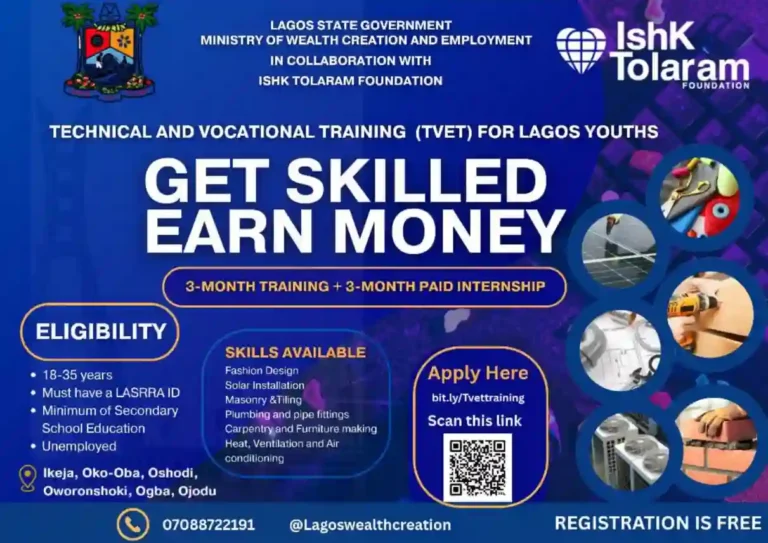
The Lagos State Government has launched a free Technical and Vocational Education and Training (TVET) programme for young residents through the Ministry of Wealth Creation and Employment, in partnership with the Ishk Tolaram Foundation.

The initiative, tagged “Get Skilled, Earn Money,” is designed to equip youths with practical skills and hands-on experience that will enhance employability and promote self-reliance across the state. According to the government, the empowerment scheme will run for six months, beginning with a three-month intensive vocational training phase, followed by a three-month paid internship that offers industry exposure and real-life work experience.

Officials said the programme targets unemployed youths between the ages of 18 and 35 who possess a Lagos State Residents Registration Agency (LASRRA) ID and have completed at least secondary school education. The training covers high-demand vocational areas such as Fashion Design, Solar Installation, Masonry and Tiling, Plumbing and Pipe Fitting, Carpentry and Furniture Making, as well as Heating, Ventilation and Air Conditioning (HVAC).

The Ministry noted that training centres have been strategically established in Ikeja, Oko-Oba, Oshodi, Oworonshoki, Ogba, and Ojodu to ensure accessibility.

“This initiative is part of our commitment to empower Lagos youths with employable skills and reduce unemployment,” a representative of the Ministry said.

Interested applicants can register online via bit.ly/Tvettraining or by scanning the QR code provided on the programme’s flyer. Registration for the TVET programme is completely free.

Wale Edun says price of rice now N80,000 from N120,000

0

In a recent piece titled Nigeria Turns Towards Prosperity, the Minister of Finance and Coordinating Minister of the Economy, Wale Edun, said Nigeria has entered a new phase of stability and growth after years of economic turbulence. According to him, the country is moving from crisis to stability, and the signs of recovery are now becoming more visible in key economic indicators.

Edun noted that food prices, which have been a major concern for many Nigerians, are finally starting to come down. “A bag of rice that cost about ₦120,000 last year now averages around ₦80,000. The prices of garri, pepper, tomatoes, and other essentials have also decreased,” he said.

He expressed both pride and hope, while acknowledging the challenges that Nigeria has faced in the past. “In this role, I often feel a mix of emotions: deep pride in our national journey, regret over the opportunities we failed to seize, and confidence in our direction of travel today. Despite some historical shortfalls and present-day challenges, I believe the most difficult phase of our economic journey is behind us. Nigeria has turned a decisive corner. The road ahead will demand hard work and discipline, but we are firmly on the right path,” he said.

Edun explained that when President Bola Ahmed Tinubu took office in 2023, the economy was “on the brink of fiscal collapse” due to slowing growth, high inflation, and market distortions caused by the fuel subsidy and multiple exchange rate systems. “The President’s mandate was clear – dismantle those market distortions, reward productivity, and create a climate where private investment can thrive,” he said.

According to him, two years after those reforms began, the results are now showing. “GDP grew by 4.23 percent in the second quarter of 2025. Inflation, while still high, has moderated to 18.02 percent after six consecutive months of decline. The exchange rate has stabilised, and the gap between official and parallel markets has narrowed to about 1 percent, down from a peak of nearly 70 percent. Importantly, foreign reserves have risen above $43 billion, the highest since 2019,” he added.

Edun explained that while the macroeconomic numbers are encouraging, the government understands that “the economy is ultimately about people, not statistics.” He said that millions of Nigerians measure progress by the cost of food, transport, and other essentials, adding that food inflation has been the most painful challenge since the removal of fuel subsidies and currency depreciation.

However, he said that targeted government measures are easing the pressure on households. “At the same time, we are careful to ensure our smallholder farmers have enough incentives to return to farms next planting season. We are therefore implementing programmes that stimulate agricultural production by safeguarding smallholder farmers’ incomes,” he stated.

He added that the government has provided financial support to millions of homes across the country. “8.1 million households nationwide have received direct cash support from the government to help meet basic needs. This is more than a safety net; it ensures that the impact of these necessary reforms is cushioned for the most vulnerable among us, even as we continue to resolve the identity verification issues required to reach our 15 million households’ target,” he said.

On Nigeria’s debt and revenue situation, Edun said, “The progress we have made does not diminish the tough realities we still face. Debt service costs remain heavy, consuming a larger-than-ideal share of our revenues. This is the consequence of past borrowing and elevated interest rates.”

He further highlighted that Nigeria’s revenue-to-GDP ratio “remains one of the lowest in Africa, at about 10 percent after rebasing,” which limits the government’s ability to fund key services like health, education, and infrastructure.

To address this, he noted that President Tinubu signed the new Nigeria Tax Act and related legislation on 26 June 2025, which will take effect from 1 January 2026. “These reforms aim to broaden the tax base, simplify compliance, and reduce leakages, while introducing a more progressive tax regime that shields lower-income earners and adjusts rates for higher earners,” he said.

He mentioned that along with the Revenue Optimisation and Assurance Programme (RevOp), these measures will “strengthen revenues, create fiscal space, and support greater investment in our people and infrastructure.”

Speaking on sectoral growth, Edun emphasised that stability alone is not enough for sustainable development. “A stable economy is crucial, but stability alone is insufficient. To deliver inclusive prosperity, we must anchor growth in sectors that generate jobs and opportunities,” he said.

He revealed that the government is “providing necessary incentives to revive investments in the oil and gas industry.” He added that with improved security, oil theft has declined, and production has increased to 1.68 million barrels per day, including condensates.

He said that new refinery projects are also positioning the downstream oil sector for a revival. “In agriculture, we are boosting food supply, reducing reliance on imports, and ensuring farmers have security and access to markets,” he said.

He added that Nigeria is encouraging investment in factories and strategic value chains to create employment for the country’s young workforce. He also said that the government is investing in technology and the creative sector to harness youth innovation and make Nigeria a leading hub in Africa.

“In addition, we are expanding exports beyond oil by tapping into the global demand for critical minerals,” he said.

Edun also highlighted the role of infrastructure as the “backbone of growth,” noting that public funds alone are not enough to meet Nigeria’s infrastructure needs. “We are attracting private capital through public-private partnerships. The Ajaokuta–Kaduna–Kano gas pipeline, and Project Bridge’s 90,000 km fibre expansion are examples of how we are laying out the groundwork for industrialisation and nationwide connectivity,” he stated.

Speaking about restoring investor confidence, Edun said the signs of recovery are already visible. “The clearest sign that Nigeria is on the right path is the return of confidence. Investors – both domestic and foreign, multilateral institutions, and ordinary citizens are starting to believe in the nation’s prospects again,” he said.

He cautioned, however, that confidence is fragile and must be maintained through consistent policies. “Sustaining it demands a predictable policy environment, disciplined fiscal management, and steady progress in reducing inflation,” he said.

Looking ahead, Edun said the government’s medium-term target is to achieve 7 percent GDP growth by 2027/2028. “Achieving this will require not only government action but the full participation of the private sector, entrepreneurs, and citizens. I am confident that if we work together, we will not only meet this target but surpass it,” he said.

He ended with a message of optimism. “The task ahead, therefore, is to deepen resilience, broaden opportunities, and ensure that reforms translate into real improvements in daily life—better schools, affordable food, reliable power, accessible healthcare, and jobs for our youth. Then, we can be assured that Nigeria’s next decade will be one of shared prosperity and renewed hope,” Edun said.