Home Blog Page 358

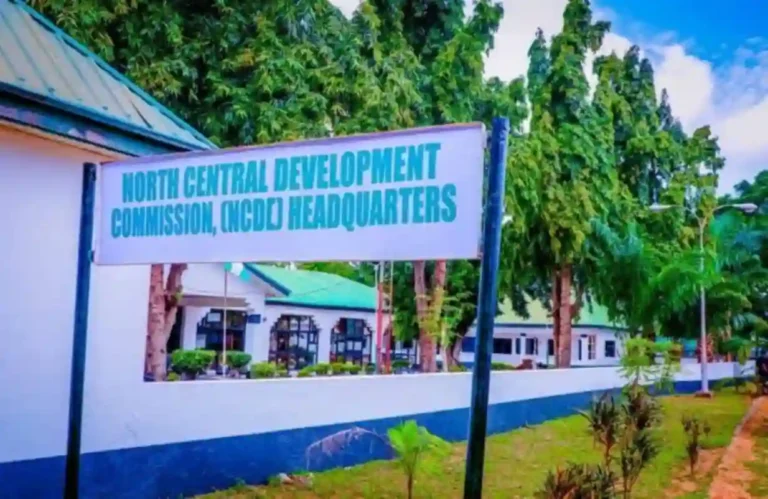
North central development commission denies recruitment claims

0

The North Central Development Commission (NCDC) has cautioned the public against falling victim to fake recruitment schemes being circulated online and through other unofficial channels.

This was contained in a statement signed by the Commission’s Executive Director, Corporate Services, Mr James Uloko, and made available to newsmen on Friday in Lafia.

Uloko clarified that the Commission has not commenced any recruitment exercise. According to him, the clarification became necessary following rumours suggesting that the NCDC is currently employing.

He explained that since the establishment and inauguration of its Board and Management, the Commission has been in the initial phase of developing its organisational structure and determining its human and material resource needs.

“As part of this process, the Commission has commenced engagements with the Office of the Head of the Civil Service of the Federation, the Federal Character Commission, and other relevant government agencies to conduct a comprehensive needs assessment and obtain the necessary waivers and approvals,” he said.

Uloko stated that recruitment would only commence after these fundamental steps were completed and the Commission’s budget proposal received final passage at the National Assembly.

“Any claims of ongoing recruitment are entirely false,” he stated.

He advised members of the public to disregard such rumours and remain vigilant against scammers and fraudsters who might attempt to defraud unsuspecting individuals through fake employment offers or online recruitment portals.

Uloko assured that when the time comes, the recruitment exercise would be publicly announced and conducted in line with due process, transparency, and fairness, with the involvement of relevant stakeholders.

Advertisement

5% of TETFund allocated to TVET as cohort 1 training officially begins

0

The Technical and Vocational Education and Training (TVET) Programme has officially commenced its training phase, marking a major step in Nigeria’s skills development drive. Speaking at the launch, the programme coordinator announced, “I am pleased to announce the official kickoff of the training phase of our TVET Programme.”

Since its launch in May, the initiative has attracted over 1.3 million applications for the 6–12 month master training track, out of which 970,000 have been certified as eligible. These trainees will gain hands-on experience across 25 National Board for Technical Education (NBTE)-approved trades, including Hospitality, Fashion and Garment Making, Livestock and Animal Husbandry, and Solar Photovoltaics, among others.

According to the statement, “The first cohort of 250,000 trainees has already been matched to over 1,700 training centres across the country.” The coordinator added that he had personally visited two training centres in Abuja, expressing optimism about the level of participation and enthusiasm among young Nigerians. “I was encouraged by what I witnessed — young Nigerians, many of whom are already tertiary-educated, now seeking practical, industry-relevant skills to improve their livelihoods and contribute meaningfully to the economy,” he said.

Highlighting the government’s commitment, President Bola Ahmed Tinubu, GCFR, has approved that 5% of Tertiary Education Trust Fund (TETFund) resources be allocated to support and expand the TVET initiative nationwide. The move aligns with the President’s goal of transforming Nigeria from a resource-based economy to a knowledge-driven economy.

“This is Renewed Hope in Action,” the statement concluded.

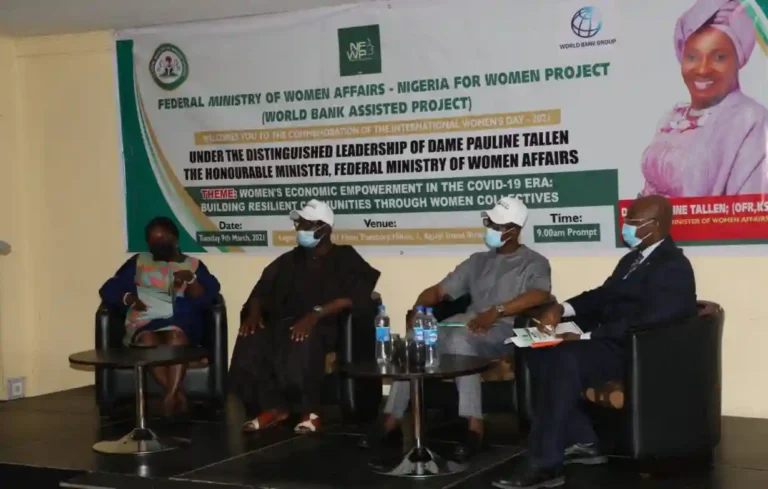
NFWP-SU: FG to empower over 4 million women in all 36 states, FCT

The Federal Government has announced the full-scale expansion of the Nigeria for Women Programme Scale-Up (NFWP-SU) to all 36 states and the Federal Capital Territory, targeting over four million women across the country to boost financial inclusion, livelihood support, and social protection.

Speaking at the inauguration of the Federal Steering Committee for the Nigeria for Women Programme Scale-Up Project in Abuja, the Minister of Women Affairs, Hon. Imaan Sulaiman-Ibrahim, said the initiative marks a transformative phase in Nigeria’s social protection and women’s economic empowerment agenda.

According to the minister, the scale-up builds on lessons from the initial phase of the programme, which ran from 2018 to 2024, and aligns with the national Gender Equality and Women’s Empowerment Agenda, as well as the Nigeria Women Economic Empowerment Policy (WEE). She disclosed that although the project took off 18 months later than planned, it is already operational in about 18 states and has been rated “satisfactory” by the World Bank after its latest implementation support mission.

“The NFWP-SU is a resilient economic base model designed to build a national network of micro-entrepreneurs, savers, and borrowers who form the bedrock of a stable economy,” Sulaiman-Ibrahim said.

She added, “We aim to reach about four million women across the nation, advancing SDG 5 on gender equality and SDG 16 on peace and social cohesion.”

The minister expressed concern about the high level of gender inequality in economic participation, revealing that about 70 per cent of Nigerian women live in extreme poverty, with only 10 per cent having access to land ownership. She added that women earn 45 to 50 per cent less than men in similar roles and that only 34 per cent of women have access to digital technology, compared to 88 per cent of men.

Sulaiman-Ibrahim explained that the scale-up phase would replace fragmented interventions with a comprehensive model that can reshape local economies, reduce household vulnerability, and position women as key drivers of inclusive growth and economic stability.

She noted that the initiative also aligns with the World Bank Group’s Global Crisis Response Framework, particularly in addressing food insecurity through support for agricultural productivity and climate-resilient livelihoods. The minister highlighted the importance of collaboration with partner ministries such as Agriculture, Health, Water Resources, Finance, Environment, Communications, and Digital Economy in achieving the project’s goals.

“When we empower a woman, we empower a household; and when we empower millions of women, we recalibrate an entire economy,” she said. She called on all implementing partners to work together to sustain the project’s progress and ensure that it delivers meaningful results.

Delivering his goodwill message, Minister of Budget and Economic Planning, Senator Abubakar Atiku Bagudu, described the inauguration as a major step toward institutionalising women’s empowerment and inclusive economic growth. He noted that the Terms of Reference and Work Plan adopted by the steering committee would promote coordination, transparency, and measurable impact across all levels of implementation.

Representing the World Bank Country Director, Mr. Michael Ilesanmi, commended the Nigerian government for scaling up the initiative and reaffirmed the Bank’s continued support. He said the Nigeria for Women Project remains the largest women’s economic empowerment programme in Africa and has become a model for similar projects in other countries.

“The world is looking up to Nigeria on how to do women’s economic empowerment right,” Ilesanmi said. He added that the scale-up is expected to create access to finance and markets for about five million women and their households, helping to reduce poverty and stimulate growth in local economies.

Other goodwill messages came from representatives of the Ministries of Health, Humanitarian Affairs and Poverty Reduction, Industry, Trade and Investment, and Communications and Digital Economy. They each pledged their ministries’ support to ensure the smooth and effective implementation of the project nationwide.

In her vote of thanks, the Permanent Secretary of the Federal Ministry of Women Affairs, Dr. Maryam Adebola, appreciated the World Bank and other partners for their continued collaboration. She reaffirmed the Ministry’s commitment to building “a framework that lifts women, families, and communities toward national prosperity.”

Stakeholders at the event agreed that the Nigeria for Women Programme Scale-Up represents a crucial step toward bridging gender inequality and driving inclusive growth under the Renewed Hope Agenda of President Bola Ahmed Tinubu.

With Nigerian women contributing between 70 and 80 per cent of agricultural labour but still largely excluded from land ownership and financial services, the NFWP-SU is expected to empower millions of women through access to finance, training, and sustainable livelihood opportunities.

BOA, UN launch $200M fund to support displaced Nigerians

Senior United Nations officials have commended Nigeria for its leadership in addressing internal displacement and urged sustained international support to achieve long-term, development-based solutions. This recognition came as the International Organisation for Migration (IOM) and the Bank of Agriculture Limited (BOA) signed a Memorandum of Understanding (MoU) to enhance access to sustainable livelihoods for migrants and displaced persons across Nigeria.

The agreement, signed by IOM’s Deputy Director General for Operations, Ugochi Daniels, and the Managing Director and Chief Executive Officer of the Bank of Agriculture, Ayo Sotinrin, establishes a $200 million Agriculture and Livelihood Support Fund aimed at improving the lives of forcibly displaced persons in Nigeria.

At the end of a three-day joint mission to Nigeria, IOM’s Deputy Director-General for Operations, Ugochi Daniels; the Assistant High Commissioner for Operations at the UN Refugee Agency (UNHCR), Raouf Mazou; and the Director of the Crisis Bureau at the UN Development Programme (UNDP), Shoko Noda, called on global and national partners to build on Nigeria’s progress through coordinated and inclusive approaches.

The delegation highlighted that Nigeria’s forthcoming National Development Plan (2026–2030) offers a key opportunity to integrate durable solutions for internally displaced persons (IDPs) into the country’s development and financing priorities. They also urged international financial institutions and development partners to scale up long-term financing, noting that consistent investment is vital to move from humanitarian response to economic recovery, self-reliance, and resilience.

During their visit to Yobe State, the delegation met with the State Policy Advisory Committee on Durable Solutions, chaired by the Deputy Governor, traditional leaders, commissioners, and IDP representatives. The state authorities confirmed that 24 percent of Yobe’s annual budget was dedicated to implementing its State Action Plan on Durable Solutions—one of the highest government allocations globally.

Daniels stated, “Humanitarian needs remain urgent and security remains a top priority, but durable solutions cannot be achieved through humanitarian aid alone. What we witnessed in Yobe State is government leadership and development approaches in action. Importantly, IDP representatives took part in the discussions as members of the official delegation, reflecting a shift from being seen as beneficiaries to recognised partners and decision makers.”

Nigeria is one of 15 pilot countries under the UN Secretary-General’s Action Agenda on Internal Displacement and continues to demonstrate strong national ownership through the National Policy on Internal Displacement (2022) and State Action Plans for Durable Solutions in Borno, Adamawa, Yobe, and Benue states.

Mazou said, “Nigeria’s experience shows a clear shift is taking place from humanitarian aid to self-reliance, from short-term response to long-term recovery. What makes Nigeria unique is its commitment to pairing public investment with private sector engagement. Harnessing private capital and innovation is essential to create jobs, rebuild livelihoods, and help displaced families achieve self-sufficiency.”

In Abuja, the delegation held meetings with the Federal Ministry of Budget and Economic Planning and the Federal Ministry of Humanitarian Affairs and Poverty Reduction. The discussions focused on embedding durable solutions for internally displaced persons into Nigeria’s next National Development Plan (2026–2030) and mobilising long-term blended financing to maintain progress. The Nigerian government reaffirmed that internal displacement remains both a development and investment priority.

Noda stated, “Nigeria’s leadership on durable solutions is impressive, and the ingredients for success are already in place. Nigeria has the potential to build a comprehensive model in support of solutions, one that can inspire similar progress in other displacement contexts.”

The officials explained that Nigeria has benefited from the global framework for advancing IDP solutions. Funding to UN agencies through the Internal Displacement Solutions Fund (IDSF) has provided vital support for state-level data, policy development, and coordination structures. Through the global Solutions Hub, a Resident Coordinator Adviser on Durable Solutions is also ensuring stronger system-wide collaboration.

The UN officials reaffirmed their support to work with the Nigerian government in driving durable, inclusive, and nationally owned solutions to internal displacement. They called on international and local partners to continue providing financial and technical support that matches Nigeria’s growing ambitions for long-term recovery and stability.

Meanwhile, the newly signed MoU between IOM and the Bank of Agriculture marks a key milestone in the country’s efforts to tackle displacement through sustainable development. The partnership establishes the $200 million Agriculture and Livelihood Support Fund, designed to promote inclusive economic growth and empower migrants and displaced persons across the country.

Daniels said, “This partnership reflects our shared commitment to advancing sustainable solutions for migrants and communities. By linking migration management with development financing, we can create inclusive economic opportunities that empower people to rebuild their lives, contribute to local economies, and reduce aid dependency.”

The MoU underscores Nigeria’s determination to address the root causes of displacement and irregular migration while boosting economic inclusion and resilience. It aligns with Nigeria’s national development goals and the African Union’s Agenda 2063, reinforcing efforts toward stability and self-reliance in regions affected by conflict, food insecurity, and poverty.

According to Sotinrin, “The Bank of Agriculture, in executing the vision of the Presidency, views this fund as a crucial step in transforming the landscape of rural poverty. This partnership unlocks productivity through people-centred investment that enables the economic inclusion of migrants and, critically, positions displaced and vulnerable Nigerians as active, valued contributors to rural development, community resilience, and the national economic stability promised by the Renewed Hope Agenda.”

The signing of this agreement comes as Nigeria intensifies its push to address the root causes of displacement and irregular migration. The country currently hosts more than 3.5 million internally displaced persons, many of whom have lost access to farmland, income opportunities, and productive assets due to conflict, insecurity, and climate-related challenges.

This partnership between IOM and BOA aims to bridge critical economic gaps and provide a strategic pathway for locally driven intervention. It will improve access to agricultural inputs, financial inclusion, market linkages, and capacity development for IDPs, returnees, and host communities, thereby reducing aid dependency.

The initiative also aligns with the United Nations Sustainable Development Cooperation Framework (UNSDCF) and supports Nigeria’s broader national strategies on economic recovery and rural transformation. It is expected to serve as a model for migration-sensitive development financing in Africa, promoting agricultural development, job creation, and inclusive growth.

Parallex Bank opens 2025 graduate trainee program

0

Parallex Bank has announced the commencement of its 2025 Graduate Trainee Program, designed to empower young and ambitious graduates with the skills and experience needed to thrive in the fast-changing banking and finance sector.

According to the bank, “The Parallex Bank Graduate Trainee Program is tailored for ambitious young graduates seeking to explore limitless career opportunities in the dynamic banking and finance sector.” The institution explained that the program is structured to nurture and empower emerging talent, fostering a new generation of innovative leaders ready for future challenges.

Participants in the program will undergo an intensive curriculum that focuses on developing both soft skills and technical expertise vital for success in the industry.

Highlighting the bank’s vision, Parallex Bank stated, “We are redefining the banking experience through a customer-centric approach and cutting-edge digital innovations. We’re committed to delivering unparalleled value to our stakeholders by offering a product portfolio that prioritizes simplicity and innovation.”

The bank emphasized its dedication to providing personalized solutions, supported by a strong customer-focused ecosystem that integrates technology and human expertise to enhance customer satisfaction.

Interested candidates must have completed the National Youth Service Corps (NYSC) or present an exemption certificate, possess a minimum of a Second Class Lower degree from a recognized university, and have at least five O’Level credits including Mathematics and English in not more than two sittings. Applicants must not be older than 26 years.

Applications can be submitted through the official link: bit.ly/ParallexGTP2025.

SMEDAN trains 100 rural women entrepreneurs in Niger State

0

The Small and Medium Enterprises Development Agency of Nigeria (SMEDAN) has partnered with the Better Life Program for the African Rural Woman, chaired by Aisha Babangida, to empower 100 female entrepreneurs in Minna, Niger State.

Unlike entrepreneurs in urban areas who enjoy easier access to finance, mentorship, and business training, many women in rural communities face challenges in finding the right guidance and opportunities to grow their businesses. To address this gap, SMEDAN and the Better Life Program organized a three-day capacity building programme aimed at boosting financial management, business growth, and sustainable enterprise development.

Each of the 100 participants underwent intensive sessions covering key areas such as business management skills, financial literacy, and exploring growth opportunities tailored to the realities of local entrepreneurs. At the end of the training, every participant received a ₦100,000 business grant to support and expand their ventures.

One of the beneficiaries said, “I used to think grants were only for manufacturers and big businesses, but this training helped me understand that even I, as a ‘nano business’, a new word I learned here, can go to SMEDAN for information and support.”

Another participant added, “Before now, I believed you had to know someone in government to benefit from programmes like this. But this training changed that mindset. I was randomly selected and didn’t know anyone here. I’m grateful to SMEDAN and the Better Life Program for bringing this opportunity right to our doorstep.”

Through initiatives like this, SMEDAN continues to promote women empowerment, entrepreneurship development, and rural economic growth, ensuring that no entrepreneur, no matter how small, is left behind.

Rivers State urges indigenes to apply for Nigerian Navy batch 38 recruitment

Rivers State Government has announced the commencement of recruitment into Batch 38 of the Nigerian Navy Basic Training School. According to the notice, “this is to inform Rivers State indigenes that application is open for recruitment into Batch 38 of the Nigerian Navy Basic Training School.”

Interested candidates are advised to apply online through the official portal at https://www.joinnigeriannavy.navy.mil.ng before the closing date on October 31, 2025. The government emphasized that “the application is free.”

All LGA Chairmen, traditional rulers, and other stakeholders have been urged to “sensitize their constituents of the opportunity.” The application age limit is 18–22 years for SSCE, GCE, NECO, and NABTEB holders, while those with NCE, OND, or professional qualifications such as nurses, drivers, and sportsmen/women must be between 18–26 years by December 31, 2025.

Kwara AGILE scheme to pay N130000 for girls’ school enrollment

Kwara State Government has introduced a new education incentive aimed at reducing the number of out-of-school children, especially girls, across the state.

The initiative, launched under the World Bank-assisted Adolescent Girls Initiative for Learning and Empowerment (AGILE) project, will provide parents with N130,000 for enrolling and keeping their daughters in school.

Speaking during the second day of the third-quarter inter-ministerial press briefing held on Wednesday in Ilorin, the Commissioner for Education and Human Capital Development, Dr Lawal Olohungbebe, revealed that more than 37,000 girls have already been captured to benefit from the programme.

“No girl in Kwara State will receive less than N130,000 to go to school. We have paid our counterpart funds, and the disbursement will begin soon,” the commissioner stated.

He explained that the AGILE project is part of the government’s wider effort to improve access to quality education and empower young girls to reach their full potential.

Dr Olohungbebe also announced that the government has cancelled Parent-Teacher Association (PTA) fees across all public schools, describing the move as a deliberate measure to remove financial barriers that discourage parents from sending their children to school.

According to him, the state has also introduced a second-chance education programme aimed at older youths who missed previous opportunities to complete their schooling.

The commissioner reaffirmed the state government’s commitment to achieving Sustainable Development Goal 4, which focuses on ensuring inclusive and equitable quality education for all by 2030.

FG launches free data, device scheme for 8000 teachers

The Federal Government has launched a new initiative to empower teachers across Nigeria with subsidised mobile devices and free data access to boost professional development and improve classroom delivery.

The scheme, unveiled by the Federal Ministry of Education on Thursday, will benefit 8,000 teachers from the six geopolitical zones in its first phase, which is scheduled to run from December 2025 to July 2026.

The programme is being implemented with technical support from the UK-funded Partnership for Learning for All in Nigeria (PLANE) initiative. It forms part of the government’s broader effort to advance digital learning through the Education Public-Private Partnership (ePPP) framework, aligned with the National Digital Learning Policy (NDLP).

Speaking at the Ministerial Roundtable on Zero-Rated Data and Devices for Nigerian Teachers, the Minister of Education, Dr. Tunji Alausa, described the initiative as a major step towards building a digitally competent teaching workforce capable of delivering quality education in the 21st century.

Alausa said the initiative reflects the government’s strong commitment to bridging the digital divide in the education sector by equipping teachers with the right tools and digital resources to enhance learning outcomes. He praised the PLANE programme and other partners for their collaboration, noting that the partnership demonstrates the importance of joint efforts in achieving Nigeria’s education goals.

According to the minister, participating teachers will gain access to the federal government’s eLearn platform and other approved digital learning resources at no cost. This will be made possible through zero-rated data access provided by partner telecommunications companies and Internet Exchange providers.

“We know it’s unfortunate that teachers are not being paid enough, and we’re not fooling ourselves,” Alausa said. “Giving these teachers devices and expecting them to pay for data is foolhardy. It’s dead on arrival. That’s why we’re here today—to create a path for them to access whatever they need without paying anything.”

In her remarks, the Registrar of the Teachers Registration Council of Nigeria (TRCN), Dr. Ronke Soyombo, hailed the initiative as a major milestone in making digital learning more accessible to teachers nationwide. She stated that the programme would improve teachers’ capacity to use technology in the classroom, bridge the digital divide, and promote continuous professional development while improving education quality across the country.

“The provision of zero-rated, subsidised data bundles is not merely a technical solution—it is a strategic intervention that can accelerate digital inclusion, enhance teacher capacity, and improve learning outcomes nationwide,” Soyombo said.

She added that TRCN is committed to working with all stakeholders to ensure that every teacher in Nigeria becomes digitally empowered and professionally equipped to thrive in a technology-driven education system.

Dr. Alausa also inaugurated the Ministerial Implementation Committee on the Education Public-Private Partnership (ePPP) on Zero Data and Devices.

The committee, which includes representatives from the Federal Ministry of Education, the Universal Basic Education Commission (UBEC), TRCN, telecommunication companies, and EdTech platforms, will provide the cost details for the pilot phase in the fourth quarter of 2025. It will also submit a verified list of participating teachers and schools, as well as produce a comprehensive pilot impact and learning report to guide the nationwide scale-up by July 2026.