Home Blog Page 374

FG highlights youth empowerment programs at life after school summit

0

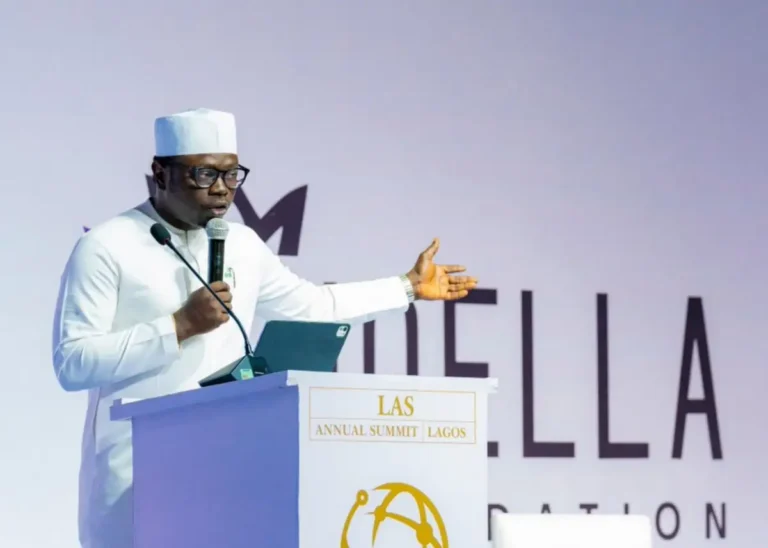
The Honourable Minister of Youth Development, Comrade Ayodele Olawande, has called on young graduates to focus on building character, discipline, and purpose as they transition from campus life to career development. He made this call while delivering the Goodwill Message at this year’s edition of the Life After School (LAS) Summit hosted by the Noella Foundation in Lagos.

Addressing over 500 young graduates, the Minister said the true journey of life begins after school when “certificates give way to character, and grades make room for grit.” He noted that while the path from campus to career is rarely easy, it becomes a launchpad for greatness when combined with the right skills, values, and mindset.

“I reminded the over 500 young graduates in attendance that life will test their patience but never their purpose,” Olawande said. He encouraged the youth to keep learning, volunteer freely, start small but start strong, and build meaningful relationships that will help shape their future. According to him, “What they do in the first five years after graduation will shape the next fifty years of their lives.”

Sharing from his personal experience, the Minister warned against shortcuts that promise quick wealth but take away valuable wisdom. He also advised young people not to compare their stories with others, emphasizing that “every destiny has its own clock.”

Olawande reaffirmed the Ministry’s commitment to empowering young Nigerians through initiatives like NiYA, YouthCred, and Yo! Health under the Renewed Hope Agenda of President Bola Ahmed Tinubu, GCFR. These programs, he said, are designed to ensure that education leads to employment, enterprise, and empowerment for the nation’s youth.

He expressed special appreciation to Mrs. Layal Tinubu and the Noella Foundation for their dedication to nurturing a generation of “doers, dreamers, and nation builders.”

The event highlighted the government’s ongoing efforts toward youth empowerment, innovation, and skill development in Nigeria.

Advertisement

CAC tells youths to seize free 250000 business name registration

The Registrar-General and Chief Executive Officer of the Corporate Affairs Commission (CAC), Hussaini Ishaq Magaji, SAN, has advised Nigerian youths to take advantage of the Federal Government’s free 250,000 business names registration to formalise their businesses.

Hussaini Magaji gave the advice in Kaduna while receiving members of the Association of Northern Nigerian Students (ANNS) on a courtesy visit. He said the initiative was designed to support young entrepreneurs and stimulate economic growth across the country.

According to him, “By this gesture, the CAC is injecting six billion naira into the economy and creating 250,000 jobs mostly for Nigerian youths in order to curb unemployment.” He explained that the initiative is part of a joint project between the CAC and the Small and Medium Enterprises Development Agency of Nigeria (SMEDAN).

Magaji urged the association to create awareness among its members about the project, adding that many youths engaged in content creation and other business ventures would now have the opportunity to register and formalise their operations. He said this would help them access loans, government grants, and business opportunities available to registered enterprises.

He stated that the business registration drive supports the Federal Government’s plan to strengthen Micro, Small, and Medium Enterprises (MSMEs) and improve the ease of doing business in Nigeria.

Speaking earlier, the President of the Association of Northern Nigerian Students, Comrade Abdulmalik Zakari, commended the CAC Registrar-General for his role in promoting MSME development and youth empowerment.

Comrade Abdulmalik described Hussaini Magaji as “a visionary leader who has impacted the lives of thousands of young men and women in the country.” He praised his dedication to reforms aimed at improving Nigeria’s business environment and urged him to continue with the initiatives for the growth of the national economy.

During the visit, the CAC boss was presented with the Sir Ahmadu Bello Sardauna Educational Merit Award as an “Icon of Humanitarian Service.”

Nigeriastartupact.ng previously reported the launch of free CAC registration by CAC and SMEDAN for 250,000 micro, small, and medium enterprises. Interested business owners can register with SMEDAN through the official portal at portal.smedan.gov.ng.

A’Ibom to begin new salary, allowance increase for health workers

The Akwa Ibom State Government will implement the upward review of salaries and special allowances for doctors and other health workers from November 1, 2025. This follows the approval by Governor Umo Eno during the State Executive Council meeting held on October 13, 2025. The Commissioner for Health, Dr. Ekem Emmanuel John, made the announcement on Friday, October 17, 2025, while addressing members of the House of Representatives Committee on Health Services at the Ministry of Health Headquarters in Uyo.

The committee, led by its Chairman, Hon. Dr. Amos Mogaji, was in the state to assess the implementation and performance of the Basic Healthcare Provision Fund (BHCPF) as part of its oversight responsibilities. Dr. John explained that the comprehensive salary review covers both the Consolidated Medical Salary Structure (CONMESS) and the Consolidated Health Salary Structure (CONHESS). He stated that this move would make Akwa Ibom medical doctors and other health workers among the best paid in the country.

According to him, once implemented, doctors and health workers in Akwa Ibom will earn comparatively higher than their counterparts in other states and even those in the federal civil service. He added that the review is aimed at motivating the healthcare workforce and ensuring the delivery of quality healthcare services across the state.

“The review demonstrates Governor Umo Eno’s commitment to improving the welfare of health workers and strengthening the state’s healthcare delivery system,” Dr. John said. “I can boldly say that the review is the largest single one-time percentage review in terms of medical salary in this country. Governor Umo Eno has given a marching order that it must be implemented from 1st November,” he added. He also mentioned that the circular from the Head of Service regarding the new salary structure is expected before the end of the month.

Earlier, the House of Representatives Committee on Health Services inspected several primary healthcare facilities across the state to evaluate the utilisation of the BHCPF and the quality of primary healthcare delivery in Akwa Ibom.

The Executive Secretary of the Akwa Ibom State Primary Healthcare Development Agency (AKSPHCDA), Dr. Eno Attah, and the Executive Secretary of the Akwa Ibom State Health Insurance Agency (AKSHIA), Dr. Igbemi Igbemi, in their separate presentations, outlined the progress made in managing the BHCPF. They highlighted the state’s strategies to achieve universal health coverage and expand access to medical insurance for residents.

The House Committee on Health Services commended the Akwa Ibom State Government for prioritising the welfare of medical personnel, describing the salary review as a bold and progressive step toward strengthening the state’s healthcare system. The committee stated that such motivation would enhance staff retention, improve healthcare delivery, especially in rural areas, and promote transparency in managing public health funds.

With the implementation of the revised salary structure, Akwa Ibom is set to establish a new benchmark for healthcare workforce motivation in Nigeria, reinforcing the government’s commitment to providing accessible and affordable healthcare for all citizens.

Nigeria, China partner to boost women’s participation in gas sector

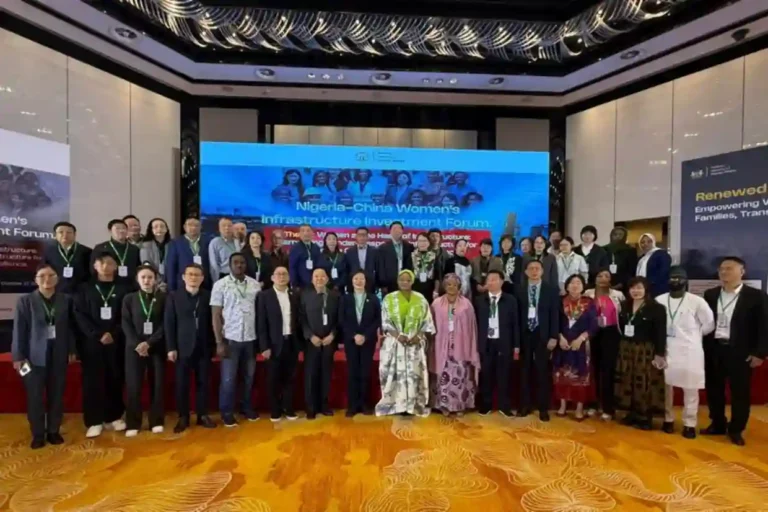
Nigeria and China have strengthened their partnership through the maiden Nigeria–China Women’s Infrastructure Investment Forum held in Beijing, focusing on women’s economic empowerment, inclusive development, and gender-responsive infrastructure. The event was co-hosted by the Minister of Women Affairs, Imaan Sulaiman-Ibrahim, alongside key stakeholders from both nations.

The forum was jointly organised by the Federal Ministry of Women Affairs, the Mutual Commitment Group, the China Chamber of Commerce for the Petroleum Industry (CCCPI), and the Nigeria–China Friendship Association. It brought together senior government officials, investors, and private-sector leaders from Nigeria and China to explore new opportunities for women’s development and economic cooperation.

One major highlight of the event was the signing of a Memorandum of Understanding (MoU) on “Enhancing the Participation of Women in Nigeria’s Gas Sector.” The agreement aims to support Nigeria’s transition to clean energy and expand access to sustainable energy for women-led enterprises and households, which aligns with global goals for renewable energy investment and women empowerment.

Minister Imaan Sulaiman-Ibrahim explained that the MoU reflects President Bola Ahmed Tinubu’s Renewed Hope Agenda, which prioritizes women’s economic inclusion and social protection. She mentioned that the partnership complements other national initiatives such as the Women Agro Value Expansion (WAVE) Programme and the establishment of Safe Spaces and Sexual Assault Referral Centres (SARCs) across the country.

According to the Minister, the forum marks a “decisive shift from policy dialogue to measurable action,” reflecting Nigeria’s commitment to empowering women, strengthening families, and driving shared prosperity. “Through partnerships like these, we are moving from advocacy to execution. The Renewed Hope Agenda is clear — empower women, strengthen families, and create shared prosperity,” she said.

Group Managing Director of the Mutual Commitment Group, Mr. Liu Zhaolong, praised the collaboration, noting its potential for long-term development. He expressed confidence that the partnership would boost investment, promote women’s participation in energy infrastructure, and advance sustainable development goals.

Chairman of the House Committee on Women Affairs, Hon. Kafilat Ogbara, also lauded the Minister’s leadership and reaffirmed the National Assembly’s support for women and children’s rights. “My presence here today is a testament to the collaboration between the Executive and Legislative arms of government. We are here to offer structural assurance that every project discussed today is supported by a strong and progressive legal framework,” Ogbara stated.

Representing the Director-General of the Bureau of Public Procurement (BPP), Mrs. Eugenia Ojeah emphasised the importance of affirmative procurement as a strategy for inclusive growth. “This milestone seeks to empower and encourage the Nigerian woman to live her best life yet. Affirmative procurement remains a global practice for promoting inclusive participation and building stronger societies,” she said.

Ms. Ma Li of the China Chamber of Commerce also commended the Nigerian delegation and highlighted the importance of cross-border cooperation in driving gender-responsive investments and infrastructure development.

The forum featured presentations from private-sector players such as Newbury Energy Ltd and Easy Sales Export, who shared insights from their work under the Ministry’s Renewed Hope Social Impact Interventions (RH-SII 774). The initiative aims to reach 10 million women across Nigeria’s 774 local government areas through projects in agriculture, energy, digital inclusion, and family infrastructure.

Minister Sulaiman-Ibrahim appreciated the Chinese government and all stakeholders for their collaboration and assured that the Ministry would ensure transparent and accountable implementation of the MoU. “These engagements are not ceremonial; they are operational blueprints for change. By investing in women, we are investing in the future of Nigeria,” she stated.

Senator Katung awards N40m scholarships to 400 Kaduna students

0

Senator Sunday Katung of the Peoples Democratic Party (PDP), representing Kaduna South Senatorial District, has awarded scholarships worth N40 million to 400 indigent students across his constituency.

The funds were distributed through the Sunday Marshall Katung Foundation, with each beneficiary receiving N100,000 to support their education in various tertiary institutions.

Speaking at the scholarship presentation held on Saturday in Kafanchan, Mr Katung, who was represented by Bature Likoro, chairman of the Southern Kaduna Community Development Associations, said the initiative was created to ease the financial burden of students and reduce hardship. He described education as “the most powerful tool for social change and human capital development,” pledging to sustain the scholarship programme beyond his tenure as a senator.

Gloria Ballason, chairperson of the foundation’s scholarship committee, revealed that 3,125 students applied for the scheme, but only 400 were selected after a rigorous and transparent screening process. She noted that the beneficiaries were chosen based on their economic backgrounds and academic performance. “It is our hope that this support will make the difference between staying in school and dropping out,” Ms Ballason said.

The secretary of the committee, Edward Auta, called on government and private individuals to invest more in education to create equal learning opportunities. He also urged the beneficiaries to use the funds responsibly.

Delivering a lecture on “Mainstreaming STEM Education for National Development,” John La’ah highlighted that Science, Technology, Engineering, and Mathematics (STEM) are key to innovation and sustainable growth. “In recent development, scientists have agreed that STEM is going to be the game changer, and it is important for us to know this,” he said.

Two beneficiaries, Zingina Precious and Omega Enoch, expressed gratitude, describing the scholarship as a lifeline that arrived at a critical time. They thanked Mr Katung for his continued support to students and less-privileged constituents.

Delta government resumes N15,000 monthly stipends for widows

The Delta State government has resumed the payment of N15,000 monthly stipends to widows under the state’s Widows Welfare Scheme. The scheme’s coordinator, Isioma Okonta, made this known while speaking with journalists in Asaba on Saturday.

Okonta said the beneficiaries started receiving credit alerts on Thursday, confirming that each widow received the stipend in continuation of the government’s effort to support vulnerable women across all 270 wards in the state. He noted that each beneficiary got N45,000 covering the months of August to October.

According to him, the latest payments mark another phase in a welfare programme widely praised for its consistency and impact. He explained that the scheme remains a vital part of Governor Sheriff Oborevwori’s socio-economic policy aimed at lifting vulnerable populations out of hardship.

“This initiative is not just about giving money; it is about restoring dignity, providing hope, and showing our widows that they are not forgotten,” Okonta said.

He added that since its inauguration, the Widows Welfare Scheme has supported thousands of widows by providing a steady source of financial assistance to reduce economic pressure and improve their daily living conditions.

Yobe State launches cohort 2 batch b youth digital training in Gashua

0

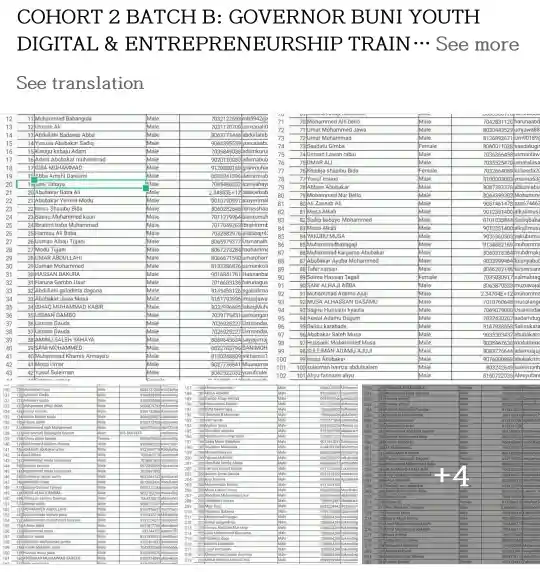
Governor Mai Mala Buni has reaffirmed his administration’s commitment to youth empowerment through the Cohort 2 Batch B Youth Digital and Entrepreneurship Training at the SAIL Skills Acquisition Center, Umar Suleiman College of Education, Gashua, Yobe State.

The program, organized in collaboration with the Yobe State Information Technology Development Agency (YITDA), is scheduled for Saturdays and Sundays, with sessions from 8–10am, 10–12pm, and 2–3pm. The initiative aims to equip young people with vital technology and innovation skills. “Governor Buni’s vision is to transform Yobe’s economy from consumption to production,” the organizers stated.

The training will help participants become self-reliant through digital entrepreneurship and skill development. A list of shortlisted candidates has been released for participation, and is available via the link facebook.com/share/p/1Jbr1a8a9T.

YEIDEP October 20 disbursement uncertain as FG yet to authorize banks

Beneficiaries of the Youth Economic Intervention and De-Radicalization Programme (YEIDEP) are eagerly waiting for the much-anticipated disbursement of funds scheduled to start on Monday, October 20, 2025. The expected payments are said to range between N50,000 and N500,000, depending on the category of each beneficiary. However, it is not certain whether the payments will actually take place, and as such, beneficiaries are advised not to have high hopes.

The document circulating online suggesting that the YEIDEP disbursement will happen between October 20 and 30 is not authentic. The notice, which has spread across social media, has not been confirmed by any official source. In fact, the information has no clear origin, raising doubts about its reliability. This is why Nigeria Startup Act believes that the rumored October 20 disbursement might not take place, even though the proposed dates align with previous YEIDEP activities.

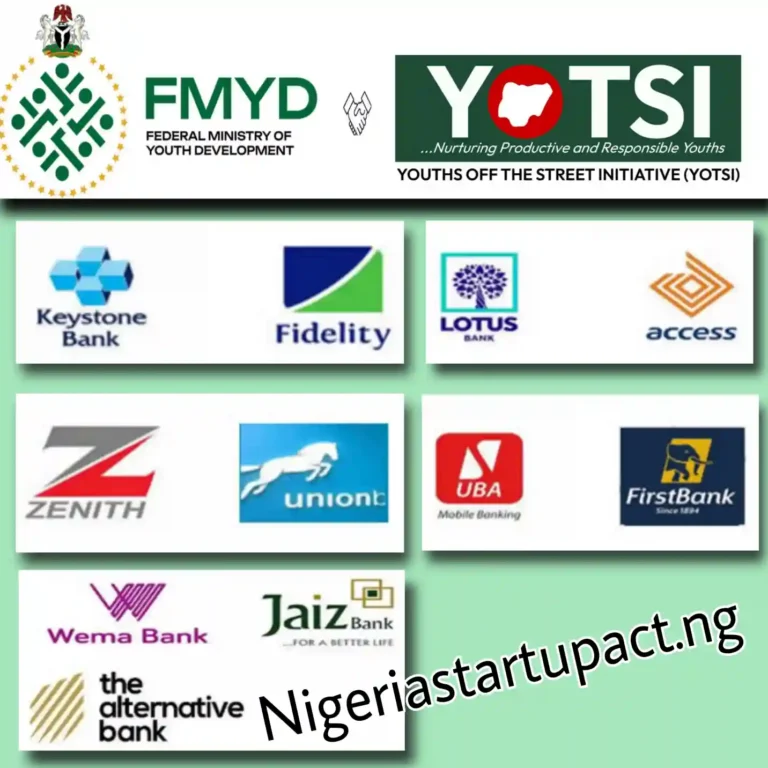
As of the time of this publication, just hours before the rumored date, the federal government has not authorized any of the listed partner banks, Keystone Bank, Lotus Bank, Fidelity Bank, Access Bank, Zenith Bank, Union Bank, UBA, FirstBank, Wema Bank, Jaiz Bank, and The Alternative Bank, to begin payment to beneficiaries. Recently, Alpha Morgan Bank publicly backed the YEIDEP initiative as a step against unemployment, but it remains unclear whether the bank will be officially included among YEIDEP’s payment partners.

At the moment, there is also no verified information about those who made it into the first batch of 8,000 beneficiaries. The only proof available for most candidates is the standard message from participating banks confirming their registration and account activation that say “Your registration for the YEIDEP program is successful,” and subsequently “Your account is active,” (for those who were sent YEIDEP account number via email or SMS) and this is the case for many candidates.

Some candidates have received YEIDEP account numbers via email or SMS, but beyond that, there has been no public confirmation (like a publicly available shortlist) of who qualifies for the Batch A disbursement phase.

There are also growing concerns about the ambitious nature of YEIDEP’s targets. The programme claims it aims to empower 20 million youths and create 100,000 entrepreneurs by 2026, yet with 2025 almost coming to an end, the first batch reportedly consists of only 8,000 beneficiaries. Moreover, over 8 million youths have already registered for the initiative, raising questions about how such a vast number will be reached in the remaining time.

Observers have also criticized YEIDEP and the Federal Ministry of Youth Development (FMYD) for not maintaining active communication channels with participants. Apart from occasional stakeholder engagements and public tours to different states, including Oyo (Ibadan), Akwa Ibom (Uyo), etc., there has been no consistent online presence or official updates. Many beneficiaries have expressed frustration over the lack of a verified social media page or official platform where updates can be regularly monitored.

Nevertheless, if disbursement eventually begins, potential beneficiaries are advised to ensure that their YEIDEP-linked bank accounts are active and upgraded. Fidelity Bank, along with other partner banks, has previously advised YEIDEP candidates to keep their accounts operational. In many cases, a customer must have performed at least one transaction within the last six months to be considered active. Banks have also emphasized the importance of upgrading accounts because of transaction limits. For example, in Fidelity Bank, a Tier 1 account can only receive a single credit of up to N50,000 per day and hold a balance of up to N300,000. This restriction means that such accounts cannot receive the expected YEIDEP payments ranging from N50,000 to N500,000 unless they are upgraded.

For those wondering about eligibility, YEIDEP officials have clarified that the programme is not restricted to farmers. Comrade Kennedy Iyere, the Coordinator-General of YEIDEP, explained that the initiative is designed to include a broad range of young people across various sectors. In his words, “Not just farmers only, but our priority is to engage youths in the agricultural sector, agriculture, food business, food entrepreneurship, and then agro-allied.” He further emphasized that individuals involved in technology, entertainment, and the creative economy would also benefit from the intervention.

However, as anticipation builds, there are concerns about transparency and accountability. Nigeriastartupact.ng previously reported that Comrade Iyere had accused the Central Bank of Nigeria (CBN) of mismanaging funds from previous government programs. According to him, “The Central Bank has a bad reputation for embezzling public funds. No apologies yet. Now, we’ve had programs like NIRSAL and the Anchor Borrowers Program. The Anchor Borrowers Program had government bills valued at ₦1.1 trillion. It was domiciled with the Central Bank, and the money was embezzled. NIRSAL was also coordinated by the Central Bank, and the money got embezzled. They diverted the funds for private use, to the point that they even created a fake microfinance bank.”

From Iyere’s comments, it was evident that holding the Central Bank accountable was difficult in past initiatives. This, according to him, is one of the reasons YEIDEP decided to work directly with commercial banks. By doing so, the programme hopes that it will be easier to monitor the flow of funds and hold the banks responsible in case of any irregularities or mismanagement.

As the clock ticks closer to October 20, 2025, many youths across Nigeria remain anxious, hoping the government fulfills its promise of financial empowerment. Yet, with uncertainties surrounding authorization, communication, and verification, skepticism remains widespread. Some believe payments could still occur within the rumored October 20 to 30 timeline, while others think delays are more likely.

For now, potential beneficiaries are advised to stay cautious and avoid falling victim to fraud. There have been reports of individuals or groups pretending to represent YEIDEP and demanding payment to secure or fast-track disbursement. Authorities have repeatedly warned that no legitimate government agency will ever request money from applicants before granting them access to empowerment funds.

As Nigeria continues to face high youth unemployment and inflation, programs like YEIDEP carry the hopes of many young Nigerians seeking business capital or support for small ventures. Whether or not October 20 brings relief to the first batch of beneficiaries remains to be seen, but one thing is certain, the nation’s youth are watching closely, expecting action, transparency, and genuine empowerment.

This Editorial is by Nigeria Startup Act (nigeriastartupact.ng).

Unilorin graduates 9924 student entrepreneurs

The University of Ilorin has celebrated the graduation of 9,924 student entrepreneurs under its Innovative Skills Pioneering Entrepreneurship Scheme (U-Inspire). The programme was designed to equip students with modern entrepreneurial and digital skills to prepare them for a competitive global economy.

Speaking during the maiden graduation ceremony held in Ilorin, the Chairman of the Implementation Committee of U-Inspire, Professor Rasheed Jimoh, explained that the initiative was created to complement traditional academic learning with practical, industry-relevant skills.

“The management of Unilorin, under the leadership of Professor Wahab Egbewole (SAN), has the vision to empower every graduate of the institution with a degree through additional 21st-century skills,” he said.

Professor Jimoh added that the programme was carefully developed to build competencies that align with emerging global trends in digital innovation, leadership, and entrepreneurship. According to him, “Out of the 9,924 graduands, 45 ambassadors were picked, five from each of the nine partners of the U-Inspire.”

He further explained that the maiden edition of the scheme began with three core skill sets — Leadership and Personal Development, Graphic Design, and Web Development. These, he said, were chosen to meet current market demands and enhance employability through digital transformation and entrepreneurship development.

Representing the Vice-Chancellor, Professor Wahab Egbewole, the Deputy Vice-Chancellor, Management Services, Professor Adegboyega Fawole, described entrepreneurship as the ability to identify opportunities and transform them into profitable ventures.

“An entrepreneur is somebody who can look into the world and see opportunities,” Egbewole noted. “The purpose of entrepreneurship is to enjoy yourself, solve the world’s problems, and make a profit.”

In his keynote address, Arc. Zakirudeen Oladotun of ZAKMAD, Ilorin, commended the University of Ilorin for moving beyond theoretical education into practical and industrial innovation. He stated that the future of higher education must be entrepreneurial, experimental, and ecosystem-driven.

“At the heart of the U-Inspire initiative is a powerful tool — that skills today come with trust, competency beats credentials, and attitude shapes altitude,” Oladotun said. He added that skills can be built through mentorship, product development, problem-solving, design thinking, and entrepreneurship boot camps.

The event concluded with awards to top-performing student teams. Team MCGeorge Consulting Limited emerged in first place, receiving a cash award of ₦550,000, while Team HR Square Concept came second with ₦350,000, and Team Groom 2Lead Integrated Services took third place with ₦250,000.

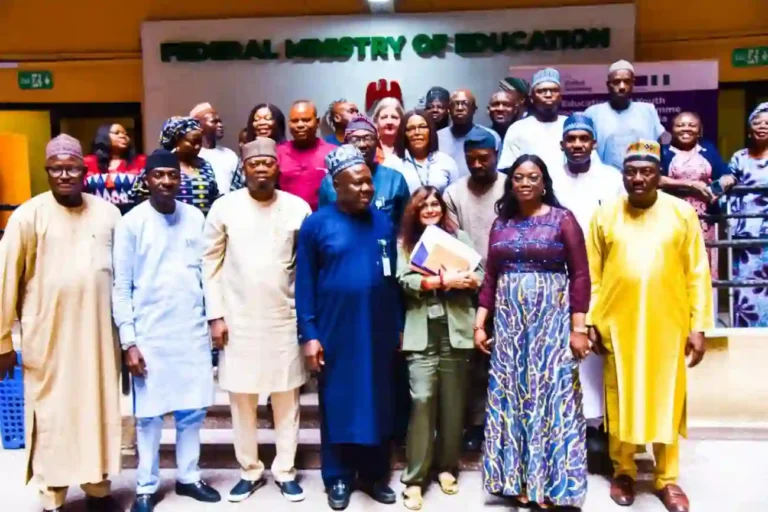
FG inaugurates €40m EYEPINN for Northwest education, empowerment

The Federal Government has inaugurated the Education and Youth Empowerment Programme in Northwest Nigeria (EYEPINN) National Programme Steering Committee (NPSC) to provide strategic direction, policy guidance, and oversight for the €40 million EU-supported initiative aimed at transforming education and empowering youth in the Northwest region.

The programme, which is being implemented in Jigawa, Kano, and Sokoto States, seeks to reduce the number of out-of-school children, enhance teacher development, and promote youth skills acquisition to support human capital growth in the region.

The committee is chaired by the Minister of Education, Dr. Tunji Alausa, and co-chaired by the Minister of Budget and Economic Planning, Senator Abubakar Atiku Bagudu. It will meet annually to provide strategic direction, while the EU Technical Assistance Team (EU-TAT) will serve as its secretariat. Quarterly technical meetings are also planned to ensure close monitoring, transparency, and accountability in project delivery.

Speaking at the inauguration in Abuja, the Permanent Secretary, Federal Ministry of Education, Mr. Abel Olumuyiwa Enitan, represented by Dr. Ejeh Usman, described EYEPINN as a flagship initiative under President Bola Ahmed Tinubu’s Renewed Hope Agenda. He reaffirmed the government’s commitment to ensuring equitable access to quality education and youth empowerment across Nigeria.

He stated that the NPSC will coordinate multi-sectoral efforts to improve foundational learning, digital literacy, teacher development, and youth skills training in line with global education standards.

“The EYEPINN project represents one of the most strategic interventions aimed at addressing the persistent challenges of out-of-school children, teacher capacity development, safe learning environments, and youth skills acquisition in Nigeria’s Northwest,” he said.

He added that the EU’s continued support through initiatives such as EYEPINN and the Expand, Integrate and Strengthen Systems (EISS) project reflects a shared commitment to empowering young people and ensuring that every child—regardless of background or gender—has access to quality education.

Highlighting the committee’s oversight role, Enitan said, “The committee is not only a platform for accountability but also a forum for strategic dialogue to ensure that all partners’ efforts are coherent and impactful. The success of EYEPINN depends on strong collaboration among federal, state, and local governments and our international partners. Every Euro invested must translate into measurable outcomes—better learning, empowered teachers, safer schools, and a resilient education system that leaves no child behind.”

Mr. Benjamin Nyanza Galadima, representing the Ministry of Budget and Economic Planning, noted that the €40 million funding “reflects a shared commitment by the Federal Government and the European Union to human capital development.” He said the programme aligns with Nigeria’s National Development Plan (2021–2025) and the EU’s Global Gateway Strategy aimed at promoting inclusive growth and sustainable development.

The EU Programme Manager, Ms. Kate Kanebi, explained that the ₦69.9 billion initiative will promote safe learning spaces, vocational education, and inclusive opportunities for girls and marginalized groups in the Northwest.

Team Leader for Human Development at the EU Delegation to Nigeria and ECOWAS, Leila Mathieu, described EYEPINN as the EU Delegation’s first standalone education project in Nigeria. “This is the EU Delegation to Nigeria’s first project solely focused on education—our flagship project,” she said. “We wanted it designed in alignment with the Ministry of Education to serve the real needs of the Nigerian people.”

Mathieu revealed that under the EU’s 2021–2027 partnership framework, about €800 million has been committed to Nigeria through national programmes, alongside hundreds of millions more from regional programme windows. She said the €40 million EYEPINN project, funded through UNICEF, Plan International, DIME, and technical assistance to the Ministry of Education, focuses on improving basic education—especially for out-of-school children and nomadic learners—through partnerships with Quranic schools.

UNICEF’s Chief of Education, Vanessa Lee, said the project is timely and comes at a crucial stage in Nigeria’s education reform journey. “It will support both Federal and State Ministries of Education, as well as UBEC and SUBEBs, in transforming the education system,” she said.

“We remain committed to ensuring every child learns by supporting digital data systems, education financing, integrated Quranic learning centres, and foundational literacy and numeracy programmes, while promoting professional learning for teachers.”

Country Director of Plan International, Dr. Charles Usie, praised the EU’s sustained investment in Nigeria’s education and health sectors, noting that such partnerships strengthen the delivery of essential services.

Save the Children International’s Country Director, Duncan Harvey, emphasized the project’s potential to promote inclusive learning. “This is an important step that will improve programme leadership and ensure that every child—regardless of location, gender, or ability—has the right to quality basic education,” Harvey said.

The NPSC, chaired by the Minister of Education, includes key ministries, the Universal Basic Education Commission (UBEC), state representatives, and development partners such as UNICEF, Plan International, the World Bank, and the EU Delegation.