Home Blog Page 381

Zenith Bank launches Zecathon 5.0 innovation challenge with N140m

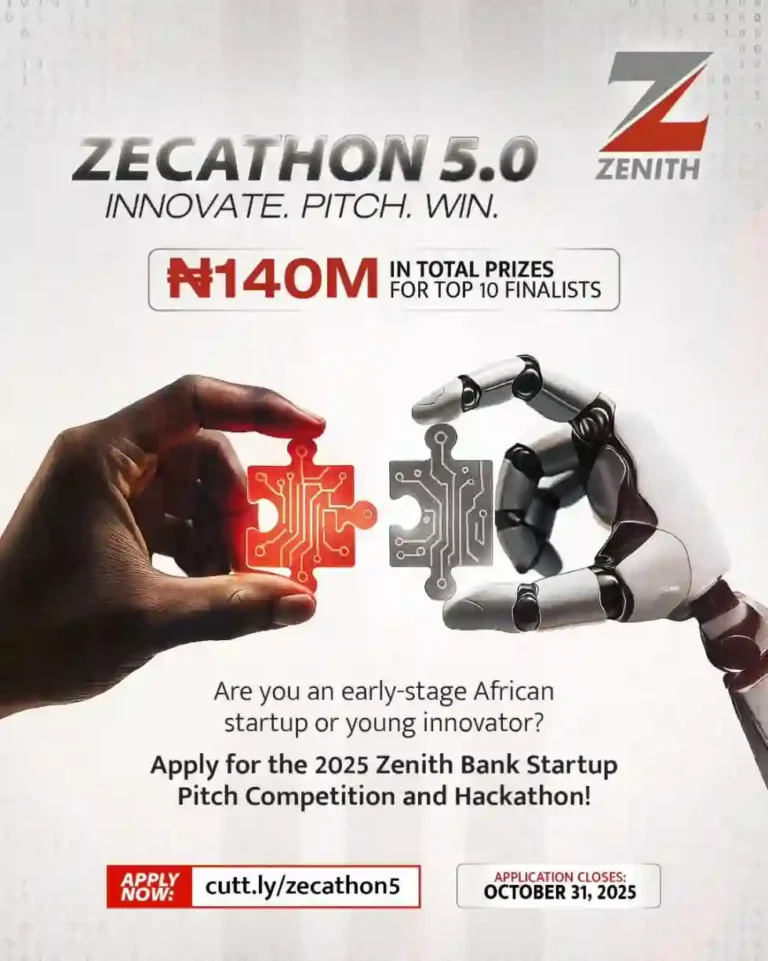
Zenith Bank has announced the launch of the Zenith Bank Zecathon 5.0, a major innovation challenge designed to drive Africa’s digital transformation by bringing together developers, entrepreneurs, and visionary innovators. The programme is aimed at empowering startups and creators to turn bold technological ideas into real-world solutions, reflecting the bank’s growing focus on entrepreneurship funding opportunities across the continent.

According to the organisers, the Zenith Bank Zecathon 5.0 is Africa’s premier innovation challenge and is hosted by Zenith Bank Plc in partnership with Beyond Limits. The initiative supports early-stage startups and developers with funding, mentorship, and incubation to help them scale up their innovations. “This challenge is designed to empower visionary innovators with the right resources to transform bold tech ideas into scalable, real-world solutions,” the organisers stated.

The programme is open to innovations across several technology sectors including fintech, agritech, healthtech, embedded finance, cybersecurity, artificial intelligence (AI), and other emerging technology fields. It is structured as a startup competition and innovation challenge, combining both funding and incubation opportunities.

Eligibility for participation requires applicants to be early-stage African startups with a registered business entity. They must also be operating within one or more of the listed focus sectors, have developed a viable product or Minimum Viable Product (MVP) with some market traction, and demonstrate a scalable business model with strong growth potential.

Selection will be based on innovation, market relevance, scalability, potential impact, team capability, and execution strategy. Organisers explained that shortlisted startups will go through several stages, including evaluation, pitching, and incubation phases before the final winners are chosen.

The competition is open to innovators from all African countries, with activities hosted both online and at select physical venues in Nigeria coordinated by Zenith Bank and Beyond Limits. Multiple startups are expected to emerge as winners, sharing a total prize pool of ₦140 million.

In addition to the cash prizes, selected startups will receive incubation and acceleration support, mentorship from industry experts, access to investors, and continental visibility through Zenith Bank’s extensive network. The organisers confirmed that the Zecathon 5.0 will run through several stages over the coming months.

Interested startups can apply by visiting the official Zecathon portal Link, completing the application form, and submitting all required documents before October 31, 2025.

Advertisement

Senator Wamakko launches empowerment programme in Sokoto South

0

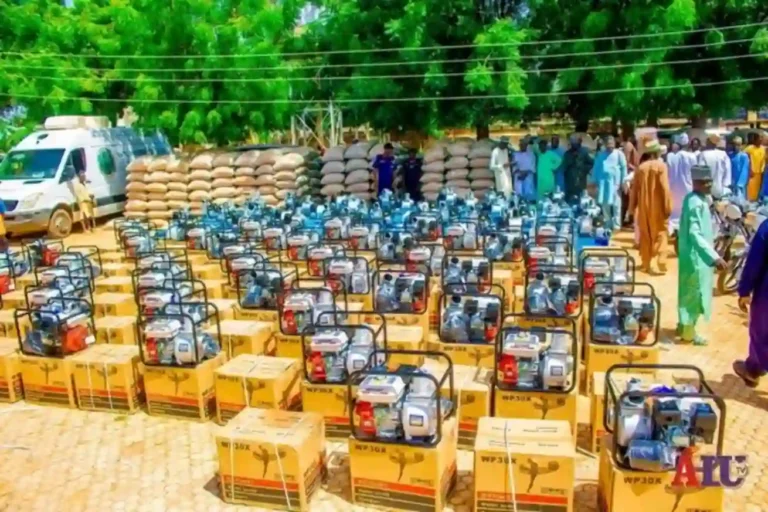
Senator Aliyu Magatakarda Wamakko has launched a major distribution programme in the Sokoto South Senatorial District, demonstrating his commitment to community development and social welfare. The initiative, held in Bodinga, featured the distribution of motorcycles, water pumping machines, grinding machines, and assorted food items aimed at supporting residents and improving their livelihoods.

The event served as the official flag-off for beneficiaries drawn from several Local Government Areas, including Tambuwal, Kebbe, Shagari, Yabo, Tureta, Bodinga, and Dange Shuni. This large-scale empowerment programme is part of Senator Wamakko’s broader effort to strengthen grassroots development across Sokoto State.

Representing Senator Wamakko at the ceremony, Alhaji Nasiru Italy stated that the programme continues the senator’s earlier outreach efforts in the Central Zone. He explained that the senator remains dedicated to enhancing the welfare of his constituents, noting that “this initiative reflects the senator’s consistent support for people at the grassroots level and his vision for an inclusive community.”

The Speaker of the Sokoto State House of Assembly, Hon. Tukur Bala Bodinga, commended the initiative, describing it as “a benevolent act that has not been witnessed in this area for the past two years.” He further praised the collaboration between Senator Wamakko and the Ahmed Aliyu-led administration, saying their combined efforts are improving community resources and empowering local citizens.

The event was attended by key dignitaries, including Members of the State Assembly from Yabo Constituency, Abubakar Shehu Shamaki Yabo, Sabon Birni North, Almustapha Aminu Boza, ALGON Chairman Abba Shehu Tambuwal, Dange Shuni Local Government Chairman Aminu Magaji Bodai, and APC Chairman of Shagari Local Government, Abubakar Umar Yabo. Also present was the Deputy National Youth Leader of the APC, Jamaludeen Kabir.

Speakers at the event praised the senator’s commitment to development and called on beneficiaries to make proper use of the distributed items. They urged APC supporters to remain patient and continue backing the administration, emphasizing that every citizen deserves government attention and assistance.

Beneficiaries, including men, women, and social media coordinators from various local government areas, expressed gratitude for the senator’s gesture. Many shared their hopes for the continuation of such programmes that directly improve living conditions and promote economic empowerment.

Other notable attendees included Members of the House of Assembly from Sokoto South 1 and 2, Aminu Gidado Jegawa and Almustapha Abdullahi, Shamsu Aliyu from Wurno, Harisu Kuchi from Kebbe, and Sirajo Muhammad from Dange Shuni, as well as traditional rulers, ulama, and other political leaders who described the occasion as historic and impactful.

Kellogg’s offers N150000 scholarship to 150 students

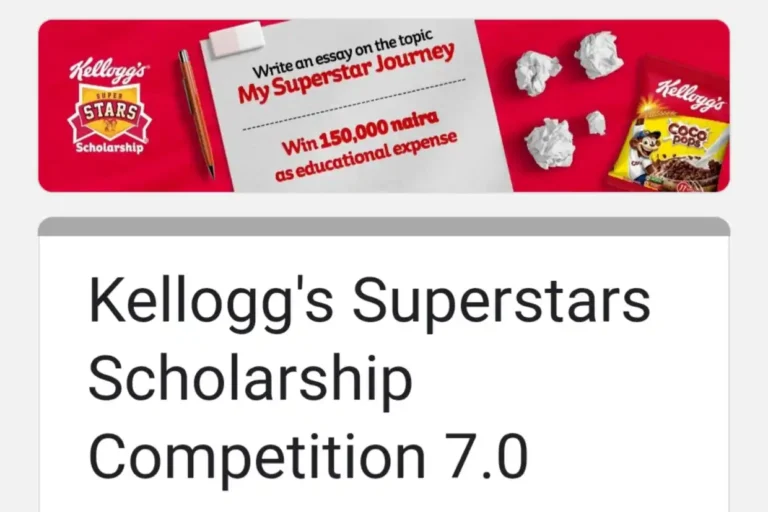
Kellogg’s Nigeria has launched the 2025 edition of its annual essay competition, the Kellogg’s Superstars Scholarship Competition 7.0, offering 150 scholarships worth ₦150,000 each to Nigerian children between the ages of 5 and 12. The competition aims to promote creativity, literacy, and self-expression among young pupils through writing.

According to the organisers, Kellogg Tolaram Nigeria, the initiative has supported education since 2019 by rewarding exceptional writing skills among Nigerian children. “The Kellogg’s Superstars Scholarship Competition has reached over 1.8 million pupils across 12,000 schools nationwide, nurturing young talents and promoting academic excellence,” the company said.

The scholarship is open to Nigerian pupils who demonstrate strong writing and storytelling skills. To participate, applicants are required to write an original essay on the topic “My Super Star Journey” and upload five wrappers of any Kellogg’s product along with their entry. Essays will be judged based on creativity, storytelling ability, grammar, and vocabulary.

A total of 150 pupils will each receive a ₦150,000 scholarship to support their education. In addition, top-performing schools will also be rewarded. The best-performing school will receive ₦500,000 and Kellogg’s products, the second-best school will get ₦300,000 and products, while the third-best school will receive ₦200,000 and products. Twenty additional schools will each get ₦100,000 as consolation prizes.

“The goal is to inspire children to express themselves and value education through writing,” the organisers stated. The competition is open only to Nigerian pupils, and winners will be celebrated at their respective schools.

Interested applicants can submit their essays and required product wrappers online through the official application form available at this Link.

Afreximbank, ITC launch free AfCFTA export training for African businesses

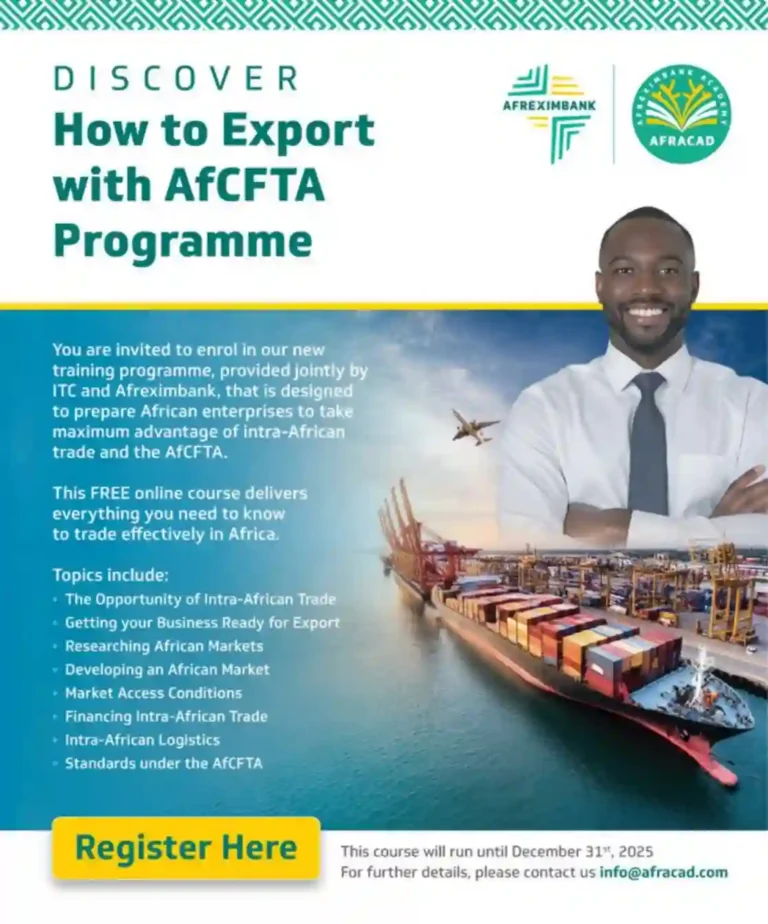
Afreximbank, through its training arm AFRACAD, in partnership with the International Trade Centre (ITC), has announced the launch of a new free online training programme titled “How to Export with AfCFTA.” The initiative is designed to help African entrepreneurs and enterprises take full advantage of the African Continental Free Trade Area (AfCFTA) and strengthen intra-African trade.

According to Afreximbank, the course aims to provide African businesses with the knowledge and skills to seize the growing opportunities within the continent. “With only 16% of African exports currently happening within Africa, this programme seeks to empower exporters and aspiring exporters to unlock untapped potential and expand confidently across African markets,” the statement said.

The How to Export with AfCFTA Online Training Programme offers practical knowledge and tools to help participants trade effectively under AfCFTA. It covers essential areas such as The Opportunity of Intra-African Trade, Getting Your Business Ready for Export, Researching African Markets, Developing an African Market, Market Access Conditions, Financing Intra-African Trade, Intra-African Logistics, and Standards under the AfCFTA.

“This comprehensive course delivers everything you need to know to trade effectively in Africa,” ITC added, stressing the importance of equipping African businesses to compete in the regional market.

The training is open to entrepreneurs, exporters, and small and medium-sized businesses across Africa and will run until December 31, 2025. Interested participants can register through the Afreximbank Academy portal at afreximbankacademy.org.

LASODA gives ₦100000 cash support to persons with disabilities in Lagos

0

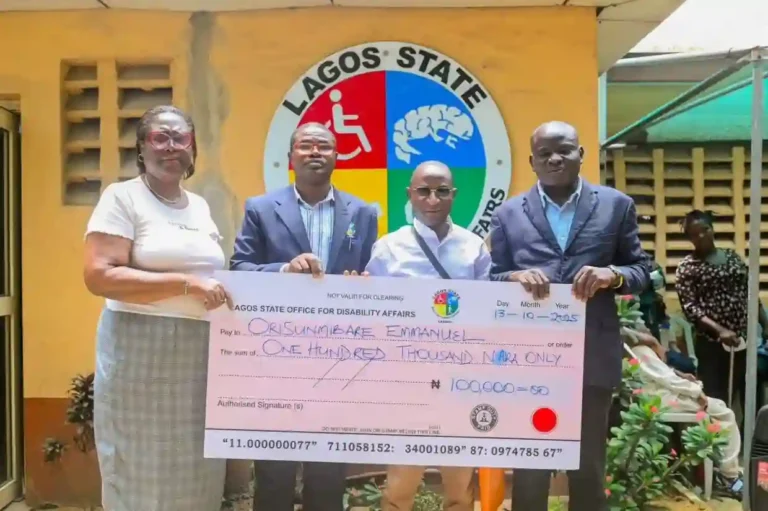
The Lagos State Office for Disability Affairs (LASODA) has reaffirmed the Lagos State Government’s commitment to the welfare and inclusion of persons with disabilities through its two-day cash support initiative held on October 13th and 14th, 2025, at the Agency’s premises in Lagos.

Speaking on behalf of the General Manager of LASODA, Mrs. Adenike Oyetunde-Lawal, the Head of Finance and Accounts Department, Mr. Hezekiah Akinbule, said the initiative reflects Governor Babajide Sanwo-Olu’s dedication to ensuring that no group of people in the state is left behind.

According to Mr. Akinbule, “On behalf of the Lagos State Government, represented by LASODA, each beneficiary will receive the sum of ₦100,000. This gesture is not intended to solve all your challenges but to show that the government cares deeply about you and that you are not forgotten. We are here for you, and by God’s grace, before you leave here, you will receive your alerts. A symbolic presentation of dummy cheques will also be made for documentation and photo purposes.”

The event, which focused on social inclusion and economic empowerment, saw several beneficiaries from different disability clusters receive support. Among the beneficiaries were Ms. Akanbi Opayemi Blessing, Omo Tola Owolabi, and Gift Blessing Igwe from the visually impaired cluster, as well as Shonibare Adenike Mustapha Ganiyu from the physically challenged cluster.

Mr. Akinbule commended the beneficiaries for their resilience and advised them to use the cash support wisely to improve their livelihoods. He also noted that LASODA remains committed to promoting empowerment, disability rights, and equal opportunities for all persons with disabilities in Lagos State.

The two-day programme forms part of LASODA’s wider mandate to enforce the Lagos State Special People’s Law and to build a more inclusive and sustainable society where persons with disabilities can contribute meaningfully to the state’s growth and development.

Anambra civil service commission denies recruitment claims

The Chairman of the Anambra State Civil Service Commission, Mr. Anthony Ezenwaka, has refuted the widespread claims that a recruitment exercise is ongoing in the state’s Ministries, Departments, and Agencies.

In a press statement released in Awka, Mr. Ezenwaka described the rumours as unfounded and misleading, urging members of the public to disregard such information. He stressed that the Commission remains the only authorized body to handle recruitment matters within the state civil service.

According to him, “Any waiver from the Governor authorizing recruitments into any of the aforementioned cadres should be communicated to the Commission for necessary action and documentation.”

Mr. Ezenwaka emphasized that the Civil Service Commission should not be sidelined in any recruitment process, citing its statutory powers as provided by the 1999 Constitution, as amended. He further directed all heads of Ministries, Departments, and Agencies who have received waivers for recruitment to forward them to the Commission for appropriate processing.

Yiaga Africa seeks consultant for 2025–2030 strategic plan

0

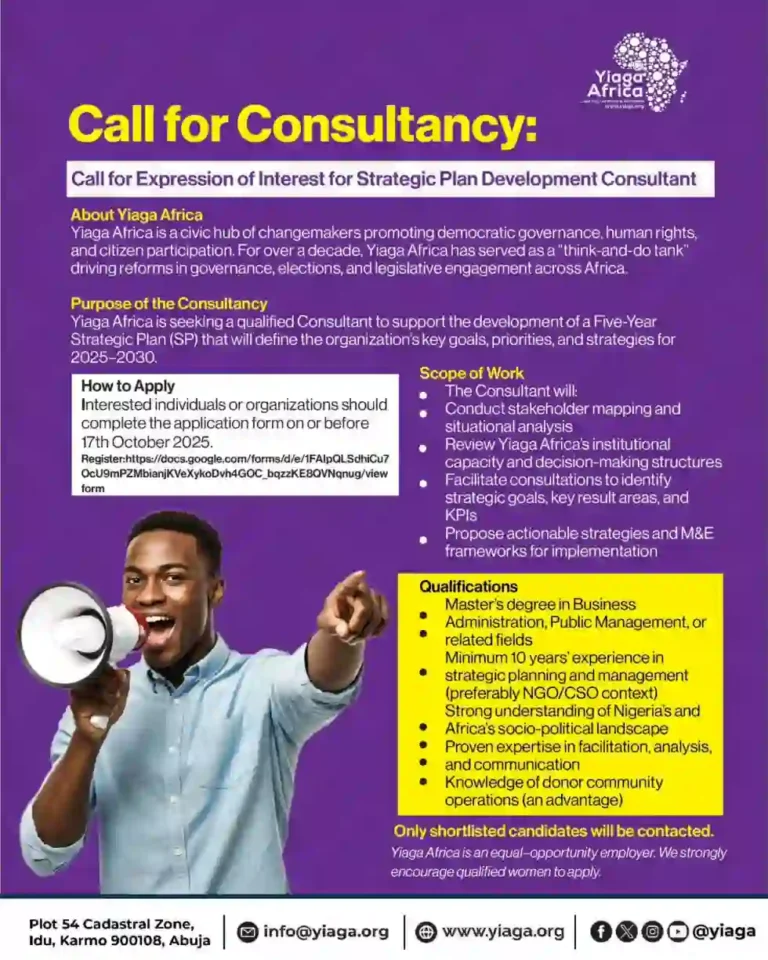
Yiaga Africa has announced a call for Expression of Interest for a Strategic Plan Development Consultant to guide the creation of its Five-Year Strategic Plan covering 2025 to 2030. The civic organisation, known for promoting democratic governance, human rights, and citizen participation, described this consultancy as an important step towards shaping its long-term goals and priorities.

According to Yiaga Africa, the Consultant will “support the development of a Five-Year Strategic Plan (SP) that will define the organization’s key goals, priorities, and strategies for 2025-2030.” The assignment involves conducting stakeholder mapping and situational analysis, reviewing Yiaga Africa’s institutional capacity and decision-making structures, and facilitating consultations to identify strategic goals, key result areas, and key performance indicators.

The role also requires the Consultant to propose actionable strategies and monitoring and evaluation frameworks that will guide the implementation of the plan. Yiaga Africa stated that qualified applicants must hold at least a Master’s degree in Business Administration, Public Management, or related fields, with a minimum of ten years’ experience in strategic planning and management, preferably within the NGO or CSO context.

The organization added that a strong understanding of Nigeria’s and Africa’s socio-political landscape, along with proven expertise in facilitation, analysis, and communication, are key requirements. Applicants with knowledge of donor community operations will have an advantage.

Interested individuals or organizations are to complete the online registration form on or before 17th October 2025 via this Link.

Yiaga Africa emphasized, “Only shortlisted candidates will be contacted,” while reaffirming that it is an equal-opportunity employer encouraging qualified women to apply.

World Bank says 1/3 of Nigerians rely on farming

0

Over one-third of Nigeria’s jobs are in agriculture, yet the sector’s heavy dependence on rainfall continues to threaten food production and rural livelihoods. In response, a World Bank-supported initiative is helping Nigerian farmers adopt improved practices, creating a foundation for resilient and smart agriculture that promises to secure the nation’s food future.

Agriculture remains one of Nigeria’s most critical economic sectors, employing millions of people and contributing nearly a quarter of the country’s Gross Domestic Product. However, unpredictable weather patterns, frequent floods, and prolonged dry spells have made farming increasingly uncertain. With less than one percent of Nigeria’s farmland currently irrigated, most smallholder farmers still depend entirely on rainfall for cultivation, leaving them vulnerable to climate shocks.

Recognizing this challenge, the Federal Ministry of Water Resources and Sanitation, with financing from the World Bank’s International Development Association (IDA), launched the Transforming Irrigation Management in Nigeria (TRIMING) project. The initiative aims to expand and modernize irrigation systems, improve water management, and upgrade critical agricultural infrastructure across several states.

In Kano State, northern Nigeria, farmer Mustapha Adamu recalls how tough it was a decade ago. “Things were bad here,” he says, reflecting on the 6,000 hectares of farmland that were once difficult to cultivate due to poor access to water and degraded soil. “Farming this land was a tough task.”

That situation has changed dramatically. With the TRIMING project’s support, farmers in Mustapha’s area now have access to improved irrigation systems that allow them to grow crops more reliably and efficiently. “The project has helped us manage water better,” he adds. “Now we can farm more regularly and make good use of the land.”

The TRIMING project rehabilitated and expanded irrigation networks across 43,400 hectares, producing enough food to feed over one million people. It also helped establish and strengthen more than 800 Water Users’ Associations (WUAs), which now play a crucial role in managing water distribution and maintaining infrastructure. Mustapha, who leads one of these associations, explains that farmers now collaborate more effectively to allocate water fairly and ensure canals remain clean and functional.

In nearby Jigawa State, farmer Musa Idris has also seen the difference that improved irrigation makes. “Before the project, we faced many challenges with water,” he says. “We used to get about 15 to 20 bags of rice per acre. Now, we get between 30 and 35 bags. We are preparing the land to plant tomatoes and rice, and after that, we will get ready for wheat.”

These gains have extended beyond higher yields. Communities have benefited from rehabilitated access roads, better water drainage, and improved dam safety. Farmers are now producing more food with less uncertainty, even as the effects of climate change continue to pose threats across northern Nigeria.

Women farmers have also experienced significant transformation. In Kano State, Hajiya Ramatu, a farmer and deputy leader of a women’s group, recalls the lack of support for irrigated farming before the project began in 2014. “That has changed, women are actively involved now,” she says proudly, pointing to a field of rice ready for harvest. “You can see this lane of rice, we are going to make some good money from it.” Her group expanded its farmland from 22 to 37 hectares after gaining access to reliable irrigation.

Improved infrastructure has opened more opportunities for rural women and youth. Better farm roads have made it easier for farmers to transport produce to local markets, reducing post-harvest losses and improving income. Ramatu shares how these benefits have transformed her family’s future. “My son is now attending university, something that would have been impossible before,” she says.

With over 70 percent of Nigeria’s population under the age of 30, job creation in agriculture remains a pressing need. Reliable irrigation and modern farming practices can help absorb this growing workforce, while increasing food security and supporting economic growth.

The TRIMING project also received technical support from the Global Water Security and Sanitation Partnership (GWSP), which contributed to dam safety programs, sediment control, and sustainable water management strategies. By integrating technology, infrastructure, and community-based resource management, the project is setting new standards for agricultural resilience.

Looking ahead, Nigeria’s government plans to scale up these efforts through the Sustainable Power and Irrigation for Nigeria project, another World Bank-supported initiative under the IDA. This follow-on program aims to expand the benefits of TRIMING, enabling more farmers to access irrigation systems and further strengthen water governance.

With the country’s population projected to reach 400 million by 2050, the government’s target to irrigate 500,000 hectares by 2030 is part of a broader plan to boost food production and enhance rural livelihoods. By increasing irrigation coverage and adopting smarter water management, Nigeria hopes to ensure food security and reduce the risks caused by climate variability.

Globally, food demand is expected to rise by more than 50 percent by 2050, while the world’s population approaches 10 billion. Experts say irrigation could help farmers produce more with less land and water, providing a practical response to rising demand and environmental pressures. Across many developing countries, the World Bank continues to support such projects to ensure sustainable agricultural growth.

In Nigeria, the transformation is already visible. Farmers like Mustapha Adamu, Musa Idris, and Hajiya Ramatu represent the new face of modern agriculture, producers who can rely on stable water supply, increase their harvests, and build stronger communities. “Before, we didn’t know if we would have a good season or not,” says Mustapha. “Now, with irrigation, we have more control, more confidence, and more food to feed our people.”

FG denies claims of importing grain to crash food prices

0

The Federal Government has dismissed claims that it imported grains to crash food prices, explaining that the recent drop in food costs is due to increased domestic production.

Minister of State for Agriculture and Food Security, Senator Sabi Abdullahi, made this clarification during a press conference in Abuja to mark the 2025 World Food Day celebration. He said the government had scaled up agricultural productivity through several ongoing programmes aimed at ensuring food availability, accessibility, and affordability.

Abdullahi stated that since the start of the current administration, efforts have been focused on reducing food prices by boosting production of key commodities such as wheat, maize, and cassava.

“From 2023, the government embarked on massive food production under the Agricultural Pocket Scheme, through which we injected about 500,000 metric tons or more of various commodities,” he said. “The large volume of food produced was responsible for the drop in prices.”

He explained that while the government approved a limited importation window in 2024 to bridge the demand-supply gap, the imported grains have not been released.

“I will tell you for a fact that the imported grains have not even been released,” he said. “So all these claims about the government bringing in food to crash prices are not true. What happened was that when people heard about possible importation, hoarders rushed to offload their stock, which naturally led to a fall in prices.”

Abdullahi noted that several state governments have also contributed to the national strategic grain reserve to help stabilize food supply and affordability.

“States like Niger, Kaduna, Kano, and Jigawa have stocked grains to serve as buffers during lean periods,” he added.

To support smallholder farmers, he said the federal government is distributing farm inputs to help them stay productive and resilient. He also revealed plans to institutionalize the First Lady, Senator Oluremi Tinubu’s “Every Home a Garden” initiative as part of the National Agricultural Programme.

The initiative, according to him, is designed to promote gender inclusion, boost food production at the household level, and encourage sustainable urban farming practices.

He further explained that the government is promoting climate-resilient agricultural practices such as drought-tolerant crops, efficient irrigation systems, and agroforestry to address climate change impacts and strengthen national food security.

Additionally, the ministry is implementing pest and disease control programmes, including aerial pest management, to protect crops, minimize yield losses, and safeguard farmers’ livelihoods.

FG, Google launch AI training for civil servants

0

The Federal Government on Thursday launched an Artificial Intelligence training programme for public servants in partnership with Google as part of efforts to transform governance and improve service delivery in Nigeria. The initiative, which was unveiled in Abuja, is anchored on the Apolitical Government AI Campus, a global hub for AI excellence in government supported by Google. It is delivered through the Federal Ministry of Communications, Innovation and Digital Economy, with the goal of equipping civil servants and government leaders with the skills needed to adopt and apply artificial intelligence in daily operations.

Speaking virtually at the launch, Minister of Communications, Innovation and Digital Economy, Dr Bosun Tijani, said the programme was designed to align with President Bola Tinubu’s plan to build a one trillion dollar economy and ensure Nigeria is not left behind in the global race for AI adoption. He explained that artificial intelligence had become central to the productivity of key sectors such as food security, education and healthcare.

Tijani said the government had already developed a national AI strategy, established a National AI Trust and the Artificial Intelligence Collective, and released a government-backed multilingual large language model. He noted that these investments would amount to little if public servants were not empowered to use AI in their daily work.

The minister said, “Despite all these investments in deepening the absorptive capacity, we also understand the need for government itself to accelerate the understanding among our civil servants, but also accelerate the adoption and integration of artificial intelligence into how we do things in government. Whether it’s by using it to accelerate and shorten the time we spend on administrating our processes, or by using it to better deliver to our people. And this is why the e-political government AI campus is extremely important. We have been putting resources into ensuring that we can support our civil servants and our public service in a manner that AI can become something that is native to them. And this is why we’re extremely excited about this opportunity and support from Google.”

Tijani stressed that Nigeria must increase the absorptive capacity of government itself to integrate AI into administration and deliver better results to citizens.

The Head of Government Affairs and Public Policy for West Africa at Google, Adewolu Adene, said that the training would follow a phased approach to support AI adoption. He explained that the first phase would focus on senior decision makers to help them understand the importance of artificial intelligence in governance. The second phase would target middle-level executives and focus on how to strategically apply AI in daily government processes. The final stage would train civil servants across different levels to use AI tools effectively.

Adene described the initiative as a once-in-a-generation opportunity for Nigeria’s public service to transition from digital to intelligent government. He pointed to research showing that AI could deliver up to 1.75 trillion dollars in annual global productivity gains for the public sector by 2033. He also noted that citizens across the world expect AI to streamline government operations and improve service delivery.

Google’s Director for West Africa, Olumide Balogun, said that supporting Nigeria’s digital transformation involves investing in people who shape the country’s future. He explained that the company’s partnership with the public sector would provide essential knowledge that enables public officials to deliver more efficient services.

Google’s Communications Manager for West Africa, Taiwo Kola-Ogunlade, said the company had maintained a long record of investment in Nigeria through various digital skills training initiatives, infrastructure projects such as the Equiano subsea cable, and support for start-ups. He described the AI Campus as a programme created for public sector leaders and practitioners who drive national progress. He said it is focused on using artificial intelligence to improve healthcare, education and public services for Nigerians.

Vice President at Apolitical, Chris Ferguson, highlighted the importance of structured training in government for the successful use of artificial intelligence. “Structured training is the cornerstone for successful AI adoption in government. This initiative is a pioneering effort that will equip Nigerian public servants with the capabilities to lead the digital transformation with confidence and foresight,” Ferguson said.