Home Blog Page 383

Rivers State to integrate 800 beneficiaries into agricultural support programmes

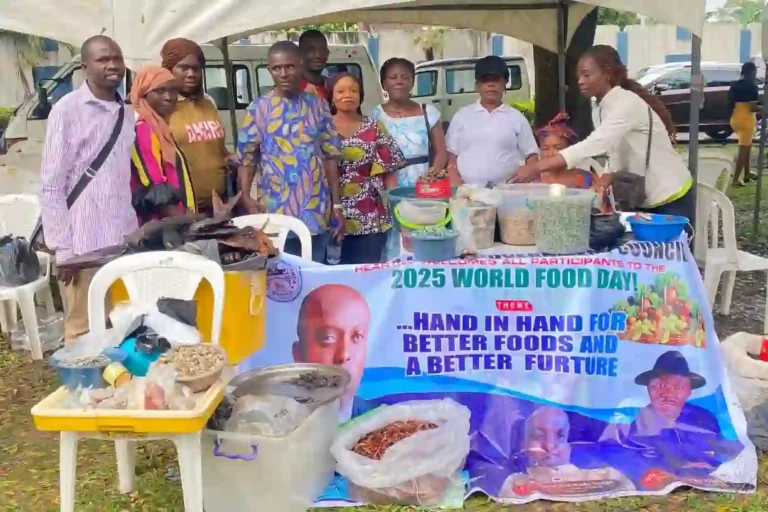
Rivers State today joined the global community to mark the 2025 edition of World Food Day under the theme “Hand in Hand for Better Foods and a Better Future.” The theme emphasizes cooperation, solidarity, and shared purpose in redesigning food systems, ensuring access to healthy diets, and building a sustainable and food-secure world.

The Rivers State Government said the theme aligns strongly with its vision to increase food availability, improve nutrition, and promote resilient agriculture that benefits all residents. “Food is more than sustenance — it is the foundation of health, dignity, economic growth, and social stability,” the government stated.

Officials noted that this year’s World Food Day serves as a reminder that food is not only a basic necessity but also a fundamental human right and a cornerstone of peace, stability, and development. The state reaffirmed its commitment to ensuring food security, promoting sustainable agriculture, and contributing to the global efforts to end hunger in all its forms.

Under the leadership of His Excellency, Sir Siminalayi Fubara, GSSRS, Governor of Rivers State, the Ministry of Agriculture has continued to implement policies and programs designed to boost food production, support farmers, and build a strong agricultural sector capable of meeting the needs of the population.

The Ministry highlighted several strategic initiatives aimed at repositioning agriculture as a driver of economic growth, food security, and job creation. Among these are the School-to-Land Agricultural Training Programme, which will be revitalized to train young people in modern farming techniques and agribusiness. The initiative aims to build a new generation of farmers who can compete globally.

The state also announced the revitalization of the Songhai Integrated Farm, a model agricultural and research center. This facility will serve as a hub for innovation, training, and agro-industrial production, supporting local farmers and strengthening agricultural value chains.

Other key initiatives include the Farm Cluster Development and Input Support Schemes, which will give farmers across the 23 local government areas better access to quality seedlings, fertilizers, and modern equipment. Additionally, the Community-based Livestock and Fisheries Programs are being expanded to diversify agricultural production and ensure food availability throughout the year.

The Ministry noted the successful implementation of the Renewed Hope Initiative Agricultural Empowerment Support Programme, coordinated by the Wife of the President of Nigeria, Senator Oluremi Tinubu, CON. In Rivers State, the program was implemented by Lady Valerie Fubara, the First Lady of the state, and supported 800 beneficiaries. The Ministry will integrate these beneficiaries into its supervisory and extension programs to monitor their progress and ensure that the distributed inputs and equipment are used effectively to increase productivity and strengthen the food supply chain.

“This collaboration represents a significant step toward achieving the broader objectives of the Renewed Hope Agenda,” the Ministry stated. “It aligns with our state’s vision to build an agriculturally sustainable economy that can feed our people, create employment, and generate wealth.”

Governor Fubara has provided strong support and approvals for all agricultural interventions, demonstrating leadership in developing the sector. The Ministry described these programs as practical measures to empower farmers, support agripreneurs, and ensure that agriculture remains a key contributor to the state’s economy.

As the state commemorates World Food Day, the Ministry of Agriculture reaffirmed its commitment to advancing sustainable agricultural practices, strengthening food systems, and supporting local farmers with training and resources. Officials said the state will continue to work closely with development partners and stakeholders to promote the objectives of the World Food Programme and contribute to global efforts to end hunger and poverty.

“In Rivers State, we believe that the future of food security lies in the hands of our farmers, our youths, and our collective determination to sustain the land that sustains us,” the Ministry said. “Together, with the continued support of our Governor, development partners, and all stakeholders, we will build a future where no citizen goes hungry and where agriculture remains a source of pride and prosperity.”
Advertisement

Katsina trains 1250 secondary school teachers in 3-day workshop

0

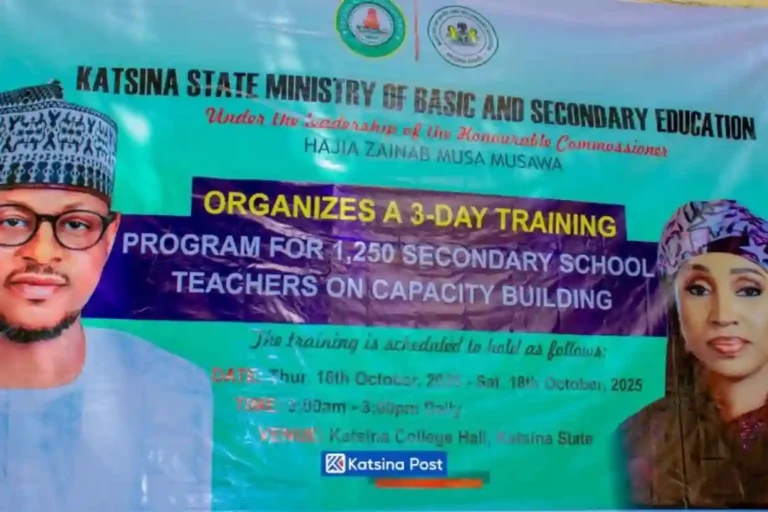
The Katsina State Ministry of Basic and Secondary Education has commenced a three-day capacity-building workshop for 1,250 secondary school teachers across the state to improve the quality of education.

Declaring the programme open, the Commissioner for Basic and Secondary Education, Hajiya Zainab Musa Musawa, reaffirmed the administration’s strong commitment to improving the education sector through continuous teacher development and reforms. She explained that the government has introduced several initiatives to strengthen the education system and enhance teachers’ performance.

According to her, “The training and retraining of teachers remain top priorities for the ministry as part of efforts to improve knowledge, teaching methods, and professional competence.” She noted that the administration is passionate about teachers’ welfare and professional growth, adding that the ongoing programme is part of the government’s plan to reshape the teaching sector for better service delivery.

Speaking on the objectives of the training, the State Coordinator of the programme said the workshop is designed to equip teachers with additional skills, especially in areas such as computer literacy and the use of technology in education. He revealed that the training is taking place simultaneously across the three senatorial zones of the state in collaboration with development partners.

The Commissioner urged teachers to adopt modern teaching methods and make effective use of technological tools to improve learning outcomes. She stressed that the government’s focus is on providing qualitative education through new reforms aimed at modernizing the education system and supporting teachers with the resources they need to perform effectively.

Hajiya Zainab further revealed that, as part of these reforms, the state government recently distributed 30,000 electronic smartphone tablet devices to teachers to promote digital learning and improve classroom teaching. She encouraged participants to make the most of the training and apply the knowledge gained to improve teaching practices for the benefit of students and the overall advancement of education in Katsina State.

In their goodwill message, the participants expressed appreciation to Governor Malam Dikko Umar Radda, PhD, for giving them the opportunity to participate in the training. They stated that such initiatives were unprecedented in previous years and commended the Governor’s efforts, noting that under his leadership, the education sector in Katsina State has witnessed remarkable improvement.

NJFP 2.0 career activation session for Nigerian graduates

0

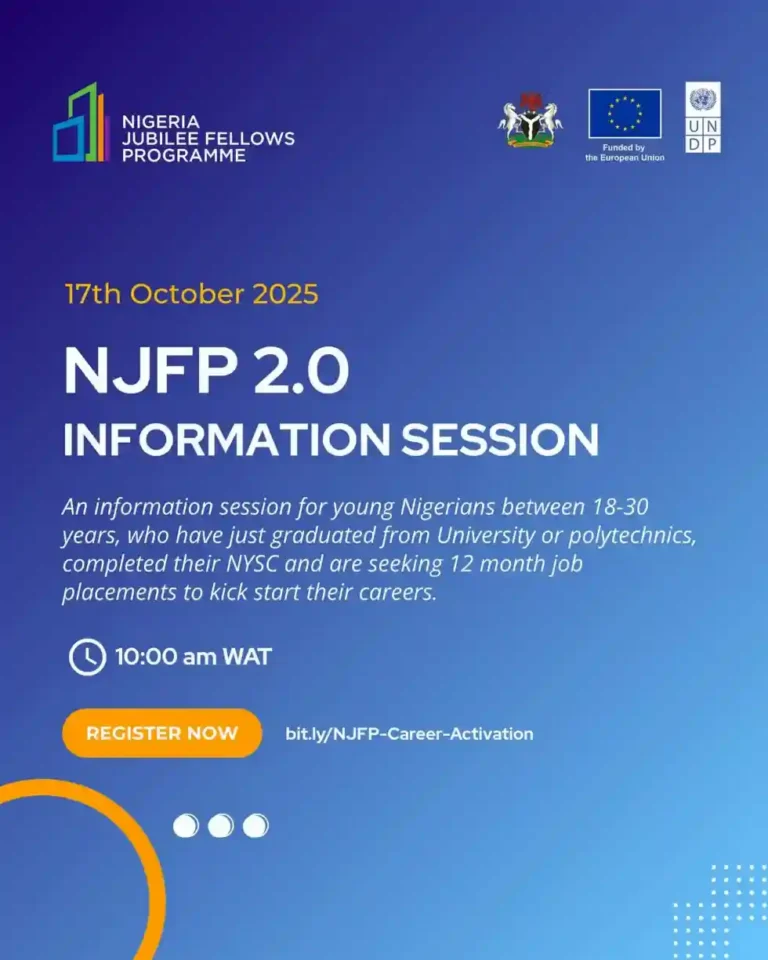
Young Nigerian graduates have been urged to take part in the Nigeria Jubilee Fellows Programme (NJFP) 2.0 Career Activation Information Session aimed at supporting job seekers.

The session is designed for graduates between 18 and 30 years old who have completed their NYSC and are looking for 12-month job placements to kick start their careers. According to the organisers, “This programme is a major opportunity for young Nigerians to gain work experience.”

Funded by the European Union, the event will provide key insights for job seekers. It will hold on 17th October 2025 from 10:00AM to 11:30AM. Interested participants can register through bit.ly/NJFP-Career-Activation.

NSITF registers 3686 Kano firms

0

The Nigeria Social Insurance Trust Fund (NSITF) has registered a total of 3,686 firms in Kano State under the Employees’ Compensation Act (ECA) 2010, a scheme created to provide financial relief to workers who suffer death, injury, disability, or illness in the course of their work.

The disclosure was made by the NSITF Kano Branch Manager, Mr. Muhammed Bukar Sanka, during a courtesy visit to the Media Trust Group’s Kano Regional Office. He explained that the Fund is dedicated to ensuring that every employee in the country enjoys social security benefits through proper employer registration.

According to Sanka, more companies in Kano are currently in the process of enrolling in the compensation scheme, noting that the initiative remains one of the most effective safety nets for Nigerian workers. He said, “Under the ECA 2010, any employee who sustains an injury or disability while carrying out their job is entitled to compensation. That’s why every employer should register with the Fund to protect their workforce.”

In response, the Regional General Manager of Media Trust Group, Mr. Shamsuddeen Sani, praised the NSITF for its commitment to workers’ welfare and called on the agency to expand its awareness campaigns.

He emphasized the need for more Nigerians to understand the benefits of the compensation programme and how it helps safeguard employees’ rights and welfare. “Public sensitization is key. Many workers still don’t know they have a right to such protection under the law,” Sani stated.

NDDC launches N1.5bn loan to empower 1500 small businesses in Niger Delta

0

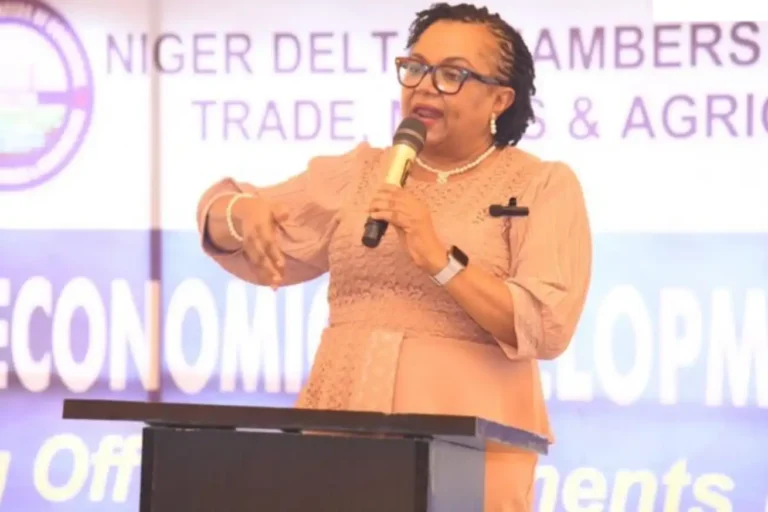
The Niger Delta Development Commission (NDDC) has introduced a ₦1.5 billion soft loan scheme in partnership with the Niger Delta Chamber of Commerce, Industry, Trade, Mines and Agriculture (NDCCITMA) to support 1,500 small and medium-scale businesses across the Niger Delta region.

Launched in Port Harcourt, the initiative is part of NDDC’s broader plan to boost grassroots entrepreneurship, create jobs, and promote economic growth. The programme targets nano, micro, small, and medium enterprises (MSMEs) across the nine oil-producing states, offering affordable loans to improve financial inclusion and local business development.

Chairman of NDCCITMA, Ambassador Idaere Gogo-Ogan, praised the Commission for what he called a transformative partnership that focuses on wealth creation and regional stability. He said the loan scheme would enable entrepreneurs to grow their businesses, employ more people, and reduce poverty.

“This programme is designed to reach the poorest of the poor, the micro and small business operators,” Gogo-Ogan said. “Sustainable development begins from the bottom up. When small businesses are empowered, the economy grows naturally and inclusively.”

He explained that the facility includes a one-year repayment plan with a three-month moratorium at a 9 percent annual interest rate. The first ₦1.5 billion disbursement marks the beginning of a wider empowerment drive, with another ₦2 billion expected by December.

According to Gogo-Ogan, the loan categories are based on business size, ranging from ₦200,000 for nano enterprises to ₦50 million for medium-scale ventures. “We profiled all beneficiaries and worked closely with consultants to ensure due diligence,” he said. “The impact of this initiative will be far-reaching, fostering entrepreneurship, reducing unemployment, and curbing youth restiveness.”

He added that financial inclusion for local entrepreneurs is essential for lasting regional peace, stressing that small businesses remain the backbone of the Niger Delta economy.

NDDC’s Director of Commercial and Industrial Development, Mrs. Lina Okara, said the programme aligns with the Commission’s goal of driving sustainable economic growth across the region.

She advised beneficiaries to manage the funds responsibly, emphasizing that accountability and discipline would determine the programme’s success. “This is a unique opportunity to build your business and empower others in your community,” Okara said. “Your success will determine how far this empowerment model can go.”

The NDDC–NDCCITMA partnership stands as one of the Commission’s largest empowerment initiatives in recent years, supporting President Bola Ahmed Tinubu’s vision for inclusive economic growth and sustainable development. With over 1,500 entrepreneurs benefiting in the first phase, the scheme is seen as a major step toward rebuilding the Niger Delta economy through innovation and enterprise.

Federal College of Education (Technical) Gombe says no interview invitations

0

The Management of the Federal College of Education (Technical), Gombe has dismissed rumors circulating on social media that the institution is inviting applicants for interviews after the recently concluded online employment application exercise.

In a statement released to the public, the Management described the information as false and misleading. “The College has not issued any invitation for interviews in connection with the said recruitment process,” the statement read.

The College emphasized that the circulating messages did not originate from any official source. It urged members of the public, especially applicants, to ignore such unfounded claims. “The Management wishes to categorically refute this information as it is false, misleading, and does not emanate from the College,” the statement further noted.

The institution reassured applicants of its commitment to a transparent and merit-based recruitment process. According to the Management, all shortlisted candidates will be contacted through official communication channels at the appropriate time.

The College also cautioned the general public to remain vigilant against fake news and fraudulent individuals posing as representatives of the institution. It stressed that any genuine information related to recruitment or other official matters will be published only through its verified platforms.

“The general public is therefore advised to be wary of fake news, misinformation, and fraudulent individuals purporting to represent the College,” the Management stated, while appreciating the cooperation and understanding of all concerned.

ROSAFOWA seeks partnership with Lagos ministry to empower women

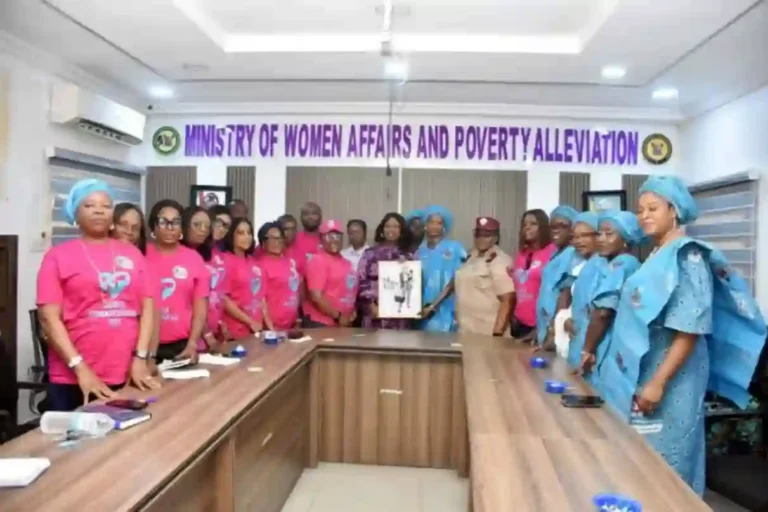
The Road Safety Officers’ Wives Association (ROSAFOWA), Lagos State Branch, led by its Chairperson, Mrs. Oluwayemisi Caroline Hamzat, has paid a courtesy visit to the Lagos State Ministry of Women Affairs and Poverty Alleviation (WAPA) to seek collaboration in empowering women across the State.

The visit, which took place on Tuesday, 14th October 2025, at the Ministry’s Conference Room, Alausa, Ikeja, focused on exploring partnership opportunities between both institutions to promote women’s development and social responsibility initiatives.

Speaking during the visit, Mrs. Hamzat highlighted ROSAFOWA’s ongoing humanitarian programmes, including providing healthcare materials to accident victims, conducting advocacy campaigns against drunk driving, and organising visits to motherless babies’ homes. She stated that the association remains committed to promoting safety, compassion, and community service among women and families in Lagos State.

“The association is dedicated to supporting women and families through various community-driven initiatives that align with the government’s efforts to build a safer and more inclusive society,” she said.

Responding, the Honourable Commissioner for Women Affairs and Poverty Alleviation, Hon. Mrs. Bolaji Cecilia Dada, praised ROSAFOWA for its continuous humanitarian efforts and dedication to community development. She assured the association of the Ministry’s readiness to collaborate through Skills Acquisition Centres and empowerment programmes aimed at strengthening women’s economic independence.

Hon. Dada reaffirmed that the Governor Babajide Olusola Sanwo-Olu–led administration is committed to supporting initiatives that promote women’s empowerment and improve social welfare across the State.

The Permanent Secretary, Mrs. Rianat Ajibike Onigbanjo, and other directors of the Ministry were also present during the visit.

FSDH opens applications for 2025 management associate program

0

FSDH Group has announced the commencement of applications for its 2025 Management Associate (MA) Program, an elite initiative aimed at attracting, training, and integrating skilled graduates into the organization. According to the group, the program is designed to identify and nurture future leaders by providing challenging career opportunities within its various subsidiaries.

In a statement released by FSDH Holding Company Limited, the organization said, “We are targeting candidates with 4-5 years of experience. This program aims to develop future leaders by providing them with challenging career opportunities for growth within the FSDH.” The program will cater to vacancies in pre-management level roles within the group.

Eligible candidates must possess an MBA or a related master’s degree from a recognized institution, hold professional qualifications such as ICAN, CFA, or ACBIN, and have at least a second-class upper or first-class degree in their first degree. Applicants are also required to demonstrate leadership potential and strong analytical skills.

The program is open to young Nigerians both within the country and in the diaspora. It will take place in Lagos State. Interested applicants can apply through the official Link before the deadline on October 31, 2025.

FSDH Holding Company Limited is a non-operating holding company that provides progressive financial services through subsidiaries such as FSDH Asset Management, FSDH Capital, FSDH Merchant Bank, and Pensions Alliance Limited (PAL). The group stated that maintaining its reputation as a provider of dependable and innovative financial solutions remains its top priority.

Foreign investors reaffirm confidence in Nigeria’s economic reforms

0

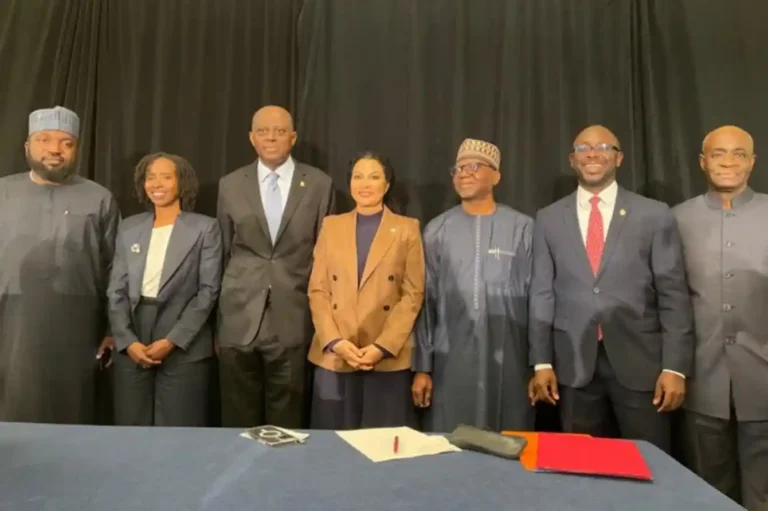
A new wave of economic growth and development is taking shape in Nigeria as foreign investors continue to express confidence in the country’s ongoing reforms. At the Nigeria Investors Forum, held on the sidelines of the 2025 World Bank Group and International Monetary Fund (WBG/IMF) Annual Meetings in Washington D.C. yesterday, key government officials reassured investors of the government’s commitment to building a strong and stable economy.

The Governor of the Central Bank of Nigeria (CBN) and leader of the Nigerian delegation to the meetings, Mr. Olayemi Cardoso, assured investors that the Federal Government remains dedicated to advancing reforms and unlocking opportunities for sustainable investment and growth. According to him, Nigeria’s economic fundamentals remain strong, supported by a growing external reserve and stable macroeconomic indicators.

Mr. Cardoso highlighted that Nigeria’s external reserves have reached $43.4 billion, the highest level in five years, adding that the Central Bank and the Ministry of Finance have been working closely to ensure policy alignment and clarity for investors. “The Central Bank and the Ministry of Finance have been working hand in hand to ensure alignment, stability, and clarity for investors,” he said. He also expressed optimism about Nigeria’s economic outlook, emphasizing the government’s focus on strengthening the economy and promoting long-term growth.

The Honourable Minister of State for Finance, Dr. Doris Uzoka-Anite, was among the top officials who joined Mr. Cardoso at the event, reinforcing the commitment of President Bola Ahmed Tinubu’s administration to attract and protect foreign investment. Her participation reflected the Federal Government’s drive to create a business-friendly environment through sound fiscal policies and transparency.

Also speaking at the event, the CBN Deputy Governor, Mohammed Abdullahi, noted significant improvements in foreign exchange inflows. He said the monthly turnover in the forex market has risen by 56.4% to $8.6 billion in 2025. “Over the last two years, we’ve really focused a lot on improving FX flows into the economy, and we’ve seen a significant jump. Average net flows between January 2023 and July have doubled,” Abdullahi stated.

The Special Adviser to the President on Finance and the Economy, Sanyade Okoli, reaffirmed the government’s commitment to achieving 7% economic growth by 2027–2028 through diversification and investment in infrastructure. “Our target is 7% by 2027–2028. When the IMF increased its forecast a week later, for 2025 we are forecasting 4% growth, rising to around 5% next year,” she said.

Okoli added that 13% of sectors grew above 7% in the second quarter. “Our dependence on oil for total exports has reduced to about 57.5% in the first half of this year compared to last year, and oil now accounts for about 4% of GDP, down from 8% in 2021,” she explained.

With renewed investor confidence and continued economic reforms, Nigeria appears ready to unlock new opportunities for sustainable growth and development, positioning itself as one of Africa’s most promising investment destinations.

FG begins 2025 audit, skills gap analysis for civil servants

The Federal Government has launched the 2025 Personnel Audit and Skills Gap Analysis, also known as the PASGA Project, through the Office of the Head of the Civil Service of the Federation. The initiative aims to provide a detailed workforce profile to support decisions on recruitment, training, deployment, and career progression within the civil service.

The project focuses on identifying skills gaps in critical areas such as ICT, project management, public finance, and data analysis. It is also expected to strengthen training programmes and ensure targeted capacity development across government institutions. By using the Human Resource Management Information System, the initiative seeks to improve human resource management through digitalisation.

According to the government, the project will promote efficiency, reduce financial leakages, eliminate redundancies, and enable the strategic redeployment of resources across Ministries, Departments, and Agencies. The implementation is being led by a Steering Committee chaired by the Head of the Civil Service of the Federation, Dr Didi Walson-Jack, and a Project Implementation Committee chaired by the Permanent Secretary, Common Services Office, Dr Danjuma Kalba.

Speaking at a sensitisation programme for the project on Thursday, Walson-Jack said the PASGA initiative represents a significant milestone in the ongoing implementation of the Federal Civil Service Strategy and Implementation Plan 2021–2025. She explained that the strategy is anchored on innovation, talent optimisation, and institutional excellence.

“Data remains the backbone of effective planning, deployment, and decision-making,” she said. “Over the years, the Service had grappled with fragmented and outdated personnel records, leading to inefficiencies and misalignments. Through PASGA, we are setting a new standard — one that is transparent, data-based, and performance-oriented. This reform will deliver accurate personnel records, identify existing skills gaps, and support targeted training and redeployment aligned with the evolving needs of government.”

The Head of Service commended the Permanent Secretary, Common Services Office, and the Project Implementation Committee for their coordination and preparatory work, describing their efforts as exemplary of the teamwork and shared vision driving the ongoing transformation of the civil service. She also called on Knewrow Consulting, the OHCSF Cluster Consultant, to carry out the assignment with professionalism, integrity, and technical precision, assuring them of full management support throughout the implementation process.

Walson-Jack urged Permanent Secretaries, Directors, union leaders, and staff across MDAs to fully cooperate with the PASGA Project. She emphasised that it is not just an audit, but a reform tool to shape the future of Nigeria’s workforce.

“This exercise is a bold statement of our readiness to build a civil service that is data-driven, merit-based, and future-ready. Together, we can make the Nigerian civil service a model of efficiency, accountability, and innovation in public administration,” she said.