Home Blog Page 386

NELFUND tells schools to upload student details for 2025/2026 session

0

The Nigerian Education Loan Fund (NELFUND) has called on all accredited tertiary institutions across the country to update their existing student records and upload the details of both returning and newly admitted students on the NELFUND Student Verification Portal ahead of the official opening for the 2025/2026 academic session.

According to NELFUND, this proactive step is designed to ensure a smooth verification and loan application process once the portal opens. Institutions have been directed to make sure that each student’s data is correctly captured and uploaded using the admission number or another unique and verifiable identifier.

In a statement, the Fund emphasized the importance of institutional collaboration. “NELFUND recognizes the vital role that tertiary institutions play in the success of the Education Loan Scheme and seeks their continued cooperation and partnership in achieving the collective goal of expanding access to higher education for all eligible Nigerian students,” it stated.

The agency further noted that only students whose details have been duly uploaded and verified through their respective institutions will be eligible to apply for and benefit from the student loan scheme. It therefore urged all institutions to begin and complete the upload process promptly.

“Institutions are expected to designate appropriate officers to oversee this critical exercise in line with the provided technical guidelines,” NELFUND added.

The Fund stressed that this collaboration is key to ensuring that no eligible student is left behind as it prepares to open the student loan application portal for the new academic session.

Advertisement

Viral claims circulate on CDCFIB recruitment training exercise

0

Rumors have recently surfaced online regarding a supposed recruitment training exercise for the Civil Defence, Correctional, Fire and Immigration Services Board (CDCFIB). However, CDCFIB has nothing to do with the circulating information.

According to the claims being shared, “To be followed after the successful documentation exercise of newly recruited personnel, basic training will resume across all states formations of The Services and the Federal Capital Territory.”

The viral message further reads, “Prior to the nationwide training, all the recruits will be subjected to full documentation in batches at their designated Service headquarters, where their details including biometric data will be captured.”

Another part of the message claims, “At state commands level where they are to undergo basic mandatory training before proceeding for career courses, the new entrants are required to physically present themselves for the already pre-planned programme coordinated from the National Headquarters.”

It also states that “The harmonized basic training is expected to progress simultaneously for three months in different locations across the country where they will be exposed to regimental orientation and the mandates of the Corps. Thereafter, they will proceed in batches for more training at the various training colleges of the Service.”

“The CDCFIB expects the new recruits to show commitment and exhibit high level of discipline during the training as this would help them to sharpen their skills for the task ahead,” the statement added.

The unofficial message even boldly ends with “copied from CDCFIB,” which isn’t the case.

While many applicants are eagerly waiting for the official shortlist, it is important to ignore unverified news on social media. Genuine shortlisted candidates will be contacted directly through email and SMS with further instructions.

Plateau Gov signs MoU with Solutron for broadband project

0

Plateau State Governor, His Excellency Barr. Caleb Manasseh Mutfwang, has taken a significant step in driving digital transformation with the signing of a Memorandum of Understanding (MoU) between the Plateau State Government and Solutron Eastern Fibre Limited for the implementation of a state-wide Broadband Fibre Infrastructural Project.

The signing ceremony, held at the Twin Theatre, New Government House, Little Rayfield, marks a milestone in the State’s journey toward becoming a digitally connected and knowledge-driven society. Governor Mutfwang described the partnership as “a game changer and a homecoming for Plateau’s digital revolution,” emphasizing that the project will make Plateau one of Nigeria’s most connected and data-driven states while positioning it as an emerging ICT hub for youth entrepreneurs and innovators.

“With this new journey, you can now sit anywhere across the State and work in America,” the Governor said, stressing how the initiative will open global opportunities for Plateau citizens through high-speed digital connectivity. He appreciated Mr. Ron Chang for his support and contribution to the project, reaffirming his administration’s dedication to leveraging technology for inclusive growth and sustainable development.

“Every genuine son, daughter, and friend of Plateau has a duty to bring value home. If we redirect even 10% of the resources circulating elsewhere back to Plateau, our economy will experience an unimaginable transformation,” he added. Governor Mutfwang also urged all stakeholders to embrace the digital era as a key driver of development, productivity, and global competitiveness.

The 25-year Build, Operate, and Transfer (BOT) partnership will create a strong fibre optic network connecting ministries, departments, and agencies (MDAs), as well as schools, hospitals, and residential areas, with reliable broadband internet access. At the end of the operational period, the entire infrastructure will be handed over to the Plateau State Government.

Governor Mutfwang explained that the agreement would allow the State to map and redesign existing fibre routes for efficient planning and management, expand internet coverage to rural areas, and support his digital inclusion agenda. He noted that the project would also empower local Internet Service Providers (ISPs), promote tech entrepreneurship, and align with Nigeria’s National Broadband Plan and the “Dig Once” Policy aimed at promoting sustainable digital growth.

He described the signing of the MoU as “a turning point, not just in technology, but in the destiny of our people. It is a bold declaration that Plateau is ready to compete, connect, and create.”

Speaking at the event, the Director-General of the Plateau Information and Communication Technology Development Agency (PICTDA), Mr. Datong Dominic Gwaman, revealed that since Governor Mutfwang assumed office, fibre coverage in the State has expanded from 900 kilometers to 2,500 kilometers. He attributed this growth to “vision, collaboration, and leadership determined to bridge the digital divide.”

Mr. Gwaman highlighted that the Broadband Infrastructure Project will help establish Plateau as a major digital hub in Northern Nigeria, drawing investors, encouraging e-governance, and driving innovation in fields like telemedicine, smart security, and electronic traffic management. “When we improve connectivity, we don’t just increase Internet speed, we unlock economic possibilities,” he said. “From business process outsourcing to remote learning and smart governance, this project will power a new Plateau economy.”

Also present at the event, the Chief Operating Officer of Solutron Eastern Fibre Limited, Mr. Chris Eguaibor, expressed confidence in the success of the partnership, describing it as a move that will “open the doors to a connected, creative, and competitive Plateau.” He assured that the company is fully committed to transparency, innovation, and sustainable value creation throughout the implementation process.

When fully implemented, the Plateau State Broadband Infrastructure Project is expected to transform communication, governance, education, healthcare, and business operations across the State. It will mark the beginning of a new era of innovation, inclusion, and prosperity for Plateau citizens, supporting digital transformation and technological advancement in Nigeria.

ITF SUPA begins screening 15000 artisans in Plateau

0

The Industrial Training Fund (ITF) on Wednesday commenced the screening of 15,000 artisans in Plateau State under the Federal Government’s Skill-Up Artisans (SUPA) programme. The initiative aims to equip Nigerians with vocational and technical skills that can boost employment opportunities and promote economic growth.

The screening exercise, held at the ITF Vocational Training Centre in Jos, attracted thousands of applicants hoping to participate in the nationwide empowerment programme designed to enhance job creation and skill acquisition.

Speaking with journalists after addressing the artisans, the Director-General of the Industrial Training Fund, Dr. Afiz Ogun, said the screening process was essential to identifying genuine applicants and ensuring proper placement into suitable training centres.

“We want to screen the artisans. We do not know who they are or whether some of these applications were done by proxy,” Ogun explained, emphasizing the need for physical verification to maintain transparency in the exercise.

According to him, the Skill-Up Artisans programme provides training in 24 trade areas, including information and communications technology, tailoring, plumbing, electrical installation, and hospitality. He stated that the programme’s goal is to empower young Nigerians to become self-reliant and financially independent.

“We want to take as many people as possible off the streets and give them financial independence,” the ITF Director-General said. “For Plateau alone, we are screening 15,000 artisans within this period. We have our officers across all local governments of the state, and similar exercises are ongoing in other states of the federation.”

Ogun also pointed out that one of the major challenges facing the agency is the shortage of standard training centres across the country. He appealed to both the government and private individuals to invest in building modern facilities that can support technical and vocational training.

“One of our biggest challenges is the inadequate number of centres,” he said. “We are not going to onboard trainees to shops in markets or makeshift spaces. They will be trained in state-of-the-art facilities equipped with the right tools because they will be sitting for internationally recognised certification exams.”

He explained that the certifications to be obtained from the training would increase the employability and global competitiveness of Nigerian artisans.

Ogun, who was represented by the Director of Technical and Vocational Skills Training, Mrs. Nancy Ekong, urged state governments to establish at least three well-equipped training centres in their states to support the initiative.

“We are appealing to governments to help build quality training centres with the necessary equipment. If each state can provide at least three centres for key trades, it will make implementation easier,” Ekong said.

The screening exercise in Plateau is scheduled to last for two days. The Skill-Up Artisans programme is part of the Federal Government’s plan to empower citizens with practical skills, reduce unemployment, and drive inclusive economic development.

Nasarawa Governor approves recruitment of 1000 SUBEB teachers

Governor Abdullahi Sule of Nasarawa State has approved the recruitment of 1,000 new teachers for primary and junior secondary schools across the state.

The announcement was made by the Executive Chairman of the Nasarawa State Universal Basic Education Board (NSUBEB), Dr. Kassim Muhammad Kassim, after a closed-door meeting with the executive chairmen of the 13 local government councils in Lafia, the state capital.

Dr. Kassim explained that a seven-member committee would be inaugurated soon to oversee the recruitment process. The committee will include four representatives from NSUBEB and three from the local government council chairmen. He said the team would ensure a transparent and merit-based selection process to maintain fairness in the recruitment exercise.

The NSUBEB chairman commended Governor Sule for responding to the appeals of residents and parents who have called for improvements in public education. He stated that the approval would help strengthen the state’s teaching workforce and improve learning outcomes across schools.

“By approving this recruitment, His Excellency has once again demonstrated his commitment to improving the quality of basic education, which remains the foundation of every child’s development,” Dr. Kassim said.

He also disclosed that 1,900 administrative staff members who possess teaching qualifications have already been redeployed back to classrooms. According to him, this move aims to tackle the persistent shortage of teachers in public schools and enhance educational delivery.

Dr. Kassim emphasized that these actions reflect the administration’s goal of revitalizing the education sector and ensuring every child in Nasarawa State has access to quality basic education.

Lagos hosts agricultural scholars’ quiz to promote youth innovation, food security

0

The Lagos State Government has reaffirmed its commitment to agricultural education, innovation, and youth inclusiveness in the agricultural value chain through the Lagos Agricultural Scholars’ Quiz Competition, organised by the Ministry of Agriculture and Food Systems. The event, held at the Adeyemi-Bero Auditorium, Alausa, Ikeja, brought together bright students from public secondary schools across the State to showcase their knowledge and passion for agriculture.

Speaking at the event, the Honourable Commissioner for Agriculture and Food Systems, Ms. Abisola Olusanya, described the competition as a strategic platform for nurturing the next generation of agricultural thinkers, innovators, and entrepreneurs who will drive food security and sustainable development in Lagos State. She explained that the initiative reflects the State Government’s continuous investment in education and human capacity as vital components of agricultural transformation.

Ms. Olusanya noted that the Lagos Agricultural Scholars’ Quiz Competition was designed to promote agricultural awareness, encourage academic excellence, and inspire young people to explore the numerous opportunities within the agricultural value chain. According to her, the competition seeks to stimulate students’ interest in agriculture, reinforce its importance in national development, and encourage the adoption of modern technologies and sustainable practices.

She stated that the Lagos Agricultural Scholars’ Quiz Competition is not just a contest but an investment in the future of the State and the nation. “By inspiring young people to explore the vast opportunities in agriculture, we are preparing a new generation of thinkers, scientists, and entrepreneurs who will drive food security and sustainable development,” she said.

The Commissioner added that participants were tested in key areas such as Crop Production, Animal Science, Fisheries, Soil Science, Agribusiness, and Agro-technology, reflecting the diversity and richness of the agricultural sector and the exciting prospects it offers for innovation and enterprise.

Earlier in his address, the Special Adviser to the Governor on Agriculture and Food Systems, Dr. Oluwarotimi Fashola, commended teachers and students from various schools across the State for their enthusiasm and participation in the Lagos Agricultural Scholars’ Quiz Competition. He described the event as a unique platform that continually showcases the brilliance, creativity, and growing knowledge of young students in agriculture. “The Ministry looks forward to the competition every year as an opportunity to discover new talents and assess the progress made in strengthening agricultural education in Lagos State,” he added.

Dr. Fashola encouraged students to take pride in learning about agriculture, emphasising that there is dignity in understanding and practising it. He stated that one does not have to be a professional farmer to contribute to agricultural growth, as everyone can engage in small-scale efforts such as maintaining a home garden or cultivating crops around their schools or residences. “Agriculture is not just a profession; it is a way of life. Everyone can grow something, no matter how little,” he said. He explained that promoting small-scale agricultural practices among individuals and households can help reduce pressure on the food system while enhancing food availability across the State.

In his remarks, the Permanent Secretary, Ministry of Agriculture and Food Systems, Mr. Emmanuel Audu, commended the students for their outstanding performances and intellectual brilliance during the competition. He described the Lagos Agricultural Scholars’ Quiz as a testament to the State Government’s unwavering commitment to developing young minds and promoting knowledge-driven growth in the agricultural sector.

According to him, the initiative aligns with the State’s strategic vision of positioning agriculture as a viable tool for youth empowerment, food security, and sustainable economic development. Mr. Audu stated that the competition was not merely an academic exercise but a platform to ignite curiosity, creativity, and innovation among young people. He stressed that by investing in the intellectual and practical capacities of students, the State is laying a solid foundation for a future where agriculture becomes a career of choice and a catalyst for technological advancement.

“What we are witnessing today is the future of Lagos agriculture, young people who are inquisitive, innovative, and ready to redefine the sector through modern practices and smart solutions,” he said. He applauded the dedication of teachers, school administrators, and other stakeholders who continuously support the Ministry’s educational initiatives.

He encouraged the students to sustain their interest in agriculture beyond the classroom, assuring them that the Ministry will continue to create enabling platforms for their growth and exposure. He reaffirmed that the Lagos State Government remains committed to building a resilient agricultural system driven by knowledge, innovation, and the energy of its young population.

A total of 28 secondary schools across the State participated in the Quiz Competition, showcasing their knowledge, confidence, and passion for agriculture. The event served as a clear demonstration of the State’s commitment to developing future agricultural leaders and strengthening the role of young people in achieving food security, agribusiness development, and sustainable economic growth in Lagos State.

NADF urges Nigeria to treat agricultural data as national asset

0

The Executive Secretary of the National Agricultural Development Fund (NADF), Mohammed A. Ibrahim, has called on Nigeria to recognise reliable agricultural data as a critical national asset needed to transform the country’s food systems.

Speaking at the 25th Annual Conference of the Nigerian Association of Agricultural Economists (NAAE) held at Ahmadu Bello University, Zaria, Ibrahim described the “lack of reliable, timely, and coordinated agricultural data” as one of the nation’s biggest structural challenges.

Delivering his keynote address under the theme, “Rethinking Nigerian Agricultural Systems through Innovation, ICT and Food Systems,” he explained that accurate and accessible data is essential for sound policymaking, subsidy design, and performance evaluation. “A government with funds but without credible statistics risks investing in shadows,” he warned.

Drawing from his experience as co-founder of the agritech startup Livestock247, Ibrahim shared insights into the difficulties of innovation within Nigeria’s agriculture sector. He highlighted the challenges of raising capital and overcoming cultural resistance to technology. According to him, these experiences strengthened his understanding of “data integrity and trust in every layer of the agricultural ecosystem.”

He cited examples from Kenya, Ghana, and Rwanda, where national digital agriculture strategies have improved transparency and resource management. He said Nigeria could adopt similar models to drive efficiency and enhance accountability across its agricultural value chains.

Outlining the strategic priorities of the NADF, Ibrahim revealed that the Fund is focused on building a data-driven foundation for its interventions. “We are building an integrated digital platform to track beneficiaries, monitor performance, and align interventions with national data systems,” he said. “Our goal is simple: to ensure that every naira spent by the Fund translates into measurable, evidence-based impact.”

He also reaffirmed the Fund’s commitment to supporting agritech startups and small and medium enterprises (SMEs), describing them as the “bridge between innovation and impact, between research and rural livelihoods.”

Challenging the attending agricultural economists, Ibrahim urged them to design frameworks that would bridge the data divide, link farmers to crucial information, and reduce socio-economic barriers to technology adoption.

“Let us rethink agriculture not as a tradition of the past, but as a technology-driven enterprise that secures our food future and strengthens our economy,” he stated, outlining a vision for a modern, data-centered agricultural sector.

FG empowers 17 startups through NiYA StartUp pitch 1.0

The Federal Ministry of Youth Development has announced that 17 youth-led startups have successfully participated and benefitted from the NiYA StartUp Pitch 1.0, a groundbreaking platform aimed at empowering young Nigerian innovators and entrepreneurs.

The participating startups included Trybb Enterprise, Mobile HealthCare Initiative, Project Launch Pad, Agrogrid, Kedu, Acheva Technologies Limited, Heabron, AA Kwakwatawa General Enterprise, Asoro Automotive, BoiBoi Technologies, Smart OPs AI, Smartify, Charge 24/7 Plugzone, ExportPlug, Univille Nigeria Limited, Washup Weekly, and Switched.

According to the Ministry, this milestone marks another significant step in the collective effort to transform youth creativity into national prosperity. The startups showcased innovative ideas, solutions, and resilience, highlighting the strength and potential of young Nigerians in driving economic growth. “When Nigerian youth rise, our nation rises with them,” the Ministry stated.

The NiYA initiative, under the Nigerian Youth Academy, is designed to build an inclusive ecosystem that supports young people from learning to earning. With components such as NiYA Gigs, NiYA Jobs, NiYA Academy, and now NiYA StartUp, the program provides pathways for skill development, entrepreneurship, and access to opportunities.

Earlier in March, during the official launch of NiYA, six young Nigerians from different geopolitical zones received support through a partnership with Providus Bank. The recent NiYA StartUp Pitch 1.0 extends this progress, with 17 startups now supported and new commitments from the Securities and Exchange Commission (SEC) and other partners to further invest in young innovators through the NiYA platform.

Speaking on the development, the Honourable Minister for Youth Development, Comrade Ayodele Olawande, emphasized the Ministry’s dedication to youth empowerment. “While these may appear as small numbers, we remain committed to expanding opportunities for young people, one youth at a time,” he said.

He added that the NiYA StartUp Pitch 1.0 is not just a competition but a movement that unites government, private sector players, and development partners to unlock the full potential of Nigerian youth as innovators and global competitors. “To every young innovator and thinker out there, keep building and keep believing — because the future truly belongs to you,” the Minister urged.

Katsina council approves projects to empower women, modernize markets

The Katsina State Executive Council, led by Governor Malam Dikko Umaru Radda, has approved a fresh set of major projects and policies aimed at empowering women, providing clean water, modernizing community markets, supporting displaced persons, and strengthening the State’s agricultural and housing infrastructure.

The decisions were made during the 15th Regular Council Meeting chaired by Governor Radda at the Upper Chamber of the General Muhammadu Buhari House, Katsina. The approvals align with the administration’s Building Your Future agenda focused on inclusive growth, economic empowerment, and sustainable livelihoods.

Briefing journalists after the meeting, a delegation of Commissioners led by the Commissioner for Information and Culture, Dr. Bala Salisu Zango, included Hon. Bashir Gambo Saulawa (Commissioner for Water Resources), Hon. Yusuf Haruna Jirdede (Commissioner for Commerce, Industry, and Tourism), Alhaji Abdullahi Ibrahim Tsiga (Permanent Secretary, Ministry of Agriculture and Livestock Development), and Malam Murtala Daura (Permanent Secretary, Ministry of Women Affairs). They highlighted the major resolutions approved by the Council and explained how these initiatives would impact communities across Katsina State.

Hon. Bashir Gambo Saulawa, Commissioner for Water Resources, announced the Council’s approval for the completion of the Zobe Dam Phase 1B Project. The project will provide potable water to Dutsin-Ma, Kankia, Charanchi, Rimi, Batagarawa, and Katsina Local Government Areas.

He described the decision as “a historic milestone that will bring lasting relief to thousands of households.”

“Once completed, this project will deliver clean and reliable water to more communities and improve living standards across the State,” he added.

Hon. Yusuf Haruna Jirdede, Commissioner for Commerce, Industry, and Tourism, stated that the Council approved a phased rehabilitation and modernization of major community markets across all 34 Local Government Areas. According to him, at least one market in each senatorial zone will be upgraded to international standards.

“This initiative will boost commerce, expand local trade, and create new economic opportunities for traders and entrepreneurs at the grassroots level,” he said.

In the area of agriculture, Alhaji Abdullahi Ibrahim Tsiga, Permanent Secretary, Ministry of Agriculture and Livestock Development, revealed that the Council approved the procurement of nine heavy-duty earth-moving machines. These machines will be used for the construction, rehabilitation, and dredging of irrigation dams across the 361 wards of the State.

“These machines will enhance irrigation farming, increase productivity, and promote food security in Katsina,” he emphasized.

Malam Murtala Daura, Permanent Secretary, Ministry of Women Affairs, announced the approval of a large-scale Women Empowerment Programme targeting 14,450 women involved in small-scale businesses and traditional livelihoods across the 34 Local Government Areas.

“This initiative aims to strengthen women’s economic independence, boost household incomes, and stimulate rural economic growth,” he said.

The Council also considered the State’s progress in climate governance. Professor Al-Amin Mohammed, Special Adviser to the Governor on Climate Change, revealed that Katsina State ranked 7th out of 275 sub-national governments in Africa and 2nd in Nigeria in a continental climate performance assessment held in Ethiopia. The ranking marks a major improvement from its 25th position last year.

“This recognition is a testament to Governor Radda’s commitment and foresight in driving home-grown climate action and sustainable policies,” he noted.

Dr. Bala Salisu Zango, Commissioner for Information and Culture, also announced that the Council approved a review of the existing policy on private schools after consultations with the National Association of Proprietors of Private Schools (NAPPS), Katsina State Chapter.

“The reviewed policy will ensure fairness, quality assurance, and stronger collaboration between the government and private education stakeholders,” he said. He also noted that the approval came during the symbolic 15th Executive Council Meeting held on the 15th of October.

In a related development, the Council approved the adoption of the Katsina State IDP Policy and State Action Plan on Durable Solutions for Internally Displaced Persons (IDPs). This new policy framework will guide the protection, rehabilitation, and reintegration of displaced persons, ensuring their dignity and livelihood restoration.

Furthermore, the Council granted approval for the construction of a modern housing estate along the New Eastern Bypass and within the low-density layout behind the Nigerian Air Force Base, Katsina. The housing project aims to promote urban expansion, improve residential infrastructure, and provide affordable homes for the growing urban population.

In his closing remarks, Dr. Bala Salisu Zango reaffirmed that all these approvals reflect Governor Radda’s vision of transforming Katsina into a model state built on innovation, inclusiveness, and resilience.

“These decisions reaffirm the government’s commitment to empowering communities, strengthening the economy, and ensuring that development reaches every corner of the State,” he concluded.

The approved projects, covering sectors like water supply, market modernization, women empowerment, housing development, and climate resilience, form an integral part of Governor Dikko Umaru Radda’s Building Your Future blueprint. The comprehensive roadmap focuses on security, infrastructure renewal, youth empowerment, sustainable agriculture, and community development.


NALDA unveils greenhouse farming for vegetable production, youth empowerment

0

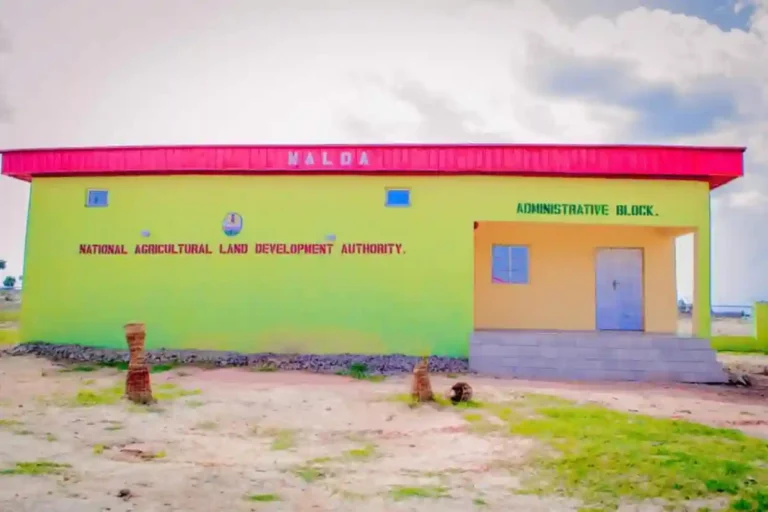
The National Agricultural Land Development Authority (NALDA) has launched a nationwide greenhouse farming initiative aimed at transforming vegetable production, empowering young people, and supporting women farmers across Nigeria.

During an inspection visit to the University of Abuja greenhouse site, NALDA’s Executive Secretary, Dr Cornelius Adebayo, explained that the project, approved by President Bola Tinubu, seeks to end Nigeria’s dependence on seasonal vegetable farming and close the distribution gaps that often lead to food shortages and high market prices.

“The greenhouse project is in three phases because we realised that one of the major problems we have with vegetables is that we depend too much on seasonal production. We approached Mr President for approval, which he graciously gave, for mega high-tech greenhouses across the country,” Dr Adebayo said.

The initiative includes the construction of three temperature-controlled high-tech greenhouses in key locations across the country, as well as net-house greenhouses in Abuja and Ogun State. At the Giri site in Abuja, NALDA has already completed 20 units and a nursery, while 30 units with a nursery are being set up in Shagamu, Ogun State. Each site features packing houses, cold storage facilities, and solar-powered energy systems to support efficient and sustainable operations.

According to Dr Adebayo, the project will make fresh vegetables available closer to consumers in major cities like Abuja and Lagos, reducing transport costs and post-harvest losses that affect farmers and market prices. He added that the facilities will be managed by young farmers, who will each receive two net houses to operate independently as agripreneurs under NALDA’s supervision.

“Most of these facilities will be handed over to young people who understand how to run them. The idea is to engage youth productively while ensuring food availability,” he said.

Beyond youth empowerment, NALDA is focusing on supporting women farmers through open-field vegetable cultivation. Under the second phase of the initiative, the Authority plans to establish at least 10 hectares of open-field vegetable farms in every federal constituency, where 100 women farmers per site will cultivate pepper, tomatoes, and leafy greens.

“We’re providing land clearing, irrigation, packing houses, and cold storage to support them,” Dr Adebayo explained. He added that land preparation and irrigation work are already underway in 16 pilot locations, including Cross River, Taraba, Plateau, and Gombe States.

The Abuja greenhouse farm is expected to become fully operational by December 2025, while other sites will follow in early 2026. NALDA has started registering farmers who will manage the greenhouse structures and will monitor all operations to ensure they meet global agricultural best practices.

Addressing concerns about the technology, Dr Adebayo clarified that greenhouse farming is safe and organic. “It’s just atmospheric condition control — very safe and cleaner. Plants simply need the right environment to thrive, and that’s what we’re providing,” he said.

The NALDA Executive Secretary also stressed that the project is not a loan or credit programme but a government-backed empowerment effort designed to eliminate infrastructural challenges that often hinder farmers’ productivity.

“Government is not in the business of business; our job is to create the environment for business to thrive,” he added.

Each of the 20 greenhouses in Abuja will be managed by 10 young farmers, with plans to expand the number to 50 units each in Abuja and Shagamu. NALDA has also called on state governments and local communities to provide more land for the expansion of the programme.

Dr Adebayo further stated that by organising vegetable production into structured clusters and coordinating offtake arrangements, NALDA aims to stabilise prices and promote urban agriculture close to Nigeria’s biggest cities.

“Outside every major city in the world, you see clusters of greenhouses supplying that city. As the giant of Africa, we should do no less. Our goal is to ensure fresh vegetables are available and affordable for Nigerians year-round,” he said.

The greenhouses will produce tomatoes, peppers, avocados, and other vegetables, while also providing agricultural training opportunities for young Nigerians through partnerships with universities and agricultural institutions.