Home Blog Page 388

Federal workers ask Tinubu to pay 3 months ₦35,000 wage award arrears

The Federal Workers Forum (FWF) has called on the administration of President Bola Tinubu to immediately pay the outstanding three months wage award owed to federal workers, harmonize salaries across the public service, and improve general welfare conditions.

In a statement issued on Wednesday and signed by Comrade Andrew Emelieze, the National Coordinator of the forum, the group accused the federal government of neglecting its financial obligations to workers, which has worsened their economic hardship.

“The refusal of the federal government to pay up the balance of the outstanding three months wage award as promised by the Accountant General of the Federation has shown clearly how our government has been treating her workers,” the statement read. “Same also has been the case for so many backlog of arrears owed the federal workers, especially promotion arrears, in some cases over ten years backlog owed the federal workers in Nigeria.”

According to the forum, the ₦35,000 wage award was introduced as a cost of living allowance following the removal of fuel subsidy and the devaluation of the naira. However, the group criticized the government for its inconsistent and delayed payments.

“Our government eventually decided to give a paltry sum of ₦35,000 to all federal workers irrespective of their grade levels,” the forum said. “The payment since its implementation has been inconsistent and staggering. Most times, it has taken the Federal Workers Forum to cry out before payments are made. As a matter of fact, the federal government has been very unfaithful in the payment of the wage award, thus the purpose of setting up the wage award to cushion the horrible effects of fuel subsidy removal has been defeated.”

The group explained that payment of the wage awards was halted in February 2024 after the new national minimum wage took effect in August 2024. At that time, the government reportedly owed workers five months of wage awards covering March to July 2024.

After repeated protests, the Accountant General promised to settle the arrears and implement the new minimum wage in full. “Most unfortunately,” the group said, “the federal government has only managed to pay just two months, remaining the balance of May, June and July 2024. ₦35,000 × 3 = ₦105,000 is what the federal government is owing each federal government worker since last year, over 15 months now.”

The forum described the situation as “a national embarrassment,” accusing the government of “economic sabotage” and “insensitivity to the plights of the federal workers.”

It also criticized the new minimum wage implementation, claiming it failed to provide any meaningful increase in take-home pay.

“The same Accountant General of the Federation that earlier promised the full implementation of the new national minimum wage as widely published in the media had turned around to say that the new national minimum wage has been fully implemented,” the forum said.

“We the federal workers are still in shock and in great surprise as nothing significant was added to the salaries of all federal workers. Only ₦40,000 flat was what was added to the salary of each worker across all levels, and there was also heavy taxation on the ₦40,000. Hence, all workers got less than ₦40,000 as the promised new national minimum wage.”

The group further said, “It is horrible to note that despite the increase in the price of petrol, the devaluation of the naira, the increased national budget, and the rising cost of living, only ₦40,000 was what was added to the salaries of the federal government workers in Nigeria.”

The forum also accused the organized labour, including the Nigeria Labour Congress (NLC) and the Trade Union Congress (TUC), of failing to defend the interests of workers.

“Most painful aspect of it all is that the Nigeria Labour Congress (NLC), the Trade Union Congress (TUC), and their affiliate unions have endorsed these ridiculous ill-treatment of the federal government workers,” the statement added.

The forum lamented that many federal workers are now living in debt and struggling to meet basic needs because their salaries no longer reflect the true cost of living.

“President Tinubu, we are really very disappointed in you,” the forum said. “Your poise for our welfare is really very abysmally poor. You are insensitive to our plights. This accounts for the ‘Japa’ syndrome among the federal workers and the recent wave of agitations, strikes, and protest. Today ASUU is being pushed to the wall and our collective future is at stake.”

“This current ₦70,000 minimum wage is a slave wage; we call for its immediate abolision,” the group declared.

The Federal Workers Forum listed several demands to the federal government, calling for urgent action to ease workers’ suffering.

The group urged the government to “pay up now the balance of the outstanding three months wage award, clear the backlog of promotion arrears, and work out a cost of living allowance for the workers, preferably pay 30% of our salaries as cost of living allowance.”

They also demanded the “resumption of the monthly payment of ₦35,000 wage award pending the payment of a living wage and implementation of the 40% peculiar allowance and pay 14 months outstanding arrears.”

Additionally, the forum called for the “immediate abolision of the contributory pension funds,” citing non-remittance of deductions for four months. It also urged the government to abolish compulsory housing funds, provide free healthcare for both workers and retirees, and reinstate leave bonuses and domestic servants’ allowances for directorate cadre officers.

The group rejected the proposed 5% petrol tax, describing it as an additional burden on already struggling Nigerians. It also called for the reinstatement of the fuel subsidy to reduce the high cost of living.

“We call on government to honour the agreement reached with our university lecturers and pay up all the backlog of arrears owed the lecturers,” the statement added.

The forum further urged the Nigeria Labour Congress, the Trade Union Congress, and their affiliate unions to “call for a warning strike to demand improved welfare for the federal workers.”

In its closing remarks, the group expressed solidarity with the Academic Staff Union of Universities (ASUU) in their ongoing struggle, saying, “We the federal workers are in solidarity with ASUU as they embark on the warning strike and we call on the NLC/TUC to declare a one-day national sympathy strike in solidarity with the ASUU struggles.”

Advertisement

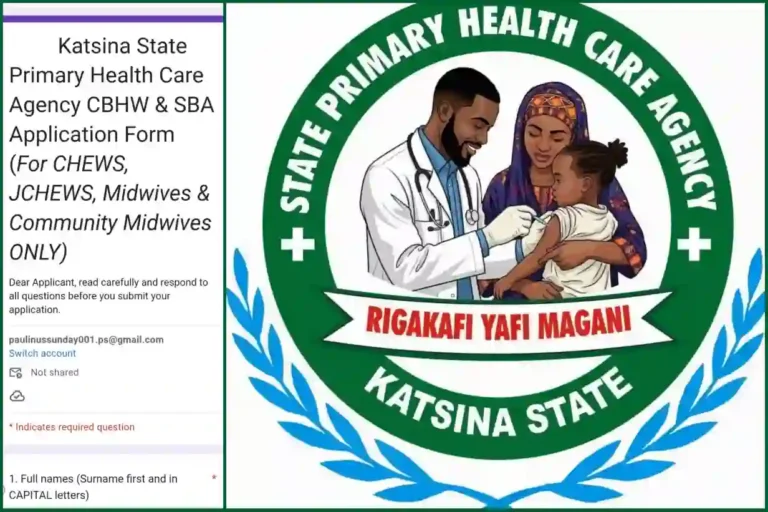
Katsina primary health care agency opens recruitment application

The Katsina State Primary Health Care Agency (KSPHCA) has announced the opening of applications for the recruitment of new healthcare workers across the 34 Local Government Areas of the state. The recruitment is being carried out under the administration of His Excellency Malam Dikko Umar Radda PhD, in partnership with the National Primary Health Care Development Agency.

According to the official statement from the agency, the application is open to suitably qualified candidates who are interested in joining the state’s healthcare workforce. This move follows the recent approval by Governor Radda for the recruitment of 1,020 new healthcare personnel to strengthen the delivery of primary health services in Katsina State.

The available positions include Midwives, Community Midwives, Community Health Extension Workers (CHEWs), Junior Community Health Extension Workers (JCHEWs), and Community-Based Health Care Workers. The Katsina State Government emphasized that this recruitment is part of ongoing efforts to improve access to quality healthcare in rural and urban communities.

Applicants must be indigenes of Katsina State with valid proof of origin. They are also required to possess relevant qualifications from recognized institutions, including Certificate in Basic Midwifery, Certificate in Community Midwifery, Diploma in Community Health Extension Work, or Certificate in Junior Community Health Extension Work.

The statement further added that, “All applicants must be registered with their respective professional regulatory bodies such as the Nursing and Midwifery Council of Nigeria or the Community Health Practitioners Registration Board of Nigeria.”

Candidates must be residents or willing to work in the local government areas they are applying for and must be ready to serve in rural locations. The agency noted that good communication skills, integrity, and a genuine passion for community service are essential qualities expected from all applicants.

Qualified candidates are to complete the application form online via the Katsina State Government recruitment portal link at forms.gle/ew2fyBij7aERVDaS9. The deadline for submission of applications is October 28, 2025. Shortlisted candidates will be contacted for screening, examination, and interviews at designated centers to be announced later.

House hears bill to establish S’East vocational and entrepreneurship institute

0

The House of Representatives on Monday held a public hearing on a bill proposing the establishment of the South East Institute for Vocational and Entrepreneurial Studies in Umuobom, Ideato Federal Constituency, Imo State. The bill, sponsored by Hon. Ikenga Imo Ugochinyere, who represents Ideato North and South Federal Constituency, aims to create a federal institute dedicated to promoting innovation, entrepreneurship, and practical vocational training tailored to modern industry and technology.

The session, organized by the House Committee on Alternative Education, served as an opportunity for stakeholders to present their views and make recommendations on the proposed law. Following the review and adoption of these contributions, the committee is expected to submit its report to the House for consideration before the bill proceeds to its third reading.

Hon. Ugochinyere described the bill as a major step toward redefining Nigeria’s education and employment system. He said it represents “a vision for a new Nigeria, one that prioritises skills, innovation, and creativity over paper qualifications.” He added that the proposed institute stands for justice and equity, noting that the Southeast region, despite its strong economic contributions, remains underrepresented in federal educational initiatives.

According to him, establishing the institute in Imo State would signal the Federal Government’s commitment to balanced and inclusive national development. He called on lawmakers and stakeholders to support the initiative, emphasizing that it is a strategic move to close the educational and economic gaps affecting the region.

“This bill is about building the Nigeria of our dreams, a nation where certificates no longer define success, but where skills, innovation, and creativity power our shared prosperity,” Ugochinyere said. “It’s more than a legislative proposal; it’s a vision of hope, of a Southeast, and indeed a Nigeria, where young people are defined not by unemployment or insecurity, but by enterprise, productivity, and innovation.”

He explained that the South East Institute for Vocational and Entrepreneurial Studies would serve as “a factory of ideas, a hub of creativity, and a launchpad for future innovators, entrepreneurs, and skilled professionals.” The lawmaker noted that unemployment continues to pose one of the greatest threats to Nigeria’s stability and development, adding that many young people are pushed into crime or social unrest due to lack of opportunities.

“When a young man or woman acquires a skill or starts a business, it transforms not only that person’s life but also their family, community, and the entire nation,” he said.

Highlighting the Southeast’s long-standing reputation for entrepreneurship, Ugochinyere praised the traditional Igbo apprenticeship system, which has been recognized internationally by institutions like Harvard University as one of the most successful grassroots entrepreneurship models in history. He said the institute would merge that indigenous system with modern technology, research, and global collaboration to enhance innovation and productivity.

“With the right training and innovation, we won’t just be creating jobs, we’ll be building industries. We won’t just be generating income, we’ll be laying the foundation for sustainable prosperity,” he stated.

He stressed that although the institute will be located in the Southeast, it is a national project designed to tackle a national problem. “Youth unemployment is not an Igbo, Hausa, or Yoruba problem, it is a Nigerian problem. This bill provides a Nigerian solution: empower the youth and secure the nation,” he said.

Ugochinyere pointed to examples from countries such as Germany, Japan, China, and the United States, where technical and vocational education has played a vital role in industrial growth and economic development. “Universities alone cannot sustain industrial growth,” he said. “Entrepreneurship, innovation, and technical expertise are the backbone of every prosperous nation. Through this bill, Nigeria can join the ranks of countries that have harnessed skills to power peace, growth, and national progress.”

The lawmaker called for bipartisan support for the bill, describing it as a collective investment in the country’s future. “In passing this bill, we’re not just creating another federal school, we’re building a future where every Nigerian youth can rise, where skills take precedence over paper qualifications, and where innovation fuels national prosperity.”

IITA partners FG to boost soil health, sustainable agriculture

0

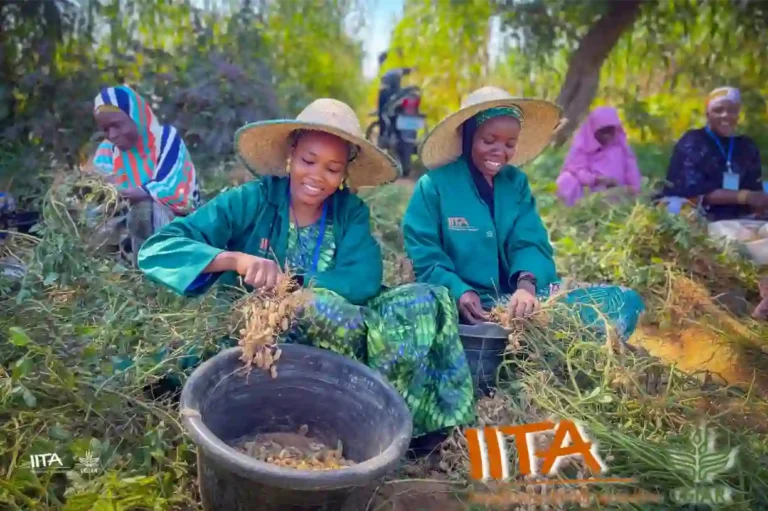
The International Institute for Tropical Agriculture (IITA) has pledged to collaborate with the Federal Ministry of Agriculture and Food Security (FMAFS) to improve soil health and promote sustainable agricultural production in Nigeria.

Beatrice Aighewi, head of station at IITA Abuja, made this known during the launch of the Nigerian Farmers’ Soil Health Scheme (NFSHS). The initiative, she explained, is a comprehensive soil fertility management programme designed to promote sustainable land management, climate resilience, and regenerative agriculture practices.

According to her, the NFSHS will provide farmers with real-time insights into their soil conditions, enabling them to boost crop yields, reduce costs, and adopt smarter farming methods. She noted that IITA is working closely with the Federal Ministry of Agriculture and Food Security to identify effective ways to improve the country’s soil conditions for better food production.

Ms Aighewi also stated that the institute is currently hosting the ECOWAS Centre for Excellence and the Soil Laboratory in Ibadan. She described the laboratory as a “Regional Hub for Fertiliser and Soil Health for West Africa and the Sahel,” adding that it plays a vital role in supporting agricultural research, soil testing, and fertiliser innovation.

She explained that the collaboration reflects a major commitment between the Nigerian government and IITA to enhance soil fertility and promote sustainable food systems. The project aligns with national efforts to achieve food security, boost agricultural productivity, and ensure environmental sustainability.

Vincent Aduramigba, a visiting scientist at the Regional Hub for Fertiliser and Soil Health for West Africa and the Sahel, said the hub provides technical expertise, innovation, and collaboration to improve soil fertility and strengthen food security across the region.

He added that the hub is owned by ECOWAS, while IITA provides technical coordination on behalf of member countries. “IITA has been a strategic partner in the soil health scheme since its inception,” he said.

Speaking further, Mr Aduramigba disclosed that the federal government plans to establish 774 soil health laboratories nationwide to help rural farmers benefit from soil testing and management services. He noted that this initiative would help farmers achieve higher yields, better-quality crops, and sustainable livelihoods.

Also, Jubril Mohammed Jubril, president of the Soil Science Society of Nigeria, emphasized that “soil is the basis of agriculture,” explaining that healthy soil is essential for both crop and livestock production. He said the NFSHS would guide farmers and fertiliser companies in producing the right fertilisers for specific regions in Nigeria.

WAEC announces recruitment for staff positions in Nigeria

0

The West African Examinations Council (WAEC) has announced recruitment openings for several key staff positions across its Nigeria National Office. In a public notice, the council invited applications from qualified individuals to fill the positions of Assistant Registrar II, Human Resource Management Officers, Accountants, Medical Doctor, and Internal Auditor II.

According to the announcement, “Applicants must possess a minimum of a Bachelor’s Degree, at least Second Class Lower Division, from a recognised University in relevant fields of study.” WAEC added that having a professional certification or membership of a recognised professional body would be an added advantage for candidates. The council stated that a minimum of three years of relevant post-NYSC work experience is generally required, except otherwise stated in specific roles.

The examination body also noted that applicants must be computer literate and proficient in using personal computers, office software packages, and web-based systems. “Candidates should be self-motivated, capable of working independently with minimal supervision, and able to deliver under pressure,” the statement read. WAEC further highlighted the importance of strong analytical, report writing, communication, and interpersonal skills, adding that successful applicants should be able to work effectively in a team and demonstrate readiness to lead change when needed.

The notice also stated that “All applicants must possess credits in WASSCE/SSCE/GCE ‘O’ Level in five subjects, including English Language and Mathematics at a sitting, or six credits including English Language and Mathematics at not more than two sittings.”

In addition, candidates must not be more than forty years old at the time of application. The council clarified that those who already possess a Master’s Degree or Ph.D. are not eligible to apply. Every applicant must have completed the National Youth Service Corps (NYSC) programme or hold a valid exemption certificate.

The statement emphasized that “All applicants should be physically and mentally fit, of good character, and ready to work in any part of Nigeria.” Interested and qualified candidates are to apply online through the link https://forms.cloud.microsoft/r/X60Gcr9M8t. The closing date for submission is Tuesday, November 5, 2025, and only shortlisted applicants will be contacted.

Ojodu LCDA trains 154 youths In 6-month digital skills programme

0

The Chairman of Ojodu Local Council Development Area (LCDA), Hon. David Olusegun Odunmbaku, has launched a six-month digital skills empowerment programme for 154 youths within the council area, urging them to take active roles in the nation’s democratic process.

The comprehensive training, which began at the ICT Centre Oluwole Ogba, will cover essential areas including digital literacy, social media marketing, cybersecurity, digital entrepreneurship, artificial intelligence (AI), and cloud computing. The programme is designed to equip young people with relevant digital skills that can enhance their employability and promote self-reliance in the digital economy.

Addressing the participants, Hon. Odunmbaku encouraged the youths to make the most of the initiative while also exercising their civic responsibility. He advised them to obtain their Permanent Voter Cards (PVCs) and participate actively in elections, stressing that their involvement is crucial for democratic growth.

“Go and register to vote and exhibit your civic responsibility,” he said. “Many of our young ones are disconnected from governance. Your decisions matter — you should be able to choose your leaders. If I had sat on the fence, I wouldn’t be chairman today.”

The council chairman expressed concern over the growing apathy among young Nigerians toward governance and emphasised that meaningful change in society can only occur through active participation. He added that youth participation in governance remains central to sustainable development and innovation.

“We have a cerebral president who has created programmes that benefit the youths, such as the school loan scheme and the reinstatement of history as a compulsory subject in schools. As youths, you can change the status quo by participating in the electoral process. It may not be a perfect system, but it can only improve when you participate,” he stated.

Speaking further on the empowerment initiative, Odunmbaku described the digital training as a “fantastic opportunity” for the participants to gain advanced technological knowledge. He urged them to take the training seriously as it could help them become independent and globally competitive.

“Digital empowerment will give you the skills to reach the next level. The world has changed, and vocational skills have evolved into technology. Take this training seriously because you never know when you’ll need it,” he said.

SISDev trains Bauchi farmers on smart agric practices

0

Farmers in Bauchi State have commended the introduction of a smart agric education programme by the Savanna Institute for Sustainable Development (SISDev), describing it as a major step toward transforming agriculture in the state.

The programme, supported by the Soil Values Project funded by the International Fertiliser Development Corporation (IFDC), aims to strengthen climate-smart agriculture practices and enhance food security through sustainable farming methods.

SISDev is currently sensitising farmers and agricultural extension agents on smart agriculture through practical sessions focused on soil health, water conservation, and natural resource management. The initiative provides extension agents with essential tools such as soil testing kits and tablets to help them train farmers on modern and sustainable practices that improve productivity and protect the environment.

The organisation has launched a statewide sensitisation exercise, with 25 smallholder farmers benefiting in Ningi Local Government Area. The farmers were trained on soil restoration, conservation techniques, integrated soil fertility, and pest management practices designed to boost yields and promote sustainable agriculture.

According to SISDev, the programme seeks to improve soil fertility, restore degraded farmlands, and build farmers’ capacity across Bauchi State. The development follows similar interventions recently implemented in Kano and Jigawa States.

The SISDev-Soil Values programme is designed to address challenges faced by Sahelian countries, including recurrent droughts, socio-political conflicts, desertification, and the growing impacts of climate change. The project’s framework is built on three intervention pathways—Agroecology, Inclusive Markets, and Enabling Environment—supported by five operational areas: bundling, integration, brokering, convening, and scoping or learning.

Speaking during a farm demonstration exercise in Ningi on Wednesday, Mr. Isiaka Ibrahim, Project Team Lead at SISDev, said the programme had earlier trained 50 extension agents and lead farmers in Bauchi. He explained that these trained agents were expected to transfer their knowledge and skills to smallholder farmers across the 20 local government areas of the state.

“We are here in Ningi to supervise and monitor the EAs to lead farmers’ cascade training. We are here to see whether the EAs can impact what we have impacted on them in Bauchi,” Ibrahim said.

He added that the performance of both the extension agents and the trainees was satisfactory. “Both the EAs and the trainee’s performance is very satisfactory because the EAs are really trying, and this is a practical training, a farmer field school where the EA for Ningi trains them on our demonstration plot,” he said.

Ibrahim explained that the project’s main goal was to empower lead farmers with knowledge and hands-on skills necessary to support smallholder farmers in their communities. The field demonstration, he noted, was designed to promote peer-to-peer learning through practical engagement, equipping farmers with the knowledge to adopt innovative farming methods.

“The exercise availed participants opportunities to learn viable sustainable agricultural technologies, including soil restoration methods, water conservation techniques, and integrated pest management,” Ibrahim said.

He added that the farmers received training on integrated soil fertility management, the half-moon farming system, mulching, zai or compost pits, and the use of neem seed for pest control.

“Now that fertiliser is too expensive, smallholder farmers can use the composting system to create their own manure and sell it as a means of getting income. It is organic in nature, environmentally friendly, and helps to stem climate change,” he explained.

He further commended the partnership between SISDev and the Soil Values Project, noting that it had provided both technical and financial support. “The collaboration between SISDev and Soil Value is very excellent because we are appreciating both the technical and financial support,” he said.

Some of the beneficiaries expressed appreciation, describing the initiative as a life-changing opportunity for farmers in the area.

One of the participants, Mainuna Hassan, said the training had exposed her to practical methods of recycling farm residues into effective organic fertiliser. “I learnt how to recycle farm residues and transform it into an effective organic fertiliser. I have acquired practical skills to improve my farming activities and increase my output,” she said.

Another farmer, Mama Mairam, said the new techniques introduced through the programme had helped farmers reduce waste and improve yields. “SISDev–Soil Value has brought tremendous progress. Before the intervention, we were getting low yield but it has improved and achieved great results now. We’ve learned improved methods of local fertiliser application and how to retain soil moisture effectively so that our crops can thrive even with limited water,” she explained.

Mairam added that the intervention had brought remarkable transformation among women farmers in the area. “Women farmers are adopting new techniques which make farming less cumbersome and more profitable,” she said.

Another participant, Hashim Waziri, noted that the water conservation skills acquired during the training had helped farmers nurture their crops and reduce wastage. She explained that farmers were taught how to make holes in the ground to store excess water through mulching, especially during the dry season.

While commending the effort, Waziri promised to pass on the knowledge to other farmers in her community. “We will continue to teach others what we have learned so that more farmers can benefit from these sustainable agricultural practices,” she said.

WFP says 673 million people worldwide facing hunger

The World Food Programme (WFP) has reported that about 673 million people, representing nearly eight percent of the global population, are not getting enough to eat and are facing hunger. The UN agency highlighted that export restrictions, tariffs, and unstable commodity prices are disrupting global food markets, making food less affordable and accessible in countries that already struggle with shortages.

The WFP warned that trade policy uncertainty, particularly global tariffs and inflation, is worsening the situation. It stated that these challenges limit access to affordable food, especially in vulnerable regions. The announcement came ahead of the 2025 World Food Day, observed annually on October 16. The agency listed Nigeria among eight countries currently experiencing severe food insecurity.

According to the WFP, nearly two-thirds of the world’s population living in extreme poverty are in Sub-Saharan Africa. “Somalia, Sudan, South Sudan, Mali, Burkina Faso, the Democratic Republic of the Congo, Nigeria, and Ethiopia all face acute food insecurity driven by a combination of conflict, droughts, floods, and desertification,” the organisation said.

The WFP explained that conflict, climate change, and inequality are major drivers of global hunger. It added that armed conflicts in places like Ukraine, Sudan, and Gaza are disrupting food production, supply chains, and access to markets. “This leads to the displacement of people, creating acute food insecurity for millions,” the statement read.

The agency further said that increasing climate variability, including droughts, floods, and heat waves, is undermining farmers’ ability to produce food. It noted that these challenges are reducing agricultural productivity and food availability, especially in developing countries. The WFP also linked rising food and energy prices, inflation, and global economic instability to reduced purchasing power and limited access to nutritious food.

“The COVID-19 pandemic, the war in Ukraine, and climate shocks all contributed to food price surges between 2020 and 2024,” the agency stated. “As food prices rose, real wages fell and inflation kicked in. People, especially in low-income countries, were less able to afford nutritious food and often ate fewer meals per day.”

The WFP said that deep-rooted poverty and inequality continue to limit access to food and essential resources. It added that rural and marginalised communities, particularly women and indigenous groups, face the harshest impacts due to low incomes, poor infrastructure, and limited local services.

SON announces 13th ARSO continental essay competition 2025/2026

0

The Standards Organisation of Nigeria (SON) has announced the launch of the 13th ARSO Continental Essay Competition for the 2025/2026 edition, inviting entries from young African students. The competition is organized by the African Organisation for Standardisation (ARSO) and focuses on the theme, “The Role of Harmonized Standards in Reducing Technical Barriers to Trade and Promoting Fair and Just Trade within Intra-African and Global Trade.”

According to SON, the competition aims to promote understanding of how harmonized standards can support fair and equitable trade across Africa and globally. It provides a platform for young Africans to share their perspectives on standardization and its impact on the African Continental Free Trade Area (AfCFTA).

The competition is open to students from all African countries under the age of 35 who are currently studying in recognized universities or colleges approved by the relevant commission for university education or its equivalent. SON stated that “participants are expected to write essays in English or French, with a word count between 1000 and 1200 words, using Century Gothic font size 12 and double spacing.”

The organizers have emphasized strict adherence to originality. “Essays that are generated by AI or contain more than 20 percent AI-generated content will be automatically disqualified,” the announcement stated. This policy aligns with the competition’s commitment to academic integrity and creativity.

Winners of the competition will receive cash prizes and international recognition. The first-place winner will receive $1,000, a return ticket to attend the ARSO General Assembly in Uganda in June or July 2026, and recognition during the event. The second-place winner will earn $800, and the third-place winner will receive $500, with both runners-up having their essays published on the official ARSO website.

Each participant is allowed only one essay submission. Essays must be submitted in Microsoft Word format and must include the participant’s full contact details on the first page, along with a brief author profile not exceeding 50 words. A copy of the participant’s identity card or passport, a passport-sized photo, and the completed registration form are required attachments.

SON advised that completed essays and required documents should be sent to umarzainab59@yahoo.com, paul.pankes@son.gov.ng, and pcpankes@yahoo.com before the deadline of February 28, 2026. Participants must also ensure that their registration forms are endorsed by the Head of Department from their respective institutions.

Hope Behind Bars Africa launches inmate farming training

0

Hope Behind Bars Africa has launched the Farming Justice Project at the Kuje Custodial Centre in Abuja to promote inmate rehabilitation and address food insecurity within correctional facilities. The initiative is being implemented in partnership with the Nigerian Correctional Service and funded by the European Union through International IDEA under the Rule of Law and Anti-Corruption Programme.

At the official launch on Tuesday, the Executive Director of Hope Behind Bars Africa (HBBA), Funke Adeoye, said the project represents a practical response to Nigeria’s evolving correctional system. She explained that the change from “prison” to “correctional service” must go beyond words to reflect genuine rehabilitation and empowerment for inmates.

“With the change in nomenclature from ‘prison’ to ‘correctional service,’ there is a need to ensure that our custodial centres reflect that change through genuine rehabilitation and empowerment,” Adeoye stated.

She said the Farming Justice Project combines agriculture with restorative justice principles, allowing inmates to acquire life skills and contribute meaningfully to society both during and after their time in custody. The project aims to empower inmates through agricultural training and hands-on food production.

According to her, more than 80 inmates are currently being trained in modern agricultural techniques for okra, watermelon, and tomato cultivation. “Some of our harvested okra has already been consumed by inmates, showing real progress in tackling food shortages in custodial centres,” she added.

The project currently operates at the Kuje Custodial Centre and the Dukpa Farm Centre in Abuja. Adeoye said there are plans to expand the model to other correctional facilities across Nigeria, including Lagos, where Hope Behind Bars Africa has previously worked with female inmates on similar agricultural programmes.

“Our goal is to reduce recidivism by equipping inmates with viable means of livelihood after serving their sentences,” she said. “We are calling on partners and well-meaning Nigerians to support the NCoS in ensuring effective rehabilitation and reintegration of inmates.”

Adeoye commended the Comptroller General of the Nigerian Correctional Service, Sylvester Nwakuche, for his support and for encouraging public-private partnerships focused on reforming correctional practices.

She also highlighted the importance of preparing inmates for life after incarceration. “Out of over 80,000 inmates nationwide, only about 3,600 are on death row. This means a large number will eventually return to our communities. Therefore, it is our responsibility to ensure they come out better prepared for productive living,” she noted.

In his welcome remarks, the Controller of Corrections for the FCT Command, Christopher Jen, praised the initiative as a significant step towards building a more peaceful and secure Nigeria.

“My desire is to see a better Nigeria tomorrow where everyone will live without fear or anxiety. The enthusiasm and willingness of inmates to learn skills today give me confidence that such a future is possible,” Jen said.

He described the Kuje Custodial Centre as a “centre of excellence” in vocational training, pointing out that inmates are already engaged in barbing, embroidery, carpentry, plumbing, electrical work, shoemaking, soap making, and fishery. These activities, he said, are helping inmates to develop skills that can sustain them after their release.

Delivering a goodwill message, Joseph Odeh, a representative of International IDEA, emphasised the importance of collaboration in achieving justice reform.

“Justice reform is not the responsibility of one institution alone. It is a shared mission that requires the active participation of all sectors of society. Let this day mark the beginning of a new chapter in our justice system—one that prioritises human development, community reintegration, and sustainable transformation,” Odeh stated.

The event featured a guided tour of the Kuje Custodial Centre, the official unveiling of the Farming Justice Project, and visits to skill acquisition centres where inmates are being trained in various trades. The programme highlights how agriculture, skills development, and rehabilitation can work together to support justice reform and national food security.