Home Blog Page 389

WFP says 673 million people worldwide facing hunger

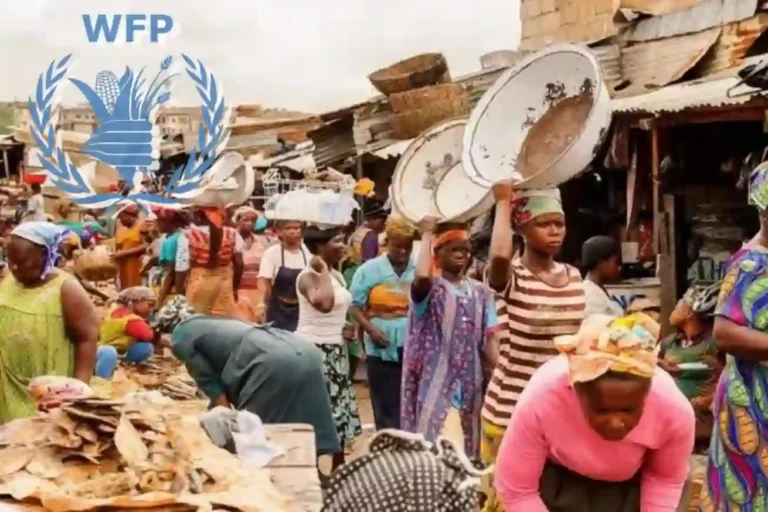
The World Food Programme (WFP) has reported that about 673 million people, representing nearly eight percent of the global population, are not getting enough to eat and are facing hunger. The UN agency highlighted that export restrictions, tariffs, and unstable commodity prices are disrupting global food markets, making food less affordable and accessible in countries that already struggle with shortages.

The WFP warned that trade policy uncertainty, particularly global tariffs and inflation, is worsening the situation. It stated that these challenges limit access to affordable food, especially in vulnerable regions. The announcement came ahead of the 2025 World Food Day, observed annually on October 16. The agency listed Nigeria among eight countries currently experiencing severe food insecurity.

According to the WFP, nearly two-thirds of the world’s population living in extreme poverty are in Sub-Saharan Africa. “Somalia, Sudan, South Sudan, Mali, Burkina Faso, the Democratic Republic of the Congo, Nigeria, and Ethiopia all face acute food insecurity driven by a combination of conflict, droughts, floods, and desertification,” the organisation said.

The WFP explained that conflict, climate change, and inequality are major drivers of global hunger. It added that armed conflicts in places like Ukraine, Sudan, and Gaza are disrupting food production, supply chains, and access to markets. “This leads to the displacement of people, creating acute food insecurity for millions,” the statement read.

The agency further said that increasing climate variability, including droughts, floods, and heat waves, is undermining farmers’ ability to produce food. It noted that these challenges are reducing agricultural productivity and food availability, especially in developing countries. The WFP also linked rising food and energy prices, inflation, and global economic instability to reduced purchasing power and limited access to nutritious food.

“The COVID-19 pandemic, the war in Ukraine, and climate shocks all contributed to food price surges between 2020 and 2024,” the agency stated. “As food prices rose, real wages fell and inflation kicked in. People, especially in low-income countries, were less able to afford nutritious food and often ate fewer meals per day.”

The WFP said that deep-rooted poverty and inequality continue to limit access to food and essential resources. It added that rural and marginalised communities, particularly women and indigenous groups, face the harshest impacts due to low incomes, poor infrastructure, and limited local services.
Advertisement

SON announces 13th ARSO continental essay competition 2025/2026

0

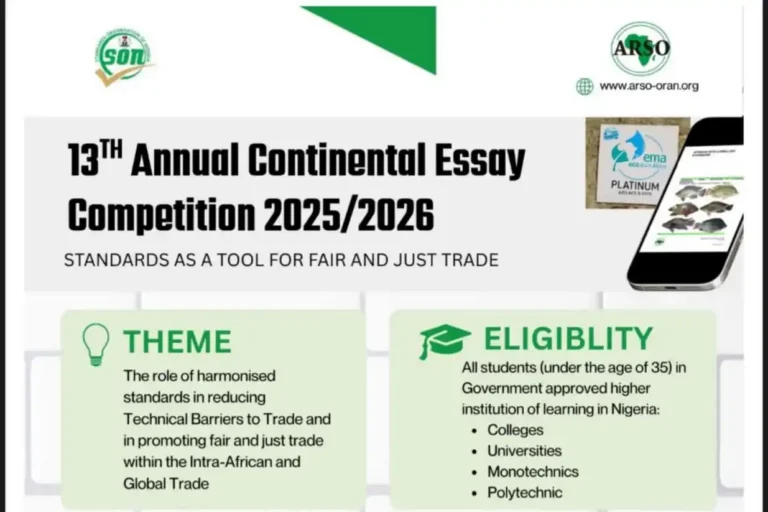
The Standards Organisation of Nigeria (SON) has announced the launch of the 13th ARSO Continental Essay Competition for the 2025/2026 edition, inviting entries from young African students. The competition is organized by the African Organisation for Standardisation (ARSO) and focuses on the theme, “The Role of Harmonized Standards in Reducing Technical Barriers to Trade and Promoting Fair and Just Trade within Intra-African and Global Trade.”

According to SON, the competition aims to promote understanding of how harmonized standards can support fair and equitable trade across Africa and globally. It provides a platform for young Africans to share their perspectives on standardization and its impact on the African Continental Free Trade Area (AfCFTA).

The competition is open to students from all African countries under the age of 35 who are currently studying in recognized universities or colleges approved by the relevant commission for university education or its equivalent. SON stated that “participants are expected to write essays in English or French, with a word count between 1000 and 1200 words, using Century Gothic font size 12 and double spacing.”

The organizers have emphasized strict adherence to originality. “Essays that are generated by AI or contain more than 20 percent AI-generated content will be automatically disqualified,” the announcement stated. This policy aligns with the competition’s commitment to academic integrity and creativity.

Winners of the competition will receive cash prizes and international recognition. The first-place winner will receive $1,000, a return ticket to attend the ARSO General Assembly in Uganda in June or July 2026, and recognition during the event. The second-place winner will earn $800, and the third-place winner will receive $500, with both runners-up having their essays published on the official ARSO website.

Each participant is allowed only one essay submission. Essays must be submitted in Microsoft Word format and must include the participant’s full contact details on the first page, along with a brief author profile not exceeding 50 words. A copy of the participant’s identity card or passport, a passport-sized photo, and the completed registration form are required attachments.

SON advised that completed essays and required documents should be sent to umarzainab59@yahoo.com, paul.pankes@son.gov.ng, and pcpankes@yahoo.com before the deadline of February 28, 2026. Participants must also ensure that their registration forms are endorsed by the Head of Department from their respective institutions.

Hope Behind Bars Africa launches inmate farming training

0

Hope Behind Bars Africa has launched the Farming Justice Project at the Kuje Custodial Centre in Abuja to promote inmate rehabilitation and address food insecurity within correctional facilities. The initiative is being implemented in partnership with the Nigerian Correctional Service and funded by the European Union through International IDEA under the Rule of Law and Anti-Corruption Programme.

At the official launch on Tuesday, the Executive Director of Hope Behind Bars Africa (HBBA), Funke Adeoye, said the project represents a practical response to Nigeria’s evolving correctional system. She explained that the change from “prison” to “correctional service” must go beyond words to reflect genuine rehabilitation and empowerment for inmates.

“With the change in nomenclature from ‘prison’ to ‘correctional service,’ there is a need to ensure that our custodial centres reflect that change through genuine rehabilitation and empowerment,” Adeoye stated.

She said the Farming Justice Project combines agriculture with restorative justice principles, allowing inmates to acquire life skills and contribute meaningfully to society both during and after their time in custody. The project aims to empower inmates through agricultural training and hands-on food production.

According to her, more than 80 inmates are currently being trained in modern agricultural techniques for okra, watermelon, and tomato cultivation. “Some of our harvested okra has already been consumed by inmates, showing real progress in tackling food shortages in custodial centres,” she added.

The project currently operates at the Kuje Custodial Centre and the Dukpa Farm Centre in Abuja. Adeoye said there are plans to expand the model to other correctional facilities across Nigeria, including Lagos, where Hope Behind Bars Africa has previously worked with female inmates on similar agricultural programmes.

“Our goal is to reduce recidivism by equipping inmates with viable means of livelihood after serving their sentences,” she said. “We are calling on partners and well-meaning Nigerians to support the NCoS in ensuring effective rehabilitation and reintegration of inmates.”

Adeoye commended the Comptroller General of the Nigerian Correctional Service, Sylvester Nwakuche, for his support and for encouraging public-private partnerships focused on reforming correctional practices.

She also highlighted the importance of preparing inmates for life after incarceration. “Out of over 80,000 inmates nationwide, only about 3,600 are on death row. This means a large number will eventually return to our communities. Therefore, it is our responsibility to ensure they come out better prepared for productive living,” she noted.

In his welcome remarks, the Controller of Corrections for the FCT Command, Christopher Jen, praised the initiative as a significant step towards building a more peaceful and secure Nigeria.

“My desire is to see a better Nigeria tomorrow where everyone will live without fear or anxiety. The enthusiasm and willingness of inmates to learn skills today give me confidence that such a future is possible,” Jen said.

He described the Kuje Custodial Centre as a “centre of excellence” in vocational training, pointing out that inmates are already engaged in barbing, embroidery, carpentry, plumbing, electrical work, shoemaking, soap making, and fishery. These activities, he said, are helping inmates to develop skills that can sustain them after their release.

Delivering a goodwill message, Joseph Odeh, a representative of International IDEA, emphasised the importance of collaboration in achieving justice reform.

“Justice reform is not the responsibility of one institution alone. It is a shared mission that requires the active participation of all sectors of society. Let this day mark the beginning of a new chapter in our justice system—one that prioritises human development, community reintegration, and sustainable transformation,” Odeh stated.

The event featured a guided tour of the Kuje Custodial Centre, the official unveiling of the Farming Justice Project, and visits to skill acquisition centres where inmates are being trained in various trades. The programme highlights how agriculture, skills development, and rehabilitation can work together to support justice reform and national food security.

World Bank to invest $9bn in agribusiness to create 400 million jobs

The World Bank has restated its commitment to transforming agriculture into a strong business sector that drives job creation, income growth, and food security globally.

World Bank Group President Ajay Banga made this known on Tuesday in Washington during the ‘AgriConnect Flagship Event’ held on the sidelines of the 2025 Annual Meetings of the IMF and World Bank Group.

Mr Banga noted that agriculture has always been central to global development and must now evolve to meet modern economic needs.

“Today, the challenge is to make it about how to grow more food, and turn that growth into a business that produces higher incomes for smallholder farmers and more opportunity across entire economies,” he said.

He explained that over the next 10 to 15 years, around 1.2 billion young people in developing countries will reach working age, but current trends indicate that only 400 million jobs will be created.

“Hundreds of millions will either power the global economy or spill over into unrest and migration. That is why the World Bank Group has made job creation our central mission,” he added.

Mr Banga emphasised that jobs ultimately come from the private sector, even though they do not always start there.

“Countries move along a continuum: early on, the public sector drives job creation; over time, private capital and entrepreneurship take the lead. Our three-pillar strategy reflects that arc; build infrastructure and skills, create predictable regulations and a business-friendly environment, and back investors with risk tools that crowd in capital,” he said.

He stated that the World Bank sees great potential in five key sectors — infrastructure, agribusiness, healthcare, tourism, and value-added manufacturing — with agribusiness being a central focus due to its link to job creation and rising global food demand.

“We see potential in five sectors: infrastructure, agribusiness, healthcare, tourism, and value-added manufacturing. Today, we will focus on agribusiness, central both to jobs and to meeting global food demand that is projected to rise more than 50 per cent in the coming decades,” he explained.

Banga noted that emerging markets hold a crucial role in achieving these goals, adding that the developing world already has the necessary resources — land, sunlight, water, and human capacity.

“Africa holds 60 per cent of the world’s uncultivated arable land and can boost yields on land already farmed. Latin America already produces enough food for well over a billion people, but infrastructure is a challenge. Across Asia, smallholder farmers manage most farmland; an enormous base to lift with better technology, finance, and market access,” he said.

He pointed out that about 500 million smallholder farmers produce 80 per cent of the world’s food, but most still operate at a subsistence level.

“Fewer than one in 10 have access to commercial finance. The opportunity has been there for decades; what’s changing is our ability to organise at scale to shape the future of food security, nutrition, growth, and employment,” he stated.

According to him, the World Bank Group in 2024 began implementing a strategy aimed at helping smallholders raise productivity and connect them to structured value chains that can lift incomes and protect against exploitation.

“We also set out to connect them to structured value chains that lift incomes and guard against exploitation so farmers are not forced to sell land for lack of credit, insurance, or market access,” he said.

Mr Banga revealed that the World Bank plans to double its agribusiness commitments to nine billion dollars annually by 2030 while also seeking to mobilise an additional five billion dollars in investments.

“At the same time, we have set a target to double our agribusiness commitments to nine billion dollars annually by 2030, aiming to mobilise an additional $5 billion. It is grounded in what we have tested in the field and in lessons borrowed from others,” he added.

He explained that the focus remains on supporting small farmers who face challenges such as limited access to credit, inputs, and reliable buyers.

“Producer organisations, often built by governments, entrepreneurs, or private actors, can connect them to suppliers, insurers, buyers, and lenders,” Mr Banga said.

She Code Africa opens 2025 grow with Google scholarship applications

0

She Code Africa has announced the opening of applications for the 2025 She Code Africa x Grow with Google Scholarship Program to mark the International Day of the Girl Child. The initiative, held in partnership with Grow with Google and Coursera, will provide full 100% scholarships to 200 African women who are eager to improve their digital and tech skills.

The 24-week virtual program is designed for women aged 20 to 35 who wish to upskill in Prompting Essentials, AI Essentials, Cybersecurity, Data Analytics, Digital Marketing and E-commerce, IT Support, Project Management, and UX Design. The training will be self-paced, allowing participants to learn at their convenience while accessing a supportive community of women in tech across Africa.

According to She Code Africa, “This scholarship program aims to empower African women with the technical knowledge and tools needed to thrive in the digital economy.” Participants who successfully complete the program will receive a Coursera Career Certificate and a Certificate of Completion from She Code Africa, increasing their job readiness and global employability.

Eligibility for the program requires applicants to be women aged between 18 and 35, living in any African country, with at least beginner-level knowledge in their chosen track. They must own a working laptop, have reliable internet access for the full duration of the program, and be able to commit 8 to 10 hours weekly over the six-month period.

Interested candidates can apply through the official link bit.ly/GWGApplicationForm or by scanning the QR Code provided. The application deadline is October 24, 2025.

FG invests ₦1 trillion in solid minerals sector

0

The Federal Government has earmarked ₦1 trillion for investment in Nigeria’s solid minerals sector to fund geo-scientific exploration and develop critical infrastructure aimed at unlocking the country’s vast mineral wealth.

President Bola Tinubu announced this at the opening of the 2025 Nigeria Mining Week in Abuja, reaffirming his administration’s commitment to making the solid minerals sector a major driver of economic growth and diversification.

Represented by the Secretary to the Government of the Federation, Senator George Akume, the President described the sector as a vital component of the national economy that deserves top priority.

“We made the historic decision to increase the 2025 national budget by ₦4.5 trillion, with an extra ₦1 trillion earmarked for the solid minerals sector. This represents the most significant single investment in Nigeria’s mining industry by any administration,” the President stated. “These funds are being channelled towards geo-scientific exploration, detailed geological surveys, and the development of infrastructure to unlock our mineral-rich regions.”

President Tinubu explained that Nigeria’s overdependence on a single natural resource had provided important lessons, prompting the government to diversify the economy through the mining sector. He noted that alternative revenue sources would help stimulate local industries, generate employment, and fund national development.

He added that the recent reforms in the solid minerals sector were already showing positive results.

“In 2024, the solid minerals sector generated over ₦38 billion in revenue, up from ₦6 billion the previous year—a sixfold increase achieved through improved policy and oversight,” he said.

Tinubu also highlighted the importance of securing mining regions to attract and sustain both local and foreign investments. He assured that the government was intensifying efforts to eliminate insecurity and banditry in mining zones.

As part of the new policy framework, the President approved the establishment of the Nigeria Solid Minerals Company to harness the full potential of the sector and ensure accountability in mineral resource management.

Minister of Solid Minerals Development, Dr. Dele Alake, announced that the Federal Government was introducing a series of financial and operational policies to boost local participation and close critical funding gaps in the solid minerals sector.

According to him, these measures include the SMDF High-Impact Exploration Programme, which is designed to support exploration geo-chemists and geophysicists, as well as grants and scholarships for geosciences students to promote research and enhance local industry standards.

Dr. Alake further disclosed that a pre-shipment inspection agency for solid minerals exports would be established in collaboration with the Ministry of Finance. This initiative, he explained, would help ensure strict quality control and accountability across the export value chain.

“Like the early industrial development under the petroleum industry, the solid minerals sector will now have its own dedicated machinery inspection agency,” he said.

He stressed that Nigeria must possess internationally certified geological data to attract credible investors to the sector.

“Investors need accurate data on deposit volume and quality to make informed decisions,” he explained. “That is why we are directing that all geological data from ministries and agencies be centralised in the Nigeria Geological Survey Agency (NGSA), which is the official national repository.”

On the legislative side, the Chairman of the Senate Committee on Solid Minerals, Senator Ekong Sampson, reaffirmed the National Assembly’s readiness to provide legislative support for the ongoing reforms. He called for collaboration among the government, industry stakeholders, and host communities to promote peace and growth.

“We need collaboration, not conflict,” Senator Sampson said.

The President of the Miners Association of Nigeria, Mr. Dele Ayanleke, described the Nigeria Mining Week as a vital platform for innovation and sectoral growth. He said the event continues to foster investment opportunities while promoting transparency and sustainable practices in the mining industry.

Similarly, the Permanent Secretary, Ministry of Solid Minerals Development, Mr. Faruk Yabo, said the ministry was building a technology-driven, transparent, and investor-friendly environment to encourage value addition in the sector. He added that the goal was to ensure Nigeria transitions from exporting raw minerals to producing value-added products that create jobs and increase national income.

The 2025 Nigeria Mining Week, themed “Nigeria Mining: From Progress to Global Relevance,” reflects the country’s ambition to reposition the solid minerals sector as a major pillar of economic diversification, industrial growth, and sustainable development.

Akwa Ibom Gov revokes illegal land titles in Uyo Tropicana layout

0

Akwa Ibom State Governor, Pastor Umo Eno, has moved to restore order in Uyo’s Tropicana layout by revoking all illegal land titles and activities that violate the area’s original master plan. The governor made this decision after inspecting the portion of land designated for the ARISE Shopping City, emphasizing that government property must not be encroached upon or converted for private use.

Fielding questions from Government House Correspondents, Governor Eno said the government was determined to reclaim all lands illegally occupied in the area to ensure that development follows the approved master plan. “Even though the land has not been put to use for years, there has been so much of encroachment. That is why I came in here and revoked every title and activity that was happening here different from the original master plan,” he stated.

Governor Eno explained that his administration’s vision to make Akwa Ibom a world-class tourism destination informed the decision to advance work on the previously abandoned 5,000-seat Ibom International Convention Centre and the 200-room Ibom International Hotel. He added that the ARISE Shopping City would complete the ecosystem for a comprehensive tourism experience.

“We are trying to create a tourism ecosystem for the State. And, we have been blessed by previous administrations to have laid this foundation, and we are building on this to better our State,” he said.

The governor stressed that tourism remains the hallmark of Akwa Ibom’s economic development strategy, adding that the state already has the right infrastructure to become a top travel and leisure destination in Nigeria. “We are trying to ensure that we revive tourism. That is the hallmark for our State. We have all the infrastructure to become the best tourist destination in this country, and we are building on it. That is our strong point,” he stated.

Governor Eno further said that his administration is working on a comprehensive tourism master plan that will integrate all tourism assets across the state, including cultural, medical, agricultural, and aviation potentials. “Whether this is in Uyo, Ikot Abasi, Ikot Ekpene or Oron, we will build all our tourism potentials and assets; whether it is culture and heritage, medical, agriculture, or aviation. We are going to put them together into a tourism Master plan that will help our State,” he explained.

On the proposed ARISE Shopping City, the governor said the project aims to provide tourists with an all-in-one leisure and shopping experience. “We need a Shopping City with international brands where tourists would come here and can stroll in to have their leisure, vacation, and recreational comfort,” he said. “So, instead of going to all those big places where tickets are very expensive, you can get them all here, same quality, same top brands. That is what the ARISE Shopping City connotes.”

Governor Eno disclosed that the project has a 12-month completion timeline and is expected to boost tourism, investment, and economic growth in Akwa Ibom. He added that with the state’s quality road network and peaceful environment, Akwa Ibom is set to experience significant expansion in hospitality and recreation. “It is against this backdrop that we are building on. We will not allow anyone, no matter how highly placed, to disrupt the peace and harmony of Akwa Ibom State,” he emphasized.

FG moves to improve livestock data management

0

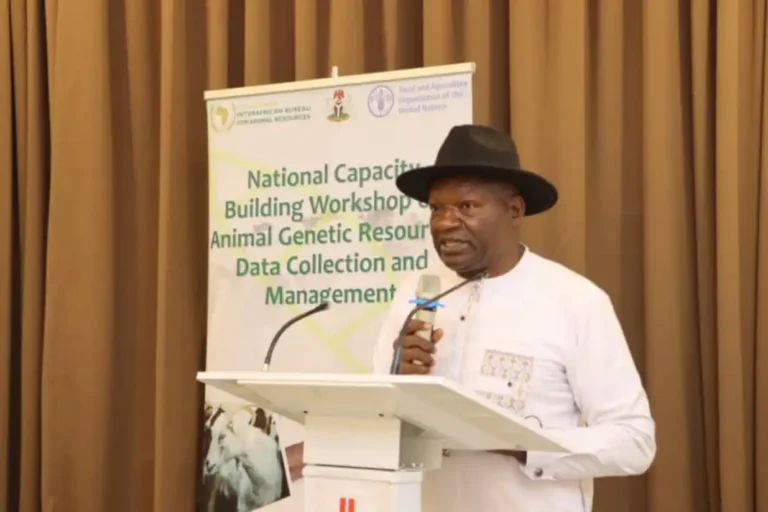
The Permanent Secretary of the Federal Ministry of Livestock Development, Dr. (Mrs.) Chinyere Ijeoma Akujobi, has stressed the importance of proper data collection, documentation, and management of Animal Genetic Resources (AnGR) as a foundation for evidence-based policy formulation, research, breeding programmes, and sustainable utilization.

Dr. Akujobi made this known during the National Capacity Building Workshop on Data Collection and Management of Animal Genetic Resources, held in Abuja on Tuesday, October 14, 2025. The event was organized by the African Union Inter-African Bureau for Animal Resources (AU-IBAR) in collaboration with the Federal Ministry of Livestock Development.

Represented by the Director, Technical, in the Office of the Permanent Secretary, Dr. Peter Alike, the Permanent Secretary emphasized that animal genetic resources are central to livestock productivity, resilience, and adaptation to climate change.

“This workshop could not have come at a more opportune time, as the livestock sector continues to play a critical role in national food security, economic development, rural livelihoods, and environmental sustainability,” she said.

According to her, the event reaffirms Nigeria’s commitment to transforming the livestock sector through innovation, science, and technology. She added that the effective management of data on animal genetic resources is key to achieving sustainable livestock production and boosting agricultural GDP.

“Nigeria, like many African countries, is blessed with a rich diversity of indigenous animal genetic resources. However, the lack of robust and harmonized data collection and management systems has hampered our ability to fully harness this potential,” she said.

Dr. Akujobi described the capacity-building workshop as a vital step toward strengthening institutional and human capacity to generate reliable data, adopt modern management tools, and align with continental and global strategies for the sustainable use of AnGR.

The Permanent Secretary reiterated the Ministry’s commitment to modernizing the livestock industry through the National Livestock Growth Acceleration Strategy (NL-GAS), which serves as the Ministry’s flagship framework for transforming the sector into a productive, inclusive, and data-driven industry.

“The NL-GAS provides a clear roadmap for improving animal genetics, enhancing feed and fodder systems, strengthening veterinary services, and promoting data-driven decision-making across the entire value chain,” she explained.

She assured stakeholders of the Ministry’s full support in implementing the outcomes of the workshop and pledged continued collaboration with AU-IBAR, regional bodies, research institutions, and development partners to strengthen livestock development policies and practices across Nigeria.

Dr. Akujobi encouraged participants to take full advantage of the training, share experiences, and build lasting partnerships that would improve data management practices in their institutions and communities. “I urge participants to make the most of this workshop, acquire new skills, exchange experiences, and build lasting partnerships. The knowledge and tools gained here will help improve practices and promote sustainability in livestock development,” she said.

In his opening remarks, the Head of the Northeast Sub-Office for the Food and Agriculture Organisation (FAO) of the United Nations in Nigeria, Al Hassan Cisse, highlighted Nigeria’s position as host to the largest livestock population in Africa, with 58.5 million cattle, 124 million goats, 64 million sheep, 14 million pigs, and 180 million poultry.

He also noted Nigeria’s diverse livestock breeds, including the Red Sokoto goat and the White Fulani cattle, stressing the need to safeguard genetic diversity. “Globally, one in four local animal breeds is at risk of extinction, and West Africa remains a data-deficient hotspot,” he said.

Cisse expressed optimism that the workshop would help develop effective data collection tools, sampling plans, and management protocols that would contribute to Nigeria’s first-ever Animal Genetic Resources dataset, to be integrated into the global Domestic Animal Diversity Information System (DAD-IS).

Akwa Ibom Gov moves to launch tree crop revolution, repositions AKADEP

0

Akwa Ibom State Governor, Pastor Umo Eno, Ph.D, has directed that the Akwa Ibom State Agricultural Development Programme (AKADEP) become a stand-alone agency under the supervision of the Office of the Secretary to the State Government, ahead of the official launch of the Tree Crop Revolution in November 2025.

Governor Eno issued the directive during an unscheduled inspection of facilities at the AKADEP premises in Uyo. He also ordered the immediate overhaul and remodeling of the infrastructure within the premises to prepare for the new agricultural initiative.

“The Tree Crop Revolution is an important step in transforming our agriculture sector,” the Governor said, noting that the restructuring of AKADEP is part of the broader strategy to ensure efficiency and proper coordination of agricultural projects in the state.

The Tree Crop Revolution, announced recently by the Governor, is designed to expand palm oil production using high-yield varieties. It aims to create generational wealth for Akwa Ibom people, particularly those in rural communities, while restoring the state’s reputation as a premier palm oil producing region in Nigeria.

The programme will be managed by the Akwa Ibom State Agriculture and Food Security Committee, chaired by Professor Okon Ansa, a former Commissioner for Agriculture in the state. Other members include Professor Trenchard Ibia, also a former Commissioner for Agriculture.

According to the directive, the Committee will operate from the AKADEP premises and collaborate closely with the Office of the Secretary to the State Government to ensure the successful launch of the Tree Crop Revolution across all ten Federal Constituencies.

The facility is expected to serve as a nursery for palm fruit seedlings that will be distributed to farmers throughout the constituencies. The Agriculture and Food Security Committee will also oversee the off-taking of produce during harvest seasons.

In addition, AKADEP will assign at least two extension workers to each farm in the ten Federal Constituencies to provide technical guidance and ensure effective monitoring of farming activities.

The initiative is expected to enhance agribusiness, boost rural employment, and improve food security across Akwa Ibom State.

Ogun state to regulate scavengers and waste dealers

0

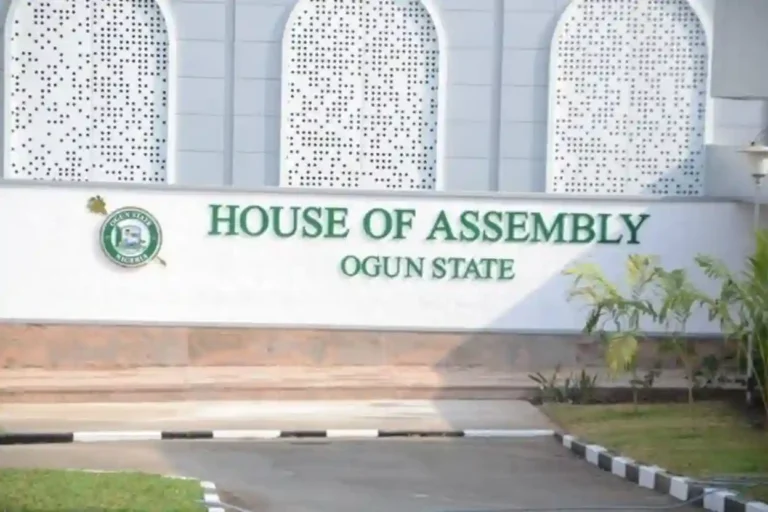
The Ogun State House of Assembly on Tuesday passed into law a bill seeking to regulate the activities of scavengers and waste dealers across the state. The legislation, titled the Scavengers and Waste Dealers Law, 2025, was passed during plenary at the Assembly Complex in Abeokuta to promote public order, environmental safety, and peaceful coexistence.

The passage followed the presentation of the report by the Chairman of the House Committee on Environment, Samusideen Lawal (PDP Ogun-Waterside), who moved the motion for its adoption. The motion was seconded by the Minority Leader, Lukman Adeleye (PDP Odogbolu), and supported by all members through a unanimous voice vote.

The bill was read and adopted clause by clause before the Committee of the Whole House. The Majority Leader, Yusuf Sherrif (APC Ado-Odo/Ota 1), later moved the motion for its third reading. The Clerk and Head of Legislative Service, Sakiru Adebakin, subsequently read the bill for the third time before the lawmakers.

The Speaker, Oludaisi Elemide, directed that the clean copy of the bill be forwarded to Governor Dapo Abiodun for his assent.

During the earlier consideration of the bill on February 11, the Ogun Assembly had emphasized that the law would empower communities to control the operations of scavengers in their areas. The lawmakers stated that the legislation would ensure accountability by mandating all scavengers to register with the Ministry of Environment, law enforcement agencies, and community leaders.

According to the Assembly, the bill aims to protect the environment by creating a structured and monitored framework for waste recycling and disposal. The initiative is expected to reduce illegal waste collection, improve public health, and enhance sustainable waste management across Ogun State.

In another development, the Assembly has invited all stakeholders involved in the defunct Anchor Borrowers Programme, an initiative of the Federal Government implemented in partnership with the state government.

The invitation follows allegations of illegal withdrawals of personal savings from farmers who participated in the programme. The Speaker, Oludaisi Elemide, issued the directive after a presentation by the Minority Leader, Lukman Adeleye, who cited Order 8 (47) and requested that the concerned stakeholders appear before the House on October 21.

Elemide explained that previous meetings with the stakeholders, including officials from the Central Bank of Nigeria, Wema Bank, the Federal Ministry of Agriculture, the State Ministry of Agriculture, and the Cassava Farmers Association, had not produced meaningful results.

He said, “Many victims of the Anchor Borrowers Programme are still experiencing illegal withdrawals of their personal funds without benefiting from the programme.”

The Speaker added that some farmers were being held liable to repay loans they never received. “The farmers’ personal money was reportedly withdrawn from their accounts without notice, years after the programme had ended,” he said.