Home Blog Page 391

Oluremi Tinubu empowers 800 Rivers farmers with agricultural support

Nigeria’s First Lady and national coordinator of the Renewed Hope Initiative (RHI), Senator Oluremi Tinubu, has distributed agricultural support materials to 800 farmers in Rivers State. The initiative is part of the Federal Government’s effort to promote food security and boost agricultural productivity across the country.

Senator Tinubu urged the beneficiaries to take full advantage of the empowerment by cultivating their farmlands, nurturing livestock, and working toward higher yields that will help build a food-secure nation. The First Lady, represented by the wife of the Rivers State Governor, Lady Valerie Fubara, made this call during a brief ceremony held at the Government House in Port Harcourt on Tuesday.

The event was organised by the Renewed Hope Initiative in partnership with the Federal Ministry of Agriculture and Food Security, the Rivers State Government, and the Young Farmers’ Club of Nigeria. The programme provided support materials such as seedlings, farm inputs, and livestock to encourage agricultural development among young and older farmers.

Delivering the First Lady’s message, Lady Fubara encouraged the beneficiaries to be dedicated and responsible in managing their farms. She said, “Grow these seedlings, nurture these livestock, and turn them into good yields. As you do that, you will also reawaken the entrepreneurial spirit that we are known for.”

Lady Fubara described the programme as a practical step to revive Nigeria’s agricultural potential and drew lessons from past government efforts such as Operation Feed the Nation and the Green Revolution. According to her, the initiative reflects a strong commitment to empowering Nigerians and demonstrates genuine love and dedication to national progress.

“This support programme is not just assistance, it is an investment that will lead to food surplus and help combat scarcity,” she said.

She further explained that the Rivers State Government, under Governor Siminalayi Fubara, is complementing the initiative by supporting an additional 400 farmers, including 100 young and 300 older farmers, making the total number of beneficiaries 800. She added, “The First Lady of Nigeria is trusting you to make the best use of this opportunity. The Rivers State Government believes in your ability; do not let us down.”

Rivers State Deputy Governor, Prof. Ngozi Odu, commended the initiative as a platform promoting inclusivity and reducing socioeconomic gaps. “This initiative embodies the Federal Government’s commitment to improving lives through sustainable and inclusive development,” she said.

Prof. Odu also praised Lady Fubara for her leadership and passion in localising the Renewed Hope Initiative within the state. “Beyond the immediate benefits, this programme lays the foundation for a more prosperous and self-reliant Rivers State,” she added.

The Head of the Rivers State Civil Service, Dr. Inyingi Brown, described the programme as timely and impactful. She called on the beneficiaries to be examples of commitment and to ensure the programme continues to grow. “You are the first set of beneficiaries, please, show an example so that the program will be replicated. Let it not die in your hands,” she said.

Advertisement

Promasidor Nigeria hosts harness your dream career guidance programme

0

Promasidor Nigeria has continued its commitment to youth empowerment with the latest edition of its career guidance programme, Harness Your Dream, held recently in Lagos. The initiative brought together students, educators, government officials, and professionals for a day of mentorship, motivation, and career insights designed for junior secondary school students.

Speaking at the event, the Chief Executive Officer of Promasidor Nigeria, Mr François Gillet, said the company believes that education is a powerful tool for change and community growth. “Promasidor is more than just a food and beverage company, we’re part of the community,” he said. “Harness Your Dream gives students a chance to understand their strengths, explore different career paths, and start thinking about their future in a focused way.”

Mr Gillet also mentioned other educational initiatives supported by the company such as Cowbellpedia and Ikun Milk Day, both of which promote learning and youth development across Nigeria. According to him, the company remains focused on building programmes that encourage students to think critically and plan ahead for success.

Representing the First Lady of Lagos State, Mrs Ibijoke Sanwo-Olu, at the event was Mrs Anike Adekanye, former Tutor General and Permanent Secretary of Education District II. She commended Promasidor for sustaining a programme that aligns with the Lagos State Government’s goal of preparing young people for a productive future.

“This kind of initiative fits right into the Governor’s vision for a more educated and empowered generation,” Mrs Adekanye said. “Your dreams are important, but they need to be backed by discipline, purpose, and hard work.” She advised students to stay curious, keep learning, and understand that their choices today will influence the kind of adults they become.

Also speaking, Dr Chinenyem Obasi-Obonga, Head of Regulatory and Government Affairs at Promasidor, explained that the programme supports both global and state education goals, including the United Nations’ Sustainable Development Goal 4 (Quality Education) and the Lagos State THEMES+ agenda. “Our goal is to help students connect the dots between what they’re learning and who they want to become,” she said. “With the right support, there’s no dream that’s out of reach.”

Chairman of Isolo Local Council Development Area, Mr Adebayo Olasoju, also shared his experience with the students, encouraging them to believe in themselves regardless of their background. “Don’t let your situation define your future,” he said. “What matters is your drive and how much you believe in yourself.”

Students had the opportunity to interact with Promasidor staff members who offered practical career advice and shared personal success stories. Among them were Mr Olabisi Ajeyomi, Head of Sales and Operations Planning; Mrs Arike Nwachukwu, National Key Account Manager; and Mr Chukwunonso Udeh, Performance and People Services Specialist. They urged students to set realistic goals, stay committed, and plan wisely as they pursue their dreams.

The interactive event featured quizzes and games that kept the students engaged, with some winning prizes for their enthusiasm and quick thinking. The atmosphere reflected excitement and learning, showing how initiatives like Harness Your Dream can inspire students to make informed career choices.

Other notable attendees included the Director of Human Resources and Corporate Services at Promasidor Nigeria, Mrs Efeguom Oriero; representative of the Lagos State Agency for Mass Education, Mr Ibrahim Mustapha; Chief of Staff to the Chairman of Oshodi Local Government, Mr Leke Banjoko; and members of the Education District 6 team.

FG, Sun King sign $150m solar manufacturing partnership

0

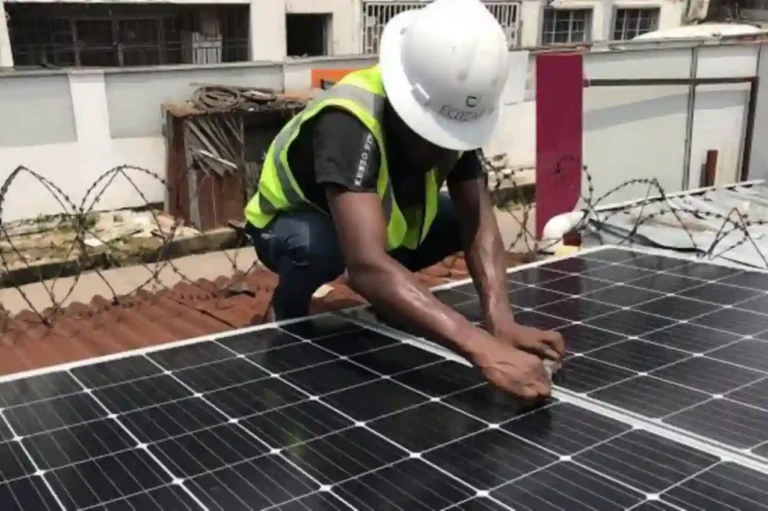
The Federal Government, through the Rural Electrification Agency (REA), has entered into a strategic partnership with global off-grid solar company, Sun King, to strengthen local manufacturing, expand renewable energy access, and save Nigeria up to $150 million in solar imports over the next five years.

The Memorandum of Understanding (MoU) was signed during the Nigeria Renewable Energy Innovation Forum held in Abuja, in the presence of Vice President Kashim Shettima and Sun King’s co-founder and Chief Executive Officer, Patrick Walsh. The partnership marks another major step in Nigeria’s commitment to industrialising its clean energy sector through strong collaboration between the public and private sectors.

“With the right enabling support from REA and wider government, Sun King estimates that its planned local manufacturing facilities could substitute imports worth $150 million over the next five years,” a statement from the company read. “In parallel, the partnership will promote structured dialogue between the public and private sectors on the conditions necessary to build a thriving local manufacturing ecosystem.”

Vice President Shettima said the administration of President Bola Ahmed Tinubu is focused on attracting more private investment into renewable energy by improving incentives and removing regulatory bottlenecks.

“To unlock the full potential of Nigeria’s energy transition, we need the private sector, our industrialists, innovators, and financiers, to take bold steps forward,” he stated. “We are enhancing incentives for local manufacturing, streamlining regulatory frameworks, and deepening collaboration with state governments and development partners to de-risk private capital and accelerate the growth of a self-sustaining renewable energy market.”

The partnership will focus on three main areas: local manufacturing and value addition, data-driven collaboration, and joint advocacy for off-grid solar as a key part of Nigeria’s energy transition.

Under the local production component, Sun King and REA will jointly work on domestic assembly of solar panels, home systems, and energy-efficient appliances such as freezers and televisions. This initiative supports the Federal Government’s Nigeria First policy aimed at creating jobs, supporting industrial growth, and reducing dependence on imported energy products.

According to Sun King, with the right incentives and supportive regulations, local production could replace imports worth $150 million within five years while creating thousands of direct and indirect jobs in manufacturing, logistics, and after-sales service.

REA Managing Director, Abba Abubakar Aliyu, said the partnership links energy access, industrial growth, and supportive policy into a unified drive for Nigeria’s clean-energy future.

“Sun King was the largest partner on REA’s Nigeria Electrification Programme,” Aliyu said. “This next chapter goes further by integrating industrialisation and policy alignment into our shared renewable energy vision.”

The second component of the partnership will strengthen data sharing and technical cooperation between both organisations. Through shared market intelligence, consumer data, and performance metrics, REA and Sun King aim to improve the design and performance of key national programmes, including the Nigeria Electrification Project and the Distributed Access through Renewable Energy Scale-up initiative.

These data-driven insights are expected to guide national planning under Mission 300, a global initiative seeking to connect 300 million Africans to electricity by 2030. Nigeria is expected to play a leading role in achieving this goal, given its large population and rising energy demand.

The third focus area of the partnership involves public awareness and policy advocacy to position standalone solar systems as a major component of Nigeria’s energy mix. REA and Sun King will work together to promote favourable financing policies, attract private capital, and showcase how solar power is improving lives in rural and peri-urban communities across the country.

Sun King currently sells over 330,000 solar kits every month across Africa. In Nigeria, the company’s operations have expanded rapidly, growing from 3,000 units sold per month in 2020 to about 75,000 monthly units in 2025. With this new agreement, the company plans to triple its sales in Nigeria over the coming years as demand for reliable and affordable electricity continues to rise.

Sun King’s co-founder and CEO, Patrick Walsh, described the agreement as a strong example of cooperation between the private sector and government.

“This partnership unites two powerful goals, Mission 300 and Nigeria’s industrialisation drive,” Walsh said. “It’s about making clean energy affordable, unlocking manufacturing opportunities, and using shared data to strengthen Nigeria’s renewable energy and electronics industries.”

Sun King’s growing presence in Nigeria has already created more than 12,000 jobs in sectors such as engineering, sales, data analytics, and customer service. The company expects that the new agreement with REA will expand these opportunities through local assembly, component production, and supply chain development.

Experts believe that this agreement could serve as a model for other African countries aiming to combine renewable energy growth with industrial policy. It reflects a strong alignment between President Tinubu’s Renewed Hope Agenda and global sustainability goals, with a focus on inclusive economic growth and energy access.

Nigeria currently has an estimated 85 million people living without access to electricity, according to the World Bank. Energy experts say that scaling up off-grid solar and hybrid energy systems, alongside local production initiatives, could significantly improve energy access and reduce the country’s reliance on foreign imports for solar equipment.

FG To issue ₦4tn bonds to pay power companies’ debts

0

The Federal Government on Tuesday announced that it has finalized a comprehensive plan to deploy ₦4 trillion in government-backed bonds to settle verified arrears owed to power generation companies (GenCos) and gas suppliers. The move is aimed at restoring financial stability in the electricity sector and boosting investor confidence.

Mrs Olu Verheijen, the Special Adviser to the President on Energy, confirmed the development in a statement issued in Abuja. She explained that the bonds are part of an initiative approved by President Bola Tinubu and the Federal Executive Council to address deep-rooted structural challenges in Nigeria’s power sector.

According to Verheijen, the measure will “foster an environment conducive to massive private sector investment” and help strengthen the financial health of power utilities that have struggled with liquidity issues for years.

The agreement was finalized during a high-level meeting attended by key government officials, including the Minister of Finance and Coordinating Minister of the Economy, Mr. Wale Edun; the Minister of Power, Chief Bayo Adelabu; and Mrs. Verheijen.

The meeting focused on reviewing and finalizing settlement modalities, with stakeholders agreeing to engage in bilateral negotiations to develop sustainable settlement agreements that reflect Nigeria’s fiscal realities and the financial challenges faced by GenCos.

Mrs. Verheijen stated that the intervention represents “the largest-scale debt resolution effort in over a decade.” She added that it aims to eliminate legacy debts that have limited growth in the energy market, improve the bottom lines of utility firms, and enhance the reliability of power supply nationwide.

“This is a major step by the federal government towards restoring financial stability and investor confidence within Nigeria’s electricity market,” she said.

Lagos begins free software quality assurance training for 600 youths

0

The Lagos State Government has launched a free Software Quality Assurance (SQA) training for 600 students and fresh graduates, aiming to equip young people with essential digital and employability skills for the technology-driven future of work.

The initiative, which began on October 11, is organized by the Office of the Senior Special Assistant to the Governor on Students Union Affairs (Tertiary Education) in partnership with Korrekt Tech, a startup that provides Quality-as-a-Service (QaaS) solutions for digital products.

The training is currently ongoing at three centres across Lagos — Lagos State University of Science and Technology, Ikorodu; Lagos State University of Education, Otto/Ijanikin; and Lagos State College of Health Technology, Yaba. It will run for three consecutive Saturdays.

Speaking at the launch, the Senior Special Assistant to the Governor on Students Union Affairs (Tertiary Education), Kappo Samuel, described the initiative as a strategic investment in the state’s youth population, aligned with Governor Babajide Sanwo-Olu’s THEMES+ agenda, which focuses on education, technology, and youth empowerment.

“This is more than a training; it’s a launchpad to tech excellence,” Kappo said. “It is one of the many ways Governor Sanwo-Olu is preparing Lagos youths for the future. The world is moving rapidly in the direction of technology, and Lagos youths are being equipped not to be left behind.”

According to him, the programme targets students in tertiary institutions and recent graduates seeking to build careers in the tech industry. He noted that the enthusiasm and interest from participants highlight the growing appetite among Lagos youths for digital capacity-building opportunities.

“We are encouraged by the turnout and passion of participants. While we couldn’t accommodate everyone in this phase, more impactful programmes are being planned,” Kappo stated. “Our governor remains committed to empowering Lagos youths with globally relevant skills.”

FG removes mathematics requirement for arts and humanities admissions

0

The Federal Ministry of Education has announced a major reform in the admission policy for tertiary institutions in Nigeria. Under the new guidelines, senior secondary school students in the arts and humanities will no longer need a credit pass in mathematics in their Senior School Certificate Examination, conducted by the West African Examination Council (WAEC) and the National Examination Council (NECO), to gain admission into universities or polytechnics.

For several years, students seeking admission into higher institutions across Nigeria have been required to obtain five credits, including English Language and Mathematics, regardless of their chosen field of study. This new development marks a shift from that policy, which many had considered restrictive for students in non-science disciplines.

According to the Federal Ministry of Education, the new policy is captured in the “revised National Guidelines for Entry Requirements into Nigerian Tertiary Institutions,” which aim to remove unnecessary barriers while maintaining academic quality.

“The revised National Guidelines for Entry Requirements into Nigerian Tertiary Institutions are designed to remove barriers while maintaining academic standards,” a statement by the ministry’s spokesperson, Folasade Boriowo, said.

She explained that the new framework applies to universities, polytechnics, colleges of education, and Innovation Enterprise Academies across the country.

For universities, the statement noted that candidates are required to have “a minimum of five credit passes in relevant subjects, including English Language, obtained in not more than two sittings. Mathematics is mandatory for Science, Technology, and Social Science courses.”

For the National Diploma level in polytechnics, the guideline requires “a minimum of four credit passes in relevant subjects, including English Language for non-science courses and Mathematics for science-related programs.”

At the Higher National Diploma level, “a minimum of five credit passes in relevant subjects, including English Language and Mathematics,” will be required.

For Colleges of Education, the policy states that candidates must have “a minimum of four credit passes in relevant subjects, with English Language mandatory for Arts and Social Science courses, and Mathematics required for Science, Vocational, and Technical programs.”

The Minister of Education, Dr. Tunji Alausa, described the reform as “a deliberate effort to expand access to tertiary education.” He explained that the change is part of the federal government’s plan to make admission into higher institutions more inclusive.

The ministry also announced a comprehensive review of admission entry requirements for all tertiary institutions, increasing the national admission capacity from about 700,000 to one million students annually.

According to the government, the reform aims to expand access to higher education and create opportunities for an additional 250,000 to 300,000 admissions each year.

“Every year, over two million candidates sit for the Unified Tertiary Matriculation Examination (UTME), yet only about 700,000 gain admission,” the minister said. “This imbalance is not due to lack of ability but outdated and overly stringent entry requirements that must give way to fairness and opportunity.”

He added that “the reform is a deliberate effort to expand access to tertiary education, creating opportunities for an additional 250,000 to 300,000 students each year. It reflects our commitment to ensuring that every Nigerian youth has a fair chance to learn, grow, and succeed—putting the Renewed Hope Agenda into action.”

FG rules to increase tertiary admission from 700000 to 1 million

0

The Federal Government has approved a comprehensive reform of admission entry requirements into all tertiary institutions across Nigeria, increasing the average annual intake from about 700,000 to one million students.

According to the government, the new policy aims to expand access to higher education and create opportunities for an additional 250,000 to 300,000 admissions each year.

Director of Press and Public Relations at the Federal Ministry of Education, Boriowo Folasade, disclosed this in a statement issued on Tuesday. She said the reform, driven by the Minister of Education, Dr. Maruf Tunji Alausa, represents a bold step in advancing the Renewed Hope Agenda and promoting inclusive education for national development.

The minister explained that the reform became necessary after years of limited access, which left many qualified candidates unable to secure admission despite meeting required standards.

“Every year, over two million candidates sit for the Unified Tertiary Matriculation Examination (UTME), yet only about 700,000 gain admission. This imbalance is not due to lack of ability but outdated and overly stringent entry requirements that must give way to fairness and opportunity,” he said.

“The reform is a deliberate effort to expand access to tertiary education, creating opportunities for an additional 250,000 to 300,000 students each year. It reflects our commitment to ensuring that every Nigerian youth has a fair chance to learn, grow, and succeed — putting the Renewed Hope Agenda into action.”

The revised National Guidelines for Entry Requirements into Nigerian Tertiary Institutions are designed to remove barriers while maintaining academic standards.

Under the new framework, universities will require a minimum of five credit passes in relevant subjects, including English Language, obtained in not more than two sittings, with Mathematics mandatory for Science, Technology, and Social Science courses.

For polytechnics, candidates seeking admission at the National Diploma level must have a minimum of four credit passes in relevant subjects, including English Language for non-science courses and Mathematics for science-related programmes. At the Higher National Diploma level, a minimum of five credit passes, including English Language and Mathematics, will be required.

Colleges of Education at the Nigeria Certificate in Education (NCE) level will require at least four credit passes, with English Language mandatory for Arts and Social Sciences, and Mathematics required for Science, Vocational, and Technical courses. For Bachelor of Education (B.Ed) programmes, a minimum of five credit passes, including English Language and Mathematics, will apply.

Innovation Enterprise Academies (IEAs) are to adopt the same requirements as polytechnics for the National Diploma (ND) programme, as the National Innovation Diploma (NID) has been abolished. The National Industrial Diploma (NID) previously issued by IEAs will also be phased out and replaced with the National Diploma (ND) to ensure uniformity, credibility, and better progression opportunities for graduates.

The National Board for Technical Education (NBTE) is re-accrediting all IEAs nationwide to align with the new standards, warning that institutions that fail to comply will be de-accredited.

Alausa said harmonising admission guidelines will reduce the number of out-of-school youths, strengthen vocational and technical training, and align Nigeria’s tertiary education system with global and industry standards.

“The Federal Government remains steadfast in its commitment to inclusive education, human capital development, and youth empowerment in line with the Renewed Hope Agenda of President Bola Ahmed Tinubu,” he added.

Bet9ja Foundation opens 2025 undergraduate scholarship application

0

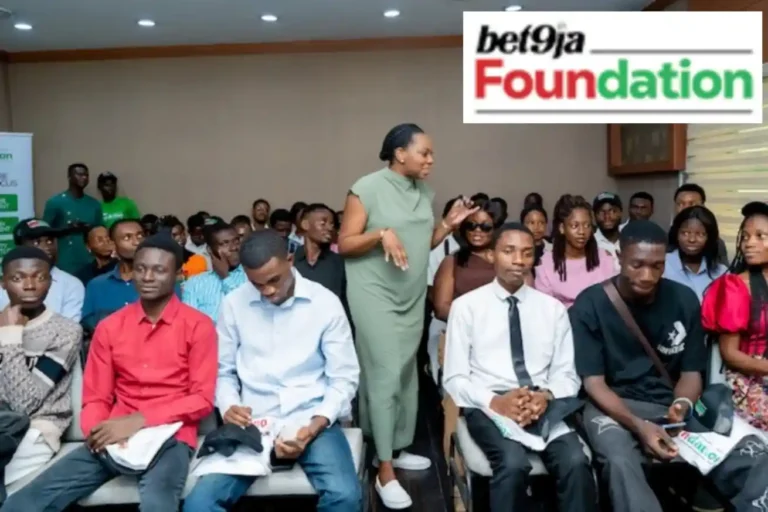
The Bet9ja Foundation has officially announced the opening of applications for its Undergraduate Scholarship Program, reaffirming its commitment to supporting youth education and empowerment in Nigeria. The foundation described the initiative as part of its mission to “implement transformative schemes that foster youth development” and strengthen national growth through education.

According to the Bet9ja Foundation, “access to quality education is a powerful tool for personal growth, community advancement, and national development.” The scholarship aims to cover full tuition for students currently studying in public Nigerian universities, helping to ease the financial burden of education and encourage academic excellence. There is no application fee required for participation.

The scholarship is open to students in public universities across different fields, including Humanities, Administration, Law, Medicine, and STEM disciplines. Applicants must be in their third or fourth year of study and must maintain a cumulative grade point average (CGPA) of 4.0 or higher to qualify.

As part of the application process, candidates are required to submit a 200-word essay on the topic “The Transformative Power of Education.” In the essay, students should describe how education has influenced their personal growth, share specific experiences, and explain why they deserve the scholarship and how it will help them make a positive impact in society.

To apply, interested candidates must prepare their supporting documents, including a school ID card, the last school fees receipt, an endorsement letter, and an academic transcript showing their current CGPA. Applications are to be submitted online through the foundation’s official portal at bet9jafoundation.org/scholarship.

The Bet9ja Foundation stated that shortlisted applicants will be contacted, and the final selection results will be communicated to successful candidates in due course.

Sterling Bank, Edubanc launch exam financing for professionals

0

Sterling Bank, in partnership with Edubanc, has introduced a new financing program designed to help professionals pursue global certifications without financial stress. The initiative supports qualifications such as ACCA, CFA, ACMP, CIPM, and other professional exams, allowing candidates to focus on their career growth rather than worrying about upfront exam fees.

According to the bank, once a candidate’s financing is approved, Edubanc pays the exam body in full directly. This ensures that registration is secured without any delay. “We support certifications such as ACCA, CFA, ACMP, CIPM, and other relevant professional qualifications. Get financed upfront and repay monthly with Edubanc,” the statement said.

Sterling Bank explained that the partnership aims to make exam financing more accessible. “Edubanc makes it easy to finance your professional exams, with flexible repayment in small installments,” the company noted, adding that candidates can enjoy repayment plans of up to seven months.

Addressing concerns about exam outcomes, Edubanc clarified that repayment obligations remain as agreed, even if the candidate does not pass the exam. However, those affected can reapply for support in future exam cycles.

The bank described Edubanc as a “trusted growth partner” that has already helped many professionals achieve their goals. The financing offer is open to salary earners in reputable organizations preparing for professional exams. Interested candidates can apply through sterling.ng/exam-financing.

Afro-Tech girls opens project 100 for 50 scholarship for STEM

0

The Afro-Tech Girls organization has officially announced the launch of Project 100 for 50, a new scholarship initiative aimed at boosting female participation in STEM education across Nigeria. The program is now open for applications and will provide a one-time financial award of ₦100,000 each to 50 young women studying Science, Technology, Engineering, and Mathematics at Nigerian universities and polytechnics.

According to Afro-Tech Girls, Project 100 for 50 is designed to empower more young women to complete their studies and transition successfully into the STEM workforce. “This initiative is about giving bright female undergraduates in STEM the financial support they need to stay focused and succeed,” the organization stated.

The Afro-Tech Girls Undergraduate Scholarship, also known as Project 100 for 50, targets female undergraduate students pursuing courses in Science, Engineering, Technology, Agriculture, and Medicine. Each awardee will receive ₦100,000 to help cover tuition, books, or research materials. The initiative supports gender inclusion and academic growth in high-demand fields that drive innovation, digital transformation, and economic development.

To qualify, applicants must be female undergraduates currently enrolled in accredited public or state universities or polytechnics in Nigeria. Candidates must also be studying a STEM-related course and maintain at least a Second Class Lower (2:2) grade or its equivalent. Being a member of the Afro-Tech Girls community gives an added advantage but is not mandatory. Applicants must also reside in Nigeria during the application period.

Selection will be based on academic performance and the quality of a written essay of 300 to 450 words, detailing personal background, financial need, and reasons for deserving the scholarship. Each submission must include proof of admission, proof of ID, and current academic standing.

Fifty scholarships will be awarded across Nigeria, each offering ₦100,000 as a one-time grant for the 2025 academic cycle. Recipients will also gain access to mentorship and networking opportunities through the Afro-Tech Girls community, providing further empowerment and visibility in STEM.

Applications close on October 20, 2025. Interested candidates can apply by visiting the official scholarship Link.