Home Blog Page 395

Germany urges Nigeria to create more opportunities for young women

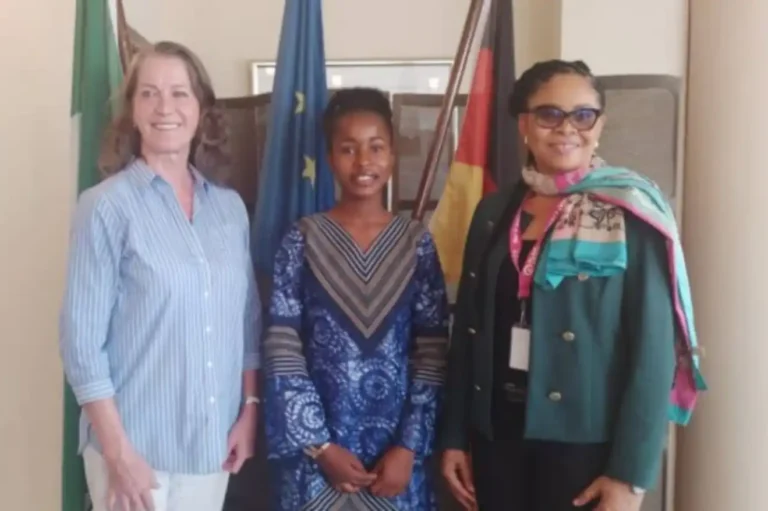
German Ambassador to Nigeria, Annet Gūnther, has called on the Nigerian government to make deliberate efforts toward creating opportunities and a strong framework for young women to thrive.

Gūnther made this appeal on Monday during a news conference in Abuja held to commemorate the 2025 International Day of the Girl-child. She emphasized the need to support young women to take opportunities, adding that more chances for women contribute to a safer and more stable society.

The ambassador said the German government supports the reform of the Nigerian Police Force, noting that women play a key role in the process. She explained that the project goes beyond the idea of gender equality but focuses on building a Police Force that serves all citizens effectively.

On women’s inclusiveness, ‘A Day German Ambassador’, Miss Comfort Edmond, urged the Nigerian government to give more consideration to women in governance and other areas of nation building.

“When girls are given a chance, they build nations,” she said. “We all know that when a girl child is educated, she becomes a light that transforms her community, strengthens her family, and empowers the whole nation. Education is the line between limitation and liberation, and when we educate our girls, we transform generations.”

Edmond pointed out that one of the major challenges facing the girl-child in Nigeria is child marriage. She said Nigeria is home to over 25 million brides, the highest number in Africa.

She noted that some people still believe early child marriage helps to break the cycle of poverty, but she disagreed with this notion. “But I tell you today that there is no strongest tool like education to break the cycle of poverty,” Edmond said.

“Today, I speak not only for myself, but for millions of girls who are out there waiting for their dreams to be seen, heard and believed in. This moment, to me, is more than a title,” she added.

Edmond called on both the Nigerian and German governments to join forces and invest in safe and inclusive education systems that empower girls.

Also speaking at the event, Dr Helen Idiong, Director of Programme Quality and Influencing at Plan International Nigeria, said that many girls in the country continue to face serious challenges.

“Nigeria is the headquarters of child rights in Africa, yet every three girls married off before the age of 18, Nigeria has two, hence the need for more advocacy for girl-child education nationwide,” she said.

According to her, Plan International Nigeria is a child rights organization deeply committed to supporting and empowering girls. Idiong described the event as part of the series of activities marking the 2025 International Day of the Girl-child.

The day is celebrated every year on October 11 to honor the strength, resilience, and leadership of girls across the world. The theme for this year’s celebration is “The Girl I Am, the Change I Lead: Girls on the Frontline of Crisis.”

Advertisement

Katsina, BOI disburse N303.5m to 126 small businesses

Katsina State Government has reaffirmed its commitment to enterprise development and inclusive economic growth through the disbursement of ₦303.5 million to 126 qualified businesses across the state. The initiative, carried out by the Katsina State Enterprise Development Agency (KASEDA) in partnership with the Bank of Industry (BOI), marks the third phase of support for local entrepreneurs.

The fund is part of Governor Dikko Umaru Radda’s continuous effort to strengthen micro, small, and medium enterprises (MSMEs), boost productivity, and create more job opportunities in key sectors of Katsina’s economy. The program is designed to enhance entrepreneurship development, support business expansion, and foster financial inclusion.

Speaking on the development, the Head of Public Relations Unit at KASEDA, Hauwa Ibrahim Jikamshi, said the initiative reflects Governor Radda’s strong vision of building a self-reliant and economically vibrant Katsina through enterprise-driven reforms.

“This initiative is yet another demonstration of Governor Radda’s unwavering commitment to empowering the people of Katsina. The disbursement represents a major step in nurturing homegrown entrepreneurs, expanding the job market, and promoting sustainable business growth across the state,” Jikamshi stated.

She explained that the collaboration between KASEDA and the Bank of Industry continues to yield meaningful results in promoting innovation, supporting small-scale industries, and expanding financial access for business owners.

“The beneficiaries are expected to use the funds responsibly to grow their businesses, improve productivity, and contribute meaningfully to the diversification and long-term stability of the state’s economy,” she emphasized.

Under the leadership of Hajiya Aisha Aminu, KASEDA has remained a major driver of Governor Radda’s economic transformation agenda. The agency continues to design and implement strategic programs that provide entrepreneurs with access to funding, mentorship, and essential business development services.

Hajiya Aisha Aminu has repeatedly emphasized the importance of supporting local businesses to reduce unemployment, tackle poverty, and bridge the economic gap between rural and urban communities.

“This disbursement reflects Governor Radda’s firm belief that small businesses form the foundation of every thriving economy. We are pleased to see more enterprises gaining access to the financial support they need to grow and succeed,” she said in a separate remark.

Over the past two years, the administration of Governor Dikko Umaru Radda has implemented several empowerment programs aimed at strengthening Katsina’s entrepreneurial ecosystem. These include specialized training for youth and women entrepreneurs, market linkage support, and capacity-building initiatives facilitated through KASEDA and development partners.

The recent disbursement of ₦303.5 million highlights the government’s deliberate efforts to promote sustainable enterprise growth and position Katsina’s local businesses to compete effectively at both national and regional levels.

With continued collaboration between the state government, financial institutions, and private-sector partners, Katsina is gradually emerging as a vibrant hub for innovation, entrepreneurship, and inclusive economic progress.

FG to empower flood-prone communities to manage their own safety

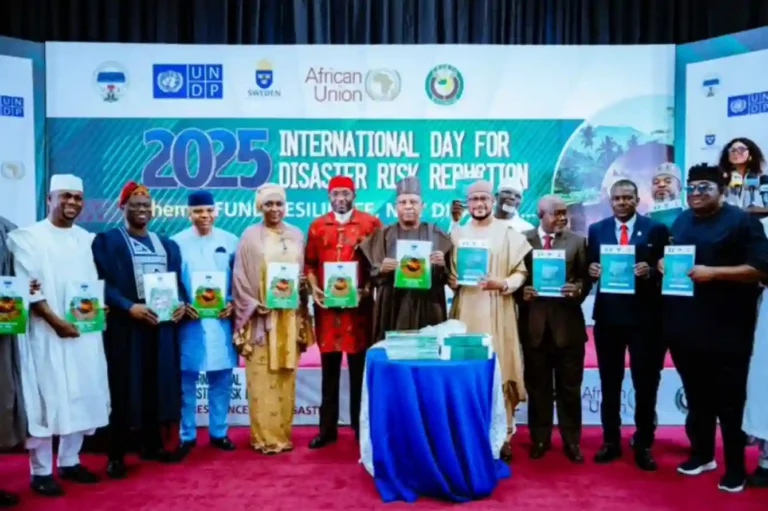
The Federal Government has announced plans to empower communities across Nigeria, especially those prone to floods, to manage their own safety as part of a new approach to addressing flood-related disasters.

Vice President Kashim Shettima made this known on Monday in Abuja during the commemoration of the 2025 International Day for Disaster Risk Reduction (IDDRR). He stated that empowering local communities is key to preventing the devastating impact of natural disasters.

According to the Vice President, no amount of preparedness will yield tangible results if communities are not equipped to take responsibility for their safety. He explained that resilience is not achieved by government efforts alone but also depends on how cities are planned, how businesses protect their workers, and how communities share information and support one another.

“The private sector must see itself as a partner in prevention, embedding risk reduction into corporate planning and investment decisions,” Shettima said.

He emphasized that institutions of learning and research must help generate data, innovation, and practical solutions to strengthen disaster preparedness in Nigeria. “Our academia and research institutions also bear the responsibility of helping us generate the data, innovation, and practical research we need to prepare for a safer future,” he noted.

He called on civil society organizations to play their role in holding government accountable, raising awareness, and mobilizing citizens toward a shared sense of responsibility. “None of these efforts will yield results unless we empower and support our communities to take ownership of their safety. They are the foundation of whatever strategy we adopt and the heartbeat of our national resilience,” he added.

The Vice President praised the theme of the 2025 IDDRR, “Fund Resilience, Not Disasters,” saying it reflects the need to invest in prevention rather than reaction. “It is far wiser, far cheaper, and far more humane to prepare for disasters before they strike than to rebuild after they destroy,” he said.

Shettima further explained that investing in preparedness yields long-term benefits. “Every naira we spend today on preparedness saves many more tomorrow on response and recovery. Every investment in resilience is, in truth, an investment in the lives and futures of our people,” he added.

The Vice President, however, said that commitment alone is not sufficient. “We must match our words with action and our policies with funding,” he declared.

He outlined the government’s new focus areas for funding resilience, stating that resources will be directed toward improving infrastructure such as drainage systems instead of relying on temporary relief camps. He also emphasized the need to build stronger schools and hospitals, support farmers with climate-smart tools, and train first responders before disasters occur.

According to him, these priorities reflect a shift from merely reacting to crises to actively preventing them. “This is the shift required to move from reacting to crises to anticipating and preventing them,” he said.

Senator Shettima highlighted that President Bola Tinubu has directed that resilience be treated as a national policy. The Federal Government is now integrating disaster risk reduction into sectors such as agriculture, infrastructure, education, and health. He revealed that the government is expanding early warning systems to ensure that communities receive alerts about floods, droughts, or disease outbreaks before they happen.

He explained that the government is strengthening state and local emergency management agencies through improved training, technology, and coordination. “We are developing a National Disaster Risk Financing Framework to guarantee that funding for prevention and preparedness is available when and where it is needed,” Shettima said.

He added that partnerships with development agencies, the private sector, and research institutions are being deepened to promote innovation and resilience across all levels of government.

Also speaking at the event, Governor of Zamfara State, Alhaji Dauda Lawal, commended the National Emergency Management Agency (NEMA) for its efforts in strengthening Nigeria’s disaster management system through the launch of a five-year strategic plan.

The governor explained that Zamfara State has adopted an emergency management framework to address local challenges and called for stronger collaboration among stakeholders. He also proposed the use of a Public-Private Partnership model in funding disaster management efforts nationwide.

The Minister of State for Humanitarian Affairs and Poverty Reduction, Hon. Yusuf Tanko Sununu, acknowledged that Nigeria has suffered from both natural and human disasters, which highlights the importance of a united approach to managing risks. He stressed the need to diversify funding sources to improve disaster response and reach more communities in need.

According to him, reviewing Nigeria’s strategic disaster management framework will make it easier to support vulnerable populations and improve the effectiveness of intervention efforts.

Director General of NEMA, Hajiya Zubaida Umar, stated that the 2025 International Day for Disaster Risk Reduction marks a key moment in Nigeria’s journey toward building resilience. She said the event provides an opportunity to promote innovative financing options that can sustain long-term disaster risk reduction.

“The conversations at this event will help galvanize support for innovative financing that can sustain risk reduction efforts on scale and form the core of NEMA’s plans towards strengthening Nigeria’s resilience architecture,” she said.

Chairman of the Senate Committee on Special Duties, Senator Kaka Shehu Lawan, commended the DG of NEMA for organizing the event, describing it as timely. He assured that the National Assembly would continue to collaborate with NEMA to create an enabling environment for effective disaster management.

Similarly, Chairman of the House of Representatives Committee on Disaster Management, Hon. Joseph Bassey, pledged the legislature’s support for NEMA, especially in its efforts to amend the NEMA Act to make the agency more efficient.

In his keynote address, the Country Director of Plan International Nigeria, Dr. Charles Usie, emphasized the need for Nigeria to adopt a global framework for disaster risk reduction. He urged the government to improve data collection, coordination, and transparency while paying attention to early warning systems.

He explained that stronger data and coordination will help transform NEMA into a modern and efficient disaster management agency capable of responding proactively to threats.

CREDICORP wins consumer credit access company of the year

0

The Nigerian Consumer Credit Corporation (CREDICORP) has been named the “Consumer Credit Access Company of the Year” at the 13th BusinessDay Banks and Other Financial Institutions (BAFI) Awards.

The event, organised annually by BusinessDay, took place in Lagos over the weekend, bringing together major stakeholders across banking, fintech, and financial services. The Federal Government institution, which has been in operation for just about 18 months, stood out among top private-sector brands such as Opay and First Bank of Nigeria.

According to BusinessDay’s selection committee, CREDICORP’s recognition was based on its speed of results, innovative financial products, and what it described as an “ecosystem-first model.” The committee noted that “CREDICORP operates not to crowd out or compete with lenders, but to win by enabling them.”

The evaluation process was data-driven, focusing on institutions that are redefining access, affordability, and innovation in Nigeria’s growing consumer credit ecosystem. BusinessDay said CREDICORP has made measurable progress in improving credit affordability and expanding inclusion, driving down effective interest rates by as much as 20 percent.

The Corporation has helped financial institutions reach groups traditionally excluded from formal lending systems, including artisans, civil servants, traders, and young people. About 65 percent of its beneficiaries are first-time successful borrowers, marking a major step forward for financial inclusion in Nigeria.

Despite having financial operations for less than a year, CREDICORP has already reached around 180,000 Nigerians. It has enabled access to essential goods and services such as vehicles, solar power systems, home improvements, and work tools, all financed with affordable consumer credit.

The award also recognized CREDICORP’s role in pioneering innovative credit products designed to serve Nigerians across different life stages. These include YouthCred, which targets National Youth Service Corps (NYSC) members and employed youth, and Pensioners’ Credit, which provides retirees with financial support and dignity in retirement. The Corporation also offers programs designed for households, workers, and small business owners.

CREDICORP’s credit interventions are focused on key areas that directly impact the lives of Nigerians. Notable among these are the Credit Access for Light and Mobility (CALM) Fund, which supports mobility and alternative energy for homes and small enterprises, and S.C.A.L.E. (Securing Consumer Access to Local Enterprises), a program that promotes local production, job creation, and industrial growth through expanded credit access.

According to BusinessDay, these initiatives demonstrate a “double-bottom-line model that simultaneously empowers citizens and stimulates local enterprise.”

Other notable winners at the event included Opay, which was named Mobile Payment Solutions Provider of the Year; First Bank of Nigeria, which won the Dominant Force in Inclusive Banking award; Fidelity Bank, which received the Export Finance Bank of the Year award; and Page Financials, which was recognized as Finance Company of the Year.

Oluremi Tinubu gives N50000 grants to 500 women in Plateau

Nigeria’s First Lady, Oluremi Tinubu, has given a grant of N50,000 each to 500 women in Plateau State to support small businesses. The initiative is part of her Renewed Hope Initiative, which aims to promote women’s economic empowerment across Nigeria.

Mrs Tinubu, represented by the wife of the Plateau State Governor, Mrs Helen Mutfwang, said the empowerment programme was supported by the Tony Elumelu Foundation to boost women’s businesses and improve their livelihoods.

“I thank the Tony Elumelu Foundation, which donated N1,000,000,000 to the Renewed Hope Initiative, to directly support 18,500 women across the nation,” she said. “500 women from each of the 36 states and the FCT will be receiving N50,000 each to strengthen and recapitalise their existing small businesses.”

The First Lady explained that the initiative was aimed at boosting the capacity of women traders and small-scale business owners across the country. She said the programme was designed to support the entrepreneurial spirit of Nigerian women who work hard to provide for their families, educate their children, and uplift their communities.

Mrs Tinubu described the project as a practical step toward strengthening the economic foundation of households and promoting national development. She clarified that the financial support was not a loan but a grant meant to recapitalise and expand existing small businesses.

“When you empower a woman, you empower a household, a community, and indeed, a nation,” she stated, stressing that empowering women contributes directly to family well-being and national growth.

The First Lady reaffirmed her commitment to supporting Nigerian women through sustainable empowerment programmes, adding that such initiatives are key to achieving inclusive growth and long-term national prosperity.

Some beneficiaries of the grant expressed their appreciation for the support.

Elizabeth Pam, a mother of six and a farmer, said she plans to invest the money in her farm to boost production. Zainab Idris, a mother of eight and also a farmer, said the financial support came at the right time and would help her improve her farming business. Augustina Damanjei, a single mother of three, said she would use the money to expand her poultry farm.

The Renewed Hope Initiative continues to promote entrepreneurship and financial inclusion among women, encouraging self-reliance and community development across Nigeria.

EU grants €190m loan to support Nigeria’s agriculture

0

Nigeria’s agricultural sector is set for a major financing boost as the European Union has approved a €190 million, about N320.5 billion, credit line to expand lending to farmers and agribusinesses through Nigerian commercial banks and development finance institutions.

The facility, provided by the European Investment Bank, was announced during a bilateral meeting between senior EIB executives and a delegation from the Federal Ministry of Budget and Economic Planning on the sidelines of the Global Gateway Forum held recently in Brussels, Belgium.

A statement issued on Monday by the Minister of Budget and Economic Planning’s Special Adviser on Media, Bolaji Adeniyi, confirmed the development.

Speaking at the session, the EIB’s Director for International Partnerships, Thourayya Tricki, said the initiative underscores the EU’s commitment to supporting Nigeria’s economic diversification drive, particularly through climate-smart agriculture and value-chain development.

“This credit line is part of our continued effort to strengthen Nigeria’s agricultural value chains, especially in cocoa and dairy. The investment package will not only expand access to finance but also promote sustainability and competitiveness in Nigeria’s agri-food products,” Tricki said.

Tricki, who was accompanied by the EIB’s Head of Sub-Saharan Africa Relations, Diedrick Zambon, explained that the facility includes both credit and technical assistance components targeted at development finance institutions and commercial banks. The goal, she said, is to “de-risk agricultural lending and build institutional capacity for long-term financing in the sector.”

Nigeria already benefits from several EU-supported programmes, including an €18 million technical assistance grant to strengthen the local regulatory framework for vaccine production and a €50 million credit facility to deepen access to finance in the pharmaceutical industry.

Representing Nigeria, Special Assistant to the Minister of Budget and Economic Planning, Bolaji Onalaja, and the EU Unit Focal Officer, Benjamin Galadima, reaffirmed the country’s commitment to implementing reforms under President Bola Tinubu’s Renewed Hope Agenda to attract sustainable investments.

“Our government is determined to create an enabling environment for investment through the forthcoming National Development Plan (2026–2030) and the Ward-Based Development Programme, which will ensure that growth reaches communities at the grassroots,” Onalaja said.

The Nigerian delegation also held meetings with senior officials from the Directorate of International Partnerships and the European Bank for Reconstruction and Development, where they discussed opportunities for collaboration in green infrastructure, renewable energy, and industrial development.

On behalf of the Minister of Budget and Economic Planning, Senator Abubakar Bagudu, who was on an official assignment in Vienna, Austria, the delegation expressed appreciation to the Head of the EU Delegation to Nigeria and ECOWAS, Ambassador Gauthier Mignot, for facilitating Nigeria’s participation in the Global Gateway Forum.

The Global Gateway Forum, the EU’s flagship investment platform, brings together governments, private investors, and development finance institutions to mobilise resources for sustainable projects that promote digital transformation, green transition, and human capital development.

In her keynote address, President of the European Commission, Ursula von der Leyen, reiterated the EU’s resolve to build “mutually beneficial partnerships based on trust and shared prosperity.”

“We are expanding the Global Gateway Investment Package to €400bn and launching a dedicated Investment Hub to accelerate project delivery, especially in Africa,” von der Leyen announced.

The new EU–Nigeria financing deal is expected to strengthen bilateral cooperation under the Global Gateway Strategy and support Nigeria’s efforts to modernise its agricultural sector, improve food security, and enhance export competitiveness.

Fidelity Bank wins best export finance and most innovative bank awards

Fidelity Bank has once again reinforced its market leadership as the tier-one lender received double honours at the BusinessDay Bank and Other Financial Institutions’ (BAFI) Awards 2025.

At the event held on Saturday, 11 October 2025, at the Lagos Continental Hotel, Victoria Island, Lagos, Fidelity Bank was named the “Best Bank for Export & Trade Finance” and the “Most Innovative Bank of the Year.”

The recognition further establishes Fidelity Bank’s strong presence in Nigeria’s financial sector, highlighting its consistent efforts in supporting businesses and driving economic growth.

Dedicating the Export and Trade Finance Award to its customers, the Managing Director and Chief Executive Officer of Fidelity Bank Plc, Dr Nneka Onyeali-Ikpe, OON, represented by the Executive Director, Chief Operations and Information Officer, Stanley Amuchie, expressed gratitude to the bank’s customers and partners.

“This recognition underscores our unwavering commitment to promoting non-oil exports and supporting Nigerian businesses to compete globally through initiatives such as the Fidelity International Trade & Creative Connect (FNITCC) and the Export Management Programme (EMP),” Amuchie said. “I dedicate this award to all our exporters who continue to showcase the best of Nigeria to the world, our loyal customers, and our partners for their steadfast support.”

The BAFI Awards, which have become the benchmark for excellence within Nigeria’s financial services industry, are now in their 12th year. The event celebrates organisations that demonstrate exceptional performance, leadership, and innovation in financial service delivery.

Fidelity Bank’s recent recognition is attributed to its significant accomplishments in the past year. Among these milestones is the funding of the first privately constructed onshore oil export terminal in Nigeria in fifty years at the Otakikpo Marginal Field. The terminal, commissioned by President Bola Ahmed Tinubu last week, marks a major step in strengthening Nigeria’s export capacity.

In addition, the bank launched the Fidelity SME Hub, a dedicated multipurpose facility aimed at supporting small and medium enterprises through innovation, collaboration, and capacity-building programs.

Fidelity Bank also hosted the third edition of the Fidelity Nigeria International Trade & Creative Connect (FNITCC) in Atlanta, Georgia, USA, in September 2025. The event connected Nigerian businesses with international buyers, including major U.S. retailers such as Walmart and Target, creating new trade opportunities and partnerships.

“The innovation award is a special one for us as it validates our continued drive to enhance operational efficiency, elevate customer experience, and strengthen business performance,” Amuchie added. “We sincerely appreciate BusinessDay Media for this recognition and reaffirm our commitment to introducing more impactful innovations that empower our customers and advance the Nigerian financial services industry.”

FG flags off empowerment programme for 1200 women, youths in Nasarawa

The Minister of Women Affairs, Hajiya Imaan Sulaiman Ibrahim, has reaffirmed the Federal Government’s commitment to strengthening institutions across Nigeria to safeguard the rights of women and the girl child.

Hajiya Imaan made this known during the disbursement of empowerment equipment to women and youths, alongside a free medical outreach, held at the Muhammadu Cindo Keffi Square in Nasarawa State. The event attracted a large number of residents, mostly women and youths, who came out in their hundreds to benefit from the empowerment and medical intervention programme.

Speaking with journalists, the Minister said the administration of President Bola Ahmed Tinubu, anchored on the Renewed Hope Agenda, is turning promises into impactful actions aimed at lifting citizens out of poverty and building the economy.

“This government is committed to ensuring that every Nigerian, especially the vulnerable, women and the girl child, is protected from hunger and any form of molestation. We will continue to strengthen systems and institutions across the country,” she said.

According to her, the Tinubu administration is focused on action and not just programmes, stressing that “President Tinubu is relentlessly working to drive the economy towards sustainable growth and resilience.”

Hajiya Imaan explained that within the past year, the Ministry of Women Affairs has implemented a sustainable action plan to address gender-based violence and ensure the protection of the girl child across Nigeria. She said Nigerian women remain central to the implementation of the Renewed Hope Agenda, which aims to build a strong, inclusive economy and improve the standard of living for citizens.

Also speaking at the event, the Minister of State for Works, Alhaji Muhammed Bello Goronyo, described the programme as a clear demonstration of the Tinubu administration’s effort to bring its policies closer to the grassroots. He called for peace, unity, and collective support for leadership to achieve national development.

In his remarks, the Nasarawa State Chairman of the All Progressives Congress (APC), Alhaji Aliyu Bello, said the empowerment and medical intervention initiative directly addresses the needs of the people.

Some of the beneficiaries, including Mallam Ado Yahaya and Mrs. Lami Kefas, expressed joy after receiving empowerment tools. Yahaya, who got a water pump, and Kefas, who received a grinding machine, described the gesture as life-changing and a major boost to their household income.

Over 1,200 women and youths benefited from the initiative, receiving items such as sewing machines, generators, water pumps for dry-season farming, wrappers, and food items. The event also featured the flag-off of a free medical outreach for women, children, and the elderly.

Oluremi Tinubu seeks Qatar foundation support for 15 million children

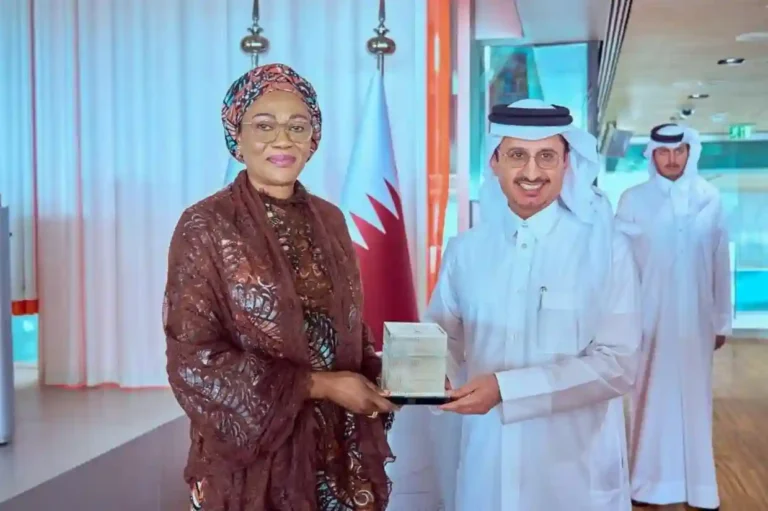
The First Lady of Nigeria, Senator Oluremi Tinubu, has met with the Founder and Chairperson of the Qatar Foundation, Sheika Moza Bint Nasser Al-Missned, to seek the foundation’s support in addressing Nigeria’s challenge of out-of-school children. The meeting, which took place in Qatar, focused on finding collaborative solutions to the education crisis, as Nigeria currently has more than 15 million out-of-school children, the highest number globally.

According to Senator Oluremi Tinubu, the Nigerian government, through the Ministry of Education, is prepared to implement a new and transformative model for the Almajiri Education Schools System. The initiative aims to integrate both Islamic and formal education while ensuring that children are provided with a safe and supportive learning environment.

“These schools will host and care for the children in a safe learning environment, which will include a mosque for worship, incorporate skills acquisition, and offer boarding facilities for students, as well as residence for Imams and care givers. This holistic approach will allow children to acquire both formal and Islamic education free from exploitation, while equipping them with life skills that empower them to build their lives and contribute meaningfully to society,” the First Lady said.

She emphasized that due to the magnitude of the challenge and the limited national resources, Nigeria cannot achieve the goal alone. “However, given the magnitude of this challenge and the competing demands on our national resources, Nigeria cannot achieve this alone, we need strategic partners, and Your Highness represents precisely the kind of visionary partners who can help us make this dream a reality,” she stated.

Senator Tinubu also commended Sheika Moza for her contributions to education and humanitarian causes through the Qatar Foundation. She noted that the foundation has made significant strides with the establishment of the Qatar Education City, which hosts over 40 schools, including universities and the Qatar National Library.

“I am proud to learn of your achievements in surpassing the target of enrolling 10 million marginalized children into school, and all that you continue to do for humanity around the world. Watching you do all these great works has reinforced our conviction that change is possible and I believe reaching out to your esteemed organization could provide the support we urgently need,” she added.

In response, Sheika Moza Bint Nasser Al-Missned pledged to support the Almajiri and Out-of-School Children Education initiative in Nigeria. She confirmed that the Qatar Foundation will work closely with Nigeria’s Ministry of Education and assist in training teachers and handlers to ensure the best outcomes for the students.

Earlier, Senator Tinubu was received at the headquarters of the Qatar Foundation by its CEO, Yousif Al Na’am, who conducted her and her delegation around the facility. During the visit, the First Lady was informed that Nigeria has 41 alumni from the Muhammad Khalifa University.

Senator Oluremi Tinubu was accompanied on the visit by the Coordinating Minister of Health and Social Welfare, Prof. Muhammad Ali Pate, the Minister of State for Education, Prof. Suwaiba Ahmed, and the Executive Secretary of the National Commission for Almajiri and Out-of-School Children Education, Dr. Muhammad Sani Idris.

Katsina-Wema capacity development programme opens application for 2025 training

0

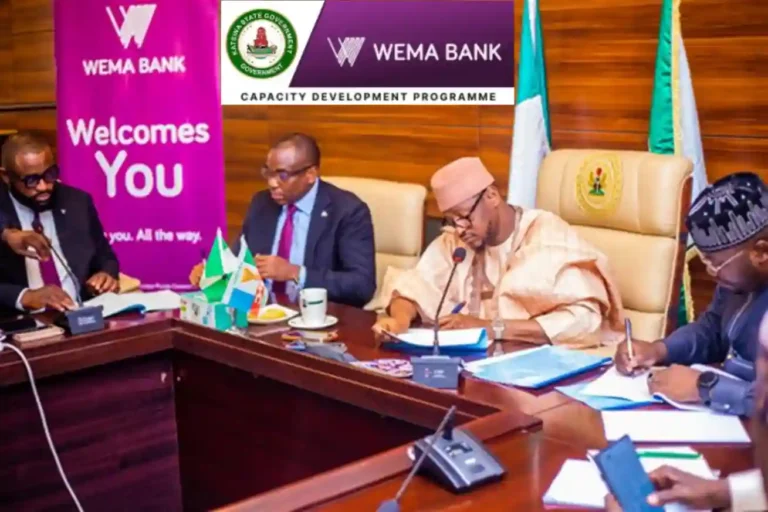
The Katsina State Government, in partnership with Wema Bank, has announced the launch of the Katsina-Wema Capacity Development Programme, a major initiative under the FGN/ALAT Digital Skill Innovation Program for MSMEs. The program aims to train about 500,000 youths and business owners across the state with essential financial literacy and digital skills.

According to the organizers, the training is completely free for all eligible participants. “This initiative is a catalytic intervention to provide financial literacy, digital skills, and sector-relevant competencies to strategically selected clusters,” a statement from the organizers said.

The programme has a clear roadmap that targets 150,000 beneficiaries in 2025, 250,000 in 2026, and 100,000 in 2027. It is designed to unlock inclusive economic growth, enhance service delivery, and build Katsina’s human capital for the future. Participants who successfully complete the training and assessments will also receive a digital certificate.

“The goal is to empower 500,000 residents and indigenes of Katsina State by 2027 with transformative digital and financial skills,” the statement added. “This will accelerate development, innovation, and economic inclusion across the state.”

The programme focuses on four main areas which include digital literacy, inclusivity, mentorship, and learning and development. The digital literacy aspect seeks to improve the financial and digital capacity of key stakeholder groups across Katsina. Inclusivity aims to increase the economic participation of marginalized and underserved groups, especially youth and women.

The mentorship component will support the digital transformation of MSMEs and public sector actors, while learning and development will promote entrepreneurship and a culture of lifelong learning.

Interested applicants, including MSME owners, civil servants, students, youth, and professionals, are encouraged to register for the Katsina-Wema Capacity Development Programme via the official link at https://wema-katsina.alat.ng.