Home Blog Page 407

Gov Oyebanji presents N415.57bn 2026 budget to Ekiti Assembly

0

Ekiti State Governor, Mr. Biodun Oyebanji, on Friday presented a budget estimate of N415.57 billion for the 2026 fiscal year to the Ekiti State House of Assembly. The budget, titled “Budget of Impactful Governance,” aims to consolidate the achievements of his administration over the last three years and advance key projects across the state.

The 2026 budget proposal comprises a Recurrent Expenditure of N221.87 billion, representing 53 percent of the total budget size, and a Capital Expenditure of N193.70 billion, which accounts for 46 percent. The proposed budget represents an increase of about 11 percent compared to the approved 2025 budget of N375.79 billion, which had a Recurrent Expenditure of N252.15 billion and a Capital Expenditure of N104.51 billion.

Presenting the budget during a plenary session at the Old Assembly Complex in Ado-Ekiti, Governor Oyebanji explained that the 2026 fiscal plan was designed to complete all ongoing infrastructural development projects. He said the new budget would also focus on agriculture, wealth creation, and improving the welfare of citizens, aligning with the Shared Prosperity agenda of his administration.

According to the Governor, the substantial investment in agriculture and the related value chain is targeted at generating employment, stabilizing food prices, ensuring food security, and boosting the sector’s contribution to the state’s Gross Domestic Product (GDP). He noted that the state’s revenue sources for funding the budget would include Federal Allocation, Value Added Tax (VAT), internally generated revenue from Ministries, Departments and Agencies (MDAs), tertiary institutions, international donor agencies, and other income sources.

Governor Oyebanji stated that the 2026 Budget was the result of extensive consultations across the three senatorial districts of the state. He explained that during the statewide town hall meetings, traditional rulers, community representatives, civil society organizations, and other stakeholders made significant inputs that shaped the proposal.

He emphasized that the new budget aligns with the State Development Plan (2021–2050), the Medium Term Expenditure Framework (MTEF) for 2026–2028, and the Six Pillars of his Administration. The budget was also prepared in accordance with the National Chart of Accounts (NCoA) Template, as agreed upon by the sub-nationals through the Nigerian Governors’ Forum (NGF).

Governor Oyebanji reaffirmed his administration’s commitment to fiscal discipline and transparency in implementing the proposed budget. He said, “Distinguished Honourable members, without any fear of contradiction, I make bold to say that our Administration has demonstrated a high level of fiscal discipline and prudence in the utilization of our commonwealth to implement laudable developmental projects.”

He added, “These projects are not only impactful, they will set our State on the path of realizing the Shared Prosperity vision. I, therefore, affirm my commitment to continued fiscal discipline, transparency and accountability.”

Oyebanji stressed that transparency and accountability remain central to governance in Ekiti State under his leadership. “To further promote good governance, we have designed a framework for effective policy formulation and implementation that would further boost the economy of our dear State. We have also institutionalized several fiscal reforms at the State and the Local Government levels for quality service delivery. These reforms are already paying off,” he said.

The Governor also appreciated President Bola Ahmed Tinubu for his continued support to the government and people of Ekiti State. He said the President’s interventions had been instrumental in alleviating poverty and supporting the delivery of campaign promises. “I express my profound gratitude to President Bola Ahmed Tinubu for his very strong support to the government and the good people of Ekiti State. This support has translated to several interventions and has been very helpful in the quest to alleviate poverty in the State,” he stated.

Reviewing the performance of the 2025 budget, Oyebanji expressed satisfaction with its implementation, noting that several projects were executed across the state. He said, “Our government has ensured good implementation of the 2025 Budget with several projects and programmes being executed, which include construction and rehabilitation of several roads, renovation of eight general hospitals, among others.”

Speaking on the floor of the Assembly, the Speaker of the Ekiti State House of Assembly, Rt. Hon. Adeoye Aribasoye, commended the Governor for presenting the 2026 Appropriation Bill and assured that lawmakers would handle it with diligence and fairness.

He said, “The lawmakers will deliberate on the budget with diligence, patriotism, and impartiality to ensure that the 2026 Appropriation Bill reflects the aspirations of the generality of Ekiti people.”

The Speaker urged his colleagues to approach the budget review with integrity and shared purpose. “With united effort, we can sustain the momentum of reforms, catalyze inclusive growth, and build an Ekiti State where opportunity is within reach for all,” he said. He also called on heads of MDAs to be ready to explain their budgetary provisions when invited.

Rt. Hon. Aribasoye reaffirmed the Assembly’s commitment to financial accountability. “Every naira will be accounted for and directed to priority sectors that yield maximum public benefit,” he assured.

The presentation of the budget was attended by top government officials, including the Deputy Governor, Chief (Mrs.) Monisade Afuye; Secretary to the State Government, Prof. Habibat Adubiaro; Head of Service, Dr. Folakemi Olomojobi; Chief of Staff, Mr. Oyeniyi Adebayo; members of the State Executive Council; heads of MDAs; tertiary institution leaders; traditional rulers; heads of security agencies; and political leaders.
Advertisement

FG denies ending revenue agencies cost of collection deductions

0

The Federal Ministry of Finance has dismissed recent media reports claiming that the Federal Government has stopped revenue-generating agencies such as the Federal Inland Revenue Service (FIRS), the Nigerian Upstream Petroleum Regulatory Commission (NUPRC), and the Nigeria Customs Service (NCS) from deducting their cost of collection at source.

In an official statement, the Ministry described such reports as inaccurate and misleading, emphasizing that the policy on cost of collection remains unchanged.

“The Federal Ministry of Finance wishes to address recent media reports suggesting that the Federal Government has discontinued the practice of allowing revenue-generating agencies such as the Federal Inland Revenue Service (FIRS), the Nigerian Upstream Petroleum Regulatory Commission (NUPRC), and the Nigeria Customs Service (NCS) to deduct their cost of collection at source. We categorically state that these reports are inaccurate and misleading,” the statement read.

According to the Ministry, at no point during his remarks at the Nigeria Development Update (NDU) programme hosted by the World Bank did the Honourable Minister of Finance and Coordinating Minister of the Economy, Mr. Wale Edun, announce or imply any change to the existing policy.

“For the avoidance of doubt, there has been no policy change regarding the deduction of costs of collection at source by revenue-generating agencies. The current framework remains in effect,” the Ministry added.

The statement clarified that the ongoing discussions are only part of policy reviews directed by President Bola Ahmed Tinubu to assess the cost of collection structure. These reviews are aimed at enhancing transparency, efficiency, and value-for-money in public financial management. It further explained that no final decision has been made on the matter.

“The Ministry assures all stakeholders and the public that revenue operations continue uninterrupted and that any future adjustments will be guided by due process, stakeholder engagement, and clear communication,” it said.

The Ministry also urged media outlets to verify information from official sources before publication to avoid unnecessary confusion. It appreciated the support of Nigerians, reaffirming its commitment to building a stronger, more transparent, and sustainable economy.

NELFUND reopens portal for final 48-hour student verification

0

The Nigerian Education Loan Fund (NELFUND) has announced a final 48-hour reopening of its verification portal to allow tertiary institutions that are yet to complete their student verification exercise to do so.

This was disclosed in a statement issued in Abuja on Friday by Oseyemi Oluwatuyi, Director of Strategic Communications of the Fund. According to her, the portal will be open from 12:00 a.m. on Sunday, October 12, to 12:00 a.m. on Tuesday, October 14.

Mrs Oluwatuyi stated that the extension is aimed at ensuring all eligible students are duly captured and verified by their respective institutions as part of the ongoing 2024/2025 NELFUND student loan application process.

“Institutional heads are strongly advised to make full use of this final opportunity,” she said. “Failure to complete the verification process within the stipulated period will result in the affected institutions forfeiting participation in the current loan cycle, a situation that will regrettably disadvantage their students who are the ultimate beneficiaries of the loan scheme.”

She further explained that, in the spirit of transparency and accountability, NELFUND will publish the list of institutions that fail to meet the deadline.

Mrs Oluwatuyi reaffirmed the Fund’s commitment to equitable access to higher education through transparent and inclusive loan management aimed at supporting Nigerian students financially.

FG begins smart board distribution to public schools

0

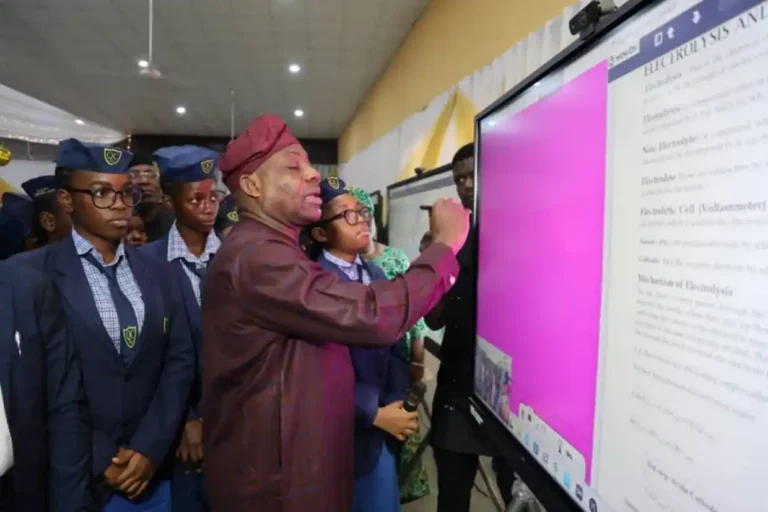
The Federal Government of Nigeria, through the Honourable Minister of Education, Dr. Maruf Tunji Alausa, CON, has launched the Digitalization of Public Schools Initiative and started distributing Interactive Smart Boards to public schools across the country.

Speaking during the flag-off ceremony at Queen’s College, Lagos, Dr. Alausa described the initiative as “a bold step toward modernizing education in line with President Bola Ahmed Tinubu’s Renewed Hope Agenda for technology-driven, inclusive learning.” He stated that the move from chalkboards to smart boards signifies “a transformation from traditional to interactive, digital classrooms that prepare students for a global, knowledge-based economy.”

The Minister explained that the new education technology project aligns with other ongoing federal efforts, including the Nigeria Education Data Initiative (NEDI), the Nigeria Education Repository and Databank (NERD), and the $40 million ICT-Dev Project with the French Development Agency (AFD). These programs aim to strengthen ICT infrastructure, promote hybrid learning, and enhance the country’s digital education framework.

Dr. Alausa added that through the Universal Basic Education Commission (UBEC), the Ministry is expanding broadband access, promoting digital literacy, and providing teacher training across primary and secondary schools nationwide.

Mrs. Aisha Garba, Executive Secretary of UBEC, reaffirmed the Commission’s commitment to integrating technology into classrooms, highlighting the BESDA-AF tablet distribution, the Digital Literacy Curriculum, and the creation of an AI in Education Department as part of the government’s broader digital learning strategy.

She noted that the initiative signals “a new era of innovation and inclusion,” ensuring public schools are equipped for a digitally empowered future.

AGILE cct second cohort to support 35,000 girls in Nasarawa

The first cohort of the Conditional Cash Transfer (CCT) under the Adolescent Girls Initiative for Learning and Empowerment (AGILE) has recorded remarkable success across the seven pilot Local Government Areas of Nasarawa State. Grateful parents have expressed appreciation to the Nasarawa State Government and the World Bank-supported project for providing financial support to keep their daughters in school.

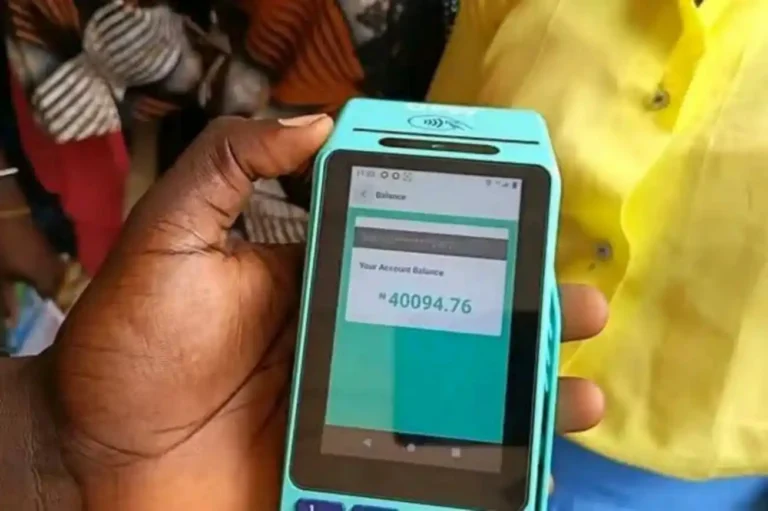
From Keana to Doma, Awe to Kokona, and Lafia to Wamba and Nasarawa LGAs, thousands of households have received ATM cards loaded with cash support aimed at easing education-related expenses. For many families, the initiative is more than financial aid; it is a lifeline for their children’s education and future.

“We are deeply grateful to AGILE and the Nasarawa State Government for coming to our aid,” said Mrs. Martha Okuba, a parent in Doma LGA. “This support has eased the burden of school expenses and will help our children continue their education without interruption.”

Mallam Ogri Musa, also from Doma, shared similar feelings. “This initiative is a blessing to poor families. With this assistance, our daughters can stay in school and complete their studies,” he said.

The AGILE project, supported by the World Bank, has distributed ₦40,000 per student—₦15,000 for registration and ₦25,000 for transition—along with an additional ₦10,000 incentive for girls who maintain at least 70 percent attendance during the second and third terms. This conditional cash transfer aims to encourage consistent school attendance and reduce dropout rates among adolescent girls in Nasarawa State.

State Project Coordinator, Hajiya Aishatu Aliyu Isoga, explained that the initiative was designed to empower girls through education while reducing financial strain on families. She noted that ATM cards were issued directly to beneficiaries and their caregivers, and school principals were tasked with verifying student identities to maintain transparency and accountability.

According to the AGILE office, 10,539 girls have already benefited from the program across the seven pilot LGAs. Encouraged by the success of the first phase, parents and community leaders are calling on the government to expand and sustain the program. The second cohort, expected to cover 35,000 girls in Akwanga, Obi, Nasarawa Eggon, and Keffi LGAs, is already generating anticipation among residents.

“We call on AGILE and the Nasarawa State Government to keep this momentum going,” said a group of caregivers in Lafia. “Education is the key to our daughters’ future, and this scholarship is opening doors we never thought possible.”

NYCN protest rocks CAC headquarters over deregistration

0

The National Youth Council of Nigeria (NYCN) has staged a major protest at the Corporate Affairs Commission (CAC) headquarters in Abuja, opposing the withdrawal of its registration and accusing the commission of political interference and legal violations.

NYCN National President, Sukubo Sara-Igbe Sukubo, strongly condemned the deregistration, describing it as “a clear disregard of a subsisting Federal High Court ruling” that remains in favor of the council. He explained that the case is currently before the Court of Appeal and alleged that the CAC’s action disrupted an ongoing judicial process.

Sukubo accused the Registrar General of CAC, Ishaq Magaji, of abusing his office and undermining the rule of law. He warned that the move could pose a threat to national security, given the NYCN’s position as the official representative body of millions of Nigerian youths. “This is an attempt to silence the voice of Nigerian youths,” he said, calling on President Bola Ahmed Tinubu to immediately remove Magaji from office.

The council also urged Senate President Godswill Akpabio and National Security Adviser Nuhu Ribadu to intervene in the matter, stressing that the issue has wider implications for youth participation in governance. Protesters at the CAC headquarters vowed to maintain their demonstration for up to one month or until their demands are met. The event featured speeches from Sukubo and former NYCN Secretary, Barrister Abubakar Suleiman, both of whom criticized the deregistration as “unlawful and politically motivated.”

Meanwhile, a closed-door meeting between NYCN representatives and CAC officials ended without a clear resolution. Julius Anga, CAC’s Director of Customer Service and Acting Registrar General, described the meeting as “constructive” but confirmed that the deregistration stands. According to him, the decision followed an internal investigation that led to the suspension of NYCN’s trustees and the appointment of an interim management team.

Anga explained that the interim arrangement would last for one year, after which the situation would be reviewed. “Our investigation revealed multiple governance issues, and the suspension will remain in place for twelve months pending full compliance,” he said.

Reacting to the outcome, Sukubo criticized the commission’s stance, saying it disregarded both court orders and previous calls for dialogue. He maintained that the CAC lacked the authority to suspend the council’s trustees while the matter was still in court. “No institution has the right to override a court ruling,” he stated, describing the meeting as a deadlock, with the commission refusing to acknowledge the ongoing legal proceedings.

The protest continues as both sides hold their positions, with the NYCN insisting that the deregistration was illegal and politically driven.

NOA launches N10m real Nigerian animation challenge

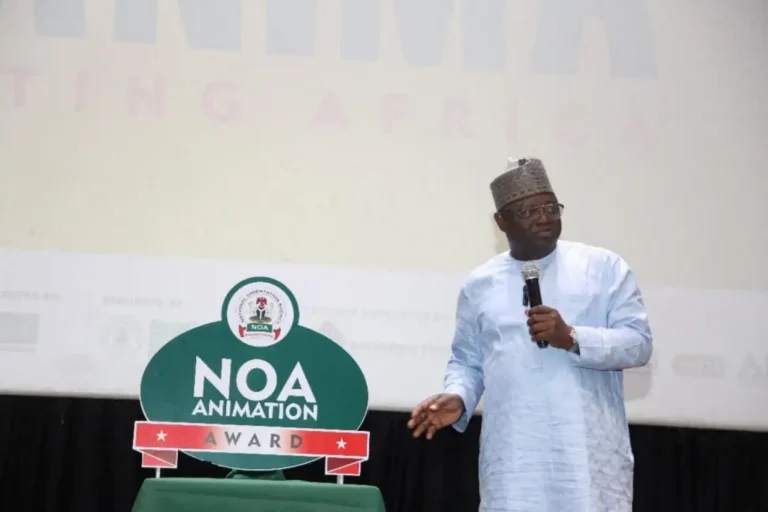
The Lagos International Festival of Animation (LIFANIMA) ended yesterday with an important announcement from the National Orientation Agency (NOA), introducing a new competition designed to boost Nigeria’s animation industry. The event, held at the Mike Adenuga Centre in Ikoyi, Lagos, drew attention from government officials, creative professionals, and private sector stakeholders.

The Director General of the NOA, Mallam Lanre Issa-Onilu, who attended the closing ceremony, revealed that beginning from the tenth edition of LIFANIMA in 2026, a new category titled “Real Nigerian Animation Challenge” will be introduced. He explained that the initiative aligns with the federal government’s policy to nationalise cartoon content and use animation as a tool for promoting cultural expression and national values.

According to Issa-Onilu, the new challenge “focuses on government effort to promote National Identity through the National Values Charter.” The competition will feature generous rewards for winners, with the first-place winner receiving 10 million naira, the second-place winner getting 7.5 million naira, and the third-place winner earning 5 million naira.

The Real Nigerian Animation Challenge will include 2D, 3D, and Stop Motion picture styles and will be open only to Nigerian animators. Each short film must not exceed three minutes and should highlight a positive Nigerian trait such as resilience, optimism, or unity. In addition to the monetary prizes, all submitted entries will enjoy three months of free airing on national television channels, giving creators wider exposure and recognition.

Mallam Issa-Onilu explained that the NOA is leading the cartoon nationalisation policy to “reduce the impact of overwhelming foreign animation exposure on young people,” stressing that most foreign animations do not reflect Nigeria’s cultural values or orientation. He said the initiative is part of broader government efforts to promote indigenous creativity and showcase Nigerian culture and values globally.

Festival Director of LIFANIMA, Muyiwa Kayode, expressed excitement about the government’s growing involvement in animation development. He stated, “The need for authentic stories to be told through animation is long overdue, given the rich cultural heritage of the country.”

The event also had in attendance representatives of the Lagos State Government, the Executive Director and Chief Executive Officer of the National Film and Video Censors Board, Dr. Shaibu Husseini, the Director General of the Centre for Black Arts and Civilisation, Aisha Adamu Augie, as well as representatives from private sector organisations and the French Embassy in Nigeria.

Federal medical centre Makurdi announces internship for optometrists

0

The Federal Medical Centre (FMC), Makurdi, Benue State has announced an internship opportunity for qualified Optometrists. The management invites applications from suitably qualified candidates for the position of Intern Optometrist at its facility located at KM 5, Gboko Road, Makurdi, Benue State.

According to the hospital’s announcement, applicants are required to submit an application letter, Curriculum Vitae (CV), current license, degree certificate or notification of result, WAEC or NECO certificate, first school leaving certificate or testimonial, local government identification letter, birth certificate, and three recommendation letters.

“All applications should be addressed to The Medical Director, Federal Medical Centre, KM 5, Gboko Road, Makurdi, Benue State,” the statement added.

Qualified and interested Optometrists are encouraged to apply promptly. The internship provides hands-on experience in clinical eye care within one of Nigeria’s recognized federal medical institutions.

Association urges FG to revive school feeding, promote egg consumption

0

The Poultry Association of Nigeria (PAN), FCT Chapter, has reaffirmed that eggs remain one of the most affordable and complete sources of dietary protein, capable of providing 12 to 13 per cent of daily nutritional requirements. The association made this known to mark the 2025 World Egg Day, themed “Mighty Egg: Packed with Natural Nutrition.”

World Egg Day is celebrated every second Friday in October and was established in 1996 by the International Egg Commission (IEC) to promote the nutritional and economic benefits of eggs. The event highlights the importance of eggs as a sustainable food option that supports healthy living and food security.

Mrs Yemi Egwudale, Auditor of PAN FCT and Managing Director of Yemi’s Integrated Farms, stated that eggs, currently sold between N150 and N250, offer a complete and balanced diet for individuals across all age groups. She explained that consuming two eggs daily provides roughly a quarter of the body’s required protein, a level that is difficult to obtain from many other foods.

“Eggs contain protein, carbohydrates, fat, and healthy cholesterol. One or two eggs daily gives a child a fully nourishing diet for learning and development,” Egwudale said. She urged the federal government to revive the national school feeding programme and ensure that every pupil receives at least one egg each day, citing the food’s affordability and nutritional value.

Egwudale pointed out several challenges faced by poultry farmers in Nigeria, including insecurity, inadequate access to veterinary services, and rising costs of production inputs. According to her, the price of a day-old chick now ranges from N1,600 to N1,900, while raising one to the point of lay costs about N9,000, making egg production more expensive for farmers.

She appealed to the government to introduce subsidies on poultry inputs, create targeted grants, and provide affordable loans for local farmers to ensure stable egg production. “Government can partner with hatcheries, feed mills, and vaccine producers to cut production costs. This will make eggs more affordable and accessible to low-income Nigerians,” she added.

Egwudale also expressed concern over the impact of insecurity on poultry farming, noting that many farmers are now forced to operate by proxy due to the risk of attacks on farms and staff. She called on authorities to prioritise security in rural communities, stressing that protecting farmers is vital for ensuring food security and supporting Nigeria’s agricultural growth.

Dangote Refinery denies importing high-sulphur petrol from UK

0

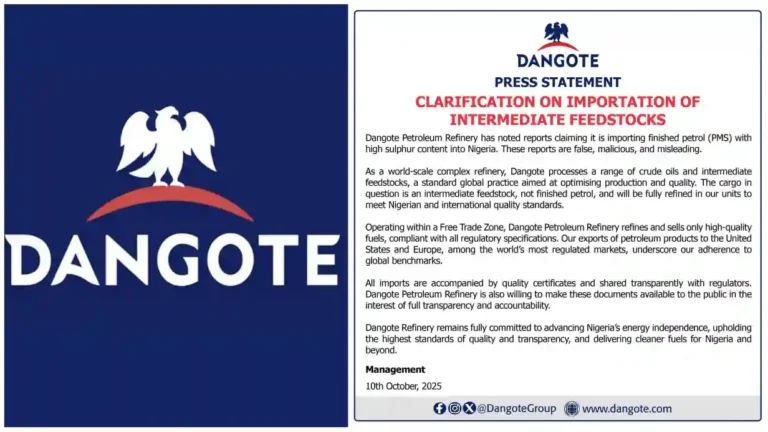
Dangote Petroleum Refinery has dismissed recent media claims that it is importing finished petrol with high sulphur content into Nigeria, describing the reports as false, malicious, and misleading. The clarification follows a report by Sahara Reporters which alleged that the refinery imported dirty fuel from the United Kingdom with sulphur content thirteen times higher than Nigeria’s approved 50 parts per million (ppm) limit.

In its official statement, Dangote Petroleum Refinery explained that the cargo in question was not finished petrol but an intermediate feedstock, a standard input used by refineries across the world for production optimisation. The company emphasised that the feedstock will be fully refined in its units to meet both Nigerian and international fuel quality standards.

“As a world-scale complex refinery, Dangote processes a range of crude oils and intermediate feedstocks, which is standard global practice aimed at optimising production and quality,” the statement read. “The cargo in question is an intermediate feedstock, not finished petrol, and will be fully refined in our units to meet Nigerian and international quality standards.”

Sahara Reporters had earlier published an exclusive story alleging that the refinery imported Premium Motor Spirit (PMS) with sulphur content far exceeding Nigeria’s approved environmental standard. The report cited an unnamed industry source who claimed that a vessel, MT Clearocean Mary, was scheduled to arrive at the refinery’s offshore facility on October 9, 2025, with about 37,000 metric tonnes (49.6 million litres) of petrol containing 690ppm sulphur.

The report also alleged that the product was loaded from the Phillips 66 Refinery in Immingham, United Kingdom, and supported this with a Certificate of Quality indicating that the consignment contained high-sulphur catalytic gasoline. The document, signed by a representative of the Humber Refinery’s quality-assurance department, stated that the fuel had characteristics consistent with refinery-grade gasoline, including a Research Octane Number of 92.3, a Motor Octane Number of 79.3, and a density of 0.7375 kilograms per litre. However, it recorded a sulphur concentration of 690ppm, well above the 50ppm limit enforced by the Nigerian Midstream and Downstream Petroleum Regulatory Authority (NMDPRA).

Responding to these claims, Dangote Refinery maintained that it operates within a Free Trade Zone and only refines and sells high-quality fuels compliant with all regulatory standards. The company added that its exports of petroleum products to the United States and Europe, two of the most strictly regulated fuel markets, prove its adherence to global benchmarks.

“All imports are accompanied by quality certificates and shared transparently with regulators,” the refinery said. “We are also willing to make these documents available to the public in the interest of full transparency and accountability.”

Dangote Refinery reaffirmed its commitment to Nigeria’s energy independence and stated that it remains focused on producing cleaner fuels for both domestic and international markets. The company reiterated that its operations uphold the highest standards of environmental safety, transparency, and product quality.

Industry sources had alleged that the refinery’s Fluid Catalytic Cracking (FCC) unit was not operational and claimed that the company was selling imported fuel as locally refined petrol. However, Dangote Group dismissed these allegations, insisting that its refining process complies with global environmental and quality standards.

Dangote Refinery was inaugurated in May 2023 and has a capacity of 650,000 barrels per day. The facility, located in the Lekki Free Trade Zone, was built to reduce Nigeria’s dependence on imported refined products and boost energy security.

The refinery stated that it remains committed to producing petrol that meets the 50ppm sulphur specification in line with Nigeria’s “Clean Fuels” initiative under the Petroleum Industry Act. It also assured Nigerians that no product will be released for sale until it meets both domestic and international quality requirements.

“We remain fully committed to advancing Nigeria’s energy independence, upholding the highest standards of quality and transparency, and delivering cleaner fuels for Nigeria and beyond,” the statement concluded.