Home Blog Page 409

NCTO unveils new HoPE website for household empowerment

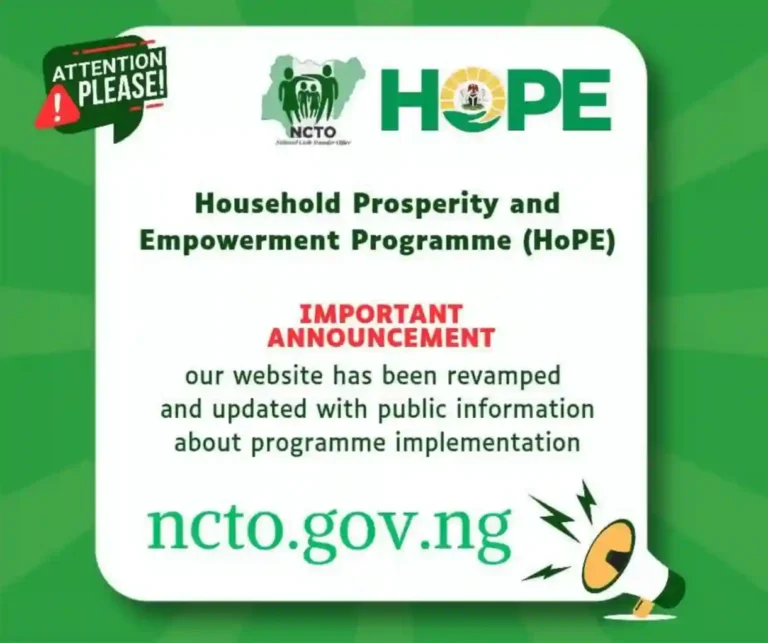
The National Cash Transfer Office (NCTO) has announced the launch of its newly revamped Household Prosperity and Empowerment Programme (HoPE) website. According to the agency, the new platform serves as the official and verified source of information about the HoPE initiative, which aims to improve the livelihood and economic well-being of households across Nigeria through targeted empowerment and support.

Speaking about the development, the NCTO stated, “This upgraded platform provides enhanced transparency, giving users easier access to verified updates and programme objectives.” The office also highlighted that the new website ensures better communication, allowing citizens to stay informed about new developments in the programme’s implementation process.

The platform has been fully redesigned for accessibility, catering to beneficiaries, stakeholders, and the general public. Nigerians are encouraged to explore the new HoPE website to stay updated on social protection and empowerment opportunities at https://ncto.gov.ng.

Advertisement

CADEF, JLA graduate greenlabs cohort, open applications for cohort 2

0

The Consumer Advocacy and Empowerment Foundation (CADEF), in partnership with Jacob’s Ladder Africa (JLA), has announced the graduation of the inaugural cohort of the greenlabs Incubation Program. According to an official release, the graduation ceremony is scheduled to take place on Friday, October 10, 2025.

The statement noted that this milestone event will celebrate the culmination of nine transformative months where young African innovators transitioned from bold ideas to market-ready, climate-smart solutions. The greenlabs Incubation Program is described as a Pan-African initiative dedicated to nurturing the next generation of green innovators and entrepreneurial leaders. The program currently operates in both Nigeria and Kenya, underscoring a continental commitment to driving sustainable innovation and accelerating Africa’s transition to a low-carbon, circular economy.

The Lagos Cohort 1 journey began with a highly competitive selection process that attracted numerous applications from passionate young Nigerians determined to pioneer change. Following an intensive Renewable Energy Innovation Challenge, the most promising ideas advanced to the incubation phase. Over the course of ten months, participants underwent a rigorous series of capacity-building workshops, technical mentorship sessions, and business coaching activities designed to refine their concepts and prepare them for market readiness.

These young entrepreneurs did not only acquire technical skills but also transformed their innovative ideas into viable green ventures. The graduating innovators are unveiling projects that are redefining sustainability in their local communities. Some of the standout ventures include initiatives that convert organic waste into clean, renewable energy, deploy affordable solar-powered irrigation systems to improve food security for smallholder farmers, and introduce recycling and upcycling models that both create income and significantly reduce environmental impact.

Prof. Chiso Ndukwe-Okafor, Executive Director of CADEF, emphasized the organization’s focus on empowering youth through innovation. “The greenlabs program is proof that sustainability starts with empowerment. This first cohort hasn’t just developed innovative ideas; they’ve created viable, scalable enterprises. They are not merely responding to Africa’s climate challenges, they are building the profitable, long-term solutions our continent desperately needs. This is the future of African enterprise,” she said.

The upcoming graduation event will highlight the achievements of these innovators while also showcasing the strength of the partnership between CADEF and Jacob’s Ladder Africa. Together, the two organizations are building a growing network of African change makers equipped with the knowledge and skills to address pressing environmental and economic challenges through innovation and entrepreneurship.

Karen Chelangat, Chief Innovation Officer at Jacob’s Ladder Africa, spoke about the program’s vision for future expansion. “Our mission is to ensure African youth are the architects of the green economy, not just its beneficiaries. The success of Cohort 1 fuels our commitment to further scale this impact. Cohort 2 will strengthen this movement, building the essential green jobs, green skills, and green enterprises that will drive inclusive and resilient growth across the continent,” she stated.

Following the success of the first edition, CADEF has officially opened the call for applications for the greenlabs Incubation Program Cohort 2. The next phase is expected to feature expanded collaborations across African countries, strategic partnerships, and new opportunities for aspiring green entrepreneurs. Young Nigerians passionate about sustainability, entrepreneurship, and innovation are encouraged to apply and become part of this growing network of leaders shaping Africa’s green future.

Kaduna launches Nigeria’s first OC4IDS infrastructure data portal

0

Kaduna State Governor, Senator Uba Sani, has launched the Kaduna State Infrastructure Portal, marking a major step in Nigeria’s transparency and data disclosure efforts. The Governor, represented by the Commissioner for Planning and Budget Commission, Mukhtar Ahmed, unveiled the platform during CoST’s event at the Open Government Partnership (OGP) Global Summit.

The new platform is the first in Nigeria to publish data using the OC4IDS data standard, allowing the public to access detailed information on infrastructure projects across the state. The state government also introduced a Formal Disclosure Mandate to improve compliance with data publication and ensure continued openness.

Speaking at the launch, Mukhtar Ahmed said, “Kaduna’s infrastructure data is now open to the world, empowering citizens, civil society, private sector and development partners to monitor progress which opens the door to trust, innovation, and inclusive development. We invite the world to explore, engage, and emulate. The future of infrastructure is open, and Kaduna is leading the way.”

The World Bank has been supporting several Nigerian states in developing data platforms, with Kaduna already publishing information on over 1,300 projects using the Open Contracting Data Standard (OCDS). However, Kaduna has gone further as a CoST member by aligning its data to the OC4IDS, which combines project-level and contract-level publication, improving transparency and accessibility.

After becoming validated as an OC4IDS publisher earlier this year, CoST Kaduna worked on training its team to upload data efficiently. The state has now published information on nearly 1,500 projects on the new infrastructure portal, with the goal of making all infrastructure data open and easy to understand for the public.

CoST Kaduna manager, Tara, said, “This new portal means that more data will be available in priority sectors such as healthcare, education, agriculture and transport. Publishing and reviewing data in these sectors are vital for improving quality of life for over 10 million people living in Kaduna. We’re proud of how this work and has enabled us to work with a wide range of stakeholders.”

The Kaduna Infrastructure Portal aligns with Nigeria’s Open Government Partnership commitments and several objectives in CoST Kaduna’s annual plan. It reinforces the state’s dedication to transparency and supports better governance practices.

This initiative also builds on past successes, including government training programs for civil society, media, and public officials, as well as Kaduna’s participation in major transparency events like OGP Africa.

Interested users can explore the new portal through the official website: ipdata.kdsg.gov.ng/public/home.

CoST, the Infrastructure Transparency Initiative, continues to promote global standards and free tools that enable governments to improve accountability, transparency, and participation in infrastructure delivery to strengthen economies and improve lives.

Mavin Records opens 2025 graduate internship program

0

Mavin Records has announced the opening of its Graduate Internship Program 2025 for young professionals looking to gain experience in the entertainment industry. The internship will take place in Lagos and is open to candidates with a Bachelor’s Degree in Accounting, Finance, Economics, or related disciplines.

According to the company, applicants must have “a strong understanding of basic accounting principles,” along with proficiency in Microsoft Excel and accounting software. The record label also emphasized the need for candidates with “excellent analytical, problem-solving, and numerical skills,” as well as strong communication and interpersonal abilities.

Interested and qualified candidates are encouraged to send their CVs to oluwakemi.adeniyi@mavinrecords.com using the job title as the subject line. The deadline for submission is October 23, 2025.

FG gives tertiary institutions 30 days to account for unspent TETFund allocations

0

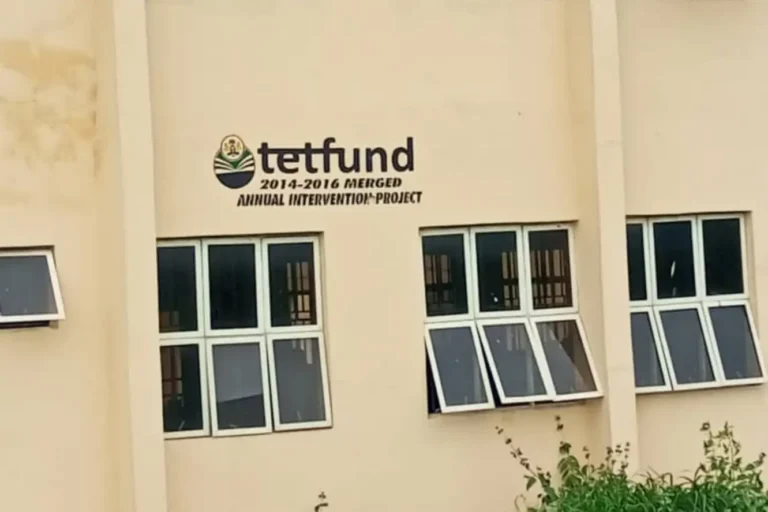
The Federal Government has given tertiary institutions in Nigeria 30 days to account for unspent Tertiary Education Trust Fund (TETFund) allocations, warning that any idle funds will be reallocated, and officials found guilty of non-compliance will face sanctions.

The Minister of Education, Dr Tunji Alausa, issued the directive in Abuja on Thursday during a meeting with heads of tertiary institutions. He said the ministry is worried about the large sums of money lying idle instead of being used for infrastructure and academic development.

Alausa explained that the Federal Ministry of Education has faced a dilemma over allocations that are not being fully utilised, stating that several projects meant to improve tertiary education have been delayed due to administrative bottlenecks. “Institutions must submit reconciled reports of all unutilised funds within 30 days, which will be jointly verified. Unused funds may be redirected to priority projects, and carrying them over without strong justification will no longer be allowed. Procurement plans must align with approved interventions, and approvals should be fast-tracked to prevent delays,” he said.

The minister’s directive follows repeated concerns raised by TETFund over the huge amount of unused allocations in various universities, polytechnics, and colleges of education across the country. In July, the Fund had threatened to delist institutions that failed to access and use their allocations, warning that such money would instead be given to schools that have been consistent in accessing and utilising disbursements.

Although TETFund did not disclose the total amount of unused allocations, the House of Representatives Committee on TETFund revealed in August 2024 that about N500 billion was still lying idle in the Central Bank of Nigeria. Similarly, the Academic Staff Union of Universities (ASUU) stated during a meeting convened by the TETFund Board of Trustees in Abuja that over N600 billion worth of allocations remain unutilised by institutions.

Dr Alausa added that the Federal Government will introduce capacity-building programmes to strengthen project management, compliance, and reporting across tertiary institutions. He also said mentorship initiatives would be implemented to guide institutions on effective fund utilisation.

According to him, quarterly reviews will be conducted to track progress and ensure compliance, while sanctions will be imposed on institutions that fail to utilise their funds properly. “Transparency will be enhanced through a public dashboard showing disbursement and utilisation data, and institutions will be required to publish project progress reports,” the minister stated.

Alausa stressed that the success of the initiative will depend on cooperation among all key stakeholders. “TETFund must lead with professionalism, enforce compliance, and ensure transparency. Institutional heads should drive urgency and accountability, while bursars, procurement officers, and project coordinators must plan and report diligently. Auditors and oversight bodies are expected to monitor activities and flag irregularities. All stakeholders must uphold a sense of stewardship, recognising that every TETFund naira represents public trust,” he said.

The allocation of TETFund resources is based on demand-driven interventions, where institutions submit project proposals based on their needs and receive funding after approval. In 2025, TETFund allocated N1.6 trillion to tertiary institutions across Nigeria, focusing on campus security, direct interventions, and healthcare improvements.

The immediate past President of the Academic Staff Union of Universities and a member of the union’s National Executive Council, Prof Victor Osodeke, called for firm disciplinary measures against heads of institutions who fail to deploy allocated intervention funds.

He emphasised that such negligence undermines TETFund’s core mandate to enhance teaching, learning, and research infrastructure in universities, polytechnics, and colleges of education. “There’s a huge sum of money in the Central Bank belonging to institutions that have not been utilised. The last time we checked, it was close to ₦600 billion. None of the universities or Vice-Chancellors responsible for this has been punished,” Osodeke said.

“This is public money given to universities over the years. Some have had the funds for 10 to 15 years without using them, and several projects have been abandoned. Measures must be put in place to ensure accountability among university administrators and governing councils,” he added.

Oluremi Tinubu gives N50,000 frants to 1,000 women in Rivers state

The Renewed Hope Initiative (RHI), led by Nigeria’s First Lady, Senator Oluremi Tinubu, in collaboration with the Tony Elumelu Foundation (TEF) and supported by the Rivers State Government, has empowered 1,000 women in Rivers State with N50,000 each in free cash grants. The programme is aimed at boosting women’s entrepreneurship, strengthening small-scale businesses, and reducing poverty among women in the region.

The event, held at the Government House, Port Harcourt, on Thursday, brought together women from across the state to receive financial support under the Women Economic Empowerment Programme. Mrs. Tinubu, represented by Lady Valerie Fubara, wife of the Rivers State Governor, said the empowerment initiative was part of the Renewed Hope agenda to improve the lives of women and their families.

Speaking at the event, Mrs. Tinubu explained that the RHI and the Tony Elumelu Foundation jointly provided N50,000 each to 500 women, while the Rivers State Government, under Governor Siminalayi Fubara, extended the same amount to another 500 beneficiaries.

She said, “Let me emphasize that this is not a loan; it is a grant and a seed of renewed hope to help you recapitalize existing businesses. I strongly believe that when you empower a woman, you empower a household, a community, and indeed a nation.”

Mrs. Tinubu praised the resilience of Nigerian women, highlighting their ability to sustain their families, educate their children, and contribute to community development. She expressed her gratitude to the Tony Elumelu Foundation for its N1 billion donation to the Renewed Hope Initiative, noting that 18,500 women across Nigeria would benefit from the scheme.

“Five hundred women from each of the 36 states and the FCT will receive N50,000 each to strengthen and recapitalize their small businesses,” she added.

The First Lady also commended Governor Siminalayi Fubara and his wife for their continued support in implementing RHI’s programmes in the state, urging other leaders and corporate organisations to emulate the philanthropic example of Tony Elumelu.

In her remarks, Lady Valerie Fubara described the initiative as a vital step towards enhancing the economic capacity of women and addressing their daily challenges. She noted that over the past two years, the Renewed Hope Initiative had provided agricultural, educational, and economic support to women and families across the country.

“The Renewed Hope Initiative has embarked on several interventions for women and the elderly, and we are proud of our partnership with the Tony Elumelu Foundation, whose N1 billion donation is uplifting women in all 36 states and the FCT,” Lady Fubara said.

She described the impact of the initiative in Rivers State as “gratifying and transformative,” adding that the combined efforts of RHI, TEF, and the state government had created new opportunities for women to expand their businesses and improve their livelihoods.

“At this programme today, all 500 beneficiaries will be given N50,000 each courtesy of the Tony Elumelu Foundation and RHI partnership. In deepening the gains of this partnership, the Rivers State Government is also giving N50,000 to yet another 500 women, making a total of 1,000 women who will be receiving this grant,” she explained.

Lady Fubara added that the empowerment scheme reflected Governor Fubara’s commitment to improving the economic strength of women in the state. “His Excellency, Sir Siminalayi Fubara, believes that empowerment should be value targeted and has therefore asked me to congratulate beneficiaries of this empowerment programme,” she said.

She also encouraged the beneficiaries to make good use of the grants to support ventures that would strengthen their families and contribute positively to the state’s economy.

WEMA Bank, FG train 100 youths in vocational and digital skills

0

The Ministry of Youth Development, in partnership with WEMA Bank and the Research Development and Training Institute (RDTI), has empowered 100 young Nigerians with vocational and digital skills under the 2nd Cohort of the Skillnovation Training Programme.

Speaking at the event in Abuja, the Minister of Youth Development, Ayodele Olawande, said the initiative was part of the government’s strategic plan to promote youth empowerment and job creation. He explained that the Skillnovation Programme is one of several youth-focused interventions supported by WEMA Bank and the Ministry to promote inclusive economic growth and help young Nigerians thrive in the modern economy.

The minister, who was represented by the Director General, Committee of Youth on Mobilisation and Sensitisation (CYMS), Chief Obinna Nwaka, said the four-week training focused on practical skill acquisition in hair making, make-up artistry, confectionery, digital marketing, and shoe making among others.

According to him, “These skills are essential for self-reliance and national development. The programme demonstrates the government’s commitment to tackling unemployment and poverty by providing young Nigerians with opportunities to learn, innovate, and create sustainable livelihoods.”

Ayodele added that the initiative aligns with key interventions of the Ministry, including the Nigerian Youth Academy (NiYA), Pi-CNG Youth Initiative, and the Nigerian Youth Investment Fund (NYIF). He emphasised that such programmes are vital for equipping young people with skills that promote entrepreneurship and drive economic growth.

“The ministry remains steadfast in ensuring that Nigerian youths are empowered to contribute meaningfully to the economy. Programmes like this are pathways to building resilience, creativity, and productivity among our young population,” he said.

The minister commended the participants for their dedication and encouraged them to make full use of the knowledge and skills gained. He also praised Dr Chiji Ojukwu, Managing Director of the African Project Development Centre Group (APDC), for his consistent support of youth development initiatives across the country.

Other dignitaries at the event included Kelechi Ugwumba, CYMS Director of Contacts and Mobilisation, and Ms Evelyn from the Volunteer Group. They both highlighted the importance of partnerships in advancing youth capacity development, noting that empowering young Nigerians with practical skills would reduce unemployment and stimulate local entrepreneurship.

Highpoints of the event included the presentation of certificates and cheques to the trainees on behalf of the minister.

Adamawa PPSMB transfers teachers across secondary schools

Adamawa State Post Primary Schools Management Board (PPSMB) has approved the transfer of 1,227 teaching staff across various secondary schools in the state. The directive was contained in a circular issued on 3rd October 2025 from the board’s headquarters in Yola.

The circular, referenced PPSMB/CIR/172/VOL I, was addressed to all Zonal Directors and Principals. It stated that “approval has been given by the Board for the transfer of the following teaching staff. The affected teachers should report at their new stations on or before 10th October, 2025.”

The statement further instructed that “Principals should report any teacher that fails to report on the given date line, please.”

The transfer list includes teachers’ names, qualifications, subject specialisations, old stations, and their newly assigned schools.

The complete list titled “POST PRIMARY SCHOOLS MANAGEMENT BOARD, YOLA – TEACHERS TRANSFER: OCTOBER, 2025” can be accessed online via www.facebook.com/share/p/1A63nsJZ9h.

Firm to train 2 million rural women in climate-smart farming

ZLGA Waterways Limited, in partnership with the Rural Women Energy Security Initiative, is set to train about two million rural women across Nigeria in eco-friendly agricultural practices.

The initiative, known as the Climate-Smart Agronomy Programme, is designed to empower women at the grassroots through climate-resilient farming, renewable energy adoption, and sustainable income generation.

According to a statement issued on Thursday by the Programme Coordinator, Dr Abiola Bashorun, more than two million women from rural communities have already registered for the training.

Bashorun explained that both organisations had signed a Memorandum of Understanding in Abuja to formalise their collaboration, noting that the training supports Nigeria’s climate action goals. She said the programme would help women gain access to clean and sustainable energy sources, especially for cooking, lighting, and other income-generating ventures.

“The Climate Smart Agronomy Programme is expected to bring several key benefits which include women empowerment – training and equipping rural women with modern, climate-smart farming and clean energy tools,” the statement read.

“It improves food security, it will provide higher crop yields, reduced losses, and better nutrition through sustainable farming practices. On climate resilience, this training would bring about drought-resistant crops, efficient water use, and soil conservation to withstand climate change.”

Bashorun added that the project would create new income streams, jobs, and better market access for women while promoting renewable energy technologies such as solar irrigation, biogas, and clean cookstoves.

“I encourage all women, regardless of age or social status, to join this program — it offers an opportunity to become key contributors to environmental sustainability while also advancing their businesses.

“We must act now to protect the earth from total collapse and create a better, more sustainable world for ourselves and future generations,” she said.

The initiative comes as the Federal Government intensifies its climate-smart agriculture and agrifood investment plans aimed at boosting food production in a low-carbon, resilient manner.

Nigeria increases nursing and midwifery enrolment to 115,000 by 2025

0

The Coordinating Minister of Health and Social Welfare, Professor Muhammad Pate, has announced a major expansion in nursing and midwifery enrolment across Nigeria, increasing from 28,000 in 2023 to 115,000 in 2025.

Speaking in Abuja during the launch of the National Strategic Direction for Nursing and Midwifery (NSDNM) 2025–2030, Professor Pate said the move is part of government efforts to tackle workforce shortages and improve healthcare delivery nationwide.

He disclosed that 69,000 frontline health workers have been retrained, while 20,000 new workers have been recruited, with 60% of them being nurses and midwives. According to him, this initiative aligns with President Bola Tinubu’s Renewed Hope Agenda and demonstrates Nigeria’s commitment to strengthening human resources for health.

“Our fight for a stronger health system cannot succeed without empowering nurses and midwives,” Professor Pate stated. He further noted that Nigeria is the first country in West Africa to adopt the Best Practice Frontline Organisation Model, developed with the Registered Nurses Association of Ontario, Canada, to enhance leadership and retention among frontline workers.

Delivering the keynote address, Professor Saleh Garba highlighted that nurses and midwives account for nearly 60% of the global health workforce, but Nigeria continues to face a severe shortage. He revealed that one nurse currently serves about 1,260 people, far below the World Health Organization (WHO) standard of one nurse to 1,000 people.

He described the new strategy as a lifeline for the profession, which has been hit by brain drain and poor working conditions. “Without investment in human resources, infrastructure, and fair pay, we cannot retain our talent,” Garba said, emphasising that the plan is vital to achieving universal health coverage and reducing maternal and child mortality.

Representing WHO, Dr Mary Brantuo said the global shortage of nurses could reach 4.8 million by 2030, with Africa expected to be the hardest hit. She described Nigeria’s strategy as timely and pledged WHO’s continued technical and policy support for its implementation.

Earlier, the Permanent Secretary of the Ministry of Health and Social Welfare, Daju Kachollum, represented by Teshoma Dafeta, Director of Human Resources, said the plan is a living document aimed at reforming nursing education, creating jobs, and building leadership across all levels. Mrs Dafeta called for collaboration among states, professional bodies, and universities to achieve real progress.