Home Blog Page 412
Advertisement

BOI launches N2bn loan programme for NYSC members

The Bank of Industry (BOI) has launched a two billion naira entrepreneurship programme aimed at supporting National Youth Service Corps (NYSC) members with affordable business loans. The initiative, tagged the “2bn BOI–NYSC Entrepreneurship Programme,” was officially inaugurated in Abuja on Wednesday.

Speaking at the event, the managing director of BOI, Olasupo Olusi, represented by the executive director for micro, small and medium enterprises (MSME), Shekarau Omar, said the programme was part of ongoing efforts to reduce unemployment and encourage youth-led enterprises across Nigeria.

He explained that the initiative would enable beneficiaries to access up to five million naira each at a single-digit interest rate of nine percent per annum. According to him, the loan is repayable over three years with a three-month moratorium on both the principal and interest.

Olusi described the entrepreneurship programme as a practical step towards transforming young Nigerians from job seekers to job creators. “The partnership between BOI and NYSC builds on earlier collaborations like the Graduate Entrepreneurship Fund (GEF), which trained over 3,000 graduates, financed 609 businesses, and disbursed over one billion naira in loans,” he said.

He added that the numbers represented real impact across sectors such as poultry farming, fashion, technology start-ups, and creative industries. “These numbers are not just statistics, they represent poultry farms, fashion houses, tech start-ups and creative studios brought to life. When young people receive targeted capacity building, affordable finance and mentoring, they repay, they employ, and they grow,” he said.

Olusi praised the NYSC’s Skills Acquisition and Entrepreneurship Development (SAED) department for continuously training corps members to become self-reliant. He emphasized that the new programme would strengthen the SAED initiative and further boost youth entrepreneurship in Nigeria.

“To our corps members, your service year is a launch pad, not a waiting room. Start small, plan well, and stay disciplined about cash flow and compliance. With creativity and determination, you can become the next generation of entrepreneurs shaping Nigeria’s future,” Olusi said.

Nigeriastartupact.ng also reported that the BOI chief appreciated the NYSC director-general, Brigadier General Olakunle Nafiu, along with the SAED director and other officials of both organizations, for their contributions in designing and implementing the new loan programme.

He said the success of the initiative would be measured by the number of loan approvals granted, jobs created, and businesses that remain sustainable after the NYSC service year. The programme is expected to increase youth access to credit, promote small business growth, and contribute to national economic development.

In his remarks, the NYSC director-general, Brigadier General Nafiu, commended the Bank of Industry for its commitment to youth empowerment through the new loan fund. He called on the bank to expand the initiative from two billion to five billion naira to reach more corps members.

Nafiu highlighted the longstanding collaboration between the NYSC and BOI, noting that their partnership began in 2012 with the creation of the SAED programme, which focuses on skills development and entrepreneurship training for young Nigerians.

“This event reaffirms our shared vision. We are not just building skills; we are building livelihoods for over 400,000 corps members who pass through the NYSC programme annually. The new loan scheme underscores BOI’s responsiveness to one of the biggest challenges in the youth entrepreneurship ecosystem, access to affordable financing. This is not just credit, it is confidence. Confidence that the ideas of young Nigerians are worth investing in. BOI’s commitment ensures that good ideas do not die because of a lack of capital,” he said.

The NYSC boss also assured that strong measures would be put in place to ensure the programme delivers its intended impact. The initiative is expected to create jobs, stimulate small business development, and enhance public-private partnerships in promoting inclusive economic growth across Nigeria.

VP Shettima says Nigeria now stable, urges investors to choose country

0

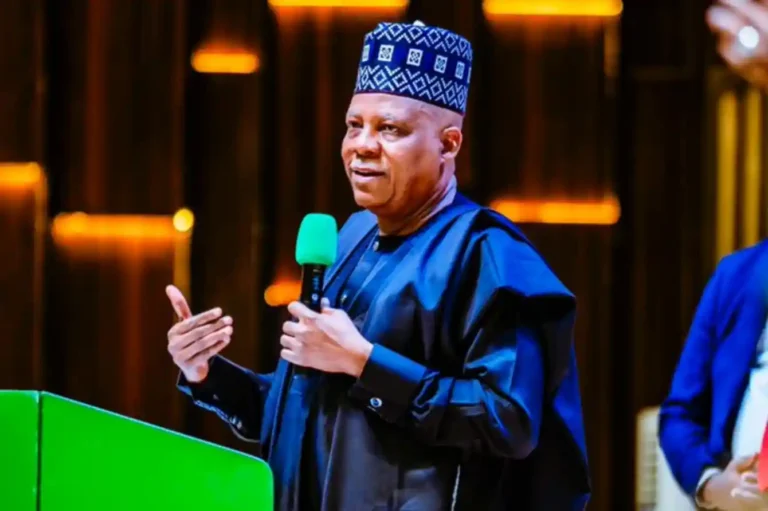
Vice President Senator Kashim Shettima has assured investors that now is the most auspicious and convenient time to choose Nigeria as an investment destination, saying the country has exited its phase of economic instability.

He attributed this milestone to the decisive actions of President Bola Ahmed Tinubu’s administration, which removed obstacles that had hindered the nation’s economic growth. Speaking on Wednesday in Bauchi State while declaring open the Bauchi Investment Summit 2025, Senator Shettima explained that the administration came into office in 2023 with a firm promise to turn around the fortune of an economy that was already on the brink of crisis, with a debt service-to-revenue ratio of nearly 100 percent.

Addressing investors and stakeholders at the two-day summit, the Vice President said under President Tinubu’s leadership, the debt service-to-revenue ratio has been reduced to less than 50 percent, while the GDP growth stood at 4.23 percent as of last month.

“Our non-oil revenues grew by 411 percent year-on-year in the same month. Our tax-to-GDP ratio now stands at 13.5 percent, up from barely 7 percent a few years ago. Our debt-to-GDP ratio remains at 38.8 percent, far below the limits set by the Fiscal Responsibility Act at 60 percent and those of ECOWAS and the World Bank at 70 percent. Our external reserves have grown to 43 billion dollars as of September 2025. Nigeria has exited its phase of economic instability, and I assure investors present here that there is no better time to choose Nigeria,” the Vice President stated.

Explaining the reason behind the government’s bold policy reforms, Shettima said President Tinubu’s first decision was to remove the obstacles that had become “termites in the timber of the nation’s progress.” He said, “You cannot guarantee enduring growth without stability. Our predecessors are here to testify to this truth. Each of them endured a fair share of obstacles and pushbacks in their efforts to introduce reforms that set the nation on the path of rediscovery and stability.”

He added that no system can be suitable for business if it cannot predict the outcome of its investments, noting that a stable economic stimulus remains the most effective solution for a struggling economy. “It was this dread that inspired our bold reforms to harmonise the exchange rate regime and to dismantle the fuel subsidy structure, an avenue that had become a theatre for round-tripping and rent-seeking, where the privileged few converted the nation’s collective patrimony into their private poverty alleviation scheme. We may spend eternity debating the theories of our inactions, but the truth remains that nobody builds a house in a tsunami,” he said.

The Vice President identified job creation, food security, value-chain development, and the unlocking of subnational comparative advantages as the administration’s key development priorities. He said these priorities are anchored on the promises of stability and growth.

According to him, Bauchi State’s vast arable land, solid mineral deposits, agricultural potential, renewable energy prospects, and improving infrastructure make it an ideal environment for investors. “The Federal Government remains resolute in its commitment to ensuring security across the nation because no economy can thrive where fear replaces freedom and where insecurity undermines enterprise,” he stated.

Shettima added that Bauchi State could lead in “climate-smart agriculture, commercial outgrower schemes, and agro-processing hubs linked to national and export markets,” using its natural endowments to boost tourism, hospitality, and creative industries. “The solid mineral reserves of this rich state can also enable responsible mining and downstream industrialisation through transparent tendering, geological mapping, and community benefit frameworks. Bauchi’s renewable energy and gas potential can power industrial clusters through public-private partnerships and off-grid solutions,” he said.

Applauding the vision of Governor Bala Mohammed for opening Bauchi to investors, Shettima reaffirmed the Federal Government’s commitment to treating every state as a priority. “This is so because an affliction to any state slows down the pace of development in other parts of the nation, and this is the burden of federalism that we must never allow to slow us down. We must either grow together or falter apart,” he said.

Declaring the summit open, the Vice President urged participants to move beyond discussions and commit to concrete memoranda of understanding, set timelines, and form joint implementation teams to achieve tangible results. He insisted that all programmes and projects must align with social and environmental sustainability standards.

Former President Olusegun Obasanjo, who also spoke at the event, said the summit represented hope for Nigeria but emphasized the need for partnerships to strengthen businesses. He outlined what he called the five Ps – Politics, People, Protection, Partnership, and Progress – describing them as the bedrock of successful investment. “Governance must be right because it’s about the people and there must be protection (security), or else investors will not come. There must be strong partnership at the local, community, state, and national levels, as well as the civil society, with the public and private sectors. We need partnership,” Obasanjo said.

Governor Bala Mohammed, in his remarks, thanked the Vice President for his support and assured participants that the resolutions from the summit would be implemented. He commended the Federal Government for establishing the North-East Development Commission (NEDC), which he said is driving development across the six states of the region.

He also assured investors of safety in Bauchi State, adding that his administration would fight corruption and promote transparency to create a conducive business environment. “We will also utilize partnership and fight corruption in order to enable businesses thrive in our state,” the governor said.

The Chairman of the North East Governors’ Forum and Governor of Borno State, Professor Babagana Zulum, also commended Governor Mohammed for convening the summit. He described Bauchi’s agricultural potential as the bedrock for its development and urged investors to take advantage of the available opportunities. “Northerners are hospitable. Mineral resources and hydrocarbons are also found here in large quantity. I believe investors will have the opportunity to play around for our future development. There is ease of doing business in Bauchi and the entire North; come and do business here,” he said.

Former Head of Civil Service of the Federation, Mahmud Yayale Ahmed, in his keynote address, noted that leadership should be about creating opportunities for others to grow. He pointed out that the current global economic challenges require serious attention and action. He identified education, good governance, and human capital development as essential for national progress and said that public-private partnerships and collaboration between the federal and state governments would help boost sustainable growth.

The Sultan of Sokoto, His Eminence Abubakar Sa’ad III, expressed concern that most investment summits in the country often end without concrete implementation. “What have we achieved? Have we really achieved the goals of such summits? I want to challenge the Governors of Northern states on this. Have we really moved our states and the north forward? I want to challenge all of us to really look inwards. Nobody can take us out of these economic challenges except we, ourselves. The North has everything needed for development,” he said.

He commended Vice President Shettima’s commitment to supporting President Tinubu’s economic agenda and pledged the cooperation of traditional and religious leaders. Stressing the importance of security, he said, “Our support is unwavering. But whatever you do, if there’s no security, you can’t really achieve anything,” while urging Nigerians to love their country and pray for their leaders instead of cursing them.

Dignitaries at the event included representatives of the Governors of Oyo, Gombe, Bayelsa, and Jigawa States; former military administrators of Bauchi State, Chris Abutu Garuba and Raji Adisa; and Chairman and Founder of Oriental Energy Resources, Alhaji Mohammad Indimi, among others.


Keystone Bank begins mega milli giveaway promo

Keystone Bank has announced the start of its Mega Milli Giveaway promo, giving customers a chance to win cash prizes between October 1 and December 31, 2025. The bank said that over 565 customers will be rewarded during the promo period for either saving or carrying out transactions.

According to the bank, “This is your time to shine. Whether you transact often or grow your savings, there’s a reward waiting for you.”

Prizes include ₦1,000,000 for one top performer across the promo period in the Transactions category, ₦1,000,000 each for four mega monthly savers in the Savings category, ₦100,000 each for ten weekly winners, ₦20,000 each for eighty weekly winners, and ₦100,000 each for five monthly winners in the Savings category.

The giveaway is open only to customers with a Savings or Quick Save account. There are two ways to participate — Transact & Win or Save & Win.

To qualify under Transact & Win, customers must perform at least ten transactions across any Keystone Bank channel within a week. Qualifying transactions include fund transfers, airtime or data purchases, bill payments, and payments through POS terminals.

For Save & Win, customers can open or maintain a Savings or Quick Save account and increase their account balance by at least ₦10,000 monthly. Winners will be selected through a monthly draw.

The bank advised new customers to download the KeyMobile App to open a Quick Save account instantly. Existing customers can qualify by increasing their transaction volume or growing their savings balance. Winners will be contacted directly via SMS and email.

FG plans bond system to ensure scholarship students return to Nigeria

0

The Federal Government has announced plans to develop a framework that will ensure Nigerian students sponsored abroad on government scholarships return to the country after completing their studies to contribute to national development.

The Executive Secretary of the Tertiary Education Trust Fund (TETFund), Sonny Echono, revealed this on Wednesday in Abuja during the maiden edition of the TETFund National Town Hall Meeting. He said the initiative will help address the growing challenge of Nigerians who fail to return after studying abroad.

Echono explained that the move was part of President Bola Tinubu’s broader reforms aimed at strengthening the education sector and retaining skilled manpower within the country. He said the President has directed relevant ministries and agencies to design a policy that tackles the “brain drain” phenomenon, especially among beneficiaries of government-sponsored academic training overseas.

“Mr President complained that so many of the people we send abroad for studies do not return, and he felt it was unfair,” Echono said. “He has therefore instructed that we must put measures in place, not to stop training abroad entirely, but to ensure that those who go are properly bonded and return to contribute their knowledge to national development.”

The TETFund boss said the Federal Government will focus on identifying key sectors where Nigeria needs to compete globally and ensure that scholars trained in those areas come back to apply their expertise locally. He emphasized that the framework was not designed to punish beneficiaries but to protect national investments in education and human capital.

“When we train people, they must come back to put their knowledge to use here and help build our economy,” he added.

Echono also spoke on President Tinubu’s firm commitment to education reforms, noting that the President’s decision to raise the education tax from 2.5 per cent to 3 per cent reflects his priority for human capital development under the Renewed Hope Agenda.

“The President has consistently shown that education lies at the heart of his Renewed Hope Agenda. His decision to raise and maintain the education tax at 3 per cent, in spite of pressures to reduce it, is a reflection of his deep belief in education as the foundation for national transformation,” he said.

He further revealed that new interventions are being rolled out across tertiary institutions to modernize learning environments and improve student welfare. Among the key projects, he mentioned the construction of new student hostels under the Renewed Hope Initiative, with two new facilities scheduled for commissioning before the end of the year in Akwa Ibom State.

Echono added that the government is also introducing a campus transportation scheme that will feature electric vehicles to promote sustainability and modernize mobility within campuses.

He noted that President Tinubu has also demonstrated compassion toward Nigerian youths through the National Student Loan Scheme, a flagship program designed to ensure access to higher education for all citizens.

Under the loan scheme, no student will be denied admission or forced to drop out due to financial hardship, as repayment only begins after securing gainful employment. “This initiative reflects the President’s belief that every Nigerian child, regardless of background, deserves an opportunity to learn, grow, and succeed,” Echono said.

He assured that TETFund remains committed to expanding access to education, enhancing infrastructure, and driving innovation within Nigeria’s tertiary education system. Echono added that the Fund would continue to partner with institutions and stakeholders to strengthen the delivery of higher education across the country.

Meanwhile, the Chairman of the Board of Trustees (BoT) of TETFund, Aminu Masari, described the 2025 National Town Hall Meeting as a major step in the Fund’s efforts to deepen transparency, inclusiveness, and accountability in the tertiary education system.

Masari said the meeting marked a significant milestone in bringing the Fund closer to its stakeholders, following a series of zonal town hall meetings held earlier across the six geopolitical zones. “This meeting represents a significant milestone in our collective journey toward building a more transparent, inclusive, and responsive tertiary education system,” he said.

The BoT chairman commended President Tinubu’s leadership and policy direction, which have strengthened tertiary education governance in the country. He also outlined three key pillars driving the Board’s reform agenda: transforming tertiary education into a driver of innovation and productivity, strengthening accountability and impact measurement, and expanding the frontiers of research, technology, and entrepreneurship.

Masari stressed that the main goal of these reforms is to ensure that TETFund’s interventions result in practical improvements in teaching, learning, and research while enhancing the global competitiveness of Nigerian graduates.

“The overarching goal is to ensure that our interventions translate into tangible improvements in teaching, learning, and research while enhancing the global competitiveness of Nigerian graduates,” he said.

The Minister of Information and National Orientation, Alhaji Mohammed Idris, also commended TETFund for its transformational role in developing infrastructure, research, and human capacity across Nigeria’s tertiary institutions.

Represented by Dr Muhammed Bulama, a former chairman of the Academic Staff Union of Universities (ASUU), Idris said the Fund’s success is a vindication of the long struggle by university lecturers and education stakeholders for improved investment in higher education.

He emphasized that the Federal Government’s continued investment in education aligns with the goal of building a knowledge-driven economy that supports innovation, productivity, and sustainable growth.

Nigeria moves to implement $538m CAADP Kampala declaration

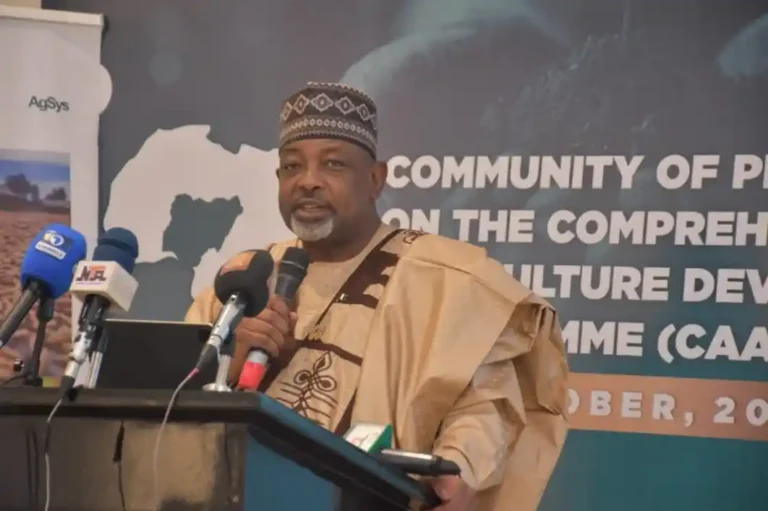
Nigeria is stepping up efforts to implement the CAADP Kampala Declaration (2026–2036) as part of its plan to strengthen agriculture and food security. The Minister of Agriculture and Food Security, Senator Abubakar Kyari, announced this at the Community of Practice Summit on CAADP in Abuja, themed “From Kampala to Abuja: Transforming Agrifood Systems in Nigeria.”

He said the focus areas include sustainable food production, agro-industrialization, reducing post-harvest losses, and promoting intra-African agricultural trade to make Nigeria’s food systems more productive, resilient, and sustainable.

Senator Kyari stated that the Federal Government has rolled out several key initiatives to achieve these goals. “We are providing 2,000 tractors and establishing Special Agro-industrial Zones in states like Kaduna, Cross Rivers, and Ogun,” he said.

The Minister explained that these projects, with investments totaling $538.05 million, are expected to generate $1 billion by 2027. According to him, these efforts are designed to drive agro-industrialization and create new employment opportunities across the agricultural value chain.

He also mentioned the Nigeria Postharvest Systems Transformation Program (NiPHaST), which aims to tackle the N3.5 trillion in annual postharvest inefficiencies. The program focuses on improving value chains and strengthening food sovereignty to ensure better food security outcomes. To guide and monitor progress, an Agricultural Sector Working Group has been established. This group includes research institutions, private and public sector partners, NGOs, and civil society organizations to promote good governance, share best practices, and ensure accountability.

“The collaboration between federal and state governments is vital for achieving the transformation envisioned in the Kampala Declaration,” Senator Kyari said. He appealed to Commissioners for Agriculture, Livestock, Fisheries, and Rural Development, noting that “you hold a crucial role in shaping the direction and impact of our agricultural policies and programs at the sub-regional level. Our challenges require not only innovative solutions but also coordinated action and unwavering commitment at every level of government.”

Key stakeholders also shared their views on the transformative role of CAADP in Nigeria. Dr. Marcus Ogunbiyi, Permanent Secretary of the Ministry, said CAADP has delivered positive results in aligning national and continental goals.

Dr. Karen Yansen of German Cooperation added that the Kampala Declaration promotes evidence-based governance, integrated monitoring, inclusivity, and equity. Minister Kyari reaffirmed the federal government’s support for coordinated efforts to build robust, equitable, and sustainable food systems across Nigeria’s regions.

Niger state to benefit from $3.5m IFAD grant with 19000 farmers

The Federal Government and the International Fund for Agricultural Development (IFAD) Value Chain Development Programme (VCDP) mission team have expressed satisfaction with the remarkable progress recorded in Niger State under the ongoing agricultural support scheme.

Members of the mission team shared their impressions during a courtesy visit to the Niger State Governor at the Government House, Minna.

The Country Director of IFAD VCDP, Mrs. Dede Ekoue, commended the state’s transformation in agriculture, attributing the success to the commitment of the “farmer governor.” She emphasized that Governor Umaru Bago’s dedication to empowering smallholder farmers has been vital to the achievements of IFAD VCDP in Niger State.

Mrs. Ekoue said, “The agricultural transformation happening in Niger State is a model that extends beyond Africa. The ripple effects of these achievements are being felt globally.” She added that the program’s success was possible through the cooperation of the state government, benefiting farmers, and the business community. According to her, more than 55,000 farmers and agro-processors are currently being supported under the scheme, and the impressive results will encourage IFAD to invest more funds in Nigeria’s agricultural sector.

The National Programme Coordinator of IFAD VCDP, Dr. Fatima Aliyu, explained that the program is operational across nine Local Government Areas in Niger State. She said intensive training has been organized for youth in areas like mechanization, agro fabrication, production, and refresher courses to strengthen their skills.

Dr. Aliyu also disclosed that Niger State is among the pilot states where VCDP is working with financial institutions to develop agricultural products that offer agro-processor loans. She said, “Niger State is one of the flagship states of VCDP, and this is why it is among the only two states to benefit from the $3.5 million grant for the Agricultural Smallholder Adaptation Project (ASAP). The project aims to tackle climate change, and Niger State will have 19,000 beneficiaries.”

She further stated that the beneficiaries will also receive training in Good Agricultural Practices (GAP) and financial inclusion initiatives to strengthen their productivity and resilience.

The mission’s technical lead, Mrs. Adeline Muheebwa, highlighted that consultants and technical specialists from eight different countries visited Niger State to assess the program’s success. She noted, “What we have seen in Niger State is remarkable. The progress made so far reflects strong political will and the unwavering support of the farmer governor.”

Permanent Secretary of the Niger State Ministry of Agriculture, Dr. Mathew Ahmed, also praised the efforts of IFAD VCDP. He stated that the program has been running in the state for over 11 years with visible achievements in agricultural transformation. “IFAD VCDP has helped Niger State stay on the right track. The collaboration has brought measurable progress to the state’s agricultural agenda,” he said.

Representing the Governor, Secretary to the State Government, Abubakar Usman, appreciated the visiting assessment team. He assured that the state government will continue to partner with IFAD and create an enabling environment for the program to thrive. Usman added that the state values the partnerships and collaborations received from both local and international development partners.

He said, “We have a deliberate policy to fully utilize our vast natural resources and human capital to make agriculture a success. Agriculture is the main pillar of our new Niger agenda.”

The SSG reaffirmed that the administration is committed to implementing all recommendations made by the IFAD mission team after its review. He also assured that Niger State will continue to fulfill all counterpart funding obligations to ensure more farmers benefit from the agricultural development initiatives.

Enugu launches free VSAT training program 2025

0

The Enugu State Government has announced the commencement of the Enugu VSAT Training Program 2025, a free capacity-building initiative designed to equip young people and professionals with hands-on technical skills in satellite communications, installation, and broadband (VSAT) technology.

The program, organized in partnership with the Nigerian Communications Satellite Limited (NIGCOMSAT) and the Office of Digital Economy & MSMEs, aims to create a digitally skilled workforce in Enugu State. According to the organizers, “Selected participants will receive free training, mentorship, and certification endorsed by NIGCOMSAT.”

VSAT, which stands for Very Small Aperture Terminal, is a satellite-based communication system that provides internet access and data services in areas where regular infrastructure is unavailable or unreliable. The program will run for seven days, offering practical lessons on VSAT installation, configuration, maintenance, troubleshooting, and real-world telecom applications.

Officials say the initiative supports the digital economy vision of His Excellency, Dr. Peter Ndubuisi Mbah, as part of efforts to position Enugu as a hub for ICT growth. “This training is part of our ongoing commitment to empower residents with digital and technical skills that open new career and entrepreneurship opportunities,” the Office of Digital Economy & MSMEs stated.

The Enugu VSAT Training Program 2025 offers participants access to high-demand skills that align with Nigeria’s growing broadband and telecom sector. Applicants must be between 18 and 35 years old, reside in Enugu State, and hold at least an SSCE qualification. A background or interest in ICT, engineering, or telecoms is also required.

Interested individuals are encouraged to apply through the official website www.enugusme.en.gov.ng/evsat.

CCT card distribution continues in Adamawa State

The Conditional Cash Transfer (CCT) cards distribution has continued in Michika Local Government Area of Adamawa State under the Adamawa State AGILE Project. The two-day exercise was part of the ongoing effort to support students and their caregivers through the government’s education support program.

Speaking during the event, the State Project Coordinator, Engr. Siddiki Liman, who was represented by the Monitoring and Evaluation Officer, Mr. Hyelda Bathon Ati, reaffirmed the project’s commitment to ensuring that all eligible students receive their CCT ATM cards. He urged caregivers to use the financial support strictly for the purpose of improving their children’s education and welfare.

Mr. Ati stated, “This initiative is designed to reduce financial barriers that keep children out of school. We want to make sure the funds are used properly to achieve this goal.”

Beneficiaries and caregivers who received the Conditional Cash Transfer cards expressed their gratitude, saying that the AGILE Project has encouraged parents to keep their children in school. Many thanked the Executive Governor of Adamawa State for ensuring that the state remains among the benefiting states of the program, describing the support as timely and impactful for low-income families.

Katsina secures $8m SABER credit for ICT and business reforms

Katsina State has secured an $8 million credit under the State Action on Business Enabling Reforms (SABER) program after meeting key Disbursement Linked Indicators (DLIs) set by the Federal Government of Nigeria in partnership with the World Bank.

Governor Dikko Umaru Radda, PhD, disclosed this during the Nigerian Communications Commission (NCC) Business Roundtable on Improving Investment in Broadband Connectivity and Safeguarding Critical National Information Infrastructure. He reaffirmed his administration’s commitment to ICT-driven governance and economic transformation, emphasizing that the SABER credit highlights Katsina’s strong performance in reform areas crucial to economic development.

According to Governor Radda, “The SABER credit recognizes our progress in ICT and digital infrastructure, investment climate reforms, and land administration. We have implemented a Right-of-Way charges waiver to attract broadband investment and improve connectivity across the state.”

He further explained that the state has streamlined business registration and investment approval processes through digital systems, making it easier for investors to operate. In land administration, technology-enabled reforms have been introduced to enhance transparency, efficiency, and access to land services.

“These achievements underscore our belief that technology and digital governance are key to reform, service delivery, and economic growth,” the Governor stated.

With the $8 million credit, Katsina State aims to strengthen its digital backbone, foster private sector partnerships, and accelerate its goal of becoming a technology-driven, knowledge-based economy. This initiative aligns with ongoing efforts to expand broadband access and boost investor confidence in the state.