Home Blog Page 418

Chinese community donates N5m food relief to Lagos families

The Chinese community in Lagos on Monday donated food and household items worth N5 million to 10 low-income families in celebration of the 76th anniversary of the founding of the People’s Republic of China.

The donation also marked the Mid-Autumn Festival and Nigeria’s 65th Independence Anniversary. The event, coordinated by the Chinese Consulate in Lagos, was held in partnership with the China Industrial and Commercial Enterprise Association and the Association of Chinese Women in Nigeria.

Beneficiaries of the outreach received rice, noodles, semovita, cassava flour, spaghetti, groundnut oil, toiletries, and other essential household items to cushion the effects of the current economic hardship in the country.

Speaking at the presentation, the Chinese Consul General in Lagos, Yan Yuqing, said the gesture reflected China’s solidarity with Nigerians and its growing commitment to supporting local communities through humanitarian efforts.

Mr Yuqing said the donation was part of an ongoing charity initiative tagged “Together Fight Against Hunger,” aimed at supporting indigent families and strengthening social ties between China and Nigeria.

“Since the inception of this programme, we have been privileged to support over 300 families, providing not just food, but hope, dignity, and a reminder that no one walks alone in times of need. As we extend our hands to these families, we illuminate the path of friendship between China and Nigeria. This partnership goes beyond government-to-government relations; it reflects people-to-people cooperation,” he said.

He reaffirmed the Chinese government’s commitment to deepening the long-standing diplomatic and economic relations between both nations, adding that such humanitarian gestures show the human side of international cooperation.

Also speaking, the chairman of the China Industrial and Commercial Enterprise Association, Eric Ni, said the group had made it a tradition to give back to Nigerian society through various support initiatives, including donations and scholarships.

“Today, we are delighted to distribute food items worth N500,000 each to 10 families. This is not the first time. We have supported over 300 families of low-income earners and more than 5,000 students through scholarships,” he said.

He described hunger and poverty as global issues that required collective action, noting that the Chinese community in Nigeria would continue to work closely with government efforts to reduce hardship and promote inclusive development.

“Hunger knows no boundaries. This project reflects our collective commitment to the wellbeing of the society we are proud to be part of. Nigeria has been home to many of us for years, and the warmth and hospitality of the Nigerian people continue to inspire us to support,” Mr Ni stated.

Adviser to the Association of Chinese Women in Nigeria, Loi Eng-Koon, said the donation also represented an expression of gratitude to Nigerians for their hospitality and cooperation with Chinese residents over the years.

“As Chinese women living and thriving in Nigeria, we understand the importance of building bridges between cultures. We have been warmly received by this beautiful nation, and this is our way of giving back and saying thank you. True celebration is not complete until we have shared our blessings with those around us. Let us continue to work together, hand in hand, to build a community where everyone can thrive,” she said.

Speaking on behalf of the beneficiaries, Babatunde Kolawole expressed appreciation to the Chinese community for their support, describing the gesture as timely considering the current high cost of living and rising inflation in the country.

“This is a wonderful gesture extended to us. Considering the economic situation of the country, many people cannot afford these items. We say thank you to the Chinese community. We really appreciate,” he said.

Advertisement

ATBU Bauchi announces 2025 recruitment for academic and non-teaching staff

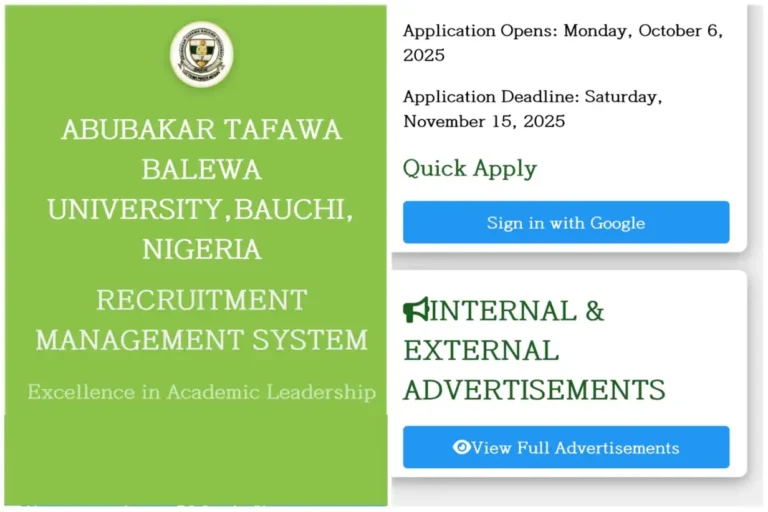
Abubakar Tafawa Balewa University (ATBU), Bauchi has announced the opening of its 2025 academic and non-teaching staff vacancies through internal and external advertisements. The university management called on qualified applicants to apply for several academic and laboratory positions across its faculties and departments.

In a statement released by the institution, ATBU stated that the available academic positions include Senior Lecturer, Lecturer I, Lecturer II, and Assistant Lecturer. The non-teaching vacancies are for Laboratory Technologist I and Laboratory Technologist II. The university said the recruitment drive aims to strengthen its academic and research capacity in key fields.

The faculties and departments listed in the advertisement include the Faculty of Computing, which houses the Department of Computer Science, Software Engineering, Cyber Security, Artificial Intelligence, Information Technology, and Information System. The Faculty of Environmental Technology has openings in the Department of Architecture and Urban and Regional Planning, while the Faculty of Science is recruiting for departments such as Biochemistry, Microbiology, Botany, Zoology, Mathematics, Chemistry, and Physics.

Other openings are available in the Faculty of Veterinary Medicine, covering departments like Veterinary Anatomy, Veterinary Physiology and Biochemistry, Veterinary Pharmacology and Toxicology, Theriogenology and Production, Veterinary Microbiology, Veterinary Parasitology and Entomology, and Veterinary Pathology.

The Faculty of Clinical Sciences is also hiring for departments such as Internal Medicine, Surgery, Paediatrics, Obstetrics and Gynaecology, Community Medicine, Ophthalmology, Anaesthesia, Otorhinolaryngology, Orthopaedics, Radiology, and Psychiatry. Additional positions are open in the Faculty of Basic Clinical Sciences, Faculty of Basic Medical Sciences, and Faculty of Allied Medical Sciences. Departments in these faculties include Haematology, Histopathology, Medical Microbiology, Chemical Pathology, Clinical Pharmacology, Human Anatomy, Medical Biochemistry, Human Physiology, Nursing Science, and Public Health. The Dairy Research and Development Centre is also seeking qualified professionals.

According to the announcement, candidates are expected to possess a PhD or Master’s degree in the relevant field from a recognized university, with professional registration where applicable. Applicants must have between 3 and 12 years of cognate experience, depending on the position, along with evidence of scholarly publications and ICT proficiency.

The statement added that, “Interested candidates should apply online through the portal recruitment.atbu.edu.ng starting from Monday, October 6, 2025. Applicants are to create an account using the Sign in with Google option and submit an application letter, CV, and supporting documents.”

The management emphasized that each applicant can only apply for one position and must provide three referees, two of whom should attest to the applicant’s professional standing. The closing date for submission is six weeks from the date of publication, which is Saturday, November 15, 2025.

Aig-Imoukhuede Foundation launches cohort 5 of public leaders programme

0

The Aig-Imoukhuede Foundation has announced the start of the fifth cohort of the AIG Public Leaders Programme (PLP). This new class includes 72 public servants recognized for their exceptional leadership qualities and dedication to driving positive change within the public sector.

According to the foundation, participants will spend six months engaging with top faculty members from the Blavatnik School of Government. During this period, they will focus on strengthening their leadership and policy-making skills to improve governance and service delivery.

“These participants will apply their learnings by delivering targeted reform projects within their Ministries, Departments, and Agencies,” the statement read. The AIG PLP aims to build a new generation of capable and ethical public leaders committed to reform and innovation in governance.

The foundation added that through the AIG Public Leaders Programme, it has trained and empowered public servants across Africa, many of whom are now leading reforms and shaping a more efficient public sector. “We look forward to the transformative contributions of this cohort in building a public service that delivers lasting results for all,” it stated.

Katsina to host $10bn federal innovation hub, Gov Radda deepens digital ties

Katsina State Governor, Malam Dikko Umaru Radda, has reaffirmed his administration’s strong commitment to advancing digital transformation across the state, describing the Federal Government’s broadband and innovation agenda as “a defining step toward building a smarter and connected Nigeria.”

Governor Radda stated this on Monday during a visit to the Minister of Communications, Innovation, and Digital Economy, Dr. Bosun Tijani, in Abuja. The visit, according to the Governor, was aimed at deepening Katsina’s collaboration with the Federal Ministry on broadband expansion, digital infrastructure, and innovation development.

He said the visit was also to personally thank the Minister for his continuous support to Katsina. “When you were appointed Minister, you visited Katsina twice within your first month. That showed your sincerity and true passion for national development,” the Governor said. “Since then, I’ve followed your work closely and seen your genuine commitment to Nigeria’s digital and renewable agenda.”

Governor Radda described Dr. Tijani as a dependable partner and reaffirmed Katsina’s readiness to align fully with federal digital programmes. He explained that his administration has made ICT one of its major governance priorities. “We created a Directorate of ICT led by a young and competent professional, trained our workforce to be ICT-compliant, reduced paperwork, and advanced digital governance. Our Treasury Single Account (TSA) is already 85 percent completed,” he noted.

The Governor recalled the successful Katsina Tech Festival where young innovators were discovered and sponsored abroad for advanced training. He also revealed that the state has granted free Right-of-Way to broadband investors, which has improved internet connectivity across key institutions including the Government House, Secretariat, Assembly, hospitals, and ICT centers.

However, he emphasized the need to extend broadband to rural areas. “We have community committees in every ward, but they need reliable internet to connect with government programmes. That’s why we’re seeking your support to expand broadband to all local government areas,” he said.

Governor Radda also requested Katsina’s inclusion among states hosting National Innovation Hubs. “We’ve passed a State Digital Policy and created a Digital Economy Zone. Our goal is to make Katsina a northern hub for innovation,” he added.

The Governor pledged full cooperation and partnership with the Ministry, saying, “We’re ready to work together and even commit our own funds to make these projects succeed.”

In his remarks, Dr. Bosun Tijani commended Governor Radda for his proactive leadership and described Katsina as one of Nigeria’s most promising innovation states. “What many people don’t know is that Katsina came very close to producing the Director-General of one of our key digital agencies. That shows how connected your state is to our vision,” Dr. Tijani said.

He praised Katsina for granting free Right-of-Way to broadband investors, which encouraged private sector participation in internet expansion projects. Dr. Tijani announced that Katsina has been shortlisted among ten states selected to host new Federal Innovation Hubs. “This hub, worth about $10 billion, is one of the best designed so far. With your support, Insha’Allah, construction will begin before the end of next year,” he said.

He also revealed that five of the next 60 satellite-based internet sites under the Universal Service Provision Fund (USPF) will be deployed to Katsina. Governor Radda requested that one of the sites be connected to the new model schools in Katsina. The Minister immediately approved the idea, saying, “We’ll connect it next week through NICOMSAT to provide 24-hour internet access.”

Dr. Tijani further acknowledged the efforts of the Katsina ICT Directorate in supporting the Federal Government’s 3MTT (Three Million Technical Talent) programme. “We plan to scale up 3MTT training in Katsina so participants can later use the new innovation hub as their base,” he said.

He assured that Katsina remains a top priority for the Ministry, noting, “Your Excellency, Katsina has been a strong supporter of our programmes, and we will continue to partner closely with you.”

Also speaking, the Permanent Secretary of the Ministry, Dr. Faruk Yabo, thanked Governor Radda for the visit, saying several projects are already in the pipeline for Katsina. “Katsina is very dear to us. Not out of bias but merit. The plans are almost finalized; what’s left now is approval and funding, which the Minister has already prioritized,” he said.

He assured that the Ministry will continue to collaborate with Katsina to strengthen digital infrastructure, training, and inclusive innovation across all sectors.

In attendance were Heads of all parastatals under the Ministry of Communications, Innovation, and Digital Economy.

Governor Radda was accompanied on the visit by his Principal Private Secretary, Hon. Abdullahi Aliyu Turaji, the Special Adviser on Intergovernmental Affairs and Development Partners, Hajia Hadiza Maikudi, and Alhaji Shamsu Sule, a Board Member of the North West Development Commission.

Federal Polytechnic Ayede opens recruitment for teaching and non-teaching staff

Federal Polytechnic Ayede, Oyo State, has announced a new round of internal and external recruitment for both teaching and non-teaching staff positions. The institution, located at P.M.B. 4001, Ogbomoso, said in a statement from the Office of the Registrar that applications are now open from suitably qualified candidates who meet the specified requirements.

According to the announcement, the available teaching positions cover several schools within the polytechnic. These include the School of Agricultural Technology with openings in the Department of Agricultural Technology and the Department of Animal Health and Production Technology. The School of Environmental Technology is also recruiting for the Department of Estate Management and Valuation and the Department of Urban and Regional Planning.

In the School of Engineering Technology, the Department of Electrical/Electronic Engineering is inviting applications. The School of Management Sciences has vacancies in the Departments of Accountancy, Business Administration and Management, Public Administration, and Office Technology and Management. Additionally, the Department of General Studies is hiring for the Department of Languages (English Language/Communication Skills) and the Department of Social Sciences (Sociology/Psychology).

Other available academic roles are within the School of Science and Technology, which includes the Departments of Computer Science, Tourism and Management Studies, Science Laboratory Technology, Statistics, and Demography & Social Statistics. The teaching roles announced are for Chief Lecturer, Principal Lecturer, Senior Lecturer, Lecturer I, and Lecturer II.

The Registrar also disclosed that there are several openings for non-teaching staff. These include positions in the Registry Department such as Confidential Secretary III, Confidential Secretary II, and Senior Confidential Secretary. In the Bursary Department, the polytechnic is recruiting Senior Accountant, Senior Internal Auditor, and Procurement Officer II. The Medical Staff category has vacancies for Staff Nursing Officer, Senior Health Record Officer, and Chief Health Record Officer.

Other available roles are Assistant Lab Technician under the Laboratory Unit, Motor Driver/Mechanic II under the Transport Unit, Secretariat Assistant III under the Secretariat, and Assistant Craftsman under the Technical Unit.

The institution stated that “applicants must possess relevant academic qualifications from recognized institutions and hold NYSC discharge or exemption certificates where applicable.” It added that professional registration with recognized bodies, relevant post-qualification experience, and evidence of scholarly publications are required for certain positions. Computer literacy, administrative experience, and valid trade certifications are also mandatory for some roles.

Candidates are required to submit fifteen typewritten copies of their applications and curriculum vitae or visit career.federalpolyayede.edu.ng. The documents should include personal details, educational qualifications, professional memberships, work experience, and referee information. Referees are expected to send confidential reports directly to the Registrar.

“All applications must be submitted within six weeks from the date of this publication,” the announcement read, adding that only shortlisted applicants will be contacted.

Abia opens second batch teachers recruitment for Ohafia residents

The Abia State government has announced a new opportunity for additional teachers’ employment, specifically targeting indigenes of Ohafia Local Government Area who are willing to serve in rural communities.

According to an official statement, “I am directed to inform you of an opportunity for additional teachers employment in Abia State, specifically for those who are willing to be posted to rural areas and are indigenes of Ohafia L.G.A.” The notice emphasized that this exercise is part of the second batch of Governor Alex Otti’s initiative aimed at improving educational standards across the state.

The statement further explained that all interested individuals seeking employment as teachers must possess a minimum qualification of the National Certificate in Education (NCE). It added that only residents of Ohafia Local Government Area who are willing to teach in any school within the jurisdiction will be considered.

In outlining the application procedure, the notice stated, “All interested applicants should address their applications to the Executive Chairman of the Abia State Universal Basic Education Board (ASUBEB) through the Education Secretary, Ohafia Local Government Education Authority (LGEA).”

The submission deadline for the recruitment was also confirmed. Applicants are expected to submit their applications to the Education Secretary’s office within one week from the date of announcement. “Deadline date: Monday, 13th October 2025,” the notice stated.

Officials encouraged eligible candidates to seize the opportunity to contribute to quality education in Ohafia.

FG commits $538m to agro-Industrial processing zones

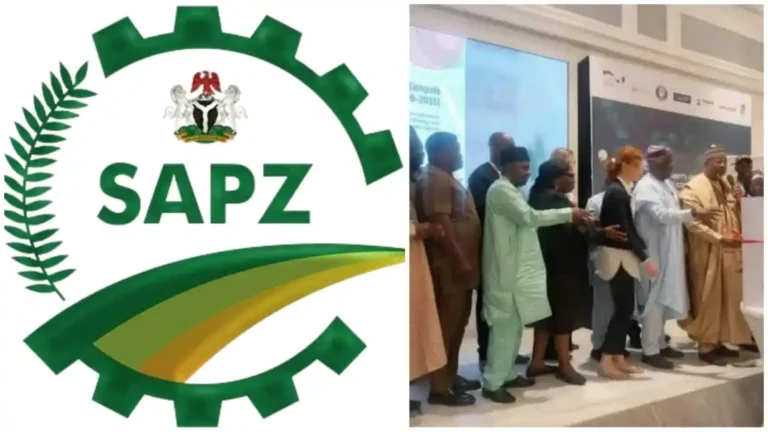
The Federal Government has announced a commitment of $538.05 million towards the establishment of Special Agro-Industrial Processing Zones (SAPZ) across the country, aimed at transforming Nigeria’s food systems and boosting agricultural productivity.

The Minister of Agriculture and Food Security, Abubakar Kyari, disclosed this on Monday in Abuja during the Community of Practice Summit on the Comprehensive Africa Agriculture Development Programme (CAADP).

Kyari said the investment is part of a broader strategy to make Nigeria’s food systems more productive, resilient, inclusive, and sustainable. According to him, the Federal Government, in partnership with the private sector, has already launched Special Agro-Industrial Processing Zone (SAPZ) projects in Kaduna, Cross River, and Ogun States, with more to follow.

“Alongside other interventions, the Federal Government has provided 2,000 tractors and related implements to boost agricultural production. We have also launched the Special Agro-Industrial Processing Zones in Kaduna, Cross River, and Ogun States, with others coming on board. Under this project, the country has committed substantial investments of $538.05 million, leveraging the private sector in the establishment of industrial hubs and agricultural transformation centres. The zones are projected to stimulate a total of $1 billion in investments by 2027,” he stated.

Kyari noted that the government’s initiatives aim to promote agricultural transformation and attract more private investment in the sector. He highlighted the creation of an Agricultural Sector Working Group comprising research institutions, development partners, the private sector, and civil society stakeholders to monitor progress, identify gaps, and promote accountability in agricultural development.

He added that Nigeria’s achievements in agriculture have been recognised by the African Union, noting that the country has made significant progress over the past decade in the biennial review of agricultural development.

Speaking on the Nigeria Postharvest Systems Transformation Programme, the minister explained that the initiative was recently presented at the African Food Systems Summit in Dakar and targets a reduction in annual post-harvest losses estimated at ₦3.5 trillion.

“At the recently concluded African Food Systems Summit in Dakar, I hosted a deal room with investors and other critical stakeholders on the Nigeria Postharvest Systems Transformation Programme (NiPHaST), which aims to reduce massive annual post-harvest inefficiencies valued at ₦3.5 trillion and strengthen value chains for national food security and sovereignty,” Kyari said.

He explained that these investments will lead to a more efficient, sustainable, and equitable food system that will improve farmers’ incomes, enhance livelihoods, reduce waste, and strengthen value chains. The initiative, he said, will contribute significantly to economic growth and food security in the country.

The minister noted that the SAPZs are designed to promote value addition, create employment, strengthen agricultural value chains, and ensure food security in line with Nigeria’s commitments to CAADP and the Malabo Declaration.

He also called for stronger collaboration between the federal and state governments, stressing that synergy and shared responsibility are key to achieving sustainable food security and resilient livelihoods. “The Federal Government stands ready to collaborate with all stakeholders to drive the reforms needed to build robust, equitable, and sustainable food systems across all regions,” Kyari added.

The Head of Development Cooperation, German Development Cooperation, Dr Karin Jansen, also spoke at the summit and reaffirmed Germany’s support for agricultural reforms in Nigeria and across Africa. She explained that the global project, Sustainable Agricultural Systems and Policies (AgSys), commissioned by the German Development Cooperation, supports reforms in nine partner countries across Africa and Asia, as well as at regional and global levels.

According to Jansen, the project seeks to strengthen sustainable agricultural transformation by connecting food security, climate action, and biodiversity conservation to ensure food systems operate within planetary boundaries. “It promotes the scaling up of local innovations, embedding successful practices into national and regional policies to bridge local priorities with global agendas and reinforce reform processes,” she said.

She added that AgSys engages civil society, women, and youth to promote inclusive transformation, while aligning financial contributions to create sustainable funding systems that support long-term agricultural resilience.

“At the continental level, the African Union’s Comprehensive Africa Agriculture Development Programme was updated in 2025 through the Kampala Declaration, which serves as a renewed commitment to driving productivity, food security, and sustainable food systems. The Kampala Agenda builds upon National Agriculture Investment Plans and the Biennial Review process, with 2025 serving as a transition year for AU institutions and member states to prepare for its rollout,” Jansen explained.

She noted that Germany, through the Federal Ministry for Economic Cooperation and Development (BMZ), has reaffirmed its partnership with the African Union on CAADP and the Kampala Agenda as central frameworks for agricultural transformation across Africa.

Support, she added, includes additional funding for the GIZ AgSys project, the deployment of experts through the Global Programme PeoPLE, and coordination with other development partners, including the Federal Ministry of Food and Agriculture’s Agricultural Policy Dialogue.

Also speaking, the Chairperson of the Coalition of NGOs in Agriculture and Sustainable Development, Rosemary Effiong, said stakeholders remain committed to partnering with the government and international organisations to strengthen agroecological practices and promote sustainable food systems.

Effiong stated that civil society groups will continue to advocate for the harmonisation of regional and continental trade policies in line with the CAADP Kampala Declaration. She also pledged support for the implementation of the National Agrifood System Investment Plan to drive inclusive and sustainable growth.

She called for stronger advocacy for increased agricultural budget allocation, timely fund releases, and effective utilisation of funds at all levels of government. Effiong further urged the promotion of homestead gardening in both rural and urban communities, as well as the inclusion of bio-fortification and nutrition-sensitive agriculture across Nigeria.

She emphasised the importance of inclusive social safety net programmes, improved rural infrastructure, and gender-responsive policies that ensure land access and increased farm inputs for women, youth, and persons with disabilities.

Effiong also highlighted the need for capacity building and the development of local seed banking systems, the promotion of Good Agricultural Practices (GAP), and increased knowledge of climate-resilient agriculture to protect livelihoods and ecosystems.

She called for the adoption of open data standards in agriculture and food systems, and the inclusion of non-state actors in government monitoring and evaluation systems to improve transparency and accountability.

Effiong further appealed for the integration of the CAADP Non-State Actors Group Nigeria into the development, implementation, monitoring, and evaluation of the 10-year Strategic Action Plan (2026–2035). She also urged the domestication of the CAADP Kampala Declaration across all 36 states and the Federal Capital Territory.

She stressed the importance of implementing the CAADP commitment to allocate at least 10 per cent of national, state, and local government budgets to agriculture, ensuring timely releases and improved performance.

Effiong emphasised that boosting rural infrastructure and services such as roads, irrigation, storage facilities, markets, and ICT access will help drive agricultural productivity. She also called for increased investment in extension services, credit access for women and youth, labour-saving technologies, post-harvest loss reduction, research and development, and climate-resilient agriculture.

Tinubu explains N200bn fund to boost small businesses and jobs

0

President Bola Ahmed Tinubu has explained the reason behind the creation of the ₦200 billion intervention fund for micro, small, and medium enterprises (MSMEs) and manufacturers, stating that the move became necessary to help boost competitiveness and address long-standing structural challenges affecting the sector.

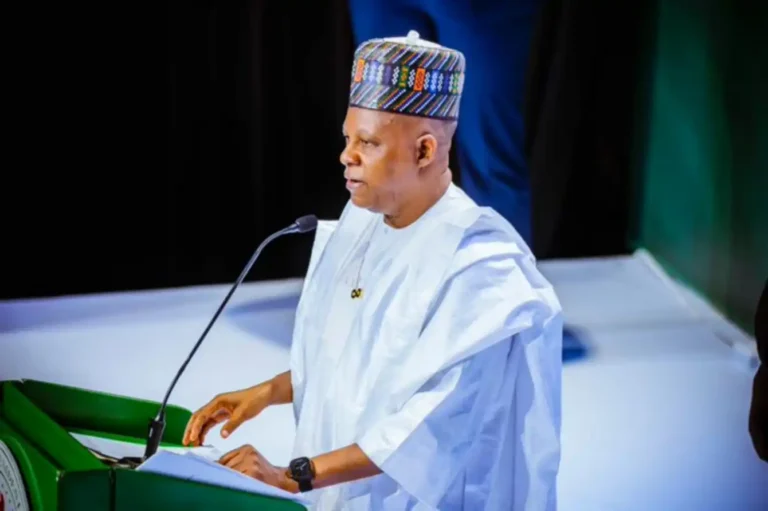
Speaking in Abuja on Monday at the opening ceremony of the 31st Nigerian Economic Summit, President Tinubu said the economic reforms led by his administration have begun to deliver measurable progress across several sectors, surpassing expectations from both international and local economic experts.

Represented by Vice President Kashim Shettima, the President said the decisions taken so far by his administration have been “guided by the pursuit of balance between economic logic and public expectation.”

He explained that the ₦200 billion intervention fund was designed to support MSMEs and manufacturers in overcoming operational challenges and enhancing productivity across the economy. According to him, the initiative is part of a wider plan to rekindle hope among vulnerable Nigerians, especially the unemployed youth, by giving them opportunities to access loans, grants, and equity investments.

“As a people-oriented government, our priority remains restoring hope to the unemployed, the poor, the excluded, and the vulnerable,” he said. “We have created pathways for young Nigerians to access grants, loans, and equity investments of up to 100,000 dollars to scale their enterprises, innovate, and build sustainable livelihoods.

“We established a ₦200 billion intervention fund to support micro, small, and medium enterprises and manufacturers, helping them overcome structural challenges and enhance competitiveness. Our expansion of digital micro-loan access has improved financial inclusion, empowering small businesses and stimulating community-level productivity. These efforts underline our commitment to an economy that works for all Nigerians.”

President Tinubu also attributed the visible progress in stabilising the economy and improving public finance to the patience and resilience of Nigerians. He emphasized that the stability of the foreign exchange market was the result of deliberate policy actions by his administration.

“As experts in the economy, you know more than the average citizen that the stability in our foreign exchange market is not accidental. It reflects deliberate choices guided by the same economic wisdom that gatherings such as this embody. Along with subsidy removal, these decisions have rescued our public finances, stabilised the economy, and reassured investors at home and abroad. We owe this progress to the sacrifices of Nigerians, whose patience and understanding have been the bedrock of our endurance. To them, I say: the better days we promised are already within sight,” the President stated.

Highlighting the nation’s growth performance, Tinubu said there was a consensus that the ongoing reforms had stabilised Nigeria’s macroeconomic environment. He disclosed that the economy expanded to ₦372.8 trillion in 2024, compared to ₦309.5 trillion in 2023.

According to him, total government revenue collection also rose from ₦19.9 trillion in 2023 to ₦25.2 trillion in 2024, and as of August 2025, the figure had reached ₦27.8 trillion, surpassing the revenue target of ₦18.32 trillion.

“These triumphs and projections are guided by the promise we have made to the nation—to grow Nigeria’s debt service-to-revenue ratio from 97 per cent, where we met it, to a sustainable level. Aside from the good news that this ratio has now reduced to less than 50 per cent, I am proud to share that this performance, in our early days in office, inspired Fitch to upgrade Nigeria’s sovereign rating to B with a stable outlook, and Moody’s to lift our issuer rating to B3 with a stable outlook. Both praised our improved economic foresight and clearer policy direction as their barometers,” Tinubu said.

On non-oil revenue, the President revealed that it had grown by 411 per cent year on year in August 2025, with Nigeria’s tax-to-GDP ratio now at 13.5 per cent, up from about 7 per cent a few years ago. He added that the country’s debt-to-GDP ratio now stands at 38.8 per cent, which remains below the 60 per cent ceiling set by the Fiscal Responsibility Act and well under the 70 per cent limits set by ECOWAS and the World Bank.

“These numbers speak volumes of a nation prepared for the present, just as they represent the promise we made to Nigerians,” he added.

Explaining why his administration increased the monthly federal allocations to states, President Tinubu said he understood from the beginning that “the secret to a successful federation lies in empowering each federating unit with the resources and autonomy to pursue development peculiar to its needs.”

He stressed that every reform introduced by his government was a product of careful reflection and the courage to act in the best interest of the nation. The President also commended economic experts and public policy stakeholders for supporting his administration through difficult times, noting that their insights, criticism, and collaboration have been instrumental to progress.

“Our collective goal is not comfort in divergence, but progress in convergence,” he said.

President Tinubu further assured that the four Tax Reform Acts he recently signed into law would boost domestic revenue mobilisation, reduce the nation’s dependence on oil, and make tax compliance easier.

“These reforms protect low-income earners, ensure fairness in corporate taxation, and strengthen digital innovation in tax administration. By promoting transparency and coordination among all tiers of government, we are laying the foundation for a fairer and more prosperous Nigeria,” he said.

Declaring the 31st Nigerian Economic Summit open, the President expressed optimism that the deliberations and recommendations from the summit would help shape policies for sustainable economic growth.

The Minister of Budget and Economic Planning, Senator Atiku Bagudu, also spoke at the event, commending the long-standing partnership between his ministry and the Nigerian Economic Summit Group (NESG). He said the collaboration had strengthened public and private sector cooperation over the years to enhance the nation’s economic development.

Bagudu noted that since May 2023, President Tinubu has introduced significant reforms aimed at improving productivity, easing the cost of living, and boosting domestic production under the Renewed Hope Agenda.

He added that the administration’s economic reform policies, including the ₦200 billion MSME intervention fund and other fiscal measures, were gradually setting the stage for inclusive growth and long-term stability.

The Chairman of NESG, Mr. Olaniyi Yusuf, in his remarks, urged the government to prioritise security as a key enabler of reforms. He stated that without security, it would be difficult to attract investment, encourage innovation, or create job opportunities for Nigerian youths.

“Tackling insecurity in rural and urban areas alike is vital to unlock productivity and restore confidence,” Yusuf said.

Vice Chairman of NESG, Mr. Boye Olusanya, also commended the Tinubu administration’s strategic reforms, describing them as bold and essential for achieving the target of building a trillion-dollar economy by 2030.

He noted that the stabilization of the foreign exchange market, the removal of fuel subsidies, and the new tax reforms were critical steps toward strengthening Nigeria’s economy. However, he cautioned that while the reforms were necessary for progress, they might not be enough to address all systemic challenges facing the nation.

Olusanya warned against any reversal of key policy decisions, saying such actions could stall economic growth and push the country backward. “Reversing the current reforms will retard growth and set the country on a backward trajectory in many folds,” he warned.

The summit was attended by several dignitaries, including the Coordinating Minister of Finance and the Economy, Mr. Wale Edun; Minister of Trade, Industry and Investment, Dr. Jumoke Oduwole; Minister of Agriculture and Food Security, Senator Abubakar Kyari; and Minister of Communications and Digital Economy, Mr. Bosun Tijjani.

Women Techsters sends emails to selected cohort 4.1 applicants

0

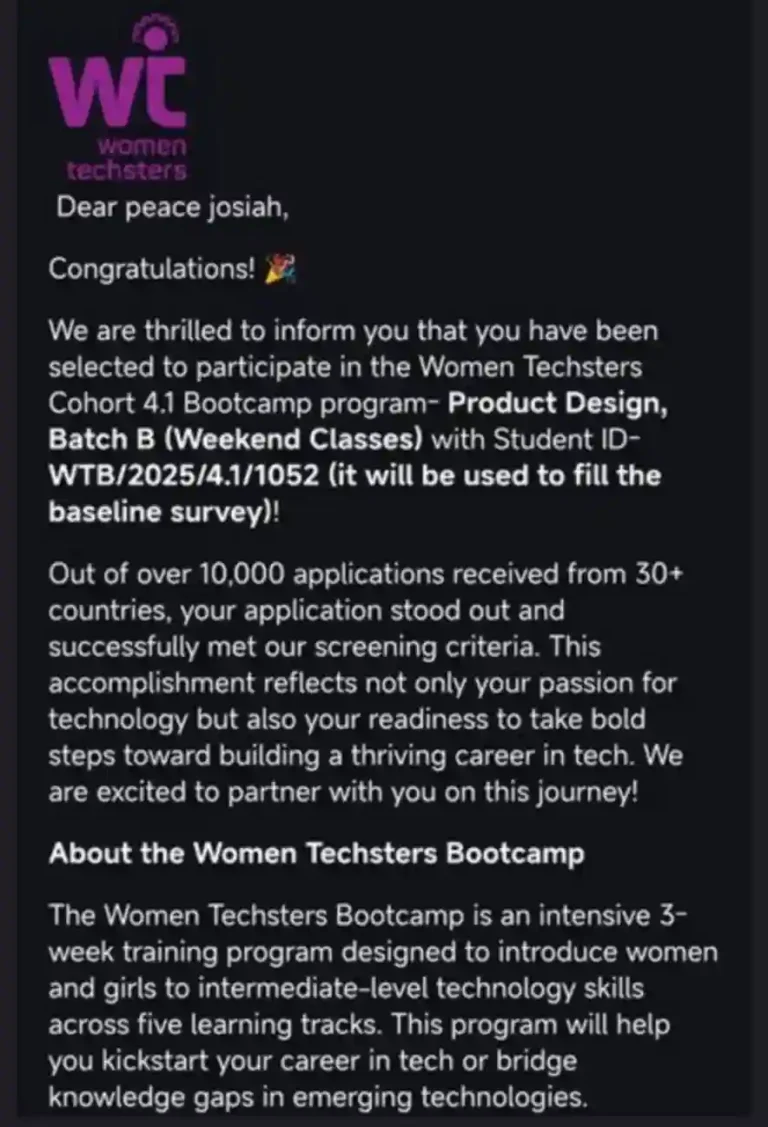
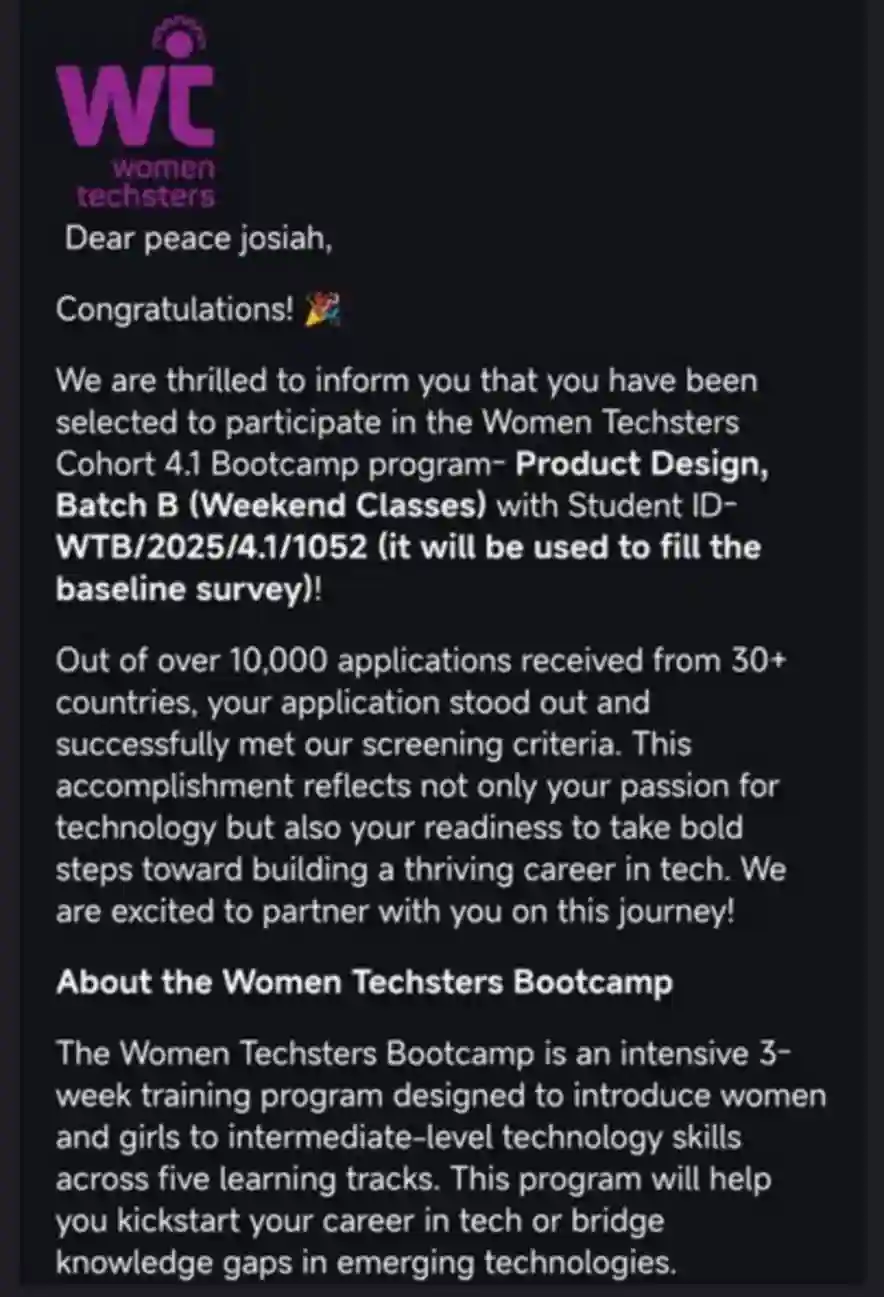
Women Techsters has started sending congratulatory emails to successful candidates selected for the Women Techsters Cohort 4.1 Bootcamp program. Applicants are advised to check their inboxes to know their application status.

According to the email received by successful candidates, it reads: “Dear (candidate), Congratulations! We are thrilled to inform you that you have been selected to participate in the Women Techsters Cohort 4.1 Bootcamp program – (Skill), (Batch) (Weekend Classes) with Student ID – WTB/2025/4.1/**** (it will be used to fill the baseline survey)!”

The message further stated, “Out of over 10,000 applications received from 30+ countries, your application stood out and successfully met our screening criteria. This accomplishment reflects not only your passion for technology but also your readiness to take bold steps toward building a thriving career in tech. We are excited to partner with you on this journey!”

The Women Techsters Bootcamp is a 3-week intensive training designed to teach women and girls intermediate-level technology skills. The program offers learning tracks in software development, product design, cybersecurity, product management, and data science. It aims to equip women with in-demand digital skills, boost employability, and help them explore global tech opportunities.

Attached below is screenshot proof:

Kwara gov approves 2025 promotion exam for TESCOM staff

Kwara State Governor AbdulRahman AbdulRazaq has approved the conduct of promotion examinations for all staff of the Kwara State Teaching Service Commission (TESCOM) who are due for the 2025 promotion exercise.

The Chairman of the Commission, Mallam Bello Tauheed Abubakar, disclosed this in Ilorin while addressing the management staff of the commission in his office. He said the approval reflects Governor AbdulRazaq’s continuous commitment to improving the welfare and motivation of teachers across the state’s education sector.

According to him, “This approval is another testimony to Governor AbdulRazaq’s dedication to the welfare of teachers and his support for quality education in Kwara State.”

Bello recalled that since assuming office in 2019, the governor has cash-backed promotions for the years 2015, 2016, and 2017, and has continued to do so for 2021, 2022, 2023, and 2024 respectively.

He urged the affected TESCOM staff to remain dedicated to their primary assignments to ensure effective service delivery, noting that the present administration will continue to prioritize their welfare.

Mallam Bello added that the date for the 2025 promotion examination will be communicated to the concerned staff soon.