Home Blog Page 420

PSC arrives Kano for 2025 Police Academy admission screening

0

The Police Service Commission (PSC) has deployed a strong delegation to Kano to oversee the screening and admission processes for the 2025 Police Academy (POLAC) exercise, which began today, Monday, October 6, 2025, in Wudil, Kano State.

Leading the delegation are Justice Paul Adamu Galumje, a retired Justice of the Supreme Court representing the Judiciary in the Commission, and DIG Taiwo Lakanu, fdc, who represents the Police and serves as Chairman of the PSC Standing Committee on Police Matters.

The Commission recently launched a whistleblowing policy on recruitment processes and vowed to ensure that offenders are prosecuted. According to the Commission, the ongoing POLAC admission screening will serve as the first test case for the new policy.

In a statement, the PSC warned that it will not hesitate to sanction any individual or group found violating the rules guiding the admission process. “The Commission will use the POLAC admission processes to test run this policy and will deal with any person or persons, no matter how highly placed, who fall victim of the dictates of the policy,” the statement read.

Chairman of the Commission, DIG Hashimu Argungu (rtd), mni, urged all participants in the screening to comply with the guidelines. He said, “I appeal to all parties participating in the ongoing POLAC admission screening to play by the rules to avoid facing the wrath of the Commission.”

DIG Argungu emphasized that the Commission is determined to reform police recruitment nationwide to ensure transparency and credibility. He explained that the goal is to make the Police proud of the candidates admitted into the Academy.

He further assured that the PSC will continue to involve all relevant stakeholders in building a clean and credible recruitment process. The Chairman also called on state governments to show greater interest in the ongoing admission exercise to protect their quota, stressing that the Commission remains committed to inclusivity in managing police personnel and will continue improving the system for better outcomes.

Advertisement

Germany, WFP, Care Nigeria to empower 6,389 Yobe households

The Federal Ministry for Economic Cooperation and Development (BMZ) of the German Government, in collaboration with the World Food Programme (WFP) and Care Nigeria, has announced plans to empower 6,389 households in Yobe State through a new initiative aimed at building resilience and promoting social cohesion.

Abatcha Abubakar, the Area Manager of Care Nigeria, disclosed this during a state-level stakeholders inception meeting on the Resilience and Social Cohesion (Peace) Project held in Damaturu, Yobe State.

According to Abubakar, the Resilience and Social Cohesion (Peace) Project is a joint initiative designed to restore essential services and rebuild livelihoods, driving sustainable transformation in the state. He explained that the households would receive training and empowerment support, including agricultural inputs, crop processing machines, and monthly stipends to improve their living standards.

He stated that the project is funded by the Federal Ministry for Economic Cooperation and Development (BMZ) of the German Government in partnership with the World Food Programme (WFP), UNICEF, and Care Nigeria. “The program aims to increase the productivity and income of 6,389 smallholder farmers and households across the agricultural value chain and enhance the economic status of 31,945 individuals,” Abubakar said.

He noted that the project targets five wards in Jakusko Local Government Area (LGA), focusing on improving dietary diversification and access to financial services through the Village Savings and Loan Association (VSLAs).

“We implement crop production initiatives where project participants are grouped together and provided with inputs to build their resilience and self-sufficiency. Additionally, we have an Income Generating Activity (IGA) aimed at improving household finances. Through IGAs, we form groups and equip them with agro-processing machines, enabling them to generate income beyond farming,” he said.

Abubakar added that the VSLAs serve as a global tool to empower women to save and contribute to a collective fund, providing mutual support. “The initiative aims to support 6,389 households through agricultural interventions. We’ll provide seeds for crops like maize, groundnuts, and rice, focusing on wet season farming. Additionally, we’ll promote vegetable gardening, encouraging participants to cultivate backyard gardens,” he added.

He emphasized that the intervention seeks to improve livelihoods and prevent households from falling into food insecurity. “Furthermore, selected households will receive a monthly stipend for six months. We’re also constructing warehouses to support these initiatives,” Abubakar said.

In his remark, Owen Maganga, the Head of World Food Programme, Damaturu Sub Office, Yobe State, said the WFP remains committed to supporting the livelihoods of farmers across the Northeastern region.

Chocolate City launches $1m fund for creative startups

Chocolate City Group has launched a $1 million founders fund targeting Nigeria’s creative startups during its 20th anniversary celebration in Lagos. The initiative, officially unveiled by the Minister of Arts, Culture, Tourism, and Creative Economy, Hannatu Musa Musawa, aims to provide both equity investment and operational mentorship for early-stage companies in music, film, and creative technology.

Speaking before over 500 creative industry stakeholders, international partners, and media representatives, the Minister commended the private sector-driven approach to strengthening the creative economy. “Private sector investment is critical for creative economy development. Nigeria’s creative industries can contribute significantly to economic diversification and youth employment, but entrepreneurs need partners who understand both the creative and business dimensions. This fund demonstrates the leadership we need from successful Nigerian companies,” Musawa stated.

The fund comes at a time when Nigeria’s creative economy is projected to reach $15 billion in value by 2025. Despite this growth, many entrepreneurs continue to face challenges in accessing traditional financing. Co-founders Audu Maikori and Paul Okeugo, who also celebrated their 50th birthdays during the event, designed the fund to fill the financing and mentorship gaps they encountered while building Chocolate City into one of Africa’s most successful independent entertainment brands.

“The reality on ground is that financial institutions struggle to understand creative businesses. Investors want immediate returns, so young entrepreneurs with genuine potential get stuck,” said Audu Maikori, Chairman of Chocolate City Group. “To solve this, we’re providing patient capital from people who have built sustainable creative businesses in this market. The fund targets companies that combine creative vision with business discipline.”

Vice-Chairman Paul Okeugo highlighted that financial support alone cannot ensure success. “Capital alone doesn’t build successful companies. We’re offering hands-on mentorship in rights management, contract negotiation, and sustainable business practices. These are the structures that allowed us to remain independent while competing globally,” he explained.

Co-Creation Hub (CCHub), Africa’s leading creative ecosystem enabler, has been selected as the programme and implementation partner for the initiative. CCHub will oversee the application process, perform due diligence, and manage portfolio support for funded startups. Managing Director of CCHub, Ojoma Ochai, explained, “We understand what creative entrepreneurs need to scale sustainably. This partnership combines Chocolate City’s industry knowledge with our startup development infrastructure to create comprehensive support for creative entrepreneurs.”

Managing Partner of Argentil Capital Management Limited, Gbenga Hassan, described the investment approach as a response to market inefficiencies. “Nigeria’s creative economy shows strong fundamentals with 63 per cent annual growth in music streaming revenue and increasing global market penetration. Nollywood alone produces over 2,500 films annually, making it the world’s second-largest film industry by volume, yet struggles to access structured financing. The Founders Fund addresses this real market inefficiency where viable businesses in both music and film cannot access appropriate financing,” he said.

Chocolate City, known for developing artists such as M.I. Abaga, Ice Prince, CKay, Blaqbonez, and Young Jonn, has maintained its independence while forming strategic partnerships with Warner Music. Applications for the founders fund will open later this month, focusing on startups with demonstrated traction, sustainable business models, and potential for job creation in Nigeria’s growing creative economy.

Presco begins first cohort of SIAT Academy graduate training program

0

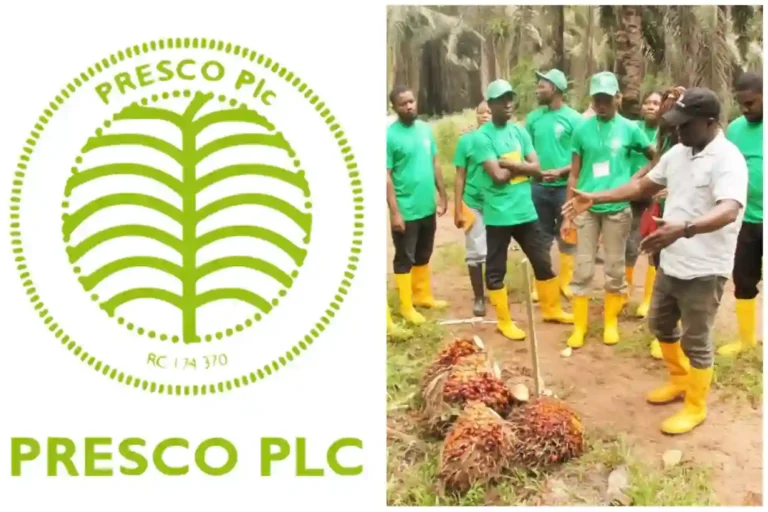
Presco Plc, Nigeria’s leading oil palm producer and a member of the SIAT Group, has announced the commencement of the first batch of its inaugural SIAT Academy Graduate Training Program. This flagship initiative marks a major step in building a strong leadership pipeline for the future of agribusiness in Nigeria and across West Africa.

The SIAT Academy, which was launched earlier this year, serves as a strategic development platform to enhance professional training and capacity building within the SIAT Group companies and the wider palm oil industry. Through leadership training and graduate development programs, the Academy aims to equip young professionals with practical and managerial skills needed to drive sustainable agricultural growth.

According to the company, the graduate training program is a core part of this initiative. It combines classroom learning, on-the-job training, and mentorship over a one-year period to prepare young African graduates for the realities of modern agriculture. The first batch of the inaugural cohort, which began in July 2025, includes 26 young professionals drawn from diverse backgrounds in agriculture, technology, and business support functions. After completing their induction phase, the trainees are now actively contributing to Presco’s operations in both Nigeria and Ghana.

“This programme is not just about training—it’s about transformation,” said Reinout Impens, Presco’s Chief Operating Officer. “We are investing in the future of African agribusiness by empowering young talent and fast-tracking them into management roles. Those who meet our performance benchmarks will transition into assistant managerial positions, beginning their leadership journey within the SIAT Group.”

The program underscores Presco’s broader commitment to economic development and workforce sustainability. It aligns with national efforts to boost job creation, skills transfer, and agricultural productivity. A second batch of trainees under the same cohort is expected to begin in September 2025, signaling Presco’s long-term investment in human capital development and agribusiness innovation.

By embedding the Academy’s training model across its operations in Nigeria and Ghana, Presco is positioning itself as a key player in shaping the next generation of agricultural leaders. The initiative also aims to encourage students and early-career professionals to see agriculture as a profitable and purpose-driven career path.

The SIAT Academy operates across Presco’s locations in Edo, Delta, and Rivers States in Nigeria, as well as in Ghana. It remains open to graduates from relevant fields who are passionate about contributing to the growth of agribusiness and advancing sustainable agriculture in Africa.

IFAD-SAP distributes gardening toolkits to 1,445 households in Kano

The Special Agro-Industrial Processing (SAP) Programme under the International Fund for Agricultural Development (IFAD) has commenced the distribution of home gardening toolkits to 1,445 households across eight local government areas in Kano State.

The initiative, which falls under the SAP Targeted Nutrition Support Programme, is aimed at empowering households, especially women and vulnerable groups, to cultivate nutrient-rich vegetables and crops within their homes. It is designed to promote food self-sufficiency, improved nutrition, and sustainable livelihoods across rural communities.

The benefiting local government areas include Kura, Garun-Mallam, Bebeji, Dambatta, Gezawa, Dawakin Tofa, Bichi, and Bagwai.

Speaking during the official launch in Kano, the State Project Coordinator (SPC) of SAP, Aminu Iliyasu, said the intervention was introduced to strengthen household food production, reduce reliance on external food sources, and enhance local economic stability.

“These toolkits will enable families to grow vegetables and small-scale crops suited to their local environment. This will not only cut household food costs but also allow them to sell surplus produce for additional income,” he said.

He explained that the distribution is part of a broader plan to reduce the effects of rising food prices and shortages while improving dietary diversity in rural areas. According to him, supporting home gardening aligns with Nigeria’s agricultural development goals, as it creates opportunities for economic resilience and rural empowerment.

In his remarks, the Kano State Commissioner for Agriculture and Natural Resources, Dr Danjuma Mahmoud, described the programme as a transformative step in repositioning agriculture as a key driver of rural development and economic growth.

Represented by the Ministry’s Permanent Secretary, Bashir Sanusi, the Commissioner commended SAP’s focus on women and youth, saying it supports the agricultural vision of Governor Abba Kabir Yusuf’s administration.

He further mentioned other ongoing agricultural initiatives in the state, such as livestock distribution, mechanized farming support, and the recruitment of over 1,000 young agricultural extension workers.

The SAP initiative is jointly implemented by the Federal Government of Nigeria, the Islamic Development Bank (IsDB), IFAD, state governments, private sector stakeholders, and local communities. It aims to boost household food security, reduce malnutrition, and stimulate local economies through materials sourced from community-based suppliers.

TRCN raises alarm over shortage Of qualified teachers

0

The Teachers Registration Council of Nigeria, TRCN, has expressed concern over the growing shortage of qualified teachers across the country, describing it as one of the major causes of the declining standard of education in Nigeria.

The Chief Executive Officer of the Council, Dr Ronke Soyombo, made this known on Monday during an interview on Channels Television’s programme, ‘The Morning Brief’, which was held to mark the 2025 World Teachers Day.

Speaking on the theme of this year’s celebration, ‘Recasting Teaching As A Collaborative Profession’, Dr Soyombo noted that the challenge lies not only in the number of unqualified teachers but also in the fact that some individuals who have a genuine passion for teaching cannot join the profession because they lack the required qualifications.

“There are many unqualified teachers in the profession. We have those teaching in classrooms but don’t have the teaching qualifications, particularly in private schools,” she said.

Dr Soyombo further explained that having a certificate alone is not enough to make one an effective teacher. “Again, it is one thing for you to say you have been to teacher’s college, and it is another thing to be able to break it down to the level of the students to soothe their specific needs. This challenge has to be addressed, and as soon as we have the accelerated programme, that is going to bring a lot of teachers in, because they don’t want to come to public schools. And what is stopping them is that they don’t have education degrees,” she added.

According to her, the TRCN is already taking steps to solve the problem by expanding access and encouraging more teachers to get certified. “We currently have about 1.4 million teachers registered with the TRCN, and our target in the next two years is to get to 20 million. What we have done is to digitise our systems, so that more people can be able to register,” she said.

Dr Soyombo also highlighted the importance of teamwork among teachers, stating that collaboration improves learning outcomes. “Every teacher has a gift which is different from one person to another. But what we are propagating in education is for everybody to come together and plan lessons together. You might be three teachers teaching a particular year group, but if you come together and plan lessons together, you are bound to come up with something richer than when you work in isolation,” she stated.

Edo SUBEB announces clearance schedule for recruited teachers

The Edo State Universal Basic Education Board (SUBEB) has announced the clearance exercise for newly recruited teachers.

According to the Board, the clearance will take place from Monday, October 6 to Tuesday, October 7, 2025, at the Edo SUBEB Head Office, Block D, Ground Floor, Secretariat Building, Sapele Road, Benin City. The exercise will run daily from 8:00 a.m. to 4:00 p.m.

A statement from the Board said, “All newly recruited teachers are expected to appear with their original documents for verification.” Required documents include Primary 6 School Leaving Certificate, WAEC or NECO Certificate, highest qualifications, NYSC or exemption letter, birth certificate, local government of origin, change of name if any, valid means of identification, TRCN, and other professional certificates.

KASITDA opens Kano digital innovation hub accreditation 2025

0

The Kano State Information Technology Development Agency (KASITDA) has announced the official launch of the Kano Digital Innovation Hub (KDIH) Accreditation 2025. The agency is inviting all digital and innovation hubs operating across the state to register for accreditation aimed at strengthening Kano’s growing technology ecosystem.

According to KASITDA, the initiative is focused on “ensuring standards and driving innovation” among tech hubs, co-working spaces, startup incubators, and innovation centers. The agency stated that accredited hubs will gain “state recognition and visibility,” along with access to government-backed programs, networking opportunities, and compliance with state digital standards.

“The Kano Digital Innovation Hub Accreditation seeks to promote excellence and recognize credible hubs that drive meaningful impact in technology, entrepreneurship, and digital skills development,” the statement read. KASITDA emphasized that the program will serve as a foundation for growth, collaboration, and investment in the state’s digital economy.

Eligible applicants include tech hubs, innovation centers, co-working spaces, and startup incubators or accelerators. Interested enterprises are required to complete the accreditation form available via the link https://kasitda.ng/kano-digital-hubs-accreditation/, undergo screening and assessment, and then receive their accreditation status.

KASITDA noted that submission of an application does not guarantee accreditation. The agency also announced that the deadline for submission is October 31, 2025, urging all qualified hubs to register early to be part of Kano’s digital transformation drive.

FG’s new agricultural curriculum to boost food security, youth interest

The Federal Government has introduced major reforms aimed at transforming agricultural education and tackling food security challenges across Nigeria. The Federal Ministries of Education and Agriculture and Food Security jointly announced the new initiatives designed to modernise agricultural curricula, attract young Nigerians, and align training with President Bola Ahmed Tinubu’s Renewed Hope Agenda for a technology-driven agricultural sector.

During the official presentation of the new Agricultural Curriculum Framework in Abuja, the Minister of Education, Dr. Maruf Tunji Alausa, CON, described the initiative as a significant milestone in repositioning agriculture as a foundation of national development. He highlighted that the new framework will bridge the gap between education and industry needs, ensuring that young people are prepared for opportunities in modern agriculture.

Dr. Alausa expressed concern over the continuous decline in enrolment into agricultural degree programmes in tertiary institutions despite Nigeria’s substantial investment in the sector. He pointed out that according to the 2024 UTME statistics on applications and admissions, 47.92 percent of the allocated admissions were left unutilised. He noted that while there are thousands of open slots in agricultural courses each year, only a small portion are filled, posing a serious threat to Nigeria’s long-term food security and economic sustainability.

“Agriculture is a major national priority, but enrolment in agriculture in higher institutions is dropping,” he said. “In the last three years, there have been thousands of open slots in agriculture, but only a fraction have been taken. This is a serious gap, especially in an area that should ensure food security for Nigeria and make the country an export hub for agricultural products.”

He compared the low enrolment in higher institutions with the growing interest in vocational and technical agricultural training across the country. “Out of over 900,000 TVET applications received recently, more than 210,000 were for livestock farming alone, while agriculture overall ranked close to garment making, which recorded over 260,000 applicants,” the Minister explained. “This shows that young Nigerians are eager to gain practical agricultural skills, but the outdated tertiary curriculum has not kept pace with modern realities.”

Dr. Alausa reaffirmed the Ministry’s determination to align agricultural education with market demands and emerging opportunities. “That’s why the Ministry of Education and state governments have agreed to modernise the curriculum to meet the needs of modern agricultural education,” he said. “Under President Bola Ahmed Tinubu’s Renewed Hope Agenda, the government has already begun creating Special Agricultural Processing and Production Zones to add value and create new value chains that will employ hundreds of thousands of Nigerians.”

The Minister also cited the Republic of Benin’s cotton processing model, located near Borgu in Niger State, as an example of how value addition can empower youth and boost economic growth. “Benin moved from earning $500 million in raw cotton exports to $12 billion in processed cotton products, employing over 25,000 young people. Nigeria will replicate this success through curriculum reform and practical agricultural education that supports our production zones and export diversification goals,” he said.

Dr. Alausa emphasised that the reformed agricultural curriculum will promote innovation, sustainable farming, and entrepreneurship, ensuring that students acquire hands-on experience in crop production, livestock management, and agri-business development. He added that modern technology, climate-smart farming, and agritech innovation will become central components of agricultural education across all levels.

Also speaking at the event, the Minister of State for Agriculture and Food Security, Senator Dr. Aliyu Sabi Abdullahi, reiterated the importance of aligning educational programmes with Nigeria’s food sovereignty goals. He said that achieving food security requires a comprehensive overhaul of agricultural education to produce graduates with practical skills and innovative ideas.

“As Nigeria seeks to diversify, we need more people engaged in agricultural enterprise,” Senator Abdullahi stated. “Food security cannot be achieved without aligning our education and training systems with national priorities. Our curriculum must equip graduates not just with theoretical knowledge but with the practical skills and innovation needed to drive agricultural transformation.”

The newly developed Agricultural Curriculum Framework, jointly prepared by the Federal Ministry of Education and the Federal Ministry of Agriculture and Food Security, provides a roadmap for modernising agricultural education. It focuses on strengthening technical and vocational training, integrating global best practices, and supporting national efforts to boost youth employment and economic diversification.

The framework also aims to attract young Nigerians into agriculture by introducing practical modules, internship programmes, and partnerships with agribusinesses. It will promote collaboration between universities, polytechnics, and agricultural research institutes to ensure that graduates are prepared for the demands of the agricultural economy.

The Federal Ministry of Education reaffirmed its commitment to collaborating with all stakeholders, including state governments, universities, and private sector actors, to ensure that the revised curriculum delivers modern, inclusive, and industry-relevant agricultural training at all educational levels.

Officials at the event noted that the reforms would help Nigeria reduce food imports, increase local production, and create jobs for millions of young people. The integration of modern technology and agribusiness into education is expected to drive national growth and make agriculture more attractive to the younger generation, strengthening Nigeria’s food security and export potential.

Ekiti Gov rewards teachers with N46m, approves retirement age of 65

Ekiti State Governor, Mr Biodun Oyebanji, has approved the immediate extension of the retirement age of teachers in the state from 60 to 65 years, while the service year has been raised from 35 to 40 years.

The Governor also rewarded outstanding teachers in the state with cash gifts amounting to N46 million and approved the upward review of science teachers’ and heads of department allowances. He further directed the immediate payment of the 2019 leave bonus arrears to motivate teachers and enhance their welfare.

Governor Oyebanji made these announcements on Sunday during the 2025 World Teachers’ Day celebration held at the Ekiti Parapo Pavilion in Ado Ekiti. The event, which was attended by over 5,000 teachers from across the state, was filled with songs, dance, and appreciation from teachers who celebrated the Governor’s teacher-friendly policies.

In his address, the Governor described teachers as the “foundation upon which the future of the state is built” and commended their contributions to education and development. He said the decision to extend the retirement age was part of his administration’s commitment to repositioning the education sector and retaining competent, experienced professionals in the system.

According to him, “I have heard your yearnings with respect to the mandatory age for retirement, and this has been approved as recommended but only for able and willing teachers.”

Governor Oyebanji explained that a committee would be set up to oversee the extension process and ensure that only active and capable teachers benefit from the new policy. He added that the move aligns with his administration’s shared prosperity agenda, aimed at ensuring better living conditions and professional satisfaction for workers in the education sector.

He assured that his government would continue to prioritize teachers’ welfare, create an enabling environment for teaching and learning, and strengthen educational institutions across Ekiti State.

While addressing the crowd, the Governor also revealed plans to seek re-election, stating that his administration’s achievements and the continued support of the people would drive him to run for a second term.

He said, “Let me respond to the request by the TUC Chairman. I have been told now that the 2019 leave bonus was paid yesterday and you will start receiving the alert by tomorrow. On the issue of science and head of departments’ allowances, I know that the Head of Service is doing the review of the allowances and I have instructed her to bring it by next week for approval.”

“My dear friends, this will be the only opportunity to meet in a group like this before the next governorship election. I therefore want to officially inform you that I will be seeking a re-election into the office of the Governor for a second term. I have been greatly encouraged by the overwhelming goodwill, enthusiasm and support that you have shown me. I want to assure you that, for you, it will always get better. I am resolutely committed to my pact with you and all Ekiti workers. I therefore solicit for your sustained support and prayers going forward,” Oyebanji stated.

The Governor emphasized that the decisions taken were not only to reward dedication but also to strengthen the education system in Ekiti State, making it more competitive and efficient.

Earlier in her address, the Commissioner for Education, Dr (Mrs) Olabimpe Aderiye, expressed her appreciation to Governor Oyebanji for his continued efforts in improving the education sector and ensuring teachers’ welfare. She praised the Governor for policies that had positively impacted teachers and students across the state.

The Commissioner highlighted several initiatives of the Oyebanji-led administration, including the release of over N1.6 billion as running grants to schools in the last three years, payment of more than N6.2 billion as Universal Basic Education Commission (UBEC) counterpart funding for the renovation of schools, and payment of over N1.5 billion for WAEC fees during the Governor’s tenure. She also mentioned the prompt payment of exam fees for placement, BECE, and SS2 students, noting that these actions demonstrated the administration’s commitment to quality education.

In separate goodwill messages, the National President of the Academic Staff Union of Secondary Schools (ASUSS), Comrade Sola Adigun; the representative of the Nigeria Union of Teachers (NUT), Mr Lateef Adesiyan; and the Ekiti State NUT Chairman, Comrade Adedeji Egbeyemi, all commended Governor Oyebanji for his unwavering support for teachers and the education sector.

They acknowledged his achievements, which include the sustenance of free and compulsory education in the state, appointment of retired teachers into political offices, massive renovation of schools, approval of career progression for graduate teachers, upward review of gratuities for retired educators, and employment of 1,500 primary and 2,500 secondary school teachers.

Comrade Adigun described the Governor as “a true friend of teachers whose leadership has brought renewed confidence to the profession,” while Adesiyan urged the teachers to continue supporting the Governor’s vision for education.

The event also featured cultural displays, songs, and award presentations to teachers recognized for their dedication and excellence. The Governor personally handed out cash prizes to the outstanding teachers, reaffirming his administration’s commitment to promoting hard work and rewarding excellence.

The 2025 World Teachers’ Day celebration was attended by top government officials, including the Deputy Governor, Chief (Mrs) Monisade Afuye; the Speaker of the Ekiti State House of Assembly, Rt. Hon. Adeoye Aribasoye; the Secretary to the State Government, Prof. Habibat Adubiaro; the Head of Service, Dr (Mrs) Folakemi Olomojobi; the Chief of Staff, Mr Oyeniyi Adebayo; members of the State Executive Council; and several lawmakers.

The Governor’s announcement on extending the retirement age and service years of teachers is expected to have a significant impact on human capital development in the state. Many education stakeholders believe the policy will help retain experienced teachers, strengthen classroom delivery, and improve the overall performance of students in Ekiti schools.

With the new policy, the state government hopes to build a stronger education workforce capable of driving growth and supporting innovation within the system. Analysts have described the move as a strategic step toward reducing the shortage of qualified teachers and improving the quality of education in Ekiti State.

Governor Oyebanji’s actions during the Teachers’ Day celebration have been widely received as a major boost to the morale of teachers and a demonstration of the government’s dedication to quality education, job stability, and welfare improvement across the state.