Home Blog Page 424

Nigeria ranked third in Africa for USAID funding, receives $876 in 2024

Nigeria has become the third-largest recipient of development assistance from the United States Agency for International Development (USAID) in Africa, securing a total of $876 million in 2024. This information was revealed in the Africa Sustainable Development Report 2025, jointly prepared by the African Union Commission, the United Nations Economic Commission for Africa, the African Development Bank, and the United Nations Development Programme.

According to the report, the Democratic Republic of Congo topped the list with $1.3 billion, followed by Ethiopia with $1.25 billion. Nigeria came third, ahead of South Sudan, which received $830 million; Kenya with $824 million; Mozambique with $756 million; and Sudan with $694 million.

Despite receiving one of the highest allocations in Africa, the report noted that Nigeria’s aid accounted for only 0.21 percent of its Gross Domestic Product (GDP), the second-lowest ratio among the top ten beneficiaries. In contrast, South Sudan, which received a smaller total amount, recorded the highest aid-to-GDP ratio at 6.05 percent.

Overall, the top ten beneficiaries across Africa received a combined total of $8.1 billion in USAID funding in 2024, with the Democratic Republic of Congo and Ethiopia taking a significant portion.

The report also highlighted regional disparities in development financing, noting that East and West Africa have the largest financing needs and gaps. It stated, “At the subregional level, East and West Africa exhibit the largest financing needs and gaps, driven by the presence of some of the continent’s most populous countries, including Nigeria, Ethiopia, and the Democratic Republic of Congo. North and Southern Africa report smaller SDG financing gaps, reflecting their relatively higher levels of development and broader fiscal space.”

The 2025 report emphasised that while foreign aid remains essential, African countries must focus on improving domestic resource mobilisation and fiscal efficiency to address the vast financing shortfalls hindering Sustainable Development Goals (SDG) progress.

Earlier, it was reported that Nigeria’s access to a $602.95 million USAID grant for 2025 had become uncertain following a 90-day suspension of all agency programmes by President Donald Trump. The funding freeze followed an executive order Trump signed upon his return to office in January 2025, directing a comprehensive review of US foreign assistance.

According to the White House, the review was intended to “assess the effectiveness of American aid programmes, eliminate waste, and ensure that funds align with US national interests.”

With the suspension in place, funding for Nigeria’s critical sectors such as health, governance, economic development, and security remains uncertain.

The proposed USAID budget for 2025 allocated 89.27 percent of the $602.95 million for Nigeria to health-related programmes, showing the country’s heavy reliance on US support in healthcare. The largest share, $368 million, was assigned to HIV/AIDS initiatives under the Global Health Programme, with $322 million coming from GHP-State and $46 million from GHP-USAID.

Other allocations included $22 million for tuberculosis, $73 million for malaria control, $33.25 million for maternal and child health, and $22.5 million for family planning and reproductive health. However, only $2.5 million was set aside for water supply and sanitation, a situation that has raised concerns about access to clean drinking water in rural areas.

The ongoing suspension has cast doubt on whether these health and development programmes will continue as scheduled, particularly as the Trump administration reassesses its foreign policy commitments in Africa.

Among the affected sectors is peace and security, which had $7.6 million earmarked to strengthen Nigeria’s internal stability. The proposed breakdown included $2.8 million for conflict mitigation, $1 million for military partnerships, and $3.05 million for citizen security and law enforcement. These allocations were part of Washington’s efforts to help Nigeria counter terrorism threats from Boko Haram and the Islamic State–West Africa Province (ISWAP) in the North-East.

However, with the USAID funding now under review, analysts fear that any cuts could weaken Nigeria’s ability to sustain ongoing security operations and humanitarian responses in conflict-affected regions.

The economic growth sector was also due to receive $39.6 million, the largest amount outside health-related spending. Of this, $29.1 million was allocated to agriculture, $1.5 million to private sector productivity, and $5 million to clean energy development. These allocations signaled a shift in US aid priorities toward promoting economic sustainability and private sector involvement rather than relying solely on humanitarian assistance.

In response to the suspension, the Nigerian government has taken emergency measures to reduce the impact of the aid freeze. The Federal Government has approved $200 million to support healthcare delivery across the country. The Ministry of Finance confirmed that the funds would be used to maintain essential services such as vaccine procurement, antiretroviral drug supply, and maternal health care amid growing fears of disruptions in medical programmes.

The Coordinating Minister of Health and Social Welfare, Professor Ali Pate, explained that the government plans to engage 28,000 health workers who were previously funded through the USAID programme.

Pate said, “We are ready to take ownership of the healthcare system in light of the new US policy direction. The Federal Government will not allow health services to collapse because of funding changes.”

Experts have noted that Nigeria’s ability to manage the aid suspension will depend largely on how effectively it mobilises domestic revenue and builds partnerships with alternative donors. They also warned that prolonged delays in restoring US assistance could slow progress in public health, agricultural productivity, and clean energy access.

According to analysts, the aid freeze has raised broader questions about the sustainability of Nigeria’s reliance on external funding. Development experts argue that while foreign assistance remains useful, greater emphasis must be placed on improving tax systems, curbing corruption, and expanding private investment to ensure long-term economic resilience.

The ongoing review of US foreign aid by the Trump administration is expected to determine whether Nigeria’s previously approved $602.95 million package will be reinstated or revised under a new policy framework focused on “mutual accountability and measurable impact.”
Advertisement

TVET ID card now available for download on trainee dashboard

0

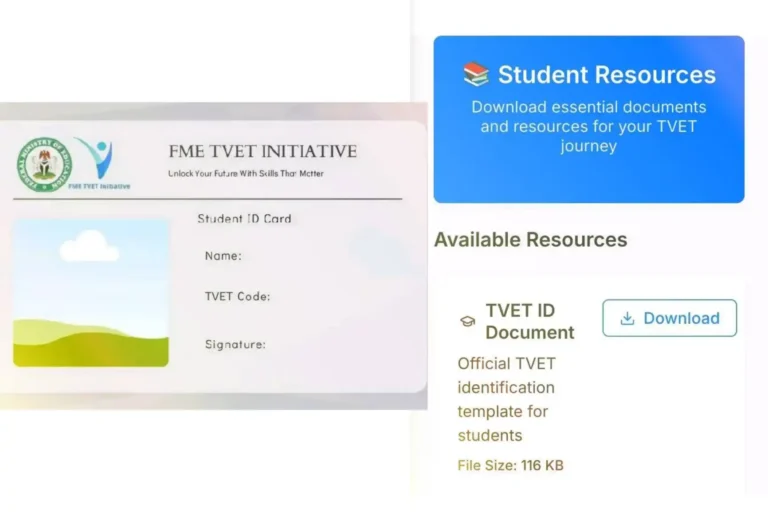
Technical and Vocational Education and Training (TVET) identity card can now be downloaded from the trainee dashboard. Candidates are to check their TVET dashboard under the Student Resources section. Here, the trainee can download essential documents and resources for their TVET journey, including the ID documents also called the Student ID Card.

According to the Federal Ministry of Education (FME), the TVET initiative ID contains the trainee’s passport photograph, name, TVET code, and signature. The ministry stated that the ID is an important verification document for trainees across the approved training centres.

“All the 58,000 shortlisted candidates who have been matched to training centres will be able to download their ID,” the ministry confirmed. Those on pending should keep checking. FG clarified that although 58,000 students have been placed, the target remains up to 150,000 trainees.

ABU Zaria loses 2,000 staff in five years, VC raises alarm

0

Ahmadu Bello University, Zaria, is grappling with a steady loss of skilled staff to better opportunities both within Nigeria and abroad, according to the institution’s Vice-Chancellor, Adamu Ahmed. He made this known during a press conference held as part of events marking the university’s 63rd anniversary in Zaria.

Mr Ahmed expressed concern over the challenges confronting the university, particularly aging infrastructure and poor remuneration, which he said have weakened staff motivation. “Aging infrastructure and poor remuneration have dampened staff motivation. It is disheartening to state that the university has lost nearly 2,000 staff in the last five years,” he said.

The Vice-Chancellor revealed that the university is in urgent need of new and replacement staff to maintain the quality of its academic and research programs. “Presently, there is a particular programme run by the university whose staff are 95 per cent professors. This development may risk non-accreditation of the programme in subsequent time and result in a shortage of those who will take over from the existing high-calibere staff,” he explained.

He identified inadequate funding as a major factor hindering the university’s operations, noting that it has limited ABU’s ability to renovate infrastructure, expand its library, and support research development. Despite these challenges, Mr Ahmed said the university is working to modernize its academic systems and improve learning outcomes through technology and innovation.

According to him, “We shall strengthen the Distance Learning Centre (DLC), the largest in Nigeria, to increase the pace at which education is taken to every home, ensuring that no family is left behind. In this way, ABU will not only expand access but also contribute meaningfully to the attainment of the Sustainable Development Goals (SDGs), especially in inclusive education and reducing inequality.”

He called on the university’s alumni community to support the institution through endowment gifts, annual giving, and donations aimed at securing ABU’s future. Mr Ahmed also commended the federal government under President Bola Tinubu for implementing bold economic and education reforms that aim to strengthen the nation’s development goals.

FG distributes farm inputs in Sokoto to small-scale farmers

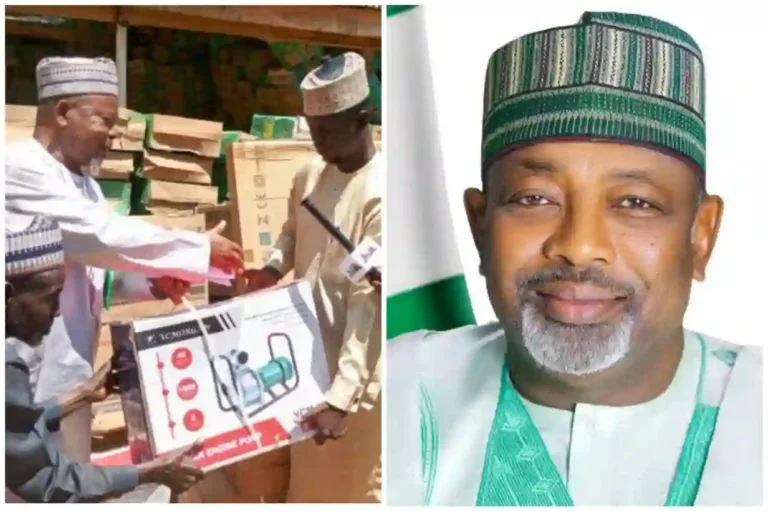
The Federal Government has reaffirmed that achieving food security remains at the centre of President Bola Ahmed Tinubu’s Renewed Hope Agenda. This commitment was emphasized by the Minister of Agriculture and Food Security, Senator Abubakar Kyari, during the flag-off of the distribution of agricultural inputs and equipment to small-scale farmers, internally displaced persons, and farmers with special needs in Sokoto State.

Represented by a Director from the Ministry, Abdulmajid Sule, the Minister stated that in line with the Renewed Hope Agenda, the Federal Government has declared food security a national state of emergency to ensure sustainable agricultural development across the country. He said, “Ensuring food security for citizens is one of the most important responsibilities of any nation.”

According to Senator Kyari, the Ministry of Agriculture and Food Security has established various modalities and mechanisms that would assist the mission of President Tinubu in enhancing productive capacity, creating jobs, and reducing the cost of living for Nigerians. He explained that the government has demonstrated strong political will by rolling out projects and programmes aimed at addressing the major challenges facing farmers nationwide.

The Minister further noted that through collaboration with state governments, opinion leaders, and development partners, Nigerians are beginning to experience the positive impact of the gradual reduction in food prices across the country. He added that these efforts are part of a long-term strategy to promote sustainable agriculture and rural development.

Radio Nigeria reports that the agricultural inputs distributed include solar-powered water pumps, power tillers, storage bags, and other essential farming equipment designed to improve productivity and support farmers in achieving better yields.

Responding, the Sokoto State Commissioner for Agriculture, Professor Tukur Alkali, said Sokoto is one of the major states benefiting from the Federal Government’s agricultural interventions across all value chains. Represented by the State Director of Irrigation, Abubakar Aliyu Rabba, the Commissioner noted that the agro inputs and equipment distributed by the Federal Government will go a long way in boosting agricultural productivity in the state.

Speaking on behalf of the beneficiaries, Lawal Sani thanked the Federal Government for the support and pledged effective utilization of the distributed inputs to improve food production and sustain livelihoods.

Nigeria Customs sends CBT pre-test links for inspectorate and customs assistant cadre

Nigeria Customs Service (NCS) has begun sending CBT pre-test links for applicants under the Inspectorate Cadre and Customs Assistant Cadre (General Duty). Candidates are advised to log in and check their dashboards for updates.

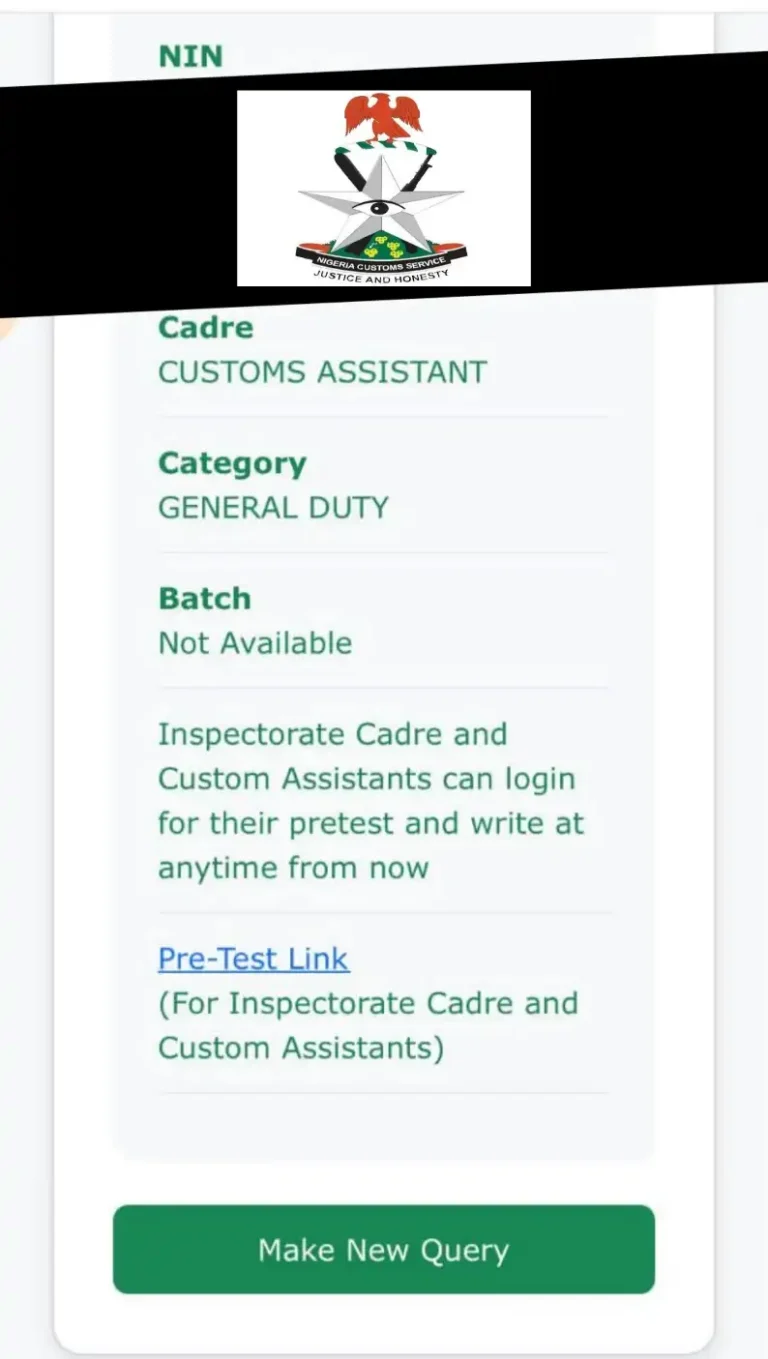
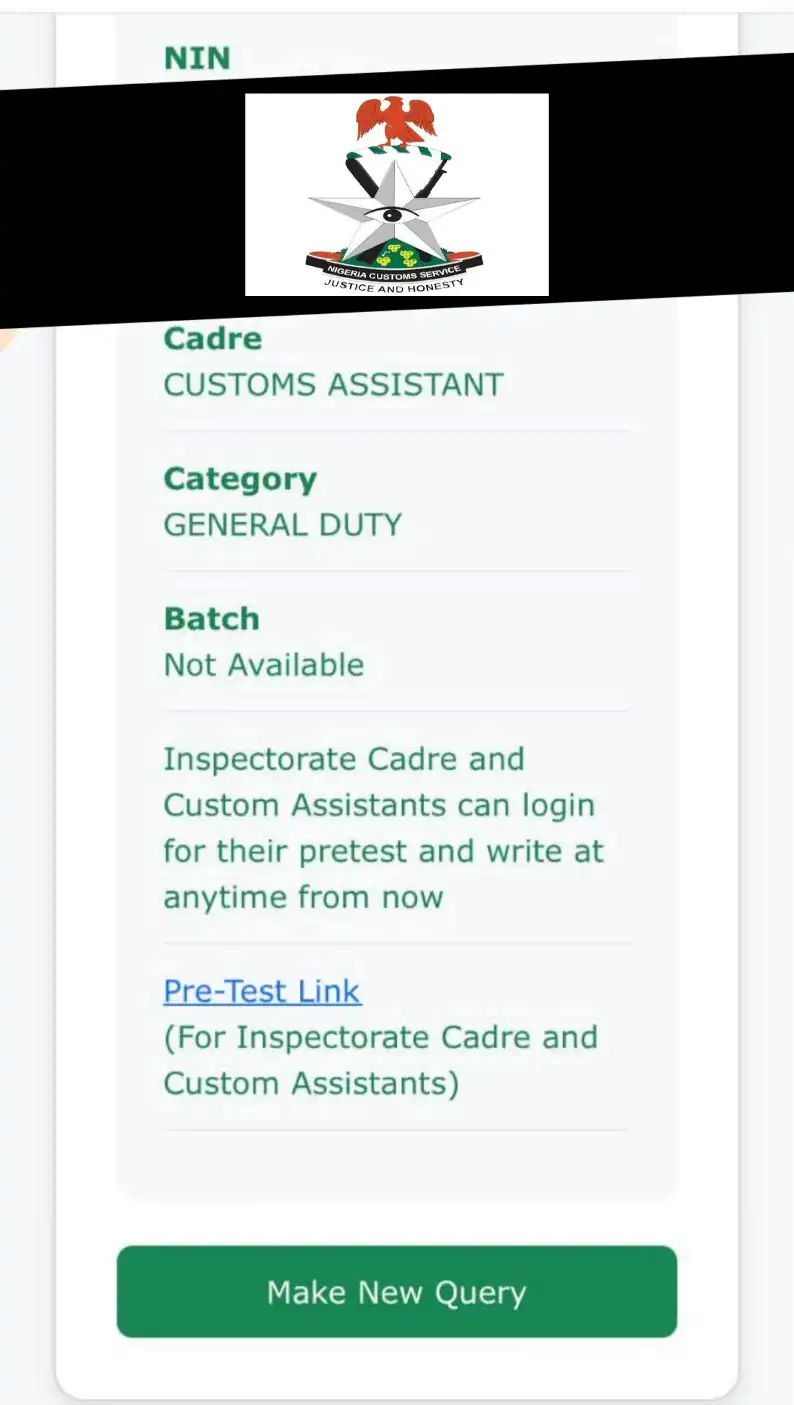
This update has now been posted on the official NCS page, the notification on the NCS updates dashboard stated, “Inspectorate Cadre and Custom Assistants can login for their pretest and write at anytime from now. Pre-Test Link (For Inspectorate Cadre and Custom Assistants).”

Both Inspectorate and Customs Assistant applicants are directed to visit updates.customs.gov.ng and log in using their NIN to confirm their batch and click on the pre-test link. Some applicants may see that their batches are not yet available, but according to the update, this will be updated shortly, while many others already have access to their batches.

Candidates are advised to ensure they have a fast and stable internet connection during the test. Those with pending batch assignments will see “Not Available” until their details are updated on the system.

Applicants should also note that the test is not enabled for mobile phones. They are required to use laptops or desktop computers equipped with a webcam. The login process will include facial verification, and candidates are advised to avoid clumsy facial looks that could hinder recognition. The system will automatically log out anyone who engages in excessive body movement or creates noise during the test.

The NCS stressed that this exercise is only a pre-test. The actual CBT will come later, and candidates will receive a second link, which is for the main examination, which will take place on a different date.

News update:

Information reaching us is that NCS is now sending pre-test links via email as well. Check your email for your pre-test link or use your dashboard.

News update:

The pre-test for all shortlisted Inspectorate and Customs Assis-tant Cadre applicants will commence on Saturday, 4th October 2025, and end by 11:00pm on Monday, 6th October 2025.

Attached below is screenshot proof:

Foundation empowers over 1000 Ikorodu residents with cash, others

0

The Abdulkareem Shittu Foundation, under the leadership of Honourable Abdulkareem Olugbenga Shittu, on Saturday, September 27th, 2025, held the second edition of its Empowerment Scheme Program, bringing hope, support, and relief to over a thousand residents of Ikorodu Federal Constituency.

The event, which witnessed a massive turnout from various wards in the constituency, further strengthened Hon. Shittu’s reputation as a grassroots leader who continues to invest in the welfare of his people. As part of the empowerment drive, financial support, foodstuffs, and working tools were distributed to small businesses and families.

A major highlight of the programme was the presentation of ₦250,000 each to 30 selected beneficiaries to grow their businesses. Among the recipients were Mrs. Abidemi Ajumobi, Mrs. Afusat Adelasi, Mrs. Ogunjimi Mary, Mrs. Olabode Bankola, Mrs. Toyin Aina, and Mrs. Adebeshin Fatimoh. Speaking after receiving the funds, several beneficiaries testified that the initiative had a direct impact on their lives and livelihoods.

In addition, 1,000 participants each received ₦5,000 alongside foodstuffs, ensuring that everyone present benefited. To further support community development and strengthen party structures, Hon. Shittu also donated 30 chairs to APC wards in Ikorodu Federal Constituency for use during meetings.

Addressing the large gathering on behalf of the foundation, Mr. Muhammed Hassan, Director General of the Abdulkareem Shittu Foundation, praised Hon. Shittu’s consistent commitment. He stated, “This is just the beginning. Greater opportunities and more support packages are still ahead.”

Beneficiaries and residents expressed gratitude, highlighting that the resources came directly from Hon. Shittu’s personal funds rather than government allocations. They recalled previous gestures by the lawmaker, including the distribution of ₦500,000 to individuals, Sallah rice during festive periods, and work tools such as tailoring machines, grinding machines, and clippers to artisans and entrepreneurs.

The atmosphere at the event was filled with appreciation as many shared personal testimonies about how his philanthropy had improved their families and businesses. Residents described Hon. Shittu as a people-focused leader whose foundation continues to provide real solutions at the grassroots level.

With the success of this second edition, residents of Ikorodu Federal Constituency are already looking forward to the next empowerment scheme, confident that Hon. Abdulkareem Olugbenga Shittu will continue to touch more lives through his foundation.

Kano State invests N800m on livestock training programmes

Kano State Agro-pastoral Project, KSADP, has disclosed that it has spent about N800 million on various training programmes for stakeholders, including direct beneficiaries and workers. The Project Coordinator, Ibrahim Garba Muhammad, said the training was designed to equip participants with the knowledge and skills required to sustain the project’s development goals.

According to him, “The training aims to ensure that the beneficiaries can effectively contribute to executing the project’s development objective and ensuring sustainability after the project’s closure.”

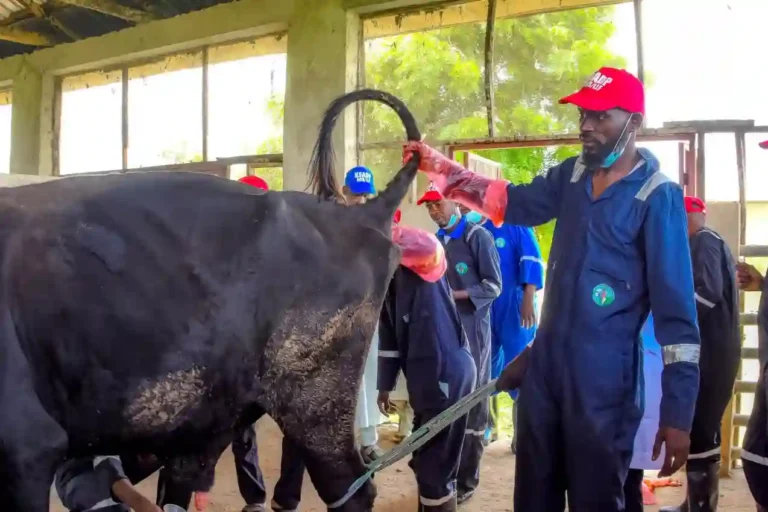
He made this known at the opening of a training workshop on animal insemination at the Kadawa Artificial Insemination Center, supported by KSADP. The workshop was organised for animal husbandry technicians and livestock staff of the Kano State Ministry of Agriculture. Garba explained that the capacity building programmes were developed to improve the skills, knowledge, and resources of beneficiaries.

Speaking on the specific training, he said, “It is part of the broader objective of the project to re-introduce Artificial Insemination, towards ensuring sustainable livestock development in the state.”

Kano remains one of the country’s leading livestock hubs, with over 1.21 million agricultural households engaged in cattle rearing, 1.46 million in goats, and 1.15 million in sheep. Figures from the sub-national GDP for Kano State indicate that livestock contributed over N1.73 trillion in 2023.

Garba further revealed that apart from renovating the Kadawa Artificial Insemination Center, the KSADP, which is funded by the Islamic Development Bank and the Lives and Livelihoods Fund, has also procured five exotic bulls and modern equipment. He said this was part of efforts to revive the center, which had been abandoned.

“Just recently, we saw the need to further upgrade the center so, we have earmarked N125 million for this, which will include provision of certain inputs, fence reconstruction etc. We will also establish a two-hectare fodder farm in the vicinity of the center for feed availability,” he added.

He urged the trainees to justify the investment by paying close attention to the modules, noting that “the expectation of the project, for breed improvement and incremental milk production, will not be achieved if you do not work efficiently.”

One of the trainees, Sulaiman Audu, expressed gratitude to the Islamic Development Bank and the Lives and Livelihoods Fund for supporting the training. He said the knowledge gained would have a positive impact on their work and careers.

The workshop, conducted in collaboration with the Federal College of Agricultural Produce Technology, Kano, covers theoretical and practical lessons on artificial insemination, including semen collection, freezing, storage, animal health, breed selection, and record-keeping.

Akwa Ibom relocates CNG bus terminal to for better accessibility

0

Akwa Ibom State Government has relocated its Compressed Natural Gas (CNG) bus terminal from Odiok Itam in Itu Local Government Area to Ikot Akpe in Uyo Local Government Area for better accessibility and patronage.

During an inspection of the new terminal site at Ikot Akpe in Uyo Metropolis, the State Governor, Pastor Umo Eno, explained that the relocation followed careful consideration to make the project more accessible to residents. According to him, the CNG bus terminal will feature a gas station, a Training School, a repair workshop for engineers, CNG technology facilities, and a maintenance unit.

Pastor Eno expressed appreciation to the host community for their support, saying, “We commend the community for cooperating with government on this project.” He urged youths in the area to get involved in the construction process and also help protect the facility against vandalism.

The Governor reminded residents that the project aligns with the Federal Government’s Presidential CNG Initiative launched in 2023 to reduce transportation costs, create employment, and encourage environmental sustainability by shifting from petrol and diesel to CNG-powered buses.

To support the policy, Akwa Ibom State Government, through the Ministry of Transportation in collaboration with the Central Bank of Nigeria, has already ordered 50 CNG buses to enhance transport services across the state.

The Governor emphasised that the new terminal would open up economic opportunities for the people, provide training for young engineers, and strengthen sustainable transportation.

Accompanying the Governor on the inspection were the Deputy Governor, Senator Akon Eyakenyi, Secretary to the State Government, Prince Enobong Uwah, and members of the State Executive Council including the Commissioner for Transport, Dr. Anthony Luke.

The government assured residents that the CNG bus terminal at Ikot Akpe would improve transport accessibility and create opportunities for skills development.

APM Terminals Nigeria opens graduate trainee program 2025 application

0

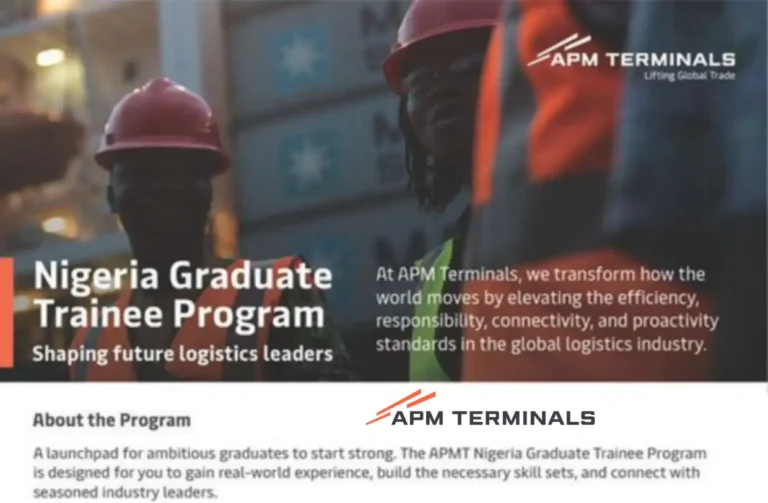
APM Terminals has announced the launch of the APMT Nigeria Graduate Trainee Program, a two-year initiative aimed at shaping future logistics leaders. According to the company, “At APM Terminals, we transform how the world moves by elevating the efficiency, responsibility, connectivity, and proactivity standards in the global logistics industry.”

The programme is described as a launchpad for ambitious graduates to begin strong careers in logistics. It is designed to provide real-world experience, skill development, and the opportunity to connect with seasoned industry leaders. The 24-month training period will include job rotations, special projects, mentoring, and periodic evaluations.

The company stated that it is an equal opportunity employer, noting that it “does not discriminate based on race, gender, age, religion, disability, or any other protected characteristic.” It further explained that applications will be reviewed strictly on merit, skills, and potential.

Eligibility for the programme requires candidates to hold at least a Second-Class Upper (2:1) Bachelor’s degree in Accounting, Engineering, Human Resources, Law, Business Administration, or other relevant disciplines. In addition, applicants must have one to two years of post-NYSC experience. The programme will be available in Onne, Apapa, and Kano, with commencement set for January 2026.

Applications will be open from October 2nd to October 20th, 2025. Interested individuals can apply via tally.so/r/3q6ev8. APM Terminals emphasised that “submission of an application does not guarantee selection or employment.” The selection process may include assessments, interviews, group exercises, and background checks.

The company also reserves the right to verify all details submitted, and candidates providing false or misleading information may be disqualified. Only individuals legally eligible to work in Nigeria will be considered for the programme.

APM Terminals said that only complete and accurate applications will move forward in the process, highlighting the importance of careful submission.

SAP young professionals program Nigeria 2025 opens for applications

0

SAP has announced the launch of the SAP Young Professionals Program Nigeria 2025, a free two-month initiative delivered by the Digital Skills Center of SAP. The program is designed to equip recent graduates with globally recognised certifications and soft skills to begin a career as an SAP Associate Consultant. According to SAP, “At the end of the training, SAP will work very closely with the program graduates to introduce them to a host of opportunities with SAP customers and partners to work as an SAP Consultant.”

The initiative offers several benefits to participants. Graduates will start their journey to become SAP Consultants, gain associate-level SAP Certifications, and learn directly from SAP experts. The training includes classroom and workshop-based sessions in SAP technologies and will help candidates develop the soft skills needed to prepare for successful job applications. The company added, “Participants will benefit from introductions to job opportunities within the SAP Ecosystem to help secure a position after the training. Please note this program does not guarantee you a job at the end of it.”

To qualify for the program, candidates must meet specific requirements. Applicants must have the legal right to work in Nigeria, be unemployed or in a part-time or non-permanent role unrelated to career goals, and hold at least a Bachelor’s degree in Business Administration, Management Information Systems, Engineering, Data Science, or Artificial Intelligence. Preferably, candidates should have graduated within the last three years with a GPA in the top quartile, as proof may be requested. SAP also requires applicants to show interest in starting an SAP-related career that may involve travel and to be fluent in English, both written and spoken.

The program is scheduled to commence by the end of October 2025 and will require full-time availability from 9am to 6pm, Monday to Friday, throughout the two-month training. It will take place online in a live virtual classroom format, and candidates are advised to ensure they have reliable internet access at home. Applicants are expected to share an English version of their resume while applying.

SAP noted that anyone in need of accommodation or special assistance during the application process should send an email to the Recruiting Operations Team at Careers@sap.com or apply directly via this Link.