
Home Blog Page 425

SAP young professionals program Nigeria 2025 opens for applications

0

SAP has announced the launch of the SAP Young Professionals Program Nigeria 2025, a free two-month initiative delivered by the Digital Skills Center of SAP. The program is designed to equip recent graduates with globally recognised certifications and soft skills to begin a career as an SAP Associate Consultant. According to SAP, “At the end of the training, SAP will work very closely with the program graduates to introduce them to a host of opportunities with SAP customers and partners to work as an SAP Consultant.”

The initiative offers several benefits to participants. Graduates will start their journey to become SAP Consultants, gain associate-level SAP Certifications, and learn directly from SAP experts. The training includes classroom and workshop-based sessions in SAP technologies and will help candidates develop the soft skills needed to prepare for successful job applications. The company added, “Participants will benefit from introductions to job opportunities within the SAP Ecosystem to help secure a position after the training. Please note this program does not guarantee you a job at the end of it.”

To qualify for the program, candidates must meet specific requirements. Applicants must have the legal right to work in Nigeria, be unemployed or in a part-time or non-permanent role unrelated to career goals, and hold at least a Bachelor’s degree in Business Administration, Management Information Systems, Engineering, Data Science, or Artificial Intelligence. Preferably, candidates should have graduated within the last three years with a GPA in the top quartile, as proof may be requested. SAP also requires applicants to show interest in starting an SAP-related career that may involve travel and to be fluent in English, both written and spoken.

The program is scheduled to commence by the end of October 2025 and will require full-time availability from 9am to 6pm, Monday to Friday, throughout the two-month training. It will take place online in a live virtual classroom format, and candidates are advised to ensure they have reliable internet access at home. Applicants are expected to share an English version of their resume while applying.

SAP noted that anyone in need of accommodation or special assistance during the application process should send an email to the Recruiting Operations Team at Careers@sap.com or apply directly via this Link.
Advertisement

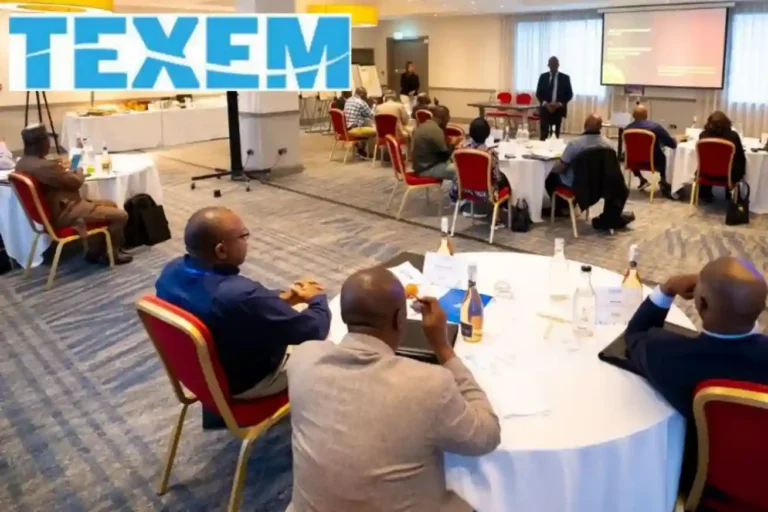
TEXEM UK to host executive leadership programme on economy

TEXEM UK has announced that it will host a high-level executive development programme in November designed to help African executives respond effectively to the deepening waves of global economic uncertainty and domestic challenges facing the continent.

The programme, themed Navigating Economic Uncertainty Successfully: Strategic Leadership in Turbulent Times, will take place from November 24 to November 27 in Milton Keynes, United Kingdom, and will bring together senior executives from both the public and private sectors.

Caroline Lucas, Director of Special Projects at TEXEM, said in a statement that the programme was coming at a critical time when African economies are contending with multiple headwinds, including inflationary pressures, fluctuating commodity prices, debt restructuring, and the urgent need to harness digital transformation for inclusive growth.

She explained that the programme would deploy TEXEM’s distinctive methodology, combining case studies, peer-to-peer engagement, observation practice, games, and role play to provide participants with practical strategies for building resilience and sustaining competitive advantage.

“It’s a leadership course that exposed me to ideas vital in turbulent times. A good leader must act swiftly on innovative ideas and improve processes to stay ahead,” Lucas said.

Musa Jimoh, Director at the Central Bank of Nigeria, emphasised that the initiative was timely as Africa grapples with rising geopolitical risks, fiscal tightening, and the opportunities presented by the African Continental Free Trade Area (AfCFTA) and the exponential growth of mobile money adoption.

“In a world where shocks are becoming the norm, leaders must learn not just to survive but to thrive. This programme will help executives develop foresight, sharpen their decision-making under uncertainty, and build agile organisations that can adapt quickly, mitigate risks, and seize opportunities,” Lucas added.

She highlighted that TEXEM’s track record of building over 4,000 African leaders demonstrates its ability to deliver value that translates into organisational transformation and national impact.

The November programme will feature globally recognised faculty with deep experience in leadership, governance, and diplomacy. Among them are Prof. Nicholas Cheeseman, a leading scholar of good governance and accountability and former don at the University of Oxford.

Other faculty members include Dr T. B. (Mac) McClelland Jr., an expert in organisational leadership and former US Marine Corps leader, best-selling author; Ambassador Charles Crawford CMG, a former UK diplomat and multiple award-winning communicator; and UK Former Attorney General Jeremy Wright MP, who also served as a cabinet minister and Digital Secretary.

Muhammed El Amin Gwadabe, President of the Association of Bureau de Change Operators of Nigeria (ABCON), spoke on the value of previous TEXEM programmes. “I’ve learned a lot. I’ve seen where tradition is being converted to modernity… I’ve learned how to keep sustainability. I have learned teamwork. I have learned different strategy tools from Marshmallow, from OODA, observation of my opponents, orienting my business, making decisions and acting fast. I’ve also learned the importance of balancing culture with my organisational objective.”

Participants in the November programme will gain actionable insights into strategic decision-making in turbulent environments, financial risk management, contingency planning, leading through recession and recovery, and developing resilient business models. They will also explore how digital innovation and data can be harnessed to unlock productivity and sustain long-term growth.

The fee for the four-day intensive is £5,500, discounted to £4,750, with an early payment option of £4,300 for those who register before October 31. The fee covers study materials and certification.

Mr Effiong Okon, Operations Director at SEPLAT, also shared his experience with TEXEM’s approach. “It’s the first time I’m doing a local programme in Nigeria, and it’s quite interesting. The first thing I liked about it is the diversity of the participants. I also like the edgy conversations we had with Christian and Alim. It’s quite thought provoking.”

Interested participants may contact TEXEM through +44 7425 883791, via email at exec@texem.co.uk, or visit the website www.texem.co.uk for registration.

Jigawa Gov launches empowerment programme for 1400 women

Governor Umar Namadi has launched a new women empowerment initiative in Jigawa State to boost the traditional cap embroidery trade. The programme, flagged off on Friday morning at the Banquet Hall of the Government House in Dutse, provided support to 1,400 women drawn from seven local government areas under the Dutse Emirate.

The scheme marks the first phase of a wider empowerment drive designed to strengthen the cultural and economic relevance of cap embroidery, a craft deeply rooted in the history of Jigawa and mainly practiced by women.

Speaking at the launch, Governor Namadi emphasised the importance of the trade to local livelihoods and family stability. “This emirate is well known for the craft of cap embroidery,” he said. “Through this craft, many have earned a livelihood, supported their families, and maintained peaceful homes.”

He explained that the government’s support package includes working tools to enhance productivity. “With this support, a woman who could previously produce five to ten caps will now be able to multiply that number,” the governor noted. He added that empowering women economically remains essential for peace and stability in households and communities.

In a statement issued by the Chief Press Secretary to the Governor, Hamisu Mohammed Gumel, on Friday, October 3, the administration also revealed plans to restructure the trade into a sustainable industry. According to the governor, the government intends to establish two production clusters where women can collaborate, improve their skills, and access both local and international markets.

“Our plan is to create two production clusters where finished caps can be collected and distributed to broader markets, not just within Jigawa, but across Nigeria and internationally,” he said.

Governor Namadi described the programme as a strategy to drive poverty reduction and economic development across the state. He stressed that the next phases of the initiative will expand to other areas, ensuring more women benefit from the opportunities.

“This initiative will not only empower the individual women involved, but also uplift their families and communities. Over time, we aim to position Jigawa’s cap embroidery craft as a globally recognized industry,” the governor affirmed.

The event was attended by government officials, traditional leaders, community representatives, and hundreds of the beneficiaries.

IDEAS TVET starts issuing admission letters to trainees

0

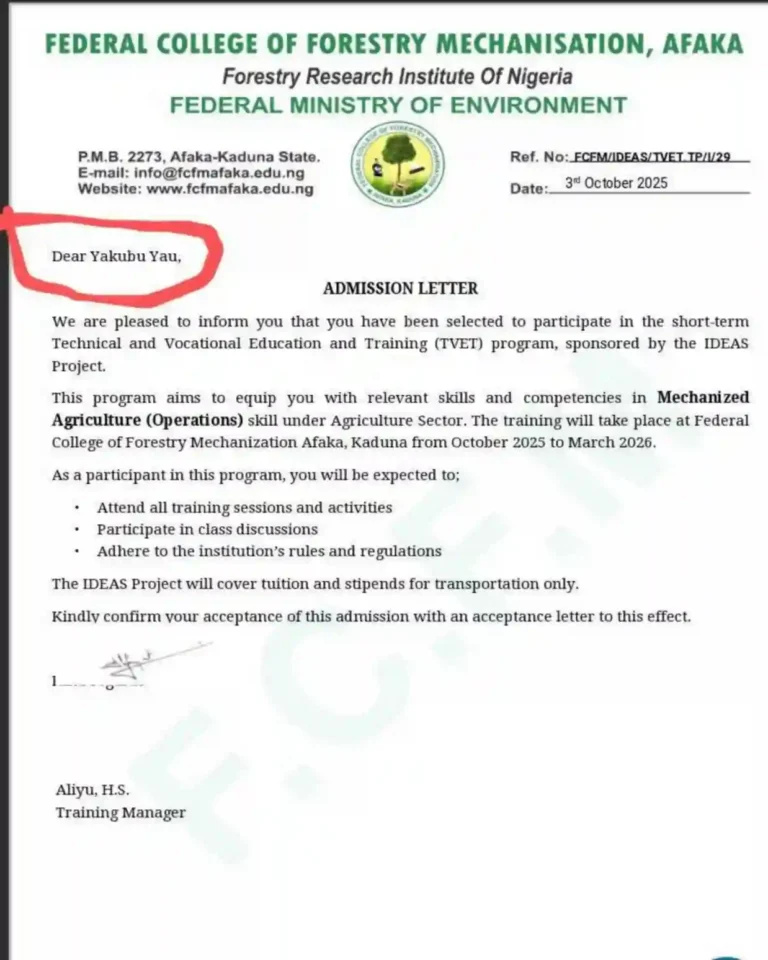
TVET by IDEAS has officially begun sending admission letters to successful trainees across the country. The letters, which carry details of the training institutions and specific skill types, are now reaching selected candidates. One of the institutions involved is the Federal College of Forestry Mechanisation, Afaka, under the Forestry Research Institute of Nigeria and the Federal Ministry of Environment.

An admission letter with Ref. No: FCFM/IDEAS/TVET.TP/1/29 dated 3rd October 2025 was addressed to Yakubu Yau. It confirmed his selection into the short-term Technical and Vocational Education and Training program. The letter read, “We are pleased to inform you that you have been selected to participate in the short-term Technical and Vocational Education and Training (TVET) program, sponsored by the IDEAS Project.”

The training will run from October 2025 to March 2026 at the Federal College of Forestry Mechanisation Afaka, Kaduna. According to the letter, the participant has been enrolled under Mechanized Agriculture (Operations) skill type within the Agriculture Sector.

Participants are required to meet the set conditions. “As a participant in this program, you will be expected to; attend all training sessions and activities, participate in class discussions, and adhere to the institution’s rules and regulations,” the letter stated.

The IDEAS Project confirmed that it will cover tuition fees and stipends for transportation. Candidates are also directed to confirm acceptance by issuing a formal acceptance letter. The letter was signed by Aliyu H.S., Training Manager.

Information on how to make further enquiries is included in the letter, and is to be directed to the technical college, example, the Federal College of Forestry Mechanisation, Afaka-Kaduna State, Ρ.Μ.Β. 2273, via email at info@fcfmafaka.edu.ng or through the website www.fcfmafaka.edu.ng.

Ibom Ignite conference 2025 opens, calls for empowerment, innovation

The 2025 edition of the Ibom Ignite Conference has officially opened at the Ibom Led Centre, IBB Avenue, Uyo, drawing young people from different parts of Nigeria with a strong call to embrace innovation, resilience, and self-determination in order to accelerate both personal and collective destinies. This year’s theme is “ignite to accelerate,” with leaders stressing the need for youth empowerment, digital technology, and entrepreneurship.

Governor of Akwa Ibom State, Pastor Umo Eno, PhD, recalled the origin of the conference as a vision to uplift young people and challenge the entitlement mentality. He emphasised that government alone cannot define success, urging participants to take responsibility for shaping their lives. “Everyday God gives you is an opportunity, so as you’ve come today, I beg you, don’t waste this opportunity. I like to talk to young people, take your destiny in your hands,” the governor said.

In his welcome address, Pastor ImoAbasi Jacob gave a background to the growth of the conference, noting that it began as a youth impact programme and has since evolved into a global event hosted at world-class venues. He encouraged participants to take action and remain focused, declaring: “Fire without movement is wasted. Wake up the giant inside you, because your future starts now.”

Delivering the opening charge, Rev. Dr. Godwin Amaowoh highlighted empowerment as the foundation of wealth creation, quoting from Deuteronomy 8:18 and Luke 4:6. He explained that God provides people with ideas, ability, and vision, while human beings build the platforms and infrastructure that drive growth. He urged young people not to waste resources but to take advantage of the opportunities available.

Keynote speaker Obafemi Banigbe, CEO of emerging markets telecommunications services, described the Ibom Ignite Conference as more than just a gathering. He called it a movement with the potential to transform industries and communities, praising Akwa Ibom’s progress in the past two decades. He pointed to opportunities in agriculture, artificial intelligence, and digital technology, stressing: “When I look at this state, I see possibilities. To the young people here: you are not just leaders of tomorrow, you are leaders of today. Don’t dim your spark, ignite it.”

Since its inception, the Ibom Ignite Conference has provided a platform for vision building, entrepreneurship, and leadership development, drawing participants from diverse fields to accelerate growth and innovation in Akwa Ibom State and beyond.

Ecobank opens entry level development programme application

0

Ecobank Nigeria has announced the opening of its Entry Level Development Programme (ELDP), a full time opportunity designed to attract young and talented individuals to meet the growing manpower needs across the bank. The application closes on 10 October 2025.

The bank described ELDP as a recruitment initiative that builds a pool of future leaders who will drive Ecobank to the next level. According to the management, “By participating in ELDP, you become part of a pool of future leaders who will drive the bank to the next level.”

Ecobank Nigeria is a subsidiary of Ecobank Transnational Incorporated (ETI), the foremost independent banking group in Africa, with headquarters in Lomé, Togo, and affiliates in over 33 sub-Saharan African countries. The bank noted that working at Ecobank Nigeria offers an opportunity to contribute to expansion, innovation, and career growth.

The criteria for the programme include a minimum of a second class lower (2:2) from a recognised university, completion of the National Youth Service Corps (NYSC), and at least five credits including English and Mathematics.

The bank highlighted benefits for successful candidates. “Continuous learning and development opportunities through the EcobankAcademy, comprehensive health and wellness benefits, regular team bonding and retreats, and a vibrant and inclusive workplace culture” were listed as key attractions. The programme also supports professional development such as ICAN, ACCA, and CIPM certifications. Other perks include recognition and rewards, an enabling work environment, and convenient staff bus services for eligible employees.

Ecobank further stated its commitment to equality. “We are an equal opportunity employer that does not discriminate based on any protected trait such as sex, race, ethnicity, disability, marital status etc. We are committed to creating an environment where you not only work but thrive.”

Only successful candidates will be contacted and invited for an aptitude test, which will be communicated through email. Interested applicants are required to submit applications via the Ecobank career portal through the official Link.

Oluremi Tinubu launches N1bn women empowerment programme in Imo

The Renewed Hope Initiative (RHI) in partnership with the Tony Elumelu Foundation on Friday, 3rd October, 2025, launched the Women Economic Empowerment Programme in Imo State and other states of the country including the Federal Capital Territory (FCT).

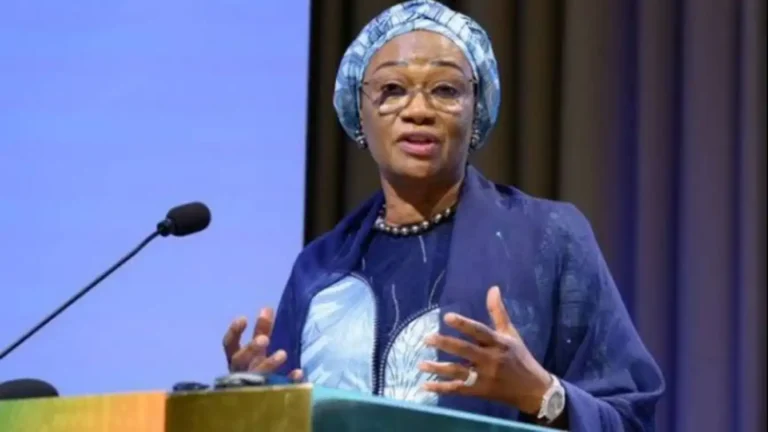
The flag-off ceremony took place at the Banquet Hall, Government House Owerri, where the First Lady of Nigeria, Senator Oluremi Tinubu, was represented by the wife of the Imo State Governor, Barr. Chioma Uzodimma. In her address, she explained that the programme is aimed at supporting the entrepreneurial spirit of women traders and small-scale business owners who work daily to provide for their families, educate their children and uplift their communities.

The First Lady commended the Tony Elumelu Foundation for donating the sum of N1 billion to the Renewed Hope Initiative to support 18,500 women across the country. According to her, “500 women from each of the 36 states and the FCT will receive N50,000 to strengthen their businesses.” She added that such generosity should inspire many across the nation to sustain their commitment to women empowerment and poverty reduction.

She further disclosed that the Governor of Imo State, Senator Hope Uzodimma, in his magnanimity, increased the financial support by adding another N50,000 for each beneficiary, making it a total of N100,000 to be given to the pre-selected women from the 27 Local Government Areas of the state.

Senator Oluremi Tinubu stressed that the initiative is not a loan but a grant designed to recapitalize and strengthen women-owned businesses. “It is my belief that when you empower a woman, you empower a household, a community and indeed a nation,” she said.

She also expressed appreciation to the Governor of Imo State and his wife for their support towards the successful execution of the Renewed Hope Initiative programmes.

The event attracted dignitaries including the wife of the former Governor of Imo State, Barr. Chioma Ohakim, female vice chairmen, councilors, women leaders, and several other prominent women from across the state.

The highpoint of the programme was the presentation of N100,000 cash each to the selected 500 women by the First Lady of Imo State, Barr. Chioma Uzodimma, on behalf of Senator Oluremi Tinubu.

Kogi, FG launch ₦75,000 cash transfer program for less privileged

Kogi State Government in partnership with the Federal Government of Nigeria has officially launched a cash transfer program aimed at supporting the less privileged in the state. The flag-off ceremony was held on Thursday at the Glass House, Government House Lokoja.

Speaking at the event, the State Coordinator of Kogi State Social Investment Program Agency (KOSSIPA), Hajia Aishat Oyiza Omade, expressed appreciation to President Bola Ahmed Tinubu and Governor Ahmed Usman Ododo for what she described as a gesture of empowerment at the grassroots. She advised beneficiaries to keep their ATM cards safe and private. “This card carries ₦75,000, don’t give your card to anybody including me,” she said. She further described Governor Ododo as the Chief Servant of the State who is committed to infrastructure and human development.

The Manager of the Kogi State Cash Transfer Unit, Mr Olorunmosunle Moses Kehinde, pledged that the team will continue to work tirelessly to build a future where poverty is eradicated and prosperity is shared among citizens. He noted that the team is committed to working with the government and stakeholders to achieve progress in Kogi State. The management also expressed gratitude to the State Coordinator for her leadership and acknowledged the support of Tagpay and Mintyn Microfinance Banks for their collaboration.

The event underlined the joint effort between the Federal Government of Nigeria and the Kogi State Government in building a brighter future for the people of the state. The team emphasised the goal of ensuring that every child has access to education, every family can enjoy basic life amenities, and that opportunities will be made available for all citizens.

Some beneficiaries shared how they intend to use the funds received. Malama Saretu Umoru said she would invest her money in her Pap (Akamu) business and also repair her grounding engine to make production easier. She expressed gratitude to the organisers for the support. Similarly, Malam Suleiman Yusuf Rufai appreciated Governor Ahmed Usman Ododo for the program, noting that as an entrepreneur, he would use the cash to expand his business and create more opportunities.

The cash transfer program is being recognised as a significant step in the fight against poverty in Kogi State. With the continued collaboration between the state government, the federal government, and financial partners, stakeholders believe the program will create lasting impact and improve the lives of the less privileged.

Peter Obi urges FG to share N350bn from EFCC recovery for poverty alleviation

Labour Party presidential candidate during the 2023 election, Peter Obi, has called on the federal government to ensure that a significant portion of funds recovered by the Economic and Financial Crimes Commission (EFCC) is channelled into development projects.

In his post on Friday, the former Anambra State governor reacted to the EFCC’s announcement that ₦853 billion was recovered within one year as proceeds of crime. Obi described the move as a positive step but stressed the need for accountability in how the money is utilised.

“The Commission deserves our commendation for this effort, even though we are aware it’s just a tiny fraction of the funds looted from the public treasury by the leaders,” Obi said.

He further stated that Nigerians want transparency in the use of such funds. “Beyond this recovery therefore, what truly matters is the utilisation of these funds in a verifiable and accountable manner, specifically in the critical areas of development, health, education, and poverty alleviation to benefit the people. Nigerians want to see impact. We must be able to trace where and how these recovered funds are invested,” he added.

Highlighting the challenges facing the country, Obi pointed out that Nigeria currently has over 20 million out-of-school children, the highest figure in the world. He also noted that more than 100 million Nigerians are living in acute poverty, with the situation particularly worse in the northern region.

“If these recovered funds and subsequent ones are strategically invested, they would immensely contribute to breaking the cycle of poverty, illiteracy, and insecurity,” he said.

Obi gave examples of how the money could be applied, referencing the 2024 federal government budget. “For example, the Federal Government 2024 operational budget for Universal Basic Education contribution is about ₦251.47 billion, so to triple this sum will be an additional ₦503 billion. The remaining ₦350 billion can be shared directly to 19 Northern provinces for lending micro credit to the poor. Most of these states have long been applying for as little as ₦2 billion of similar funding from our development banks,” he explained.

He urged the federal government to ensure that the announcement of recovery does not end as mere publicity, but becomes the start of a new era of accountability where recovered funds are turned into classrooms, hospitals, skills, and opportunities for ordinary Nigerians.

Nigeria moves to domesticate Kampala declaration for food security

The Federal Ministry of Agriculture and Food Security has announced plans to domesticate the African Union’s Kampala Declaration as part of ongoing efforts to achieve food security and sufficiency in Nigeria.

To advance this goal, the Ministry in partnership with non-state actors, international development agencies, and civil society groups, has convened a National Comprehensive Africa Agriculture Development Programme (CAADP) Summit in Abuja.

The Kampala Declaration, established in 2025, was designed to transform Africa’s food systems through increased production, boosting intra-African trade, halving post-harvest losses, and promoting sustainable livelihoods. It also highlights the importance of climate-smart agriculture, research, and innovation in strengthening food systems.

Speaking at the summit, the CAADP National Focal Person at the Ministry, Emmanuel Onojighofia, explained that the declaration, adopted by African Union Member States, goes beyond agriculture to embrace a broader agrifood systems approach. He said the framework outlines six strategic objectives which include production, trade, investment, food security, inclusivity, and governance.

Onojighofia stated that the summit offers Nigerian civil society organizations and non-state actors the opportunity to examine these priorities and align their advocacy. “The Kampala Declaration is not just a policy statement, it is a call to action. Collective action and collaboration among stakeholders are essential in driving agrifood system transformation and ensuring sustainability, inclusivity, and resilience,” he said.

Food Systems Specialist with ActionAid Nigeria, Azubike Nwokoye, urged non-state actors to strengthen their accountability roles to ensure Nigeria effectively implements the declaration and meets its goals within the next decade. He stressed the importance of innovative approaches, research, and evidence-based advocacy to drive increased funding for critical areas such as access to agricultural credit, youth and women participation, labour saving technologies, extension services, storage, processing, and transport facilities.

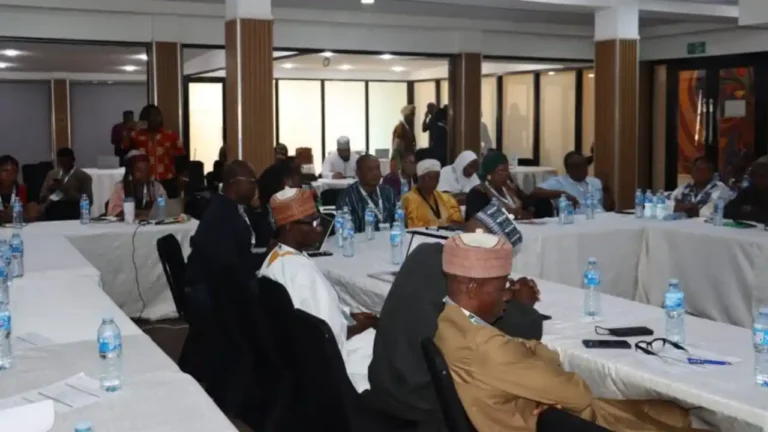
Advisor with the Global Project on Sustainable Agricultural Systems and Policies at GIZ, Precious Jacdonmi, highlighted the vital role of non-state actors in shaping the country’s agricultural future. She noted that successful domestication of the Kampala Declaration will depend on meaningful engagement from grassroots actors, policy influencers, and advocates of inclusiveness.