Home Blog Page 427

FG announces insurance for 250,000 farmers, ₦250bn agriculture fund

0

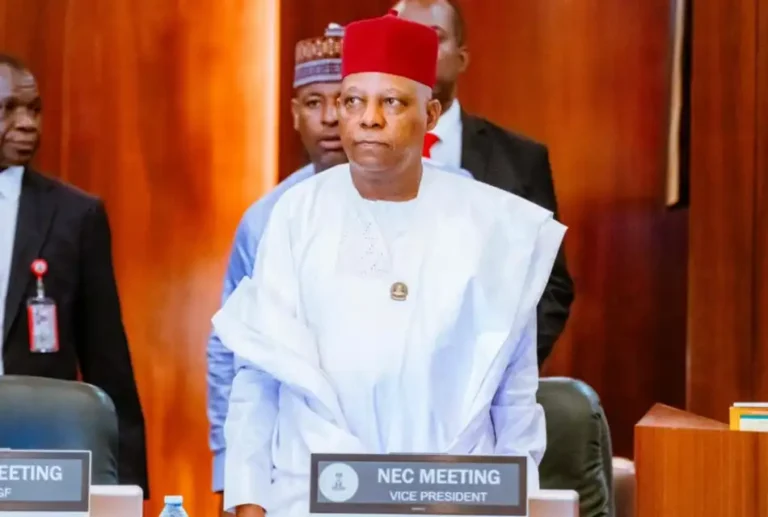
Vice President Kashim Shettima on Thursday announced key efforts by the Tinubu administration to address food security and boost economic development in Nigeria. Speaking during the 152nd meeting of the National Economic Council (NEC) held at the Presidential Villa, Abuja, Shettima revealed several initiatives aimed at supporting farmers and strengthening the agricultural sector.

According to the Vice President, “250,000 farmers have been insured across eight states, the 30 percent Value Addition Bill is advancing, and the ₦250 billion Bank of Agriculture facility is being activated to reach smallholders.”

He explained that these steps are part of ongoing strategies to increase food production and improve the livelihoods of small-scale farmers across the country.

Shettima also shared updates from the Presidential Food Systems Coordinating Unit, noting that the “Green Imperative Project with Brazil is being repositioned for financing, while the World Bank-backed AGROW programme is mapping priority value chains for roll-out.”

Highlighting progress in grassroots engagement, he stated, “The Harvesting Hope Caravan has reached half a million citizens in eight states, building trust and grassroots mobilisation.”

In his briefing to Council members, Tayo Aduloju, Chief Executive Officer of the Nigeria Economic Summit Group (NESG), spoke about the upcoming NESG summit scheduled to hold in Abuja.

He highlighted global economic trends and risks such as uneven growth, divergent inflation and policy measures, rising geopolitical tensions, and the impact of climate change and technological shifts.

Aduloju also outlined the major challenges facing Nigeria’s economy. These include structural bottlenecks, energy and transport deficiencies that increase production costs, foreign exchange liquidity crises, and over-reliance on oil, which weakens fiscal sustainability.

He added, “Political economy risks, including political instability, frequent policy reversals, and corruption, continue to hinder long-term reform.” Aduloju further cautioned that the 2027 election could delay urgent economic decisions.

Addressing broader global concerns, he said, “Global systemic pressures such as climate change, trade tensions, and capital flight strain the economy. A weak industrial base will create competitive pressures from the AfCFTA.”

Aduloju called on all levels of government to support the summit, which will focus on industrialisation-led growth. The event will also explore themes such as “Building Infrastructure for Competitiveness and Unlocking Investment amid Global Shifts” and “One Nigeria, Many Markets: A Forum for Subnational Competitiveness.”

The Council members agreed to actively participate in the NESG Summit to share ideas and mobilise support for President Tinubu’s Renewed Hope Agenda aimed at driving inclusive economic growth and national development.
Advertisement

SSANIP gives FG ultimatum over 2025 funds, unpaid arrears, minimum wage

0

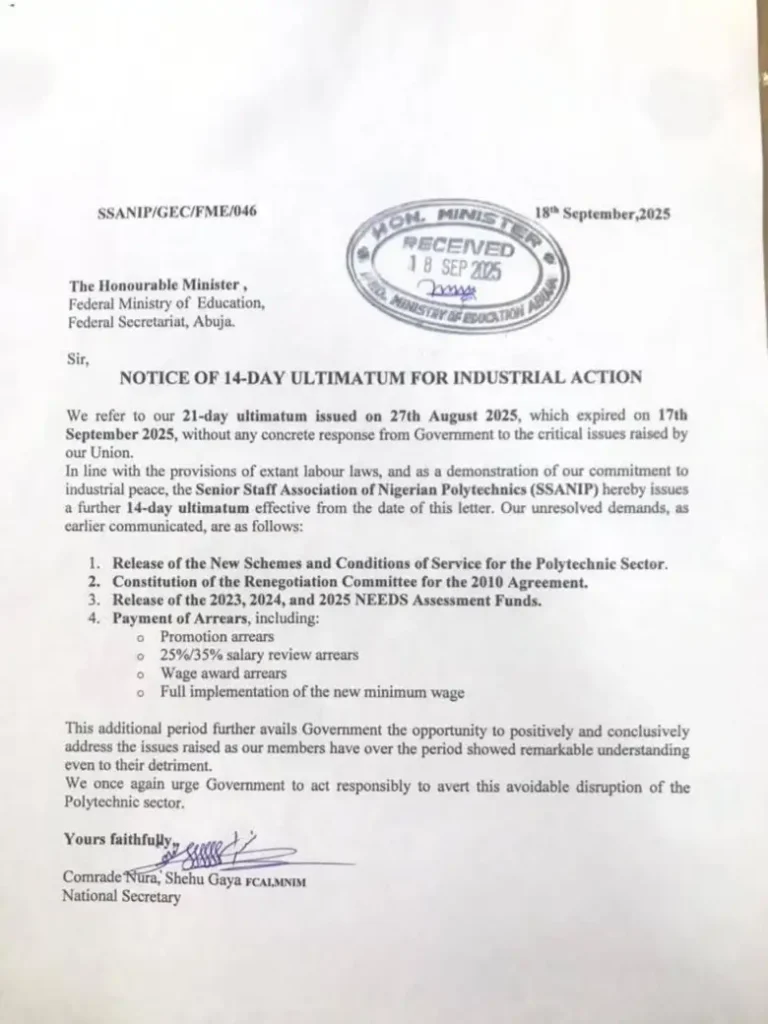
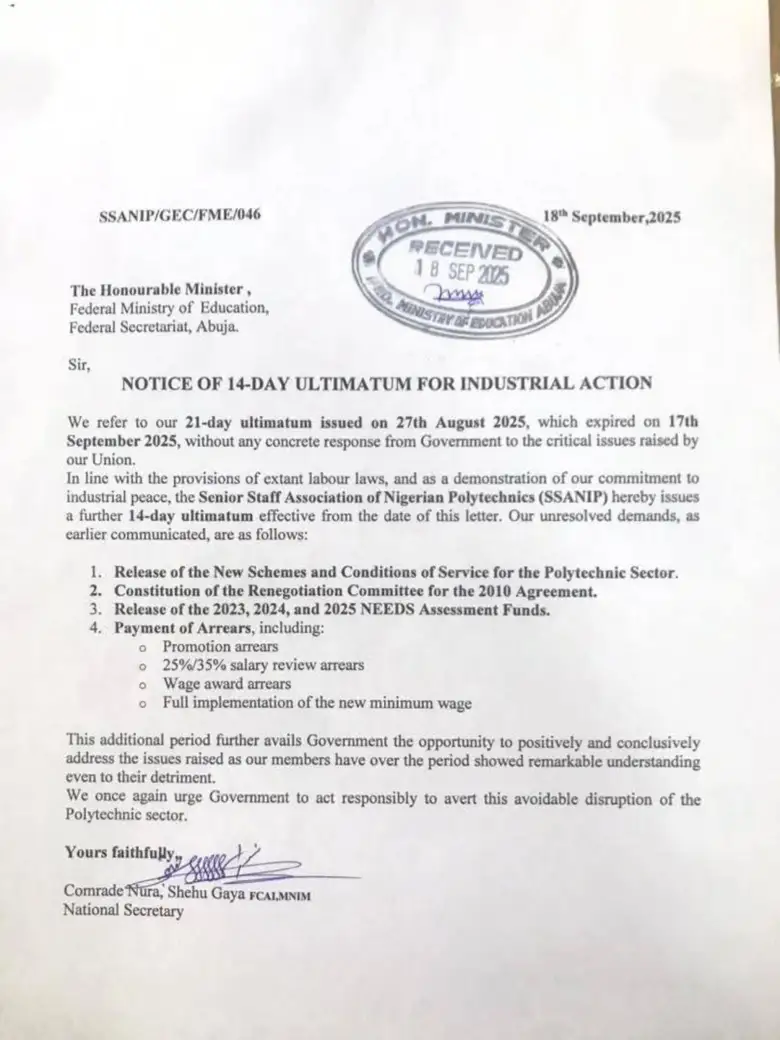
The Senior Staff Association of Nigerian Polytechnics, SSANIP, has issued a fresh 14-day ultimatum to the Federal Government over unresolved demands affecting polytechnic workers nationwide. The ultimatum, contained in a circular dated 18th September 2025, was addressed to the Honourable Minister of Education at the Federal Secretariat in Abuja.

According to the circular with reference number SSANIP/GEC/FME/046, the union stated that its earlier 21-day ultimatum issued on 27th August 2025 expired on 17th September 2025 without any concrete response from the government. The union said this has forced them to take further steps to push for their demands.

The National Secretary of SSANIP, Comrade Nura Shehu Gaya, FCAI, MNIM, who signed the document, explained that the new ultimatum was issued to give the government another opportunity to resolve the lingering issues. He said, “In line with the provisions of extant labour laws, and as a demonstration of our commitment to industrial peace, the Senior Staff Association of Nigerian Polytechnics hereby issues a further 14-day ultimatum effective from the date of this letter.”

The union listed its key demands, including the release of the new schemes and conditions of service for the polytechnic sector, constitution of the renegotiation committee for the 2010 agreement, and release of the 2023, 2024, and 2025 NEEDS assessment funds.

Other demands include payment of outstanding arrears such as promotion arrears, 25% and 35% salary review arrears, wage award arrears, and the full implementation of the new minimum wage.

Comrade Gaya added, “This additional period further avails government the opportunity to positively and conclusively address the issues raised as our members have over the period showed remarkable understanding even to their detriment.” He urged the government to act quickly to prevent disruption in the polytechnic sector.

Attached below is the circular:

Borno State trains journalists on AI, teachers on digital literacy

0

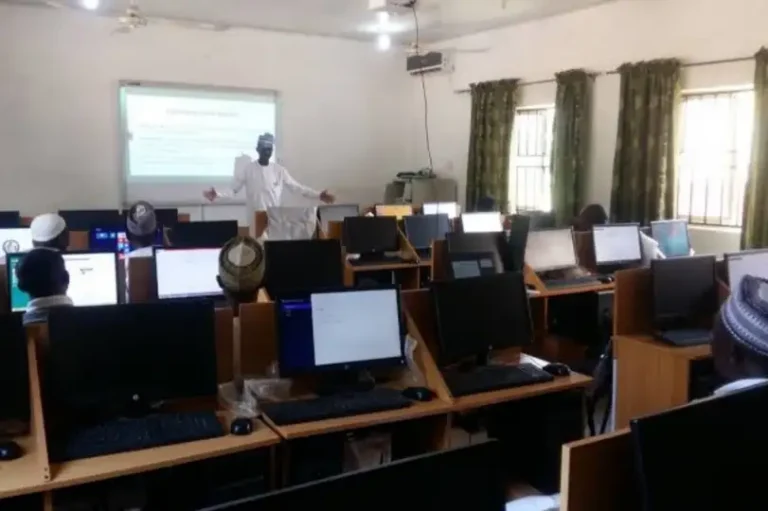
The Borno State Information and Communication Technology Development Agency (BICTDA) is spearheading two major training initiatives aimed at improving the digital skills of journalists and teachers across the state.

The first initiative is a one-day intensive workshop for members of the Nigerian Union of Journalists (NUJ), NTA Maiduguri Chapter. The workshop focuses on integrating Artificial Intelligence into modern journalism to help media professionals adapt to the fast-changing digital media space. Speaking on the importance of the training, the Executive Secretary of BICTDA, Hon. Engr. Mohammed Ahmed Kabir Wanori FNSE, said the program will provide journalists with vital knowledge and tools for the future of journalism. He emphasized, “This workshop is designed to equip our journalists with the skills needed to thrive in the age of AI and technology.”

In addition to this, BICTDA has launched a two-day ‘Digital Literacy for All’ (DL4ALL) training program for teachers, which began yesterday. This initiative is being organized in collaboration with the National Information Technology Development Agency (NITDA), the Universal Basic Education Commission (UBEC), and the National Senior Secondary Education Commission (NSSEC). The training aims to enhance the digital skills of teachers, enabling them to integrate technology into their classrooms and improve the quality of education in Borno State.

According to Engr. Wanori, “By empowering our teachers with essential digital skills, we are ensuring that our students receive a modern and technology-driven education.”

These programs are part of BICTDA’s broader strategy to drive digital transformation in Borno State. With these efforts, the agency is preparing journalists and educators to face the challenges and opportunities of a digital world, while also fostering growth in the state’s education and media sectors.

Adamawa Civil Service warns applicants against recruitment fraudsters

0

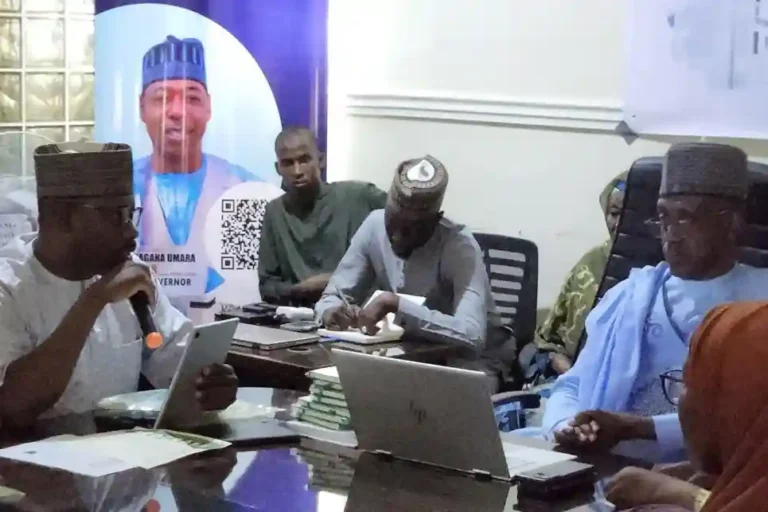
The Adamawa State Civil Service Commission has warned candidates taking part in the ongoing recruitment exercise to be cautious of fraudsters pretending to be agents of the commission.

In a statement signed by the Chairman of the Commission, Barrister Musa Kaibo, he emphasized that the commission does not and will not collect money or any form of gratification in exchange for employment.

“The commission does not collect money or favors for job placements. Anyone demanding payment is a fraudster and should be reported immediately,” the statement read.

Barrister Kaibo also cautioned individuals who are extorting unsuspecting applicants under the pretense of helping them secure jobs to stop such illegal activities, stressing that the commission will not tolerate it.

He urged candidates and the public to report any fraudulent activity to security agencies or directly to the commission’s headquarters with full details of those involved.

“The identity of whistleblowers will be fully protected,” he assured. Kaibo reaffirmed that, as directed by Governor Ahmadu Umaru Fintiri, the recruitment process will remain open, fair, and transparent to give equal opportunities to all qualified candidates.

FG approves NASENI solar irrigation pumps for 2025 dry season farming

0

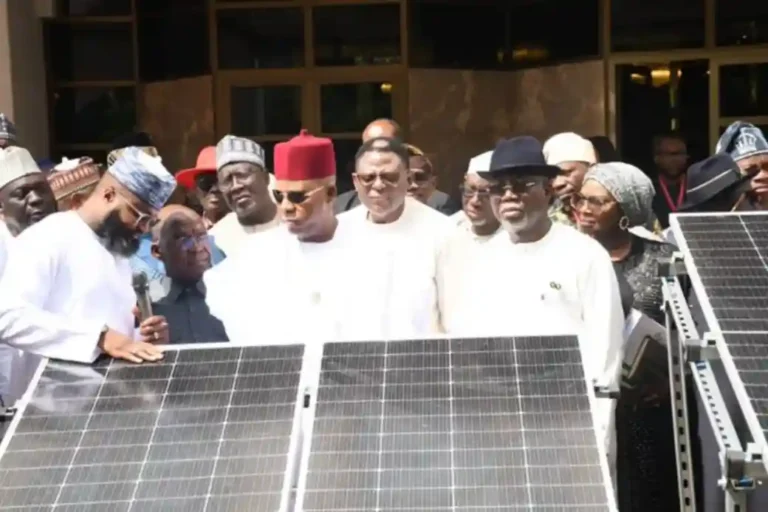
The National Economic Council (NEC) has endorsed solar-powered irrigation pumps produced by the National Agency for Science and Engineering Infrastructure (NASENI) for national rollout ahead of the 2025 dry season farming. The development is part of efforts to boost food security, reduce operational costs for farmers, and improve livelihoods across the country.

At its 152nd meeting held on Thursday at the Presidential Villa in Abuja, the Council approved the use of the NASENI solar irrigation pump, designed to replace petrol-powered pumps. The innovation is expected to increase agricultural productivity while reducing dependence on fossil fuel energy.

In anticipation of President Bola Ahmed Tinubu’s approval, NEC also mandated the Minister of Budget and Economic Planning, Senator Abubakar Atiku Bagudu, to design funding modalities that would enable NASENI to mass-produce the irrigation pumps and ensure their distribution before the 2025 dry season farming cycle begins.

Chairman of the Council, Vice President Kashim Shettima, described the endorsement as a step that demonstrates Nigeria’s ability to compete globally with innovation. He said, “We must also face the challenge of innovation in agriculture. NASENI’s scaled-up solar irrigation pumps are ready for national rollout ahead of the 2025 dry season. These pumps replace expensive petrol-powered systems, lower farmers’ costs, expand dry-season cultivation, and even provide backup power for households. Their advanced features, including GPS tracking, mobile app dashboards, usage monitoring, and pay-as-you-go integration, prove that Nigerian ingenuity can compete with the world.”

The Vice President noted that the innovation would strengthen food security and open new opportunities for carbon credits for farmers nationwide. He also highlighted other initiatives of the Tinubu administration targeted at agriculture and rural development. “Recently, 250,000 farmers have been insured across eight states, the 30 percent Value Addition Bill is advancing, and the ₦250 billion Bank of Agriculture facility is being activated to reach smallholders,” he said.

Updates from the Presidential Food Systems Coordinating Unit showed that the Green Imperative Project with Brazil is being restructured for financing, while the World Bank-backed AGROW programme is mapping priority value chains. According to Shettima, “The Harvesting Hope Caravan has reached half a million citizens in eight states, building trust and grassroots mobilisation. These are lifelines to farmers and proof that NEC’s decisions resonate beyond these chambers.”

The Council also reviewed national account balances as of September 17, 2025. The Excess Crude Account stood at $535,823.39, the Stabilization Account at N83,495,784,133.24, and the Natural Resources Account at N125,818,396,257.41.

During the session, the Nigerian Economic Summit Group (NESG) presented preparations for the 31st Nigerian Economic Summit with the theme, “The Reform Imperative: Building a Prosperous and Inclusive Nigeria by 2030.” The presentation outlined global trends such as uneven economic growth, divergent inflation, rising geopolitical tensions, and climate and technology shifts.

Key challenges facing Nigeria were identified as structural bottlenecks in energy and transport, political instability, frequent policy reversals, corruption, and over-reliance on oil revenues. The report also pointed to global pressures such as climate change, trade tensions, and competitive strain on the country’s weak industrial base. The Council committed to actively participate in the summit to mobilize support for President Tinubu’s Renewed Hope Agenda.

Another major briefing came from National Security Adviser, Mallam Nuhu Ribadu, who presented Nigeria’s Anticipatory Action Framework for Riverine Flooding. The framework aims to reduce humanitarian and economic losses from flooding by focusing on early warning, preparedness, and coordinated response in 13 high-risk states.

Objectives include protecting vulnerable households, institutionalizing anticipatory action across government agencies, and ensuring equity in response measures. The plan prioritizes multipurpose cash assistance worth ₦24 billion, while also supporting evacuation centers, child protection, and prevention of gender-based violence.

The framework revealed that 16 states have fully functional Local Emergency Management Committees (LEMCs), while 14 states have none, 4 have partial setups, and 3 depend on desk officers. The Council directed all high-risk states to establish effective LEMCs and provide targeted training to enhance grassroots preparedness. The framework also includes real-time monitoring, lessons-learned workshops, and reviews to improve accountability.

Council commended the Office of the National Security Adviser for the work and described the framework as comprehensive and visionary. It further directed that the scope should be widened to cover more states before final ratification at the next NEC meeting.

The Governor of Jigawa State also presented a report on the monthly cost of production survey and the impact of energy costs on food production. The memo highlighted challenges in agriculture, warning that high fertilizer and energy costs could worsen the food security situation. Recommendations included prioritizing fertilizer cost optimization through liberalized regimes and providing handheld farming tools for small-scale farmers who may not immediately benefit from tractor programs.

The memo also recalled President Tinubu’s directive from June 2024, instructing NASENI to ramp up production of 50,000 to 100,000 pumps for state-level distribution. In response, the Council resolved to address rising energy and fertilizer costs. The Minister of State for Petroleum Resources (Gas), Ekperikpe Ekpo, was directed to interface with industry stakeholders to address the high cost and availability of gas domestically and report back at the next NEC meeting.

The 152nd meeting of NEC ended with a reaffirmation of its commitment to strengthen food security, support innovation, and improve resilience against natural disasters, while also tackling structural and fiscal challenges facing Nigeria’s economy.

Katsina Governor Radda distributes N102m starter packs to 102 graduates

0

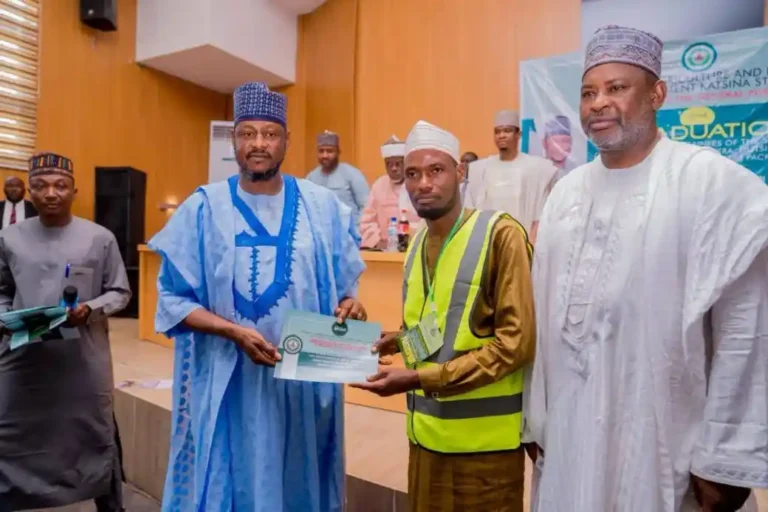
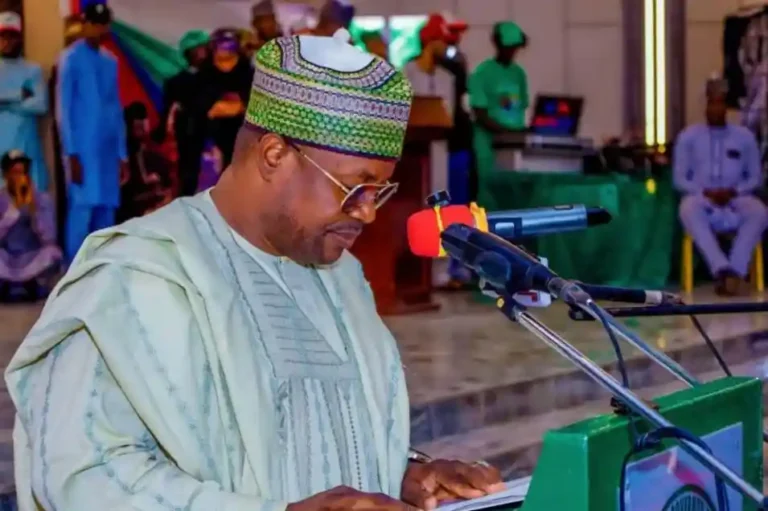
Katsina State Governor, Malam Dikko Umaru Radda, has handed N102 million in starter packs to 102 graduates of the revived Songhai Comprehensive Centre, marking what he described as a new milestone in his agricultural transformation agenda.

Speaking at the graduation ceremony held at the Banquet Hall of Muhammadu Buhari House, Governor Radda described the event as “a turning point in the history of agriculture in Katsina State.” Each of the 102 graduates, three from every one of the 34 local government areas, received N1 million as seed capital. This marked a significant rise from the initial N300,000 package earlier offered under the program.

The graduates, who successfully completed six months of intensive training, specialized in poultry, fishery, crop production, soil science, livestock management, market gardening, and biogas technology. Governor Radda emphasized that his administration has been deliberate in advancing policies that provide young people with opportunities to build sustainable businesses and strengthen the local economy.

“This is not just financial support. It is the seed capital. If you use it wisely and manage it with discipline, it will grow, create jobs, and transform communities,” he told the trainees.

The Governor highlighted that over 19,000 farmers have already benefited directly from agricultural inputs and assets distributed under his government’s farming support programs. He pointed to several reforms, including the 2023 dry season farming scheme, which distributed free improved seeds, fertilizers, agrochemicals, and 8,000 solar-powered irrigation machines to farmers across the state.

“In 2024, the government trained and deployed 722 agricultural extension workers to all 361 wards, each equipped with motorcycles and tools to support grassroots farmers,” Radda explained.

He further listed the state’s mechanization initiatives, which supplied 4,000 power tillers, 4,000 solar irrigation pumps, 400 tractors, 1,000 planters, and 10 combine harvesters. He noted that the distribution of 20,000 metric tons of fertilizer at a subsidized price of N20,000 per bag, alongside improved seeds and agrochemicals at 50 percent subsidy, was “the first of its kind by any Nigerian state.”

Women and medium-scale farmers also received attention through the goat multiplication program. According to the Governor, 3,610 women were given four goats each, while 361 medium-scale farmers were supported with 50 goats each.

Governor Radda announced that the next batch of Songhai training would expand to 361 participants, one from each ward of Katsina State, to ensure greater grassroots involvement. “I have seen your commitment and sacrifice. Some of you even left your families and children to complete this training. That gives me hope for the future of our state,” he said.

He reiterated that his agricultural vision is to move Katsina from subsistence farming to a more commercial, competitive system that generates jobs and wealth. “Together, we are moving our youth from the streets to the farms, from unemployment to enterprise, from dependency to dignity,” Radda declared.

The Governor also revealed plans to develop rural farm settlements that would come with schools, health centers, veterinary clinics, housing, and hostels to create modern farming communities. He added that cotton production had been revived with improved seeds and value chain strengthening to restore its economic relevance.

Commissioner for Agriculture and Natural Resources, Prof. Ahmed Bakori, described the graduation ceremony as more than a celebration of training completion. “This is not just the completion of a training program, but the beginning of a new chapter in the journey of agricultural transformation in Katsina State,” he said.

He commended the trainees for their dedication and the Governor for focusing on youth empowerment. “These trainees represent the future of our agricultural sector. They are now ready to transform challenges into opportunities and contribute meaningfully to food security, job creation, and the economic prosperity of our state,” Bakori noted.

He stressed that Katsina was not only producing graduates but also role models, entrepreneurs, and nation-builders who would shape agriculture’s future.

In a goodwill message, the Speaker of the State House of Assembly, Rt. Hon. Nasir Yahaya Daura, represented by the Majority Leader Hon. Shamsudeen Abubakar Dabai, encouraged the graduates to make the best use of the knowledge and skills gained. Similarly, Rabo Tambaya, Chairman of Danja and Katsina ALGON Deputy Chairman, pledged support from all 34 local government chairmen, urging the beneficiaries to apply their training to benefit their communities.

Speaking on behalf of the graduates, Umar Mukhtar assured the government of their commitment to improving food production, generating employment, and driving progress across Katsina State.

The ceremony was attended by Deputy Governor Faruk Lawal Jobe, Principal Private Secretary Abdullahi Aliyu Turaji, Special Adviser on Chieftaincy Affairs Usman Abba Jaye, and other government officials. Hundreds of trainees and community members also witnessed the event.

Sokoto launches food, cash, and SME support under RHEI

0

Sokoto State Government has reiterated its commitment to addressing the needs of residents through empowerment and poverty alleviation initiatives. Governor Ahmed Aliyu Sokoto disclosed this during the flag-off of food distribution to vulnerable groups under the Renewed Hope Initiative of the First Lady, Senator Oluremi Tinubu, held at Kasarawa Conference Centre.

Dr Ahmed Aliyu explained that the state has introduced several palliative support measures targeting vulnerable persons, the physically challenged, and the needy. According to him, “Thousands of bags of rice, maize, millet and cash assistance have been distributed free to the vulnerable persons.”

The Governor added that through the Small and Medium Enterprises Development Agency, SOSMEDA, under the Ahmadu Cares Programme, billions of naira were disbursed to entrepreneurs across the 23 local government areas of the state to enhance economic growth and promote job creation. He said the interventions were designed to cushion the effect of fuel subsidy removal on households.

Describing the programme as timely, he noted, “This initiative will go a long way in giving the vulnerable ones a sense of belonging and relief in these trying times.” The Governor, represented by his Deputy, Alhaji Idris Mohammed Gobir, expressed appreciation to President Ahmed Bola Tinubu for his commitment to the welfare of Nigerians, stressing that Sokoto State stands firmly in support of the President’s policies.

In her remarks, the wife of the Vice President, Hajiya Nana Kashim Shetima, who represented the First Lady, said the Renewed Hope food outreach scheme is aimed at supporting persons with disabilities and other vulnerable groups across Nigeria.

She explained, “The food outreach scheme under the Social Investment Renewed Hope was meant to provide food to persons with disabilities and vulnerable groups to support their families.”

She revealed that the programme has reached 17 states, including the Federal Capital Territory, and announced plans to roll out more economic empowerment schemes this year targeting elderly women and people with disabilities nationwide.

The Sokoto State First Lady, Dr Fatima Ahmed Aliyu, in her welcome address, said the government has provided assorted grains to ensure women benefit more from the intervention. She listed the items as 1,500 bags of 25kg maize and millet, 1,200 bags of rice, and cash assistance of 10,000 naira to each beneficiary.

Dr Fatima also highlighted the interventions of Senator Oluremi Tinubu under the Renewed Hope Initiative, describing them as life-changing. She said, “The interventions have brought succour to many households in the state.” She further commended the First Lady for her concern and dedication to issues affecting women, children, and vulnerable groups across Nigeria.

Lagos 2025 Eko Schools Arts and Crafts Competition

0

September 15, 2025 – 2025 Eko Schools Arts & Crafts Competition has officially opened registration for secondary schools and tertiary institutions across Lagos State. According to the organizers, “Registration is free and open exclusively to students within Lagos State.” This marks the first edition of the annual event.

The event aims to promote creativity among young talents, covering areas such as painting, sculpture, textile arts, pottery, photography, and other artistic expressions. The theme for this maiden edition is “My Lagos, My Story!” which will allow participants to share their personal perspective of Lagos through different art forms.

Speaking on the importance of the competition, the organizers explained that “the initiative is designed to showcase the skills and talents in our young individuals.”

Registration will remain open until Thursday, 25th September 2025, and interested participants can complete their entry by visiting the official portal at ekoschoolsartsandcrafts.com.

FG unveils N50,000 pension loan scheme for retirees, middle class

0

The Federal Government of Nigeria has unveiled a new pension-backed consumer credit scheme aimed at uplifting the lives of middle-class citizens and retirees, with access to loans and credit facilities designed to foster inclusivity.

The programme was launched under the Renewed Hope Agenda of President Bola Ahmed Tinubu, and is expected to transform Nigeria’s financial system by extending credit opportunities to a group that has long been left out of the ecosystem.

At the official launch and signing of a Memorandum of Understanding (MoU) with financial partners, the Managing Director and Chief Executive Officer of the Nigeria Consumer Credit Corporation (CREDICORP), Engr Uzoma Nwagba, described the initiative as a turning point for the country’s consumer credit system.

He explained that the programme would redefine credit access in a way that is transparent, affordable, and empowering.

“Annuitants are the backbone of Nigeria’s progress, yet they’ve been sidelined in the credit ecosystem. This programme changes that narrative. By partnering with Leadway Trustees’ expertise in pension management we’re delivering a credit solution that is safe, affordable, and transparent. This is consumer credit redefined inclusive, equitable, and empowering,” Nwagba stated.

He emphasized that the new scheme introduces affordable, pension-backed loans for Nigeria’s senior citizens, ensuring annuitants are fully integrated into the nation’s financial system.

“For decades, consumer credit accessibility has been a privilege reserved for active workers, leaving retirees despite their years of service to Nigeria struggling to fund critical needs like healthcare, home renovations, small business ventures, or family support.

“The programme addresses this head-on by leveraging pension income, offering retirees tailored, low-interest loans that are both secure and sustainable.”

According to him, the product is the first of its kind in the country, designed to ensure retirees can access credit with dignity without being burdened by high interest rates or complex loan processes.

Beneficiaries at the launch expressed optimism that the new scheme came at a time when many retirees were struggling financially. One of the first recipients, Mrs Amina Sule, a 68-year-old retired teacher, shared her relief.

“For years, I’ve wanted to start a small poultry business to stay active and support my family. This programme gives me the confidence to borrow affordably, knowing my pension secures my loan. It’s not just credit, it’s hope and independence.”

Another beneficiary, Mr Chukwuemeka Okeke, a retired civil servant, explained how the initiative is already addressing pressing personal needs. “Medical bills can be overwhelming. With this loan, I can cover my healthcare needs without stress. The process was straightforward, and I feel respected as a retiree.”

Under the scheme, retirees will be able to apply for loans starting from ₦50,000, with maximum amounts determined by their pension income. Repayment schedules will be structured to align with monthly pension payments, ensuring that the loans remain manageable.

Engr Nwagba announced that the programme is targeting 100 million subscribers, stressing that the goal is to mark a significant step in Nigeria’s financial inclusion drive.

“By extending consumer credit to retirees, CREDICORP and its partners are setting a new standard for equity in Nigeria’s financial system. The initiative aligns with CREDICORP’s broader mission to expand access to consumer credit for all Nigerians, supported by President Bola Ahmed Tinubu’s Renewed Hope Agenda.”

Representatives of financial institutions present at the launch said their involvement was to support bridging the gap in credit inclusivity, noting that the initiative was designed to address longstanding financial challenges faced by retirees and the middle class in Nigeria.

FG urged to create Ministry of AI to boost jobs

0

The Federal Government has been urged to establish a Ministry of Artificial Intelligence (AI) that will help drive innovation, create jobs, and strengthen Nigeria’s competitiveness on the global stage.

The call was made in Abuja by the Director-General of the Ibrosoft International Development Foundation (IIDF), Ibrahim Muhammad, during a training session organised for teachers, business executives, and residents of the Federal Capital Territory. The programme focused on how to harness artificial intelligence for personal growth, enhanced productivity, and new income opportunities.

Muhammad said artificial intelligence is already reshaping societies worldwide and Nigeria must act quickly to embrace it. According to him, a dedicated ministry would not only regulate its use but also encourage the growth of generative AI applications that could transform several sectors of the economy.

“AI is transforming every aspect of life. If government creates a Federal Ministry of Artificial Intelligence, Nigeria will not only compete with Africa but globally, and one day, we will become one of the developed countries,” he stated.

The training introduced participants to practical AI tools such as ChatGPT, which can support education, business, and research. The sessions were targeted at professionals and educators who are expected to transfer the knowledge to younger generations.

Muhammad stressed that empowering teachers and leaders is crucial because they can inspire students to be creative and innovative rather than passive consumers of technology. He added that while AI comes with risks such as generating fake content, the same tools can be applied to detect and verify information. He said proper regulation and education will ensure that the benefits of artificial intelligence far outweigh its downsides.

Participants at the training described the programme as eye-opening. Mrs. Juliana Chijoke John, a primary school teacher in Abuja, said the lessons will help her introduce AI concepts in her classroom and encourage her pupils to think more critically.

“It’s going to enhance me as a teacher and also help the children. Some of my pupils already know about AI, so this training will guide me on how best to teach them responsibly,” she explained.

For Nuhu Alia, a final-year Cyber Security student at Nile University, the training expanded his perspective on using AI in his academic work.

“As a student, I use ChatGPT and GitHub a lot. Now, I have learned how to apply them more effectively without relying on them completely,” he noted.