Home Blog Page 429

FG NAPEP scam collecting money through NIN verification

0

September 17, 2025 – National Poverty Eradication Programme (NAPEP) is a scam that is not from the Ministry of Humanitarian Affairs and Poverty Reduction.

The scam website napep-gov.ng has been deceiving the public for months and collecting money from unsuspecting people, claiming it is for NIN verification.

The fraud began around April 2025 and presented itself as Nigeria’s Rapid Response Register (RRR) under the Conditional Cash Transfer (CCT) initiatives of the National Social Safety Nets Project (NASSCO). Notice how the site uses napep-gov.ng instead of napep.gov.ng. Only verified government programmes are allowed to use ‘.gov.ng’ after a domain registrar verification process.

The scammer behind the programme strategically added the words ‘Poverty Programme’ to make it look real. A phone number, +234 703 778 1825, is even listed on the website. The fake site looks simple and avoids mentioning any government agency or its official. This is to avoid incriminating the person behind the scheme, or forcing people to contact the officials for confirmation.

For example, the Youth Economic Intervention and De-Radicalization Programme (YEIDEP) website, yeidep.org, clearly shows the Federal Ministry of Youth Development (FMYD), its stakeholders, and partner banks.

The FMYD has publicly acknowledged YEIDEP, and the Minister, Comrade Ayodele Olawande, has also spoken about it. This is not the case with NAPEP because it is fake and not authorised by the federal government.

Even mainstream media such as The Nation Newspaper published a story about this programme without realising it was fake. The programme also promises N100,000 per month. A scam!

NASSCO is the recognised federal programme for poverty eradication. There is an ongoing payment of N25,000 and activation of CCT-HoPE-RRR beneficiaries’ ATM cards for 2.1 million households, managed by the National Cash Transfer Office (NCTO). This was earlier confirmed by the Minister of State for Humanitarian Affairs and Poverty Reduction, Tanko Sununu.

Back in August, NAPEP scammers sent SMS messages to alleged beneficiaries claiming they were shortlisted, making the scam look real. The fake application form continues to run without any deadline. This means endless shortlisting while the scammer continues to collect money.

The public is hereby advised that the authentic federal government intervention website is nassp.gov.ng. The FG will never ask applicants to pay money for empowerment programmes. This scam uses fake NIN verification as a way to steal from people. The general public is hereby warned that NAPEP has nothing to do with the federal government of Nigeria, and is a scam.

Advertisement

FG PFI enters new phase 3.0 to stabilise fertilizer supply

0

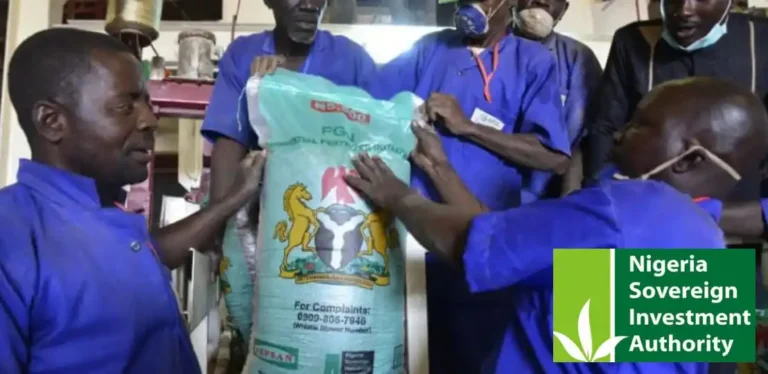
The Presidential Fertilizer Initiative (PFI) has announced new steps to guarantee a steady and reliable fertilizer supply for Nigerian farmers in line with President Bola Tinubu’s goal of food sovereignty.

In a statement, Executive Director, Portfolio, Tajudeen Ahmed, revealed that the initiative has entered a new stage called PFI 3.0. This phase is designed to stabilise the supply of raw materials to blending plants across the country and ultimately make Nigeria self-sufficient in crop production for both food and industrial use.

“As of September 2025, more raw materials have already been supplied or ordered than the total supplied in 2024, and additional arrangements have been concluded with fertilizer raw material manufacturers to stock warehouses nationwide. Blenders will have access to as much material as their production capacity can support.

“This is backed by verifiable data and a proven track record by the PFI, bolstering confidence among farmers and agricultural stakeholders,” Ahmed said.

The Ministry of Finance Incorporated (MOFI) confirmed in a statement that steady progress has been achieved. “From 2022 to date in 2025, 48 distinct vessels have delivered critical raw materials for fertilizer blending under the PFI.

“In 2025 alone, 10 vessels have already discharged and are expected to discharge cargoes, accounting for more than 560,000 metric tonnes of inputs received at Nigerian ports. This steady inflow is laying the foundation for robust production and ensuring continuity of supply and stability across Nigeria’s fertilizer value chain,” the statement read.

MOFI Managing Director and CEO, Dr. Armstrong Takang, stressed that the focus goes beyond volumes. “We are meticulously building a system that can insulate farmers from global market shocks and instill the confidence needed for long-term agricultural planning. We see the PFI as a prime example of public-private collaboration that can solve complex national challenges, and its future is a testament to Nigeria’s capacity for strategic reform.”

The PFI said that consistent local production has been sustained, with over 4.5 million MT of finished fertilizer produced between 2021 and 2024. “Cumulatively, since its inception, the PFI has facilitated the production of over 128 million bags of fertilizer, delivered directly to farmers across the country,” it stated.

The Fertilizer Producers and Suppliers Association of Nigeria (FEPSAN) also confirmed the positive impact of the initiative. “We have witnessed significant improvement in productive capacity since the PFI’s inception,” said Alhaji Sadiq Kassim, President of FEPSAN.

“The number of operational blending plants has increased to over 90 across the country, giving us a total blending capacity of up to 13 million metric tonnes. This capacity is a critical asset in ensuring fertilizer is consistently available for our farmers, bringing it closer to their farms and reducing transportation costs.”

Industry leaders acknowledged farmers’ concerns about rising prices but clarified that the issue is linked to foreign exchange volatility and global raw material costs, not local scarcity.

To tackle these external challenges, the PFI announced that its third phase, PFI 3.0, was endorsed at the August 2025 Stakeholder Roundtable in Abuja.

“MOFI is set to take over operational management from the Nigeria Sovereign Investment Authority (NSIA) by November 2025. This transition is expected to strengthen governance and provide seamless continuity as the programme enters its next, more ambitious phase,” the statement added.

FG unveils $2.2bn projects under FAO initiative, targets 500k+ farmers

0

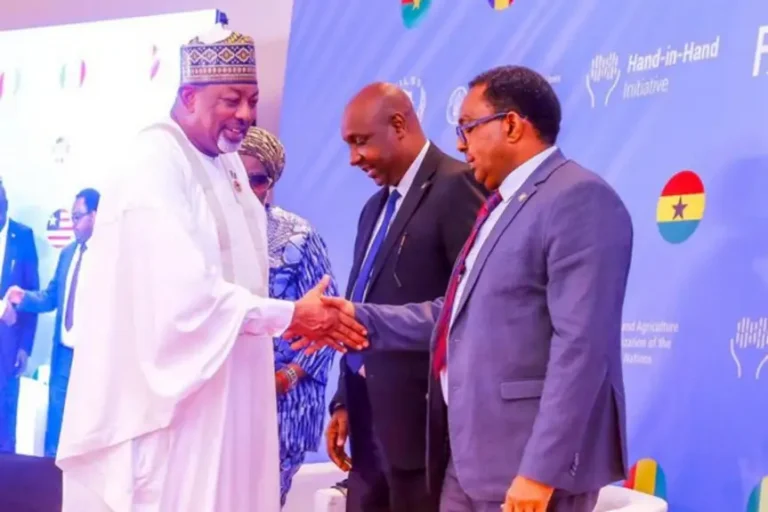
Nigeria has unveiled three major agricultural investment opportunities worth over $2.2 billion in tomato, cassava, and maize production, forming part of its wider $3.14 billion portfolio under the FAO Hand-in-Hand Initiative.

The announcement was made at the Hand-in-Hand Investment Forum in Abuja by the Honourable Minister of Agriculture and Food Security, Senator Abubakar Kyari, CON.

According to Senator Kyari, the projects are aimed at unlocking productivity, cutting post-harvest losses, and boosting food security while offering investors significant financial returns. “Investing in these value chains means investing in food security, jobs, and regional trade under ECOWAS and AfCFTA,” he stated.

The tomato programme is valued at $869 million and will focus on 72,000 hectares in Kano, Bauchi, and Borno. It is expected to reduce post-harvest losses by half and raise yields to as much as 30 tonnes per hectare. The project will directly benefit 36,000 farmers and is projected to deliver an internal rate of return of 12.5 percent and a net present value of $171 million.

For cassava production, Nigeria is seeking $382 million in investment to develop 207,000 hectares across Ogun, Oyo, and Anambra. The initiative is set to directly support 45,000 farmers, establish 375 processing units, and reduce the country’s dependence on imported starch and high-quality flour. The portfolio reflects an internal rate of return of 15.2 percent and a net present value of $187.7 million.

The largest share of the investment is earmarked for maize, with a $1 billion plan to cultivate 1 million hectares in Katsina, Kaduna, and Oyo. The project aims to close Nigeria’s 5 million metric tonne maize production gap, benefiting over 420,000 farmers directly and nearly 3 million people indirectly. The financial outlook shows an internal rate of return of 18.7 percent and a net present value of $75.6 million.

Officials highlighted that the investments will strengthen food security, boost industrial growth, and promote regional exports while creating sustainable livelihoods for millions of Nigerians.

INEC dismisses old recruitment portal, confirms Anambra ad-hoc staff vacancies

0

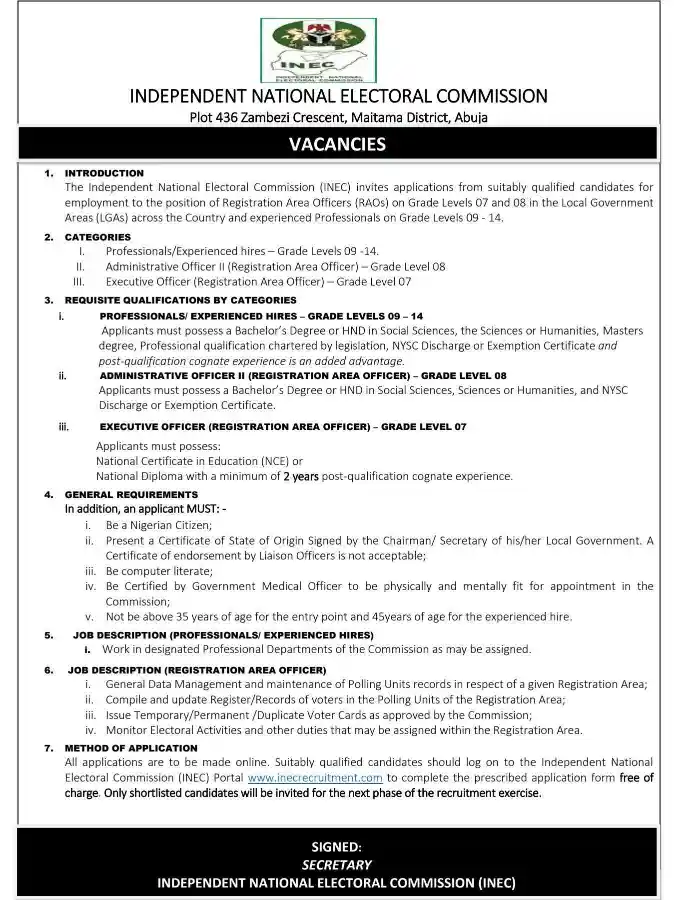
September 17, 2025 – Independent National Electoral Commission (INEC) has released a disclaimer titled “INEC is not recruiting” following a wave of confusion across social media. A certain INEC advert had been circulating online, suggesting that the Commission was recruiting for various positions.

The truth is that INEC is currently recruiting, but only for ad hoc staff for the Anambra governorship election. This recruitment has been officially announced by the Commission HERE.

In its statement, INEC said, “Our attention has been drawn to a fake advertorial currently circulating on social media, giving the impression that the Independent National Electoral Commission (INEC) is recruiting for various positions. The impostor behind this illicit recruitment exercise also asked would-be respondents to log on to an equally fake portal – inecrecruitment.com to complete their applications. But INEC does not have any such portal.”

“The Commission hereby calls on the public to disregard this fraudulent call for applications. The Commission IS NOT recruiting. Do not fall victim to the antics of criminal elements.”

The confusion appears to have started because the circulating advert refers to an old INEC announcement from 2020, when the portal inecrecruitment.com was genuinely used for recruitment.

The current Anambra ad hoc staff recruitment is being handled through the new portal presmobile.inecnigeria.org, and it is strictly for residents of Anambra State.

The public is advised to take note and avoid being misled by fake job adverts or falling victim to scammers spreading false information on social media.

Attached below is the old (and invalid) advert adhoc staff that INEC is advising the public to ignore:

Oyo PHC board releases supplementary list, sets verification date

0

September 17, 2025 – The Oyo State Primary Health Care Board (OYSPHCB) has announced the release of the supplementary list of successful applicants under its recent recruitment exercise. In a statement from the Board, applicants were advised to visit the nearest Local Government Health Authority office to obtain their unique Reference Number.

According to the Board, “This Reference Number will be required to log into the recruitment portal and print the official Offer of Appointment and acceptance letter.” The Board further directed that after printing the documents, successful applicants must proceed to the OYSPHCB’s Office at the Secretariat, Ibadan, on Thursday 18th September, 2025, with the letters and other relevant documents for verification and documentation.

The Board described this step as mandatory for finalising the appointment process and securing deployment. “All shortlisted applicants are encouraged to complete these processes promptly and ensure strict compliance with the requirements,” the statement read.

Applicants can access the recruitment portal through https://recruitment.oyophcb.org.ng to complete the necessary steps.

Air Peace to employ 1,000 graduates through 2025/2026 trainee programme

0

Nigeria’s largest airline, Air Peace, has announced the creation of 1,000 new jobs for young Nigerians through its 2025/2026 Graduate Trainee Programme. The development follows the Federal Government’s decision to suspend the 4 per cent Free on Board (FOB) levy on imported goods, which had triggered strong reactions from manufacturers, importers, and customs agents.

The FOB levy, introduced by Customs, raised concerns that it would worsen inflation, disrupt trade facilitation, and weaken Nigeria’s business climate. The Minister of Finance and Coordinating Minister for Economy, Wale Edun, confirmed that the suspension was necessary after listening to stakeholders across key sectors. Edun said the levy risked “eroding trade competitiveness and dampening the investment climate.”

In response, Air Peace Chairman, Allen Onyema, announced the job creation initiative in a statement on Wednesday. He praised President Bola Tinubu and Edun for taking swift action to address the concerns of businesses. “This suspension is a lifeline for the aviation industry. It removes a heavy burden that could have crippled airlines and triggered massive job losses. In turn, Air Peace is reciprocating this kind gesture by creating 1,000 fresh graduate jobs for young Nigerians,” Onyema said.

He explained that the initiative shows the positive impact that government and private sector partnerships can have on the economy. “If further supportive measures like this come from the Federal Government, I can assure you that thousands more jobs will be created in the aviation sector. This is how partnerships can transform a nation,” Onyema added.

According to Air Peace, the Graduate Trainee Programme is designed to equip fresh graduates with mentorship, practical exposure, and skills to build a career in aviation and related industries. Onyema described it as “a strategic pipeline for building a competent, future-ready workforce to support the continued growth of the sector.”

The airline outlined the criteria for interested candidates, stating that applicants must be 30 years old or younger at the time of application and must hold at least a Second Class Lower (2:2) degree from a recognised university. Air Peace further stated, “The candidate must also be in possession of a NYSC discharge certificate, exclusion, or exemption letter and must demonstrate passion, adaptability, and a strong desire to learn.”

Applications can be submitted via the official Air Peace website at https://flyairpeace.com/graduate-trainee-program/. Candidates may also scan the QR code on the official programme flier. The deadline for applications is September 30, 2025.

Dangote rolls out 1,000 CNG trucks to create 24,000 jobs

0

Dangote Petroleum Refinery yesterday rolled out 1,000 Compressed Natural Gas (CNG)-powered trucks, with a promise that the deployment will create 24,000 jobs across the country.

President and Chief Executive of Dangote Group, Aliko Dangote, disclosed this in Lagos during a conference organised to mark the first anniversary of the refinery’s launch of petrol production.

The trucks represent the first phase of the company’s direct fuel distribution programme. Dangote explained that the initiative is part of a broader plan to strengthen domestic fuel supply, create jobs, and support national economic growth.

He further revealed that the refinery’s capacity will rise from 650,000 barrels per day (bpd) to 700,000 bpd next year, adding that this expansion aligns with the management’s determination to generate more employment and enhance the economy.

Highlighting the achievements of the $2 billion facility, Dangote noted that Nigeria’s decades-long struggle with fuel queues has faded since the refinery began operations a year ago. According to him, the refinery has successfully reduced petrol prices by N259 per litre within twelve months.

“Despite opposition and economic headwinds, the refinery has successfully reduced the price of petrol from nearly N1,100 before production began to N841 in the South West, Abuja, Delta, Rivers, Edo, and Kwara. With the rollout of CNG-powered trucks, Dangote anticipates this price reduction will soon be felt nationwide,” he said.

He recalled that Nigeria has been battling fuel shortages since 1975 but stressed that the launch of local refining on September 15, 2024, marked a turning point. “We have been battling fuel queues since 1975, but today Nigerians are witnessing a new era,” he said.

Dangote also declared support for the Federal Government’s ambition to achieve a $1 trillion economy by 2031, describing the target as realistic. He urged Nigerians to “invest in the local economy for the good of all and in support of the government’s determination to create jobs and grow the economy.”

Addressing challenges encountered during the refinery’s development, he said the project was aimed at transforming Nigeria’s downstream sector despite resistance.

“The journey has been challenging because we sought to transform the downstream sector in Nigeria. Some believed we were taking food from their tables, which simply isn’t true. What we have done is to make our country and continent proud. Previously, only two African countries were not importing petrol, but regrettably, they have since resumed imports. This is detrimental to Africa,” he said.

He stressed that the refinery has the capacity to meet Nigeria’s domestic demand while also earning foreign exchange through exports. Between June and early September this year, the refinery exported over 1.1 billion litres of petrol, underscoring its role in stabilising supply and boosting revenue.

Dangote placed emphasis on job creation, clarifying that the refinery was not displacing existing workers but creating thousands of new opportunities.

“The deployment of 4,000 CNG-powered trucks is expected to create at least 24,000 jobs across Nigeria. We have not displaced any jobs; we are creating many more. The CNG trucks will not be operated by robots,” he said.

He explained that employees enjoy salaries three times the minimum wage, with drivers benefiting from living wages, life insurance, health insurance covering their families, and lifelong pensions. He added that the CNG fleet will also require the services of mechanics, fleet managers, and other professionals.

Dangote highlighted that Nigeria has now become Africa’s refining hub. He said the refinery is on course to make Nigeria the largest exporter of polypropylene and one of the world’s leading fertiliser producers, initiatives that will create foreign exchange, generate jobs, and stimulate growth across other sectors.

“We are fully committed to supporting the government in adding value, creating jobs, and building a stronger economy,” he said.

He expressed appreciation to the Federal Government, the refinery’s partners, its workforce, and Nigerians for their support. He also commended the Independent Petroleum Marketers Association of Nigeria (IPMAN) for encouraging members to participate in the CNG-powered trucks distribution initiative.

At the conference, some of the trucks were showcased while loading petrol from the refinery. Dangote assured that all 4,000 trucks will be deployed across the country in due course. He dismissed concerns about possible attacks on drivers or trucks, stressing that Nigeria is governed by the rule of law and that security agencies are empowered to protect citizens and infrastructure.

On labour matters, he clarified that while the company respects trade unions, membership should remain a personal choice.

He reaffirmed his commitment to Nigeria’s industrialisation, stressing that it is essential for Africa’s development. Citing the collapse of the textile sector as an example, he warned against the dumping of cheap foreign goods that harm local industries.

He urged lawmakers to support policies that prioritise Nigerian industries. “Other nations were not industrialised by outsiders. We must build and industrialise our own economies. Without this, how can others invest? That is why I believe the National Assembly should enact legislation to support the Federal Government’s ‘Nigeria First’ policy,” he said.

Dangote also spoke on Africa’s economic prospects, stressing that reliance on imports leads to job losses and poverty.

“My goal is to see Africa prosper, as we have the fastest-growing population in the world. Relying on imports means exporting jobs and importing poverty.

“Many individuals with greater financial resources than myself want to invest, but the challenges we face discourage them. Numerous sectors are still in urgent need of industrialization,” he said.

FG, SOOP Co. to boost digital creator economy and cultural exchange

0

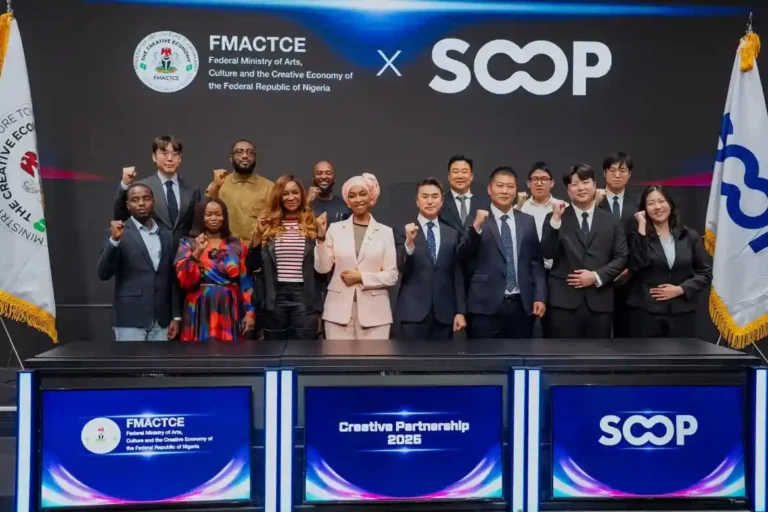
Nigeria’s Federal Ministry of Arts, Culture, Tourism, and the Creative Economy has signed a Strategic Memorandum of Understanding with SOOP Co., Ltd. to strengthen the digital creator economy and expand cultural industries.

The agreement introduces a cooperative framework that will allow SOOP to formally launch and grow its digital-content platform in Nigeria, creating new opportunities for digital content development and monetisation.

According to the Ministry, “this partnership is a step toward improving digital-content competitiveness, refining monetisation models, and encouraging wider creator participation.” The MOU also highlights joint initiatives focused on talent development through training, onboarding, and incubation programs that will support Nigerian creators and open new channels for global visibility.

The agreement further covers cultural exchange between Nigeria and Korea, including co-productions, campaigns, and global branding activities. SOOP noted that “Nigeria’s creative economy has strong potential, and we are committed to building a sustainable and mutually beneficial partnership.” Both parties reaffirmed their dedication to advancing innovation in digital content.

NDA orders 77RC reserve candidates to report or forfeit admission

0

September 16, 2025 – The Nigerian Defence Academy (NDA), Kaduna, has directed all reserve candidates listed in the 77th Regular Combatant Course admission to report for training on Sunday, 21 September 2025.

According to the official statement, any reserve candidate who fails to arrive at the Academy by Monday, 22 September 2025, will forfeit their place. The announcement added that affected candidates should consult the reporting instructions published on nigeriastartupact.ng on 19 August 2025 HERE. The notice was signed by the Academy Registrar.

The release of the list of successful and reserve candidates for admission into the 77 Regular Combatant Course was made public on 19 August 2025. The NDA confirmed that the names published belong to candidates who passed the Armed Forces Selection Board Interview conducted between 28 June and 6 August 2025. “The candidates have been offered admission into the NDA as cadets of the 77 RC,” the statement read.

Successful candidates are expected to report to the Ribadu Campus, Old Site, Kaduna, on Monday, 1 September 2025. The Registrar of the NDA, Brigadier General OA Ogunnleye, stated that cadets admitted are full-time students and not employees. “They shall not claim any form of right or engagement whatsoever as an employee of the institution or the Federal Government of Nigeria upon dismissal or withdrawal from the Academy before commission as an officer,” he explained.

The institution reminded candidates and the public that the Nigerian Defence Academy is tuition-free and warned against making payments to anyone for admission. It stressed that any candidate who fails to report by Wednesday, 3 September 2025, will lose the admission slot.

All selected candidates are to present original copies of their credentials, including First School Leaving Certificate, NECO or WAEC results, birth certificate, and state of origin certificate. They are also required to come with personal items such as white shorts, black and white trousers, canvas shoes, pyjamas, sportswear, laptops, and toiletries. Female candidates are expected to bring additional items including low heel shoes, lounge skirts, and trouser suits.

The NDA further directed that no visitors will be allowed within the first three months of training. It also instructed all successful candidates to upload their O’Level results on the JAMB Portal, accept admission through the Central Admissions Processing System, and make changes where necessary.

“Selected candidates and their parents are to please note the above for strict compliance,” the announcement concluded.

FG, China deepen biotechnology ties, focusing on agriculture, others

0

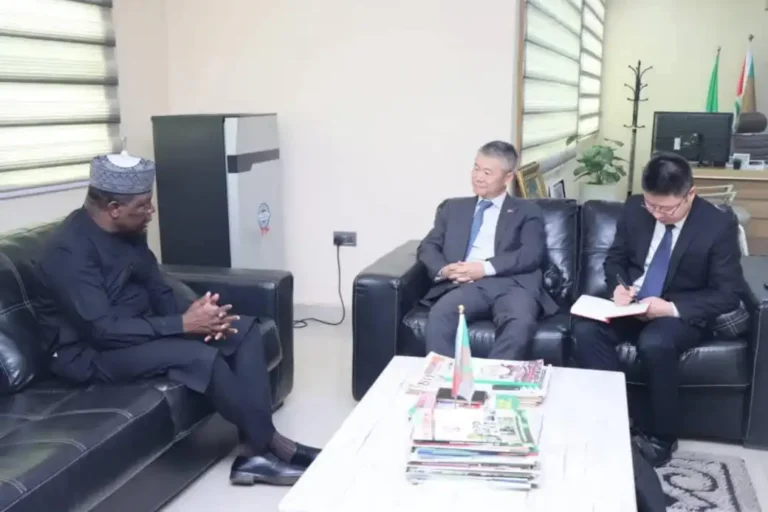
The Director General of the National Biotechnology Research and Development Agency (NBRDA), Prof. Abdullahi Mustapha, on Tuesday hosted the Minister Counsellor of the Embassy of the People’s Republic of China, Wang Yingqi, and the Deputy Director of its Economic and Commercial Section, Cai Xinfa, at the agency’s headquarters in Abuja.

The visit was centred on strengthening bilateral cooperation between Nigeria and China in biotechnology, with emphasis on agriculture, healthcare, and scientific research. Discussions highlighted the importance of joint initiatives to drive development in these sectors.

Prof. Mustapha underscored the crucial role of biotechnology in solving Nigeria’s socio-economic challenges, particularly food insecurity and limited access to healthcare. He detailed the agency’s research breakthroughs and ongoing initiatives designed to support sustainable national development, noting the significant market potential of these advancements.

The Director General also referred to the agency’s recent Memorandum of Agreement with Shanghai Haiqi Ltd to establish Nigeria’s first insulin manufacturing facility, describing it as a breakthrough for the health sector. According to him, the initiative will save lives while reducing the country’s reliance on expensive imports. “This is just the beginning. We are eager to deepen cooperation with China in agriculture and other key areas,” he stated.

Minister Counsellor Wang Yingqi praised the agency’s achievements in applying biotechnology to national development. He described the insulin agreement as “a good beginning for our operations” and assured that he would facilitate connections between NBRDA and top Chinese research institutions and companies to broaden areas of collaboration.

Deputy Director Cai Xinfa stressed the need for joint research projects between NBRDA and Chinese institutions. He further pointed out the importance of upgrading NBRDA laboratories to boost research capacity, innovation, and productivity.

The visit reaffirmed Nigeria-China relations in science and technology, with both sides agreeing that stronger cooperation in biotechnology will advance food security, improve healthcare, and foster economic growth.