Home Blog Page 431

NCS notifies shortlisted candidates to check status and verify email

0

September 13, 2025 – The Nigeria Customs Service (NCS) has released link for successful candidates shortlisted for the 2025 recruitment exercise to check their status and verify their email addresses on the official portal.

Recall that NCS recently released the shortlist and announced the CBT date.

According to the NCS, some applicants have issues with receiving official mails.

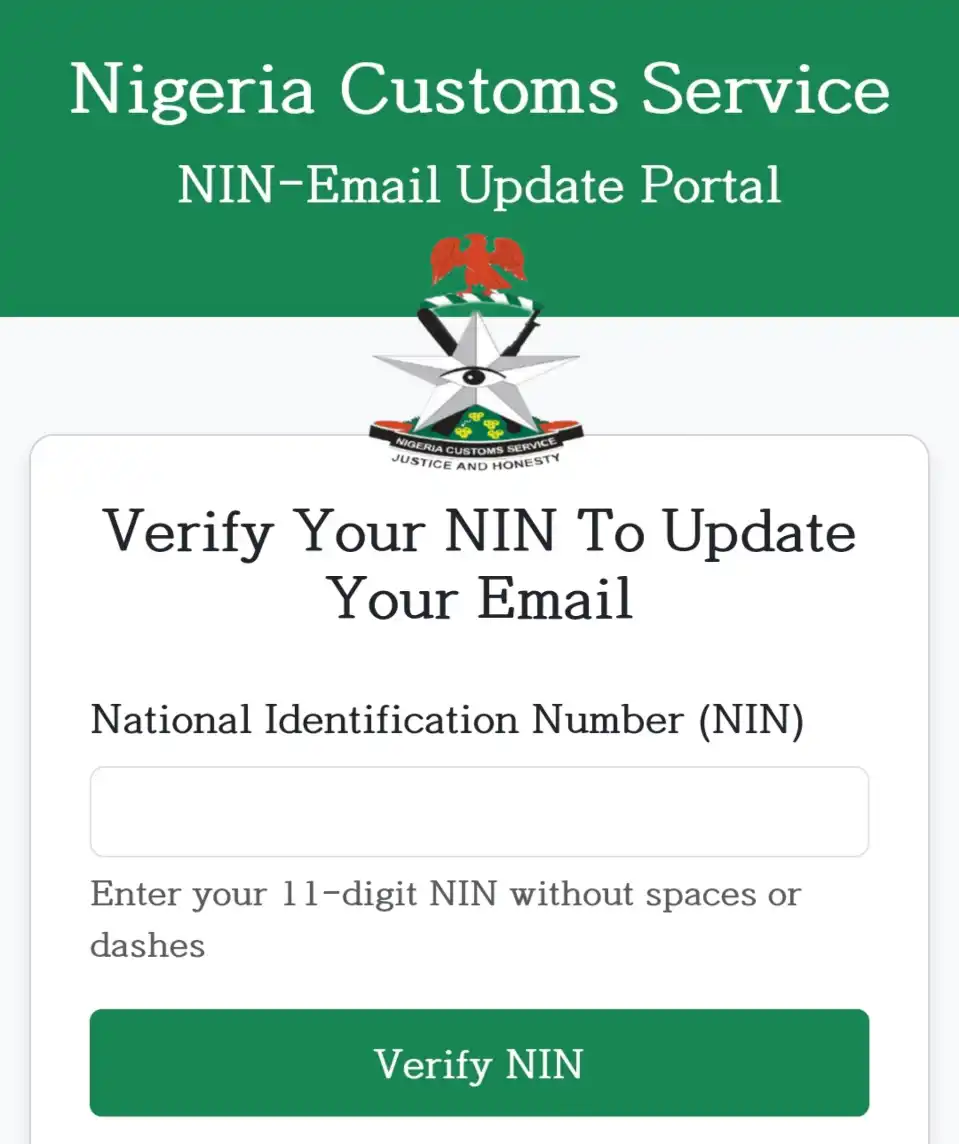
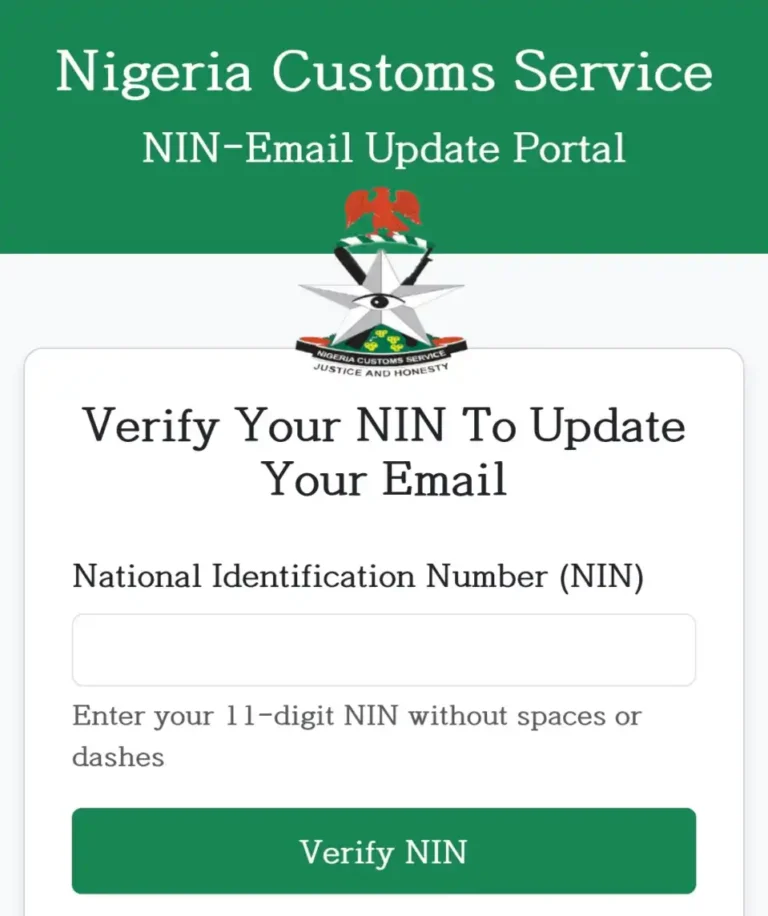
A statement from the NCS explained, “To resolve this, all shortlisted candidates are required to log on to the Recruitment Portal via this link: http://updates.customs.gov.ng. Kindly visit the Portal and log in with the National Identification Number (NIN) used while registering to access your profile, confirm the correctness of your registered email address, and update it where necessary.”

Any candidate who fails to update or verify their email address may not be able to access vital recruitment information.

How to check NCS status:

Applicants have been notified to check their status and validate their details by visiting updates.customs.gov.ng and logging in with their NIN provided during registration.

The notice further stated, “The Computer-Based Test (CBT) will commence on a date to be communicated via email. Only applicants with verified email addresses will receive official CBT instructions, pre-test access links, and login credentials.”

The NCS emphasized that henceforth, all communications with shortlisted candidates will be strictly through their registered email addresses, and no information will be shared via unofficial platforms or social media pages.

Advertisement

EU commits €15m for IDP support in Nigeria

0

The European Union has announced a €15 million intervention to support internally displaced persons in Nigeria, with a focus on Yobe, Adamawa, Kano, Sokoto and Benue States.

The initiative, unveiled in Abuja by the EU Ambassador to Nigeria and ECOWAS, Gautier Mignot, will provide protection assistance, strengthen durable solutions, and improve living conditions for displaced populations and host communities.

Speaking at the launch of the EU Support for Internally Displaced Persons in Yobe, Adamawa, Benue and Kano States (SIDPIN) and the EU Support for Protection, Assistance and Durable Solutions in Sokoto (SPADS), Mignot explained that the programmes are designed to deliver long-term benefits.

He said: “Together with the Federal and State authorities, our partners including the International Organisation for Migration, United Nations Human Settlements Programme, United Nations High Commission for Refugees and Danish Refugee Council will spearhead this initiative by focusing on local integration in urban and urbanising areas, adopting a multi-scale, integrated, and area-based territorial approach.”

According to him, the projects are aimed at strengthening durable solutions with particular attention to women and children.

He stated: “We aim to improve the living conditions of displaced populations and host communities in Adamawa, Yobe, Benue, Kano, and Sokoto States through sustainable local urban integration approaches that are replicable and scalable.”

The envoy noted that displacement across the northeast, north central and northwest has already affected over 3.5 million people.

He stressed that those affected should not be seen merely as statistics, but as “lives interrupted, dreams deferred, families torn from their homes and futures.”

Mignot explained that while many displaced persons wish to return home, insecurity has made this impossible for some, while others have chosen to remain in resettled areas. “This is a respectable personal choice,” he said.

He also emphasised that humanitarian response must move beyond emergency aid, adding: “We must look at the root causes of displacement, and just as importantly, at the pathways to sustainable solutions.

Our two projects will not only address immediate challenges but also contribute to laying the foundation for long-term stability, urban resilience, and peaceful coexistence outcomes that benefit everyone.”

He pointed out that the projects are built on strong collaboration with Nigerian authorities and communities.

“We recognise the leadership of the Government of Nigeria, both at the federal and state levels, in making these projects possible. They were developed through a consultative process involving Departments and Agencies, state governments, IDPs, and host communities to make sure that they align with the needs and priorities of our Nigerian partners.”

The ambassador stressed that the initiative is guided by local ownership and leadership. He said: “True progress happens when communities are empowered, when governments take the lead, and when development is rooted in participation, inclusion, and equity.”

He commended implementing partners such as IOM, UNHCR, UN-Habitat, and the Danish Refugee Council for their expertise and commitment.

Mignot added that the launch of SIDPIN and SPADS could serve as a model beyond Nigeria. “Together, we can ensure that no one is left behind, and that every displaced person has the opportunity not just to survive, but to rebuild his or her own life, to meaningfully contribute to communities, and become self-reliant,” he said.

Governor of Benue State, Hyacinth Alia, expressed appreciation to the European Union and its partners for the support, pledging the cooperation of his government to ensure the success of the projects.

The UN Resident and Humanitarian Coordinator in Nigeria, Mohamed Fall, also highlighted the significance of the new programmes. He said that the SIDPIN and SPADS initiatives are central to restoring lives interrupted by conflict.

According to him, “They are about restoring lives interrupted by conflict and displacement, ensuring that children can grow in safe environments, and that women and men can rebuild their futures with dignity and opportunity.”

He recalled the words of the UN Secretary-General that “leaving no one behind is not a slogan, it is a commitment,” stressing that the projects are aligned with this principle. Fall explained that displacement issues extend beyond humanitarian needs, affecting national development and stability.

“Nigeria is a nation of extraordinary resilience and potential. By addressing displacement with durable solutions, we are strengthening the social fabric, deepening trust in institutions, and creating pathways to achieve the Sustainable Development Goals. In doing so, we help secure a future where prosperity is shared, and no community is excluded from progress,” he stated.

Fall noted that the United Nations in Nigeria is working closely with government and partners through the UN Sustainable Development Cooperation Framework (2023–2027) to integrate durable solutions into broader national planning.

He said: “These initiatives are anchored in the triple nexus, linking humanitarian action, peace, and development. They aim not only to respond to urgent needs but also to build resilience, expand access to services, and empower communities to thrive.”

The two projects, “Sustainable Urban Integration of Displaced Populations in Adamawa, Yobe, and Kano States in Nigeria (SIDPIN)” and the “EU Support for Protection, Assistance, and Durable Solutions in Sokoto (SPADS),” are part of a multi-agency effort focused on sustainable urban integration with strong attention to women, children and vulnerable groups.

Lagos Gov unveils N14.1bn green bond and N200bn conventional bond

0

Lagos State Governor, Babajide Sanwo-Olu, has urged private investors to maintain their confidence in his administration’s ability to deliver critical infrastructure that will transform the state and improve the quality of life for residents.

The governor made this appeal on Friday during the Investor Forum held in Victoria Island, where Lagos unveiled plans for its maiden ₦14.1 billion Green Bond and a ₦200 billion conventional bond. Both offerings form part of the state’s ₦1 trillion Debt and Hybrid Instruments Issuance Programme aimed at driving sustainable development.

Sanwo-Olu explained that the state had the capacity to achieve more if granted access to greater funding, pointing out that inflation and rising costs made urgent investment in infrastructure inevitable.

“Lagos has enormous opportunities for growth. Successive administrations have built on each other’s successes, and I assure you that your funds are secure. With more resources, we can deliver more projects for our people,” he said.

Chapel Hill Denham’s Chief Executive Officer, Mr. Bolaji Balogun, who is leading the issuance process, described Lagos as a reliable debtor with a strong repayment record. He noted that the state had consistently shown fiscal discipline and transparency, which reassured investors of its credibility.

The Investor Forum brought together leading bank executives, pension fund administrators, and industry leaders. Deputy Governor Dr. Obafemi Hamzat, along with members of the State Executive Council, attended the event to demonstrate government backing for the initiative.

Commissioner for Finance, Mr. Abayomi Oluyomi, highlighted that since Lagos’ first bond issuance in 1987, the state had consistently maintained debt responsibility and repayment commitments.

In the same vein, Chairman of the Lagos State House of Assembly Committee on Finance, Mr. Femi Saheed, pledged legislative support and promised investors that the projects funded through the bond issuance would be closely monitored.

According to the state government, the ₦14.1 billion Green Bond, with a five-year tenor, will focus on climate-impact projects aligned with the Sustainable Development Goals.

Meanwhile, the ₦200 billion conventional Senior Unsecured Bond, with a 10-year tenor, will fund 24 major projects, including rail and road infrastructure, housing estates, hospitals, agro-produce hubs, and waterfront development.

Katsina launches Dan Amana initiative and special schools program

0

Katsina State Governor Dikko Umar Radda has said that quality education remains a vital tool for addressing insecurity and driving sustainable development across the state. He explained that education helps in tackling root causes of insecurity such as poverty, unemployment, and ignorance, while also empowering individuals with critical thinking skills, tolerance, and responsible citizenship.

“Quality education plays a fundamental role in addressing insecurity by tackling its root causes such as poverty, unemployment, and ignorance. It empowers individuals with the knowledge, skills, and values needed to promote critical thinking, tolerance, and responsible citizenship. Educated communities are better equipped to resist manipulation, extremism, and violence,” Radda said.

The governor added that his administration has continued to invest in the education sector while supporting initiatives by NGOs that expand access to learning and academic excellence in Katsina State.

“I was honoured to attend the official launch of the Dan Amana Tested and Trusted Initiative at Nagogo Primary School, Katsina. This initiative is aimed at supporting underprivileged children to gain access to quality education. Its objectives align strongly with our Building Your Future Education Agenda, which is focused on positioning Katsina as a leading hub of educational excellence in Nigeria,” he stated.

According to him, the government has already made bold commitments to improve education, including sponsoring children from disadvantaged backgrounds to study Medicine in Egypt and Artificial Intelligence in China based on merit. “I’m proud to note that many of them are performing exceptionally well in their various fields,” he added.

Governor Radda also disclosed the launch of the Katsina Special Schools Program, which involves establishing three world-class schools in Radda, Jikamshi, and Dumurkul. He explained that these schools are designed to serve as talent hubs for Katsina and Nigeria at large.

“Admission into these schools—for both students and teachers—is currently ongoing and will be based purely on merit, regardless of background or social status,” the governor noted.

He emphasized that these efforts, along with other educational initiatives, reflect his administration’s unwavering commitment to raising educational standards, promoting excellence, and ensuring long-term peace and economic growth in Katsina State.

FG to deploy solar grids in grazing reserves

0

The Federal Government, through the Federal Ministry of Livestock Development and the Rural Electrification Agency (REA), has formalised a strategic partnership to deploy solar-powered grids across grazing reserves in Nigeria.

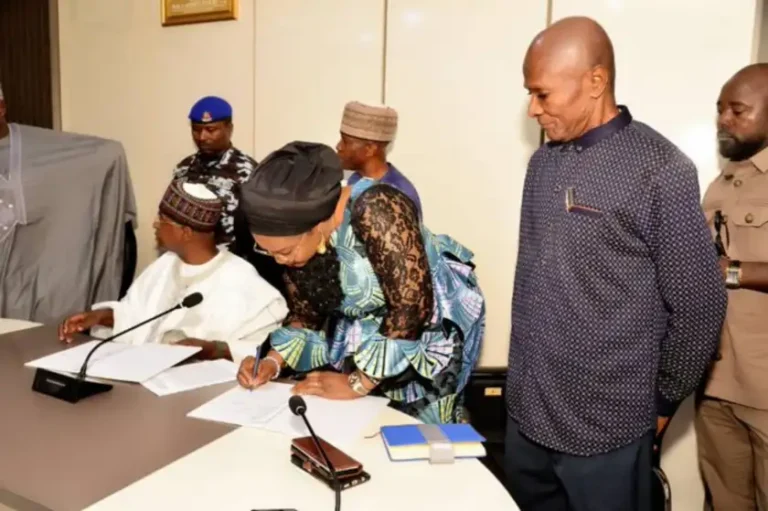
The Memorandum of Understanding (MoU), signed on Friday 12th September 2025 in Abuja, marks a milestone in the government’s efforts to revamp the livestock sector under the Renewed Hope Agenda of President Bola Ahmed Tinubu.

The Honourable Minister of Livestock Development, Idi Mukhtar Maiha, highlighted the significance of the collaboration, stressing that it will transform pastoral livelihoods and unlock the potential of Nigeria’s grazing reserves.

“Today, we are not just signing a document; we are ushering in a new era of sustainable development. For too long, the immense potential of Nigeria’s 417 grazing reserves has been hindered by lack of infrastructure. By providing solar-powered grids to rehabilitated reserves, we are laying the foundation for a more secure, productive, and peaceful future,” he stated.

The Minister explained that the intervention would deliver broad benefits to rural communities and livestock keepers. According to him, “the provision of clean, renewable energy will power irrigation systems, improve year-round access to fodder and water, enhance education and healthcare, strengthen security, and create jobs. Millions of pastoralists and livestock keepers across the country will benefit from this intervention.”

Permanent Secretary of the Ministry, Dr. Chinyere Ijeoma Akujobi, also stressed the importance of energy in achieving sustainable livestock development.

She said, “All our planned interventions across the livestock value chain rely on reliable power supply. From the Renewed Hope Villages to the grazing reserves under rehabilitation and the infrastructure we are putting in place, none can function effectively without energy. This MoU with the REA therefore represents a significant milestone in achieving our goals.”

On his part, REA Managing Director, Abba Abubakar Aliyu, described the initiative as “a marriage of convenience” and assured of the Agency’s commitment to energising livestock clusters.

“Our mandate is to provide electricity to unserved and underserved communities. Partnering with the Ministry of Livestock Development allows us to deploy solar infrastructure to grazing reserves with schools, clinics, abattoirs, and markets.

This will catalyse livestock development, stimulate rural economies, and create job opportunities in line with the Renewed Hope Agenda of Mr. President,” he said.

The pilot phase of the program will begin in Wawa-Zange in Gombe State, Wase in Plateau State, Gongoshin in Adamawa State, and Kawu in the Bwari Area Council of the Federal Capital Territory before expanding nationwide.

Apply now: PalmPay 6th anniversary lucky wish challenge

0

September 12, 2025 – PalmPay has just launched its 6th Anniversary celebrations with a special campaign tagged the PalmPay Lucky Wish Challenge.

According to the company, the initiative gives users the opportunity to “turn small wishes into big dreams” by participating in the lucky draw.

Prizes in the draw include Apple AirPods, the newly released iPhone 17 Pro, Samsung A16, Oraimo Power Banks, and several other items.

The company explained that participants can join the campaign with as little as ₦1.

Here’s how it works:
1. Pick your preferred item in the PalmPay app.
2. Enter the draw.
3. Wait for the draw day to see if your wish category comes true, or rack up Palmpoints along the way.

PalmPay noted that the more wishes a user makes, the higher their chances of winning across multiple categories. The Lucky Wish Challenge runs from September 12 to September 29.

Niger State flags off free farm inputs distribution to smallholder farmers

0

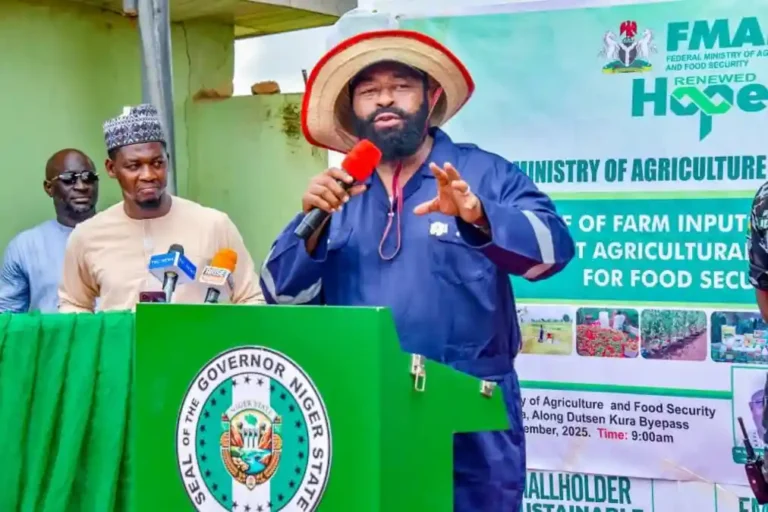
Niger State Governor, Mohammed Umaru Bago, has flagged off the free distribution of agricultural inputs and equipment to smallholder farmers’ associations in the state under the federal government’s all-year-round farming initiative.

The launch, which took place in Niger State, is expected to benefit 31 selected cooperatives, including women and people with special needs. The farmer Governor said the initiative would go a long way in supporting smallholder farmers and boosting food production.

Governor Bago expressed appreciation to President Bola Ahmed Tinubu for his consistent support in promoting agriculture, describing the initiative as a step toward achieving national food security and sovereignty. He said, “The all-year-round farming initiative of the federal government will greatly encourage farmers and make them self-sustaining, thereby achieving its food security and sovereignty agenda.”

The Governor also commended the Minister of State for Agriculture and Food Security for selecting Niger State as a pilot state for the implementation of the programme and other federal agricultural policies.

He explained that the support of the federal government would complement the state’s agricultural efforts. According to him, “The support of the federal government will enhance what the state government is already doing on agriculture, and it would address 50% of the challenges of the farmers.”

Minister of State for Agriculture and Food Security, Sen. Aliyu Sabi Abdullahi, said the free distribution of farm inputs to smallholder farmers represents one of President Tinubu’s robust agricultural policies aimed at supporting all-year-round farming in Nigeria.

He stated, “The president’s food policies align with numerous economic reforms to stimulate productive capacity in the country, create jobs, and reduce cost of living, while also guaranteeing inclusivity.” He further disclosed that the ministry is implementing several programmes and projects to sustain agriculture and ensure food sovereignty.

Sen. Abdullahi also praised Governor Bago for his commitment to agriculture, describing Niger State as a model and pilot location for federal agricultural programmes.

Permanent Secretary of the Federal Ministry of Agriculture and Food Security, Dr. Marcus Ogunbiyi, explained that at least 35% of the distributed inputs were targeted at women farmers in line with the National Gender Policy on Agriculture.

He noted that the ministry was working with sub-national governments, farmers’ cooperatives, and the private sector to ensure that only genuine farmers benefit. He urged the beneficiaries to make effective use of the distributed items.

Representatives of the Niger State Ministry of Agriculture, the All Farmers Association of Nigeria (AFAN), the Nigeria Association of Women in Agriculture, and groups representing people with special needs delivered goodwill messages.

They commended both the state and federal governments for supporting agricultural development and providing opportunities that encourage citizens to engage in farming, noting that the assistance has made them more self-reliant.

Among the items distributed were herbicides, liquid fertilisers, pesticides, growth enhancers, power tillers, water pumps for irrigation, grinding machines, and tricycles.

Niger State to launch N2bn cooperative bank and pilot scheme for women farmers

0

The Niger State Government has announced plans to establish a state cooperative bank for agriculture to give farmers quick and easy access to soft loans.

Governor Mohammed Umaru Bago, who is widely referred to as the farmer Governor, disclosed this while flagging off the free distribution of various agricultural inputs to smallholder farmers’ associations for year-round farming in the state.

According to him, the new bank will operate as a microfinance bank to provide loans to agriculture cooperatives and reduce the high interest rates charged by commercial banks. He added that the move will also address the rigorous processes farmers currently face in accessing credit facilities.

“The state government will provide N2 billion as seed capital for the take-off of the bank, and I encourage agricultural cooperatives to open an account with the bank when it is time to access soft loans,” the Governor said.

He explained that the initiative is part of the agricultural revolution policy of his administration, aimed at creating jobs, increasing farm yields, and improving the financial status of residents. He also noted that relevant stakeholders from the federal government and private sectors will be involved to ensure the project succeeds.

Governor Bago further revealed that his administration is working on a pilot scheme that will engage 2 million women in agriculture by 2026. Under the scheme, beneficiaries will receive goats, sheep, birds, and crop seedlings, alongside other farming inputs and extension services to boost productivity across Niger State.

He stressed that agriculture remains the foundation for food security and rural development, and his administration is determined to support farmers with innovative programmes and financial empowerment.

Cross River rep launches second phase of educational support for 2000+ beneficiaries

0

Over 2,000 constituents of Municipality/Odukpani federal constituency have benefited from the educational intervention programme of the lawmaker representing the area, Bassey Akiba.

Mr Akiba made this known on Friday in Calabar during the launch of the second phase of his educational support programme for students in his constituency. He explained that the project is part of his constituency intervention efforts targeted at improving education and supporting the less privileged.

According to him, the programme has already provided scholarships and other educational support to more than 2,000 people in just two years of his mandate. He added that this phase will also expand to cover more beneficiaries.

“The constituency funds are not given directly to lawmakers, but it’s an envelope, and we select what the funds can accommodate,” he said. He emphasized that his priority is to ensure that children from poor backgrounds pursue their educational goals without any form of hindrance.

Mr Akiba also disclosed that the funds are being channelled into three main areas which are livelihood support, health support, and educational support. He said that for the 2025 budget year, 70 per cent of the constituency funds will be directed to education.

According to him, the allocation will cover scholarships for students, the construction and renovation of schools, and the provision of modern learning materials to schools in the constituency.

He noted that increasing the constituency fund allows more investment in education, which remains central to his mandate.

Speaking at the event, the Obonganwan of Nsidung, Barbara James, welcomed the intervention and described the investments in education as timely. She stressed the importance of ensuring that every child enjoys their right to education.

“Every child has the right to be educated, and it’s our collective responsibility to ensure that their rights are enforced,” she said.

Also present at the launch was the state commissioner for education, Stephen Odey, who praised the initiative. Represented by the permanent secretary of the ministry, Francis Oyije, the commissioner noted that education is capital-intensive and requires the support of both government and private individuals.

He said the intervention by the lawmaker will help in laying a solid foundation for future leaders.

World Food Programme begins N50,000 anticipatory cash transfer in Adamawa

0

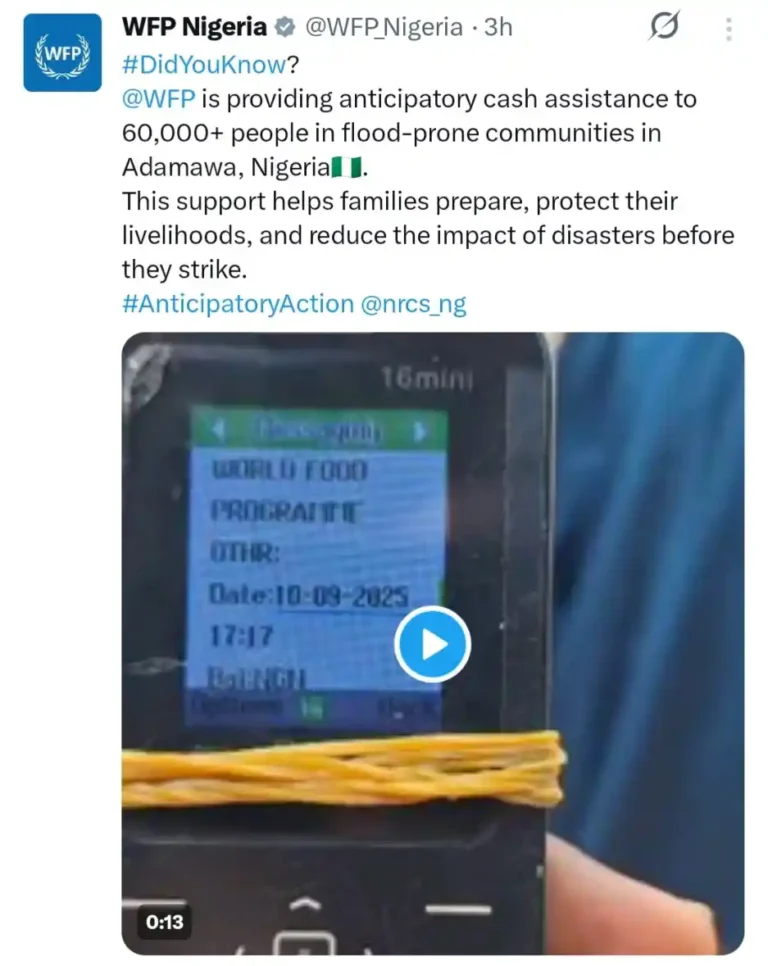
World Food Programme (WFP) has confirmed the rollout of anticipatory cash assistance to over 60,000 people living in flood-prone communities in Adamawa state, Nigeria.

The initiative is aimed at helping families prepare ahead of disasters, protect their livelihoods, and reduce the impact of floods before they strike.

An SMS notification received by beneficiaries read: “WORLD FOOD PROGRAMME OTHR: Date:10-09-2025 17:17 Bal:NGN 50,011.44 Des:N-10177337941/TRSF BO WORLD FOOD PROGRAMME 10-09-2025 05:18PM Txn: Credit Ac:288.77X.”

Under the programme, all 60,000 eligible beneficiaries are being credited with N50,000 cash transfer each.

WFP Nigeria confirmed the development on its official X handle, noting that the cash transfer assistance is ongoing and will cover all affected people in vulnerable communities across Adamawa. The support comes as part of disaster preparedness efforts.