Home Blog Page 436

Benue flags off agricultural mechanization outgrower programme pilot

0

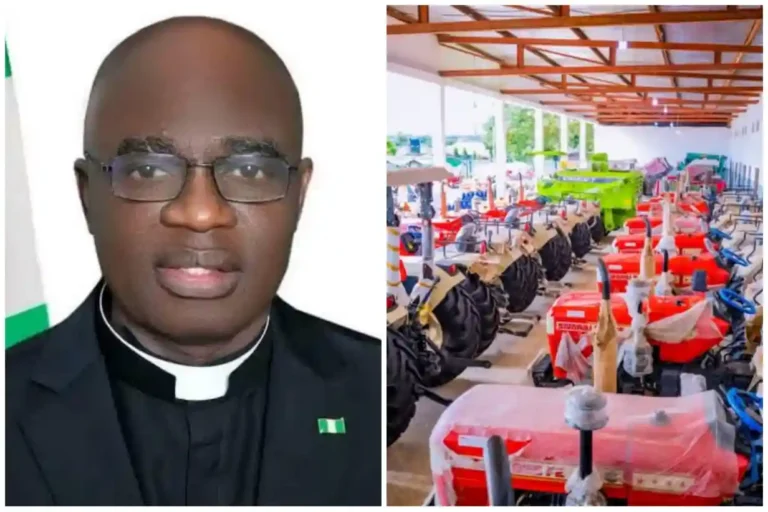
Benue State Government has inaugurated the pilot scheme of the Agricultural Mechanization Outgrower Programme, marking a new phase in the state’s drive to strengthen food production. The launch took place on Wednesday at the Benue State Agricultural and Rural Development Authority (BNARDA) headquarters in Makurdi.

Speaking during the ceremony, Governor Hyacinth Alia, represented by his Deputy, Sam Ode, reaffirmed the government’s commitment to supporting farmers with modern agricultural tools and resources. He explained that the initiative was designed to lower costs by dealing directly with manufacturers, making it possible for the state to provide subsidies.

According to him, the pilot scheme would benefit 10 farm clusters, covering about 300 farmers, who will gain access to tractors, improved seeds, farm inputs, and structured markets. He symbolically presented the first tractor key to the President of the Benue State Farmers Cooperative Federation, describing the scheme as “a gateway to prosperity and self-sufficiency.”

The Commissioner for Agriculture and Food Security, Hon. Benjamin Ashaver, praised the project as a practical step toward transforming agriculture in Benue. He stressed that the scheme would not only increase yields but also generate wealth and create new opportunities. He added that women and young people would benefit significantly from the initiative, emphasizing that “Benue must continue to lead in agricultural innovation as the food basket of the nation.”

The Director-General of the Bureau of Entrepreneurship and Wealth Creation, Ms. Benita Shuluwa, highlighted the importance of the programme in empowering farmers. She noted that participants would enjoy favourable payment plans for mechanized services, access to modern farming practices, and technical support to boost productivity.

Alhaji Mohammed Yaro, representing Mass International, assured that his company would support the governor’s vision. He announced plans to establish a tractor assembly and innovation hub in Benue, a move expected to create 5,000 jobs and empower thousands of farmers. “This goes beyond assembling tractors; it is about building a hub for innovation, training, and job creation,” he said.

In his remarks, Mr. Elias Ameh of SABASPAC International Limited explained that the Outgrower Cluster Farm model was developed after extensive research to strengthen smallholder cooperatives. He disclosed that over 120,000 farmers have already been captured in the programme’s database, adding that the first phase would involve 14 cooperatives representing more than 360 farmers. He further revealed that a revenue model had been designed to enable farmers to offset costs by offering mechanized services commercially.

A representative of the Senior Cooperative Farmers Federation commended the inclusive nature of the programme and appealed for more subsidies on tractors and farm inputs to ease the transition into mechanized farming.

Earlier, the Acting Director-General of the Bureau for Agricultural Development and Mechanization, Mrs. Dooshima Zaki, assured farmers of continued training, monitoring, and support from extension agents to ensure the success of the project.


Advertisement

Abia TECHRISE 2.0 flag-Off ceremony rescheduled

0

The Flag-Off Ceremony for TECHRISE 2.0 has been rescheduled to Tuesday, 30th September 2025. The event, which was earlier fixed for Friday, 26th September 2025, will now hold at the same venue, Hotel De La Paix, 1 Ekenna Street, Off Brass Street, Aba, Abia State.

According to the organizers, students are still expected to arrive on Monday, 29th September 2025. In a statement, they said, “We sincerely apologize for any inconvenience this change may cause and look forward to welcoming you all for an even more impactful and unforgettable TECHRISE 2.0.”

Ekiti TESCOM sends SMS screening invitations to candidates

0

Ekiti State Teaching Service Commission (TESCOM) has started sending text messages to successful candidates, directing them to appear for screening. The notice applies to both teaching and non teaching staff applicants across various subjects.

One of the messages reads, “I am directed to inform you to come to TESCOM by 8:00am on Thursday 25th Sept. 2025. Come with all your original credentials and two (2) photocopies each of the under listed documents; 1. 4 passports, 2. D.O.B cert/age declaration (obtained not earlier than 1yr), 3. L.G attestation, 4. Primary six Cert., 5. O’ Level cert., 6. Bsc, B.A, HND, with PGDE, 7. B.Ed, NCE Cert., 8. CBT exam result, 9. Written exam result.”

The management of Ekiti TESCOM urged candidates to take the directive seriously, stressing the need to arrive on time for the exercise. They warned that those who fail to show up may risk losing their slots to other applicants.

Attached below is screenshot proof:

Akwa Ibom begins arrest of unapproved private school operators

0

Akwa Ibom State Ministry of Education has begun the arrest and prosecution of operators of unapproved private schools that violated the directives on closure issued earlier by the Ministry. The Honourable Commissioner for Education, Professor Ubong Essien Umoh, made this known during the Ministry’s routine monitoring exercise across the state.

According to the commissioner, while many owners of unauthorized private schools complied with the government’s directive and shut down operations, a few had gone ahead to unseal their school premises and continued academic activities against the rules. He stressed that such actions undermine government’s efforts to improve the quality of education in the state.

“The Ministry of Education wishes to reiterate its stance on the closure of unauthorized and rogue schools operating in Akwa Ibom State,” Professor Umoh said. He further explained that the enforcement exercise is not just a directive but a long-term measure to standardize educational delivery across communities in the state.

Parents and guardians in both urban and rural areas have been strongly advised not to enroll their children or wards in any private school that has not been duly registered or licensed by the Ministry of Education. Professor Umoh noted that the state-wide enforcement exercise will continue throughout the school year to ensure compliance with approved standards and to rid the education system of substandard institutions that compromise the future of children in Akwa Ibom State.

Kano Gov releases ₦5bn for retirees’ gratuities and death benefits

0

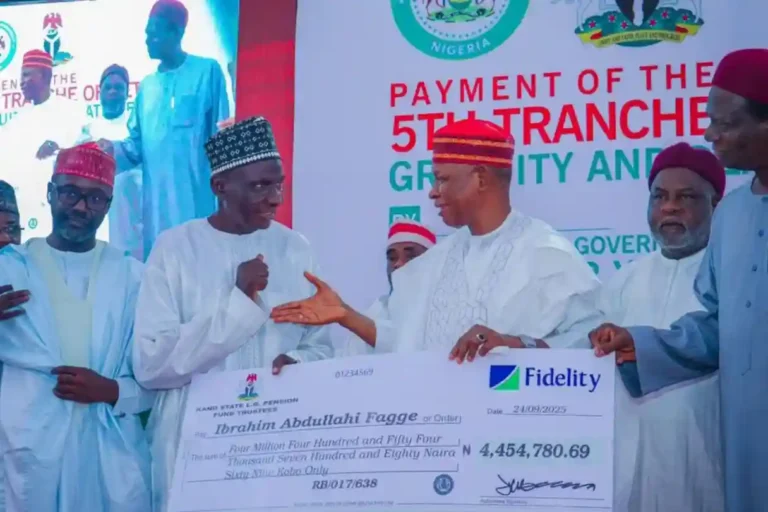
Kano State Governor Abba Kabir Yusuf has announced the release of ₦5 billion as the fifth tranche of gratuities and death benefits for retired civil servants and their families. The payment was confirmed today and marks a continuation of the government’s effort to address the backlog left by the previous administration.

“This latest disbursement brings the total payments to ₦27 billion, out of the ₦48 billion backlog of liabilities inherited from the previous administration,” the governor stated.

Some of the payment alerts obtained by Nigeriastartupact showed credits of N675,957.30 and NGN2,495,557.44, reflecting the distribution to beneficiaries.

The governor described the initiative as “a testament to our administration’s resolve to restore dignity and justice to workers who dedicated their lives to serving the state.”

Yusuf further assured that all outstanding gratuity and death benefits, amounting to ₦21 billion, would be cleared before the end of his tenure. He added that the payments have “significantly boosted morale among civil servants and reinforced public confidence in the government’s commitment to welfare.”

Jigawa Gov backs FG’s relaunch of school feeding programme

Governor Malam Umar Namadi has pledged the full support of Jigawa State as the Federal Government prepares to relaunch the National Home-Grown School Feeding Programme.

He made the commitment when he received the Senior Special Assistant to the President on School Feeding, Dr. Yetunde Adeniji, and officials of the Abdullahi Mahmood Foundation during a courtesy call at Government House, Dutse.

Describing the initiative as critical to the Renewed Hope Agenda, Governor Namadi noted that the programme carries benefits beyond the classroom. According to him, “Not only does it help reduce the number of out-of-school children, but it also improves their nutrition. Beyond that, it has a strong economic impact wherever it is implemented—vendors benefit, farmers benefit, cooks benefit, and local communities are uplifted. It is truly an all-encompassing program.”

The governor explained that Jigawa State has always gone beyond the national benchmark in supporting school feeding. “While the federal programme covered primary 1 to 3, Jigawa State extended it to primary 4 to 6. We have already included school feeding in our 2025 budget, and we will continue to make provision for it in the 2026 budget. I want to assure the Senior Special Assistant that Jigawa is ready to work closely with the federal government to revive this important programme,” he said.

Namadi further stressed the state’s commitment to sustaining the scheme. “We are proud of this contribution, and we will continue to support and encourage such efforts. This initiative requires a lot of sensitization, and I believe more philanthropists will join once they see the impact,” he added.

Earlier, Dr. Yetunde Adeniji commended the governor’s passion for education and expressed confidence that Jigawa would be among the first states to benefit once the programme restarts. “I assure you, Mr. Governor, that once the program begins, Jigawa will be one of the first states to benefit because of the passion and investment you have put into education,” she stated.

She also revealed new plans to reach vulnerable children in IDP camps, poor households, and Almajiri schools through partnerships with private organizations.

The Abdullahi Mahmood Foundation, represented during the visit, announced that it would flag off its 2025/2026 school feeding and uniform distribution programme in Malam Madori and Kaugama Local Government Areas. The initiative, carried out in partnership with the Office of the Senior Special Assistant to the President, is expected to reach about 200 schools and cover at least 30% of enrolled pupils in the first phase.

Plateau NUJ trains journalists on fish farming

0

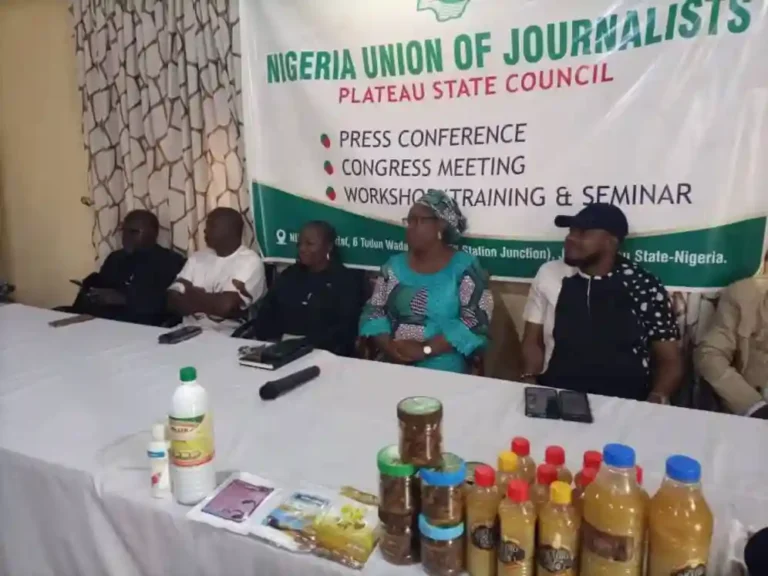
The Plateau State Council of the Nigeria Union of Journalists (NUJ) has held a practical talk and hands-on training session on fish farming for its members in Jos. The initiative focused on giving journalists entrepreneurial knowledge that can serve as an alternative source of income and improve financial stability.

In her remarks, NUJ Plateau Council Chairman, Mrs. Ayuku Pwaspo, emphasized the need for journalists to explore additional income streams beyond their salaries. She said, “This training is important for our members to understand how to earn from ventures like aquaculture. It will help in building financial security.” She also expressed gratitude to the resource person, Chief Dr. Adetunji Samuel Adebanjo, popularly known as Dr. Fish, describing him as a generous expert and business tycoon based in Jos.

Dr. Fish delivered comprehensive sessions on aquaculture, explaining types of fish ponds, pond treatment, water management, stocking, feeding, and fish smoking. He pointed out the economic opportunities in fish farming and encouraged journalists to consider it as a viable business. According to him, “Fish farming is a source of wealth creation that can change lives if taken seriously.”

During the interactive question-and-answer segment, participants engaged him with practical questions about aquaculture practices. He further invited journalists to look into his fish farming investment plan, which he said comes with attractive interest packages. To inspire the participants, he donated 15 fingerlings each to all attendees to help them begin their own fish farming journey.

Chairman of the 2025 NUJ Press Week, Mr. Farinola John Sunday, praised Dr. Fish and his team for supporting skills acquisition and empowering journalists through knowledge. He also acknowledged the presence of union members and media representatives who attended the event.

Highlights of the program included the distribution of souvenirs such as calendars, face caps, and Omega-3 oil to participants who answered quiz questions correctly. The event was hosted at the Plateau State NUJ Secretariat in Jos.

Lagos begins farmer registration for ₦500bn Produce for Lagos programme

The Lagos State Ministry of Agriculture and Food Systems has started the registration of farmers under the Produce for Lagos Programme, a ₦500 billion Offtake Guarantee Fund aimed at strengthening food security and agricultural growth in Nigeria.

Earlier, Nigeriastartupact.ng reported that the programme was launched by Governor Sanwo-Olu on Wednesday, July 23, 2025. The Governor said the ₦500 billion fund will provide “working capital for bulk traders, finance for logistics operators, liquidity for aggregators, and credit support for food producers across Nigeria.”

The initiative focuses on boosting food production within Lagos while also creating strategic partnerships with farmers in major food-producing states across the country. Officials explained that the central database, created through the registration, will serve as the backbone for planning, targeted interventions, and delivery of support services to farmers.

The Ministry noted that the registration process is open to all farmers operating in Lagos State. “By enrolling, farmers will be fully integrated into the Programme, which is designed to improve agricultural production and reduce reliance on informal and uncoordinated supply chains,” it stated.

Farmers have been encouraged to register through the official link: http://bit.ly/48dAWiI.

Sterling Bank launches Sparks with debate offering ₦200k

0

Sterling Bank has introduced Sparks, a new platform designed to connect young creators, entrepreneurs, and professionals with opportunities to collaborate, learn, and grow. The bank described Sparks as “too creative to be boxed, too ambitious to sit still,” positioning it as a space where “young, brilliant minds connect, create, and level up.”

According to the bank, Sparks gives participants a chance to turn ideas into impact while discussing culture, creativity, and success. “If you’re a creator, entrepreneur, or just figuring it out, this is where you are,” the statement read.

As part of the launch, Sterling Bank is hosting a special Booked & Connected Live Debate, scheduled for Saturday, September 27, 2025, at 1:00 PM, located at 20 Marina Road. The debate will feature the topic: “In a constrained society, is the pursuit of pleasure an act of liberation or mere escapism?” Participants at the event stand a chance to win ₦200,000.

The program will also feature fireside chats, game nights, and networking sessions with top creators, influencers, and industry leaders. Sparks promises VIP access, early invites, and career-boosting opportunities for those who sign up. Interested participants can reserve their spot by visiting sterling.ng/sparks.

FG approves rollout of NASENI solar irrigation pumps for 2025 farming

0

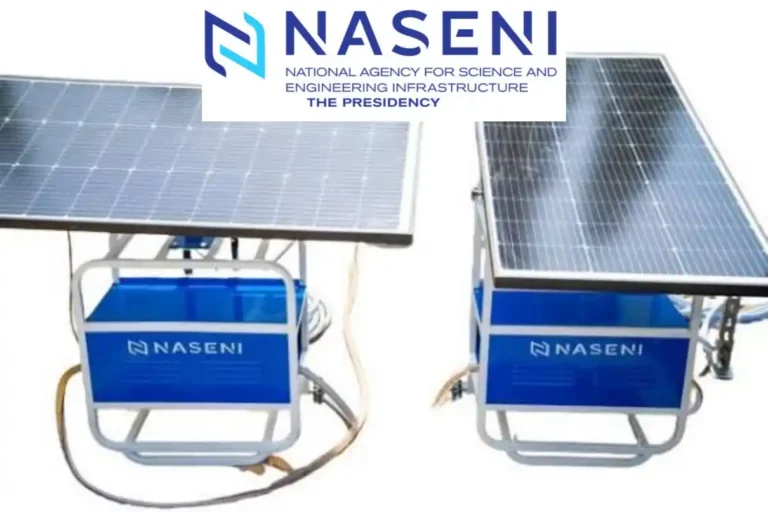
Vice President Kashim Shettima, along with the Executive Vice Chairman and CEO of the National Agency for Science and Engineering Infrastructure (NASENI), Khalil Suleiman Halilu, and state governors, has endorsed NASENI’s Solar Irrigation System during the 152nd meeting of the National Economic Council (NEC) held at the Presidential Villa, Abuja.

The development brings hope to Nigerian farmers eager to increase crop production and income through the use of modern technology. NASENI has been playing a key role in transforming critical sectors of the economy, especially agriculture, by creating a technology-enabled environment for farmers to thrive.

The introduction of NASENI’s solar-powered irrigation pump is expected to revolutionize agriculture by ensuring consistent water supply for crops. The solar irrigation pumps are cost-effective, sustainable, and reliable, helping farmers achieve higher yields and multiple harvests annually. With this system, farmers will depend less on unpredictable rainfall, thereby reducing the risk of crop failure. It also eliminates the need for diesel or petrol, cutting down greenhouse gas emissions and air pollution while working efficiently in areas without grid electricity.

Compared to petrol-powered irrigation pumps, NASENI’s solar pumps will increase productivity, reduce operational costs, and boost farmers’ incomes. The innovation has been tested and proven effective, prompting more farmers to request its nationwide deployment. This aligns with President Bola Ahmed Tinubu’s Renewed Hope Agenda, which prioritizes food security, job creation, and making Nigerian agro-products competitive globally.

During the 152nd NEC meeting, the Council approved the nationwide rollout of NASENI’s solar irrigation pumps ahead of the 2025 dry-season farming. This decision reflects NEC’s confidence in NASENI’s capacity to deliver homegrown, energy-efficient solutions to Nigeria’s food production challenges.

Khalil Suleiman Halilu praised the endorsement, saying, “The NEC’s decision is a strong vote of confidence in our ability to deliver energy-efficient, homegrown solutions that will boost food production, lower costs for farmers, and secure livelihoods. Special appreciation to President Bola Ahmed Tinubu for the continuous support, ensuring NASENI remains at the forefront of advancing his administration’s reforms on industrialization, technology transfer, and food security. Together, we are building a more resilient agricultural sector, harvesting more sustainably and unlocking infinite possibilities for Nigeria.”

To fast-track production and distribution, NEC directed the Minister of Budget and Economic Planning, Senator Abubakar Atiku Bagudu, to create funding plans for NASENI. This move strengthens NASENI’s role as a driver of President Tinubu’s Renewed Hope Agenda through industrialization and sustainable technology.

NASENI’s solar irrigation pumps reduce water waste, lower costs, and provide reliable renewable energy in remote areas lacking grid electricity. They also cut down labor demands and allow farmers to use extra solar power for other farm activities like lighting, drying, and water heating.

The investment in this innovation runs into billions of naira, but the benefits to farmers and the national food security policy are enormous. By utilizing free solar energy, the system will significantly cut irrigation costs while increasing crop yields and farmers’ earnings. It also reduces the physical burden of fetching water, a task often carried out by women, saving both time and effort.

Beyond supporting dry-season farming and crop diversification, the system is expected to boost economic growth through non-farm income opportunities. The Federal Government has allocated ₦826.5 billion to the agriculture sector in the 2025 budget, with NASENI’s intervention standing out for its direct impact on farmers’ welfare and productivity.

NASENI’s wide agricultural programs give confidence in the success of this project. The agency operates the Agricultural Machinery and Equipment Development Institute (AMEDI), which focuses on modernizing agriculture by developing machinery, seed technologies, and promoting soilless cultivation like hydroponics.

Recently, the Kebbi State Government allocated ten hectares of land to NASENI for AMEDI’s establishment in Birnin-Kebbi. This is in line with the federal directive that each geopolitical zone should host at least one AMEDI center to boost agricultural development and create jobs for young Nigerians.

NASENI is also working with international organizations to expand its impact. Collaborations with United Nations agencies, including the International Institute of Tropical Agriculture (IITA) and the United Nations Industrial Development Organization (UNIDO), are helping to promote climate-smart agriculture and enhance sustainable food systems.

These partnerships aim to improve technology transfer and agricultural productivity in Nigeria, with plans to extend cooperation to West Africa through ECOWAS and the African Union.

In a country where food shortages and malnutrition threaten millions, the nationwide rollout of solar-powered irrigation pumps marks a significant step toward food security and agricultural growth. This initiative positions Nigeria to lead regional agricultural development across Africa.