Home Blog Page 441

FG, Katsina launch vocational and empowerment initiative for youths

0

The Federal Government of Nigeria, through the National Mass Education Commission (NMEC), in collaboration with the Katsina State Agency for Mass Education, has launched a vocational training and empowerment initiative for out-of-school youths and adults across 20 local government areas of Katsina State.

The initiative is aimed at modernising traditional skills and providing tools for self-reliance. Beneficiaries, men and women aged 15 and above, will receive practical training in trades alongside start-up kits to establish small-scale businesses. The programme is positioned as part of wider efforts to reduce unemployment and enhance economic empowerment in the region.

On Wednesday, 17 September 2025, a joint delegation of federal and state officials led by Hajiya Bilkisu Muhammad Kaikai, Executive Director of the Katsina State Agency for Mass Education, carried out an inspection tour known as the Data Capture Exercise. The exercise began in Katsina metropolis and extended to designated training centres.

Speaking during the monitoring visit, Hajiya Kaikai explained that the initial federal government allocation only covered three local government areas. She said, “After assessing the scale of need across Katsina’s 34 LGAs, we sought and obtained the approval of Governor Dikko Umar Radda to expand the programme to 17 more LGAs.”

According to her, the expansion now ensures that out-of-school youths and adults in communities across the state’s three senatorial districts will participate. She described the development as a reflection of the state government’s commitment to inclusivity and wider access.

“The empowerment scheme is not only a step toward reducing unemployment but also a strategic investment in skills development and poverty alleviation,” she added.

The initiative is expected to create new opportunities in vocational training, skill acquisition, and small business growth, contributing to long-term economic sustainability in Katsina State.

Advertisement

UNDP selects 210 innovators for stage gating phase of Young Africa Innovates Programme

0

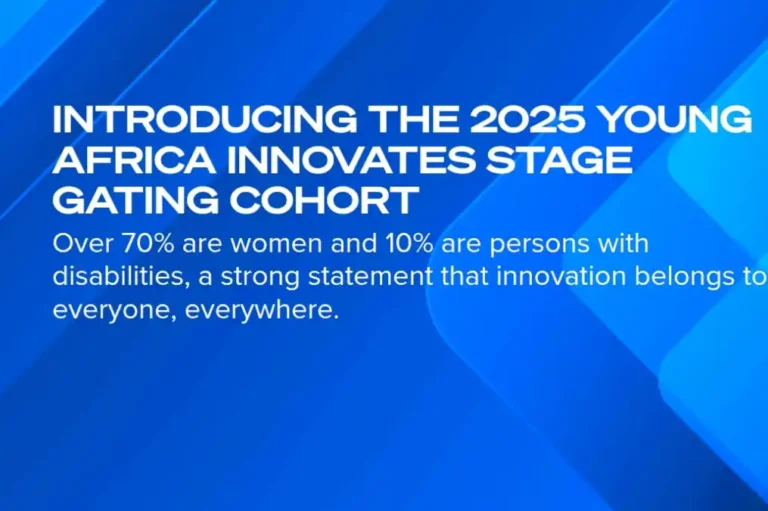
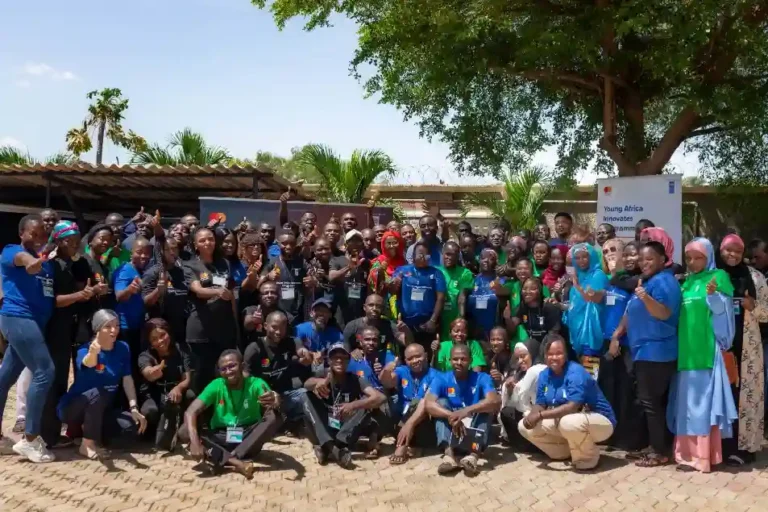
Young Africa Innovates Programme has officially announced the names of the young innovators advancing to the Stage Gating Phase, a major milestone under the Mastercard Foundation and United Nations Development Programme (UNDP) initiative. The programme is aimed at empowering young Nigerians to develop solutions that address critical social and economic challenges across the country.

According to organisers, over 1,000 young innovators took part in intensive statewide bootcamps before 210 participants were selected to move forward. “These exceptional individuals represent the next generation of problem-solvers; young Nigerians who are not only envisioning a better future but actively building the tools to achieve it,” the announcement noted.

The selected innovators come from seven states: Akwa Ibom, Anambra, Borno, Ekiti, Kaduna, Kwara and Lagos. Each of these states was chosen for its strategic importance and sectoral potential. The participants are working across six critical sectors including education, healthcare, financial inclusion, commerce, tourism, and the creative economy. Their projects range from providing solar energy solutions to underserved communities in Borno, improving healthcare access in Ekiti, to developing digital commerce platforms in Anambra.

The Stage Gating Phase is designed as a 5-month incubation journey running from August to December 2025. During this period, participants will undergo a structured programme that includes one-on-one mentorship from industry experts, technical workshops on product development and market testing, and peer learning circles to foster collaboration. They will also have the opportunity to present their solutions at state-level innovation showcases. In addition, financial support has been made available to help scale their projects.

Programme managers explained that the incubation journey is not only about refining ideas but also about linking participants with networks of partners, investors, and changemakers. “The Stage Gating Phase equips young innovators to grow their solutions and connects them to a broader ecosystem across Nigeria and Africa,” organisers stated.

The selection of the 210 beneficiaries was carried out through a three-step process. This included facilitator assessments at the bootcamps in all seven states, a UNDP review of top-performing solutions, and final approval by Independent State Steering Committees.

Young Africa Innovates is designed to catalyse youth-led innovation that drives socio-economic transformation in Nigeria. By focusing on young people, especially from traditionally marginalised communities, the programme seeks to ensure that no one is left behind. “Through their ideas, resilience and boldness, these young innovators remind us that Africa’s future will be built by the hands of its youth,” organisers added.

With the support of the Mastercard Foundation and UNDP, the programme is building a platform where inclusive, scalable innovation can thrive, creating dignified work opportunities and long-term impact for communities across Nigeria.

UNDP Nigeria names 28 young innovators from Akwa Ibom

0

The United Nations Development Programme (UNDP) Nigeria has announced a new group of young innovators from Akwa Ibom State who are transforming traditional skills into modern businesses. According to UNDP, these innovators are helping local entrepreneurs embrace digital tools, financial literacy, and market access. The initiative is also focused on job creation and youth empowerment, particularly in the informal sector.

“Akwa Ibom’s innovators are transforming traditional craftsmanship into modern-day businesses,” UNDP said in its statement. “From local tailors to shoemakers, these changemakers are helping micro-entrepreneurs access digital tools, financial literacy, and market linkages.”

The innovators were selected under the Young Africa Innovates programme, which aims to unlock opportunities for thousands of unemployed youth. Several of the participants are building platforms that connect creative talents with paying clients, opening up new economic pathways across the state.

The list of innovators and their sectors includes Ataima Onofiok in agriculture, Odudu-Abasi George in tourism, Patrick Afia in green energy and recycling, Idara Bassey in the creative sector, and Saviour Henry in tourism. Others are Aniekan Harry in agriculture, Mitchel Chukwudi in food manufacturing and processing, Glory Victor in tourism, Ekaette Sunday in food processing, and Blessing Saturday in tourism.

Also selected are Unwana Edet in the creative sector, Etini Isaac in agriculture, Glory Akpan in agriculture, Cheryl-Victoria Udom in the creative sector, Emmanuel Enensi in tourism, Ozioma Igwe in tourism, Edikeneabasi Peters in tourism, Semfon Essien in tourism, Victoria Peter in tourism, and Victoria Uyoh in agriculture.

The list continues with Eme Etim in the creative sector, Unwana James in tourism, Beatrice Joshua in the creative sector, Catherine Chime in agriculture, Victor Asuquo in tourism, Victor Okon in tourism, Victoria Francis in the green economy and recycling, and Ndueso Etuk in the green economy and recycling.

Jigawa State approves 5 new microfinance banks

0

The Jigawa State Executive Council, chaired by His Excellency, the Executive Governor, Malam Umar A. Namadi FCA, has approved the commencement of the process to obtain operational licenses for five new Microfinance Banks across the state. The decision was reached during the council’s meeting held on Monday, September 22, 2025.

According to the resolution, the new Microfinance Banks will be located in Birniwa, Gujungu – Taura, Guri, Gwaram, and Kaugama Local Government Areas. The initiative is part of the administration’s 12-Point Agenda, focusing on human capital development, job creation, and economic empowerment through technical skills and vocational training.

A government statement explained that the move is designed to deepen financial inclusion in Jigawa State and expand access to credit and savings opportunities. “This initiative is part of the government’s broader strategy to expand financial access and deepen economic participation in rural and underserved communities,” the council noted.

The governor’s administration highlighted that financial inclusion remains a vital tool for poverty reduction and grassroots development. “The decision reflects the commitment of His Excellency, Malam Umar A. Namadi FCA, to promote financial inclusion as a tool for poverty reduction, local enterprise development, and grassroots economic empowerment,” the statement added.

The new institutions are expected to complement existing microfinance banks in the state. They will provide services such as savings, microcredit, and small business support, specifically targeting individuals and communities that are traditionally excluded from the formal banking system.

The council emphasized that the policy direction underlines the state government’s dedication to building a stronger economic base by empowering citizens through financial access and technical capacity.

Tinubu’s Wife raises N20.4bn for National Library, says fundraiser not political

0

First Lady Oluremi Tinubu on Tuesday dismissed claims linking her 65th birthday fundraiser to President Bola Tinubu’s 2027 re-election plans, insisting the initiative is focused solely on completing the long-delayed National Library complex in Abuja.

Speaking during an interactive session with State House Correspondents at the Aso Rock Villa, Abuja, Mrs Tinubu said, “Let me at this point correct a notion moving around about this fundraising. It is not connected to anything political… So far, we have raised N20.4bn since this fund launched last week, and more are still coming.”

The First Lady explained that the fundraising drive has been supported by contributions from individuals and institutions across Nigeria. She noted that this is not her first experience with philanthropy, recalling similar efforts in the past. “This is not the first time I have raised funds for causes close to my heart. For my 45th birthday, I raised N50m to complete the National Sickle Cell Foundation Centre, which has since become fully operational. For my 50th birthday, I raised N200m for the New Era Foundation,” she said.

Her statement came shortly after Labour Party’s 2023 presidential candidate, Mr Peter Obi, criticised the idea of waiting for birthday donations to complete a national project. In a post on X titled ‘We Are Finished,’ Obi wrote, “We are finished! I join millions of Nigerians in wishing Her Excellency, Mrs Oluremi Tinubu, a happy birthday. May God Almighty, who has been with her all these years, grant her many more healthy, fruitful, and happy years.”

Mrs Tinubu, however, stressed that her initiative was about encouraging Nigerians to take responsibility for national development. “What is wrong with drawing attention to areas of need and inclusion? Helping to rebuild does not have a political undertone—it’s our duty as citizens to contribute meaningfully to society. I even donated to the post-war rebuilding of schools in Liberia,” she said.

She urged Nigerians to adopt a spirit of service, quoting former United States President John F. Kennedy. “Ask not what your country can do for you, but what you can do for your country. This should guide our actions. Like President Kennedy said, ‘Let both sides explore what problems unite us instead of what divides us.’”

The First Lady added that her faith has guided her commitment to philanthropy. “The biblical exhortation in Isaiah 58:6 has inspired my lifelong commitment to serving the nation,” she explained.

She announced that the special account opened for the initiative will remain active until December 2025, allowing more Nigerians to donate towards the completion of the project. According to her, the signatories to the account are the Minister of Education and the Chief Librarian of the Federation, while her role is to mobilise support.

Ahead of her birthday on Sunday, September 21, Mrs Tinubu had already appealed to well-wishers to contribute to the “Oluremi@65 Education Fund” instead of sending gifts, cakes, flowers, or publishing newspaper adverts. In a statement signed last Thursday, she explained, “I wish to appeal to those who would like to send a birthday card, cakes, flowers, greetings in the newspapers, or gifts should please send the funds to the designated account for a special project close to my heart… The completion of the National Library. This will be the best birthday present I would ever receive. My love for education has informed my decision to dedicate my birthday to this worthy cause.”

The National Library project, first proposed in 1981, has faced decades of delay. Awarded in 2006 at a cost of N8.59bn, the 11-storey complex was expected to be completed within two years. However, costs ballooned, and by 2023, only 44 per cent of the structure was completed. Estimates to finish the project have since ranged between N49.6bn and N120bn.

The site, located between the National Mosque and the National Ecumenical Centre in Abuja, has become a symbol of stalled infrastructure in Nigeria. Several governments have pledged to finish the project, and in 2025, the Federal Government directed the Tertiary Education Trust Fund to take over its financing. In April, Education Minister Tunji Alausa announced that work would restart by June 1 after site inspections. In September 2025, the Nigerian Library Association renewed its appeal for the urgent completion of the project, citing its importance for education, research, and cultural preservation.

Mrs Tinubu highlighted that the fundraiser has attracted wide support from leaders and institutions. Contributors include President Bola Tinubu, Vice President Kashim Shettima and his wife, former President Muhammadu Buhari, several former First Ladies, the Senate President and his wife, the Speaker of the House of Representatives and his wife, members of the National Assembly, the governors’ forum and governors’ spouses, security chiefs and their wives, as well as business moguls such as Aliko Dangote, Abdulsamad Rabiu, Arthur Eze, Tony Elumelu, and Jim Ovia, among many others.

Mrs Tinubu, a former senator and former First Lady of Lagos State, has consistently linked her advocacy to education, women’s empowerment, and youth development. She said her decision to dedicate her birthday to the National Library project reflects her belief in collective responsibility for education and national progress.

She said, “This is about drawing attention to what matters for the future of our children and the growth of our society. We cannot always wait for government budgets alone to fix everything. Citizens, leaders, and institutions must play their part.”

With N20.4bn already raised within days of the launch, the initiative has become one of the largest private-driven fundraisers in Nigeria’s education sector, sparking debates about philanthropy, governance, and the role of public support in driving development projects.


UNICEF to support 18000 vulnerable children in Sokoto

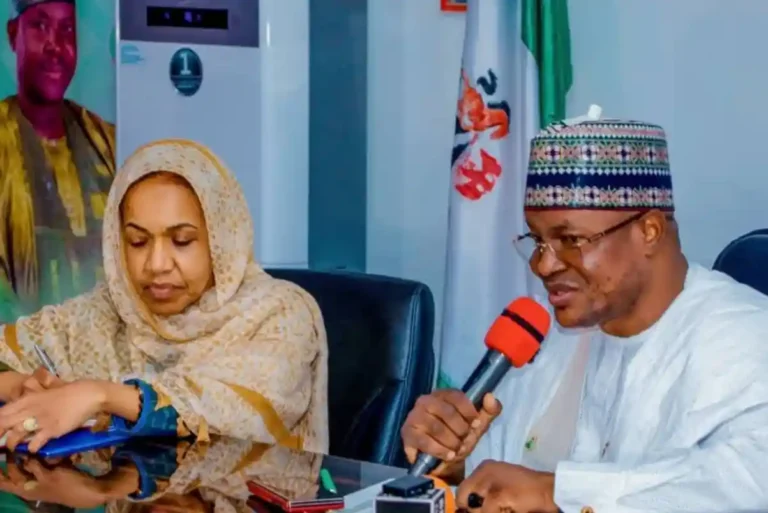
The Deputy Governor, Alhaji Idris Mohamed Gobir, stated this while receiving the new UNICEF Country Representative, Mrs Wafaa Sa’eed, who paid a familiarisation visit to Sokoto.

According to him, “the sector has been enjoying the highest budgetary allocation since the assumption of office of the present administration.” He explained that the decision was aimed at ensuring people have easy access to health care services.

Alhaji Idris Gobir also expressed satisfaction with the various supports extended to the state government by UNICEF, saying they have contributed significantly to the growth of the health sector. He added, “the State Government would continue to render whatever support required by UNICEF for the smooth conduct of their activities in the State.”

In her remarks, the newly appointed UNICEF Country Representative, Mrs Wafaa Sa’eed, said UNICEF’s activities remain focused on improving the well-being of people, particularly children, around the world. She announced that UNICEF would assist 18,000 vulnerable children in Sokoto State under the Health Insurance Programme.

Mrs Sa’eed further revealed that UNICEF has provided 200 tablet handsets, an equal number of power banks, and three laptops to support the Social Register in the state.

She was accompanied by the new Deputy Country Representative in charge of operations, Mr Charles Opikoli Lolika, who joined her in expressing appreciation for the cooperation and partnership received from the state government.

The UNICEF delegation expressed hope that the level of collaboration between the state government and the international body would be sustained to ensure continuous progress in the delivery of health care services.

Over 129 accredited TVET centres digitised, NBTE claims

0

Technical and Vocational Education and Training (TVET) has been described as a major catalyst for equipping young people with the right skills, creating sustainable pathways for self-employment, and driving socio-economic development. The United Nations Educational, Scientific and Cultural Organization (UNESCO) continues to support programmes that ensure equal access for girls, boys, women, and men to affordable and quality technical, vocational, and tertiary education, including university learning.

Speaking during a Capacity-Building Workshop for TVET stakeholders held in Kano, the Regional Coordinator of the Better Education for Africa’s Rise (BEAR) III Programme, Mr Manish Josh, said the initiative is focused on strengthening TVET in sub-Saharan African countries. According to him, the goal is to improve youth employment opportunities and enhance national economies.

Mr Josh explained that the objectives of the capacity-building workshop include strengthening the strategic planning capacities of TVET managers, leaders, and decision-makers. He added that the programme also seeks to provide the tools needed to align TVET programmes with labour market needs. “The programme is designed to support TVET centres in developing and refining institutional strategic plans that promote both quality and relevance in education and training,” he said.

Director of Technology and Science Education, Dr Olodo, represented by Deputy Director Dr Stella Uhuegbu, described the workshop as a strategic intervention to empower key stakeholders. She said, “This initiative equips TVET stakeholders with the skills required to effectively implement the BEAR III project and advance the broader national TVET reform agenda.”

She further noted that the ongoing TVET reform is already making an impact, with over one million Nigerians enrolled for Masters 6 and 12 programmes. She explained that verification of learners is expected to be completed soon to allow the commencement of training. According to her, more than 15,000 students will also be resuming across Federal Technical Colleges.

Dr Uhuegbu added that the 10-week-long online training had expanded the knowledge and practical skills of participants, pointing out that the workshop would contribute to producing a workforce that is competent and globally competitive.

In his remarks, the Executive Secretary of the National Board for Technical Education (NBTE), Professor Idris Bugaje, represented by his Technical Adviser, Dr Babangida Baba, said that NBTE has been leading efforts to digitise the Nigerian Skills Qualification Framework and strengthen quality assurance across the country’s polytechnics. He revealed that more than 129 accredited TVET centres across the country have already been digitised to meet global standards.

The two-day workshop, organised in collaboration with UNESCO-UNEVOC, brought together participants from federal colleges of agriculture and other stakeholders in science and technology education.

Airtel Africa Foundation targets 10m people by 2030

0

Airtel Africa Foundation, the philanthropic arm of Airtel Africa plc, on Tuesday unveiled its plan to directly improve the lives of 10 million people across the continent by 2030. The ambitious strategy will be implemented through four main pillars: Financial Empowerment, Education, Environmental Protection and Digital Inclusion, grouped under the FEED framework.

Speaking during the launch, Chairman of the Airtel Africa Foundation, Dr Segun Ogunsanya, said the organisation’s mission goes beyond donations, aiming instead to create sustainable opportunities for growth.

“Our 2030 vision is a transformed Africa where over 10 million lives are directly improved through our interventions. We are not just donating resources, we are building a pipeline of talent and fostering innovation to ensure the global digital revolution leaves no African behind.

“This is a strategic, measurable commitment to unlocking the continent’s demographic dividend,” Ogunsanya stated.

The Foundation explained that its programmes are designed to build a cycle of empowerment. Among these is the Connecting Schools initiative, which provides free internet connectivity and devices to learners. Another major project is the Airtel Africa Fellowship, which offers full undergraduate scholarships in technology and STEM fields, along with mentorship and internship opportunities to prepare young Africans for the future of work.

Airtel Africa Foundation pointed to its partnership with UNICEF as a clear example of its impact. Through this collaboration, more than 1,800 schools have been connected, over one million students have benefitted, and more than 17,000 teachers have been trained in digital education. These achievements span across Airtel’s 14 markets of operation.

The Foundation also plans to expand its Employee Volunteer Programme, which mobilises the skills of Airtel staff to directly support community development. For the 2025/26 financial year, the Foundation has set specific growth targets, ensuring that its initiatives reach all operating countries, including Nigeria, Zambia, Malawi, Rwanda and the Democratic Republic of the Congo.

Airtel Africa’s Chief Executive Officer, Sunil Taldar, emphasised the company’s commitment to social impact, noting that the Foundation was created as a vehicle for transformation. “We cannot thrive in a place that is not thriving. This understanding is the very reason the Airtel Africa Foundation was born. It is our vehicle to catalyse transformation, by systematically investing in the pillars that underpin a resilient and dynamic society.

“We have remained dedicated to transforming lives both as a business imperative as well as our overarching philosophy. For us, helping to connect the unconnected, banking the unbanked and enabling businesses and economies to thrive are the three most significant objectives of our business,” Taldar said.

FG reports over 1m enrolments in TVET masters 6 and 12 programmes

0

Federal Government has announced that its ongoing reforms in Technical and Vocational Education and Training (TVET) have achieved major milestones, with over one million Nigerians enrolled in Masters 6 and 12 programmes. The initiative is being carried out in collaboration with UNESCO and supported by the Government of the Republic of Korea.

The programme is aimed at strengthening the capacity of TVET managers, leaders, and decision-makers so that technical education can respond more effectively to the demands of the labour market.

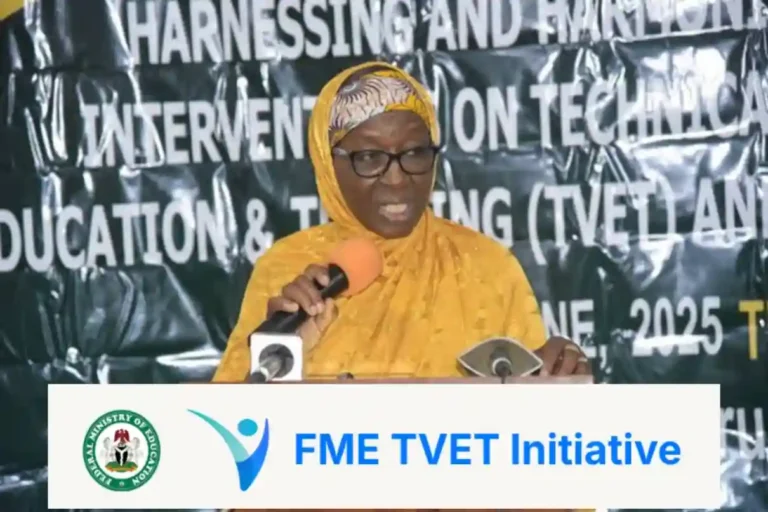
This was disclosed by Dr Muyibat Olodo, Director of Technology and Science Education at the Federal Ministry of Education, during a capacity-building workshop for TVET stakeholders in Kano under the Better Education for Africa’s Rise (BEAR) III Project. Dr Olodo was represented by Mrs Stella Uhuegbu, Deputy Director in the ministry.

Olodo explained that verification of learners was ongoing, while more than 15,000 students were expected to resume this weekend at Federal Technical Colleges across the country. She said the reforms were part of the government’s wider plan to revitalise TVET, equip young Nigerians with employable skills, and ensure that training programmes align with labour market requirements.

According to her, “the workshop is not just another training, but a strategic intervention to equip key stakeholders with the skills necessary to effectively implement the BEAR III Project and advance Nigeria’s TVET reform agenda.”

She added that the reforms had already produced encouraging results, with more than one million Nigerians participating in Masters 6 and 12 programmes. She told participants, “The 10-week online training you have completed has broadened your horizon, and the practical skills you will gain from this in-person workshop will help produce a workforce that is not only competent but also globally competitive.”

Olodo urged participants to remain committed and actively engaged, noting that their contributions would help build a robust and globally relevant TVET system for Nigeria. She also commended UNESCO and the Republic of Korea for their support, describing the BEAR III Project as a strategic intervention to strengthen capacity in the TVET sector.

UNESCO’s Representative to Nigeria and Head of Abuja Office, Mr Mendy Albert, also spoke at the workshop. He explained that the initiative was designed to boost the strategic planning capacities of TVET managers, leaders, and decision-makers in Nigeria.

Albert, who was represented by BEAR III Regional Co-ordinator, Mr Manish Josh, emphasised that TVET remains a national priority in Nigeria because of its role in equipping young people with employable skills and creating sustainable pathways for job creation and self-employment.

“The objectives of this programme include strengthening strategic planning, aligning TVET programmes with labour market needs, and supporting institutions to develop and refine plans that promote quality and relevance in training,” Albert said.

He called on participants drawn from federal and state education agencies, technical institutions, and the private sector to make the most of the opportunity and share the knowledge with their colleagues and institutions.

World Bank opens enrollment for manage successful field research course

0

World Bank has announced the launch of the new edition of its virtual course titled “Manage Successful Field Research.” Enrollment for the program is now open to interested participants. The course is designed to strengthen the skills of professionals responsible for managing field research, with a focus on best practices, critical issues in research implementation, recurring challenges, and modern technologies.

According to the World Bank, “This new edition of our virtual course is designed for professionals responsible for managing field research. It is intended to improve the skills and knowledge of field research practitioners, familiarizing them with best practices, critical issues in research implementation, recurring challenges, and cutting-edge technologies.”

The training will begin on October 7, 2025, with all materials, including videos, text resources, assessments, certification, and forum discussions, made available to enrolled participants. The Bank advised that all trainees finalize the course and secure their certificate by December 7, 2025.

The learning objectives include helping participants demonstrate the skills required to develop high-quality field research and ensuring quality research practices such as data privacy and ethics.

The course targets development practitioners, young researchers, graduate students in economics, public policy, and development studies, as well as public servants engaged in monitoring, evaluation, and analytics. Enrollment is available through the official link: wrld.bg/RtXX50WYUF1.