Home Blog Page 46

FG releases Education Reform update on TVET, ASUU, Scholarships

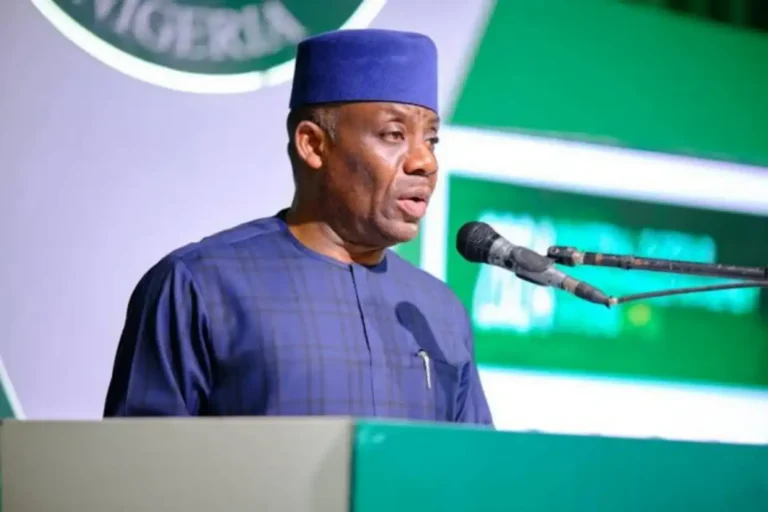
The Federal Government, through the Minister of Education, Dr. Tunji Alausa, has released the Ministry’s quarterly overview of programmes, policies and financial incentives, featuring TVET and other key reforms. The update was presented at the weekend as part of efforts to keep Nigerians informed about developments in the education sector.

Dr. Alausa, who was appointed on October 23, 2024, said the ministry is executing the Nigerian Education Sector Renewed Initiative (NESRI), a six-point agenda aimed at transitioning the country from a resource-based economy to a knowledge-based economy. According to the report, the ministry is marking 14 months of aggressive reforms focused on ensuring that every Nigerian child has access to quality education in a safe environment, regardless of location.

One of the major highlights in the report is the formalisation of the Academic Staff Union of Universities (ASUU) and FGN Agreement, which took effect on January 1, 2026. The ministry described this as a significant achievement for industrial harmony after years of recurring strikes in universities. The new agreement introduces a 40 per cent upward review of academic emoluments and a revised salary structure. It also establishes a new professional cadre allowance for full-time professors and readers, while a similar arrangement for polytechnics is being drawn up.

To promote transparency, the ministry launched the Federal Tertiary Institutions Governance Transparency Portal (FTIGTP). The platform tracks key performance and funding metrics across institutions. According to the report, 47 out of 67 Federal Universities and 35 out of 39 Polytechnics have already been onboarded.

On technology integration, the ministry said it is investing heavily to bridge learning gaps. Through the Digitisation of Public Schools Initiative, over 1,000 smart boards have been deployed to Federal and State Basic Education schools nationwide to equip students with future-ready skills.

Teacher welfare and capacity building were also highlighted. The launch of Edurevamp, a mobile-based professional development platform, has recorded 37,000 teacher registrations, with 18,000 fully enrolled to receive digital skills training and stipends. In addition, a partnership with the UK-funded PLANE programme and telecommunications companies MTN and Airtel will provide 8,000 teachers across the six geopolitical zones with zero-rated internet access to support modern teaching methods.

In line with President Bola Ahmed Tinubu’s Renewed Hope agenda, the ministry rolled out several social intervention programmes. A N2.55 billion Menstrual Health campaign titled “Flow with Confidence” was launched in Gombe. The initiative aims to distribute over 1 million sanitary pads to 370,000 girls in rural areas to reduce school absenteeism.

The ministry also secured a major scholarship initiative through the Dangote Foundation. The programme aims to provide scholarships to 3 million young Nigerians. It specifically targets 170,000 young girls and over 1 million students in Science, Technology, Engineering, Mathematics, and Medical Sciences (STEMM).

To reduce the cost of living for students, the ministry distributed 240 electric tricycles and 12 solar-powered charging stations to 12 universities across the geopolitical zones. The ministry projects that this intervention will cut campus transportation costs by up to 70 per cent.

On school security, Alausa disclosed that the ministry partnered with the National Security and Civil Defence Corp (NSCDC) to unveil the School Safety Portal. The system currently has 15,000 schools registered and has geolocated 141,000 schools to enable real-time tracking and improved security support.

The Technical and Vocational Education and Training (TVET) programme also recorded major funding support. The ministry said N2.97 billion in stipends has been disbursed to 160,000 young Nigerians, alongside an additional N4.6 billion allocated to skills training centres. To ensure accountability, Biometric Attendance Verification has been enforced at all TVET centres to monitor stipend disbursements.

Looking beyond Nigeria’s borders, the ministry signed a landmark Memorandum of Understanding (MoU) between the University of Lagos (UNILAG) and the University of Birmingham. Under Nigeria’s Transnational Education framework, the UK institution will offer postgraduate and undergraduate programmes in STEMM disciplines.

Dr. Alausa also revealed that he recently visited Singapore to discuss a bilateral agreement focused on training leaders for technical schools and adopting global excellence models for Nigeria’s TVET institutions.

The ministry reiterated that its focus remains on the NESRI six-point agenda. The National Council on Education (NCE) recently reaffirmed English as the language of instruction and suspended the previous National Language Policy in a move aimed at streamlining the curriculum nationwide.

The report further stated, “Dr Alausa held a roundtable discussion with the CBN and VCs of Federal Universities to formally transition documentation, responsibility and ownership of CBN-supported intervention education projects, to the benefitting institutions, in order to maintain institutional continuity, proper asset stewardship and long-term value for public investment in education.

“FGN and BOI launched a N50 million grant initiative to provide mentorship and capacity building opportunities to students in tertiary education. 30,639 registrations received since launch,” the document added.


Advertisement

FG to Invest N11.76bn in MSMEs, Industrial Revitalisation in 2026

The Federal Government is set to invest up to N11.76bn in 2026 to drive the growth of Micro, Small, and Medium Enterprises (MSMEs) and support industrial revitalisation across the country. The funding forms part of the capital projects allocated to the Small and Medium Enterprises Development Agency of Nigeria (SMEDAN) in the 2026 Appropriations Bill.

An analysis of the capital allocation shows that projects directly targeting MSMEs, entrepreneurship, and trade account for about N11.76bn out of the total N26.87bn capital projects vote for the agency. The allocation reflects a broader push by the Federal Ministry of Industry, Trade and Investment to deepen MSME financing, strengthen data integrity, and accelerate industrial planning in 2026.

The largest single allocation is N2.1bn for the Grow Nigeria for MSME Development programme, designed to scale enterprise support nationwide. SMEDAN also earmarked N1.4bn to revitalise Industrial Development Centres and convert them into Common Facility Centres. The move is expected to reduce production costs for small manufacturers by providing shared infrastructure.

In a major logistics intervention, N3.5bn was set aside for the supply of project vehicles to SME ecosystem stakeholders across the country to improve programme monitoring and outreach.

On policy and data reforms, the government allocated N154m for a comprehensive review of the national MSME policy, while N119m will fund the development of a Marketplace MSME Database. The database is expected to improve formalisation, enhance targeting of incentives, and increase access to finance.

To support energy transition, N700m was earmarked for a National MSME Green and Renewable Energy Initiative to help small businesses adopt cleaner and more affordable energy solutions in line with global standards. In addition, N140m was set aside for alternative power solutions for entrepreneurs in Cross River State, while N70m will fund solar power installations in business premises in Benue State.

Capacity building also received strong attention, with N1.05bn allocated to the National Business Skills Development Initiative. Another N350m was voted for the One Local Government One Product scheme to stimulate grassroots production and value addition across communities.

To promote financial inclusion, N140m was budgeted for financial literacy training, and N70m will support a microfinance bank initiative tailored specifically for MSMEs.

Inclusion-focused programmes were also featured in the budget. The government provided N69.9m for the Women in Self Employment Programme and N29.7m for specialised skills development targeting internally displaced persons, inmates, and retirees.

To strengthen digital competitiveness, SMEDAN allocated funds for digital skills training in partnership with global technology firms. The agency also set aside N17.5m for an MSME Export Facilitation Programme and N280m for the Enterprise Network Initiative.

Stakeholders in the SME ecosystem welcomed the targeted allocations but urged the government to prioritise access to affordable finance. In a phone interview with The PUNCH obtained by Nigeria Startup News, the Director-General of the National Association of Small and Medium Enterprises, Eke Ubiji, said while SMEDAN had supported members in capacity development, more effort was needed in funding access.

He said, “SMEDAN has been assisting our members, but not much in the area of access to funding and such. They assist them in capacity building and so on.”

Speaking on the proposed MSME database, Ubiji noted that the association was aware the agency relied on data from organised groups. “What they do for that is they use the data from our groups,” he said.

He urged the agency to strengthen financial support mechanisms for small businesses. “What SMEDAN should focus on in terms of growth and development is to help our members get more access to funding. They should continue the capacity building, which they’ve already been doing,” NASME’s Chief added.

The MSME investment drive follows the Federal Government’s disbursement of $200m to small businesses and exporters in 2025. More than 115,000 MSMEs benefited from grants, loans, and trade finance interventions during the period.

The Minister of State for Industry, Sen. John Enoh, said lessons from 2025 highlighted the urgency of strengthening MSME data systems and execution frameworks.

Enoh said, “Data gaps undermine good intentions. The absence of reliable MSME data constrained planning, targeting, and evaluation, reinforcing the urgency of a national MSME census.”

He stressed the importance of implementation discipline in public policy. “Sector plans without ownership, sequencing, and monitoring do not translate into outcomes,” he noted.

The minister also said sustained engagement with industry players shaped the ministry’s direction. “Industry trust is built through listening, not announcements. Engagements with manufacturers, MSMEs, and investors confirmed that credibility is built when policy reflects real constraints, not theoretical models,” Enoh explained.

Ondo State to Partner Volunteer Organisations

0

Ondo State Governor, Lucky Aiyedatiwa, has said his administration is ready to partner with volunteer organisations working toward the development of the state.

The governor described volunteers as critical partners in complementing government efforts across key sectors and reaffirmed his commitment to strengthening volunteerism in Ondo State.

Aiyedatiwa spoke on Sunday at the official launch of the United Nations International Volunteer Year 2026 in Akure, the state capital. He was represented at the event by his Senior Special Assistant on Humanitarian and Community Integration, Muyiwa Eyitayo.

According to him, the Ondo State Volunteer Service was established to coordinate, promote and strengthen volunteerism across the state. He said the initiative was designed to create an enabling environment for voluntary organisations and individuals to thrive, collaborate and expand their impact.

“I must say this clearly: volunteers in Ondo State have played a critical role in complementing development efforts — in environmental sustainability initiatives, community sensitisation programmes, youth engagement activities, and health and social interventions. You have stood in the gap,” he said.

He stressed that development cannot be achieved by government alone.

“The government alone cannot do it. No administration, no matter how committed, can achieve sustainable development without the active participation of its people. Volunteerism reminds us that development is a shared responsibility,” he added.

The governor assured volunteer organisations that his administration would continue to provide the necessary support to enable them operate effectively across communities in the state.

Earlier, the Senior Special Assistant to the Governor on Volunteer Service and organiser of the programme, Iwakun Charles, described the launch as a renewed call to service, unity and shared responsibility.

He said volunteerism strengthens communities, bridges social gaps and inspires hope. He noted that the event aligns Ondo State with the global vision of the United Nations to celebrate and expand volunteer impact. Charles also commended the governor for his continued support for youth development and civic engagement.

Delivering a keynote address titled “Volunteering as a Catalyst for Sustainable Development,” Professor Adebukola said the Sustainable Development Goals are practical action points that require grassroots participation.

“Volunteerism serves as a bridge between policy formulation and community-level implementation, particularly in areas such as quality education, good health and well-being, climate action, gender equality and poverty reduction,” she said.

She added that achieving the 2030 Agenda demands collective ownership, stressing that governments alone cannot attain the SDGs without active citizen engagement.

The don urged institutions, youth groups and civil society organisations in Ondo State to deliberately align their volunteer activities with specific SDG targets to ensure sustainability and long-term transformation.

RecycleUp Innovation Programme Announces Shortlisted Candidates

0

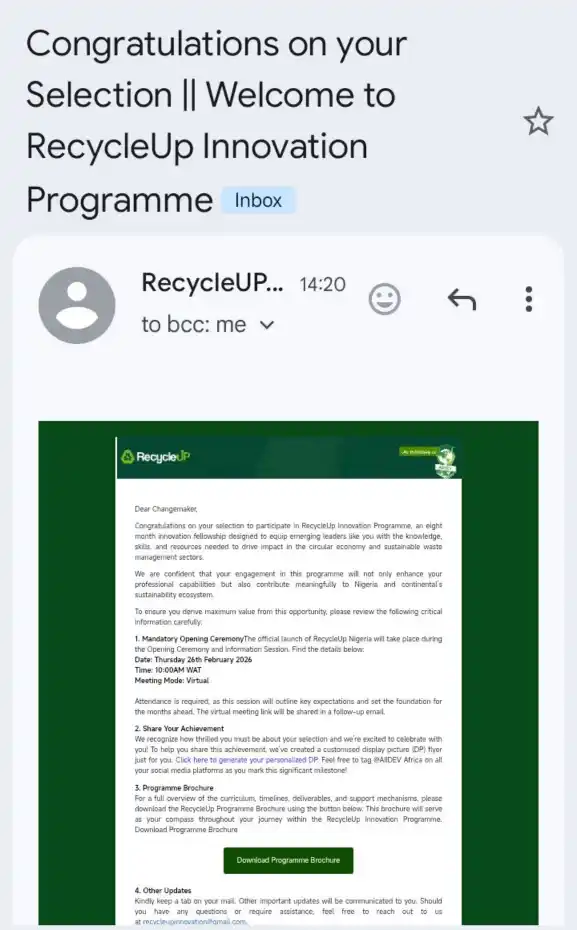
RecycleUp Innovation Programme has begun the selection of shortlisted candidates for its new cohort, urging applicants to check their email for confirmation messages.

Successful candidates received a message titled, “Congratulations on your Selection || Welcome to RecycleUp Innovation Programme,” informing them of their acceptance into the eight-month innovation fellowship.

In the message addressed to “Dear Changemaker,” the organisers stated, “Congratulations on your selection to participate in Recycle Up Innovation Programme, an eight month innovation fellowship designed to equip emerging leaders like you with the knowledge, skills, and resources needed to drive impact in the circular economy and sustainable waste management sectors.”

The organisers added, “We confident that your engagement this programme will not only enhance your professional capabilities but also contribute meaningfully to Nigeria and continental’s sustainability ecosystem.”

Participants were asked to carefully review key information to ensure they derive maximum value from the opportunity.

According to the notice, the Mandatory Opening Ceremony and Information Session will hold virtually on Thursday 26th February 2026 at 10:00AM WAT. “Attendance is required as this session will outline key expectations and set the foundation for the months ahead. The virtual meeting link will be shared in a follow-up email,” the statement read.

Selected fellows were also encouraged to celebrate their achievement. “We recognize how thrilled you must be about your selection and we’re excited to celebrate with you,” the organisers said, noting that a customised display picture flyer has been created for participants. They were invited to generate a personalized DP and tag @AIDEV Africa on social media.

The Programme Brochure, which contains details on curriculum, timelines, deliverables, and support mechanisms, is available for download. “This brochure wil serve as your compass throughout your journey within the RecycleUp Innovation Programme,” the notice added.

Organisers further advised participants to monitor their emails for updates and contact recyclespinnovation@gmail.com for assistance.

LCCI Seeks Strategic Trade Reforms to Protect SMEs

0

The Director-General of the Lagos Chamber of Commerce and Industry (LCCI), Dr Chinyere Almona, has said that protecting Small and Medium Scale Enterprises is vital to Nigeria’s long-term economic prosperity.

Almona made this statement while delivering the keynote address at the Economic Freedom Summit themed “Towards a Competitive Nigerian Economy.” The event was organised by Ominira Initiative in collaboration with Atlas Network and Fraser Institute and held in Ikeja, Lagos, on Friday.

She described the Nigerian business environment as tough, pointing to high inflation, multiple tariffs, and burdensome regulations as major obstacles facing SMEs.

“If you can succeed in doing business in Nigeria, you can succeed anywhere because the challenges are enormous. But we continue to push, and sometimes we pull through. At LCCI, we see firsthand how streamlined regulations and transparent licensing can make a difference,” she said.

Almona called for a harmonised tariff schedule and responsible trade openness to reduce input costs for businesses. She also urged the elimination of bureaucratic bottlenecks and greater policy clarity to help investors plan better. According to her, full activation of the National Single Window regime, expansion of digital lending, and operationalisation of the National Credit Scheme would improve SMEs’ access to finance.

“The global evidence is clear. Countries that embrace predictable trade, secure property rights, digital governance, and financial deepening experience sustained growth and resilience. Nigeria has the scale, talent, and strategic location; what is required is institutional clarity and policy consistency,” she said.

She added that with political will and measurable implementation, Nigeria could move from economic vulnerability to structural competitiveness.

“At LCCI, we remain committed to partnering with government, civil society, and research institutions like Ominira Initiative to drive economic reforms. Our vision is a Nigeria where enterprise flourishes, competition thrives, and economic freedom expands opportunities for all,” Almona stated.

Also speaking at the summit, economist Dr Muda Yusuf stressed the need for strategic trade openness built on transparency to support SMEs and private sector growth.

“Greater openness increases import intensity and amplifies vulnerability to foreign exchange shocks. In Nigeria, where exports depend heavily on oil prices, import dependence creates exposure to forex scarcity, inflationary pressures, and cyclical disruptions to production,” he said.

Yusuf noted that businesses are struggling with high interest rates and unfair competition from subsidised imports. “Domestic firms face unequal competition from foreign producers benefiting from export subsidies, cheaper energy, lower financing costs, and more efficient logistics. This structural asymmetry reduces Nigeria’s industrial competitiveness,” he said.

He explained that Nigerian manufacturers, especially those competing with products from China, face serious disadvantages, which have led to the closure of many firms.

Yusuf called for trade policies that promote export competitiveness and strengthen domestic productive capacity instead of presenting trade as a choice between total openness and protectionism.

“Trade policies must be strategic. Nigeria should pursue integration in ways that support export competitiveness and domestic productive expansion while addressing structural constraints that weaken industrial performance,” he said.

He recommended improved trade facilitation and export promotion strategies, as well as macroeconomic stability. He also urged a shift from an “open-to-import” to an “open-to-export” strategy. According to him, this should include export promotion zones, performance-based incentives, and sectoral export targets.

Yusuf further called for stabilisation of the foreign exchange framework to help businesses plan investments, reduce production costs, and improve access to imported inputs. He advocated reforms at the ports, including digitisation of trade procedures, streamlined agency presence, predictable clearance processes, and reduced informal charges.

He also suggested expanding export financing and insurance support through NEXIM and other instruments. In addition, he urged investment in industrial power supply, infrastructure clusters, and machinery upgrades to boost productivity.

Prof Olawale Ogunkola of the University of Ibadan’s Department of Economics said Nigeria’s productive sector has weakened due to economic policies and the broader business environment. He criticised the country’s tariff structure, arguing that it focuses more on revenue generation than trade promotion. He called for trade openness that supports development while resolving contradictions between trade and investment policies.

Another economic expert, Fred McMahon, said countries with higher levels of economic freedom tend to enjoy greater prosperity. He rejected claims that economic freedom undermines national progress and said citizens must be able to control their economic lives.

“There is a lot of poverty in countries without free markets. The greatest prosperity exists in countries with high economic freedom. Literacy and life expectancy are also higher. Lack of economic freedom is a breeding ground for corruption,” he said, while criticising bureaucratic bottlenecks, particularly at the ports.

The summit also featured panel sessions led by the Director of Ominira Initiative, Bayonle Fesob. Speakers included Prof Bongo Adi of Lagos Business School, Ishmael Balogun of the Nigeria-Indonesia Chamber of Commerce, Stephen Akut of the Nigerian Economic Summit Group, Prof Akintunde Otubu, Ikhine Mary, Festus Ogun, and James Sonde. The Communications Manager of Ominira Initiative, Adedapo Akinola, anchored the programme.

Leo Stan Ekeh to Fund 1,000 Computer Science Scholarships

0

Africa’s foremost tech icon and Chairman of Zinox Group, Leo Stan Ekeh, who turns 70 on February 22 this year, has explained why he will not be marking his milestone birthday with a mega celebration. Instead, he has chosen to fund university scholarships for an additional 1,000 Nigerian indigent wiz-kids to study Computer Science in Federal Universities across the country.

Ekeh said the goal is to help Nigeria’s private and public sectors build a new generation of tech wiz-kids who can support economic growth and defend the nation’s tech independence. According to him, the beneficiaries will not be bonded after graduation.

He said selection will be based on a minimum Intelligent Quotient and Age nationwide, and the students will be trained beyond core technology skills to become global Tech Citizens.

Speaking on phone, Ekeh said, “Each shall have a tech mentor from year one, as I plan a partnership with Computer Society of Nigeria and every vocation they shall be engaged resourcefully. Beneficiaries shall be from poor homes and those with parents who earn below Government Level 10 and its equivalent in the private sector. The first batch starts this September, and I expect each to earn first class degree. This is my Group of companies’ and my little way of appreciating my country, individuals and corporates that gave us the opportunities in the last 40 years and still patronizing our Tech Group – Task Systems, TD Africa, Zinox Technologies, Konga etc. If we are successful with this spiritual mandate, I can then celebrate my 100 years on earth with a bang. With God and AI, I am aiming to make 120 years.”

Ekeh, who is known to be humble and private and not given to celebrating birthday milestones, said he decided with his Group’s Management to invest in world-class tech human capital instead of hosting a lavish party.

“We need quality and tech-savvy wiz-kids who can drive the future of government and e-governance and those who will become change-makers in the private sector,” he said.

He added that Nigeria must prepare for the technological disruptions expected in the next five to 10 years across oil and gas, banking, agriculture, manufacturing, mining, entertainment and the public sector.

“I have been blessed and bruised in this country and I thank God. Frankly, I don’t see enough Nigerian tech wiz-kids who can defend the massive development anticipated in the next 5 – 10 years in the oil and gas, banking, agriculture, manufacturing, mining, entertainment, etcetera, and public sectors. We are becoming slaves in our own country in a knowledge century which is unfortunate. We are all arrogantly living just for today, forgetting that only four God-anointed tech wiz-kids can alter the GDP of this country in five years. The man who controls your tech resources decides your profit level and how far your country and corporations can grow in this second quarter of the 21st Century and in future,” he said.

Ekeh, who was decorated by President Olusegun Obasanjo as ‘Icon of Hope’ on Nigerian Independence Day in 2003 for his tech-driven transformative impact on the Nigerian economy and youths, said the country must begin to plan seriously for the future.

“The future is here but very fragile and disruptive, it’s either you are something or nothing at all. No middle ground. We need to alter the digital trajectories of our people. Technology is realistically the only profession in the world today that can alter the destiny of brilliant and humble kids from poor families and position them as huge wealth creators and sustainers. Though I am not really from a very poor family, but I am a testimony and shall tell the whole story in my book that shall be published last quarter of 2027. It shall be most revealing.

“This is my additional contribution amongst others to appreciate Nigerians, the Federal Government, sub- nationals and corporations that have been supporting my tech commitments and innovations on this side of the Atlantic,” he said.

When asked about the cost of the scholarship initiative, Ekeh described it as a spirit-driven project.

“It is a spirit-driven project to thank those who supported and are still supporting companies within the Zinox Group. It has an annual cost that shall run into billions of Naira and my group is committed to it amongst other social responsibility projects like TD Africa Project to produce 10,000 female tech experts out of which 400 have graduated and are fully employed in different corporates in Nigeria. This is a 10-year project with other perks. The full package shall be revealed online on April 22, 2026,” he said.

Beyond his 70th birthday and the new scholarship initiative, Ekeh has in the last 40 years built a reputation as a philanthropist and role model committed to public good. He has received several local and international awards, and his group has trained and retrained over 3,000 Nigerians. The group has also donated tech centres to over 25 institutions nationwide.

Ekeh was once a mass servant and chorister in his local Catholic Church in Ubomiri, a community near Owerri in Imo State. He has continued to show strong ties to his roots and faith.

At the dedication of a church he built in Ubomiri, complete with a rectory, Ekeh recalled his early days in the church. “My grandfather produced a Reverend Father who was ordained same day with Rev Canon Tansi. My father as a past time was a soloist in this church, and he served God with all his might; I was a mass servant and a member of this choir. I have never tasted alcohol or smoked since I was born and I don’t know why. It was something that never appealed to me or fascinated me. I believe our good God decided to save me from birth,” he said.

“I come from a lineage of people who served God dedicatedly. I think I am a miracle child and was clear who I wanted to be from the day I launched out as a tech entrepreneur. I saw myself as an only Child even though I have siblings and, as an orphan even though my parents were alive and a bit civilized because no person around me even though educated, had tech knowledge to advise me, so I decided to take the pain before pleasure alone.

“I love God and will never hesitate to do anything in the service of God and humanity. I built this church as a mark of God’s special love and mercy towards me. I have the best wife any man would wish to have. She is a super star. She is intelligent, beautiful and unlike some women, she is not expensive and more importantly, we operate on the same tech wavelength. If for any reason I get stuck, she is the one to figure out the solution for me. God blessed me with brilliant and responsible children too. I am grateful to God because He has seen me through the valleys and mountains of life. As a mark of God’s mercy to me, I pay corporate tithes for all my companies. I didn’t read it in the Bible but I do it,” he told the audience.

“God is the architect of my success. As an entrepreneur, I have strategised, stayed up late, made projections but if there was no mercy of God and His grace to help me implement these, there will be no success. God has done me well; even for me to be alive, to come from the family I come from, the village, town, region and country I come from. Most importantly, God has managed me because He gave me a proactive personality, removing all the holes in my life. The temptations are there, you can imagine them. Maybe if I was taking alcohol, I would have been a mental guy. I work an average of 20 hours a day and near zero holidays and I have no health challenges,” he once told journalists.

For Ekeh, described by some as Forbes Best of Africa Leading Tech Icon, the scholarship for 1,000 Nigerian students is only a small part of his wider philanthropy across the continent. Through the Leo Stan Ekeh Foundation (LSEF), his family’s non-profit organisation, and the companies under Zinox Group, he has supported human-capital development, upskilling Nigerians in tech techniques, institutionalising entrepreneurship in select universities and awarding numerous local and overseas scholarships to Nigerians from different backgrounds.

In the last two years alone, the Foundation launched three entrepreneurship centres at St. Augustine University in Epe, Lagos; Federal University, Birnin Kebbi, Kebbi State; and Imo State University (IMSU). The centres have been training young men and women to become wealth and job creators rather than job-seekers.

At the IMSU centre, about 200 young Nigerians were among the first beneficiaries of a three-month entrepreneurship boost programme. They were taught the fundamentals of entrepreneurship by experienced coaches and experts from Nigeria, the United States and the United Kingdom. During the programme, the trainees received stipends to support their weekly commute. Each participant was also given a brand-new Z-pad tablet to aid learning and upskilling. Some beneficiaries received interest-free loans to start their businesses.

Observers note that one unique feature of Ekeh’s philanthropy is that many of his charitable acts are carried out quietly without publicity. According to those close to him, there are often no cameras or media buzz, just deliberate efforts focused on empowering individuals and institutions.

As he approaches his 70th birthday, Ekeh says his decision to invest in 1,000 additional scholarships reflects his belief that technology remains the strongest tool for transforming lives and shaping the future of Nigeria’s economy.

Katsina launches ₦346.7m Ramadan relief distribution in Funtua Zone

0

Katsina State Governor, Dikko Umaru Radda, has launched the distribution of Ramadan relief ₦346.7 million packages, donated by Senator Muntari Dandutse, representing Katsina South (Funtua Senatorial Zone).

The launch ceremony took place in Funtua, where food items and cash totaling ₦346,715,000 were distributed to beneficiaries across the Funtua Zone. The relief package includes assorted food items such as bags of rice, maize, wheat, and guinea corn, along with ₦55 million in cash support.

Speaking at the event, Governor Radda said the initiative reflects leadership that prioritizes the welfare of citizens, especially during important periods like the holy month of Ramadan.

“The people of Katsina State deserve dedicated representatives who genuinely care for their constituents and provide support, particularly during significant periods like Ramadan,” the Governor said.

He urged citizens, especially during iftar, to remember Katsina State in their prayers and ask for divine guidance to achieve sustained security, peace, and development. He described Ramadan as a sacred period of mercy, forgiveness, and blessings, adding that it is an ideal time to pray for peace, unity, and progress across the state.

Each of the eleven local government areas in the Funtua Zone received ₦5 million to facilitate smooth distribution and ensure that the donations reach the intended beneficiaries.

Governor Radda commended Senator Dandutse for consistently supporting the people of the Funtua Zone through various empowerment initiatives. He noted that the Ramadan programme benefits women, youths, elders, less-privileged communities, traditional rulers, Ulamas, party officials, and orphans across the zone.

He described the Senator as a committed representative working for the welfare and progress of both his constituents and the party.

The Governor assured residents that his administration would continue to implement policies and programmes aimed at improving the living standards of citizens across Katsina State. He reminded leaders of the trust placed in them by the electorate and urged them to always prioritize the needs of the people, especially during the holy month.

According to him, leadership is a service to Allah and humanity, and elected officials must remember that power ultimately belongs to the people.

Governor Radda also highlighted the economic strengths of the Funtua Zone, particularly in agriculture and commerce. He pointed to the fertile land and vibrant trading culture in the area, which he said encourage self-reliance and economic growth.

He commended local government chairmen for promoting grassroots development, especially through opportunities created by local government autonomy. He also called on Islamic scholars, Ulamas, to intensify prayers during Ramadan for the restoration of peace, unity, and harmony across Katsina State.

Earlier, Senator Muntari Dandutse assured that proper arrangements had been made to ensure that both food items and cash donations reach the intended beneficiaries without delay.

He praised Governor Radda for implementing projects that directly impact the lives of ordinary citizens. These include the 25-kilometre Tashar Bawa–Sabua Road, the dualisation of Funtua township roads, and the establishment of the Federal University of Medical Sciences in Funtua.

Senator Dandutse stated that the Ramadan empowerment programme is an annual initiative designed to support communities, strengthen social welfare, and promote peace, stability, and unity across the Funtua Zone.

Also speaking at the event, Katsina State APC Chairman, Sani Aliyu Daura, praised Governor Radda’s inclusive leadership style and described the occasion as historic for the Funtua Zone. He said the Governor has made significant strides in repositioning the state for sustainable development and inclusive governance.

Abdulmutallib Goya, Chairman of Funtua Local Government, welcomed guests and thanked the Governor for fostering unity and implementing people-oriented projects that benefit residents.

Similarly, Shamsu Sule Funtua, a board member of the North West Development Commission, explained that the distributed items are intended for APC officials, youths, women, Ulamas, traditional rulers, the elderly, and orphans across all eleven local government areas in the zone.

Those in attendance included Shehu Dalhatu Tafoki, member representing Kankara/Faskari/Sabuwa Federal Constituency; Arch. Ahmed Musa Dangiwa, Minister for Housing and Urban Development; Akintunde Sawyerr, Managing Director and Chief Executive Officer of NELFUND; and Abdulkadir Mamman Nasir, Chief of Staff to the Governor. Members of the Katsina State House of Assembly, the State Executive Council, and local government chairmen from the Funtua Zone were also present.

Traditional and community leaders, including Sambo Idris Sambo, District Head of Funtua, as well as stakeholders from local government areas and the business community, attended the event.

Solar Empowerment Training for 100 Ikeja Youths Begins in March

0

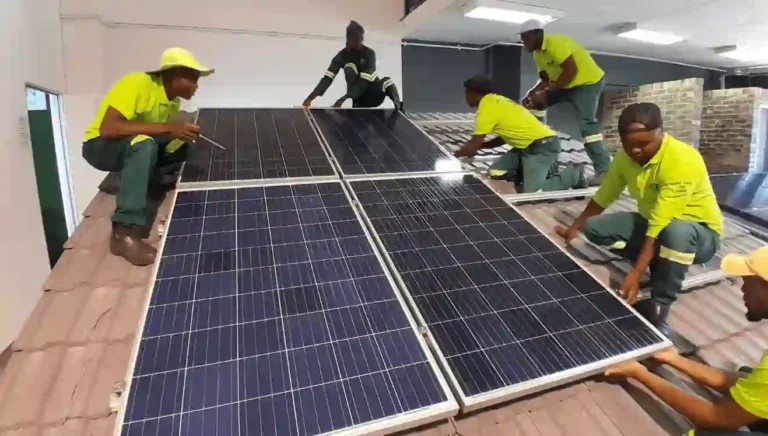
Oluwadamilare Sonayon Adebowale Bashir has launched a solar empowerment training programme aimed at creating sustainable job opportunities for 100 youths in Ikeja, placing skills acquisition and economic self-reliance at the centre of community development.

The initiative, unlike many conventional empowerment drives, is strictly focused on training. It is designed to equip young people between the ages of 18 and 40 with practical, income-generating skills in the renewable energy sector.

Bashir disclosed that 100 youths will benefit from the programme, which will be implemented in batches to ensure quality training and effective supervision. The first batch of 20 trainees is scheduled to commence in March, marking the beginning of a structured rollout intended to build a pool of skilled solar technicians and energy entrepreneurs within Ikeja.

According to Bashir, the programme is conceived as a long-term intervention that will enable participants to secure employment, establish small businesses and contribute meaningfully to the local economy.

He described the initiative as a direct response to the twin challenges of youth unemployment and unreliable power supply, noting that “solar technology offers a viable pathway for job creation while addressing everyday energy needs.”

Bashir further stated that the empowerment scheme is part of his contribution towards supporting the re-election of President Bola Ahmed Tinubu in 2027, citing the President’s emphasis on enterprise, innovation and inclusive economic growth.

In the same vein, he commended Seyi Tinubu, son of the President, for what he described as “consistent grassroots interventions and humanitarian efforts” in Ikeja and across Lagos State, adding that such initiatives continue to make tangible differences in the lives of ordinary people.

Bashir also praised Tayo Ayinde, Chief of Staff to the Lagos State Governor, acknowledging his “fatherly role” and longstanding support for community stability and development in Ikeja.

He reaffirmed that the solar training scheme is “not a one-off gesture but a structured empowerment model” aimed at building capacity, restoring dignity of labour and positioning Ikeja youths to thrive in a rapidly evolving energy economy.

Jigawa State Polytechnic Opens Short-Term Skills Training Admission

0

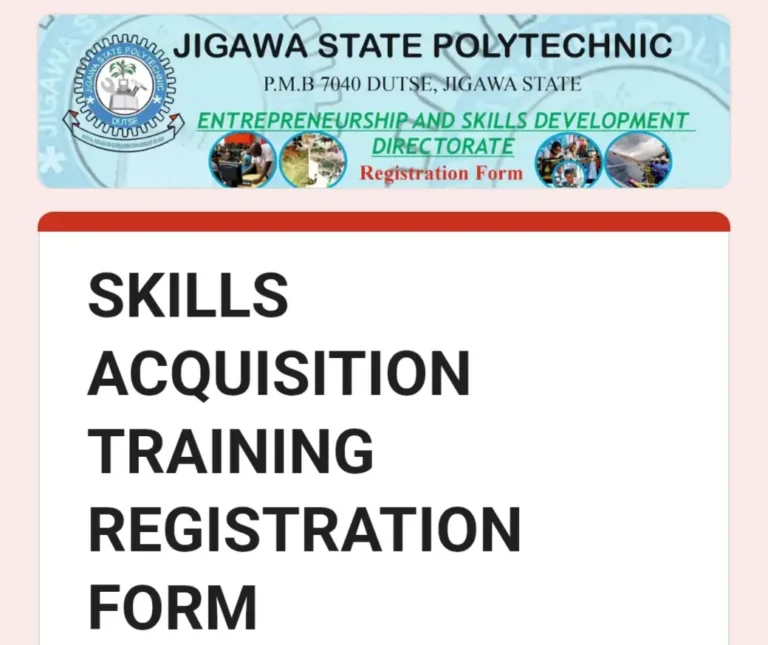
The Directorate of Entrepreneurship and Skills Development (ESDD), Jigawa State Polytechnic, Dutse, wishes to inform the general public that admission and registration have commenced for various short-term skills acquisition training programmes.

Available trades include Computer Application Skills, Solar Installation and Maintenance, Livestock Farming, Tailoring, Home Gardening, Office Technology and Management, Painting and Decoration, Paint Making, Barbering Skills, Cosmetology, Video Editing, Computer Networking, and Computer Repairs and Maintenance.

The form fee is N1,000, while the registration fee is N10,000. Sales of forms and registration are currently ongoing.

Training will hold on Saturdays and Sundays for a duration of five weeks. The venue is the Directorate of Entrepreneurship and Skills Development, Jigawa State Polytechnic, Dutse.

For inquiries, kindly contact 08033593655 or 08034153949 (Dr. M. U. Usman, Director ESDD).

Hurry now, as the second batch will commence immediately after Sallah.

To apply, interested applicants should visit https://forms.gle/1X6TqdxeWREgEhjf7.

ACI, CSR-in-Action Announce Women SDG Advocates Conference 2026

The African CleanUp Initiative (ACI), in partnership with CSR-in-Action Advocacy, has announced the Women SDG Advocates Conference (WSAC) 2026 to drive the development of women across sectors.

The conference, themed “Give to Gain: Empowering Women Through Shared Action,” is expected to bring together over 200 women leaders driving SDG action across communities, business and public service. According to the organisers, the event is designed to strengthen collaboration and create practical solutions that support sustainable development goals.

As part of preparations, the organisers recently unveiled the Conference Committee, which will provide strategic direction for the programme and support stakeholder engagement ahead of the convening. The committee is chaired by Dr Bekeme Masade-Olowola, group chief executive of CSR-in-Action, and Victoria Uwadoka, corporate communications lead, Nestle Nigeria. Other members include Titilope Oguntuga, director, Sustainability, IHS Towers, and Mrs Bukola Adeoye, executive director, Corporate Services, SystemSpecs Holdings Limited.

The Women SDG Advocates Conference 2026 is designed as a strategic convening to bring together women leaders, advocates, professionals, entrepreneurs, civil society actors, development practitioners, and corporate stakeholders committed to advancing the SDGs. Convened in commemoration of International Women’s Day 2026, the conference will serve as a catalyst for shared action, partnerships, and scalable solutions.

The hybrid event will hold on Wednesday, March 11, 2026, at The Lagos Chamber of Commerce and Industry (LCCI), Commerce House, Lagos.

Speaking about the event, Dr Alexander Akhigbe, founder and chief executive of ACI, said, “Empowering women is not charity; it is a global strategy for sustainable development. As Women SDG Advocates rise together, they unlock opportunities that transform communities and nations.”