Home Blog Page 479

CRSMEDA warns against fake Owan Enoh MSMEs support fund

0

The Cross River State Microfinance and Enterprise Development Agency (CRSMEDA) has raised an alarm over false claims surrounding the Owan Enoh MSMEs Support Fund. The agency disclosed that reports have emerged of individuals being asked to pay money in order to apply for or benefit from the grant.

In a statement, CRSMEDA clarified that such demands are fraudulent and not linked to the agency. “We want to make it unequivocally clear that this agency does not, and will not, request any form of payment from its beneficiaries for any of its programs,” the agency said.

The agency further stressed that this applies to all its programmes, including the successful Retiree Entrepreneurship Development Initiative (REDI), the Bank of Industry nano grants, and the ongoing CRSG/SMEDAN-Sterling Bank loan verification exercise.

CRSMEDA strongly condemned the fraudulent activities, describing them as criminal acts designed to exploit unsuspecting citizens. The agency urged members of the public to stay alert and avoid falling victim, while calling on people to report anyone involved in such scams to the appropriate authorities immediately.

Advertisement

Adamawa Fintiri Business Wallet to empower 100,000 beneficiaries in next phase

0

Adamawa State has continued to make deliberate efforts in promoting youth and women empowerment through entrepreneurship and wealth creation programs. Following the establishment of the Ministry of Entrepreneurship Development in 2019 by Governor Ahmadu Umaru Fintiri, the state created the Poverty Alleviation and Wealth Creation Agency to drive initiatives that support skills acquisition, financial inclusion, and business growth.

One of the leading programs of this initiative is the Fintiri Business Wallet, officially launched on March 14, 2024, to provide direct financial support for small-scale business owners. At the launch, 10,000 entrepreneurs from different sectors received ₦50,000 each to strengthen and expand their businesses.

According to government officials, the goal was to stimulate grassroots economic growth by boosting local enterprises.

Since its introduction, the program has disbursed 6 billion naira to 120,000 beneficiaries, creating opportunities for sustainable livelihoods and reducing unemployment. Governor Fintiri described the initiative as “a deliberate step to secure the future of our youth and women by giving them the resources to succeed.”

Building on this achievement, the administration has announced plans to empower an additional 100,000 beneficiaries across Adamawa State in the next phase.

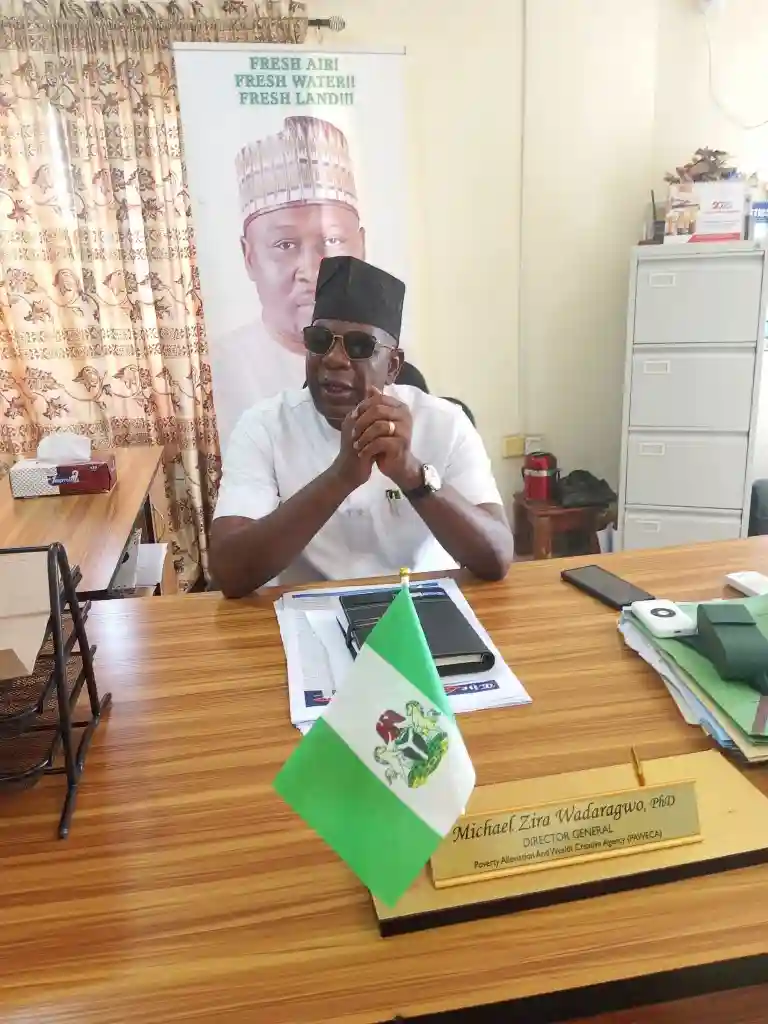
Hon. Michael Zira Ph.D, who piloted the program, explained that the success of the Fintiri Business Wallet demonstrates the impact of targeted financial interventions in reducing poverty and supporting self-reliance.

The program has been widely recognized as a model for direct empowerment. “We are not just reducing the poverty index, we are creating wealth and unlocking the potential of our most vibrant population,” Hon. Zira said.

Through this intervention and other poverty alleviation schemes, Adamawa State continues to strengthen its economy and ensure inclusiveness by giving young people and women access to business funding, small business loans, and entrepreneurship development opportunities.

Lagos Govt Releases N20m for Youth Entrepreneurs

0

Lagos State Government has announced a funding support of 20 million naira for young entrepreneurs with outstanding business proposals. The initiative is being carried out through the Ministry of Youth and Social Development.

The Permanent Secretary, Ministry of Youth and Social Development, Pharm Mrs. Toyin Oke-Osanyintolu, made this known during the formal opening of the Amplifier Business Clinic, organised by the Ministry in partnership with Pelse Consulting at Sam Sonibare Youth Centre, Surulere, on Thursday.

According to Oke-Osanyintolu, the Amplifier Business Clinic was introduced in line with the inclusion of “Youth” as a pillar in the Developmental Agenda of Governor Babajide Olusola Sanwo-Olu in 2023. She explained that the Ministry needed to broaden its activities in youth development to address the challenges faced by young people.

She urged the 92 young entrepreneurs selected from the 700 applicants to make full use of the opportunity. “You must maximise every moment of this business training programme to acquire the skills and knowledge you need to amplify your businesses to justify the money invested in the programme by the state government,” she said.

Earlier in his remarks, the Director of Youth Development, Mr. Abdulateef Saka, stated that the Amplifier Business Clinic is aimed at training young entrepreneurs on how to grow and sustain their businesses. He added that the initiative would help them create jobs and strengthen the local economy.

The Founder of Pelse Consulting, Mr. Femi Boboye, explained that the five-day training would empower young business owners across Lagos with access to funding, business skills, networks, and opportunities to build sustainable ventures. He also noted that the participants would benefit from one-on-one mentorship and coaching to scale their enterprises.

Oluremi Tinubu flags off N1bn women empowerment grants in Cross River

0

Nigeria’s First Lady, Senator Oluremi Tinubu, has launched the Renewed Hope Initiative (RHI) Women Economic Empowerment Programme in Cross River State, in collaboration with the Tony Elumelu Foundation (TEF).

The programme is aimed at boosting small businesses, with 500 women traders and entrepreneurs in the state receiving N50,000 each to support their enterprises.

Representing the First Lady at the event, the RHI State Coordinator and wife of the Cross River State Governor, Bishop Eyoanwan Otu, explained that the initiative is designed to strengthen households and communities through economic empowerment. “When you empower a woman, you empower a nation,” she said, while appreciating TEF for donating N1 billion to support women across the country.

She noted that 500 women from each of the 36 states and the Federal Capital Territory will benefit from the support, bringing the total to 18,500 women nationwide. “Thanks to the Tony Elumelu Foundation, which donated N1 billion to support 18,500 women nationwide, 500 women from each of the 36 states and the FCT will receive N50,000 each to revitalise their businesses,” she added.

Bishop Otu also commended Cross River State Governor, Senator Bassey Otu, for his consistent support of RHI programmes in the state.

A representative of the Tony Elumelu Foundation described the initiative as more than just financial support. He said it was a wider vision to transform women’s lives and strengthen the economy. “This initiative is not just a programme, it is a vision, a movement, and a clarion call to uplift the women of Nigeria. At the Tony Elumelu Foundation, we believe that when women are empowered, communities are transformed and nations prosper. We pledge our continued collaboration to ensure that women do not just survive but thrive,” he stated.

Also speaking, the Cross River Commissioner for Women Affairs, Mrs. Edema Irom, praised the initiative as a true reflection of the commitment of the First Lady to put smiles on the faces of market women and other vulnerable groups.

Some of the 500 beneficiaries in Cross River State received their N50,000 cash grants at the event and expressed gratitude to Senator Oluremi Tinubu and TEF for the intervention.

FG validates Industrial Policy for growth and job creation

0

The Federal Government in Abuja has validated the Nigeria Industrial Policy (NIP), describing it as a framework to drive inclusive growth, job creation, and national competitiveness.

Sen. John Owan Enoh, Minister of State for Industry, said at the event that the policy marked a new covenant to reposition the economy on productivity and resilience. He explained that the NIP was designed to operationalise President Bola Tinubu’s Renewed Hope Agenda by transforming the industrial sector into the true engine of sustainable growth and national pride.

According to the minister, the policy had been subjected to wide consultations involving the Manufacturers Association of Nigeria (MAN), the Organised Private Sector of Nigeria (OPSN), the Nigeria Economic Summit Group (NESG), the academia, labour, development partners, and MSMEs.

“What emerges today is not just government’s vision; it is Nigeria’s collective industrial charter,” Enoh said.

He emphasised that the success of the policy would depend on effective execution, noting that policies, however brilliant, do not transform nations without measurable implementation.

Enoh said that the NIP would focus on power for production, credit for SMEs, incentives for local content, modern infrastructure, and technology that enhances competitiveness. He noted that the framework was also aligned with global and continental strategies, including the African Continental Free Trade Area (AfCFTA), the UNIDO Programme for Country Partnership, and Africa’s Agenda 2063.

The minister called for shared stewardship among government, industry, academia, labour, and civil society to ensure that the validation translates into industrial transformation. He commended the National Institute for Policy and Strategic Studies (NIPSS) for stewarding the process and thanked all stakeholders for shaping the policy.

Enoh expressed optimism that the NIP would help Nigeria shift from being a consumer economy to a producing nation and from exporting raw materials to exporting finished products.

Stakeholders at the event expressed confidence that the new NIP would revive the sector, strengthen manufacturing, and enhance economic diversification, but stressed the need for effective implementation.

Prof. Ayo Omotayo, Director-General of NIPSS, said the framework would address long-standing challenges and enable the sector to contribute at least six per cent to the Gross Domestic Product (GDP).

Omotayo explained that the policy identified stakeholders across the industrial ecosystem, clearly defined their roles, and introduced monitoring mechanisms to ensure accountability and coherence in execution.

“The new NIP identifies key stakeholders and industrial trust centres, including development partners, with clearly defined roles and timelines. The framework also provides for monitoring and evaluation mechanisms to ensure accountability, so that any sector that falls short of its role can be promptly corrected. The reforms will bring coherence to Nigeria’s industrial ecosystem, enabling manufacturing and other subsectors to contribute more meaningfully to economic growth,” he said.

Representing the Nigerian Association of Chambers of Commerce, Industry, Mines and Agriculture (NACCIMA), Mr Abubakar Audu commended the Ministry of Industry for driving an inclusive process.

Audu said that the policy reflected inputs from the private sector, particularly on the role of MSMEs, which it described as the backbone of the industrial base. He explained that the framework would strengthen value addition, expand markets through AfCFTA, support innovation, green growth, and digital transformation.

Also, the African Development Bank (AfDB), represented by Rosemond Offei-Awuku, said that industrialisation was central to the bank’s 2024 to 2033 strategy and to Nigeria’s economic transformation.

She highlighted AfDB’s ongoing support through projects such as the Special Agro-Industrial Processing Zones (SAPZ), the Digital and Creative Enterprises Programme, and the Ekiti Knowledge Zone, designed to boost manufacturing, agriculture, and the digital economy.

She said: “Strengthening value-chains, improving infrastructure and integrating MSMEs into AfCFTA will be vital to Nigeria’s industrial success.”

The event was attended by various stakeholders, government officials, and partners who expressed their commitment to the policy. They agreed that the framework represented a new opportunity for industrial rebirth but underscored the importance of policy consistency, infrastructure, financing, and partnerships to translate the blueprint into results.

Sokoto Govt Disburses ₦69.75m and 210 Bags of Rice

0

The Sokoto State Government has provided financial and food support to families affected by recent bandit attacks in Kware and Gwadabawa Local Government Areas. A total of ₦69,750,000 and 210 bags of rice were distributed to the victims and their families as part of the relief measures.

During a condolence visit to the affected communities, Governor Ahmed Aliyu described the attacks as unfortunate and inhumane. He urged residents to accept the incidents as acts ordained by Almighty Allah, while assuring them of his administration’s determination to strengthen security in Sokoto State.

Governor Aliyu noted that the state government will continue to support security agencies in tackling banditry but expressed concern about the role of informants. He said these individuals contribute significantly to the insecurity in local communities.

According to him, “These informants are even more terrible and dangerous than the bandits themselves, because there wouldn’t have been bandits without informants. Our community and religious leaders, therefore, have a critical role to play by sensitizing their people on the dangers of harbouring informants and the need to expose them.”

The governor appealed for collective support from citizens in the fight against insecurity, stressing that restoring lasting peace across Sokoto State is a top priority for his administration.

As part of the relief, Governor Aliyu announced that each family of those killed in the attacks would receive ₦2 million and five bags of rice. He added that each of the injured would be given ₦250,000 and three bags of rice.

In Kware Local Government Area, 22 people were killed and four injured, while in Gwadabawa Local Government Area, 11 people lost their lives and another 11 were injured. The disbursement of ₦69.75 million and 210 bags of rice covered both LGAs.

The condolence visit was attended by prominent leaders, including Senator Aliyu Magatakarda Wamakko, Deputy Governor Idris Muhammed Gobir, Minister of State for Works Barrister Bello Goronyo, and Speaker of the State House of Assembly Tukur Bala Bodinga, along with other stakeholders.

FGN 50K Nano Presidential Grant second phase rumored to begin soon

0

September 5, 2025 – There are growing talks about the possible launch of the second phase of the FGN 50K Nano Presidential Grant, a scheme designed to support small-scale businesses at the grassroots level. The initiative was originally created to provide workforce support and help nano businesses acquire needed equipment for growth.

Reports suggest that each business may once again receive ₦50,000, with the condition that one additional person must be employed. This requirement is said to be part of government’s plan to encourage job creation within local communities.

“The first is the N50 billion that is for Nano, this is grant, and is supposed to go to all Nigerians across the 774 local governments, with each person collecting 50,000 and a maximum of 1,000 per local government,” an earlier statement explained during the first rollout.

The first phase took place back in March 9, 2024, under the supervision of the Federal Ministry of Industry, Trade and Investment, with the Bank of Industry (BOI) acting as the Executing Agency. At that time, officials confirmed that “as at today, the federal government has disbursed to over 800,000 Nigerians out of the earmarked 1 million, and we’ve disbursed over 40 billion of the 50 billion. The intention is that between now and Christmas and New Year, we would have disbursed the entire 50 billion to Nigerians.”

It was further stated that no local government had been left out. “And no local government as we speak today, there’s no local government that has not benefited from this grant. We will provide the details, including names and addresses and name for whoever is interested to make sure that truly these funds went to the right Nigerians.”

The structure of the program sets aside 70 percent of the grant for women and youth, 10 percent for people with disabilities, 5 percent for senior citizens, and 15 percent for other groups.

Beneficiaries are expected to undergo verification using their National Identification Number and Bank Verification Number, while also proving business ownership, readiness to expand, and willingness to employ extra staff. Applicants must also provide residence or business address along with banking details.

For now, officials advise small business owners to remain calm and only follow announcements from the Federal Government, BOI, or SMEDAN regarding the rumored second phase.

Oluremi Tinubu empowers 500 women in Cross River with N50,000 grants

0

First Lady, Senator Oluremi Tinubu, has empowered 500 women in Cross River State with a grant of N50,000 each under the Renewed Hope Initiative’s Economic Empowerment Programme.

The flag-off ceremony was held on Friday in Calabar, the state capital, where Mrs Tinubu was represented by the Wife of the Governor of Cross River State, Eyoanwan Bassey Otu. She explained that the grant is not a loan but direct financial support designed to uplift women-led businesses across the country.

“The initiative targets 18,500 women, 500 beneficiaries each from the 36 states and the Federal Capital Territory,” she said.

According to her, “This initiative is geared towards the empowerment of women with N50,000 each as a grant. It is not a loan but a seed from the Renewed Hope Initiative. When you empower a woman, you empower a household. This initiative will have a positive impact on families and communities.”

The programme is being implemented in partnership with the Tony Elumelu Foundation, which has committed N1 billion to support the project. The foundation’s involvement is expected to boost the capacity of women traders and small-scale business owners across Nigeria.

Mrs Tinubu praised the Tony Elumelu Foundation for what she described as a strong commitment to the success of the Renewed Hope Initiative. She said the empowerment scheme is a bold move to improve women’s financial independence through direct business recapitalisation support.

“We have seen how a little support in the hands of a woman becomes a seed for something greater, school fees paid, families fed, homes sustained, and communities uplifted,” she added.

Gov Eno unveils tree crop revolution programme

0

Governor Umo Eno has unveiled modalities for the full implementation of the Tree Crop Revolution Programme to boost and expand the State’s agricultural value chain under the ARISE Agenda.

Speaking during a meeting with the State Agriculture and Food Security Committee at Government House, Uyo, on Tuesday, September 2, Governor Eno disclosed that one million tree crop seedlings will be cultivated across 6,500 hectares of farmland under the programme.

He explained that the initiative will commence in the last quarter of 2025 and will target individual and family farm holdings. Access will be provided through a dedicated digital portal designed to make participation easier for households. “This approach is intended to encourage inclusiveness, giving every interested household the opportunity to participate in the agricultural renaissance,” he said.

To motivate farmers, the Governor assured that the State government will take over all yields from participating farms. According to him, this measure will serve as a guarantee for a ready market for farmers’ produce while reducing the risk of post-harvest losses.

Stressing the importance of the programme, Governor Eno noted, “The Tree Crop Revolution is a critical plank of the ARISE Agenda. It is aimed at strengthening food sufficiency, generating jobs, and enhancing the State’s capacity for agribusiness, as the crop seedlings have high yield capacity and fruit within two years.”

The meeting further reviewed strategies for effective monitoring, sustainability, and partnership with relevant stakeholders to ensure the programme’s success. Governor Eno emphasized that the effort is necessary for the State to reclaim its pride of place in oil palm production, having declined from number one to four.

The Tree Crop Revolution Programme is expected to open opportunities in agribusiness, create jobs for youths, and increase agricultural productivity while driving food security in the State.

FG to expand $1.2bn women’s education project

0

The Honourable Minister of Education, Dr. Maruf Tunji Alausa, CON, has affirmed that educating women and girls remains the smartest investment any nation can make to break the cycle of poverty. He stated that “educated girls are more likely to secure employment, educate their children, and uplift entire communities.”

The minister highlighted key government interventions aimed at improving access to quality education. These include vocational and technical education programmes, the Nigeria for Women Project, a $1.2 billion World Bank initiative running across 21 states, and the upcoming Flow with Confidence project championed by the First Lady to keep girls in school.

Other initiatives are the establishment of mega-schools, scholarships, and the distribution of learning materials in states such as Edo and Gombe.

Dr. Alausa also emphasized recent curriculum reforms which will reduce the number of subjects in primary schools from over 20 to between six and nine starting in the 2025/2026 academic session.

He explained that the change will ease academic pressure on pupils and ensure that skills are better aligned with real-world needs, which will improve future employability and reduce poverty rates.

The Honourable Minister of Women Affairs, Hajia Imaan Sulaiman-Ibrahim, noted that closing the gender gap could add $229 billion to Nigeria’s economy by 2030. She pointed to reforms in states like Adamawa, Rivers, and Niger as steps already being taken to drive women’s empowerment and gender equality.

NESG Chairman, Mr. Olaniyi Yusuf, stressed the importance of taking bold action beyond dialogue to drive measurable progress. Keynote speaker Oley Dibba-Wadda urged Africans to reclaim their stories through technology, while PIC Chairman, Mr. Udeme Ufot, underscored the summit’s role in shaping policy. He added that the outcomes will be documented in the Purple Book, which will serve as a roadmap for reform and accountability.