Home Blog Page 480

Gov Eno unveils tree crop revolution programme

0

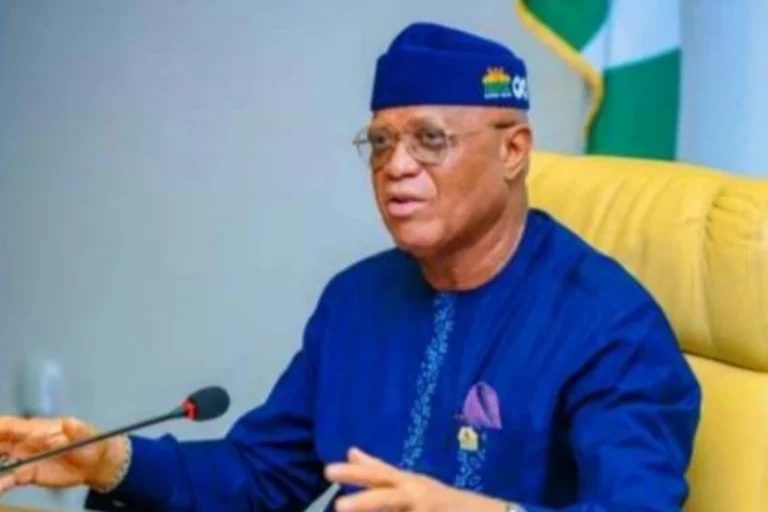
Governor Umo Eno has unveiled modalities for the full implementation of the Tree Crop Revolution Programme to boost and expand the State’s agricultural value chain under the ARISE Agenda.

Speaking during a meeting with the State Agriculture and Food Security Committee at Government House, Uyo, on Tuesday, September 2, Governor Eno disclosed that one million tree crop seedlings will be cultivated across 6,500 hectares of farmland under the programme.

He explained that the initiative will commence in the last quarter of 2025 and will target individual and family farm holdings. Access will be provided through a dedicated digital portal designed to make participation easier for households. “This approach is intended to encourage inclusiveness, giving every interested household the opportunity to participate in the agricultural renaissance,” he said.

To motivate farmers, the Governor assured that the State government will take over all yields from participating farms. According to him, this measure will serve as a guarantee for a ready market for farmers’ produce while reducing the risk of post-harvest losses.

Stressing the importance of the programme, Governor Eno noted, “The Tree Crop Revolution is a critical plank of the ARISE Agenda. It is aimed at strengthening food sufficiency, generating jobs, and enhancing the State’s capacity for agribusiness, as the crop seedlings have high yield capacity and fruit within two years.”

The meeting further reviewed strategies for effective monitoring, sustainability, and partnership with relevant stakeholders to ensure the programme’s success. Governor Eno emphasized that the effort is necessary for the State to reclaim its pride of place in oil palm production, having declined from number one to four.

The Tree Crop Revolution Programme is expected to open opportunities in agribusiness, create jobs for youths, and increase agricultural productivity while driving food security in the State.
Advertisement

FG to expand $1.2bn women’s education project

0

The Honourable Minister of Education, Dr. Maruf Tunji Alausa, CON, has affirmed that educating women and girls remains the smartest investment any nation can make to break the cycle of poverty. He stated that “educated girls are more likely to secure employment, educate their children, and uplift entire communities.”

The minister highlighted key government interventions aimed at improving access to quality education. These include vocational and technical education programmes, the Nigeria for Women Project, a $1.2 billion World Bank initiative running across 21 states, and the upcoming Flow with Confidence project championed by the First Lady to keep girls in school.

Other initiatives are the establishment of mega-schools, scholarships, and the distribution of learning materials in states such as Edo and Gombe.

Dr. Alausa also emphasized recent curriculum reforms which will reduce the number of subjects in primary schools from over 20 to between six and nine starting in the 2025/2026 academic session.

He explained that the change will ease academic pressure on pupils and ensure that skills are better aligned with real-world needs, which will improve future employability and reduce poverty rates.

The Honourable Minister of Women Affairs, Hajia Imaan Sulaiman-Ibrahim, noted that closing the gender gap could add $229 billion to Nigeria’s economy by 2030. She pointed to reforms in states like Adamawa, Rivers, and Niger as steps already being taken to drive women’s empowerment and gender equality.

NESG Chairman, Mr. Olaniyi Yusuf, stressed the importance of taking bold action beyond dialogue to drive measurable progress. Keynote speaker Oley Dibba-Wadda urged Africans to reclaim their stories through technology, while PIC Chairman, Mr. Udeme Ufot, underscored the summit’s role in shaping policy. He added that the outcomes will be documented in the Purple Book, which will serve as a roadmap for reform and accountability.

FG NHIA enrols over 20 million in health insurance

0

The National Health Insurance Authority (NHIA) has announced that it has enrolled over 20 million Nigerians in the national health insurance scheme across the country.

The Acting Zonal Coordinator for the North Central Zone, covering Kwara, Niger, and Kogi States, Adamu Abdullahi, disclosed this during a forum in Ilorin. He explained that the forum was aimed at enlightening the public on the authority’s policies for ensuring best practices, noting that the current reforms are targeted at improving healthcare delivery in Nigeria.

He said the policies are focused on achieving Universal Health Coverage by 2030. According to him, the federal government is working towards enrolling at least 44 million Nigerians to enable more people access affordable healthcare services.

“We are enlightening the stakeholders about the increase in tariff. The NHIA is ensuring efficiency through quality in service delivery. We are increasing the tariff in terms of capitation; there is also an increase in terms of fee for service,” Abdullahi stated.

He explained that the capitation fee, which was previously set at ₦750, now stands at ₦1,450 for every registered individual under the health insurance scheme. He added that the authority has also raised standards for accreditation and reaccreditation to align with current healthcare demands, despite existing challenges.

According to him, these reforms are part of the activities introduced under the current leadership of the NHIA Director-General, Kelechi Ohiri. He further stated that President Bola Tinubu has made health insurance enrolment compulsory for all Nigerians to ensure that citizens have access to quality healthcare delivery.

“We are working towards ensuring a drug-free society under the NHIA medicine initiative. We are going to have NHIA-branded drugs that our enrollees can easily access,” Abdullahi added.

To further improve service delivery, he disclosed that the federal government has introduced the ‘One-Hour Referral Authorisation Code’ to reduce the waiting time for patients when they require referrals from primary to secondary healthcare.

Also speaking at the forum, the State Coordinator of the NHIA Kwara Office, Idayat Bello-Olaitan, commended the introduction of new intervention programmes by the authority. She listed the Comprehensive Emergency Obstetric and Newborn Care programme, designed to address the five leading causes of maternal mortality in Nigeria. These causes include haemorrhage, preeclampsia, sepsis, post-abortion complications, and obstructed labour.

She also highlighted the NHIA Free Fistula Programme and the Global Fund HIV-AIDS Drug Resistant Tuberculosis project as other key health interventions. “These programmes are crucial in scaling up the Universal Health Coverage and aligning with the Renewed Hope Agenda in the health sector as directed by the president,” she said.

Ms Bello-Olaitan further revealed that the NHIA will commence “mystery shopping,” a monitoring and evaluation exercise aimed at ensuring that health facilities comply with quality standards.

She stated, “The government is committed to ensuring that enrollees don’t suffer at the point of accessing services. This is also to mandate all health facilities give the right treatment to all enrollees. We demand that there be quality assurance at all the healthcare facilities.”

Akwa Ibom Gov daughter unveils plan to train 1000 Girls

0

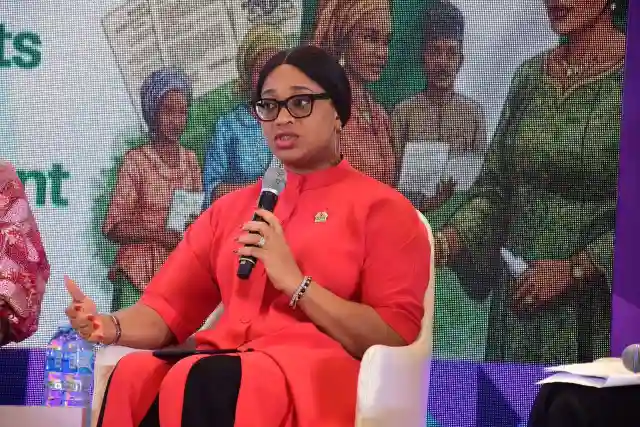
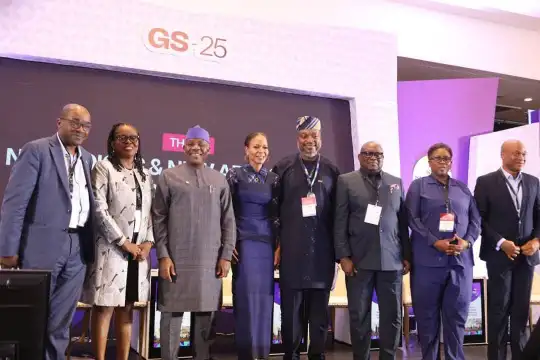
Lady Helen Eno Obareki, Co-ordinator of the office of the First Lady of Akwa Ibom State, has called on policymakers and stakeholders to prioritise inclusive and people-centred governance in Nigeria. She made the call during a high-level exclusive session of the Gender and Inclusion Summit 2025 (GS-25) for First Ladies in Abuja. The summit had the theme “From Policy to Practice: First Ladies as Catalysts for Norm Change and Economic Empowerment.”

Speaking at the event, Lady Obareki stressed that policy innovation must go beyond frameworks to directly address the challenges and realities faced by citizens, especially women and young people. According to her, gender equity is not only a justice issue but also a tested pathway to sustainable economic growth.

“Policy innovation is not just about crafting new ideas on paper; it is about creating solutions that impact families, businesses and communities in real time,” she said. “When women and youths are deliberately included in decision-making, the results go beyond empowerment—they drive progress for the entire nation.”

Lady Obareki also declared her full support for the Reserved Seats for Women Bill in Nigeria. The bill proposes the creation of additional seats in the National and State Houses of Assembly to increase women’s representation in leadership. She noted that women bring unique perspectives and experiences that enrich policymaking and strengthen inclusivity.

“As First Ladies, we are pushing and advocating for special seats for women. For me, as a young woman, it is important to note that these reserved seats for women’s advocacy should not be seen as asking for a favour, because with the percentage of women being so low at 5%, what we’re asking for pushes up to about 20% which is still a very low number when you think about it. I am a big advocate for this cause as a young woman, because it provides hope for the Girl Child,” she stated.

She commended the Policy Innovation Centre for creating a platform that allows robust dialogue among stakeholders, urging government officials, civil society leaders, academics, private sector representatives, youth and women groups to ensure that resolutions from the conference translate into practical results.

“Conferences like this allow us to think boldly, but the true measure of success is in the implementation. Nigeria’s future depends on our collective commitment to policies that are equitable, innovative, and impactful,” she added.

Highlighting her vision for Akwa Ibom, Lady Obareki said she looked forward to a future where girls are confident, academically excellent, economically independent, and have equal access to opportunities. She added that her dream is for a society where the girl child is not hindered by period poverty and where their voices are respected.

“I envisage a future where our daughters are not burdened by period poverty, where every Girl is supported and groomed to realise that their voices are heard and there is no glass ceiling that they cannot break. The Girl Child is powerful, and I want our young girls to understand that we are there for them and that there are laws that we support, advocate for, and will implement. Whenever the Girl Child is violated or abused in any way, we stand for them, speak for them, and if it means someone getting jailed over a crime, then we make sure that we get the full weight of the law applied,” she said.

Lady Obareki expressed gratitude to the First Lady of Nigeria and National Chairperson of the Renewed Hope Initiative, Senator Oluremi Tinubu, for her role in supporting sustainable period poverty campaigns, particularly through the supply of sanitary pads to all states in Nigeria to keep girls in school, especially in rural communities. She also praised the Governor of Akwa Ibom State, Pastor Umo Eno, for his economic blueprint, the ARISE Agenda, which she said has provided an enabling environment for women and girls to succeed.

During the session, which also had the First Ladies of Ogun and Imo States and a representative of the First Lady of Cross River State in attendance, Lady Obareki revealed plans to train 1000 girls. She noted that the approach will shift from temporary charity to long-term empowerment programmes designed to create lasting impact.

Her contributions at the summit reinforced the importance of inclusive governance, policy innovation, and the role of women leaders in shaping a sustainable and equitable future for Nigeria.

FG to create jobs through national arts, culture, tourism and sports

0

The Federal Ministry of Art, Culture, Tourism and the Creative Economy has entered into a new partnership with the National Sports Commission (NSC) to establish a National Arts, Cultural, Creative, Tourism and Sports Innovation Hub within the Moshood Abiola National Stadium precinct in Abuja.

The Memorandum of Understanding (MoU) was signed on Thursday in Abuja and is expected to drive youth empowerment, national development, and global visibility for Nigeria’s creative, cultural, and sports sectors.

According to the agreement, the Innovation Hub will host several key facilities. These include a National Museum of Arts and Culture, an Entertainment Arena and Performance Centre, a Youth Creative and Entrepreneurship Centre, Eco-Villas and Eco-Lodges, a Family Recreational Park, Cultural Lounges and Marketplaces, a Mounted Games Arena, and a Sports Heritage Pavilion.

Speaking during the signing ceremony, the Minister of Art, Culture, Tourism and Creative Economy, Hannatu Musa Musawa, expressed gratitude for the collaboration. She acknowledged the contributions of NSC Chairman, Mallam Shehu Dikko, to sports development in Nigeria.

“Since Mallam Shehu Dikko came on board, we’ve had back-to-back wins in sports. Thank you for coming to this office to discuss how we can open a partnership. For young Nigerians, one of the things the President has always focused on is building a better future for Nigeria, and the best way to do that is to diversify in the areas of sports and the creative industry,” she said.

She further highlighted the importance of the creative sector, pointing out that Nigeria’s cultural assets are gaining global recognition. “The creative industry is also having a great moment, and Nigeria is known for its cultural assets. Partnering with the sports industry through this MOU will bring new focus and ideas. This partnership has the power to empower the young generation, teach them about our culture, and provide capacity building. If this can be replicated in every state, it will speak to a new dawn, especially in Abuja, and will have a positive impact on the economy, job creation, and insecurity. The ecosystem we are building with the museum structure, tourism sector, and creative industry will be beneficial for Nigerians. I appreciate the President’s vision and mission, and I’m excited to be part of this journey,” Musawa added.

In his remarks, the Chairman of the National Sports Commission, Mallam Shehu Dikko, emphasized the Commission’s commitment to aligning with the administration’s Renewed Hope Agenda. He explained that the partnership will help revamp sports facilities and expand opportunities for young people and professionals.

“We need to invest and revamp our sports facilities to have around 4,000 activities around the clock. This project will showcase our history, sports, and culture, and we are committed to its success. We will turn the stadium into a sports city, leveraging existing structures to build value for creatives. I assure you of my team’s diligence to provide all the support needed to succeed in this project,” he said.

The collaboration between the Federal Ministry of Art, Culture, Tourism and the Creative Economy and the National Sports Commission will serve as a platform for inter-agency coordination and public-private partnerships.

It is expected to promote integrated strategies that link sports with arts, culture, tourism, and the wider creative economy, while also encouraging public-private dialogue and multilateral stakeholder engagement.

The project will operate under a Public-Private Partnership framework, with both institutions providing institutional support to secure government approvals and ensure alignment with national goals.

Sokoto begins verification for pensioners of 2020 and 2025 retirees

0

The Committee for Verification and Payment of Gratuities to retirees has announced the start of verification for state pensioners whose gratuity backlog dates back to November and December 2020. The process is being led by the State Accountant General, Umar B Ahmad Tambuwal.

In a statement released, the committee said, “We call on the retirees from the months of November, December 2020, and those retired in February and March 2025 to visit the Headquarters of the Ministry of Finance Sokoto today, Friday, 5th September 2025, to check their names.”

The committee further explained that those who find their names on the list are expected to return on Saturday, 6th September 2025, by 10 o’clock in the morning for the verification exercise.

According to the statement, the verification will also continue on Sunday, 7th September 2025, at the Headquarters of the Ministry of Finance. Retirees are advised to come along with their computation, both original and photocopy, as well as their Pension Identification Card or any other means of identification for easy verification.

The committee said this step is to ensure smooth payment of pension and gratuity entitlements.

Kano Govt acquires harvesters to boost food security

0

Kano State has taken another step to strengthen its agricultural sector with the acquisition of eight new combine harvesters. The machines are expected to boost agricultural mechanisation and ensure food security across the state.

The announcement was made by the Commissioner for Agriculture and Natural Resources, Alhaji Dannuma Mahmud, during the North West Zonal Consultative Forum for the Review of the National Gender Policy in Agriculture. The event, organised by ActionAid Nigeria, was held at the Thair Guest Palace in Kano.

Alhaji Mahmud said Governor Abba Kabir Yusuf remained committed to improving farming activities in the state, describing Kano as “an agrarian society with farming communities in all of its 44 local government areas.” He added that the purchase of the combine harvesters was in line with the governor’s vision to modernize agriculture and strengthen food production.

The Permanent Secretary of the ministry, Dr. Bashir Sunusi, explained that the administration has been working tirelessly to support the agricultural sector since taking office. He stressed that mechanisation would help farmers improve yields and reduce post-harvest losses.

The forum brought together men, women, and people with disabilities to discuss strategies for a more inclusive food system. Barrister Nkiruka Stella Okonkwo, the National Consultant for the policy review, said the gathering was important in achieving national food security. She noted that it aligned with the United Nations’ sustainable development goal of “leaving no one behind.”

Mrs. Blessing Akhile, the Food and Agriculture Programme Advisor for ActionAid Nigeria, said the consultative forum created space for smallholder women farmers, young people, and persons with disabilities to share their experiences. According to her, “Since its launch in 2019, the National Gender Policy in Agriculture has made significant progress in addressing gender gaps and improving productivity, which has contributed to food security and poverty reduction for millions.”

Dr. E. Ibrahim, a representative of AGRA Nigeria, also highlighted the role of gender inclusion in strengthening agriculture. She said, “Agriculture is the backbone of Nigeria’s economy, but its full potential cannot be realized without addressing the persistent gender gaps in access to resources and opportunities.”

She explained that AGRA’s interventions have so far reached 1.2 million farmers, of which 37 percent are women and 47 percent are youths, reflecting efforts to make the sector more inclusive.

NASPAN commends FG’s temporary ban on Raw Shea Nut Exports

0

The National Association of Shea Products of Nigeria (NASPAN) has applauded the Federal Government for its decision to temporarily ban the exportation of raw shea nuts, describing it as a strategic move to reposition the country as a global leader in the shea industry.

Speaking at a press conference in Abuja on Friday, NASPAN President, Mohammed Ahmed Kontagora, noted that although the announcement came during the peak of the trading season, the policy was still a welcome development. He said the step would strengthen local processing, curb informal trade, create jobs, and drive rural economic growth.

Kontagora explained that the ban affects only the exportation of shea nuts or kernels, not shea butter. He stressed that the real value addition comes when kernels are processed into butter. “This is a timely intervention to protect the sector,” he stated, while commending President Bola Tinubu and Vice President Kashim Shettima for the policy. He added that the measure would help stabilize local prices, formalize trading, and allow the assessment of processing capacity in the country.

The NASPAN president urged the government to adopt further measures to secure long-term growth for the industry. He recommended the establishment of a Shea Marketing Board, the provision of grants and equipment for processors, the passage of the National Council on Shea Bill, and the inclusion of shea trees in climate management programs.

He also highlighted NASPAN’s Shea Parkland Restoration and Afforestation Programme (SPARE), which seeks to plant 10 million shea trees across Nigeria in the next decade.

However, Kontagora appealed for a 90-day grace period for aggregators who had already purchased large volumes of shea nuts valued at billions of naira before the policy was announced. He said this would help them meet existing contractual obligations under regulated conditions.

He further called for a stakeholder meeting with government to harmonize the details of the ban, suggesting that the forthcoming NASPAN Biennial Shea Conference in February 2026 could serve as a review point.

Kontagora emphasized that proper engagement is necessary to keep both producers and processors motivated to contribute to Nigeria’s economic growth rather than discouraged by sudden policy changes.

10,465 apply for 2025 Senator Karimi and Tinubu Bursary in Kogi

0

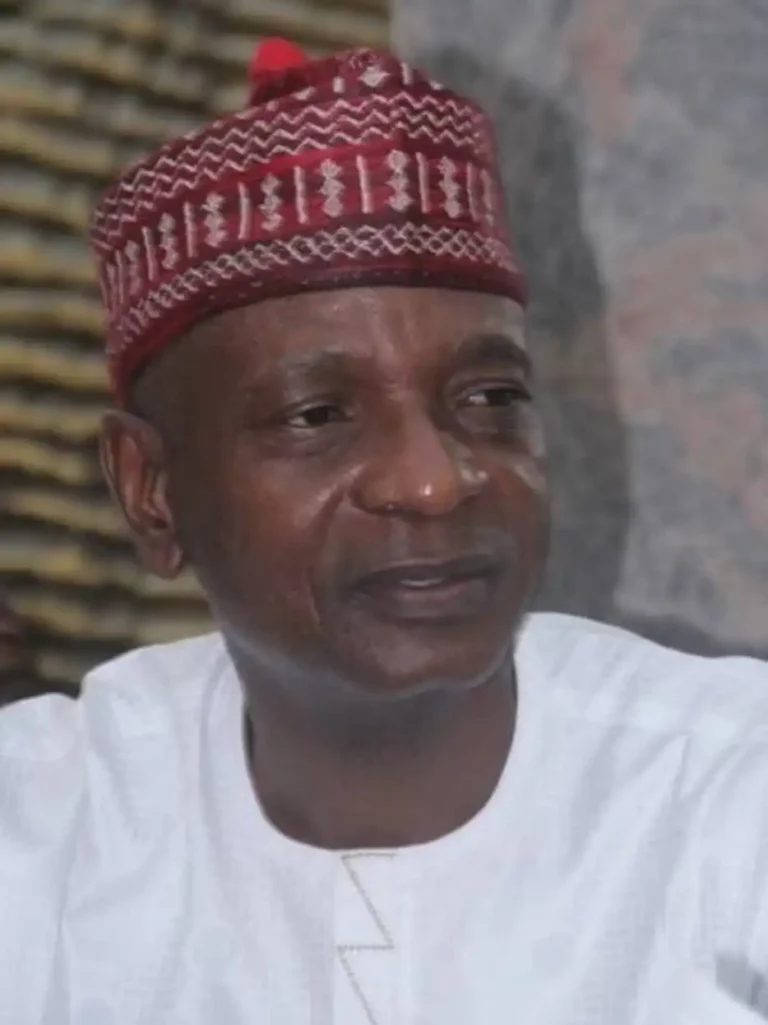
Over 10,465 students from tertiary institutions across the three senatorial districts of Kogi State have applied for the 2025 bursary award organised by the Senator Sunday Steve Karimi Education Foundation in collaboration with the Tinubu Support Group Bursary Award.

In a statement released by the Central Committee of the scholarship programme, it was disclosed that registration began on 1st August and ended at midnight on 31st August, 2025. The Committee explained that the process has now entered the sorting and screening stage to ensure the transparent selection of 3,000 successful applicants, as pledged by Senator Sunday Steve Karimi at the launch of the initiative.

The award, according to the organisers, is open to all indigenes of Kogi State studying in public tertiary institutions across Nigeria. The statement further noted: “After this stage, the names of the successful applicants will be published in due course.”

Applicants and stakeholders were also urged to follow updates from the DSSK Media Team. The Committee emphasized that Senator Sunday Steve Karimi remains dedicated to providing equal opportunity for all, while maintaining transparency, accountability, and fairness throughout the bursary award process.

It will be recalled that in July 2025, the Senator Sunday Steve Karimi Education Foundation announced the official takeoff of the bursary scheme for students of Kogi State origin in public tertiary institutions across the country.

Breakdown of beneficiaries earlier provided by the Foundation shows that 1,390 students from Kogi West Senatorial District will benefit from the bursary award. In addition, 1,000 students from Kogi East Senatorial District and 610 students from Kogi Central Senatorial District will also receive financial support under the Tinubu Support Group Bursary Award, bringing the total to 3,000 beneficiaries.

This initiative, according to the organisers, is designed to ease financial challenges faced by students while supporting quality education.

Gombe youths begin Prof Isa Pantami Foundation Training

0

The first batch of 250 youths drawn from the 11 Local Government Areas of Gombe State has begun training under the Prof Isa Pantami Foundation on mobile phone repair, lectures and mentorship on artificial intelligence, and cybersecurity.

According to the organisers, the initiative aims to equip young people with digital skills and practical knowledge needed in today’s technology-driven economy. The youths were divided into two groups, with some attending the morning session while others attend the afternoon session to ensure smooth learning.

“Over 35,000 youths applied for the programme, making it necessary to select representatives from each of the 11 Local Government Areas of the state,” a coordinator explained.

At this stage, 250 youths are undergoing training as Batch 1. After completion of Batch 1, more batches will be selected from the pool of 35,000 applicants.