Home Blog Page 49

NCDMB Trains 50 Delta Residents in Videography, Cinematography

0

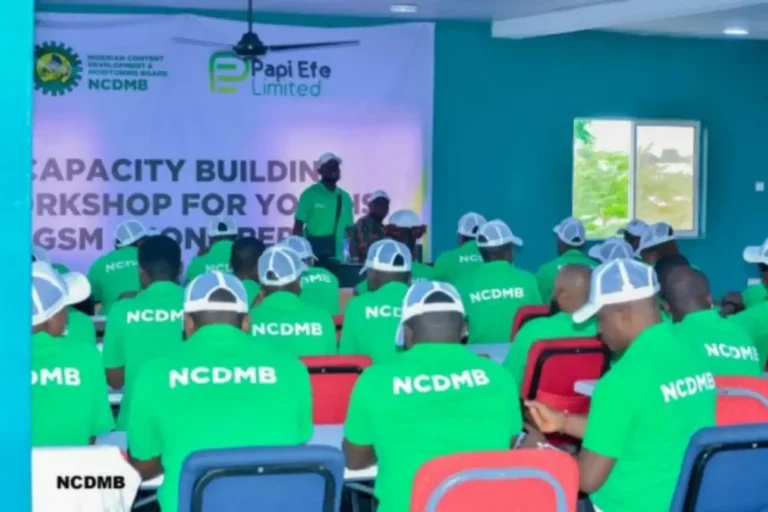
The Nigerian Content Development and Monitoring Board (NCDMB) has trained residents in Delta State on videography and cinematography as part of efforts to strengthen skills in the creative sector. The five-day training, held from February 9 to 13, was executed by King-Fahji Nig. Ltd., with 50 participants benefiting from the initiative.

Certificates were presented to the participants on February 13, alongside starter packs to help them kickstart their careers in videography and cinematography. The trainees, who were elated by the experience, commended NCDMB for giving them the opportunity to acquire a valuable skill.

The programme forms part of NCDMB’s broader efforts to enhance local capacity and promote the development of the Nigerian film industry. By equipping young Nigerians with practical skills in videography and cinematography, the board aims to support the growth of the country’s creative sector.

Participants expressed gratitude to NCDMB and King-Fahji Nig. Ltd. for the opportunity, stating that it had “opened up new avenues” to explore their passion for filmmaking and contribute meaningfully to the economy.

Advertisement

Enugu Unveils Haier Technology Factory as FG Hails Industrial Growth

0

Enugu State government has unveiled the Haier Technology Factory, marking a major step in the state’s push toward industrial growth and innovation.

The Honorable Minister of the Federal Ministry of Innovation, Science and Technology (FMIST), Dr. Kingsley Tochukwu Udeh, SAN, congratulated the Governor of Enugu State, Peter Ndubuisi Mbah, and the people of Enugu State on the successful commissioning of the facility. He described the project as “a strategic leap forward in Nigeria’s innovation-led industrial transformation.”

Dr. Udeh stated that the commissioning represents a clear demonstration of President Bola Ahmed Tinubu’s Renewed Hope Agenda in action, explaining that it translates policy vision into tangible industrial capacity, job creation and economic expansion.

The factory was delivered through a strategic partnership between the Enugu State Government and Haier Group. The project emerged from a forward-looking Memorandum of Understanding facilitated during Dr. Udeh’s tenure as Attorney-General and Commissioner for Justice of Enugu State. Its completion, he said, marks the realisation of “a carefully structured policy framework built on administrative foresight, investor confidence and alignment with the Federal Government’s Science, Technology and Innovation (STI) priorities.”

Dr. Udeh commended Governor Mbah’s disciplined leadership and execution capacity, noting that the project reflects governance anchored on strategic planning, accountability and long-term economic vision.

He emphasised that the factory advances key pillars of the Renewed Hope Agenda, including economic diversification, local manufacturing, value addition, youth empowerment and the strengthening of Nigeria’s science and technology ecosystem.

“The Federal Government remains committed to supporting sub-national initiatives that accelerate industrialisation and deepen innovation capacity across the federation,” the Minister said. He stressed that synergy between federal policy direction and state-level implementation is essential to building a resilient and competitive national economy.

Designed as a full-scale technology manufacturing and assembly hub, the facility will produce computers, laptops, mobile phones, tricycles, security cameras, smart boards and other digital solutions. Beyond boosting local content development, the factory is expected to catalyse ancillary industries, promote skills transfer, strengthen technical education and create sustainable employment opportunities for Nigeria’s growing youth population.

Dr. Udeh reaffirmed that FMIST will continue to champion policies and partnerships that attract global technology leaders, drive research and development, and position Nigeria as a premier innovation hub in Africa.

With the commissioning of the Haier Technology Factory, Enugu State reinforces its emergence as a rising technology and manufacturing centre, highlighting how strategic partnerships and alignment with national policy can drive inclusive economic growth.

FG Flags Off IDEAS TVET 2nd Cohort at Wavecrest College

0

The Federal Government has flagged off the 2nd cohort of trainees under the Innovation Development and Effectiveness in the Acquisition of Skills (IDEAS) Technical and Vocational Education Training (TVET) programme, as part of efforts to strengthen technical skills and tackle youth unemployment across Nigeria.

The IDEAS TVET programme is a Federal Government initiative under President Bola Tinubu’s Renewed Hope Agenda, which prioritises human capital development and economic growth. The project is funded through the Federal Ministry of Education and supported by the World Bank. It focuses on strengthening skills acquisition, enhancing employability, and reducing youth unemployment nationwide.

A World Bank Officer, Scherezad Latif, commended the Federal Government for its heavy investment in technical skills development across the country. Latif, who is the World Bank Education Practice Manager for West and Central Africa, spoke during a visit to Wavecrest College of Hospitality, Surulere, Lagos, one of the accredited training centres for the IDEAS TVET programme.

She explained that the visit was aimed at deepening partnerships and enhancing the delivery of technical and vocational education across accredited training service providers nationwide.

“I wish to commend this Federal Government Project, because it has been impactful and transformative for youth employment nationwide,” Latif said.

“I am here to review the Minister’s IDEAS TVET initiative, supported by the World Bank, as well as to see the impressive results, particularly here at Wavecrest College.

“We’re proud to support the Federal Government efforts and its achievements, even here in Wavecrest College. What we observed impressed us greatly.

“We are impressed, particularly by the students’ motivation, clarity of purpose, and confidence. Wavecrest stands as a model hospitality training institution delivering practical, industry-aligned skills,” she added.

The visit, which officially flagged off the 2nd cohort of trainees, included the inspection of modern training facilities, engagement with beneficiaries, and discussions on improving technical and vocational education outcomes across Nigeria. Units visited at the training centre included the kitchen, lecture rooms, computer and internet room, and the library.

In her remarks, Mrs Blessing Ogwu, the National Project Coordinator for the IDEAS Project at the Ministry of Education, disclosed that there are over 3,000 IDEAS TVET training centres currently running across the country with thousands of trainees enrolled.

Ogwu stated that upon completion of the six-month programme, trainees would be provided with a starter-pack to support their transition into the workforce or entrepreneurship.

She added that the Minister of Education is liaising with the Bank of Industry to secure soft loans for trainees to enable them set up their own businesses after graduation.

Ogwu urged participants to remain committed to the IDEAS TVET programme, noting that the Federal Government is investing heavily in technical skills development to empower youth, drive innovation, and boost sustainable economic growth.

Similarly, the Deputy Provost of Wavecrest College, Mrs Nwabachili Ifeoma, explained that the programme at the institution focuses on Catering and Hospitality Management. According to her, the training combines theory and practical sessions, mentorship, and internship opportunities to prepare participants for real industry experience.

Meanwhile, a beneficiary, Mbanefo Jennifer, expressed gratitude to the Federal Government for the opportunity and described the programme as amazing and life-changing.

“I sincerely thank the Federal Government for this opportunity. The programme has been transformative and our trainers are patient, inspiring and committed to equipping us with practical skills for success,” she said.

Premier Seed Nigeria Hiring Research Officer

0

Premier Seed Nigeria Limited, a leading indigenous seed company dedicated to delivering high-quality certified seeds to farmers across Nigeria, has announced an opening for the position of Research Officer (Plant Breeding). The company plays an important role in strengthening agricultural productivity by supporting innovation in seed research and development. As part of its commitment to continuous improvement and scientific advancement, Premier Seed is seeking a qualified and experienced professional to join its research team.

The successful candidate will support seed breeding programmes, variety evaluation, and adaptive field trials. The role includes establishing, managing, and monitoring both on-station and on-farm trials to ensure accurate and reliable results. The Research Officer will be responsible for collecting, analyzing, and properly documenting agronomic and research data. In addition, the role involves supporting seed certification processes, liaising with relevant regulatory authorities, preparing detailed technical reports, and contributing to quality assurance in seed production and research activities.

Applicants must possess a Master of Science degree in Plant Breeding and have a minimum of three years of relevant experience in seed research or agricultural research. Practical knowledge of seed breeding, field experiments, trials, and data collection is essential. Candidates should also demonstrate familiarity with seed certification standards and procedures, alongside strong analytical, reporting, and communication skills. The ability to work independently as well as within a team is required.

The position is based in Zaria, Kaduna. Interested and qualified candidates should send their CV and cover letter to premierseedng@gmail.com or submit a hard copy at the Premier Seed Head Office in Chikaji, Zaria, on or before 9 March 2026. Only shortlisted candidates will be contacted.

KASEDA explains shortlisting and bank verification for interest-free loan

0

The Katsina State Enterprise Development Agency (KASEDA) has clarified the process for its Interest-Free Loan, reminding applicants that being shortlisted does not mean final approval.

In a statement, the agency said it understands that many applicants get excited once they see their names on the shortlisted list, “but it’s important to understand that shortlisting is not the final stage.”

KASEDA explained that the first step is application and shortlisting. Business owners apply for the KASEDA Interest-Free Loan, and after the application round closes, entries are reviewed based on set criteria. Successful applicants are then shortlisted, and their names are forwarded to a financial institution for verification.

The agency noted that the second stage involves bank verification and documentation. Once the list is submitted to a financial institution such as the Bank of Industry, the bank begins its own checks. This includes documentation, reviewing credit history, verifying guarantors, and assessing the viability of the business.

According to KASEDA, “Only applicants who successfully pass this verification stage will be contacted to return to the bank to sign the offer letter before disbursement.”

It added that applicants who have completed documentation but have not yet appeared on the verified list should remain patient. “It may mean your verification is still in process, you may be contacted for clarification, or you may receive guidance on the next steps,” the agency stated.

KASEDA said it remains committed to transparency and fairness throughout the process and thanked applicants for their patience and cooperation.

FG National Talent Accelerator to boost skills under NATEP

0

The Federal Government has stepped up its talent development drive with the 2nd Co-Chair Meeting of the National Talent Accelerator under the National Talent Export Programme (NATEP). The meeting, hosted by the Ministry of Education at the Minister’s office in Abuja, brought together key stakeholders to review the system analysis of Nigeria’s talent development framework and agree on actions to accelerate skills growth nationwide.

The session was attended by the Honourable Minister for Industry, Trade and Investment, Dr. Jumoke Oduwole. Discussions focused on strengthening collaboration and fast-tracking reforms that will position Nigeria as a global source of skilled professionals.

Minister of Education, Dr. Tunji Alausa, said the Nigeria Skills Accelerator is a bold, FG-led initiative designed to unite government, industry, academia and development partners. According to him, the goal is to position Nigeria as a global hub for skilled talent and innovation.

Private sector and development leaders were also present, including Mr. Samaila Zubairu, CEO of Africa Finance Corporation, and Mr. Boye Olusanya of Flour Mills Nigeria. Their participation highlighted the government’s commitment to strong public-private collaboration in driving talent development.

The renewed push builds on earlier reforms launched in 2025 when Nigeria introduced the Nigeria Talent Accelerator Network. The initiative was described as a game-changing platform aimed at strengthening workforce capabilities, addressing productivity gaps, accelerating digital transformation and preparing Nigerians for the future of work.

The programme forms part of the World Economic Forum’s Reskilling Revolution in Nigeria. It is co-chaired by the Federal Ministry of Industry, Trade and Investment and the Federal Ministry of Education, and coordinated by NATEP. Nigeria’s entry into the Global Accelerators Network marked a significant step in aligning local talent efforts with global standards.

Dr. Jumoke Oduwole described the initiative as “a decisive step towards building a globally competitive workforce that can power Nigeria’s next phase of industrialisation and innovation.”

She added, “The Nigeria Talent Accelerator Network represents a turning point in connecting policy, industry, and education. It creates a unified platform for driving employability, productivity, and inclusive economic growth.”

Similarly, Minister of Education, Dr. Maruf Alausa, reaffirmed the ministry’s commitment to aligning education and vocational training with labour market needs. He said the focus is to ensure Nigerian youth gain future-ready skills and remain competitive globally.

Teju Abisoye, National Coordinator of NATEP, said, “Through this collaboration, Nigeria is not only preparing for the future of work but also helping to define it. We are developing a coordinated Action Plan to address the talent gaps and leverage the huge opportunities for talent export.”

Managing Director of the World Economic Forum, Saadia Zahidi, also welcomed the development. She stated, “The World Economic Forum is pleased to collaborate with Nigeria on advancing its skills development and workforce readiness. By investing in human capital, Nigeria is positioning itself not only to meet domestic workforce needs but also to contribute talent and innovation to the global economy.”

GEEP 3.0: FG aligns on FarmerMoni, TraderMoni, MarketMoni

0

The Program Manager of the Government Enterprise and Empowerment Programme (GEEP), Mr. Hamza Baba, has paid a courtesy visit to the Honourable Minister of State for Finance, Dr. Doris Uzoka-Anite, to discuss the seamless integration of GEEP 2.0/3.0 frameworks, notably FarmerMoni, TraderMoni and MarketMoni, into the national economic recovery plan.

During the meeting, Mr. Baba commended the Ministry of Finance for its clear policy direction on the release and management of funds for social interventions. He said the collaboration is key to ensuring that microcredit schemes reach Nigerians at the grassroots level.

“For the Ministry of Finance, the goal is clear: ensure every naira earmarked for social intervention is disbursed with transparency and reaches the grassroots where it can catalyse real growth,” Mr. Baba said. “By empowering our smallholder farmers and petty traders with interest-free capital, we are not only providing a safety net, we are fuelling the engine of Nigeria’s economy.”

Key outcomes and focus areas were highlighted at the meeting. On funding and optimisation, both parties discussed securing sustainable funding and optimising resource allocation to scale up GEEP 3.0’s microcredit initiatives, TraderMoni, MarketMoni and FarmerMoni, to reach millions of beneficiaries across the country.

On transparency and accountability, the two offices agreed on strengthened governance mechanisms to ensure transparent use of funds, accurate reporting and consistent enforcement of repayment obligations. This, they noted, is necessary to rebuild trust and ensure the long-term sustainability of the programme.

The meeting also focused on partnerships and digital inclusion. Both sides stressed the need to deepen partnerships with commercial banks, microfinance institutions, fintech providers and civil society organisations to enhance digital delivery, expand financial inclusion and streamline beneficiary enrollment, disbursement and recovery processes.

Improved operational coordination was another priority. Participants identified better inter-agency coordination and the use of technology as critical steps to accelerate implementation, reduce leakages and improve the overall beneficiary experience.

Dr. Doris Uzoka-Anite reiterated the Ministry’s commitment to sound public financial management and to supporting reform measures that ensure social investment funds are disbursed efficiently and responsibly.

The Government Enterprise and Empowerment Programme (GEEP) is a flagship component of NSIPA, providing interest-free microcredit and business support to traders, market women, artisans and smallholder farmers to boost livelihoods and contribute to inclusive economic growth.

No discussions were held regarding NPower during the meeting, as both parties focused strictly on the integration and implementation of GEEP 2.0/3.0 frameworks, including FarmerMoni, TraderMoni and MarketMoni, within the national economic recovery plan.

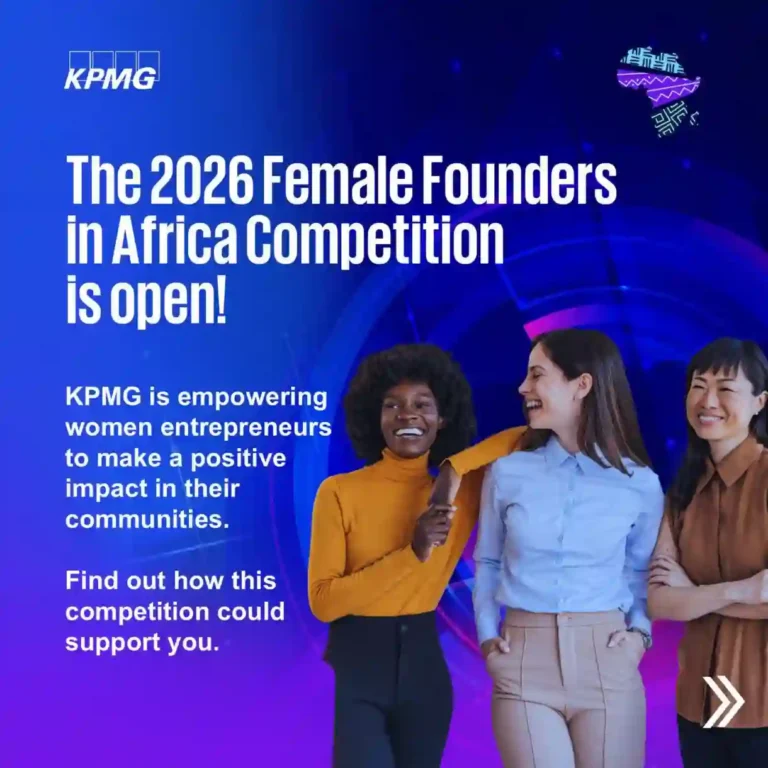
2026 KPMG Female Founders in Africa Competition Opens for Applications

The 2026 KPMG Female Founders in Africa Competition has officially opened applications, inviting dynamic female entrepreneurs from across the continent to participate in this year’s edition.

The initiative is designed to empower women entrepreneurs to make a positive impact in their communities while building resilient and scalable ventures. The 2026 Female Founders in Africa Competition is open, and calling on qualified applicants to take advantage of the opportunity.

KPMG is committed to supporting women-led businesses because many female founders in Africa continue to face major barriers. The most frequently reported challenges for female founders in Africa are related to funding, credibility, and access to networks.

The Female Founders in Africa competition aims to address these challenges by offering essential support, resources, and networking opportunities. It also seeks to equip female founders to thrive amid uncertainty and change in an evolving global environment.

KPMG is delighted to invite applications from dynamic female entrepreneurs across the continent, and is seeking resilient and ambitious ventures – owned and led by women – across a diverse array of sectors, including technology, health, agriculture, and beyond.

Benefits of the competition include access to the KPMG mentorship programme, access to investors’ deals, branding and visibility for startups, and access to community engagements.

To be eligible, applicants must be a registered company in the country or region where the final is being held. The business must be female-owned, active for at least one year, and be tech-enabled, tech-driven, or tech-led. It must not be majority-owned by a large corporate entity.

Female founders are encouraged to apply, especially those who have demonstrated tenacity in navigating challenges, possess a clear growth vision, and show strong market potential. If you have an innovative business model and an unwavering commitment to driving positive transformation within your community, this initiative is for you.

Applicants must be able to conduct all pitches in English and be available to pitch at country or regional semi-finals and finals within the outlined timeline. Finalists must also be available to pitch at the 2026 Finals.

The application process begins with a call for applications and submission of supporting details. A panel of experts will then conduct shortlist selection and invite selected teams to a pitching event. Note that KMPG can move competitors to the online other countries group and have them compete there if necessary.

Shortlisted applicants will participate in regional pitching before a jury of investors, where regional winners will be announced. The competition will then proceed to pitching finals for regional winners, culminating in the announcement of the Best female-founder for early, growth, and mature ventures.

To apply, interested applicants should visit https://forms.office.com/Pages/ResponsePage.aspx?id=uyT_3okgAESMjvceaAN4sow0Xet6uTtAp5n14pI5HttURDNGMjZYRVM1QlZLR0ZDM1g2V0dPRUpSSi4u.

5 Fully Funded Government Scholarships Open for 2026 Applications

0

Many students across the world want to study abroad, but high costs remain a major barrier. Tuition fees, travel expenses and living costs often stop qualified applicants from pursuing international education. Fully funded scholarships are designed to reduce this burden by covering major expenses and limiting the need for personal financial support. In 2026, several governments are offering programmes that cover undergraduate, master’s and doctoral studies.

The Türkiye Scholarships, also known as the Turkey Burslari Scholarship, are hosted in Turkey and funded by the Government of Turkey. The scheme is available for Bachelor’s, Master’s and PhD studies. It covers tuition fees, provides a monthly stipend, offers free accommodation, includes health insurance and airfare, and also funds a one-year Turkish language course. Applications close on February 20, 2026. More information can be found under “Turkey Burslari Scholarship”.

The Global Korea Scholarship (GKS) is hosted in South Korea and funded by the National Institute for International Education (NIIED). It supports Master’s, PhD and research programmes. The scholarship includes full tuition, airfare, a monthly allowance, medical insurance, research support and Korean language training fees. Embassy and university deadlines usually fall between February and March 2026, and applicants are advised to confirm dates with the relevant institutions.

The Australian Government is funding the Australia Awards Scholarships, hosted in Australia. The programme is open to Bachelor’s, Master’s and PhD students. It covers full tuition fees, return airfare, an establishment allowance and a monthly living stipend. It also provides health insurance and academic support. The application deadline is April 30, 2026. Further details are available under “Australia Scholarships 2026”.

Another opportunity is the Indonesian Government Scholarship (KNB), hosted in Indonesia and funded by the Government of Indonesia. It is available for Bachelor’s, Master’s and PhD programmes. The scholarship provides tuition coverage, a monthly living allowance, health insurance, a settlement allowance and Indonesian language training. The application deadline is March 31, 2026. More details can be accessed under “KNB Scholarship”.

The Taiwan ICDF Scholarship Program is hosted in Taiwan and funded by the Taiwan International Cooperation and Development Fund (ICDF). It supports Bachelor’s, Master’s and PhD studies. The programme covers tuition fees, provides a monthly stipend, includes airfare and a housing allowance, and offers health insurance throughout the study period. Applications close on March 15, 2026. Further information is available under “Taiwan Scholarships”.

100,000 Nigerian Farmers to Receive Digital Climate Advisory Service

0

The Nigerian Meteorological Agency (NiMet), in partnership with Tomorrow.io and its affiliates, as well as MTN, has signed an agreement to support 100,000 Nigerian smallholder farmers with digital climate advisory service (DCAS) across the country’s six geopolitical zones.

The initiative, launched in Abuja on Thursday, is designed to provide farmers with weekly weather-driven advisories to guide planting, fertiliser application, pest control and harvesting decisions as part of broader efforts to strengthen food security.

Speaking at the workshop, Charles Anosike, director-general of NiMet, described the initiative as a transformative innovation in climate service delivery. He explained that the programme is built on collaboration and practical engagement with farmers and other stakeholders.

“The decision tree is not merely a technical tool. It reflects the co-design principles that underpin our work,” he said.

“Through inclusive engagement with end-users, policymakers, and technical experts, we ensure that the system is practical and adaptable.”

Anosike said the system integrates data expertise, advanced analytics and user-centric design to provide tailored guidance not only in agriculture but also in aviation, disaster management and other sectors. He added that the collaboration with Tomorrow.io highlights the impact of combining global innovation with local expertise to solve real challenges facing farmers.

Brian Miranda, chief executive officer (CEO) of the US-based TomorrowNow, said the digital climate advisory will support farmers throughout the entire farming cycle, from planting to harvest.

“Every single day, the first question farmers ask is when will the rains come?’ Ninety percent of farmers across Africa are rain-fed,” Miranda said.

“They depend entirely on the weather. If you plant too early or too late, even by a few weeks, you can suffer a 10 to 20 per cent yield penalty.”

Miranda noted that changing weather patterns are worsening food insecurity in Nigeria because rainfall is no longer predictable.

“The weather that farmers are experiencing today is not as predictable as it was five, 10 or 20 years ago,” he said.

“Yet many farming practices have not adjusted to this reality. If you do what you’ve done every season and expect the rains haven’t changed, you will not have a great season.”

He disclosed that TomorrowNow has already reached nearly six million farmers in Kenya and close to one million in Malawi, recently expanded into Zambia and is now entering Nigeria with an ambitious target.

“Our vision is 100 million weather-resilient farmers across Africa. We are starting this pilot with about 100,000 farmers in multiple states, but we expect this to grow into tens of millions of farmers across Nigeria,” Miranda added.

“We are moving to Nigeria to work with you all to help localise a food institution to help smallholder farmers to be more productive. What we’re looking to do is help unlock the potential of smallholder farmers.”

According to him, the project will initially deploy SMS-based advisories before expanding to voice services and strengthening extension agents with high-quality forecast information.

Ifeoma Ebede, general manager of public-private partnership (PPP) at NiMet, said the workshop marked a critical step toward finalising documentation for a nationwide rollout.