Home Blog Page 53

NELFUND Denies Diversion of Student Loan Funds at University of Abuja

0

The Nigerian Education Loan Fund (NELFUND) has denied reports alleging that student loan funds were diverted at the University of Abuja, stating that there is currently no verified evidence to support the claims.

The Fund disclosed this on Friday while reacting to recent media reports alleging the diversion of student loan funds at the University of Abuja.

NELFUND stated clearly that, “as of this moment, there is no verified evidence before the Fund establishing that the University of Abuja has diverted, misappropriated, or unlawfully withheld NELFUND disbursements.”

The agency explained that it operates a structured disbursement and reconciliation framework in line with its statutory mandate. According to the statement, funds are released through established institutional channels, while compliance mechanisms are in place to ensure accountability and transparency.

It added that where concerns arise regarding timelines of crediting student accounts or institutional reconciliation processes, NELFUND engages directly with the relevant institution to clarify and resolve such matters administratively and in accordance with due process.

“It is important to emphasize that allegations reported in the media do not constitute established findings,” the Fund said, noting that it relies strictly on verified documentation, formal reconciliation procedures, and audit mechanisms in addressing any issues relating to its disbursement processes.

NELFUND reiterated its commitment to protecting the interests of eligible Nigerian students and ensuring that all disbursements are applied in accordance with the law. The Fund also said it will continue working with partner institutions to uphold transparency, accountability, and the integrity of the student loan programme.

Advertisement

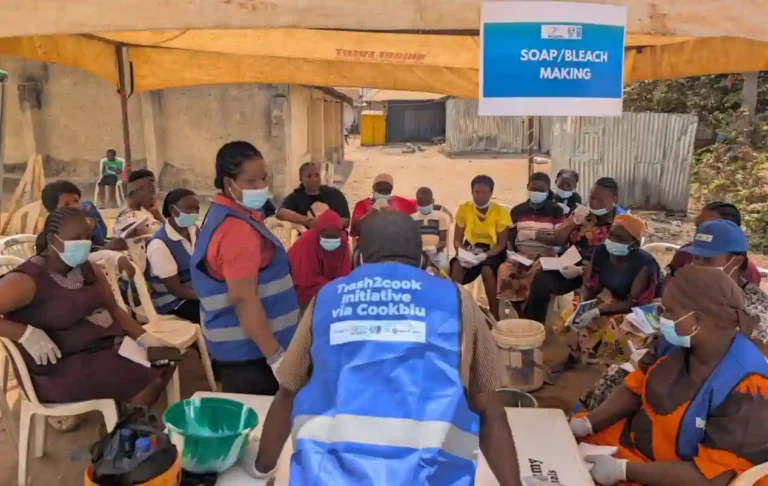
Women trained in Green Skills and Upcycling by Trash2cook Initiative

The Green Skills and Upcycling Training is equipping women with practical skills to transform waste materials into sources of income and improved livelihoods in Chika, a suburb of Abuja in the Federal Capital Territory.

The community-driven environmental initiative was organised by Trash2cook Initiative through Cookblu in partnership with the GEF Small Grant Programme. It drew women and youths from across the community for hands-on sessions in urban gardening, textile upcycling, shoe making and the production of household cleaning products.

Project Coordinator of Community Excellence and Development Initiative (CEDI), Princess Odiaka, said the programme was born out of concern over mounting waste and its impact on public health in Chika.

“We saw drains clogged with waste and rising cases of illness linked to the environment,” she said. “So we decided to turn the challenge into an opportunity by empowering women with green and upcycling skills.”

As part of the training, participants planted 15 oil palm seedlings in recycled tyres. The seedlings are expected to be transplanted to permanent locations as they grow.

Odiaka explained that subsequent sessions would focus on teaching women how to grow vegetables such as peppers and tomatoes in used tyres. According to her, this approach is designed to support household food supply and promote healthier diets within the community.

The initiative builds on an earlier “Waste to Wealth” campaign launched in 2023, which has registered more than 100 women. Odiaka said the new phase aims to move beyond waste collection into active participation in the circular economy.

She noted that participants are now being trained to convert old textiles into tote bags, purses and footwear, creating practical products that can be sold for income.

Odiaka also emphasised the role of traditional leadership in the success of the project. “The chief and council members were involved from the beginning. Some facilitators are from within the community because we want Chika to build its own capacity,” she said.

Facilitator Abdul Abdul Abubakar led sessions on producing liquid soap, disinfectant, bleach and air freshener. He said earlier editions of the training had already produced small-scale entrepreneurs within the area.

“Some participants from the last training have started businesses. You can begin with small quantities at home and expand gradually,” he said. He called for greater government and NGO support to scale up similar initiatives and engage idle youths productively.

Participants also expressed interest in seeing the programme expanded to reach more women.

Gladys Musa, who took part in the shoe-making class, said she had learnt how to measure, cut patterns and assemble shoes manually. She expressed hope that beneficiaries would receive tools to help them transition from training to full-scale production.

“If we get the equipment, we can make shoes locally and even train other young girls,” she said.

Rosemary Akinyemi, a participant in the soap-making session, said the knowledge gained would help her reduce household expenses and potentially generate income.

“Now I know what to mix to get a good result. I can use it at home or start a business,” she said.

Village Head of Chika Airport, Chief Istifanus Shekwoza, appealed to the organisers to extend similar trainings to other communities. He said skill acquisition was essential to community development and restoring hope to households.

“Without skills, you cannot go anywhere,” he said. “This programme will help people avoid idleness, earn income and make Chika a model for other communities.”

Organisers expressed optimism that the initiative would not only clean up the environment but also create a ripple effect of enterprise and self-reliance across neighbouring communities in the FCT.

AFAN proposes agricultural training for NYSC corps members

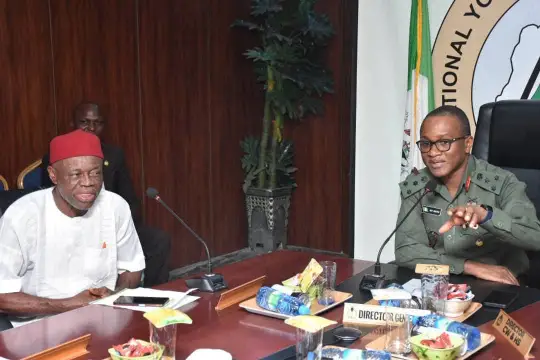
The All Farmers’ Association of Nigeria (AFAN) has proposed a new partnership with the National Youth Service Corps (NYSC) to train Corps Members in key areas of agriculture.

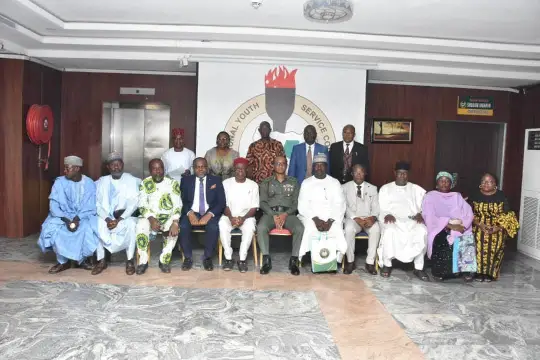
The proposal was presented by the Deputy National President 1 of AFAN, Chief Daniel Okafor, during a courtesy visit to the NYSC Director-General (DG), Brigadier General Olakunle Nafiu, at his office in Abuja.

Okafor said the partnership would focus on training Corps Members in aquaculture, irrigation farming, crop production, feed farming, animal production and other areas within the agricultural value chain.

He explained that AFAN was established to ensure sustainable agricultural practice and boost economic growth, including adequate food supply across the country.

According to him, Corps Members, as graduates, have the capacity to contribute meaningfully to agriculture if properly trained. He said they could play a major role in improving food sufficiency nationwide.

Okafor stated that agriculture remains a strong sector for job creation and quick returns. He asserted that “agriculture is the only sector of the economy that could generate employment and also yield good profit within a short period of time because of its vast value chain.”

In his response, the NYSC DG, Brigadier General Olakunle Nafiu, said farming is evolving daily and described farmers as critical to the Nigerian economy.

He noted the urgent need to produce more young farmers because of the many advantages farming offers to the people.

Nafiu identified insecurity, land ownership issues and climatic factors as major hindrances to farming. However, he added that with modern techniques, more could be done to improve agricultural practice.

The DG also said the NYSC is blessed with graduates who specialized in veterinary medicine, soil science, animal production, crop production and other agriculture-related courses.

He added that management would study the training proposal and ensure its smooth implementation.

OPM sponsors 40,000 Nigerian students in 15-year scholarship scheme

0

Omega Power Ministries (OPM) has sponsored 40,000 Nigerian students through its university scholarship schemes over the past 15 years, marking one of the largest faith-based educational interventions in the country.

The scholarship programme is spearheaded by HRM King Apostle Chibuzor Gift Chinyere, Founder and General Overseer of OPM and King of Ikwuorie Ancient Kingdom. The initiative focuses on underprivileged Nigerians who lack the financial resources to pursue tertiary education.

In a country where poverty, insecurity and economic instability continue to push many young people out of school, the programme has created access to both local and international university education for thousands of beneficiaries. According to available figures, OPM awards scholarships to no fewer than 5,000 students every year. Sustained consistently for 15 years, the scheme has recorded more than 40,000 beneficiaries across its local and overseas scholarship platforms.

The scholarships cover a wide range of degree programmes in Nigerian universities and foreign institutions. Over 30,000 beneficiaries have already graduated from universities in Nigeria and abroad, while thousands more are currently enrolled in different institutions.

At a recent matriculation ceremony at the University of Port Harcourt, OPM scholarship recipients were among newly admitted students starting their academic journeys. Similar admissions have also been recorded in other universities and colleges of nursing sciences across the country.

Graduates of the scheme include medical doctors, nurses, engineers, pharmacists, computer scientists, accountants, administrators, journalists and economists. These professionals are now positioned to contribute to critical sectors of the economy, including healthcare, infrastructure, finance, technology and public administration.

Many beneficiaries come from disadvantaged backgrounds. Some are from families that could not afford tertiary education, while others lost their parents at a young age. There are also students who grew up in communities where access to basic education was limited. For many of them, the scholarship programme provided an opportunity that would otherwise have remained out of reach.

The initiative is funded mainly through church tithes and offerings, without direct government funding or support from international organisations. Despite prevailing economic challenges, OPM has reportedly invested billions of naira over the years to sustain the scholarship scheme.

Beyond university education, OPM’s educational interventions also extend to primary and secondary levels. The ministry has established 42 free schools across Nigeria, alongside a free girls’ technical college and a specialised free school for children with special needs, including those with autism and Down syndrome.

The free schools provide tuition-free education, reducing financial pressure on families and helping to address school dropout rates. The girls’ technical college equips young women with vocational skills, while the special needs school offers inclusive education for children who might otherwise be marginalised.

With more than 40,000 students already supported and thousands of graduates contributing to national development, the OPM scholarship scheme continues to represent a sustained investment in human capital across Nigeria.

Lagos LAP Creates 15,000 Jobs, Trains 5,000 Youths in Agribusiness

0

The Lagos State Government says it has created over 15,000 jobs through the Lagos Agripreneurship Programme (LAP), an initiative focused on building livelihoods through agriculture across the state.

The programme is designed to transform agriculture into a viable, modern and profitable venture for young people. It targets residents between the ages of 18 and 30, equipping them with practical skills, mentorship and business knowledge to succeed across the food value chain.

From crop production and aquaculture to livestock management and agribusiness development, LAP is redefining what it means to be a farmer in Nigeria’s commercial capital.

The intervention aligns with the Ministry of Agriculture and Food Systems’ mandate under the THEMES+ Development Agenda of the Babajide Sanwo-Olu administration, which prioritises employment generation, capacity building, food security and sustainable economic growth.

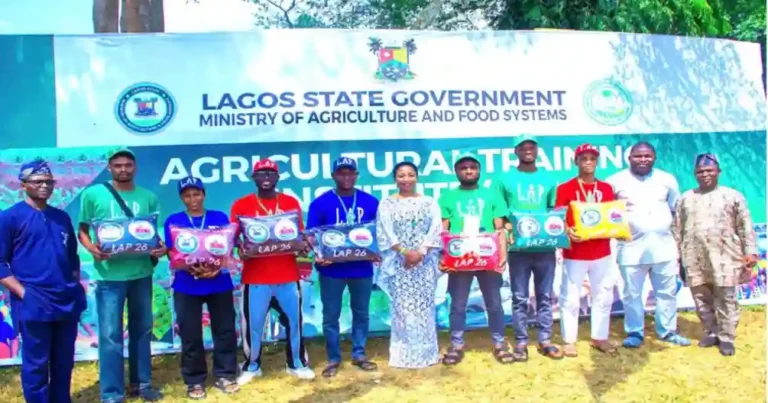
Speaking at the closing ceremony of the four-week intensive training for the 26th cohort of LAP at the Agricultural Training Institute (ATI), Araga, Epe, the Director of the Institute, Ms. Folake Ogunlana-Lawal, described the programme as a key part of Lagos’ youth empowerment strategy.

According to her, more than 5,000 youths have been directly trained through LAP since its launch, with each graduate creating jobs for an average of two to three additional people.

She explained that this ripple effect has pushed the programme’s overall job impact beyond 15,000 across the state.

“LAP is not just about training young people; it is about building a resilient and sustainable agricultural sector in Lagos State. Our goal is to equip youths with modern agripreneurial skills, reduce unemployment, promote climate-smart agriculture, strengthen food security and position Lagos as a proactive leader in addressing global food system challenges,” Ogunlana-Lawal said.

She disclosed that the next batch of trainees is scheduled to resume on February 22, as the state government continues to expand the reach of the programme.

Conceptualised in 2020, the Lagos Agripreneurship Programme is modelled after Israel’s Arava International Center for Agriculture Training (AICAT), with a strong emphasis on hands-on learning and practical exposure.

The programme runs for four months. It begins with one month of intensive on-site demonstration training at the Lagos State Agricultural Training and Entrepreneurial Centre in Araga-Epe.

This phase is followed by a three-month internship and mentorship period with reputable agro-allied companies and farms across Lagos State, giving participants real-world experience in different agricultural value chains.

During the training period, participants are fully supported by the Lagos State Government. The government provides accommodation, feeding, training materials and safety kits at no cost to the trainees.

The final stage focuses on enterprise activation. Successful participants undergo an incubation period at the Lagos Food Production and Entrepreneurial Centre, Songhai, Badagry. This stage prepares them to launch and manage independent agribusiness ventures.

Reflecting on the achievements of the programme, Ogunlana-Lawal expressed appreciation to Governor Babajide Sanwo-Olu for his consistent support of LAP and other development-driven initiatives in the state.

She also acknowledged the role of stakeholders and partners, saying their collaboration has been instrumental to the programme’s continued success.

“I want to specially thank the leadership of the Ministry of Agriculture and Food Systems, particularly the Honourable Commissioner, Ms. Abisola Olusanya; the Permanent Secretary, Mr. Emmanuel Audu; and the Directors of the Ministry for their unwavering support. Their commitment to transforming agriculture in Lagos State is truly inspiring,” she said.

Beneficiaries of the programme also shared their experiences during the ceremony.

Ayodeji Oyindamola John, a graduate of Agricultural Extension and Rural Development from the University of Ilorin, said LAP helped bridge the gap between classroom theory and real-life agricultural practice.

“This training exposed me to the real, practical side of agriculture. I am grateful to Governor Sanwo-Olu and the Lagos State Government for investing in youths and prioritising food security through programmes like this,” he said.

Another beneficiary, Balogun Saheed Ololade, said his exposure to aquaculture and pig production has positioned him as a professional agripreneur.

“I have gained practical knowledge that has changed my perspective completely. I am committed to setting up my own agribusiness, not just to empower myself but also to contribute to meat production and food availability in Nigeria,” Balogun said.

As the ceremony ended, Ogunlana-Lawal charged the trainees to remain committed to innovation and excellence as they move into the agribusiness ecosystem.

“Over the past month, you have learnt the fundamentals of agripreneurship, innovative farming practices and the importance of market linkages. Now it is time to put theory into practice,” she told them.

She also encouraged them to join the Lagos Agrinnovation Club, a platform created to promote collaboration, idea-sharing and innovation among agripreneurs across the state.

With thousands of youths trained, thousands of jobs created and stronger food systems emerging, LAP continues to expand its footprint in Lagos, positioning agriculture as a practical pathway for youth empowerment and sustainable economic growth.

She Wins Africa Programme to Support 1,000 Female Entrepreneurs

The International Finance Corporation (IFC), a member of the World Bank Group, and the Abdul Samad Rabiu Africa Initiative have announced a major expansion of the She Wins Africa programme, increasing the number of beneficiaries from 100 to 1,000 female entrepreneurs across Sub-Saharan Africa.

In a joint statement, IFC and ASR Africa confirmed that 1,000 female entrepreneurs would now benefit instead of the initial 100 selected at the start of the programme.

“We realised that 100 is just the beginning for a region like Africa. When you look at the impact it created and the kind of access to capital and markets it gave to those women entrepreneurs, you see this is a programme worth scaling. Now we’re moving from 100 to 1,000, and we’re doing it strategically through segmentation, from start-ups to growth-stage and scale-up companies,” both organisations said in a joint press release.

The first phase of She Wins Africa selected 100 women-led startups from thousands of applicants across the region. During this phase, participants collectively mobilised more than $4m in financing from external investors and partners.

The funding was secured through a mix of technical assistance, targeted advisory support, investor engagement, and catalytic grant envelopes. These measures helped reduce risk for private capital providers and supported faster business expansion for participating companies.

Officials overseeing the programme highlighted its broader economic importance for the continent.

IFC’s Regional Gender Lead for Africa, Marieme Camara, said, “When you look at the impact it created and the kind of access to capital and markets it gave to those women entrepreneurs, you see this is a programme worth scaling. Now we’re moving from 100 to 1,000, and we’re doing it strategically, from start-ups to growth-stage and scale-up companies.”

Managing Director and Chief Executive Officer of ASR Africa, Dr Ubon Udoh, added, “This expansion will create a more sustainable impact and extend the programme’s geographical reach. What these women do is not just for individual countries; it strengthens the economy of the whole continent.”

She Wins Africa is designed to support women-led small and growing businesses across Sub-Saharan Africa. The programme delivers technical services aimed at strengthening business foundations. These include coaching, investment-readiness training, tailored advisory support beyond standard modules, and investor matchmaking that connects startups with potential backers.

In its first phase, the programme provided 123 hours of structured technical support. It also facilitated 275 connections between founders and investors across regional and international markets, while mobilising 100 mentors to work directly with participating entrepreneurs.

The initial cohort exceeded early expectations, with 17 women-led enterprises securing external financing. Others also positioned themselves for greater growth opportunities.

The expanded next phase will support both early-stage ventures and growth-stage companies with tailored technical support, investment facilitation, and strategic mentorship, deepening regional reach and strengthening the pipeline of investment-ready women-led businesses across Africa.

BOI disburses ₦636bn in 2025, creates 1.6 million jobs

The Bank of Industry has released its 2025 Development Impact Report, announcing its strongest financial performance to date. Under the theme Financial Strength, the report shows that BOI recorded ₦636Billion Disbursements in 2025, describing it as “a landmark and unprecedented achievement as the largest annual disbursement in BOI history.”

According to the report, disbursements were made to over 7,000 businesses across different sectors of the economy. In addition, BOI managed ₦73Billion in Managed/Matching funds, covering funds managed by BOI for states and other institutional partners.

The sectoral distribution of disbursement shows Manufacturing received ₦79B, Services ₦55B, Extractive ₦77B, Infrastructure ₦100B, and Agro-Allied ₦202B. Under Intervention Funds, the bank disbursed ₦200Billion FGN Intervention funds and served as the disbursing entity for the FGN 200B intervention funds, achieving over 95% performance.

On loan quality, the report highlights an NPL Rate <1.5%, meaning non performing loans rate less than 1.5%. BOI also mobilized additional €210 Million, about ₦350 Billion, funding from international funding partners in 2025. Out of this, €125m went towards healthcare while €85m supported agriculture and food security.

Under Development Impact, disbursement by business size shows Nano Credits received ₦51B (8%), Micro Credits ₦32B (5%), SME Credits ₦178B (28%), and Large Enterprise Credits ₦375B (59%). The bank reports 1.6Million Jobs Created/Retained and over 7,000 New MSME’s Supported, alongside 570 Startups Funded.

In terms of inclusion, ₦150Billion was disbursed to Women-focused businesses and ₦12Billion to Youth-owned businesses. The report also states that 20K+ Tonnes CO₂ Emission Reduction was achieved as estimated cumulative annual CO₂ emissions avoided from BOI-financed projects operational in 2025.

Under Strategic Execution, 957,400 Total Beneficiaries benefited from the FGN Presidential Conditional Grant Scheme. BOI supported the upgrade of an indigenous tomato processing facility from 3.1m tonnes/hr to 10m tonnes/hr. It also deployed 100 Mini-Grids Across Rural Communities in partnership with the World Bank – Rural Electrification Programme, connecting 11,777 New Customers to Power Infrastructure and linking 47,508 Smallholder Farmers to Processing Facilities. A total of ₦100 Billion was disbursed to Critical National Infrastructure including Broadband, Power, Aviation & Transportation.

The report outlines social intervention programmes such as iDICE, a nationwide digital skills and enterprise programme targeted at over 300,000 Nigerians, with 12 participating financial institutions & Technology Fund Managers selected. It readied 500 founders for investments, provided equity to 100 tech ventures, and trained 400 youths through hackathons with seed grants.

Through GLOW, a ₦10 billion gender-focused fund offering up to ₦50 million per beneficiary, over 41,000 beneficiaries were prospected in 2025. RAPID financed rural agro-value chain anchors across all 36 states and the FCT, creating 880 rural enterprises and disbursing 6.5 billion in 2025, resulting in over 8,000 jobs.

BOI expanded its National Coverage with 4 additional state offices, bringing the total to 37, and plans 3 new offices in Zamfara, Yobe and Imo in 2026. Institutionally, BOI was appointed first and only agency for the Adaptation fund in Nigeria and received awards including “Transaction of the Year” at the 2025 THISDAY Awards, Best Bank for Sustainable Finance in Nigeria 2025 by Global Finance, and recognition at the SERAS 2025 Sustainability, Enterprise & Responsibility.

KPMG to Manage Jerry Eze Foundation $525,000 Grant for Nigerians

0

KPMG is set to manage the Jerry Eze Foundation Grant, according to an update shared by Pastor Jerry Eze on the highly anticipated programme.

Eze disclosed that global professional services firm KPMG will oversee the grant management process. The announcement was shared on his verified Instagram page, where he stated: “The Jerry Eze Foundation Grant Management Process will be handled by KPMG. Details coming soon.”

The Jerry Eze Foundation $525,000 Grant is designed to support 100 young Nigerians in key sectors, including agriculture, technology, and manufacturing. The initiative aims to provide financial backing to eligible beneficiaries across these industries.

Full details about the grant, including eligibility criteria, application procedures, and timelines, are yet to be released. More information is expected in the coming days.

FG Reaffirms TVET Reform After UNESCO National Assessment of 320 Colleges

0

The Federal Government has reaffirmed its commitment to transforming Technical and Vocational Education and Training (TVET) into a major driver of economic renewal following the presentation of a National Needs Assessment Report conducted by UNESCO in partnership with GIZ and the World Bank.

The nationwide assessment, carried out in July 2025, evaluated 320 Federal and State Technical Colleges across all states and the FCT. The review covered infrastructure, staffing, curriculum relevance, digital readiness, industry linkages, and institutional capacity.

Receiving the report, the Honourable Minister of Education, Dr. Maruf Tunji Alausa, CON, described it as “a roadmap for reform” under the Nigeria Education Sector Renewal Initiative. He acknowledged existing challenges, including infrastructure deficits, shortages of qualified instructors, weak industry partnerships, and limited digital connectivity.

However, he emphasized that reforms are already underway. According to him, Federal Technical Colleges are now tuition-free, while trade offerings have been streamlined to align with labour market demand. He added that workshop rehabilitation is ongoing across institutions.

The minister also disclosed that over 100,000 students are currently enrolled in national skills programmes supported with stipends.

The report outlined six key reform pillars: infrastructure modernization, workforce strengthening, curriculum updates, industry collaboration, digital transformation, and sustainable financing. The Federal Government reiterated its resolve to rebuild TVET into a modern, industry-aligned, and digitally enabled system to drive youth employment and national development.

Governor Radda Unveils First CNG Station in Katsina

0

Katsina State Governor, Malam Dikko Umaru Radda, has unveiled the first Compressed Natural Gas (CNG) station in the state, describing the project as a historic step toward energy security, economic growth, and environmental sustainability.

Governor Radda made the declaration during the inauguration of the Greenville LNG–CNG Hub Station, noting that the project reflects the fulfillment of campaign promises and demonstrates governance focused on impact, accountability, and visible results.

“Today’s event is historic for our state. The commissioning of the first CNG station in Katsina is a clear demonstration that our promises to the people are being translated into real projects that will improve their lives,” the Governor said.

He explained that his administration’s agenda is built on key priorities, including security, economic revitalisation, human capital development, and sustainable growth, with energy placed at the centre of these objectives.

“Energy is the backbone of security, productivity, and economic growth. Reliable power is essential for businesses, public services, and communities. That is why power and energy remain central to our development agenda,” he stated.

Governor Radda noted that the Greenville gas hub forms part of the state’s broader energy diversification strategy, combining clean fuels with renewable energy solutions in a balanced approach that promotes affordability, reliability, and environmental responsibility.

“This project supports our energy transition agenda and positions Katsina as a forward-looking state that embraces cleaner and more efficient energy solutions,” he added.

He highlighted several major power and energy interventions undertaken by his administration, including the hybridisation of the state wind farm with solar photovoltaic systems and battery energy storage, as well as the deployment of solar mini-grids and stand-alone solar systems in rural communities, markets, and public institutions.

The Governor also disclosed investments in battery energy storage to improve grid stability, alongside the procurement and installation of transformers to strengthen electricity distribution, reduce outages, and support industrial and commercial growth.

“These projects are designed to unlock economic opportunities, empower small and medium-scale enterprises, and improve the quality of life of our people,” he said.

Governor Radda stressed that the administration’s energy initiatives are people-centred, with strong emphasis on job creation, skills development, and local content participation, particularly for youths.

He further assured investors that the state government is positioning Katsina as an attractive destination for responsible investment, with strong commitments to transparency, safety, and accountability.

“Our goal is to build a secure, productive, and climate-conscious state where both citizens and investors can thrive,” he said.

Earlier, the Chairman of Greenville LNG, Mr. Eddy Van den Broeke, represented by Mr. Joseph Adewale Oyadoyin, a Director in Greenville LNG Co. Ltd., congratulated Governor Radda and his team on the successful delivery of the project.

He described the commissioning of the Greenville LNG–CNG Hub Station as evidence of the governor’s commitment to lasting development, noting that the project originated from the governor’s visit to the company’s facility in Kaduna on 6 January 2024.

“The state government provided the land promptly, demonstrating a strong ease-of-doing-business environment. As a result, the station was completed and delivered in record time,” he said.

He noted that the facility is the first LNG–CNG station in Katsina and will supply affordable CNG and LNG to citizens, transporters, institutions, and businesses, while also creating employment opportunities for residents.

The Greenville representative added that the project aligns with the Federal Government’s Presidential Initiative on CNG, which aims to provide cleaner, safer, and more affordable fuel across the country, while enhancing energy security and reducing carbon emissions.

He thanked Katsina State ministries and agencies, as well as regulators and partners, including the Nigerian Midstream and Downstream Petroleum Regulatory Authority, the Federal Ministry of Industries, NARTO, NURTW, and various tricycle associations for their support.

Also speaking, the Special Adviser to the Governor on Power and Energy, Hafiz Ahmed, described the commissioning as proof that vision can be translated into reality through commitment and strong public–private partnerships.

He noted that Nigeria holds about 206 trillion cubic feet of proven gas reserves, the largest in Africa and the eighth largest globally, adding that the Federal Government has declared 2030 as the “Year of Gas” to maximise the resource for national development.

Hafiz explained that most of the country’s gas reserves are located in the southern region, but the state government is committed to ensuring that the benefits of gas development reach all parts of the country.

“Our focus is on using gas for power generation, transportation, and industrialisation, because gas development will drive multi-sector economic growth,” he said.

The event attracted government officials, including the Speaker of the Katsina State House of Assembly, Hon. Nasir Yahaya Daura; Chief of Staff to the Governor, Hon. Abdulkadir Mamman Nasir; local government chairmen; members of the Katsina State Executive Council; industry stakeholders; transport unions; regulators; community leaders; and business representatives.